
Converting a shed into a man cave can mean adding seating and lights, installing bifold doors, or running new electrical service.
The choice depends on whether you need the shed to stay dry and comfortable year-round or whether you can get by with a space that holds up only in fair weather.
A gravel pad and a fire pit extend the shed’s footprint onto a patio without a building permit, while insulation and drywall between the studs turn it into a room you can heat in January.
1. Seating for Entertaining Friends
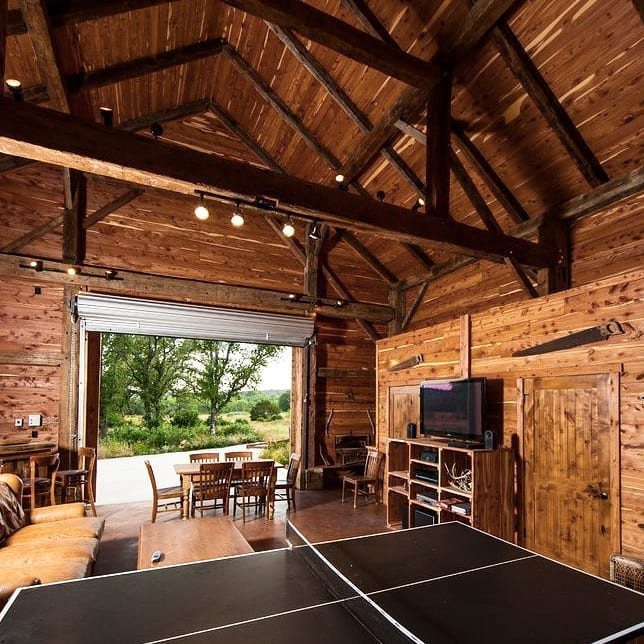
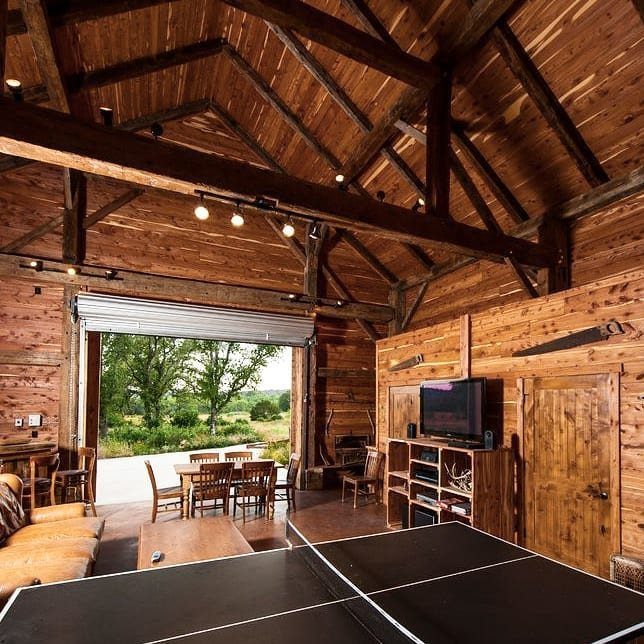
A shed with room to sit and hang out becomes a full man cave the moment you add actual seating. The ping pong table and the TV give you something to do, but comfortable seating lets people stay.
If the shed is big enough to walk around in, it can hold a couch and a small table. The open garage door keeps it from feeling too closed in when you have a few people over.
Start with what fits: a single couch if the shed is narrow, a couple of chairs if you can spare the floor space. Used furniture works fine here, since the shed itself is already doing most of the work.
2. Create a Gaming Shed
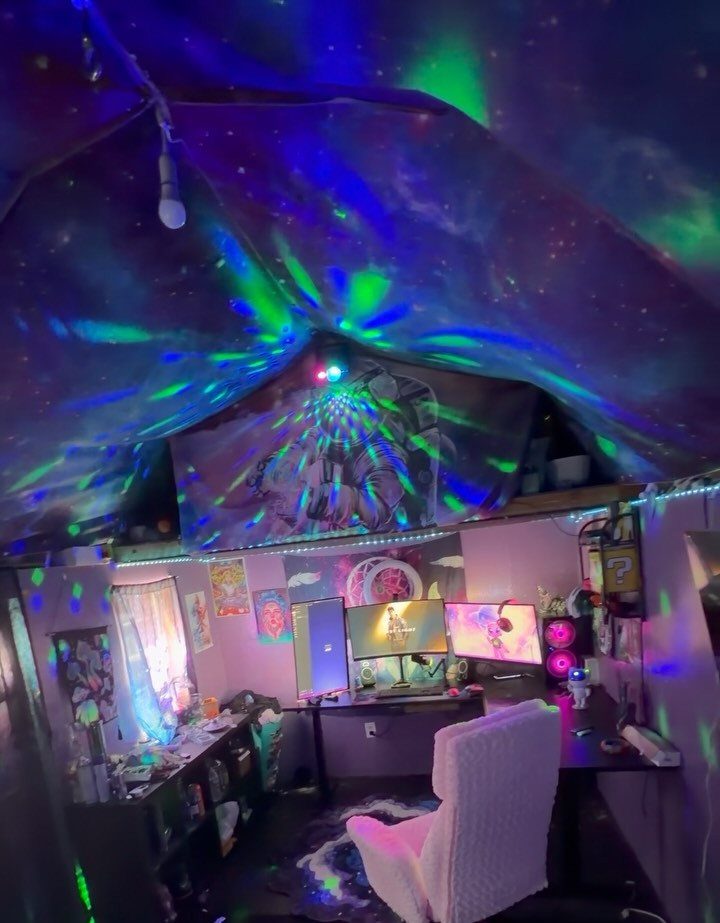
Gaming setups fit naturally in a shed because you can close the door, control the light, and wire everything exactly how you want it.
This one uses fabric and projection lights across the ceiling to block daylight and add color at the same time.
Run power to the desk first. A dedicated circuit is better if you’re plugging in multiple monitors, a PC, and a console, but an extension cord from the house will work for a single monitor setup.
The fabric hangs from a frame or clips, and a galaxy projector keeps the space dark enough to see the screens during the day without adding blackout blinds.
3. Build a Backyard Pub Bar
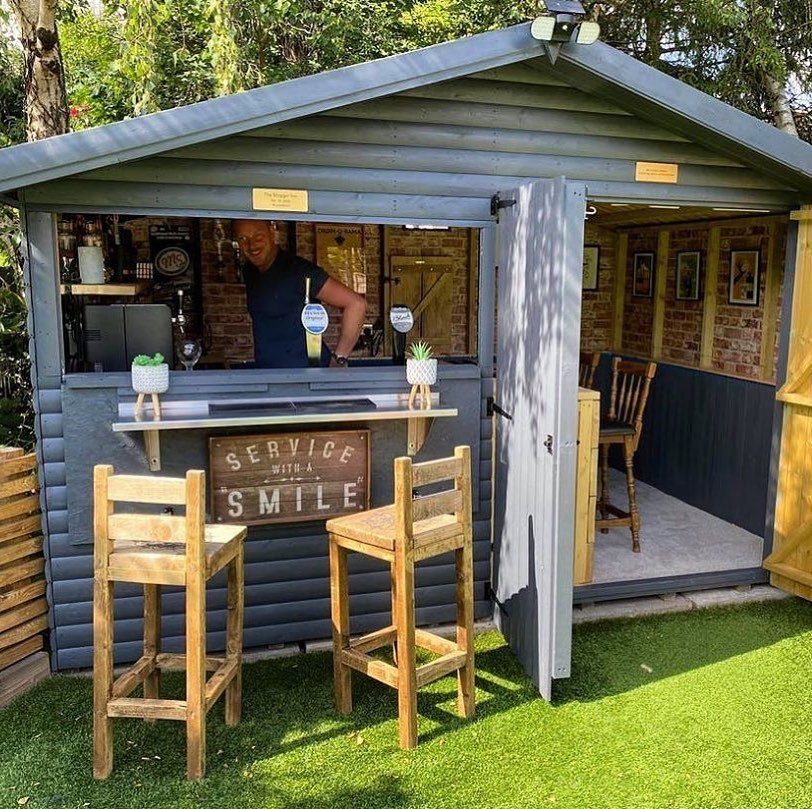
A bar with a serving hatch turns a shed into a backyard pub without losing the shed’s footprint. The window opens to a small counter outside where you set drinks and talk through the opening.
Install the counter at elbow height so someone standing inside can serve comfortably. The hatch can be a new window or an existing one widened with a saw and reframed.
Bar stools go on artificial turf or pavers outside, and a simple shelf inside holds bottles and glassware. If you add a mini fridge, it fits under the counter and keeps beer cold without a trip back to the house.
4. Outdoor Fire Pit Patio Lounge
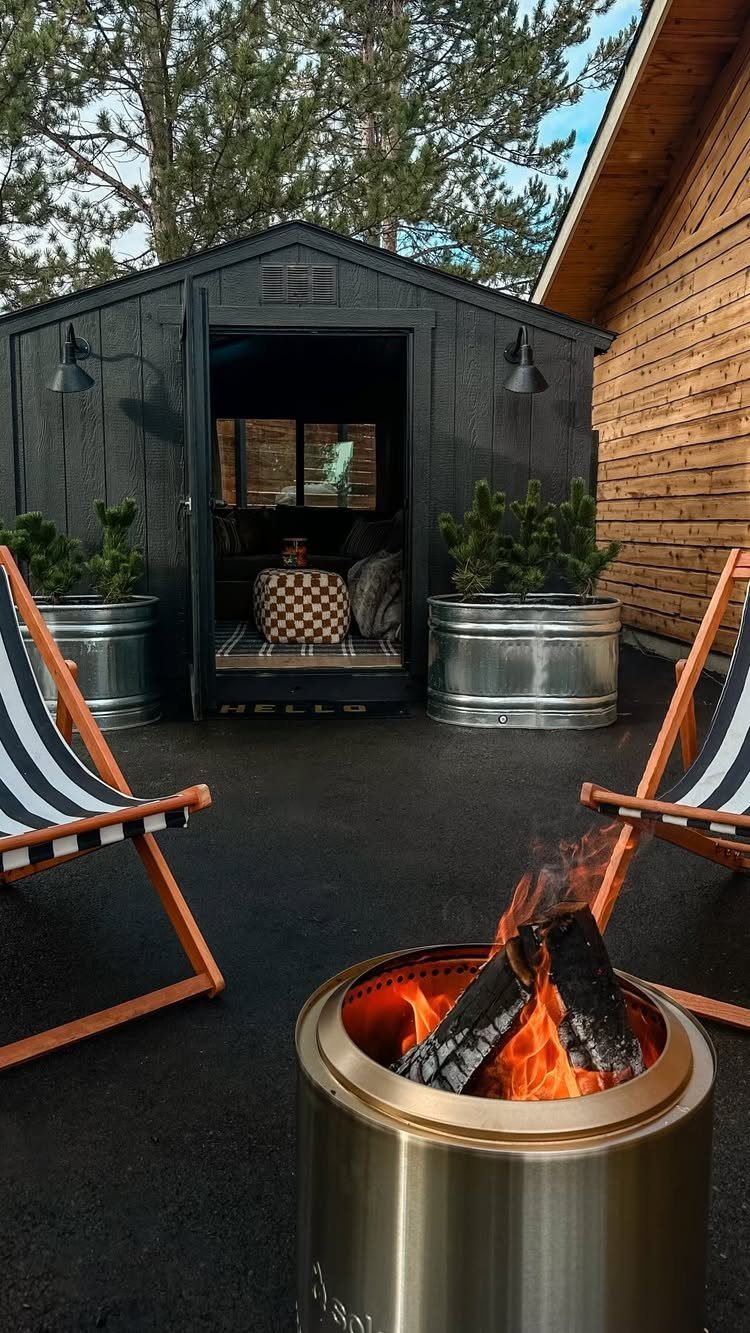
Opening the shed directly onto a patio with a fire pit gives you an indoor space that stays connected to the fire.
The gravel pad is cheap, drains well, and you can set chairs anywhere without worrying about grass dying underneath.
Pour a gravel base and tamp it flat. Metal fire pits sit directly on gravel without extra prep, and you can move them if you want the patio to work for something else later.
Paint the shed black if it isn’t already. Dark exteriors disappear at night, and the shed reads as one space with the patio once the fire is going and the lights are on.
5. Bifold Doors for Indoor-Outdoor Living
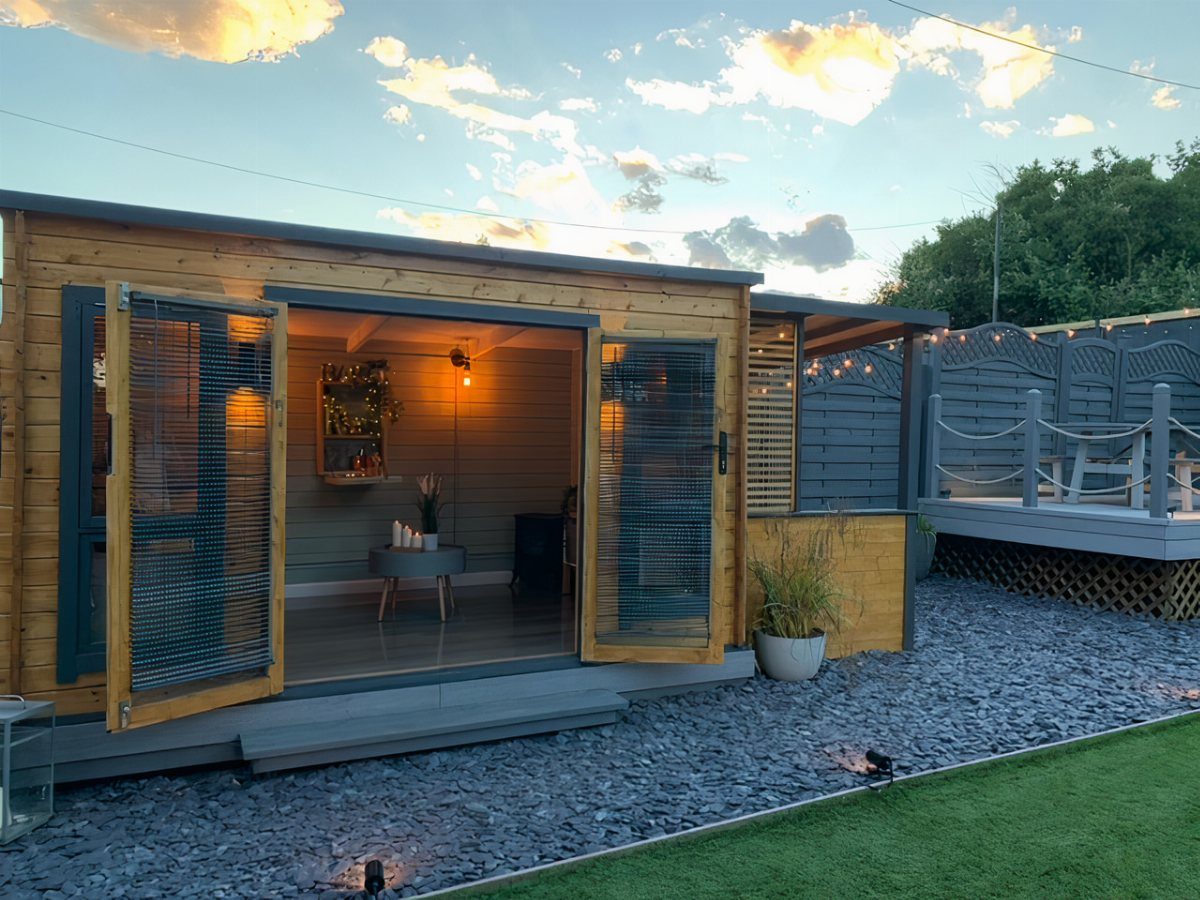
Bifold doors open the shed completely to the yard, which makes it feel twice as big when the weather is good and keeps it from getting stuffy in summer.
You lose wall space where the doors go, but the trade is worth it if the shed faces grass or a patio.
Measure the opening first. Most bifold sets come in standard widths, and the rough opening needs to be slightly wider and taller than the door size for the frame.
Install them on the long side of the shed so the doors open across the widest view. A gravel or paver pad outside the threshold keeps mud from tracking in when it rains.
6. Add a Front Porch Deck
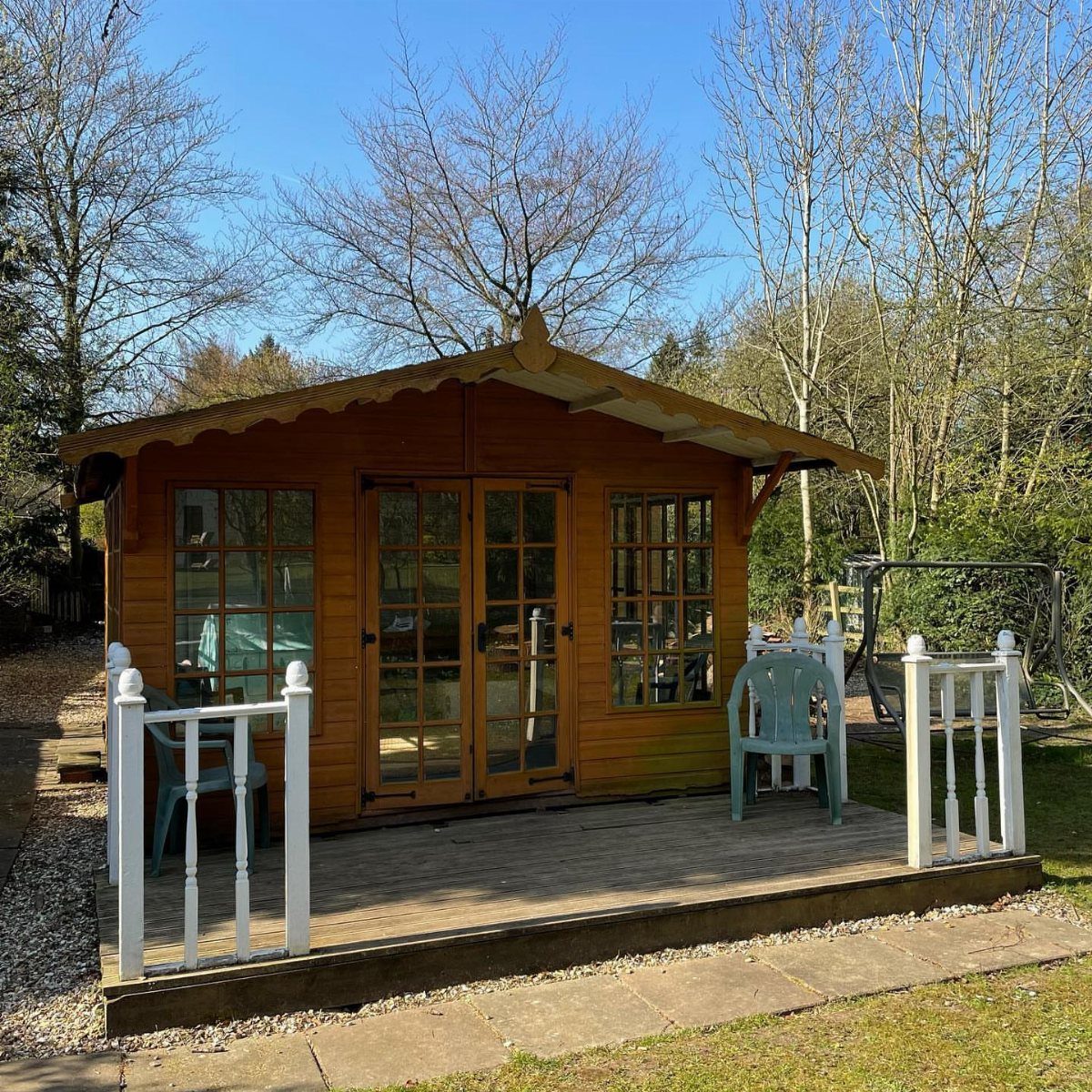
A small deck attached to the front of the shed turns it into a spot you can use even when you don’t want to be inside.
The railings and the overhang make it feel like a porch, and 2 chairs fit on a shallow deck.
Frame the deck with joists on standard centers, then screw down decking boards perpendicular to the shed. Railings are required by code if the deck sits high off the ground, and they add cost per linear foot in treated wood.
Run the deck along the shed door so you can step outside without climbing down stairs. If the ground slopes, set the posts in concrete and adjust their height to keep the deck level.
7. Add Windows
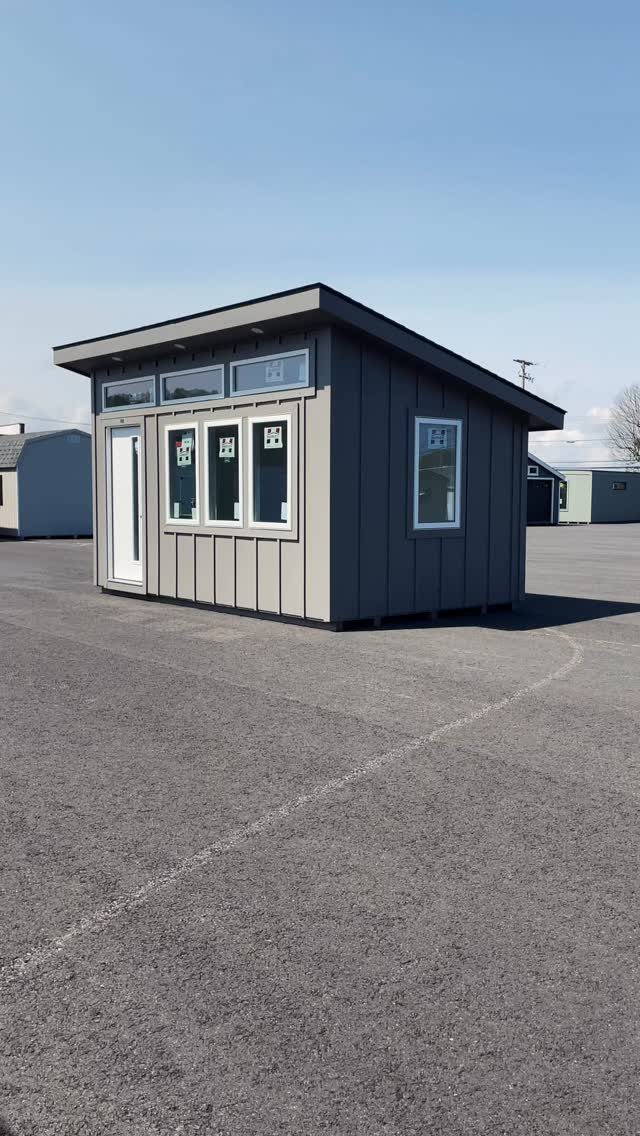
Windows let daylight in and air through, which matters when the shed is small and used for more than storage. Space 3 windows evenly along one wall, and you get enough daylight to skip the overhead lights most of the day.
Cut the opening in the wall, frame it with 2x4s, and set the window in place before caulking the seams. Most shed windows are fixed pane, not operable, because they cost less and seal better.
Add at least one window that opens if you plan to spend time inside when it’s warm.
8. Install Better Lighting
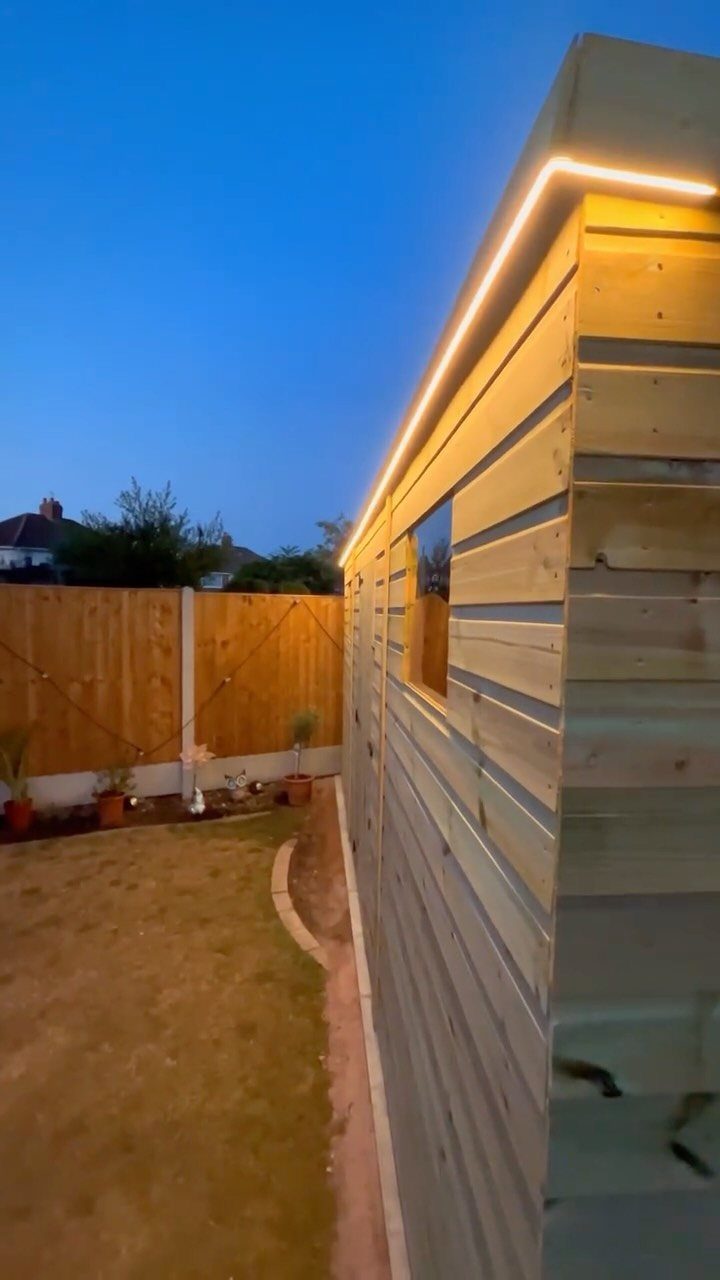
Good lighting lets you use the shed after dark and fixes the one thing most sheds lack when you convert them.
The LED strip along the roofline stays on all evening without drawing much power, and it lights the path to the door.
Outdoor-rated LED strips mount with adhesive backing or clips. Run low-voltage wire from a transformer plugged into an outlet inside the shed or the house, and the strip turns on with a switch or a timer.
Add interior lights separately. A single overhead fixture works for most sheds, and task lighting goes over a workbench or bar if you need it.
9. Install Shelves and Storage Spaces
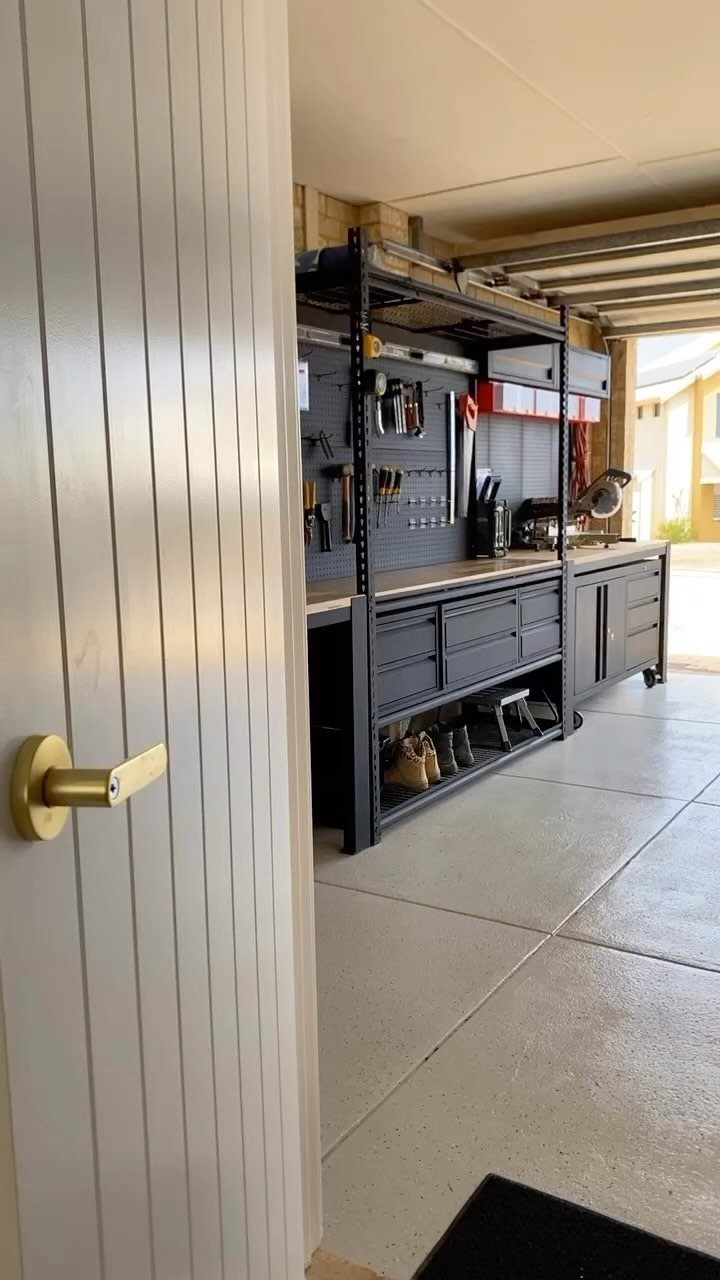
Shelves and a pegboard keep tools and gear off the floor, which frees up space for whatever the shed is actually used for.
Mount shelves to wall studs with brackets rated for the weight you plan to store. Pegboard goes up on furring strips so the hooks have room to slide in behind the board.
If the shed doubles as a workspace, put the bench near a window or under a light so you can see what you’re working on.
Community and Connection
A shed used regularly becomes a reason to invite people over, not just a place to work alone.
The shared project or the ballgame on the radio gives you something to do side by side, and that structure makes it easier to spend time together without needing a plan.
Some groups meet weekly to teach a skill or fix something, trading knowledge the way you would in a workshop class.
Others use the shed as a place to sit and talk while something else is happening, which takes the pressure off the conversation itself.
If you’re setting up a shed with other people in mind, add seating for at least 2 more than you think you’ll have. The extra chair gets used more often than it sits empty.
Health Benefits
Time spent in a shed with other people can help break the pattern of isolation that builds up when you’re home alone too much.
The regular meetup gives you a reason to leave the house, and the shared activity keeps the focus off small talk.
Physical work helps too. Converting a shed into a workout space means you can lift or run without driving to a gym, and the lack of a commute makes it easier to go more than once a week.
You’ll need room for whatever equipment you use most, and that’s usually a bench, a mat, or a bike.
Insulation matters if you plan to work out year-round, since a freezing shed in January won’t get used no matter how close it is to the house.
Customization Options
Insulation and drywall turn a shed into a space you can use comfortably in winter and summer, not just when the weather is mild.
Install insulation between the studs, then cover it with drywall if you want the walls to look finished and hold heat better.
Running electrical service to the shed lets you add outlets, overhead lights, and climate control without extension cords. A dedicated circuit is required if you’re adding a heater or an air conditioner, and you’ll need a permit in most areas.
Weatherproof flooring matters if the shed gets wet or muddy.
Vinyl plank or sealed concrete both clean easily, and they won’t rot if water tracks in from outside. Metal roofing outlasts asphalt shingles in areas with heavy rain or snow.
Frequently Asked Questions
How can I make my garage a man cave?
A garage converts to a man cave the same way a shed does: add insulation and drywall if you plan to use it year-round, run electrical service for outlets and overhead lights, and bring in seating that fits the floor space you have left.
Windows help if the garage feels too closed in, and they improve ventilation when you can’t leave the door open. Install shelves to get tools off the floor so the space works for hanging out, not just storage.
Do you need permission for a man cave?
You need a permit if you’re running new electrical service to the shed or adding climate control that requires a dedicated circuit, and most areas require permits for structural changes like adding windows or bifold doors.
Simple interior work like painting, adding shelves, or bringing in furniture usually doesn’t need approval. Check local building codes before you start, since electrical and insulation work often triggers inspection requirements even when the exterior stays the same.






