
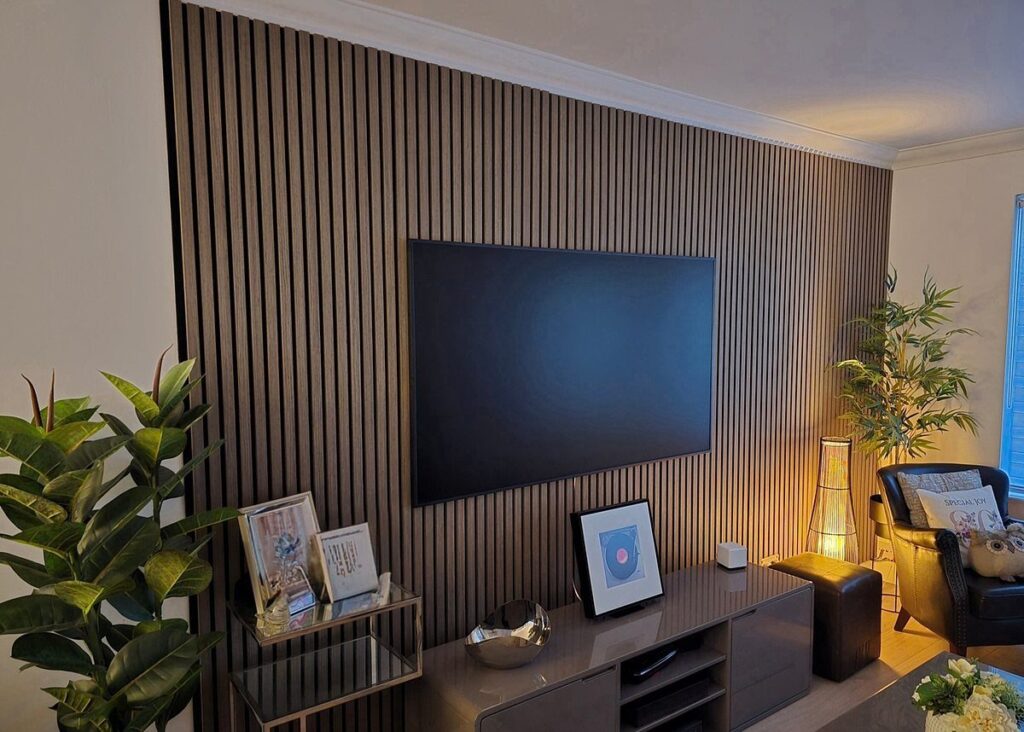
Wood panels behind the TV can run from simple slat sections that mount in an afternoon to full-wall dark paneling with fireplace surrounds, marble combinations, and backlit live-edge treatments.
The rule that picks one is how much wall you want to commit: a vertical slat panel keeps the treatment narrow and centered, while a full-wall build ties the TV into a fireplace surround or flanking wallpaper and turns the whole surface into one piece.
1. Wood Slat Wall Panel TV Wall
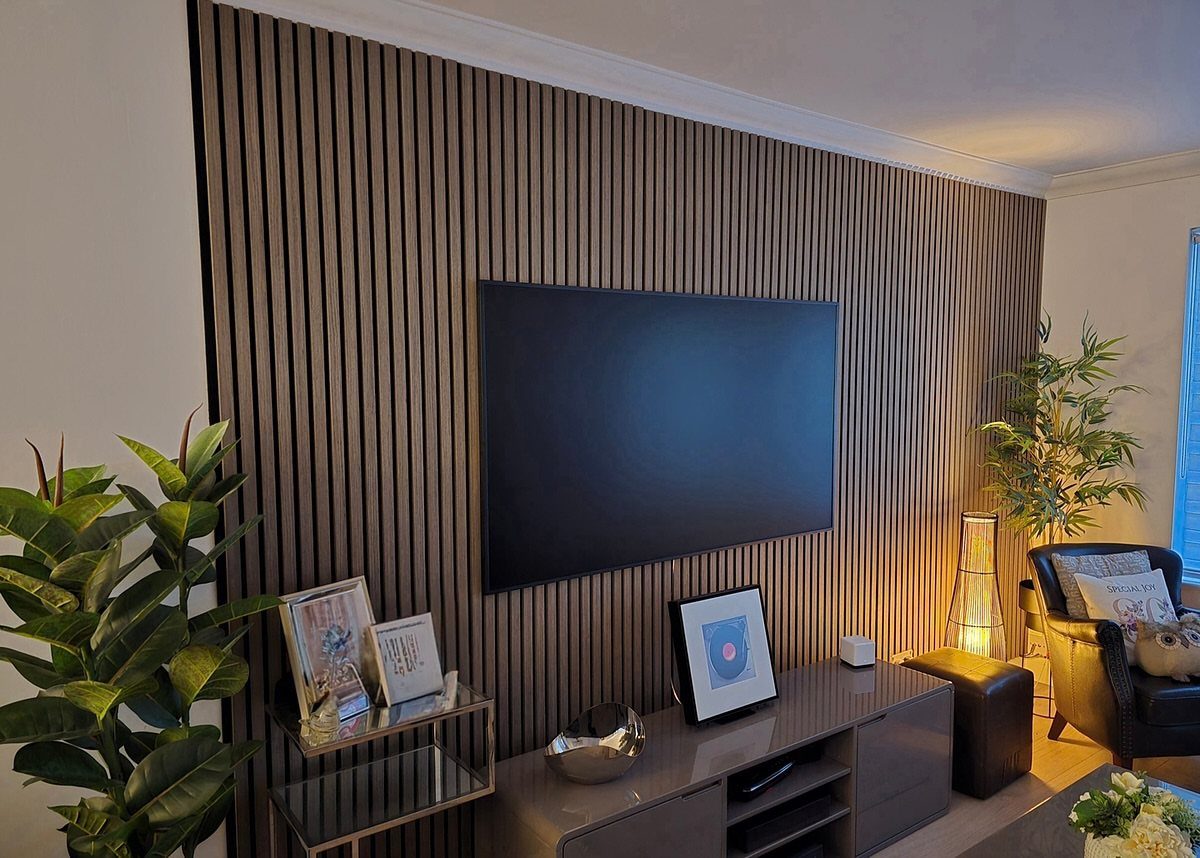
Vertical wood slats mounted on the wall behind the TV add texture without claiming much depth.
Most slat panels sit 1–2 inches off the drywall, just enough to break up a flat surface and cast shallow shadow lines that change with the light.
The walnut tone here works in rooms with neutral furniture.
If your console and seating lean cool or grey, a darker wood grounds the screen. Lighter oak or ash keeps the wall from reading too heavy.
Slat panels come in modular sections that screw into studs or furring strips. Installation takes an afternoon once the layout is marked.
2. Marble & Wood Slat Combination
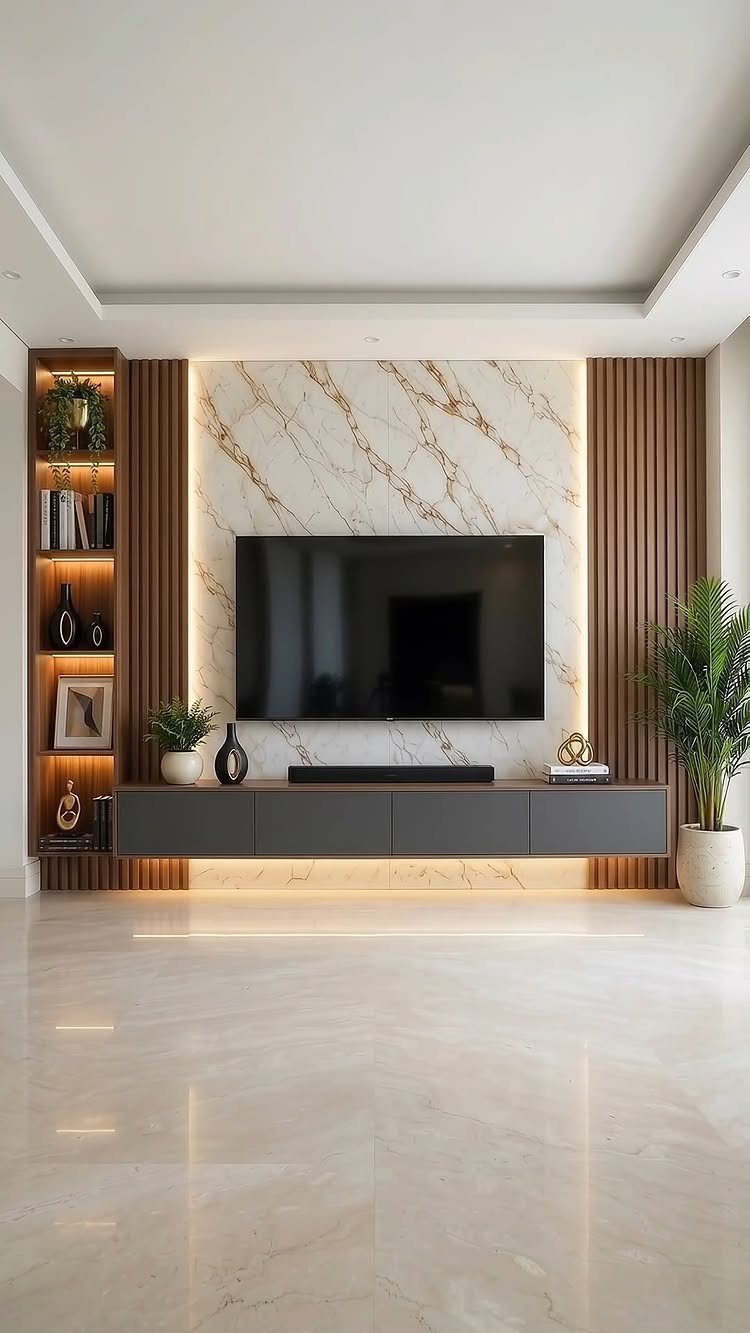
A marble slab centered behind the TV, flanked by vertical wood slats on each side, splits the wall into 3 zones. The marble keeps the screen area clean and reflective, while the wood softens the outer edges and adds warmth.
This works best when the marble section is cut to match the TV width or slightly wider.
The wood slats frame it without competing. The floating console below extends the horizontal line and keeps the floor clear.
Marble sheets for this application are typically porcelain or thin stone veneer, which install lighter and flatter than full slab. The wood slats mount to the wall on either side with a small gap between materials.
3. Painted Black Accent Wall Behind TV
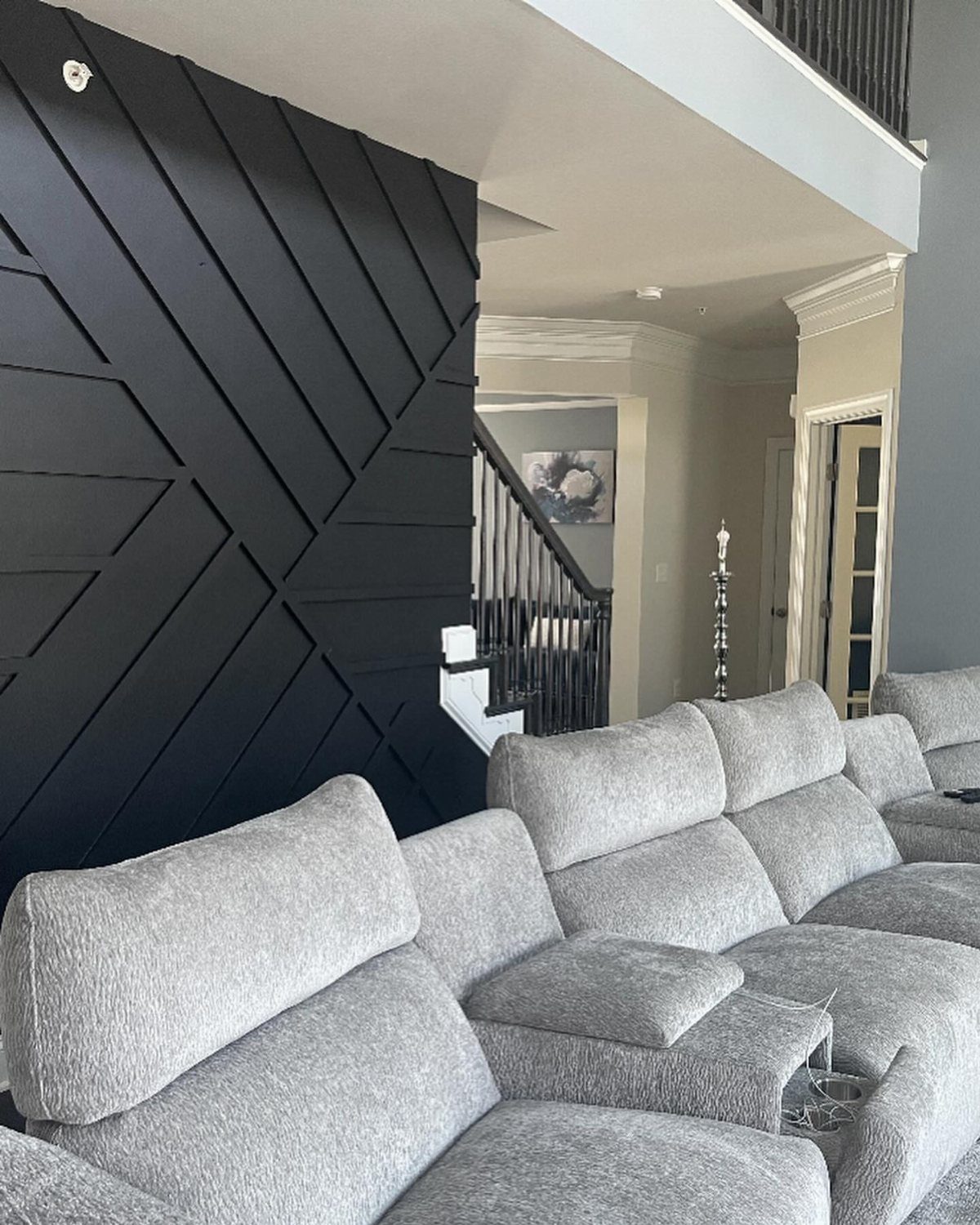
A black accent wall behind the TV pulls the screen into the background and hides the bezels. The geometric wood slats add depth without introducing color, so the wall reads as one surface instead of a collage.
Painting slats black before installation saves time on cut edges.
Matte black absorbs glare better than satin. The slats mount to furring strips or directly to studs, depending on their weight.
This suits rooms with light seating, where the dark wall anchors one end. In a smaller space, stop the black at one wall to avoid closing in the room.
4. Horizontal Wood Plank TV Wall
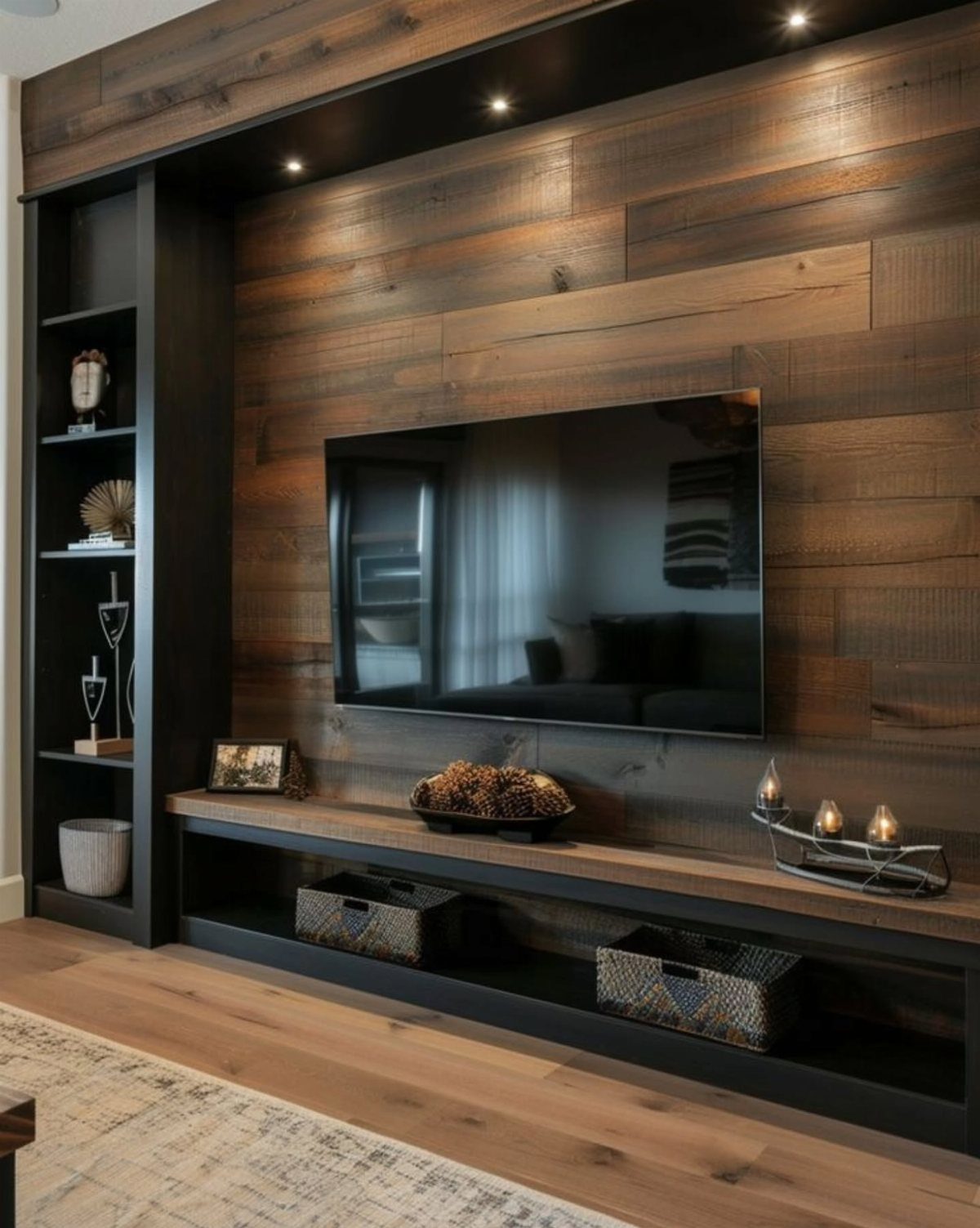
Horizontal planks create wider, slower lines that make the wall feel broader. The rustic brown tone here brings warmth to a white or neutral room, and the rough texture contrasts with the flat screen above it.
Reclaimed barn wood or rough-sawn pine give this look.
Planks attach to studs or horizontal furring strips with finish nails or screws countersunk and filled. A matte sealer protects the wood without adding shine.
The low black console keeps the plank wall visible and centers the TV at seated eye level. This look suits casual spaces where texture matters more than precision.
5. Full-Wall Dark Wood Paneling with Fireplace
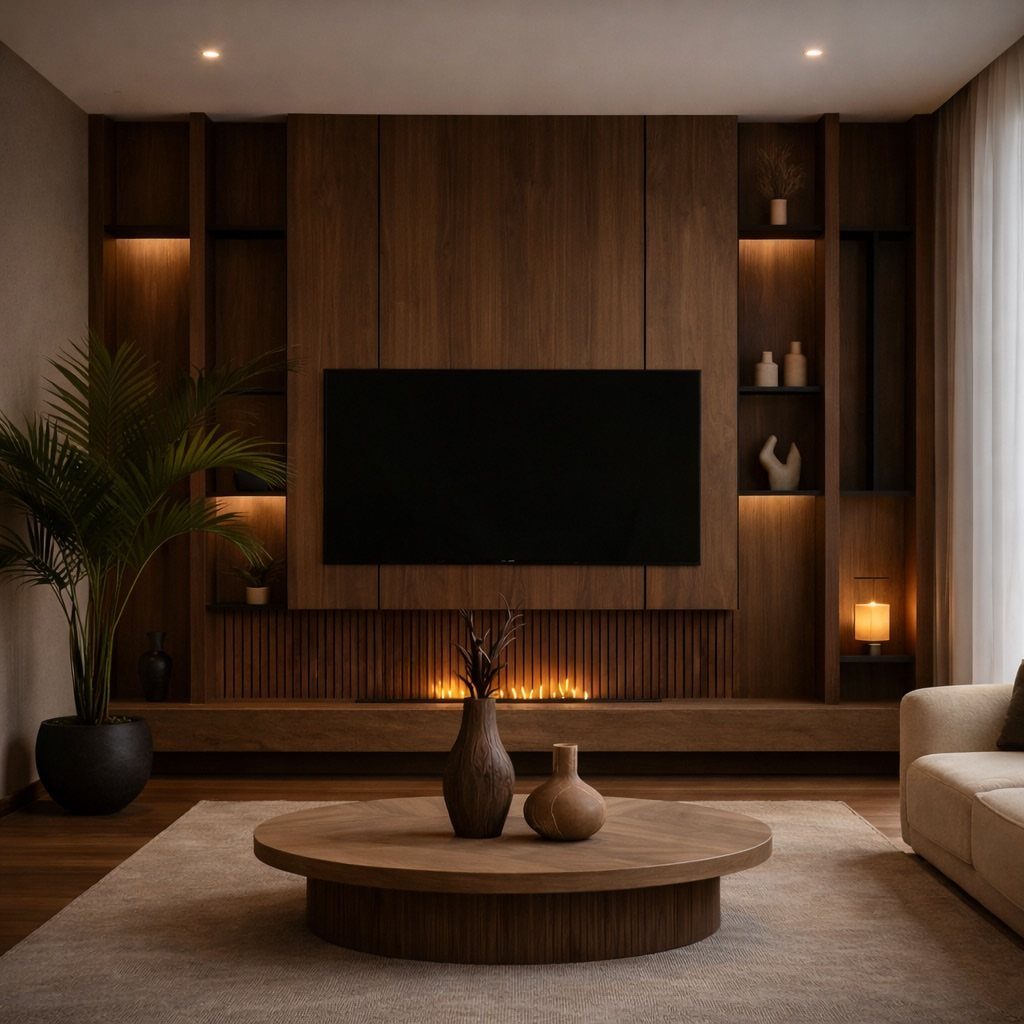
A full-wall panel in dark vertical wood anchors the TV, the fireplace below it, and built-in shelves on either side. The single material ties the 3 elements together and makes the wall feel built in rather than added on.
The linear fireplace sits below the TV at a height that works for seated viewing. Most codes require clearance between the fireplace opening and combustible materials, so check local rules before mounting wood panels near the firebox.
This layout works in larger rooms where the wall has space for flanking shelves. The dark wood reads formal and suits homes with modern or transitional style.
6. Backlit Live-Edge Wood Panels
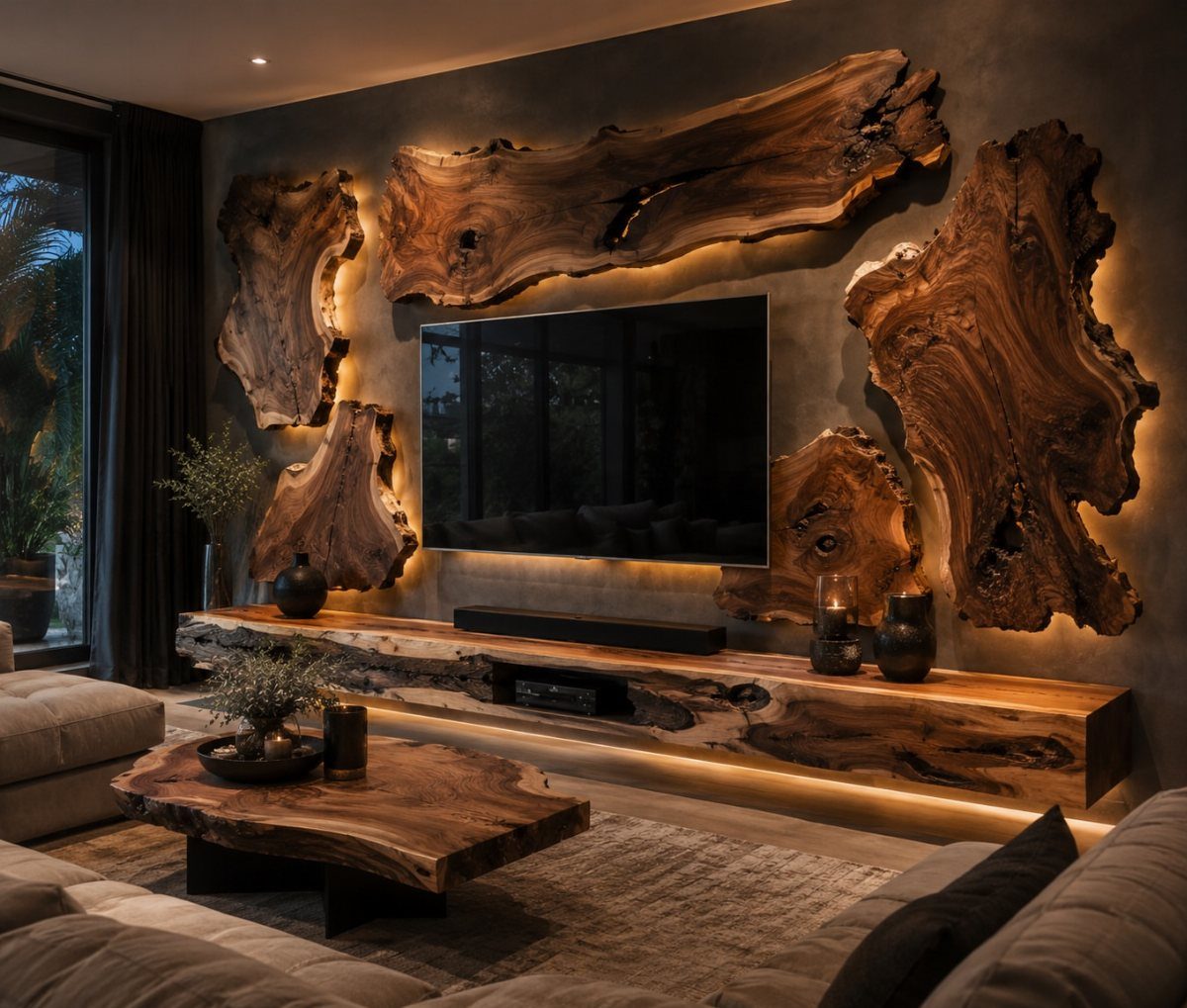
Live-edge wood slabs mounted around the TV follow the natural shape of the tree, so no 2 installations look identical. The organic edges soften the rectangular screen, and warm LED backlighting separates the slabs from the wall behind them.
The slabs mount to the wall with hidden brackets or French cleats.
Backlighting runs in channels routed into the back of each piece or on LED strips attached to the wall behind the wood. The effect works best with slabs at least 2 inches thick, which cast deeper shadows and hold their shape.
This suits rooms with other natural materials: stone, leather, or live-edge furniture.
7. White Slats with Geometric Backer
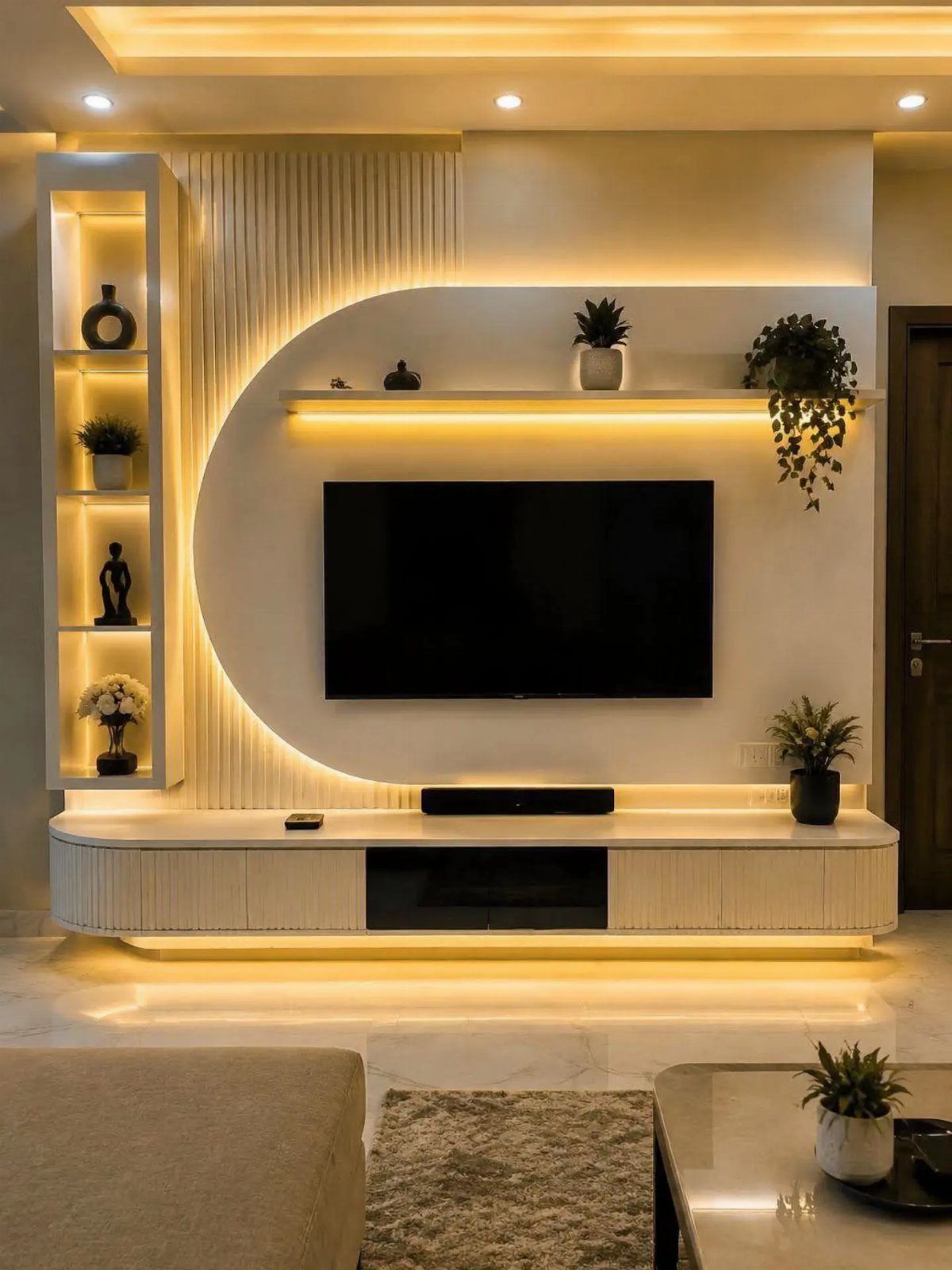
White slats keep the wall light while the circular panel behind the TV adds a focal point that breaks the vertical rhythm. The warm LED backlighting separates the circle from the wall and softens the screen’s glow in the evening.
Paint them before installation to avoid brush marks on the wall. The circular panel can be cut from plywood or MDF, then lit with an LED strip routed into a channel on the back edge.
This reads clean in rooms with white trim and pale furniture, where darker wood would feel too heavy.
8. Wood Slats Flanking Floral Wallpaper
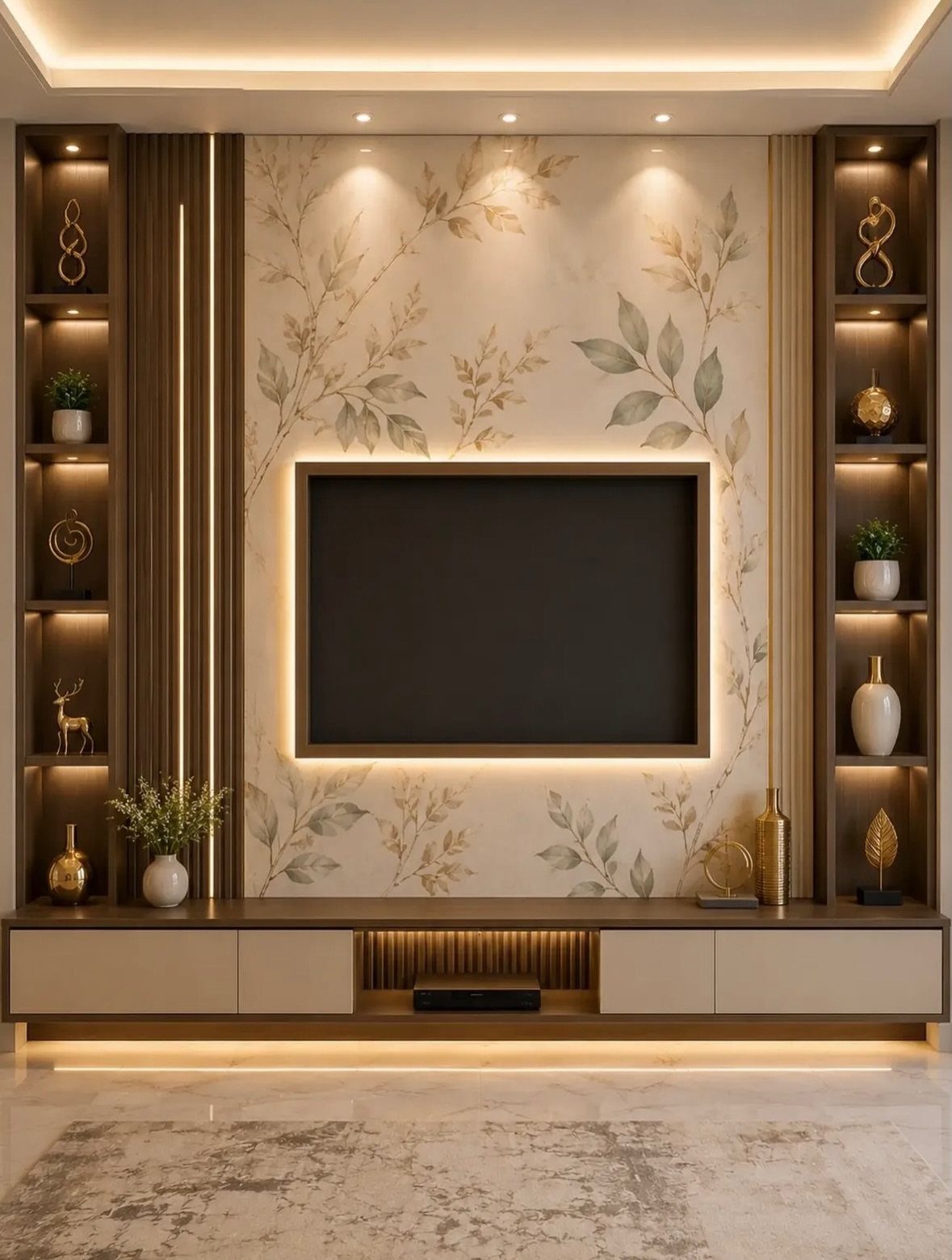
Floral wallpaper behind the TV turns the screen into part of a larger composition instead of the only thing on the wall.
The wood slats on either side frame the wallpaper and add depth, while the built-in shelves fill the outer edges with space for decor.
The wallpaper section stays narrow, just wide enough to back the TV.
Too much pattern competes with the screen when it’s on. The slats mount on furring strips and the shelves sit on concealed brackets or a cleat.
This suits rooms where the TV shares the wall with other focal points.
Acoustic Backing Importance
Backed panels pull sound in instead of bouncing it back into the room.
The gray felt sits on the back of each panel and does the work passively. You mount the panel the same way, and the acoustic treatment comes with it.
A panel that only decorates wastes the opportunity.
Installation Methods
Adhesive alone holds fine if your drywall is smooth and primed. Screws give you more holding power when the TV mount shares the same stud bay.
Glue is faster and leaves no visible fasteners. Screws into studs hold more weight and matter more when the TV and the panel share the same framing.
Sample Ordering Advice
Wood veneer reads completely different on screen than it does on your wall under real light.
Aku Wood Panel offers individual color samples. Andor Willow refunds sample orders and gives a 4th free when you buy 3.
Raw slat ends at the edge of the wall look like you ran out of material. End caps close off those edges and come in natural oak, black oak, smoked oak, and walnut.
Panels without backing photograph the same but give you no sound benefit. If you’re building a media wall, skip those entirely.
Frequently Asked Questions
Can you put a TV on acoustic panels?
Yes, you can mount a TV over acoustic panels as long as the TV bracket is anchored directly into wall studs.
The felt backing traps sound waves from your speakers before they reflect off the wall, stopping that metallic flutter you get in rooms with hard surfaces. Panels without backing offer no sound benefit, so skip them for media walls.
What is the TV partition wall called?
The wall behind a TV is usually called a media wall or TV accent wall. It often includes wood panels, stone veneer, or paint to separate the screen from the rest of the room and add texture or color.
What materials are needed to build a media wall?
Wood panels or slabs, adhesive, screws, and acoustic backing if you want sound absorption.
Slat panels mount to studs or furring strips, and heavier materials like marble veneer or thick live-edge slabs need hidden brackets or French cleats. LED strips add backlighting when routed into channels behind the wood.






