
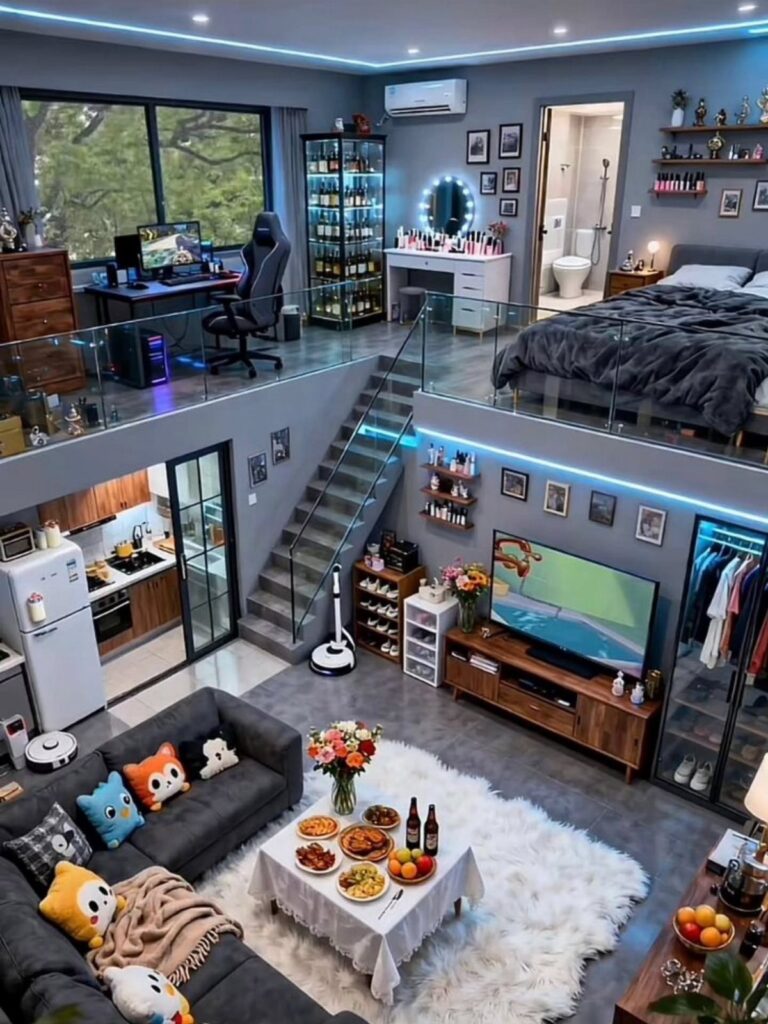
A loft game room can run from a strip of LED lighting behind a desk to a full medieval tavern with stone walls and custom-built digital game tables.
If you’re working with sloped attic ceilings, the angle decides where the desk goes, how you light the space, and whether a full arcade cabinet will clear the roofline.
The ideas here split between video game stations, classic arcade and pinball layouts, board game lounges, tabletop RPG spaces, and themed builds that lean into one style all the way through.
1. Ambient LED Lighting
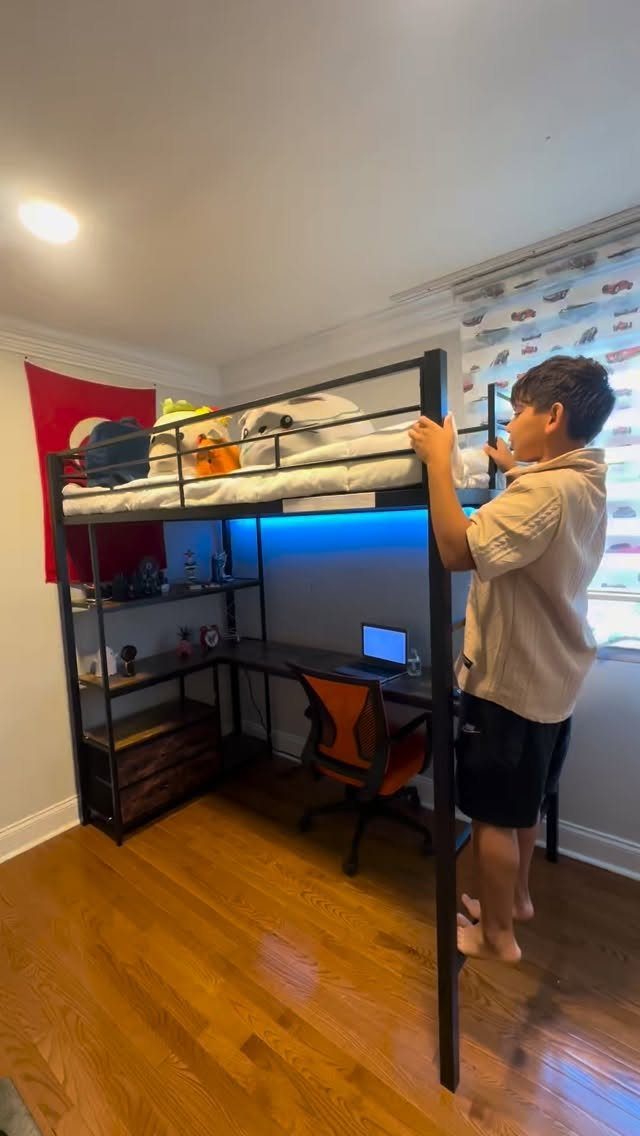
LED strips behind a desk or along a bed frame change the feel of a loft game room without taking any floor space. A basic roll runs cheap and cuts to fit wherever you need light.
Peel-and-stick backing makes installation quick.
Most kits come with a remote so you can switch colors depending on the game or the mood. If the loft doubles as a bedroom, dimming the LEDs at night keeps the setup flexible.
2. Corner Bar Cabinet
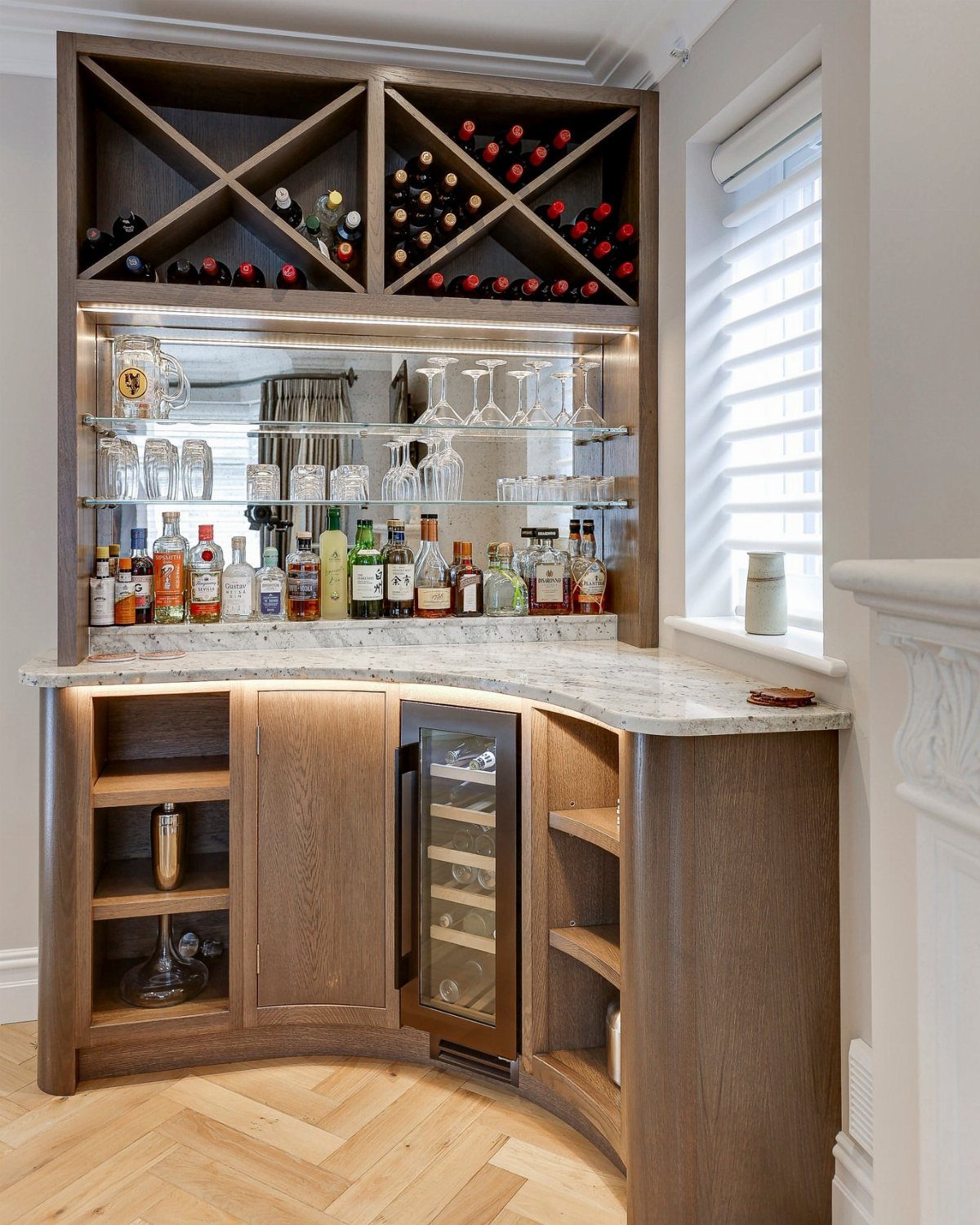
A corner cabinet puts a bar where you would otherwise have dead space. Built-in wine racks and open shelving for glassware keep everything visible, and a countertop gives you room to pour drinks during game nights.
If you are working with an existing corner, measure the height and width first.
Most custom builds use a base cabinet with a marble or butcher block top. Adding a small wine cooler underneath keeps bottles at the right temperature without needing a separate fridge.
3. Mounted TV + Gaming Console Combo
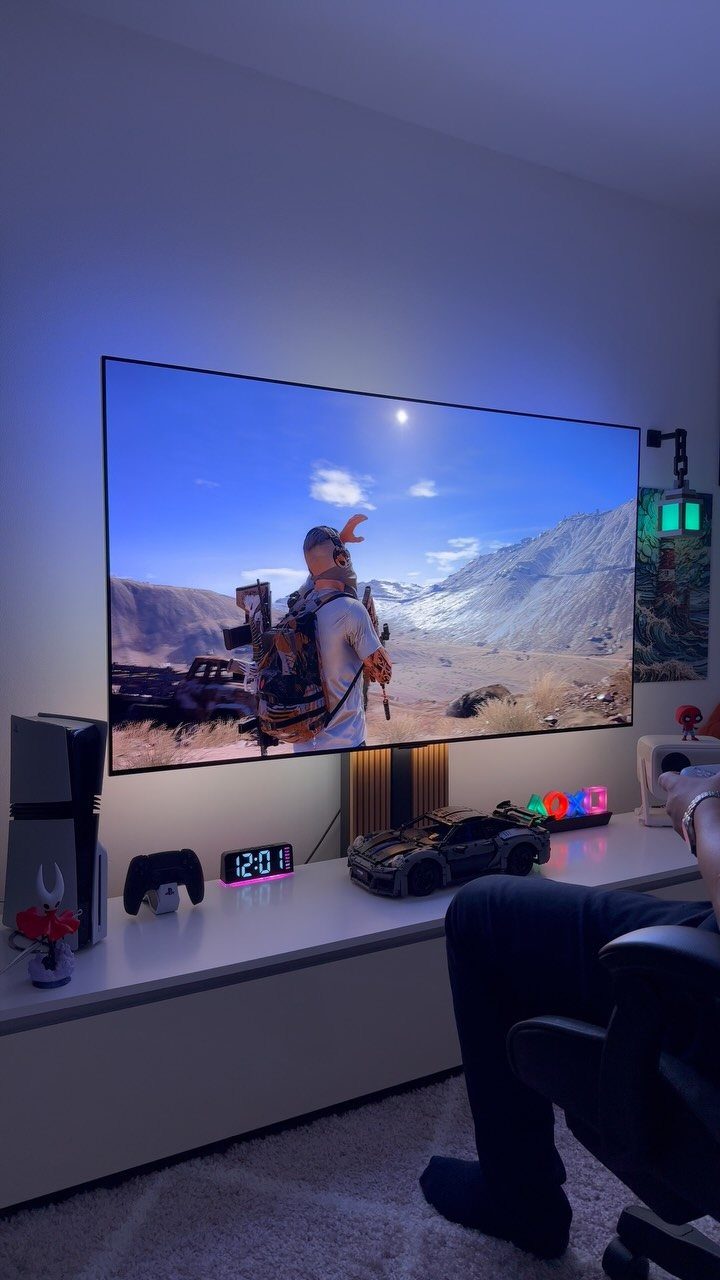
Mounting the TV on the wall and using a low console for the gaming hardware keeps cables off the floor and frees up space for seating.
A floating shelf or a simple white table holds the console, controllers, and a few accessories without crowding the screen.
Run the HDMI and power cables through the wall if you can.
Most mounts cost less than a night out and handle screens of any size you’d put in a loft. Position the console table close enough that controller cables reach, or stick with wireless for less clutter.
This setup works best when the TV sits at eye level from your usual gaming chair.
4. Indoor Mini Golf Course
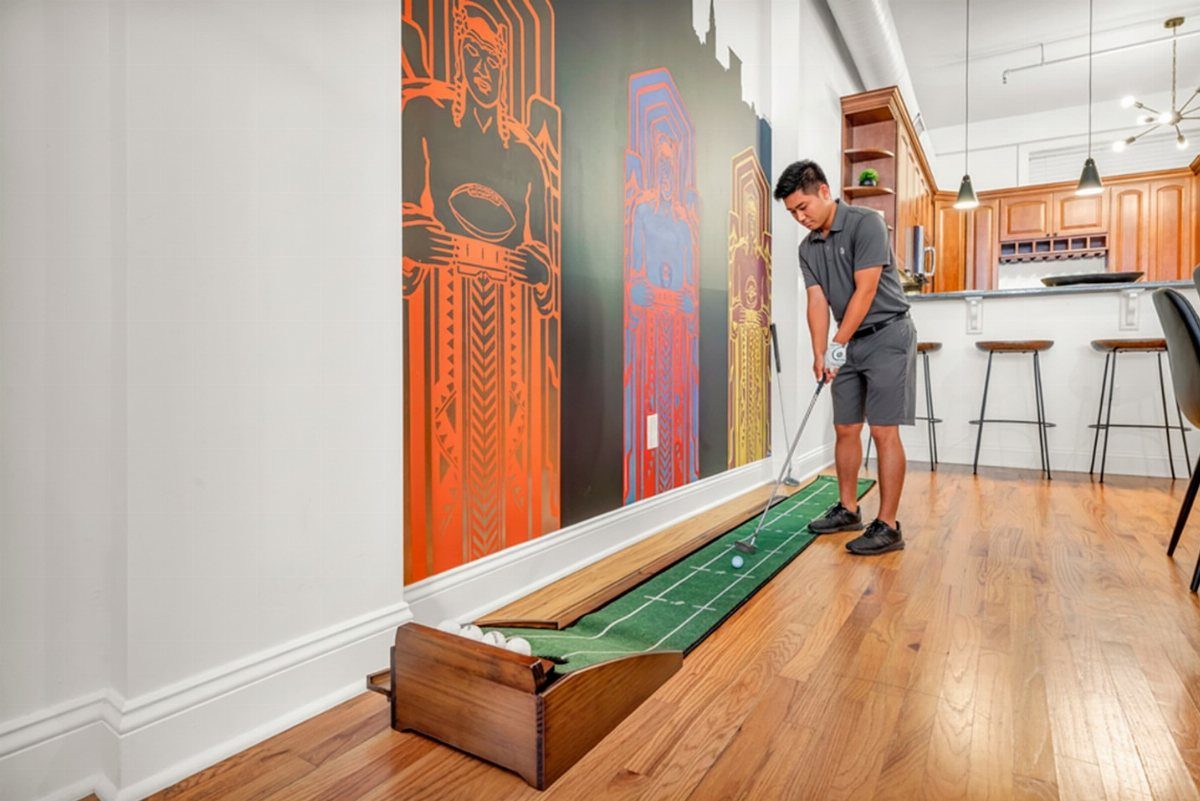
A custom putting green with a few obstacles turns an open stretch of loft floor into a mini golf course.
Artificial turf comes in rolls, and you can shape the track with angled boards or low risers to add curves and elevation changes.
Most outdoor turf works indoors if it has a low pile height. Cut it to fit your space, then secure the edges with adhesive or double-sided tape.
Drilling shallow holes at the end of each track gives you actual cups to aim for. You can buy regulation cups or just use a wide PVC pipe cut to size.
If the loft is carpeted, lay a plywood base first so the ball rolls smoothly.
5. Sports Bar-Style Basement
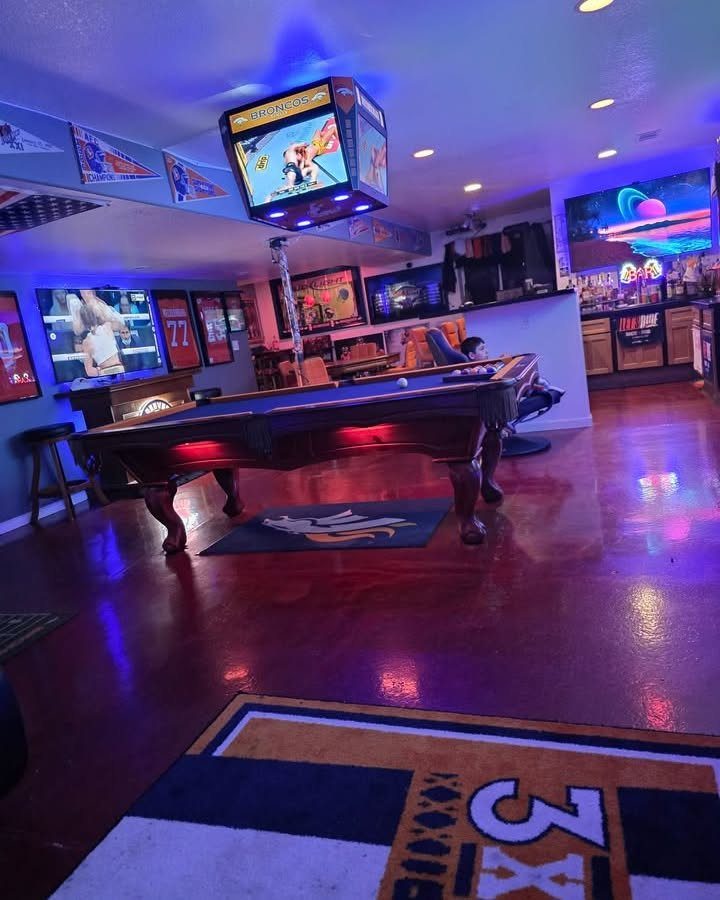
Pool table, bar, arcade cabinet, and sports memorabilia in one room gives you the full sports bar experience at home.
A bar along one wall keeps drinks and snacks within reach.
Open shelving for bottles and glassware cuts cost compared to a full cabinet. Hanging an arcade machine on the wall saves floor space, and framed jerseys or signed photos fill the walls without blocking the action.
Lighting matters here. A pendant or billiard light over the table keeps the playing surface bright, and dimmer switches on the other fixtures set the mood.
One home trend that’s continuously growing in popularity is that of the elevated game room.
6. Game Room with Antique Finds
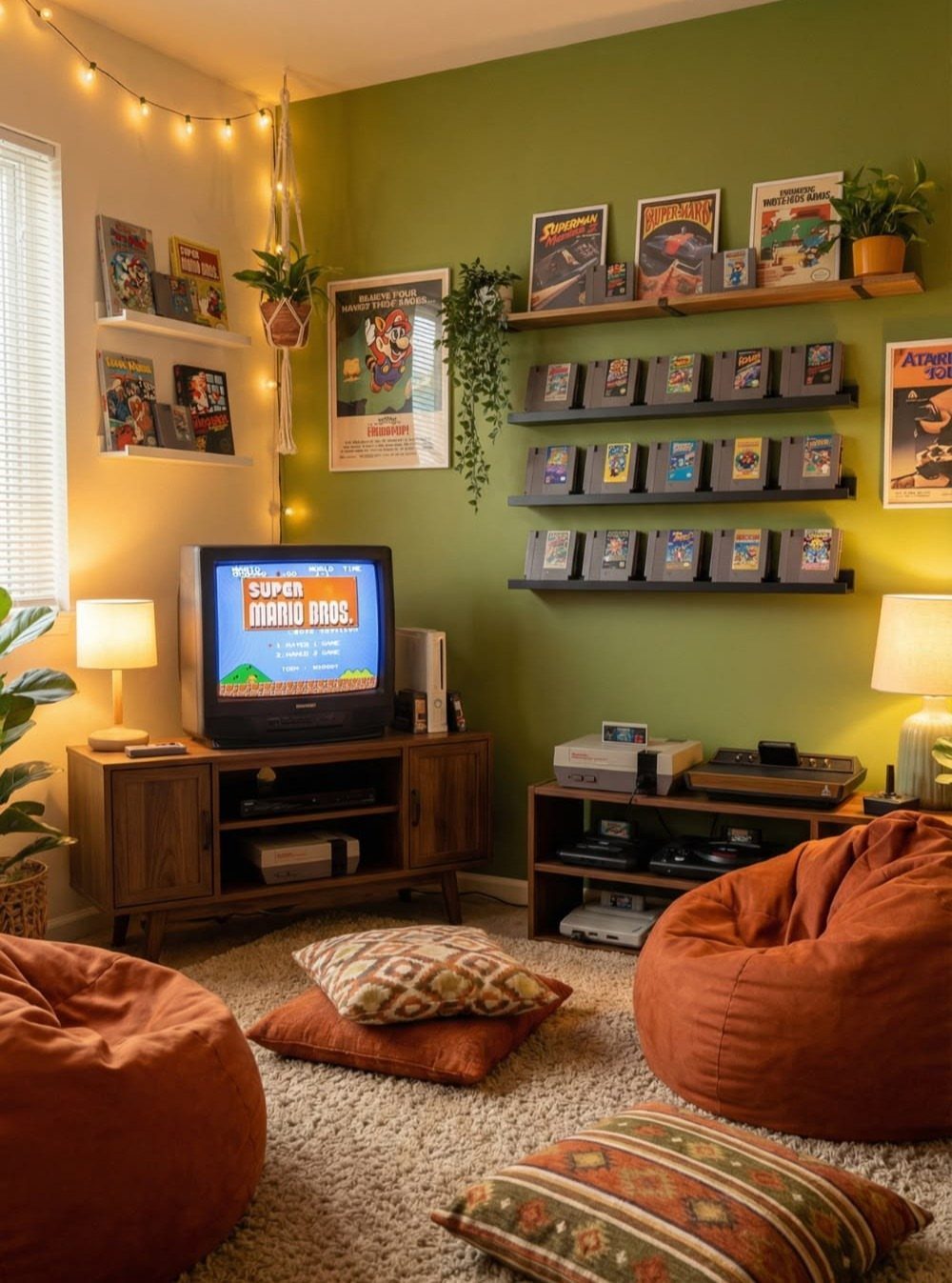
Vintage consoles and a CRT television turn a loft game room into a collection space.
The chunky picture and scan lines of a CRT are the only way to play cartridge-era games the way they were designed, and finding one at a thrift shop or garage sale usually costs less than dinner for two.
Bean bag chairs and a shag rug keep the seating casual and low to the floor, which suits the scale of older TVs.
Shelving for cartridges and controllers keeps the collection visible and organized. If you are mixing modern and retro hardware, keep them on separate shelves so the cables do not tangle.
Green walls like these make the setup feel more like an arcade than a living room.
7. Loft Bed with Gaming Setup
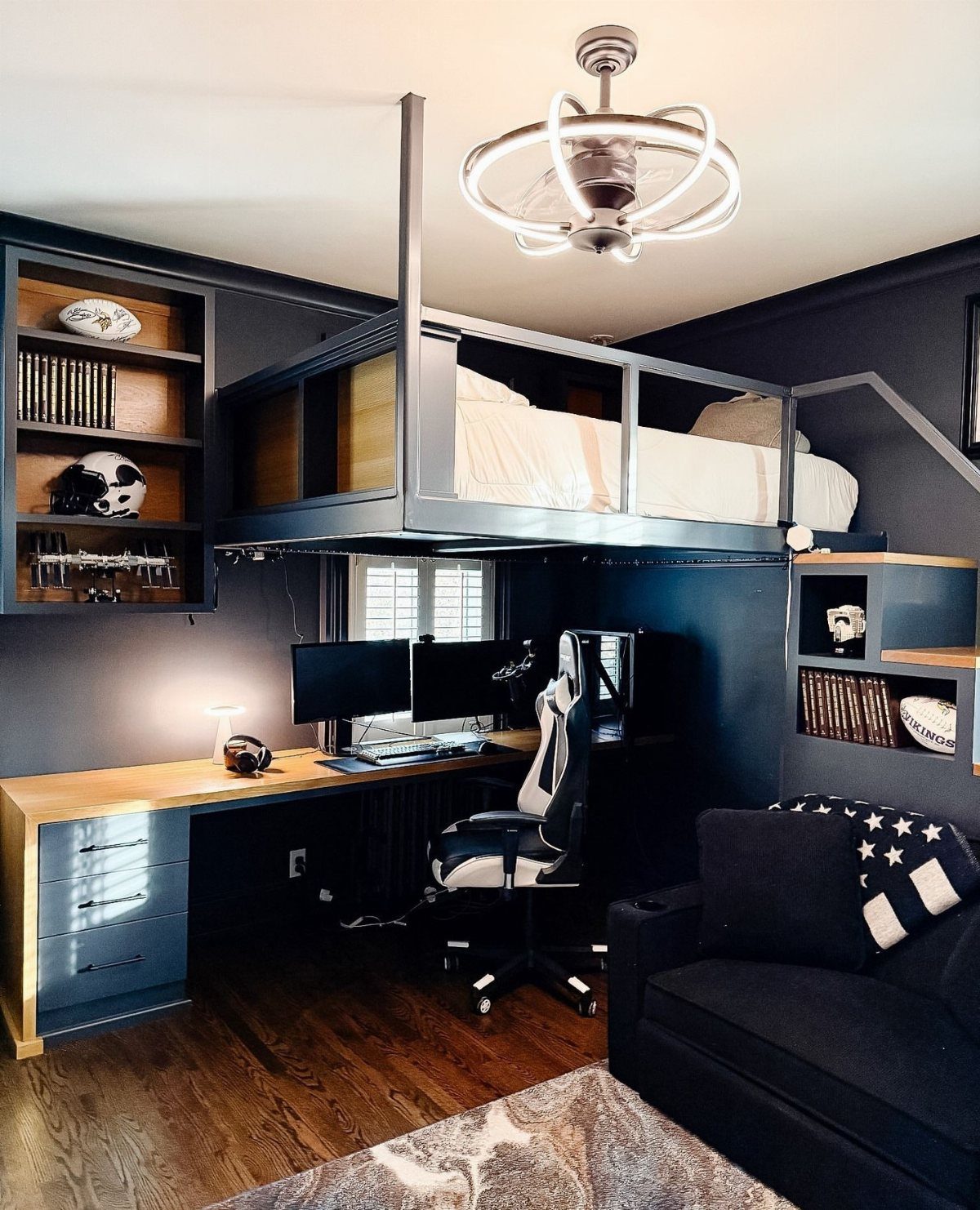
Raising the bed on a loft frame opens up floor space underneath for a full gaming desk and chair. This setup makes the room functional when square footage is tight.
Measure the height first to make sure your chair and desk fit comfortably underneath.
Dual monitors fit on most standard desks. Run cables up through the bed frame or along the wall to keep them out of the way.
8. Multi-Level Loft Game Lounge
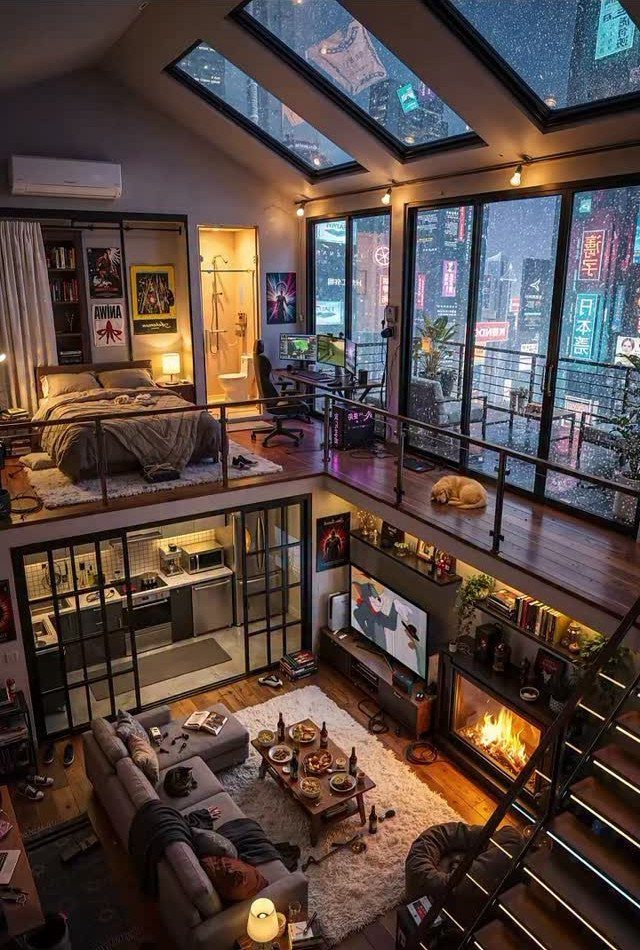
Splitting the loft into upper and lower zones gives you a gaming area and a lounge without walls. The desk goes upstairs where the light is better, and the lower level handles seating and a fireplace.
Industrial lofts with open floor plans and high ceilings make this work best.
If you have exposed beams or brick, leave them visible. The materials do the decorating.
Position the desk near an outlet and a window. Natural light during the day cuts down on glare, and the view makes long gaming sessions less isolating.
9. Loft Arcade Pinball Alley
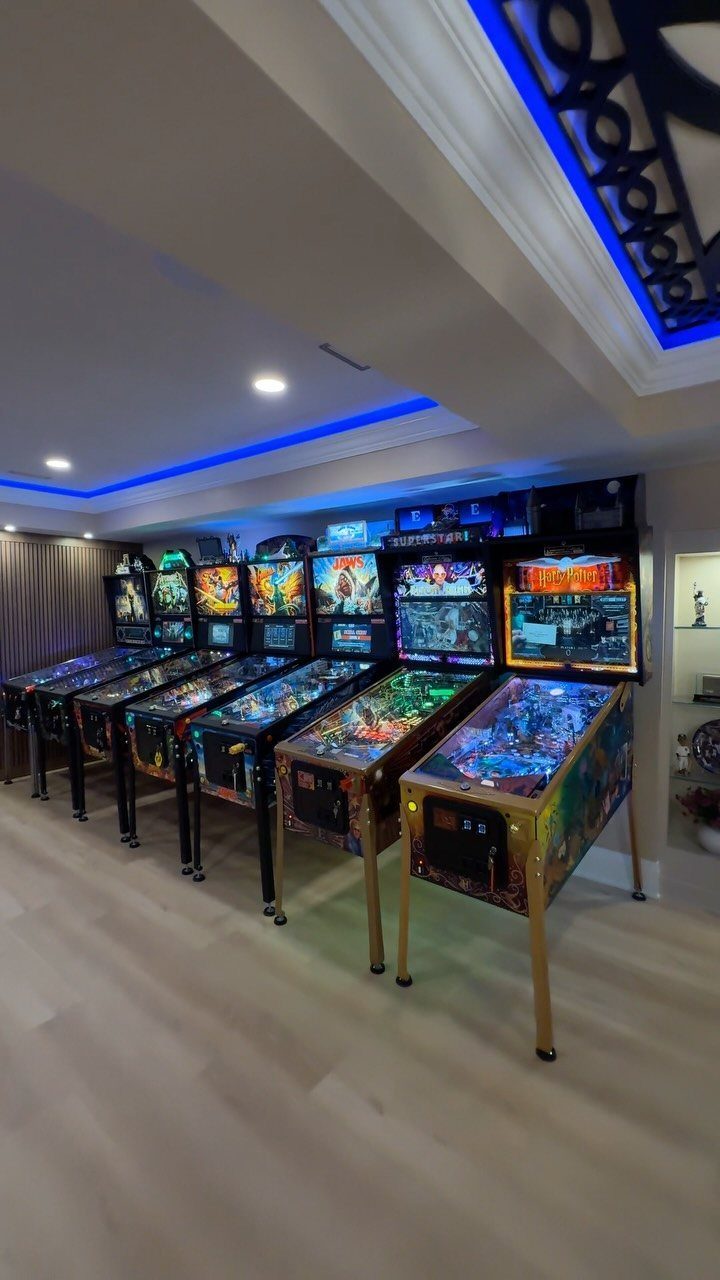
Lining up pinball machines against one wall turns the loft into an arcade without taking over the whole room.
Blue LED strips along the ceiling add color without competing with the machine displays. Most pinball machines run on standard 120V outlets, but check the power draw if you are plugging several into one circuit.
Buy used machines if the budget is tight. Refurbished models cost half what new ones do.
10. Video Game Media Library Shelf
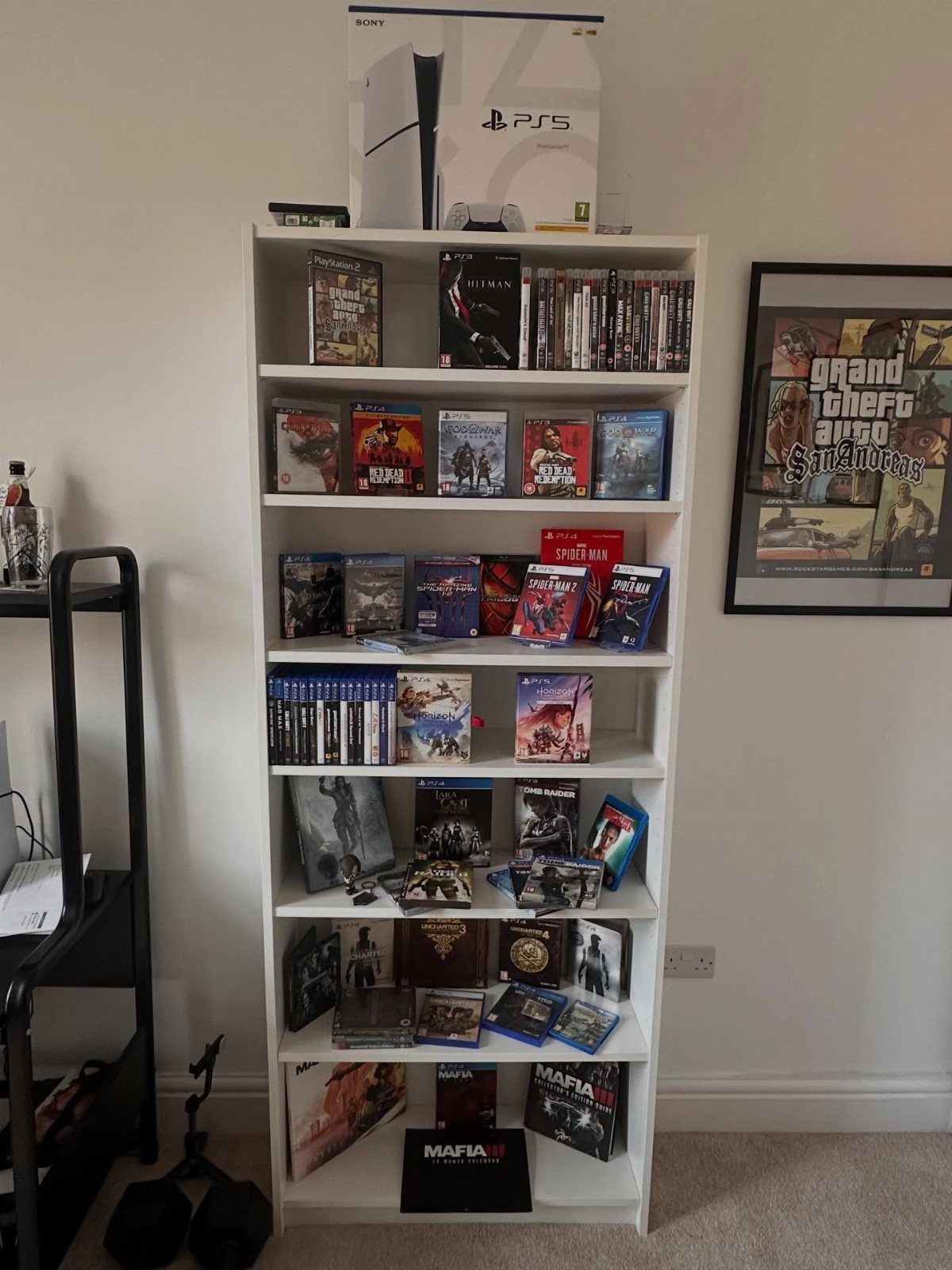
A bookshelf stacked with physical game cases and console boxes keeps your collection visible and organized. White shelving makes the colorful spines and artwork stand out.
Most open shelves work fine as long as the spacing fits standard game cases.
Game cases vary in height, so adjust the shelves to fit what you own. If you are storing consoles on top, make sure the shelf can hold the weight.
Grouping games by console or series makes it easier to find what you want.
11. Rustic Medieval Loft Tabletop Lounge
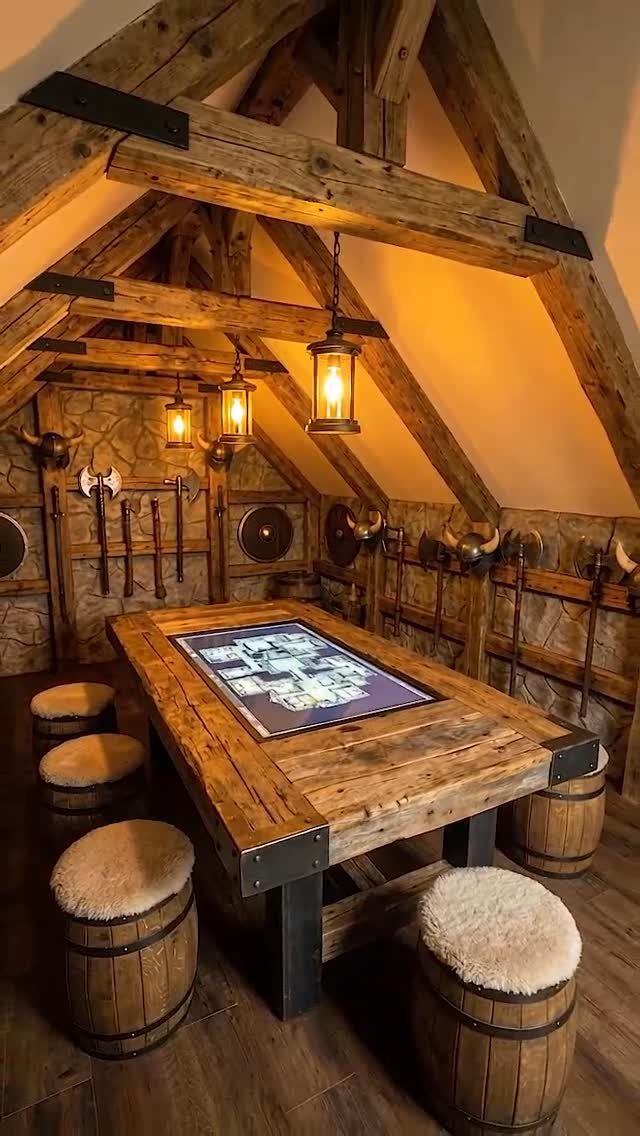
Stone walls, exposed beams, and lantern-style lighting give this loft a medieval tavern look.
The gaming table at the center has a digital screen built into the surface, which works for D&D maps, board games, or anything else that needs a shared display.
Barrel stools with faux fur on top keep the seating in theme and lower than standard dining chairs. The lower height works better around a game table where players lean in.
If you are building this in an attic, insulation matters. Stone and wood look great but do not hold heat.
12. Attic Sloped Ceiling PC Nook
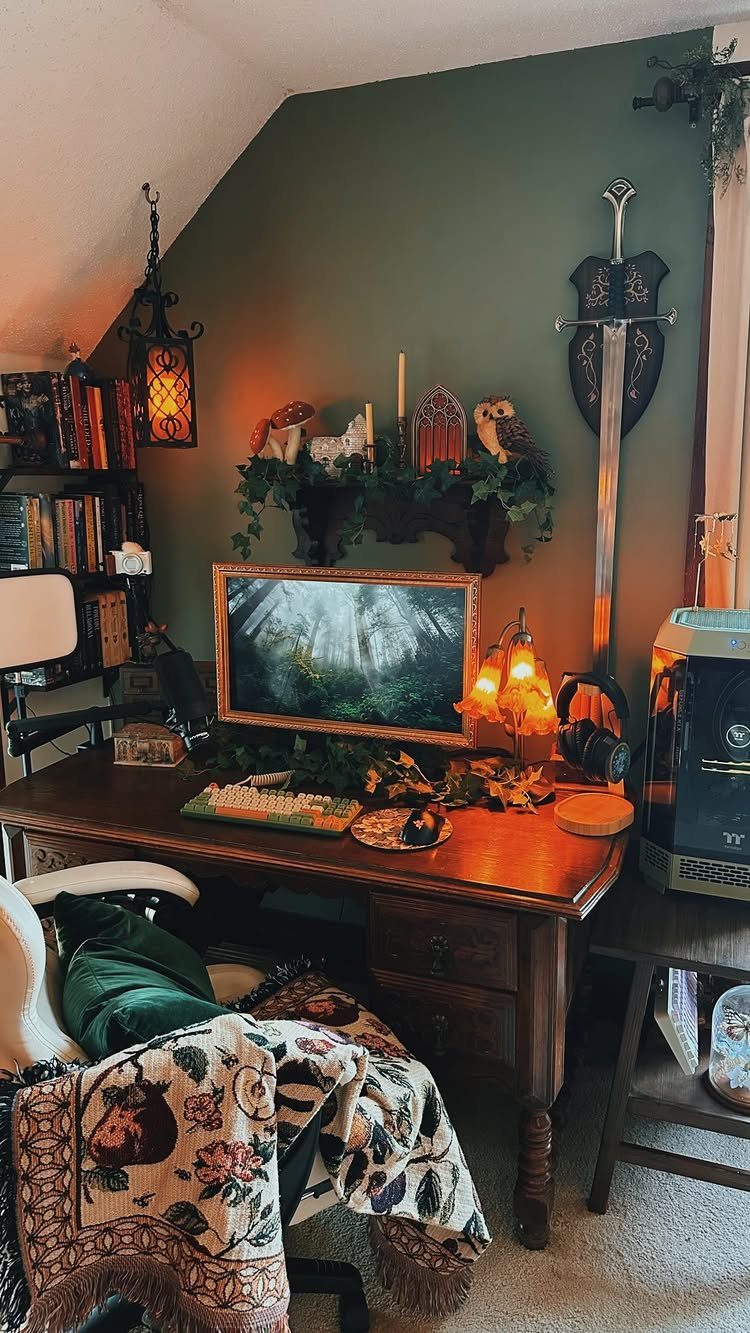
Sloped ceilings in an attic make a gaming nook feel more enclosed without adding walls. A wooden desk under the slope keeps the setup compact, and a mounted sword or fantasy decor makes the space feel intentional.
Green walls warm up the room and cut down on glare from the screen. Position the desk so the monitor sits perpendicular to the slope, not directly under it, or you will hit your head when you stand up.
Warm lighting from a desk lamp or string lights softens the space at night.
13. Convertible Board Game Table
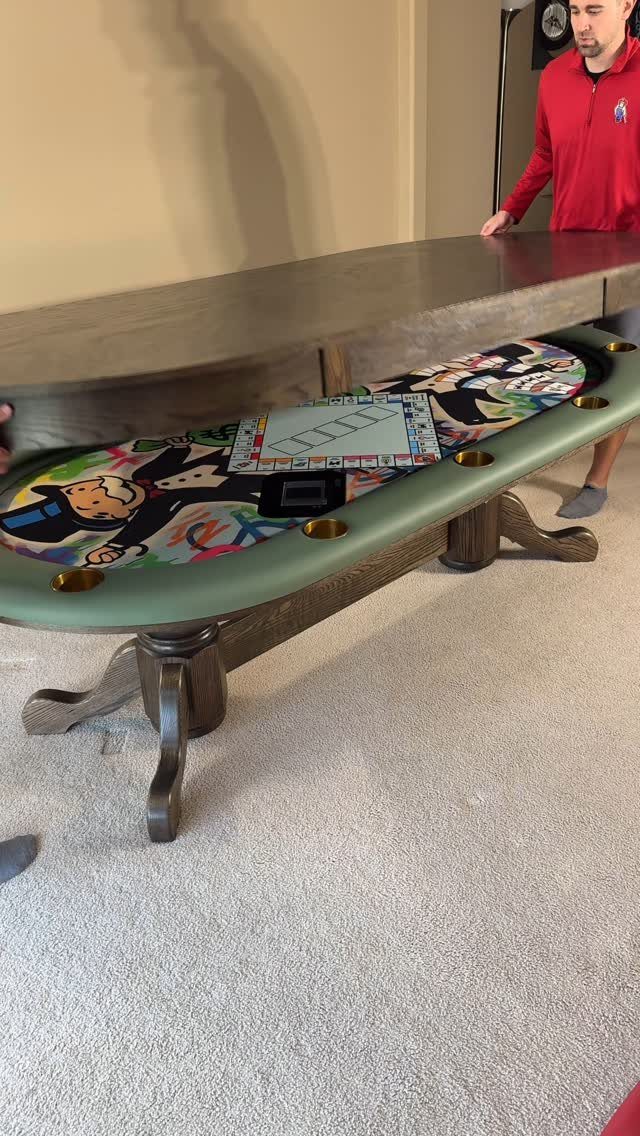
The tabletop lifts off to show a recessed gaming well with cup holders built into the rim. The top sits on without fasteners, so you can pull it when game night starts and drop it back when you’re done.
If you are buying one, check the depth of the gaming well.
The well holds cards and dice in place during play so nothing slides into the middle of the board. Felt or speed cloth works best for the surface since pieces glide easily and cards shuffle without catching.
Building one yourself means cutting a recess into the table frame and adding a separate topper that sits flush with the edges.
14. Retro CRT Gaming Station
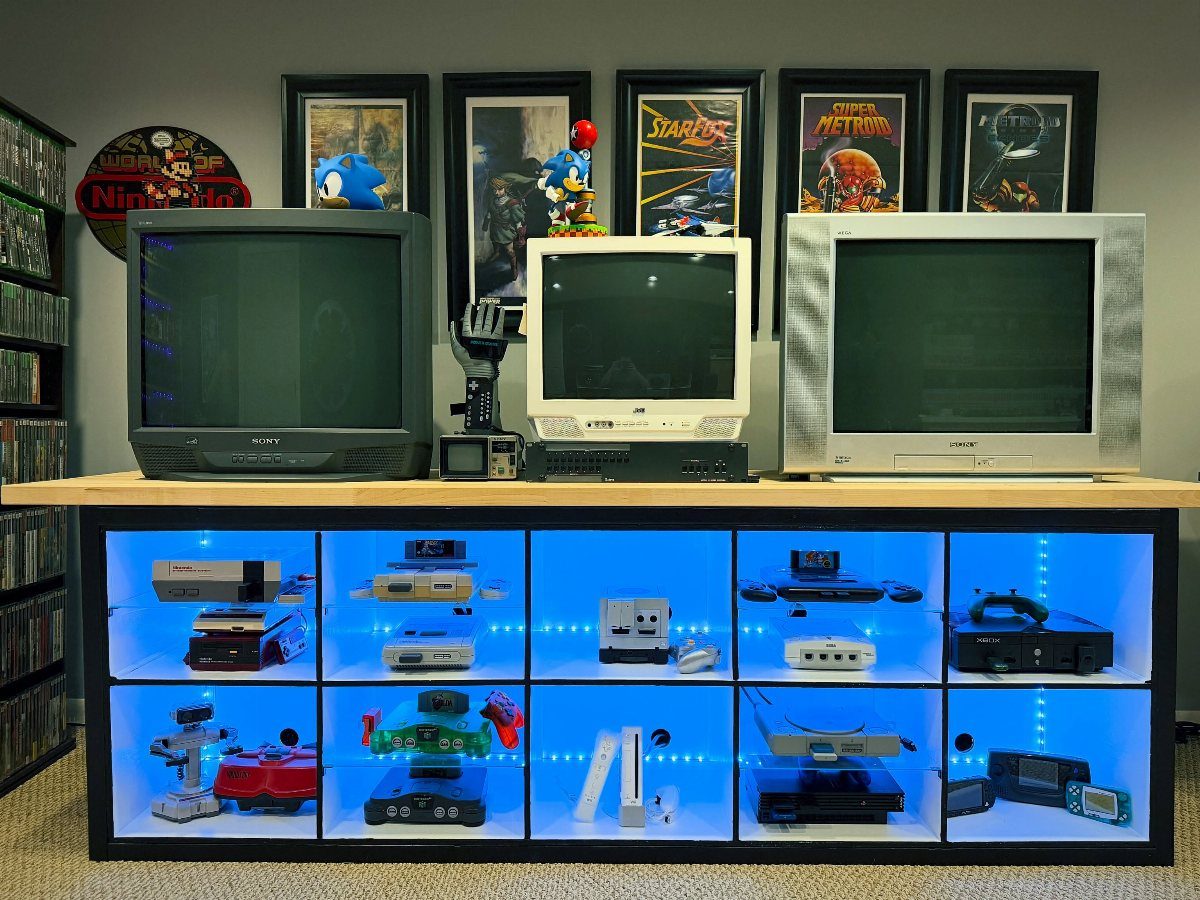
Multiple CRT monitors stacked on a counter above a lit display cabinet keep vintage consoles and screens organized in one spot. Interior lighting lets you see the console collection without glare bouncing off the screen.
CRT sets are heavy enough that the shelf needs solid lumber or bracing underneath. Screw a power strip to the back of the cabinet so every console stays plugged in and ready to switch on.
Position the screens at sitting height. CRTs throw the clearest picture when your eyes are level with the middle of the screen, not looking down at it.
Lighting Tips for Game Rooms
Recessed ceiling lights handle the general illumination, and a pendant over the table focuses light where you need it most.
Drum or cone pendants work well above pool tables or board game setups since they cast a wide circle without glare.
Dimmer switches let you adjust brightness depending on the activity. Bright light works for detailed board games, and lower levels suit video games or movie nights.
If the game room shares space with another room, keep the lighting style consistent. The same finish on fixtures and similar bulb color temperatures tie the spaces together without making the transition obvious.
LED strips along baseboards or behind screens add accent lighting that does not wash out the TV. Backlit shelving highlights a game collection without adding glare to the playing surface.
Neon signs or arcade-style lights add personality but should not be the only light source in the room.
Space Optimization Strategies
Wall-mounted tables fold down when you need them and tuck away when you do not. This keeps the floor open for other uses without sacrificing a full game surface.
Vertical storage racks hold board games, controllers, and accessories on the wall instead of on shelves that eat up square footage. Pegboards with hooks and bins adjust as your collection changes.
A storage bench under a window or along one wall doubles as seating during game nights and hides less-used games inside. Ottoman cubes with lift-off tops do the same thing and move where you need them.
When space is tight, pick one or two anchor games like a foosball table or a skee-ball machine and let those pieces shape how you arrange everything else. Trying to fit everything in makes the room feel cluttered.
If the room handles multiple activities, divide it into separate zones. A bistro table in one corner handles card games, and a sofa with built-in shelves in another keeps the space ready for reading or relaxing between rounds.
Creating a Theme
A theme shapes every choice in the room, from paint color to furniture style.
A rustic medieval setup means stone textures, dark wood, and lantern lighting. A retro arcade calls for bright colors, neon signs, and vintage consoles on display.
Pick a theme that matches the games you play most. If the room centers on board games and tabletop RPGs, lean into tavern or library aesthetics with warm wood tones and low seating.
If it is built for video games, industrial or modern themes with clean lines and minimal decor keep the focus on the screens.
Consistency matters more than budget. Matching the furniture finish, keeping wall colors in the same family, and using similar hardware on shelves and cabinets make the theme feel intentional instead of pieced together.
Frequently Asked Questions
What should I do with my loft?
A loft works well as a game room when you add comfortable seating and a gaming table or console setup.
The open floor plan and high ceilings give you room for multiple zones, like a desk area upstairs and a lounge with seating below.
Sloped ceilings work in your favor when you run the gaming setup along the low wall, where the compressed height makes the nook feel intentional instead of awkward.
How much does it cost to build a game room?
Budget for furniture and the games themselves, since both shape what the room can do. A basic LED strip costs less than a night out, and used pinball machines run half the price of new ones.
Starting with one or two anchor pieces like a pool table or arcade cabinet and building around them keeps costs manageable while still giving the room a clear purpose.
What are some fun games I can play in a room?
Board games, card games, and tabletop RPGs work well around a convertible game table with a recessed well for pieces.
Video games on a mounted TV with a low console setup keep cables off the floor and leave room for seating.
Arcade games like pinball or a custom indoor mini golf course with artificial turf and angled obstacles fill larger spaces.
How to make your garage a game room?
A Murphy-style table or folding chairs let you reclaim half the floor in about 10 seconds.
Storage that pulls double duty as a seat or footrest keeps the clutter down without eating into the square footage you actually use. Dividing the space into separate zones for different activities makes a shared room feel less cluttered.






