
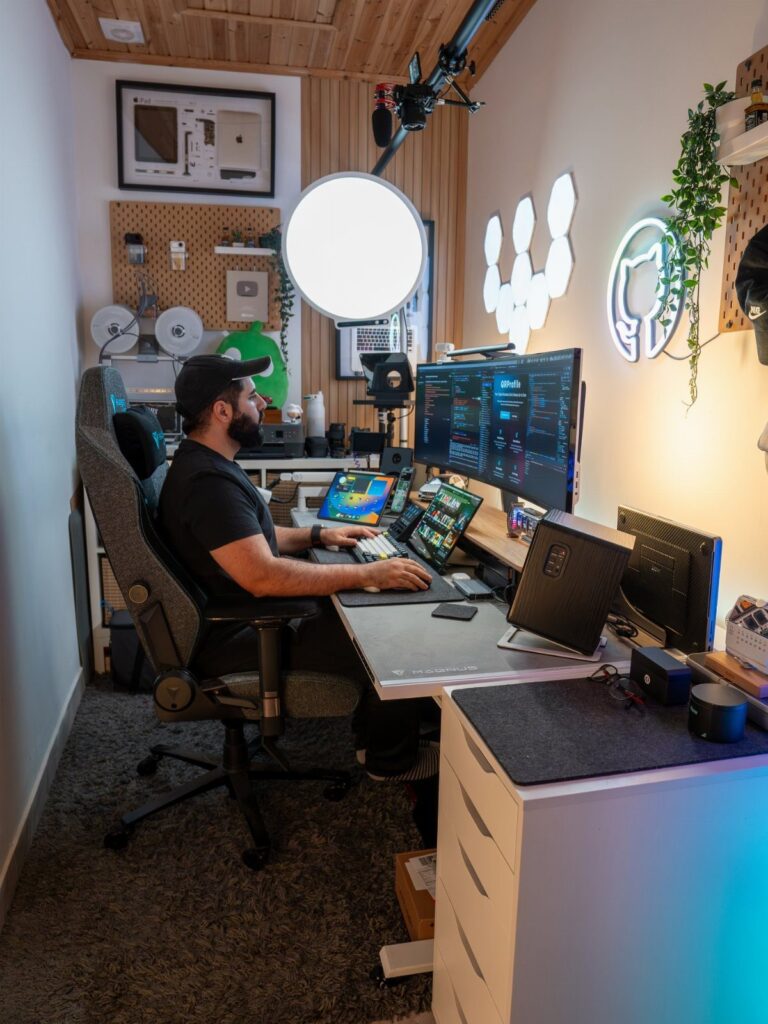
A corner desk fits spaces from compact triangular nooks to full L-shaped builds, and you can set one up with a ready-made curved desk, a vintage find, or a minimal built-in unit that spans two walls.
The choice comes down to how much linear desk space you need on each leg: a laptop and a notebook fit a compact curved model, while dual monitors and video gear require an L that gives each screen clearance and keeps cable runs short.
1. Vintage Corner Glow-Up
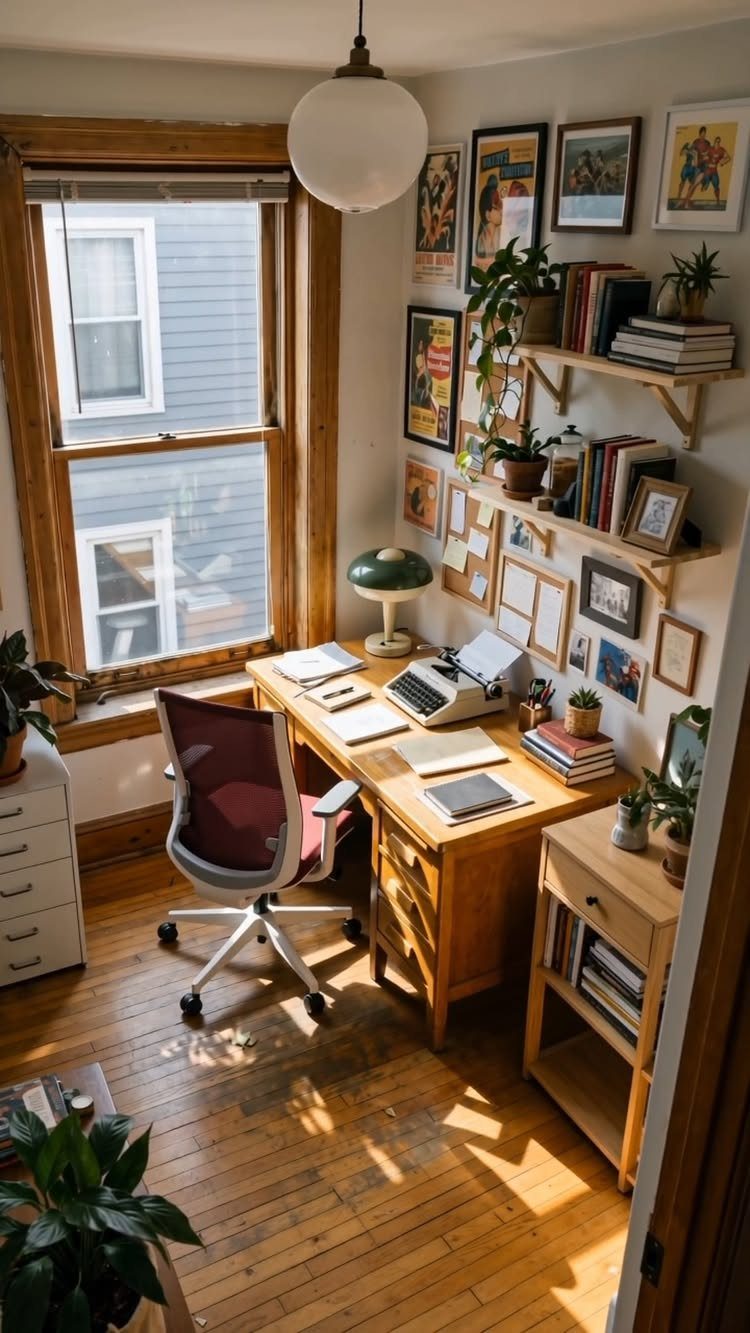
A corner desk by a window with enough room for a lamp, a typewriter, and a handful of books on the wall turns a tight spot into a place you want to sit.
The wood tone warms the space without filling it, and the vertical shelves keep the floor clear.
If you’re working with a corner that only fits a small desk, mount floating shelves above it instead of buying a hutch.
The white chair keeps the footprint light. Swap it for any office chair that rolls if you need the mobility, but a stationary chair often reads cleaner in a small nook.
No matter how small your space, these desks will help reinvent your office so you aren’t bound to working from your couch for the rest of time.
— BuzzFeed
2. Content Creator Command Center
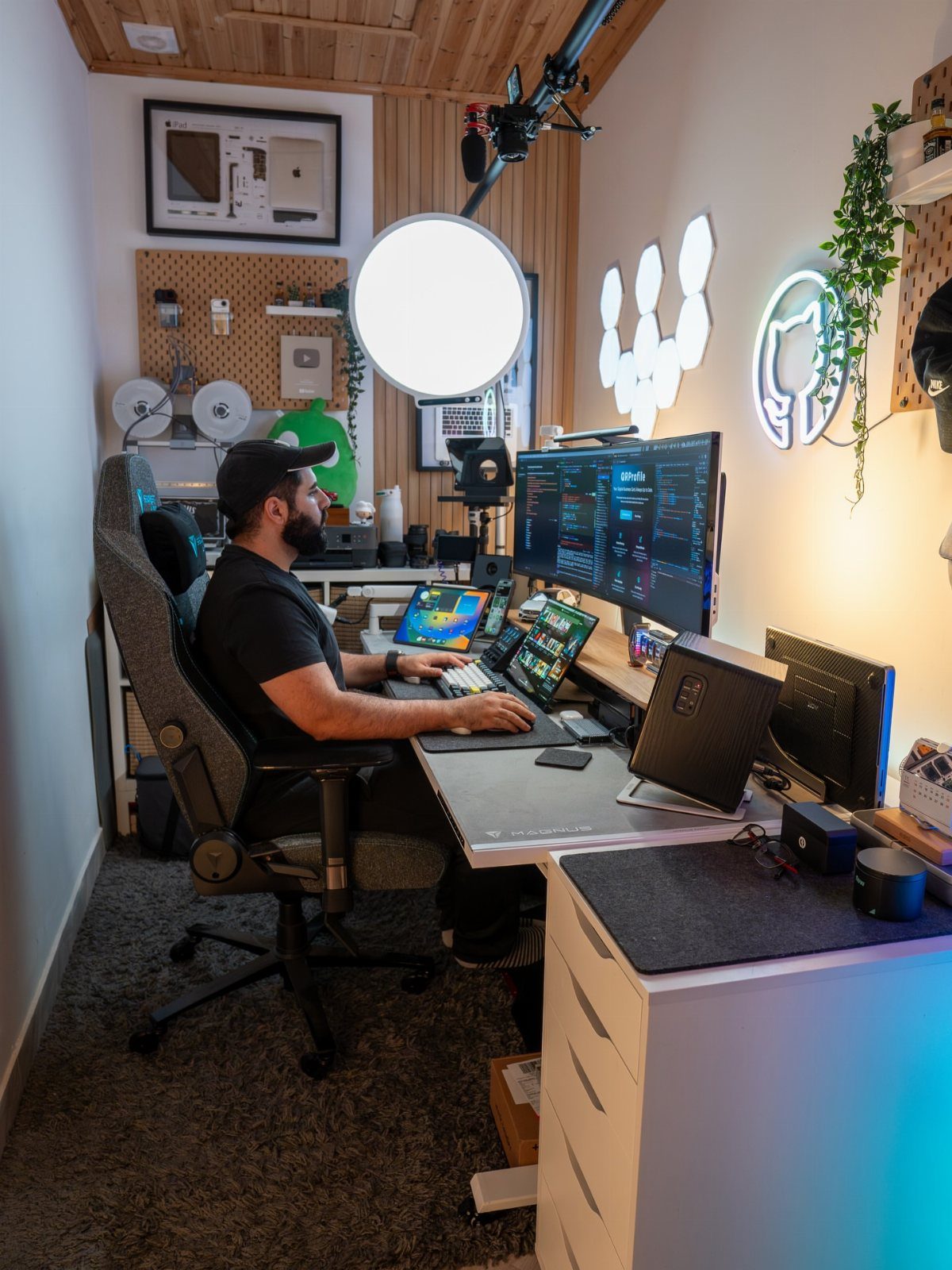
An L-shaped desk that wraps 2 walls holds multiple monitors, a tablet stand, ring lights, and enough surface area to record and edit without shuffling gear between tasks.
This setup fits someone who needs screen space and dedicated lighting in one fixed spot.
The white desk surface bounces light, which helps when you’re on camera. Dark wood panels behind the setup add contrast without competing for attention, and a neon sign mounted above the desk works as both decor and a branded backdrop.
If you’re setting up for video or streaming, plan for enough linear desk space on each leg of the L so monitors and lighting arms have clearance.
Cable management clips screwed to the underside of the desk keep power cords out of frame.
3. Minimal Built-In Corner Desk
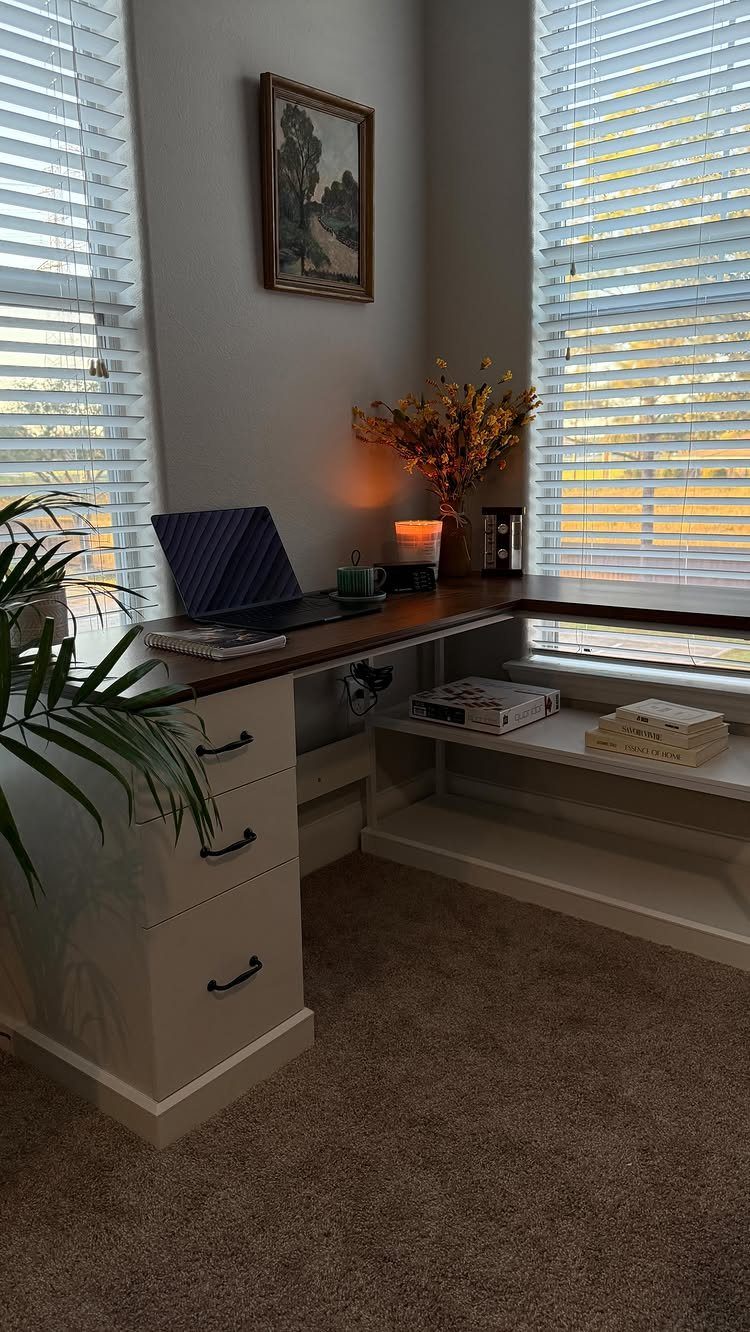
A built-in desk that spans the corner between 2 windows uses the wall structure to create storage on both sides, with drawers below and open shelving above.
The dark wood countertop contrasts with white cabinetry, and the whole unit reads as permanent furniture rather than an add-on.
This approach works best if you’re ready to commit to the layout.
You’re building around the windows, so moving the desk later means patching and repainting. You get a desk that fits the room exactly and uses vertical space you wouldn’t otherwise reach.
If you’re hiring it out, expect framing and cabinet install to take a full day. Doing it yourself with stock cabinets and a butcher block countertop brings the cost down but still requires a miter saw and a level.
4. Cozy Modern Writing Nook
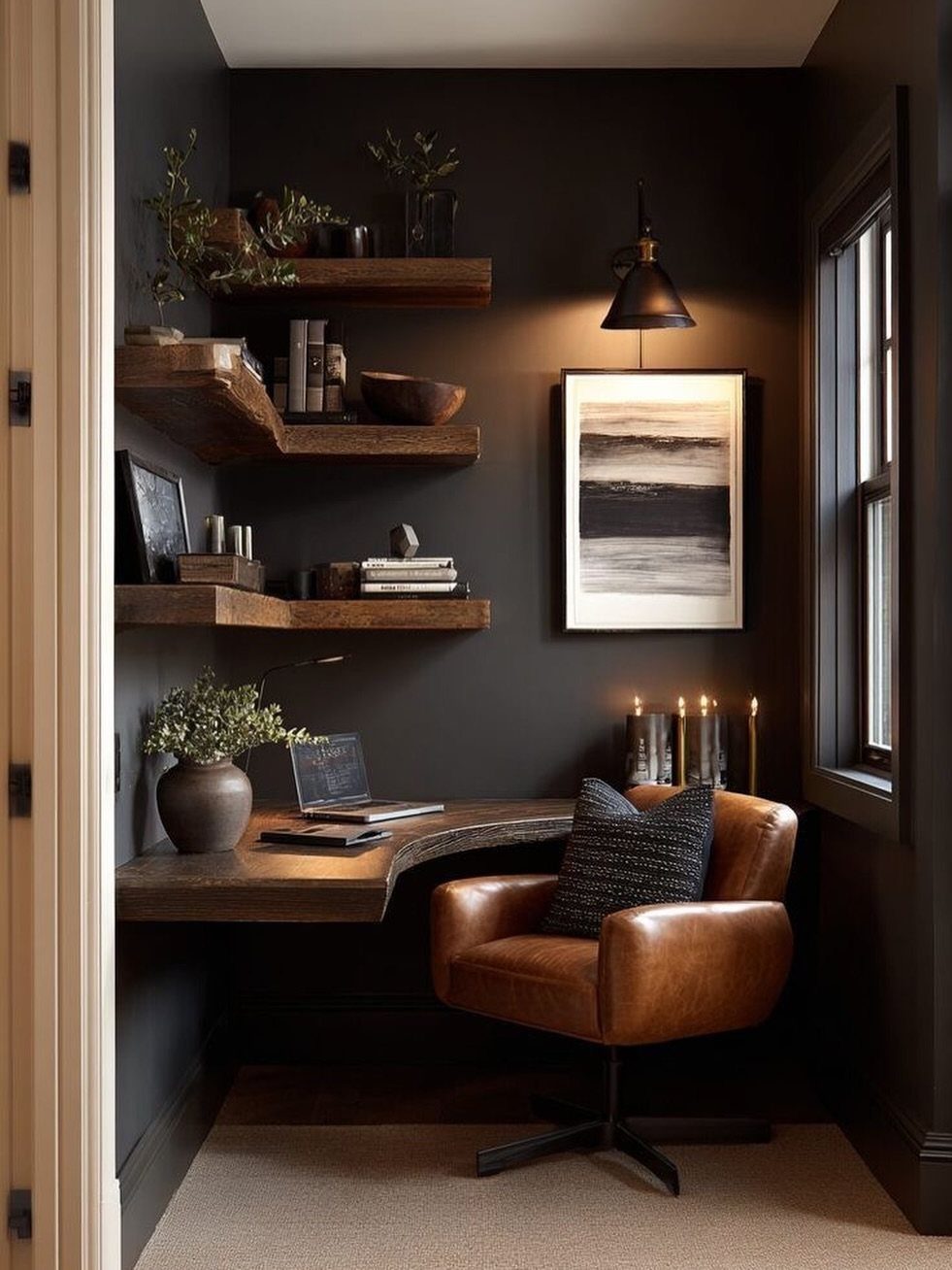
A curved desk softens the corner without losing surface area, and the dark grey walls make the wood grain stand out.
Floating shelves above the desk hold a few books and a framed print, and a single desk lamp provides task lighting in a compact footprint.
The leather chair adds texture in a room that stays simple otherwise. A matte finish hides imperfections better than satin, but it also shows scuffs if you bump the wall with the chair.
This setup skips overhead storage, so it suits someone who works with a laptop and a few reference books rather than file boxes or binders.
The open shelves keep the sight lines clear, which matters when the walls close in visually.
5. Bright All-White Study Nook
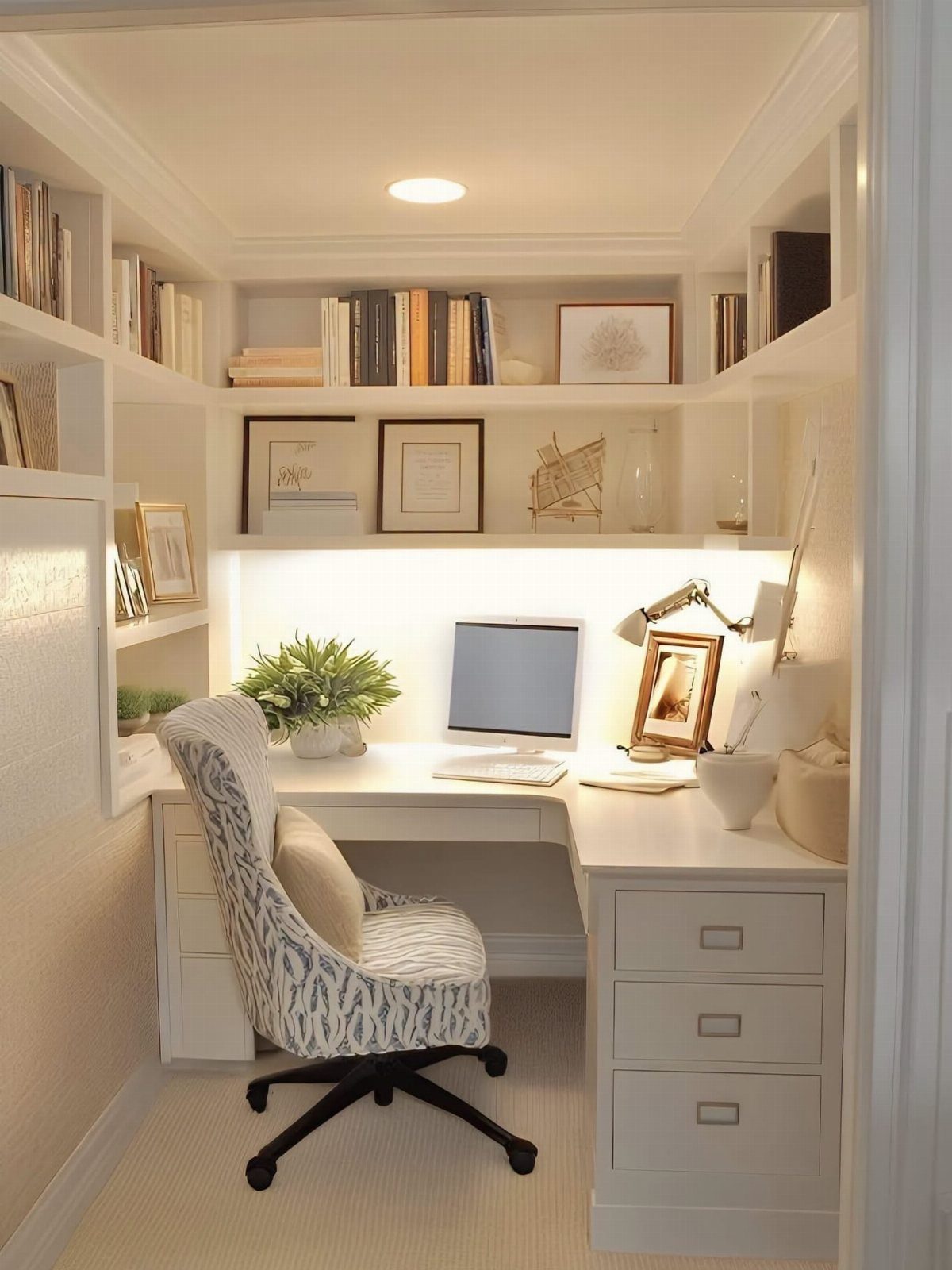
An all-white built-in desk with an L-shaped counter, closed lower cabinets, and open shelving above fills a narrow nook without making it feel smaller.
Painting the shelves, desk, and trim the same color erases the seams and makes the whole unit read as one piece.
If you’re building this from scratch, use plywood for the desktop so it doesn’t sag under a monitor and keyboard, and prime every surface before the topcoat because raw wood tannins bleed through white paint.
The open shelves keep books and small frames visible, but they also collect dust. If you’d rather have closed storage, swap the upper shelves for cabinet doors on soft-close hinges.
6. Fluted Curved Corner Desk
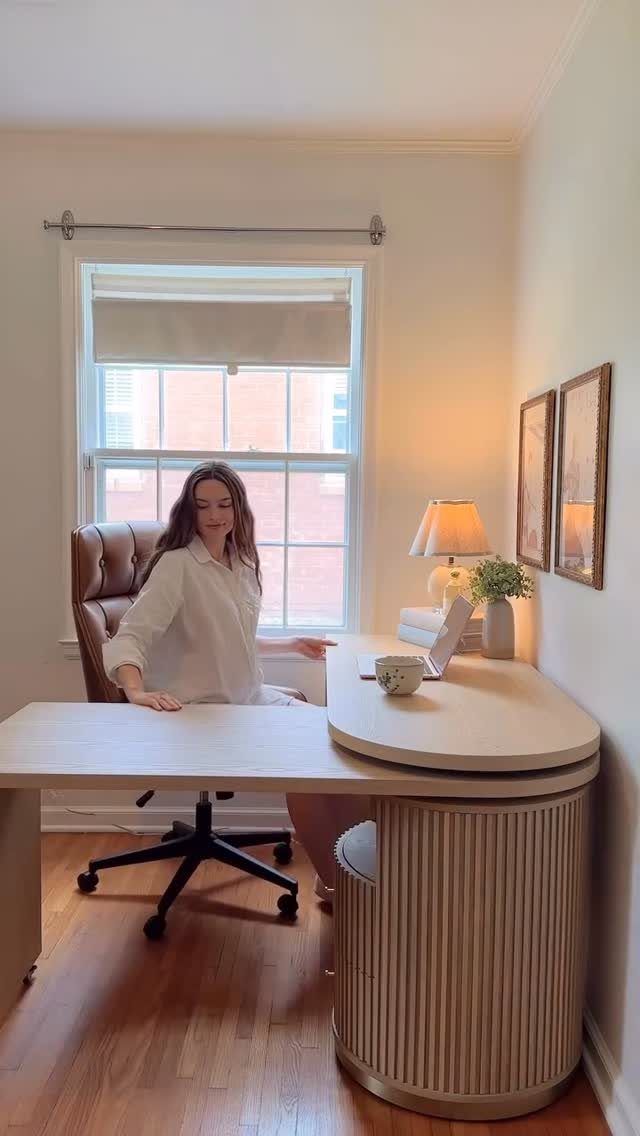
A curved corner desk with a fluted base sits lighter in the room than a standard rectangular desk because the rounded edge follows the flow of foot traffic.
The light wood finish and the vertical grooves along the front panel add detail without weight, and the sunlight from the window keeps the space bright.
Fluted furniture has gotten popular, and you can buy ready-made desks with this profile from several brands now.
If you’re building it, you’ll need to rout or apply decorative molding to get the grooves, which adds time but not difficult cuts.
The curved shape gives you more usable desktop near the corner while keeping the outer edges from sticking out into the room.
That trade works well in a small office where you need to walk past the desk to reach a closet or a door.
7. Window Nook with Sherpa Chair
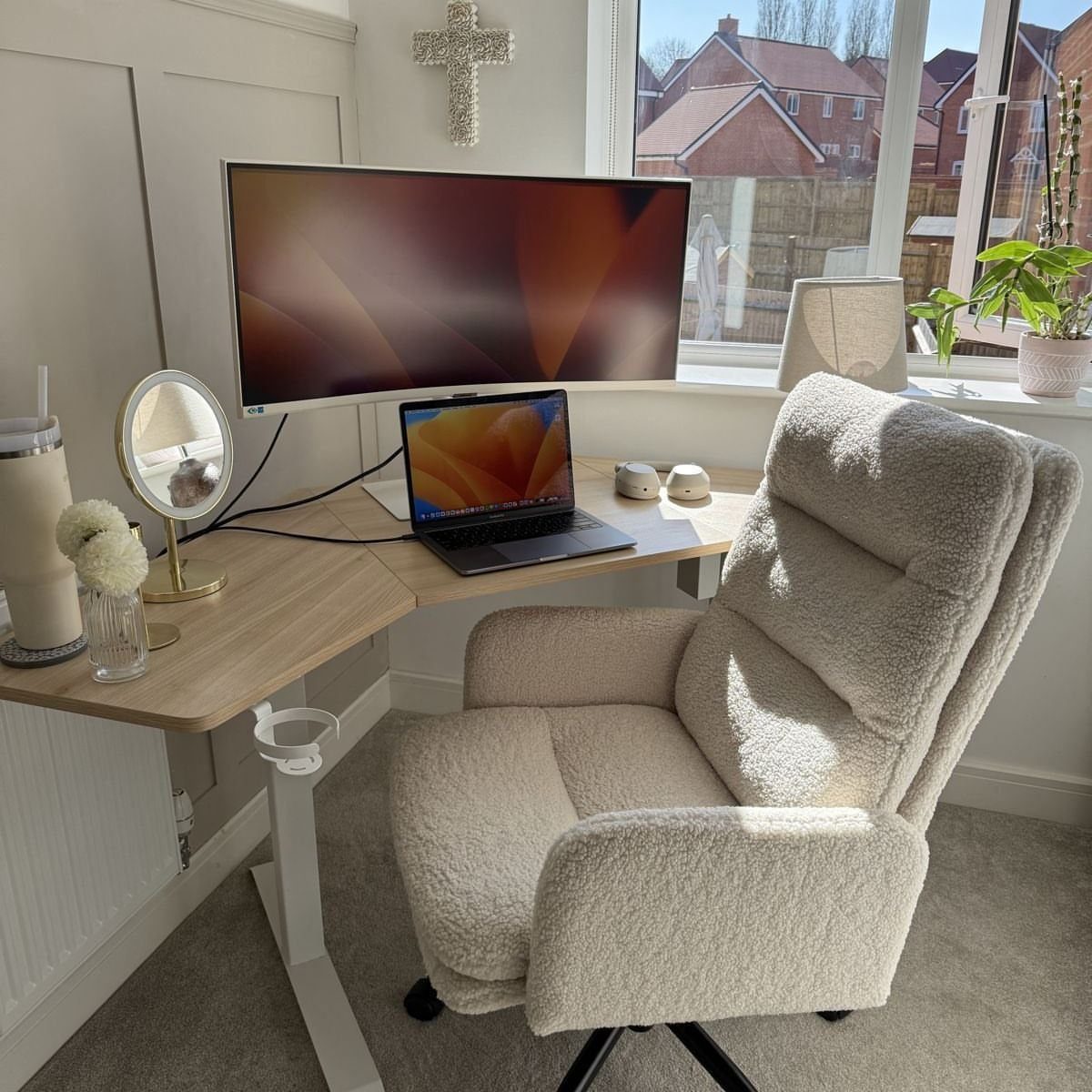
A light wood desk tucked into a corner by the window pairs clean lines with a sherpa office chair that looks more lounge than task.
The white fabric softens the setup visually, and the cross on the wall keeps the nook simple.
Sherpa chairs sit plush but they trap heat.
If you run warm or live somewhere without air conditioning, stick with mesh or a breathable fabric. The fluffy look works better in a home office where comfort wins over all-day endurance.
The monitor on a stand frees up desk surface and lifts the screen to a comfortable viewing height without an arm mount.
8. LED Backlit Corner Desk Unit
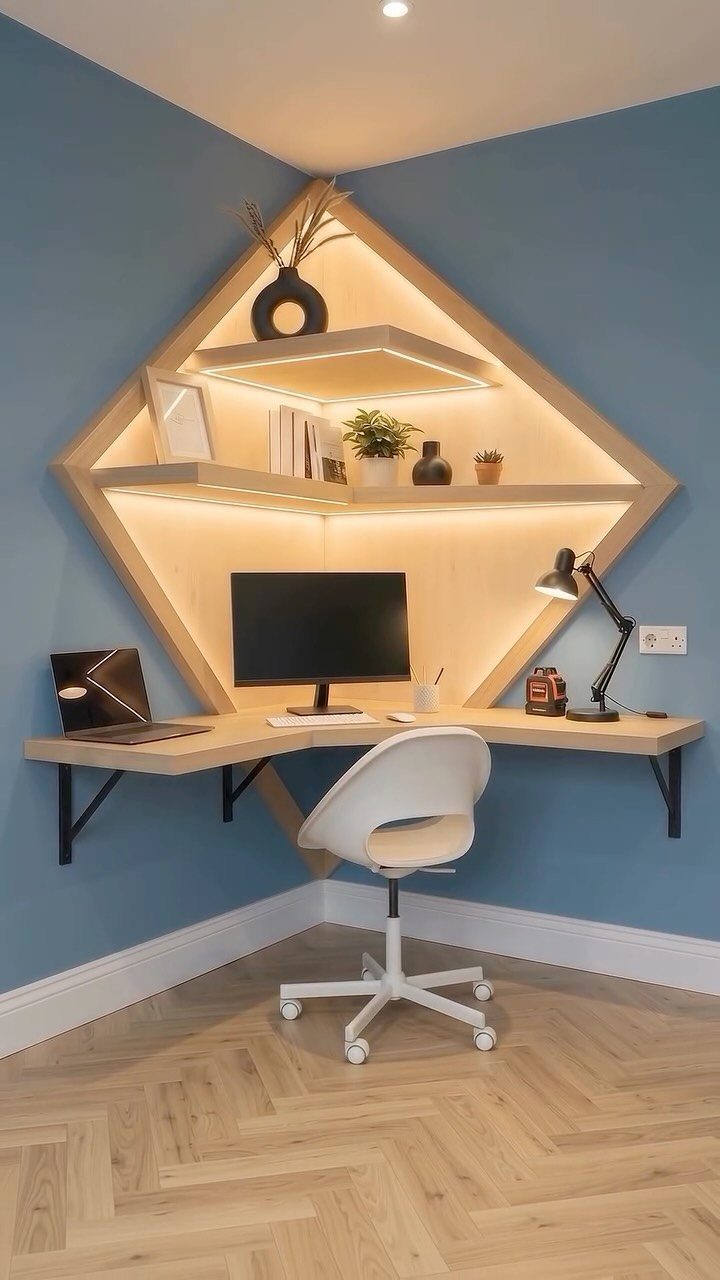
Built-in LED strips under the shelves cast warm light down onto the desk surface, which beats an overhead fixture when you’re working at night.
The navy walls pull the room in, and the light wood unit pops against them without needing white paint.
If you’re installing your own LED strips, get ones with adhesive backing and measure the shelf depth first so the light lands on the desk instead of spilling onto the wall.
A plug-in dimmer switch lets you dial the brightness down when the window light is enough.
The herringbone floor adds pattern below the desk, which stops the space from reading too flat when one wall is solid color.
9. Warm-Lit Neon Plant Setup
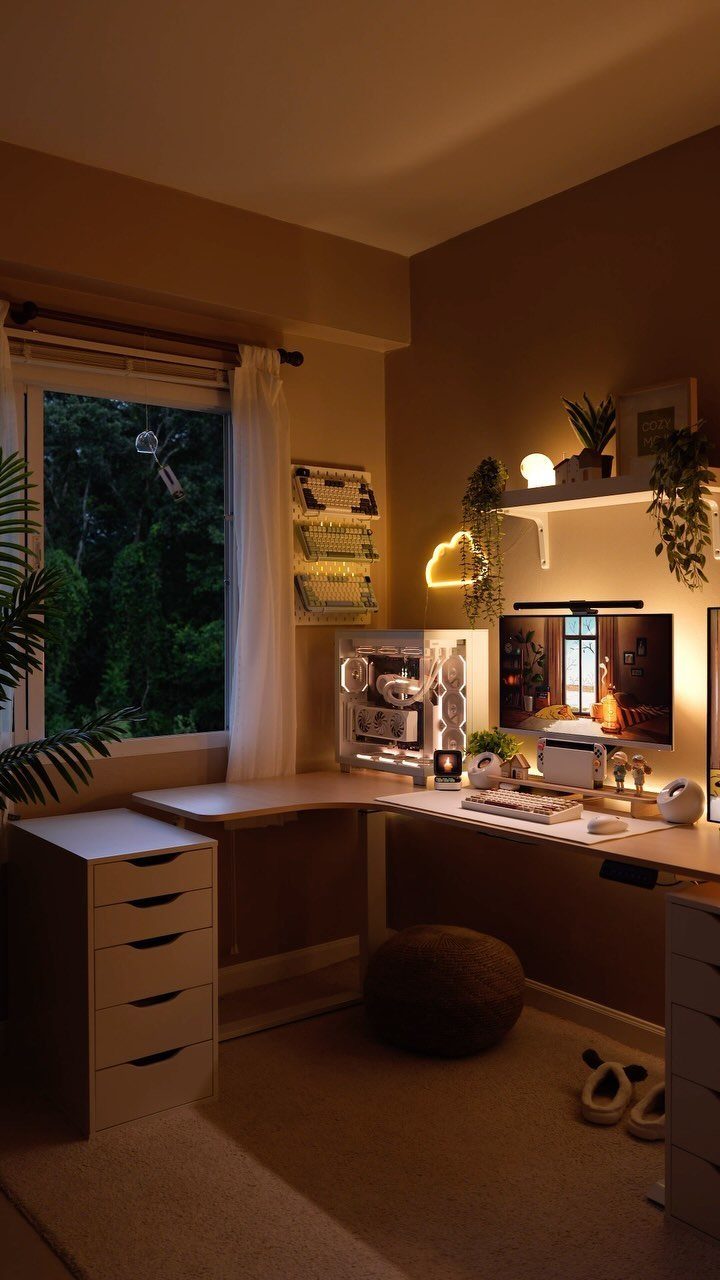
The neon cloud sign mounted above the desk throws soft colored light across the wall, and the potted plants clustered on the desk and windowsill add green without needing a dedicated shelf.
The brown pouf on the floor works as overflow seating or a footrest when you lean back.
Neon signs pull more watts than you’d expect. Budget for a dedicated outlet or a heavy-duty power strip if you’re adding one to a setup that already runs a desktop PC and two monitors.
10. Natural Grain Wood Corner Desk
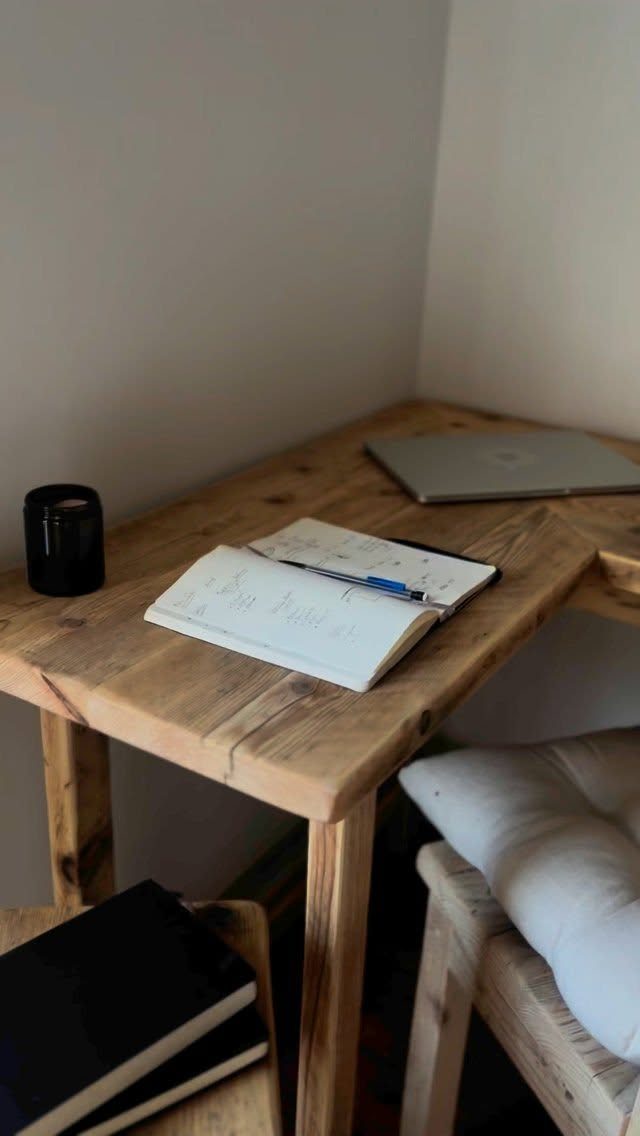
Natural grain wood with visible knots and color variation gives the desk character that laminate can’t match.
The notebook and pen sitting next to the laptop suggest this corner is for handwritten notes as much as screen work, and the white cushioned chair adds comfort without a full office chair frame.
Solid wood desks cost more than veneer or particle board, but they take a beating and still look good. If you’re buying one, check that the grain runs lengthwise across the desktop so it’s less likely to warp.
A corner desk this size fits a laptop and a few items but not dual monitors, so it suits someone working off one screen.
11. Shared L-Shaped Couple Workspace
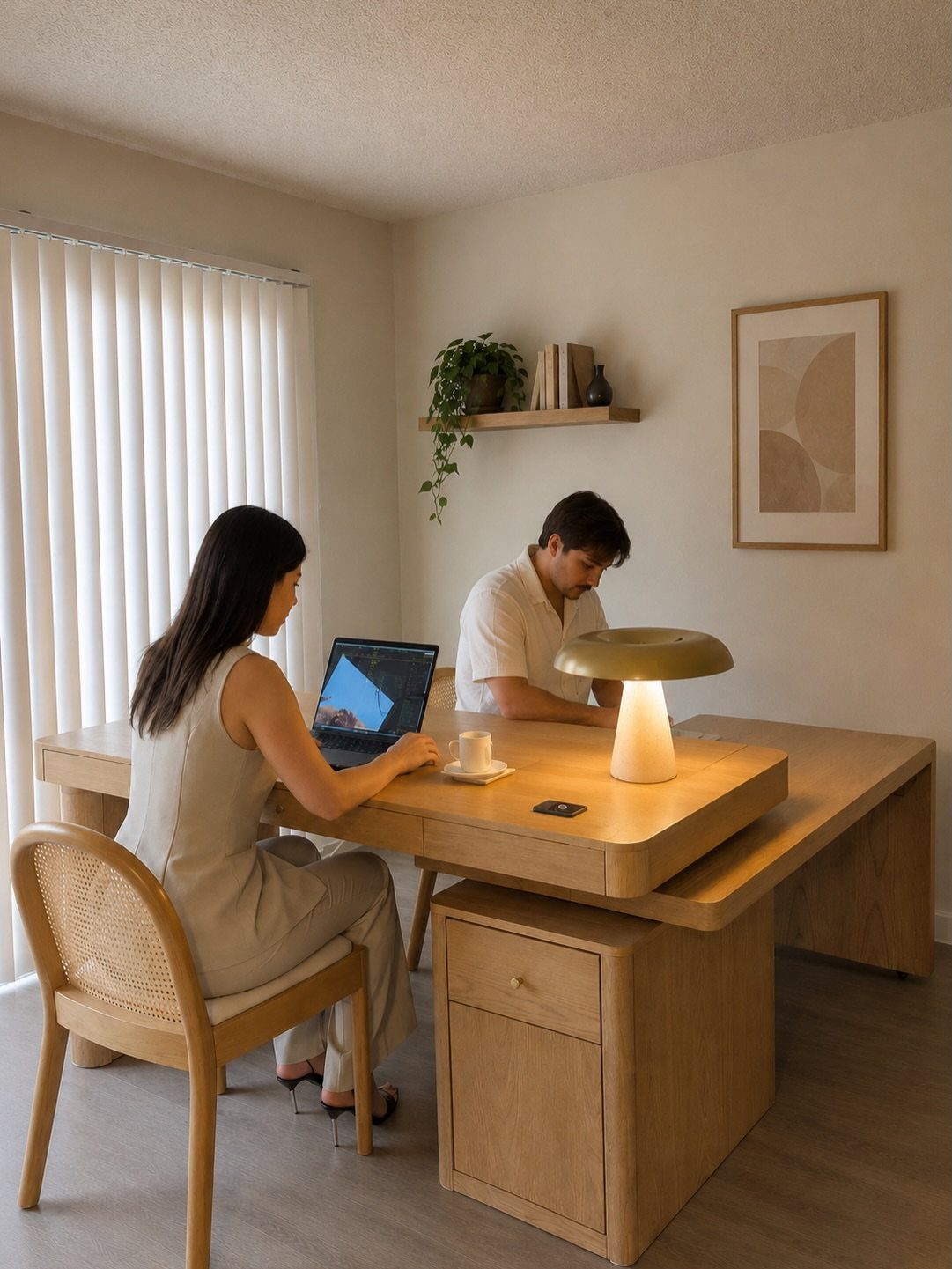
Two chairs at one L-shaped desk turn a corner into a shared workspace where both people have their own side. The light wood keeps the footprint open, and the window behind the desk provides natural light for both monitors.
If you’re setting this up, measure each person’s reach so the corner doesn’t force someone into an awkward angle.
Enough linear desk space per person keeps elbows from colliding, and a shared power strip mounted to the underside of the desk cuts down on cords running to 2 outlets.
Shared desks work when both people keep similar hours. If one works nights, you’ll need task lighting that doesn’t spill onto the other screen.
12. Dark Wood Dual-Monitor Setup
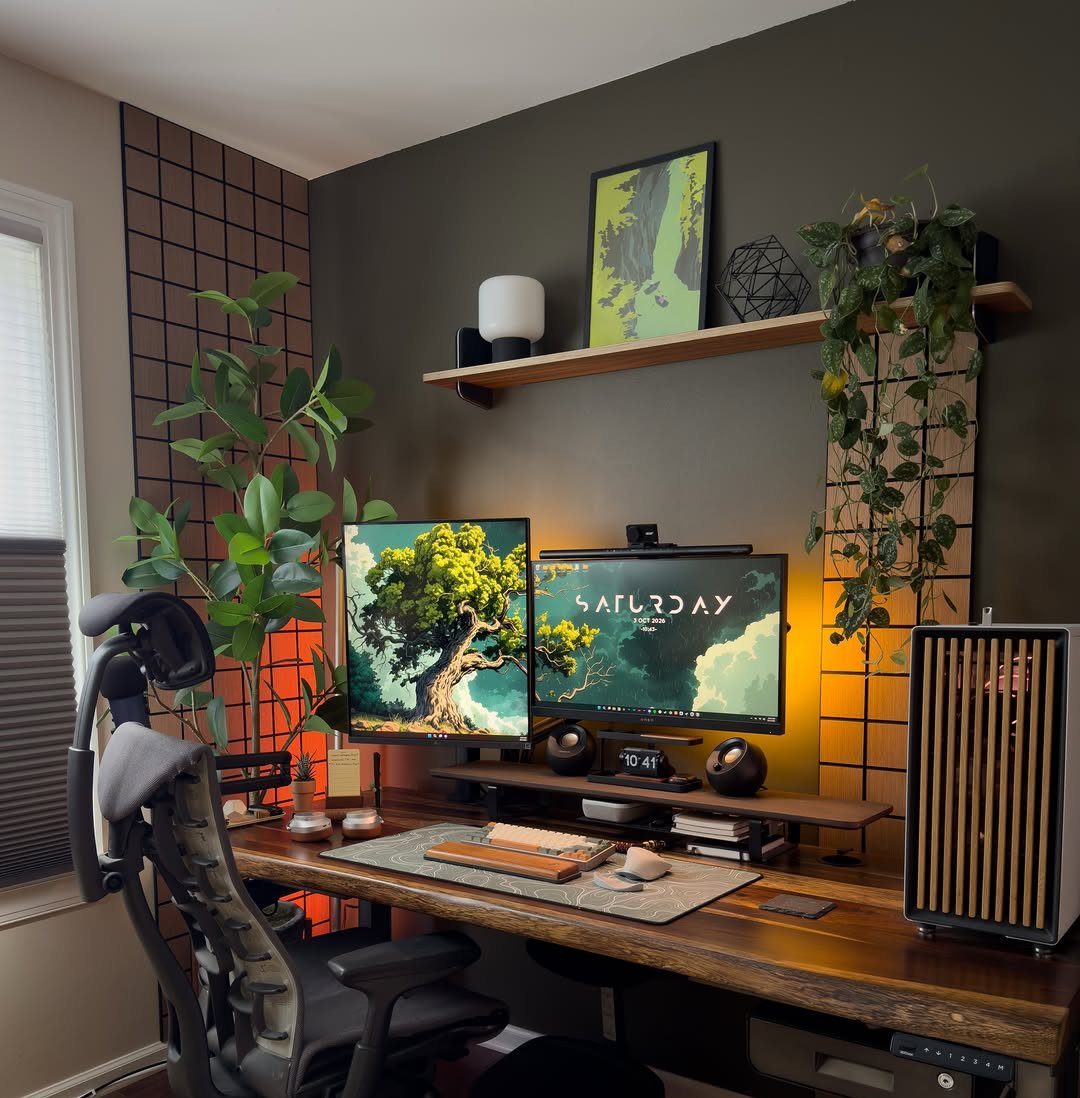
Dark wood paired with a dark green accent wall creates a grounded, quiet workspace where the dual monitors become the brightest thing in the room.
The black ergonomic chair and the shelf-mounted plants add function without competing for attention, and the L-shape gives enough surface area for a keyboard, mouse, and notebook on each leg.
Dark walls absorb light, so plan for strong task lighting if the window isn’t enough. A clip-on desk lamp or an adjustable arm mount keeps light where you need it and leaves the desk surface clear.
If you’re painting an accent wall this color, 2 coats over primer will cover evenly. One coat shows streaks.
13. Triangular Wall Unit Integration
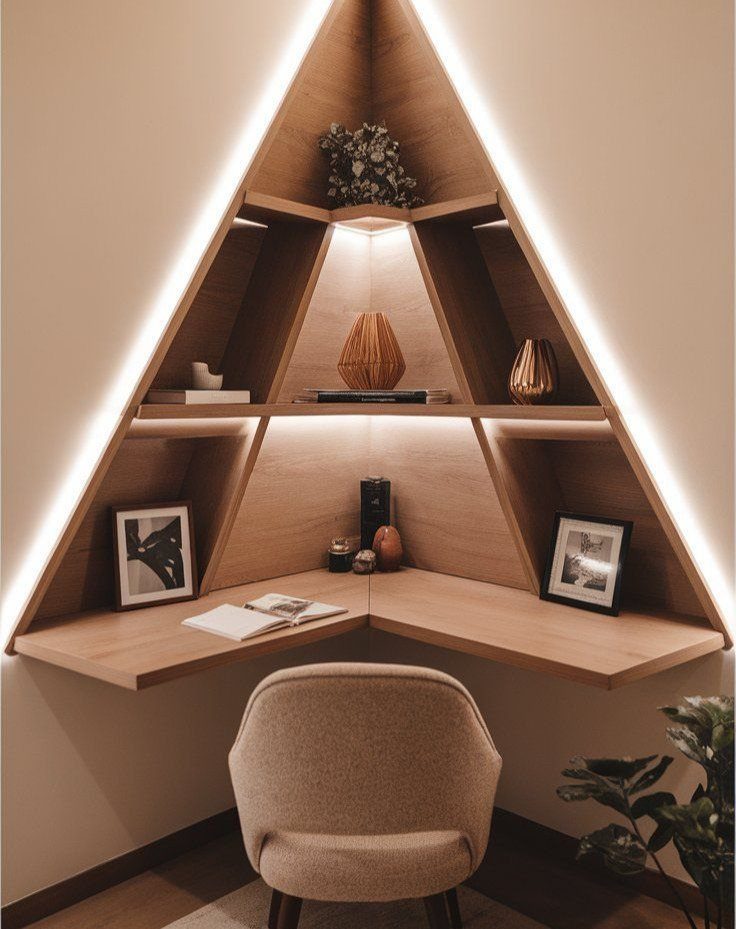
A triangular shelving unit that spans the corner and climbs the wall gives you storage that wraps the desk instead of sitting on top of it.
The light wood keeps the structure from feeling heavy, and the LED strips tucked behind the shelves cast a glow that works as ambient light when overhead fixtures are too much.
The angled geometry uses wall space you wouldn’t otherwise reach, but it also locks the desk into that corner permanently. If you move, the unit stays or you’re patching a lot of drywall.
The open shelves suit someone who likes their books and objects visible. Closed cabinets would hide the clutter but lose the display.
14. Traditional Library Corner Desk
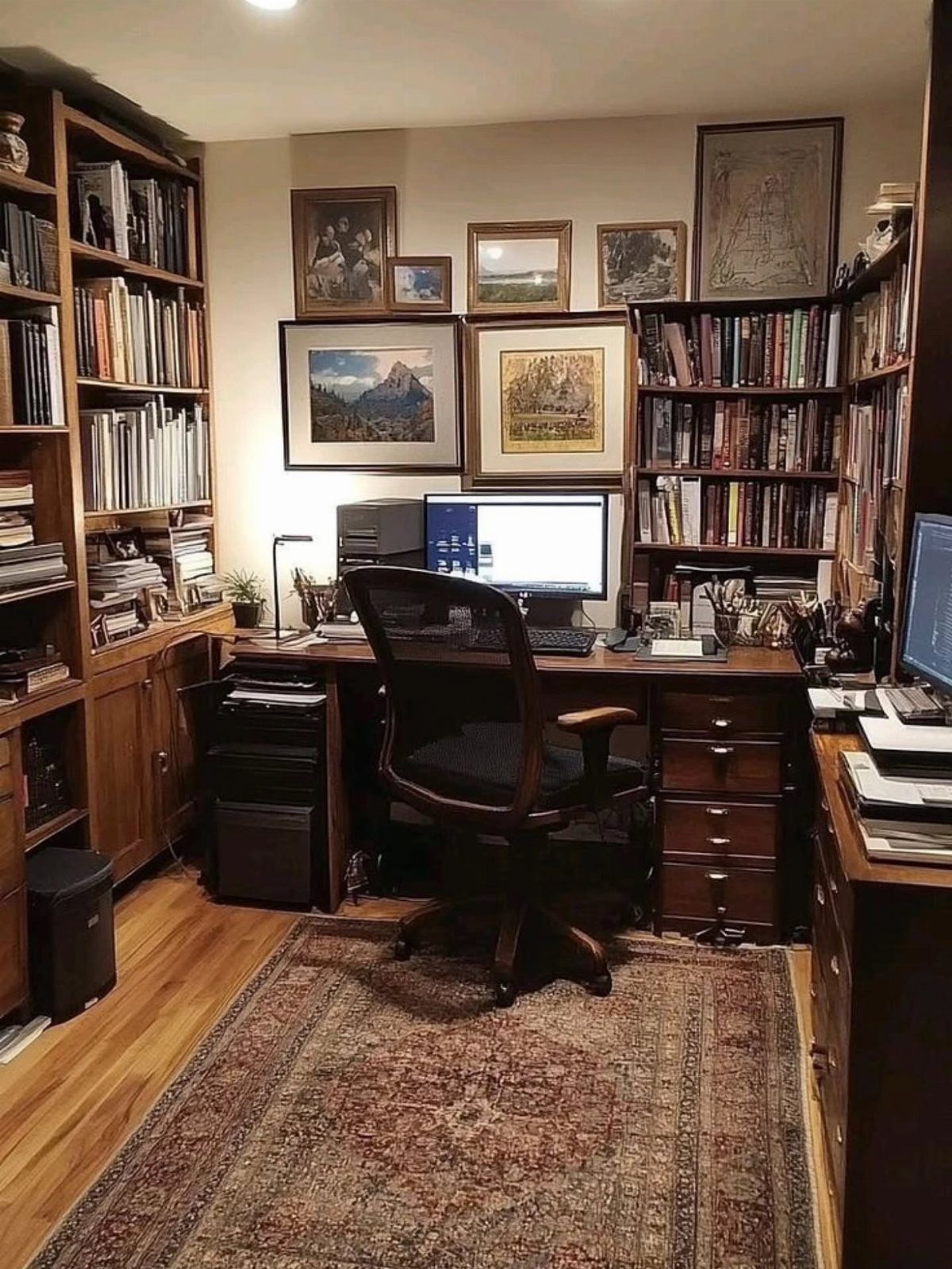
Floor-to-ceiling bookshelves flanking a dark wood L-shaped desk turn a corner into a library workspace where the books are part of the room, not an afterthought.
The deep wood tone and the framed art above the desk anchor the space without needing bright accent colors, and the patterned rug under the chair defines the zone without walls.
This setup needs the vertical clearance. Standard ceilings can take built-ins, but anything shorter makes the shelves crowd the desk.
If you have the books to fill them, the shelves justify the build cost. Empty shelves read as wasted space.
15. Bright Window Corner Workstation
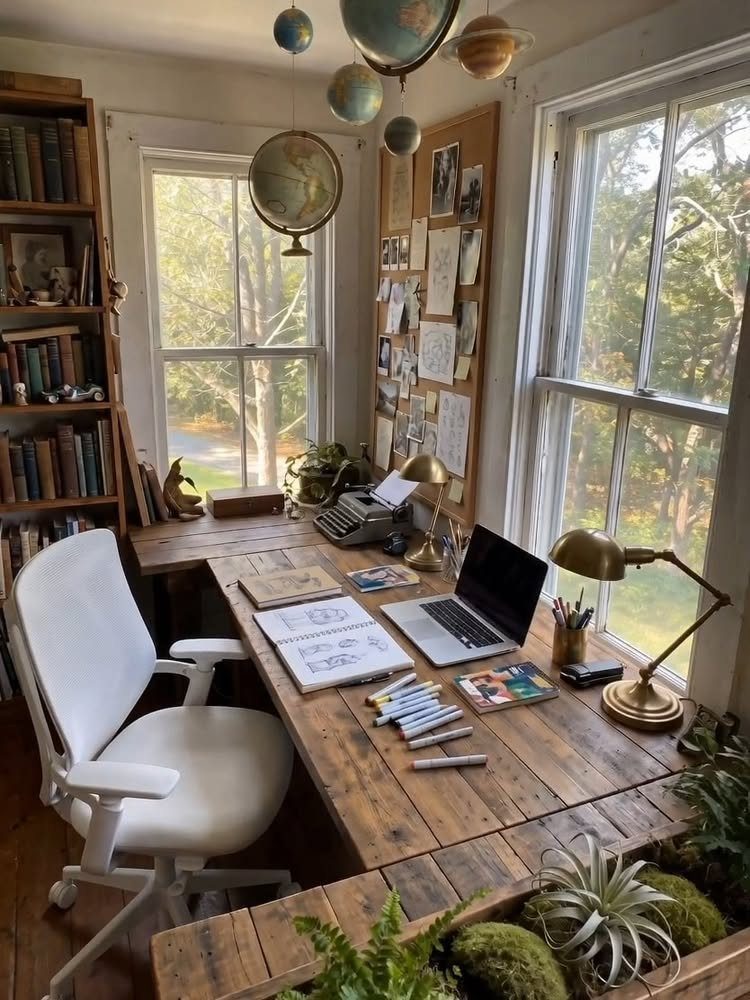
Placing the desk between 2 windows gives you natural light from both sides, which cuts glare on the screen and keeps the space bright without adding lamps.
The wood L-shape provides enough surface for a laptop on one side and a typewriter or notebook on the other, and the corkboard mounted on the wall holds notes and reminders where you can see them.
The hanging globe lights add visual interest above the desk and leave the surface clear. If the windows face west, afternoon sun will hit the screen directly, so plan for blinds or a monitor hood.
The open shelf below the desk keeps reference books within reach and leaves the desktop clear.
Ergonomics in Corner Desks
Monitor distance matters more in a corner than along a flat wall because the angled layout can push screens too close or force them into the deepest part of the corner where you crane forward to see them.
If the desk is shallower than 60 cm, a monitor arm or riser buys you another 20–30 cm of effective depth and keeps your neck level instead of tilted down.
Elbows should rest around 90–110° with your upper arms close to your body, wrists straight, and hips and knees at the same angle with your feet flat.
Corner desks that pinch you into the wedge make those angles hard to hold, so leave enough linear space on each leg of the L that you can shift your chair without hitting a wall.
Storage Solutions
Vertical storage pulls clutter off the desk surface, but in a corner it’s easy to overload the walls or block the sight lines that keep the nook from feeling closed in.
Mount heavy shelves on the side walls rather than directly above the monitor, and keep the area above your screen light: corkboards, small frames, or a single shelf for items you don’t reach for daily.
Freestanding storage near the corner avoids drilling into walls you can’t verify, which matters in rentals or older construction where stud spacing is irregular.
Route cables toward the nearest outlet so they don’t cross foot traffic or wrap around the chair base.






