
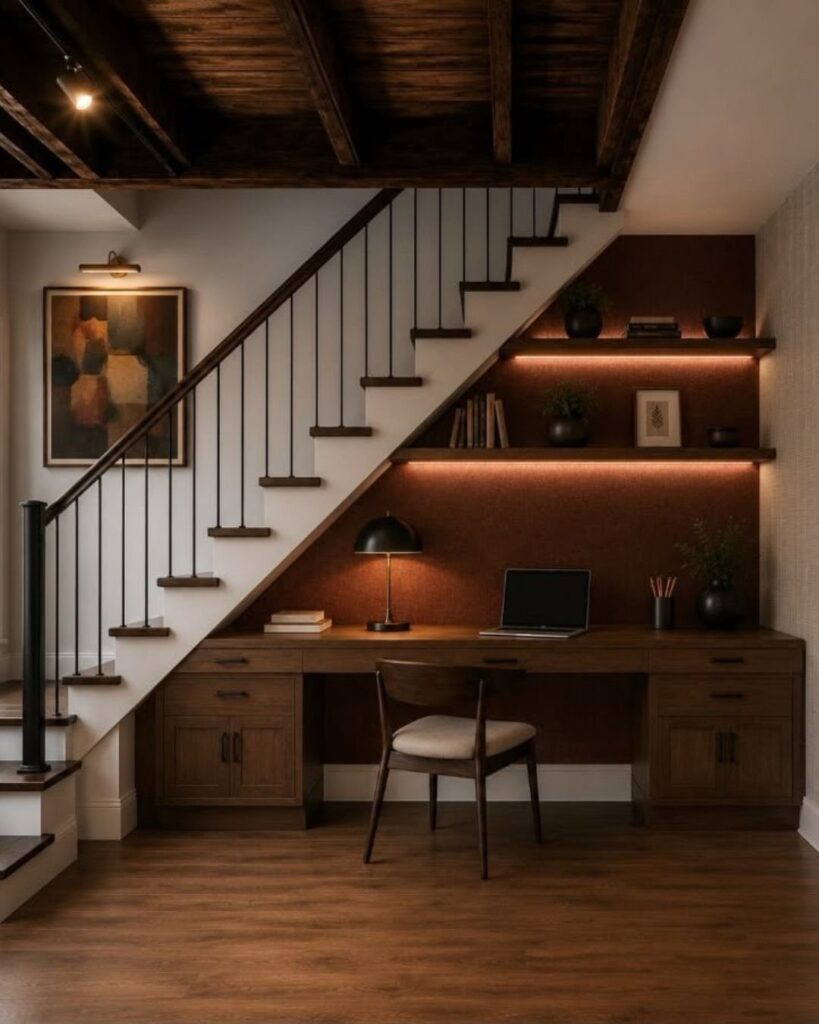
A basement office with no windows can layer ambient ceiling lights with task lamps and sconces, or it can go moody with dark walls that make the enclosed space feel like a choice.
The difference comes down to whether you’re working long hours at a screen, which demands even brightness and ergonomic furniture, or using the space for calls and short bursts where style and air quality matter more.
Acoustic panels in 2 x 4 foot sizes quiet echo on calls, and task lamps or sconces give you light exactly where you need it.
1. Ambient Ceiling Lights, Task Lamps, and Sconces
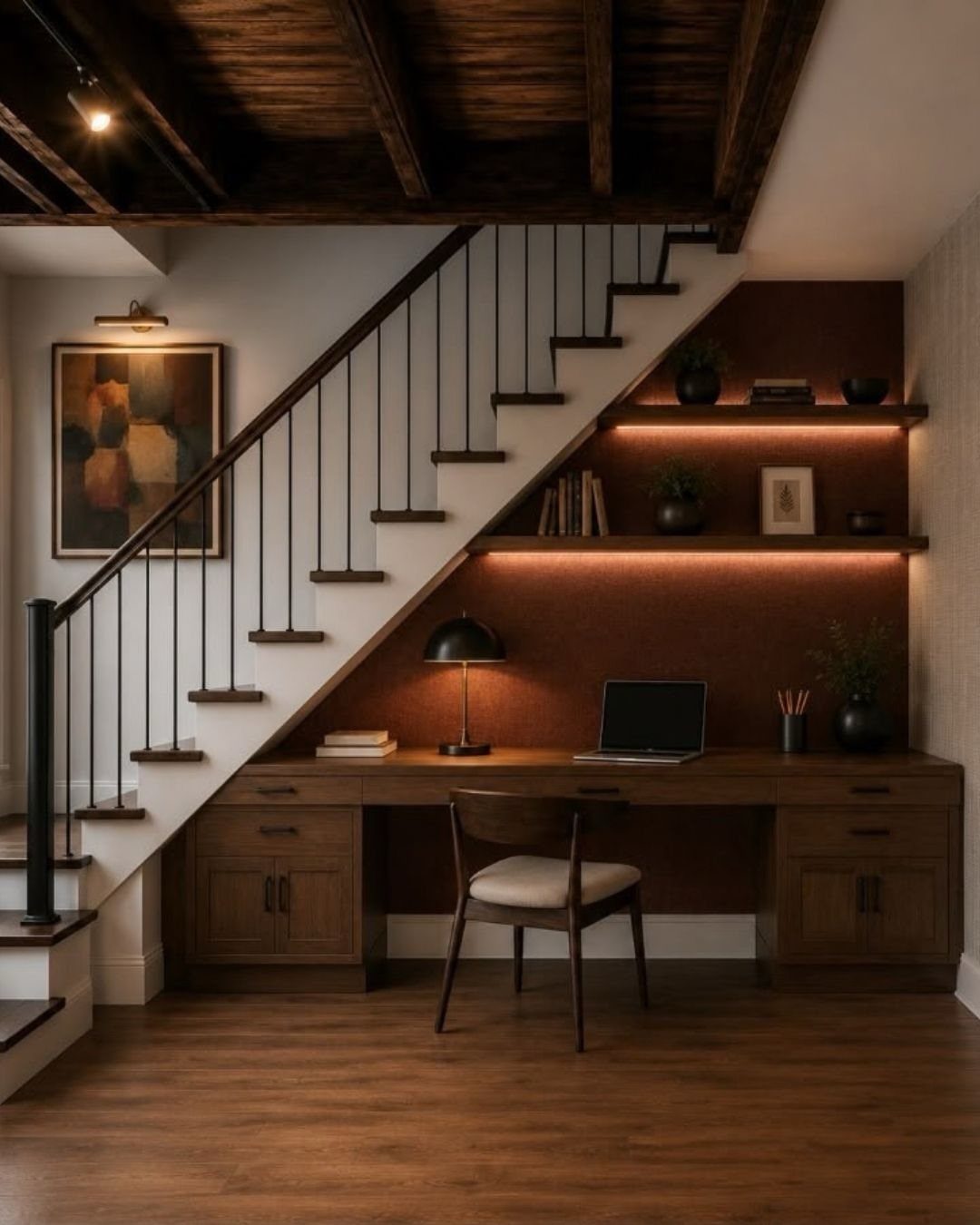
Layering ambient light overhead with focused task lamps at the desk and wall sconces for accent pulls off the trick that a single ceiling fixture never can: even illumination that actually reaches your work surface without harsh shadows.
The overhead lights set the baseline brightness, while a desk lamp puts controlled light exactly where you need it for reading documents or close detail work.
Sconces mounted midway up the wall fill in the gaps and add depth, so the whole room feels lit instead of just the center.
I keep task lamps on adjustable arms so the beam moves with the work, and I run ambient lights on a dimmer to dial the mood down when screen glare becomes a problem.
2. Ergonomic Chairs and Desks
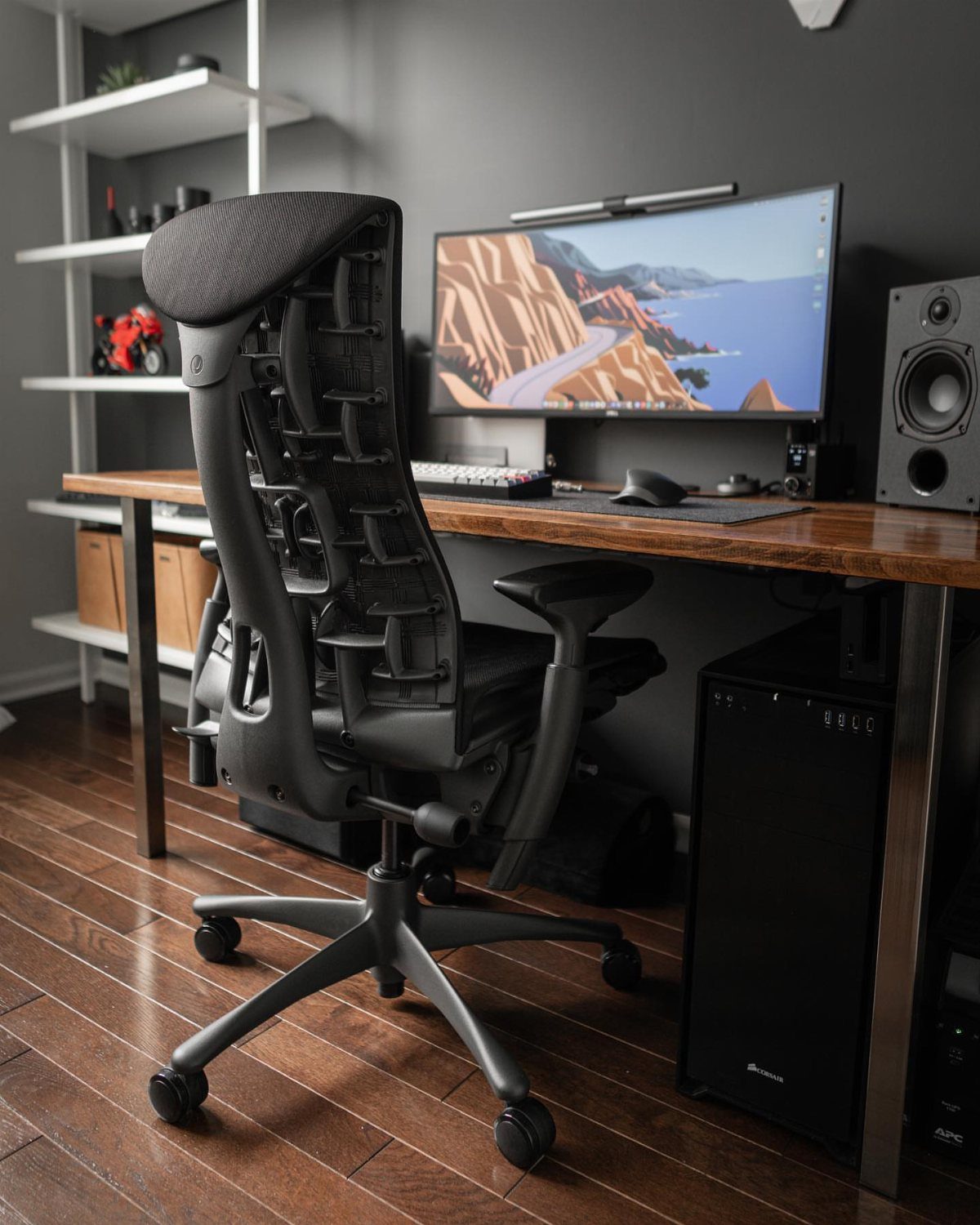
Long hours at a desk below grade make ergonomic furniture less optional. A chair that supports your lower back and a desk at the right height keep discomfort from creeping in after the first few hours.
Look for chairs with adjustable lumbar support and seat depth, and desks that let you type with your forearms level.
The standard desk is 29 or 30 inches tall, but if you’re taller or shorter than average, an adjustable-height desk solves that mismatch without custom builds.
Mesh backs breathe better than foam in spaces with limited airflow.
3. Warm Color Palettes
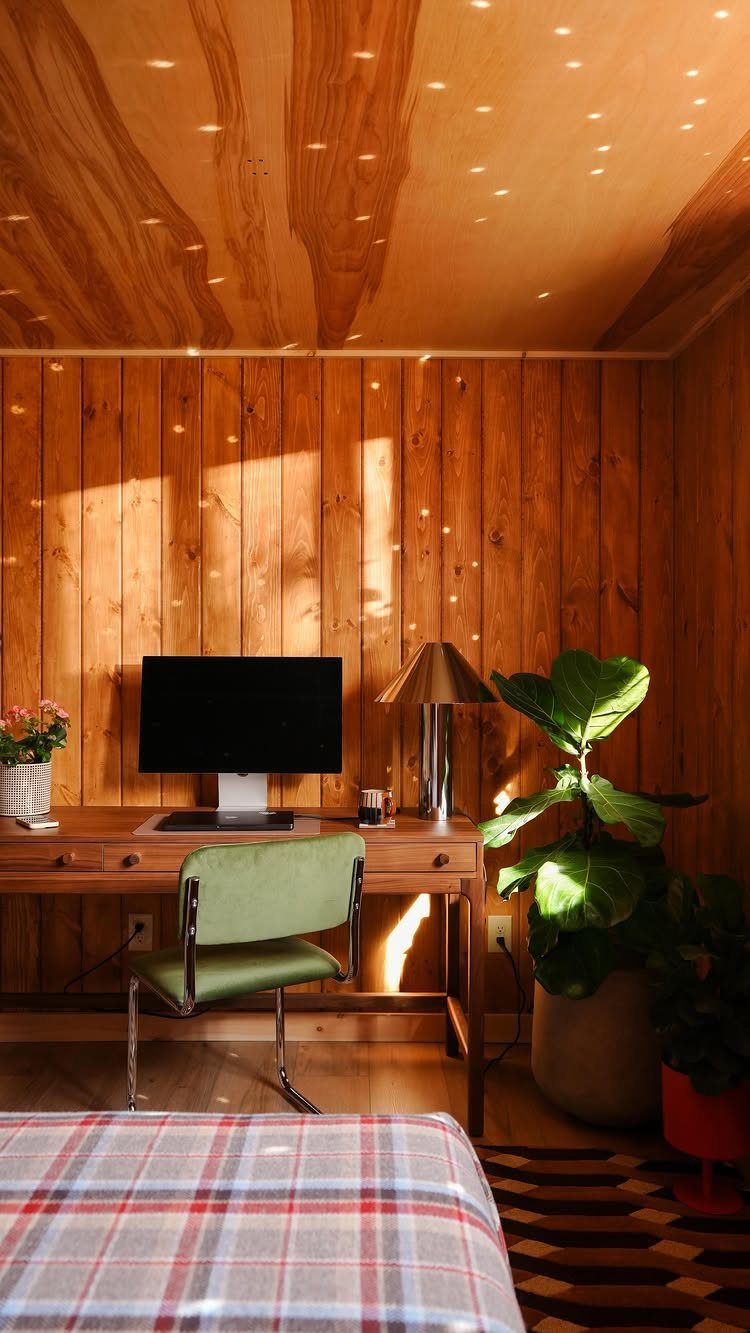
Colors shift how a basement office feels, and warm tones like wood paneling, terracotta, or muted gold bring the cozy factor that fluorescent grays and stark whites leave behind.
The wood-paneled walls and ceiling here add texture and warmth without pattern, and the green chair punches in a grounded accent that feels alive without tipping into loud.
Plants amplify that warmth and improve air quality in a closed space, which basements almost always are.
I like warm neutrals on large surfaces and one saturated accent color in seating or accessories. It reads calm but not clinical, and you can swap the accent anytime.
4. Light-colored Walls and Ceiling
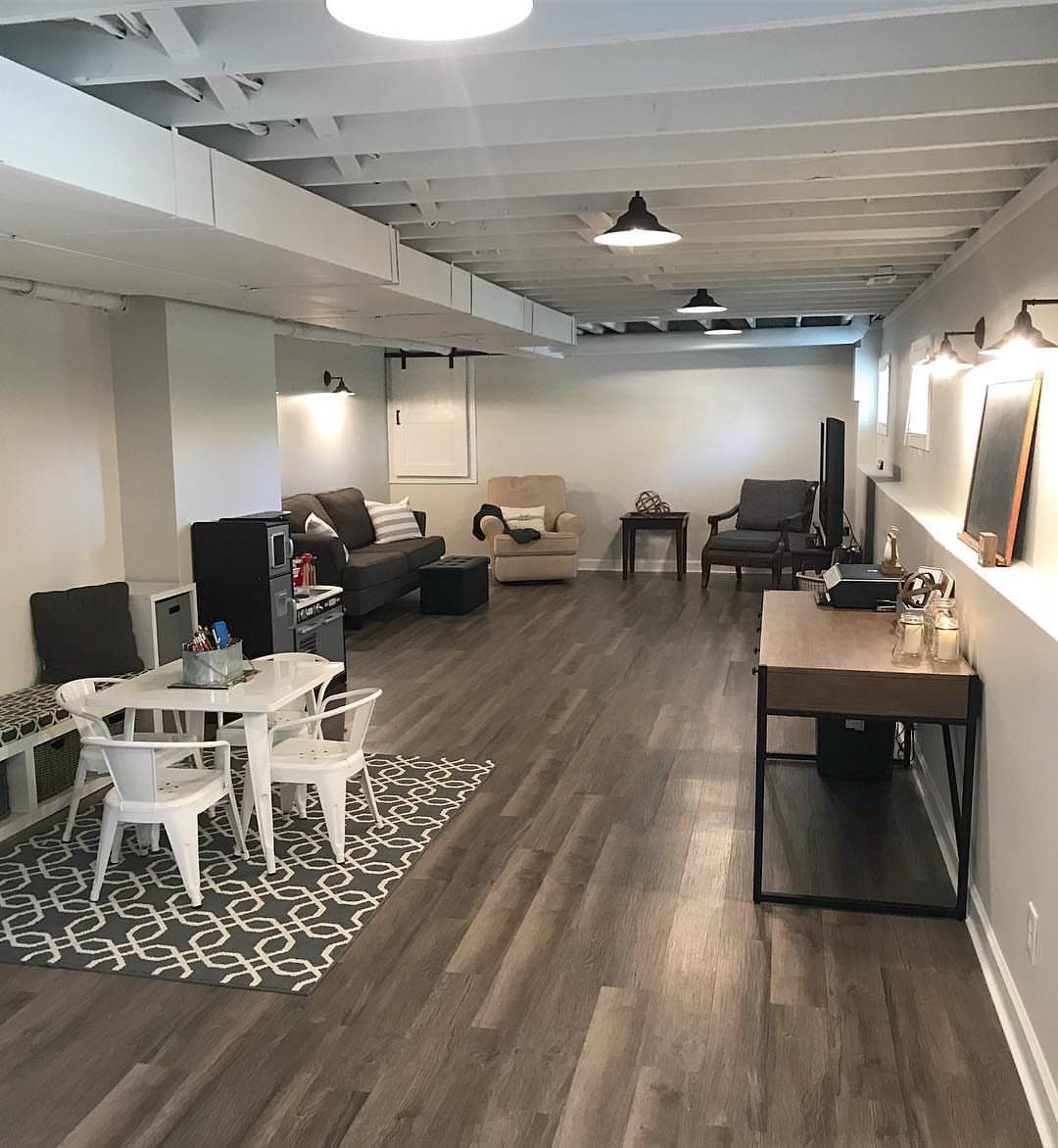
Light gray or off-white on the walls and ceiling bounces whatever light you do have back into the room instead of soaking it up, which matters when there are no windows to compensate.
The white beamed ceiling here amplifies brightness, and the pale gray walls keep the space from feeling cold or too stark.
Light flooring in a wood-look finish continues that reflective surface down to the floor without the glare of polished tile.
Paint is the fastest, cheapest fix for a dim basement, and the lighter the better. Save darker tones for accents or one feature wall when you need contrast.
5. Built-in Shelving and Cabinets
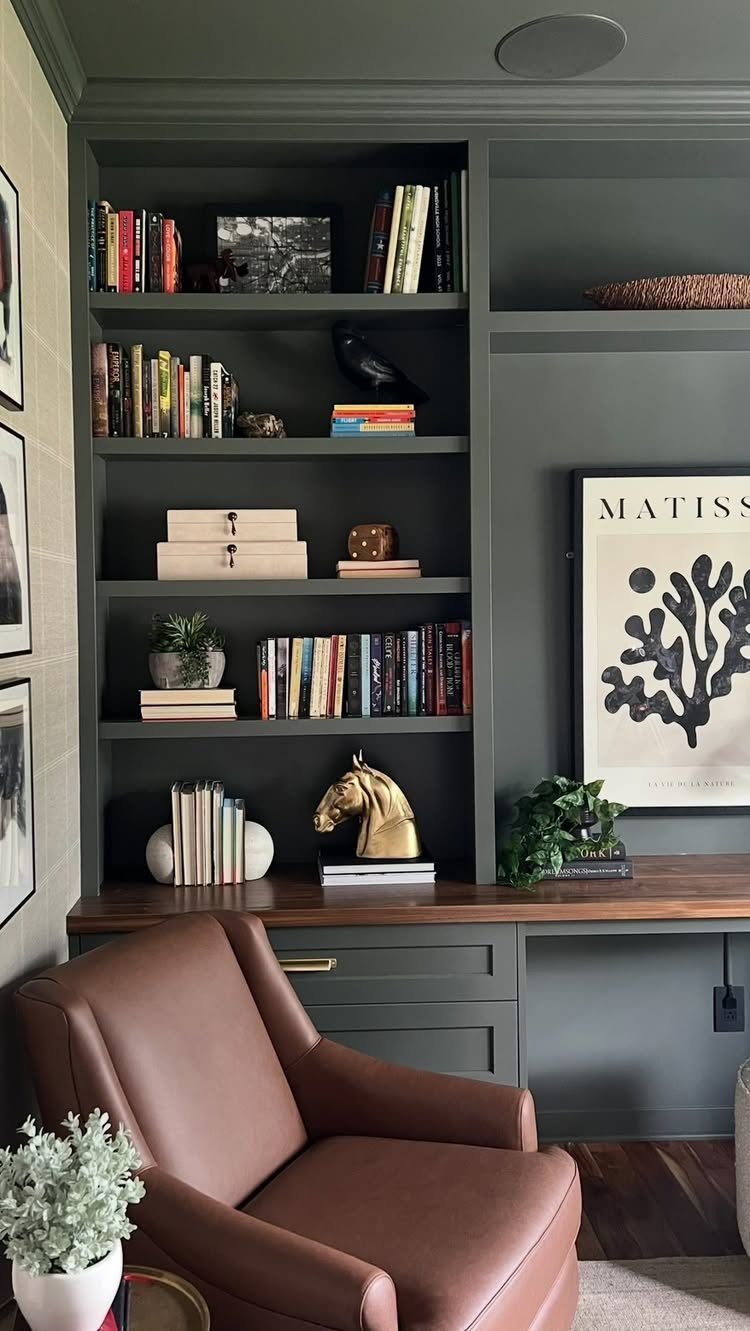
Built-ins give you floor-to-ceiling storage without eating into the already limited square footage of a basement office, and they hide clutter behind closed doors when you need the space to look clean on video calls.
The dark gray shelving here frames the desk and keeps books, files, and supplies within arm’s reach without requiring freestanding furniture that would crowd the room.
Closed cabinets at the bottom hide less attractive items like cables, paper stock, and office supplies that do not photograph well.
Custom built-ins cost more upfront but use vertical space efficiently, and painting them the same color as the walls makes the installation feel intentional instead of tacked on.
6. Cozy Reading Nook
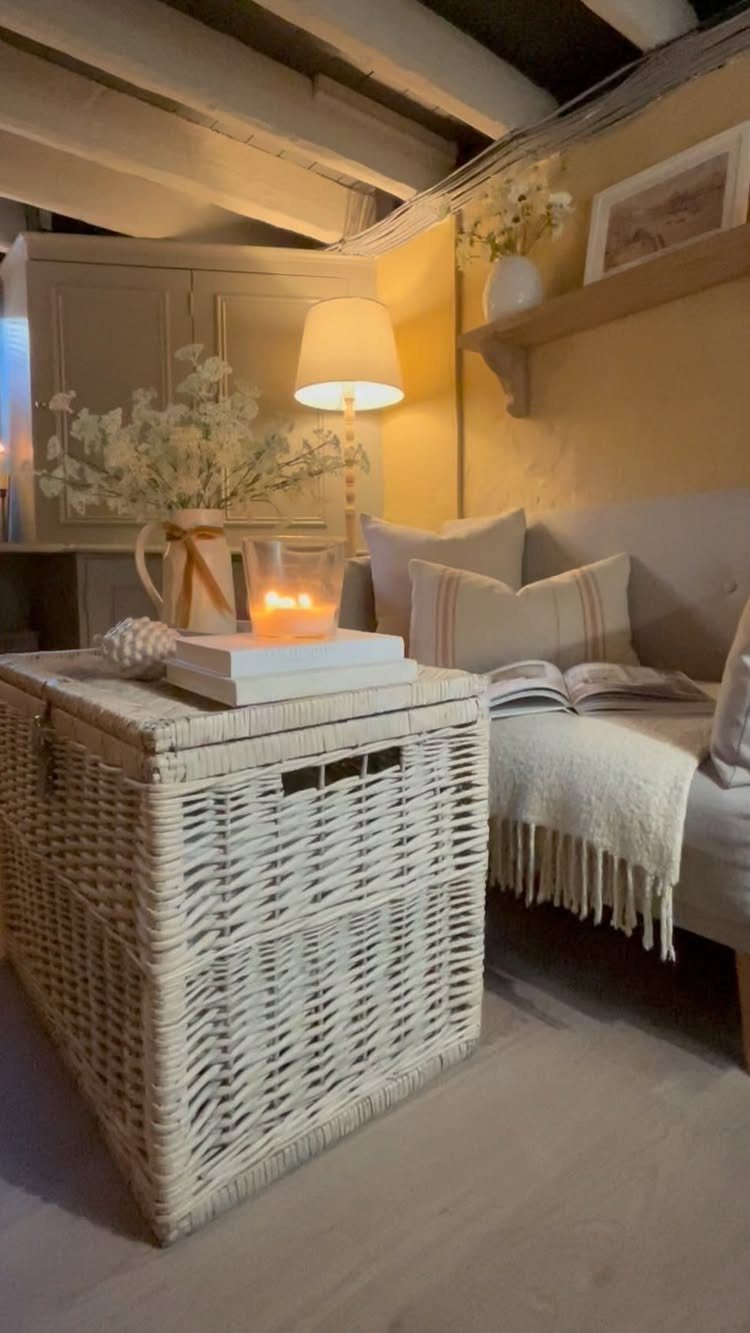
Carving out a small reading nook inside the office gives you a place to step away from the screen without leaving the room, which helps when breaks are short and you need a mental reset before the next task.
Light yellow walls and white beams keep the space airy, which prevents a reading nook from feeling like a dim corner.
I use a floor lamp or sconce near the seating so the nook stays functional after dark, and a small bookshelf within reach keeps reading material on hand.
7. Acoustic Panels
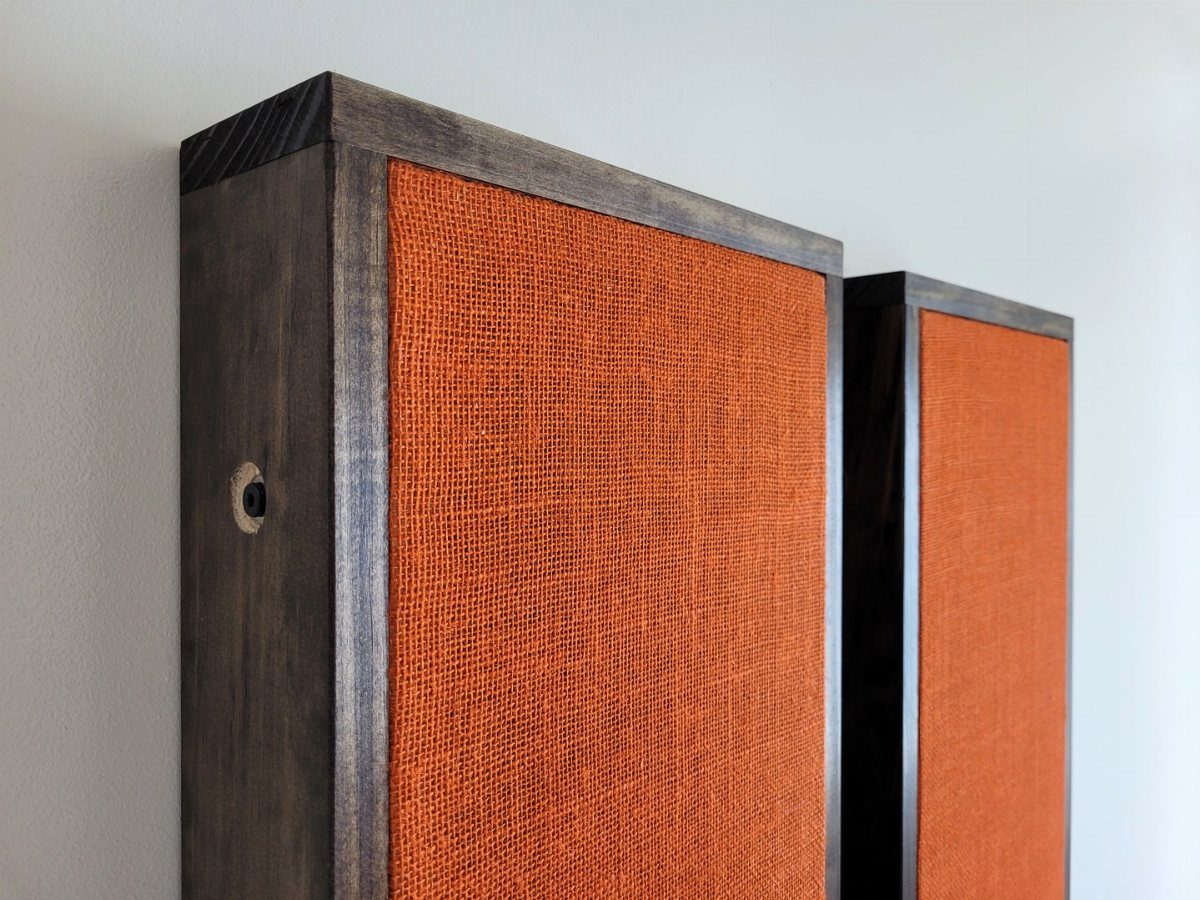
Fabric-wrapped panels mounted on the wall absorb echo and soften the hard surfaces that make a basement office sound hollow during calls or when typing fills the room with clatter.
Orange fabric adds a shot of color against plain white walls, and dark wood frames give the panels structure so they read as intentional design instead of purely functional foam squares.
Acoustic panels come in standard sizes like 2 x 4 feet or 2 x 2 feet, and mounting them takes a picture hanger or command strip depending on weight. Two or three panels handle most small office echo without covering every wall.
8. Small Coffee
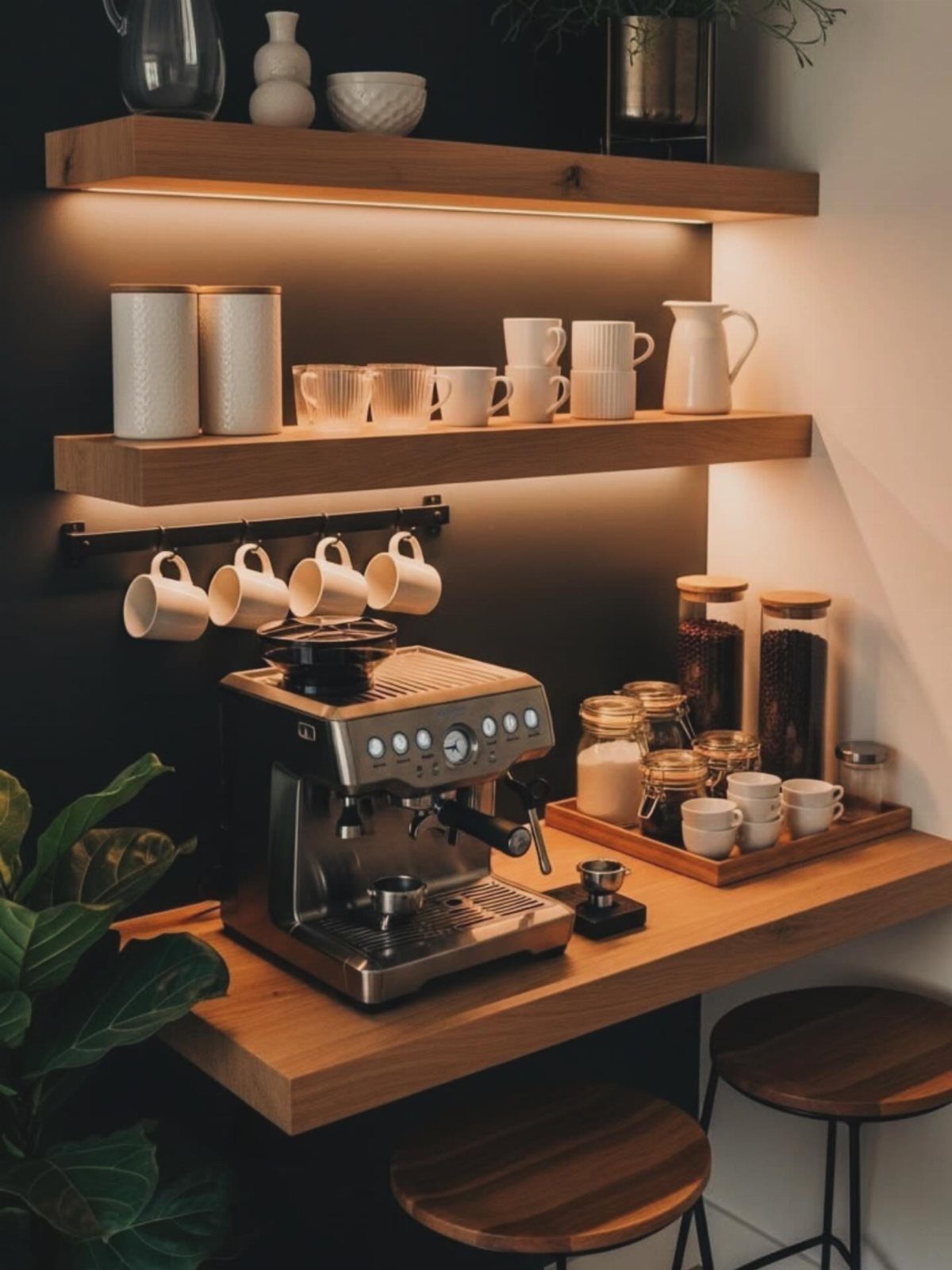
A dedicated coffee station inside the office cuts out trips upstairs when you need a refill, and the ritual of making a drink gives you a natural break without losing focus on the work.
The espresso machine, mugs, and canisters on open shelves here keep everything visible and within reach. A small countertop or floating shelf holds the setup, and a power outlet nearby makes it functional.
I keep a small tray underneath to catch drips and spills, which protects the surface and makes cleanup faster between pots.
9. Wood Slat Accent Wall
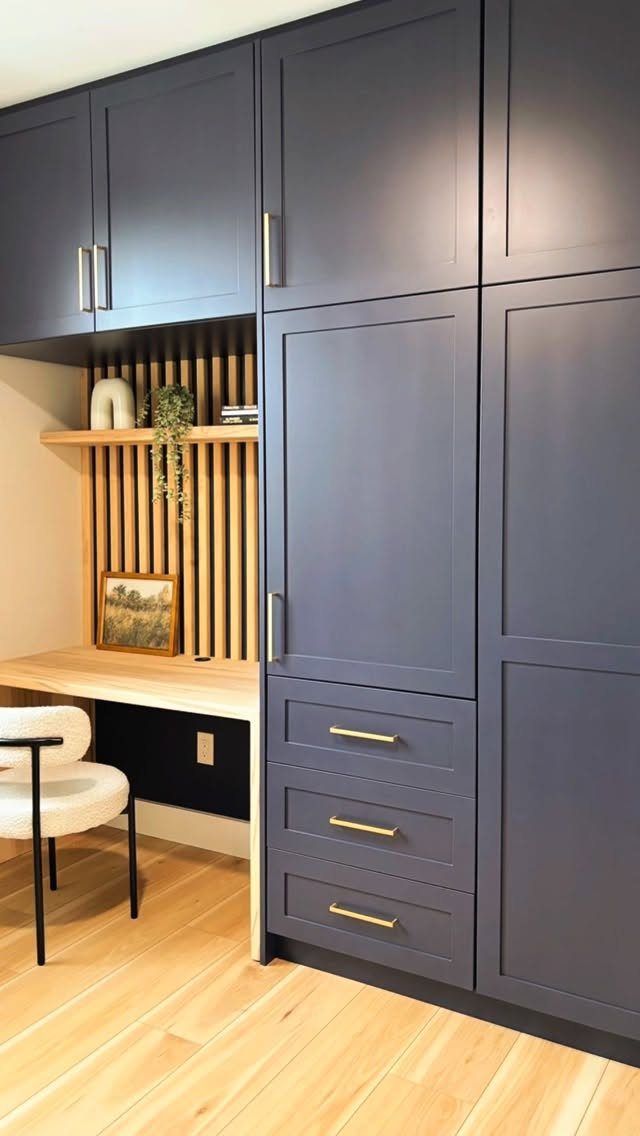
Vertical wood slats on the wall add texture and warmth without the weight of full paneling, and the vertical lines pull the eye upward in a basement with a low ceiling.
The light wood tone here matches the desk and contrasts with the dark blue cabinetry, which gives the nook definition without closing it off.
The slats install over drywall with a cleat or adhesive backing, and spacing them out creates shadow lines that add depth.
Dark cabinetry with gold pulls frames the desk and provides closed storage for files and supplies that need to stay out of sight.
10. Moody Dark Office Aesthetic
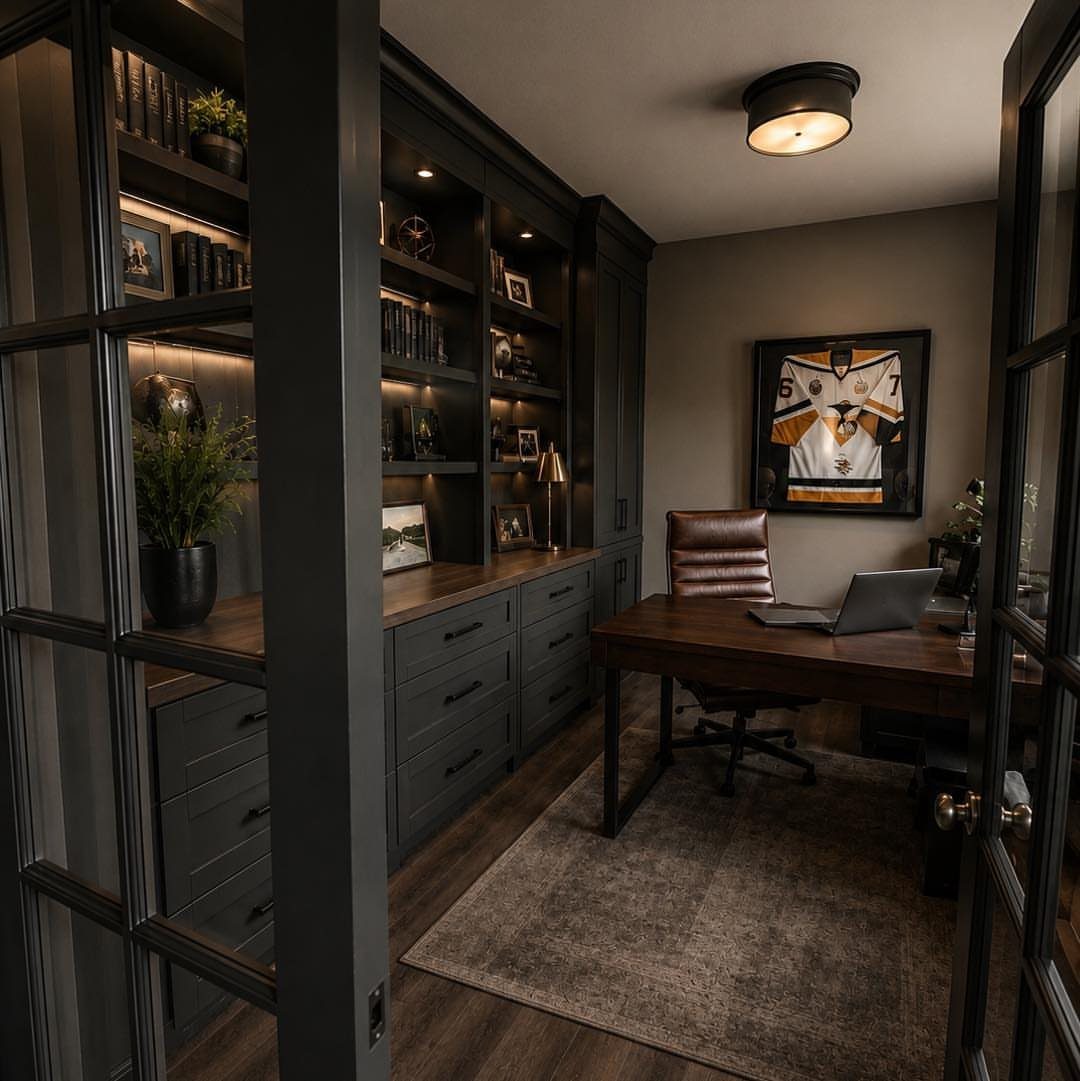
Charcoal walls and dark shelving turn the lack of natural light into an advantage by leaning into a moody, enclosed aesthetic instead of fighting it with pale surfaces that still feel dim.
Warm overhead lighting here keeps the space from going too cave-like, and the wood desk and leather chair add texture that prevents the dark palette from flattening out.
The framed jersey and filled bookshelves give the room personality without bright color.
Dark paint shows dust more than light walls do, so plan on wiping surfaces down more often to keep the look sharp.
Importance of Good Lighting
LED panels that mimic daylight keep the color temperature closer to what you’d get from a window, which prevents the sickly cast that cool fluorescent tubes leave on everything.
Warm white bulbs land between 2700K and 3000K and read more comfortable for long stretches than stark white at 5000K or higher.
Floor lamps and table lamps at different heights add depth that a grid of recessed cans cannot, and positioning them around the room instead of centering everything overhead fills in shadows near the walls.
Choosing Colors Wisely
Terracotta, sage green, and dusty blue work as accent colors that bring warmth without pushing the palette into loud territory.
Peel-and-stick wallpaper with a low-contrast pattern brings dimension to flat walls and peels away clean if you change your mind.
Soft pastels on walls and ceilings reflect light better than saturated or dark tones, which helps in a space already fighting low light levels.
You want a space that pulls you in for the full workday, not a room that feels like a box or a bunker.
Maintaining Air Quality
Peace lilies, spider plants, pothos, snake plants, and Chinese evergreens tolerate low light better than most houseplants and filter air while adding greenery to a closed space.
Position them near artificial light sources or under grow lights to keep them healthy, and place a mirror behind plants to reflect light back onto the leaves.
Wipe the leaves down once a month to clear dust that blocks absorption, and cut back on watering since low-light plants pull less moisture from the soil. Overwatering kills more low-light plants than underwatering does.
Frequently Asked Questions
How can I brighten up a basement office without windows?
Layer overhead ambient lights with task lamps and wall sconces to distribute light evenly across the room, then paint walls and ceilings in light gray or off-white to bounce that light back instead of absorbing it.
Add reflective surfaces like mirrors or light wood flooring to amplify brightness, and keep furniture finishes pale to avoid dark masses that swallow light.
Is it healthy to work in a basement with no windows?
Yes, as long as you address ventilation and lighting deliberately.
Use full-spectrum LED bulbs in the 5000K to 6500K range to mimic daylight without the harsh cast of standard fluorescents, and add plants like pothos or snake plants to filter air and improve oxygen levels in a closed space.
What type of lighting is most effective?
Full-spectrum LED bulbs in the 5000K to 6500K range give you natural daylight color temperature, while warmer 2700K to 3000K options soften the space if you want a less clinical feel.
Layer them at different heights with ambient overhead fixtures, adjustable task lamps, and wall sconces to eliminate shadows and prevent the flatness that a single ceiling grid creates.






