
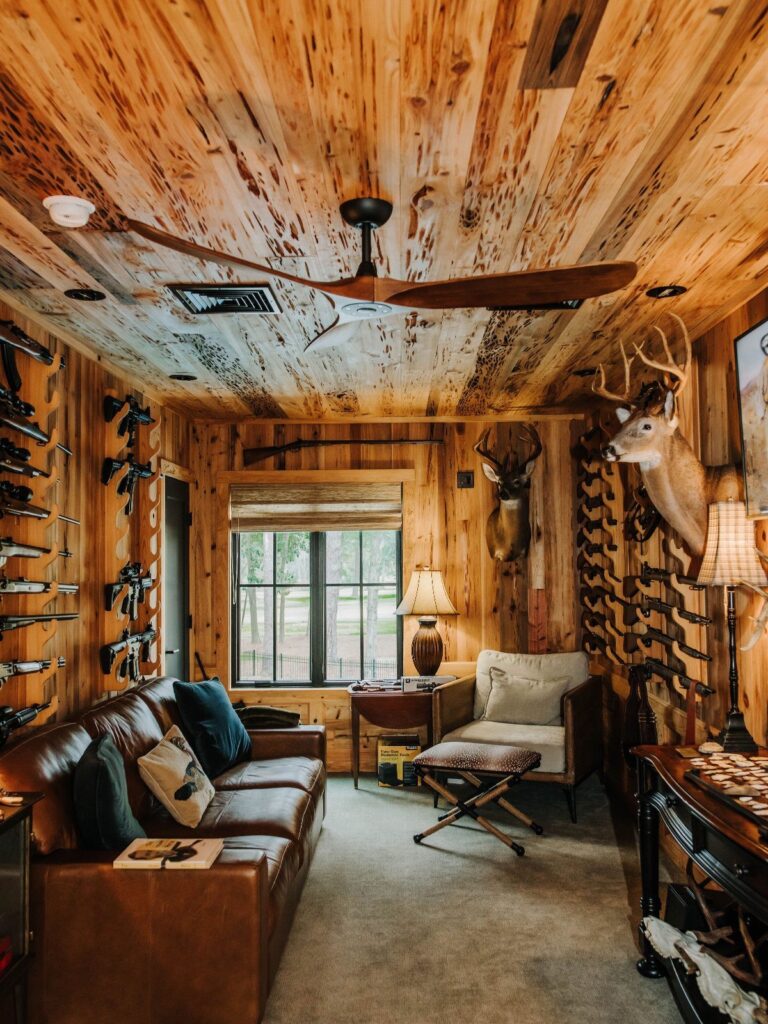
A hunting man cave runs from a pair of leather armchairs and a trophy wall in a bonus room to a rustic bar, firearm cabinetry, and gear gallery shelving in a finished basement.
1. Antler Chandeliers
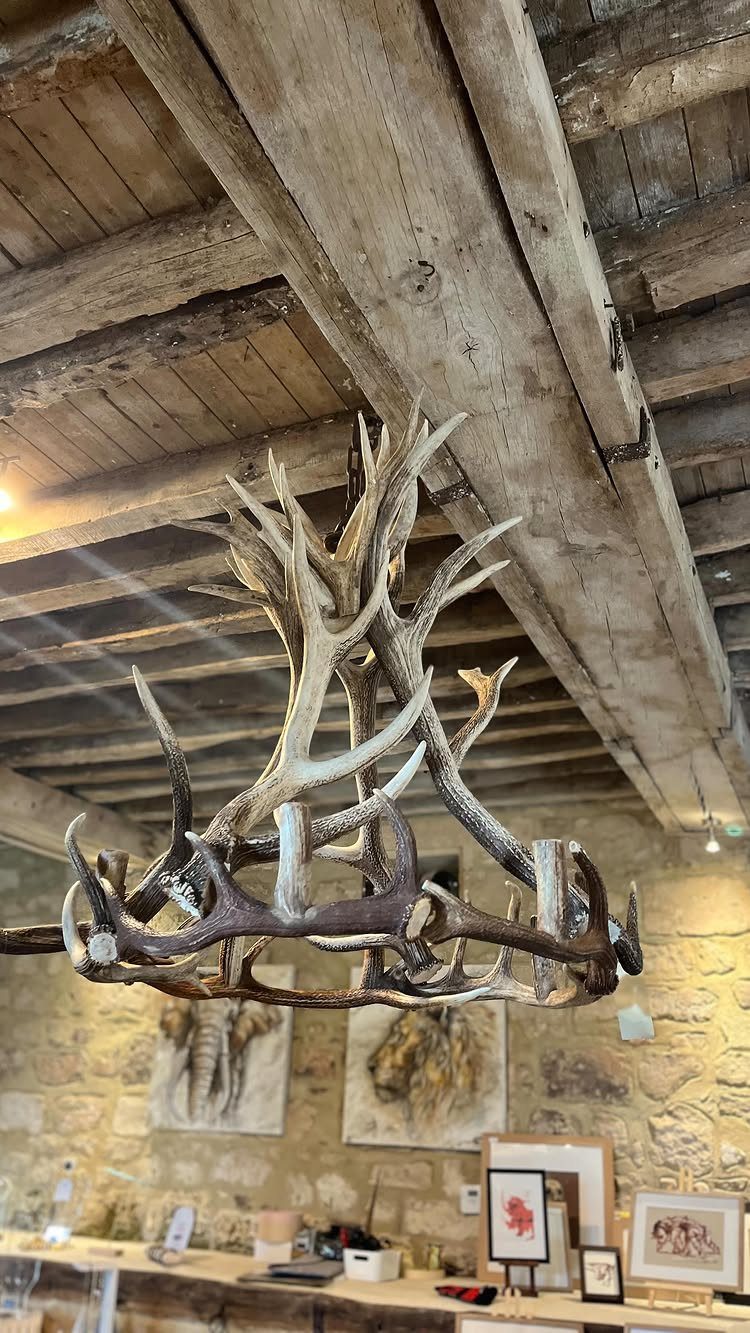
Antler chandeliers bring the scale and presence a man cave needs without leaning on metal or glass.
The natural branches catch light in a way that feels right in a room built around hunting, and the fixture itself pulls your eye the second someone walks in.
Real antler chandeliers vary widely in price depending on size and whether you’re buying new or vintage. Reproductions in resin cost less and weigh less, which matters if your ceiling joists weren’t built for the load.
The one detail that decides it: measure your ceiling height and the diameter of the space before you buy. A chandelier that fits a dining table will look lost over a sectional.
2. Animal Hide Rugs
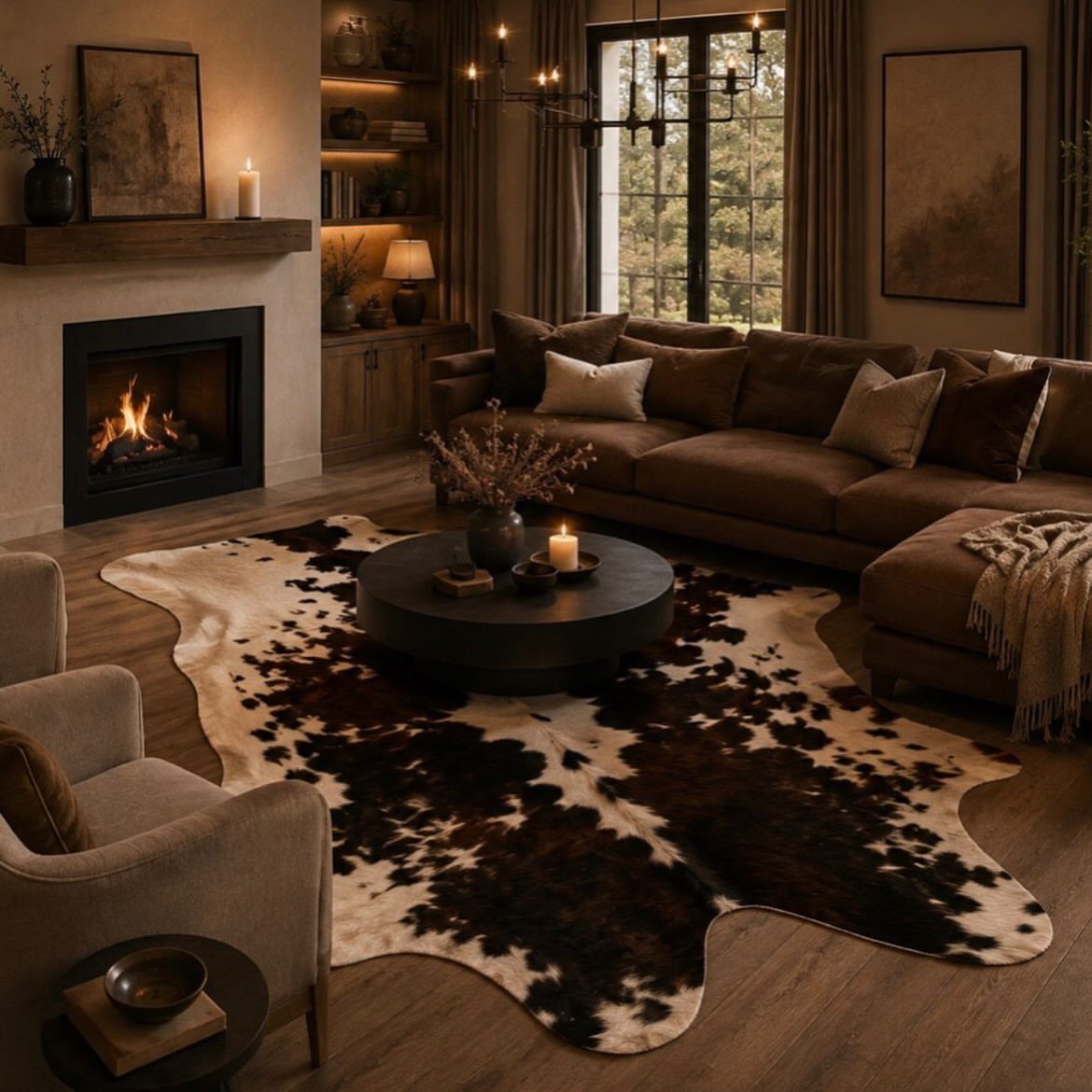
Animal hide rugs ground a hunting room in a way carpet never will. The pattern is irregular, the edges are organic, and the texture reads immediately as something that came from the field.
Cowhide is the most common and the most affordable option for a full hide.
Bison and elk hides cost more but carry more weight if your room skews toward big game. A black and white cowhide works in almost any color scheme; solid browns and brindles suit darker walls and leather furniture.
Where you put the rug carries more weight than how big it is.
A hide under a coffee table or between 2 chairs defines the seating area without covering the whole floor, and it stays visible instead of disappearing under furniture legs.
3. Leather Armchairs
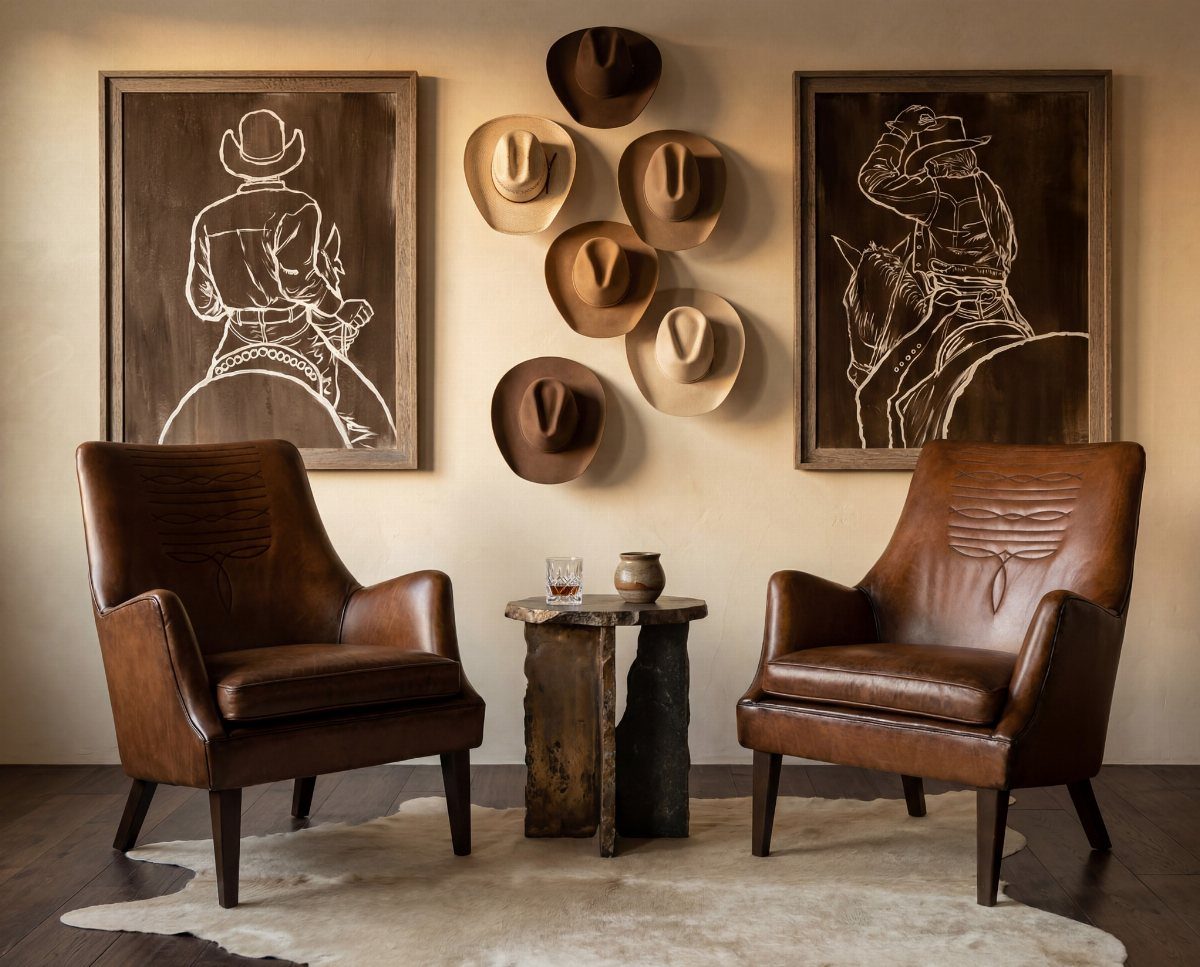
Leather armchairs age in a way that suits a man cave better than anything upholstered in fabric.
The patina improves over time, the material holds up to use, and the look stays consistent with the rest of what a hunting room usually holds.
Full-grain leather costs more upfront but lasts longer and develops the kind of worn-in character that makes a space feel established rather than new. Top-grain leather is the middle option: still real, still durable, just with a more uniform surface.
Color and wear show more on lighter leather. Dark brown or tobacco hides scuffs and scratches better, which matters if the chair sees regular use or sits next to a dog that claims the spot first.
4. Hunting Wall Art
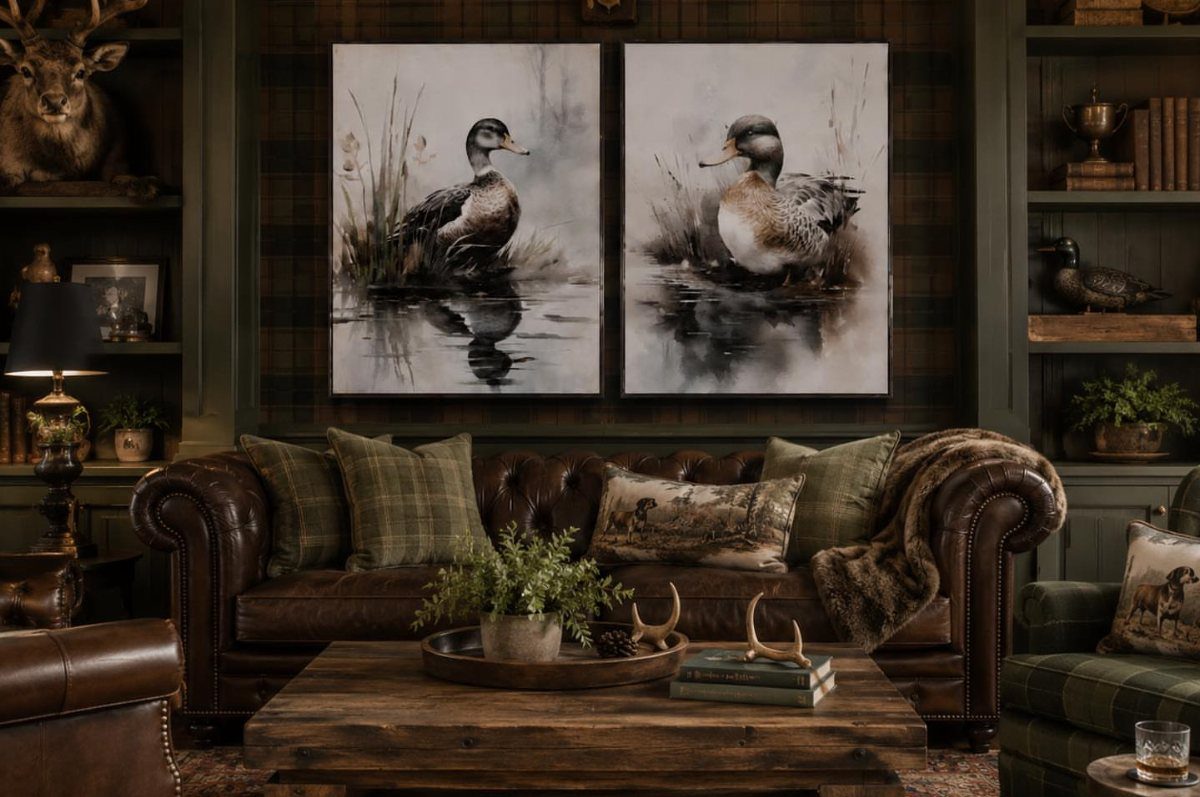
Hunting wall art gives a man cave its theme without requiring taxidermy or trophies.
A large canvas or framed print fills the same visual space a mounted head would, and it works for renters or anyone who prefers not to put animals on the wall.
Look for artwork that shows the species you hunt or the landscape you hunt in.
Duck paintings, pheasant prints, whitetail illustrations, all of them signal what the room is about without needing an explanation. Vintage-style pieces with muted colors and worn frames fit better than bright digital prints.
Scale matters as much as subject. Two large pieces side by side, or one oversized print, anchor a wall in a way a cluster of small frames never will.
5. Trophy Wall Display
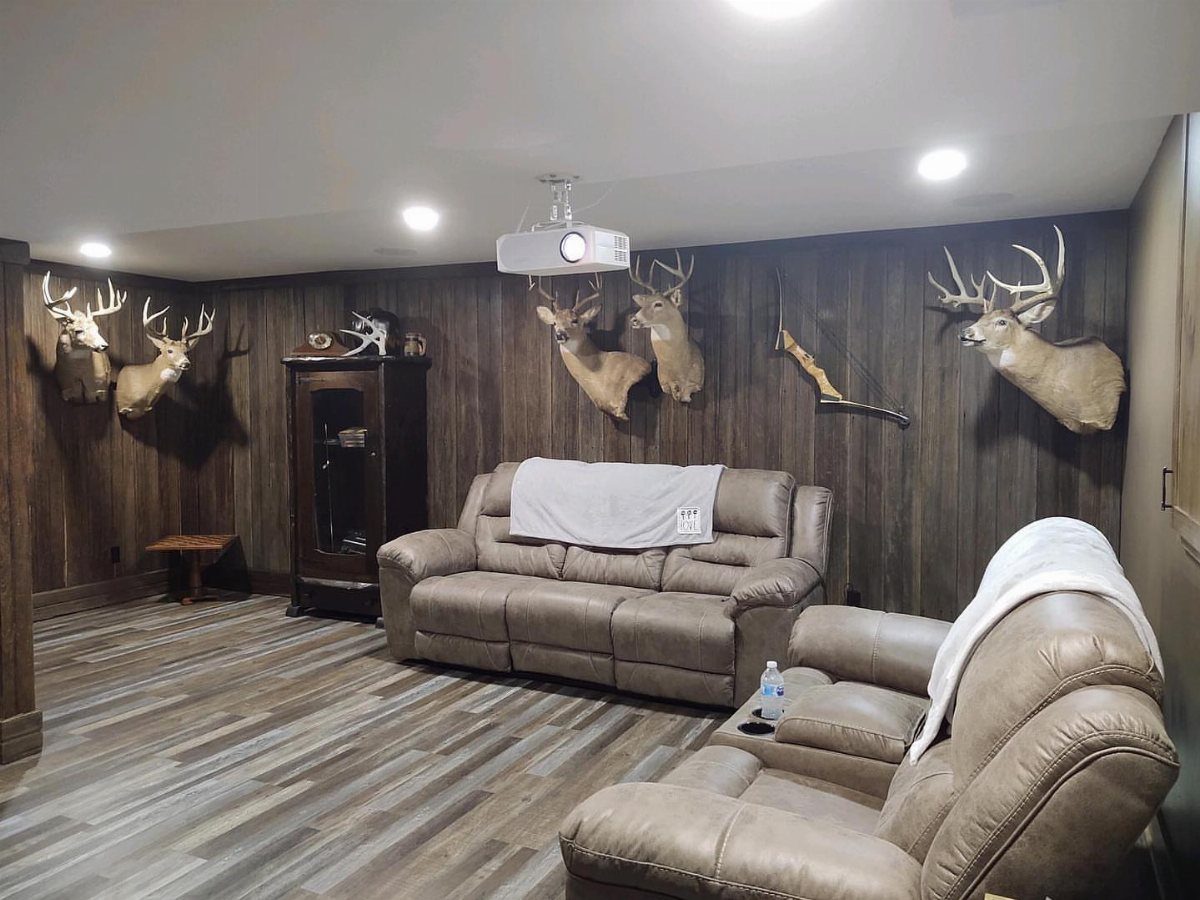
A trophy wall turns your hunting success into the room’s defining feature.
Mounted heads, antlers, and bows go up in a way that tells the story of what you’ve done, and the display itself becomes the conversation piece every time someone new walks in.
Spacing and symmetry matter less here than arrangement that feels intentional.
Group trophies by species, by size, or by the year you took them. Leave enough room between mounts so each one reads on its own, and stagger the heights so the wall doesn’t look like a lineup.
Wood-paneled walls make the best backdrop. The texture and color complement the mounts without competing, and the material handles the weight and the hardware better than drywall alone.
6. Vintage Hunting Memorabilia
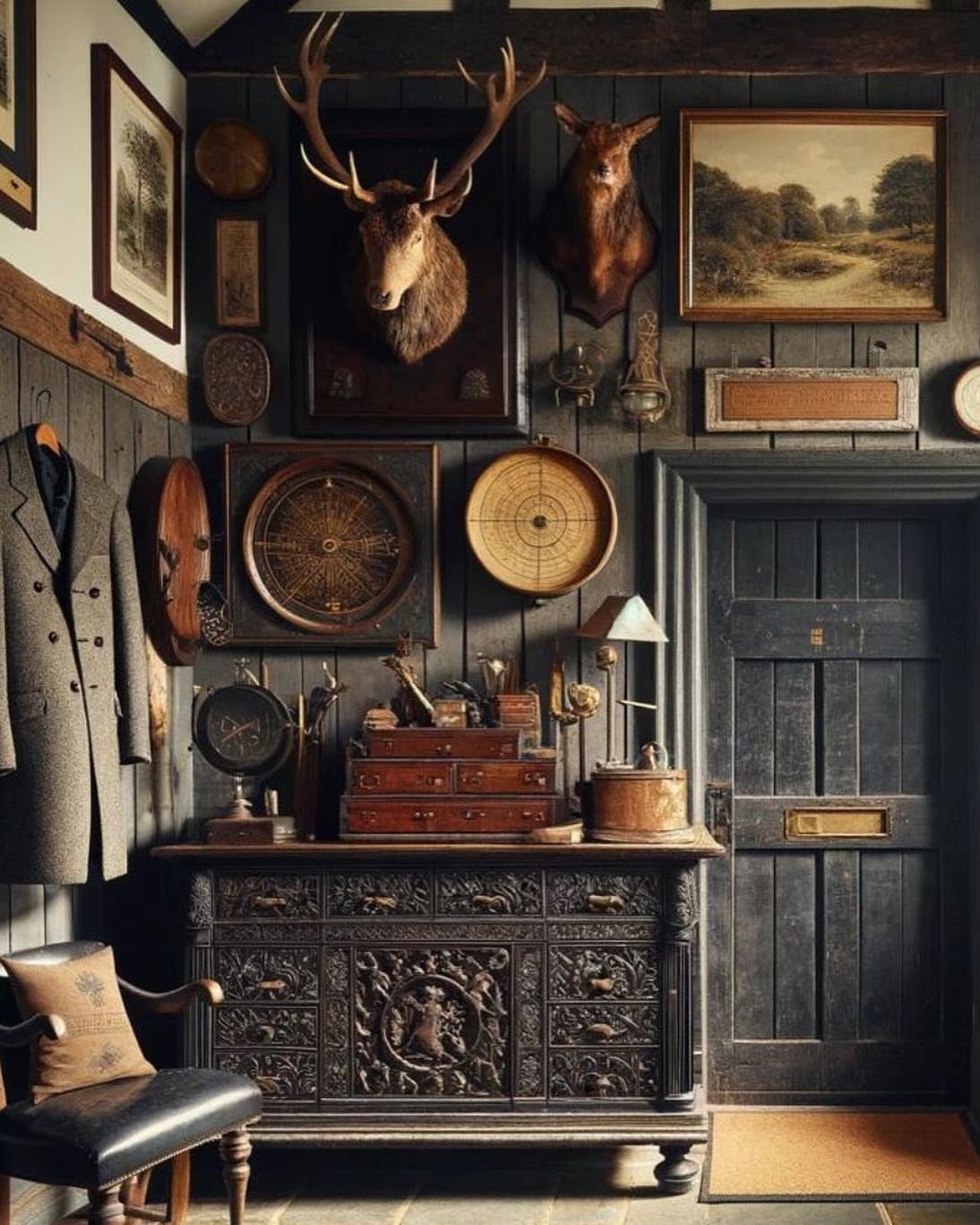
Vintage hunting memorabilia fills a man cave with history that new gear can’t replicate.
Old maps, wool jackets, hand-carved calls, leather cartridge belts, all of it carries the weight of decades and gives the room a sense of time and tradition.
Flea markets, estate sales, and online auctions are the places to find it.
Look for items with visible age: worn leather, faded canvas, tarnished brass. Condition matters less than character; a cracked duck call or a moth-bitten jacket reads as authentic in a way restored pieces don’t.
Display them where they’re visible but not crowded. A carved sideboard, a set of open shelves, or a wall grid keeps memorabilia organized without turning the space into a museum.
7. Hunting Lodge Entertainment Zone
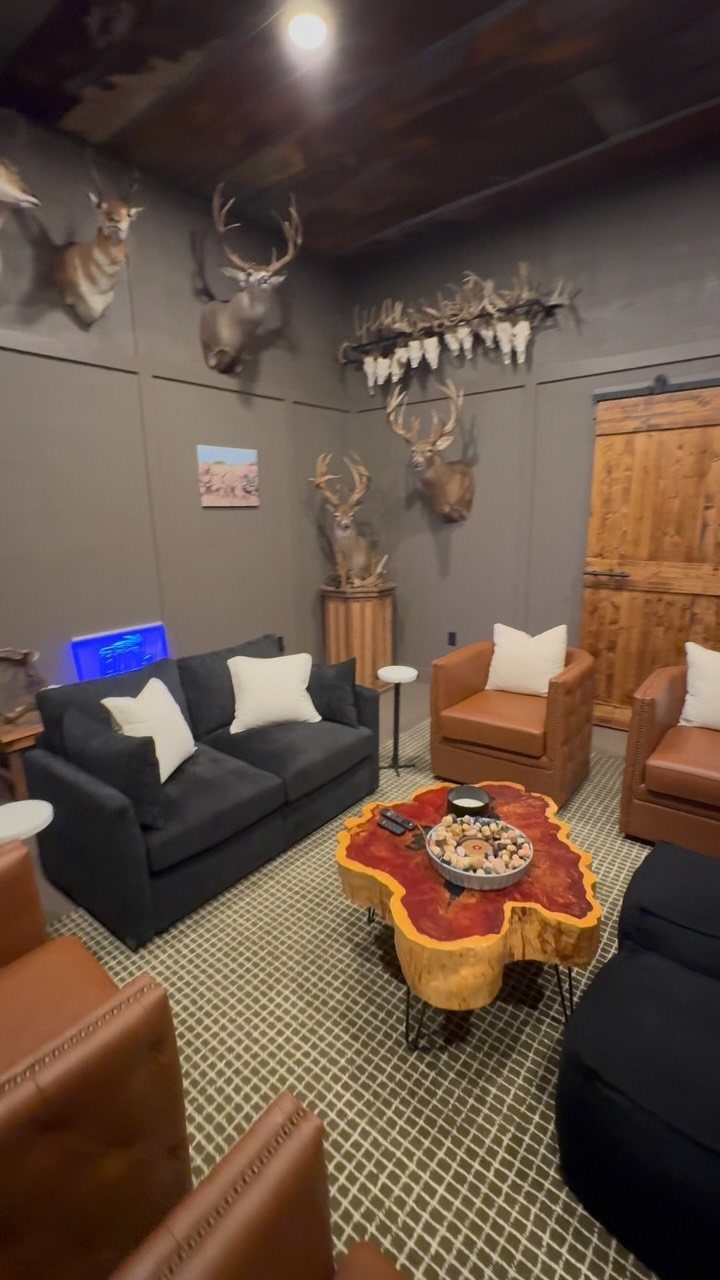
A television, a solid seating arrangement, and a coffee table that holds drinks turn a man cave into a place people actually use.
Mount the screen where everyone can see it without glare, and keep the seating low and deep enough that nobody shifts around during a game.
The coffee table pulls more weight than you’d guess.
A live-edge slab or a piece of reclaimed wood holds up to boots and spills better than glass, and the surface stays large enough for food, remotes, and whatever else lands there during a long afternoon.
Taxidermy and leather keep the room tied to hunting without turning the space into something too formal to sit in.
8. Rustic Bar Area
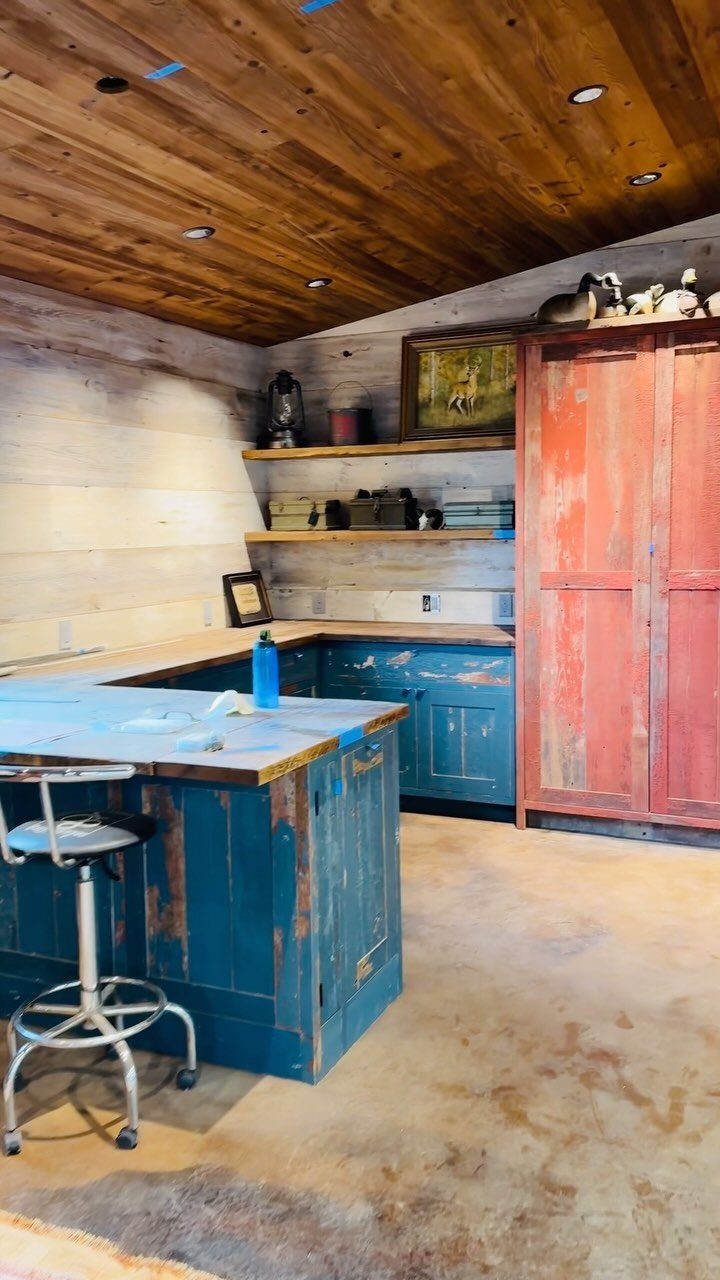
A bar built from distressed wood and salvaged cabinets anchors a hunting man cave without the cost or the look of new millwork.
The aged finish and the mismatched pieces read as collected over time, and the surface itself gives the room a place to pour drinks and gather without moving to the kitchen.
Reclaimed barn wood or weathered pine works for the countertop. The grain shows through, the surface takes a beating, and the material fits the room better than granite or tile.
Cabinets in different colors, one painted blue and another in red, add character without requiring matching hardware or careful coordination. The bar becomes the room’s anchor, and the variety keeps it from looking too deliberate.
9. Hunting Gear Gallery
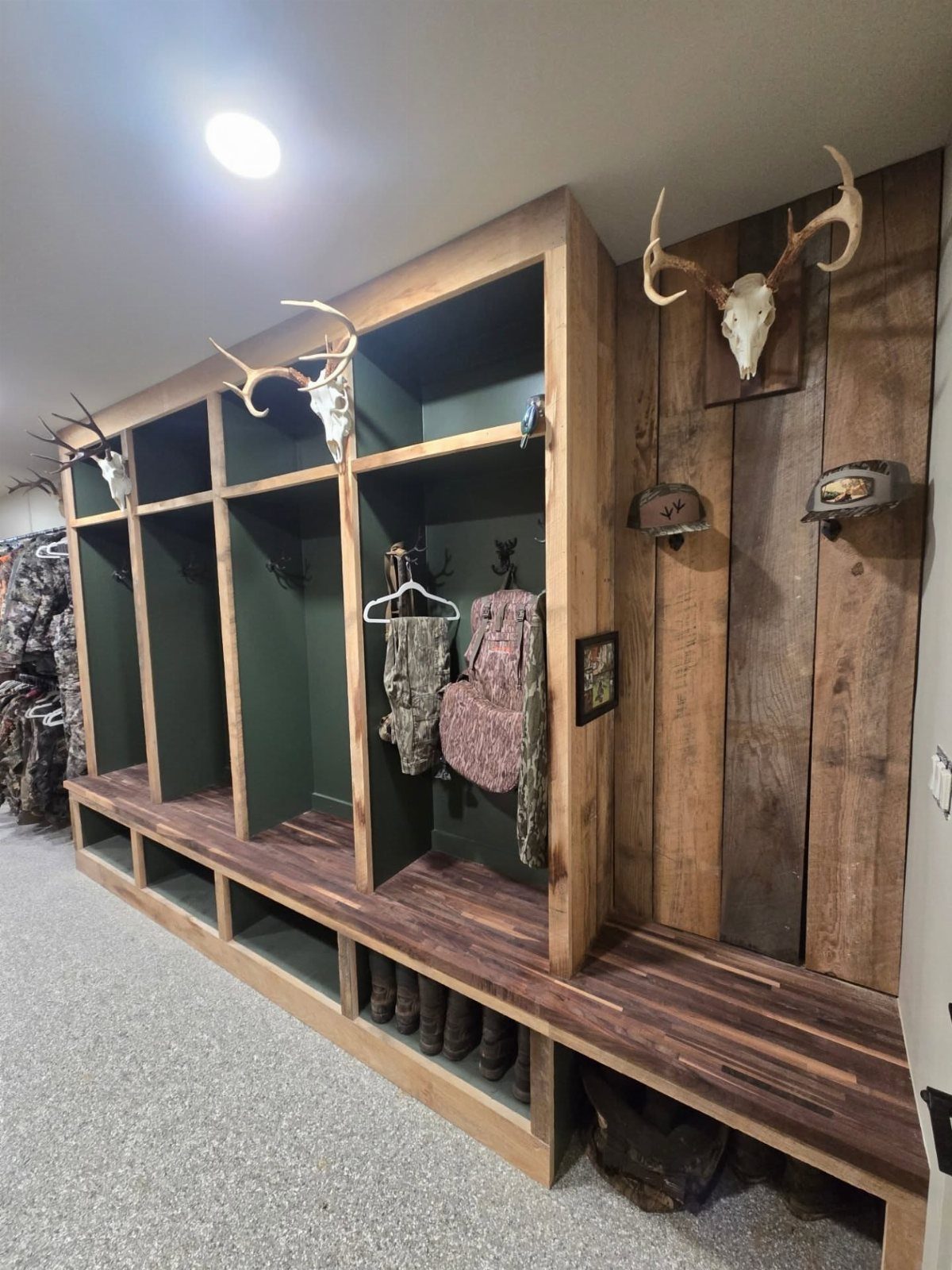
Custom shelving that holds camouflage, boots, and antlers keeps hunting gear visible instead of buried in a closet.
The open layout lets you see what you need, and the wood construction holds weight without sagging under jackets, packs, and anything else that comes back from the field.
Build the unit floor to ceiling if the space allows it.
Vertical storage takes up less floor area, and the height gives you room for mounted skulls or racks at the top where they stay in sight and leave the shelves free for gear.
Coat the wood in a matte finish that handles dirt and moisture better than bare pine.
10. Firearm Custom Cabinetry
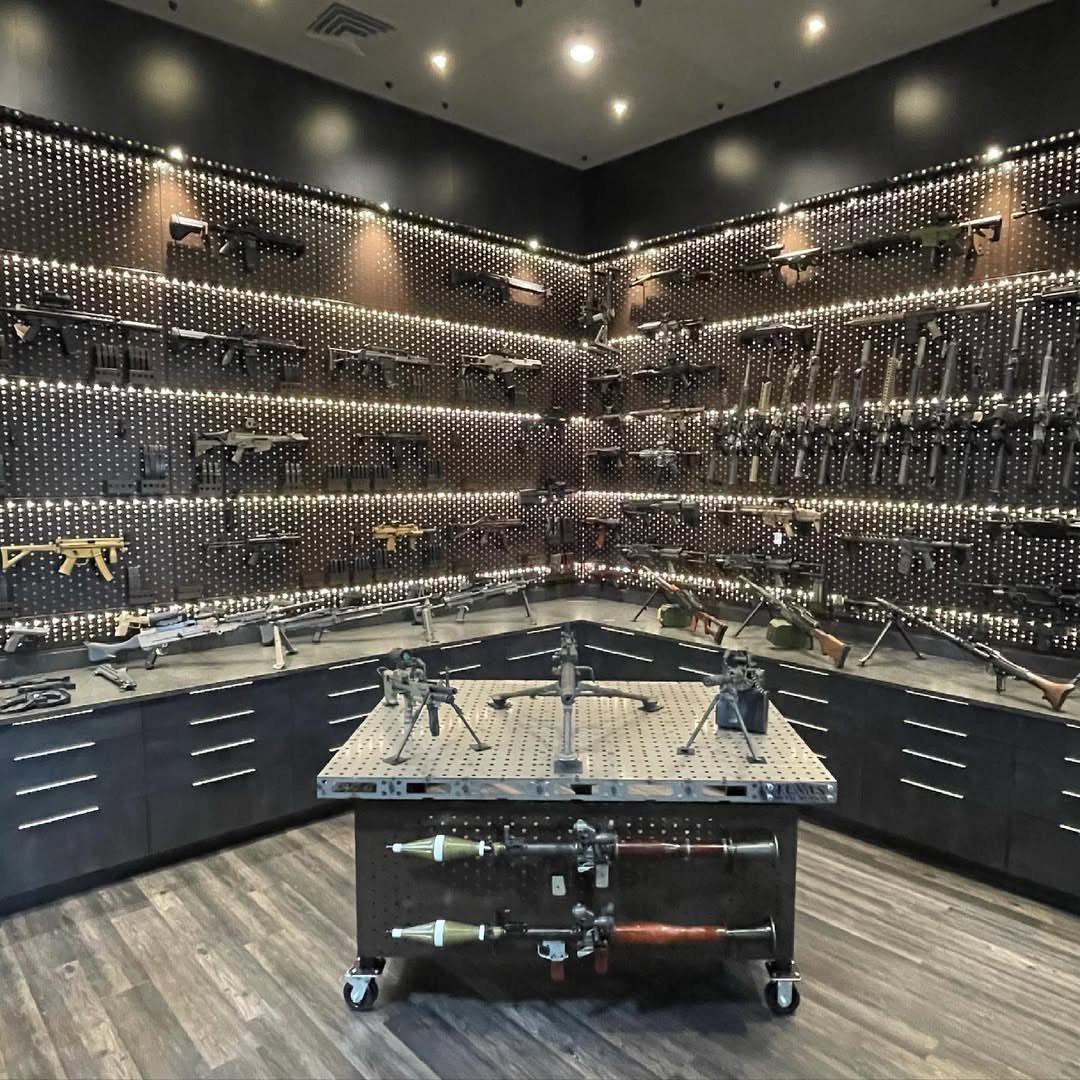
Backlit pegboard walls display firearms in a way that keeps every piece visible and secure. The pegboard layout adjusts as the collection grows, and the lighting behind it highlights the profiles without washing out the details.
Lower cabinets with locks handle ammunition, cleaning supplies, and anything else you’d rather keep out of sight. The closed storage keeps the display from looking cluttered, and the combination of open and closed space gives the room flexibility.
A mobile workbench in the center holds tools and provides a surface for maintenance without locking you into one spot. The setup keeps the room functional instead of turning it into a showroom.
11. Rustic Hunting Mudroom Entryway
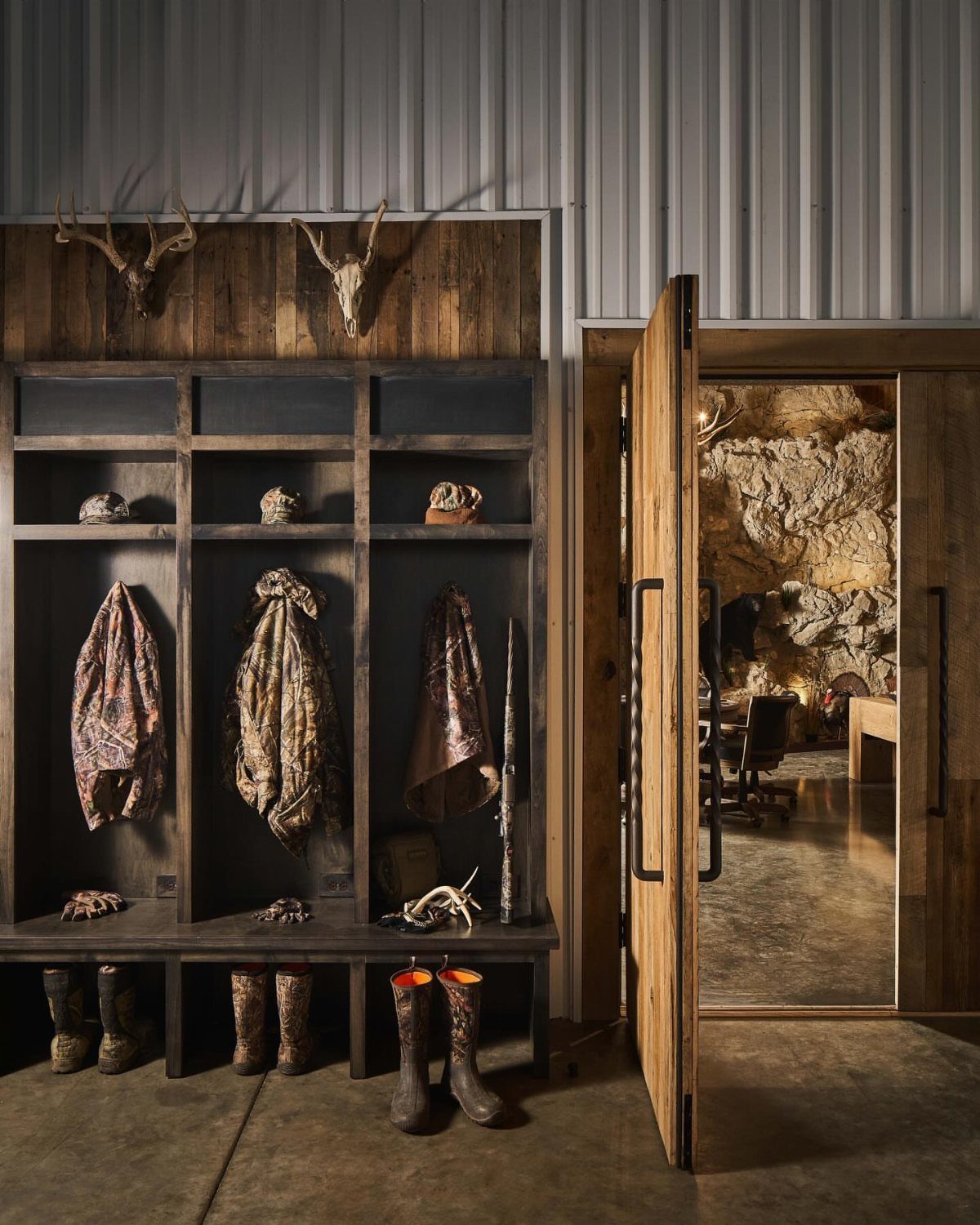
Storage cubbies built from dark wood hold boots, camouflage, and packs right where you walk in, and mounted deer skulls above them set the tone before anyone steps further into the house.
The entryway becomes a staging area that handles muddy gear without tracking it through the rest of the space.
Reclaimed wood paneling on the walls adds texture and hides scuffs better than drywall. The material holds hooks and hardware without needing anchors, and the dark finish keeps dirt from showing up every time you come in from the field.
Animal pelts draped over the cubbies soften the look without losing the hunting focus.
Creating a Comfortable Space
The space you have decides what fits. A finished basement gives you room for a full bar, multiple seating zones, and floor-to-ceiling shelving without crowding the layout.
A bonus room off the garage might hold a pair of leather chairs, a small display wall, and a television, and that’s enough if the pieces you choose carry weight.
Budget sets the timeline more than the final result. Reclaimed wood costs less than new millwork, and a single statement piece like an antler chandelier or a mounted trophy does more than a wall covered in small decor.
I’d rather see one large element that defines the room than ten things that all compete for attention.
Lighting changes how the room feels after dark.
Lantern fixtures and low-wattage bulbs give off the kind of warm glow that suits a hunting space better than overhead fluorescents, and the softer light makes leather and wood look better than they do under bright white.
Incorporating Personal Touches
The species you hunt and the places you hunt them belong on the walls.
If you spend your falls chasing whitetail in hardwood ridges, that’s what the art and the mounted trophies should show. A room full of elk and bison makes no sense if you’ve never been west of the Mississippi.
A fern in the corner or a stack of river rock on a shelf brings the outdoors in without requiring taxidermy, and the greenery works in a room that already holds leather and wood.
Personal touches mean the gear you actually use, not props bought to fill space.
The calls you carry, the pack you wear, the bow you shoot, all of it belongs in sight where it tells the story of what you do instead of what a decorator thought looked right.
Choosing the Right Materials
Reclaimed wood holds up better than new pine and costs less than hardwood from a lumberyard. The grain shows wear that adds character instead of looking damaged, and the surface takes scratches and dents without losing its finish.
Barn siding and old floor joists both work for walls, beams, and countertops if you clean them and seal them before they go up.
The patina improves with use, and the material handles moisture and dirt better than fabric upholstery.
Natural stone accents like river rock or stacked slate add texture without covering the walls.
A stone base around a fireplace or a stone backsplash behind a bar ties the room to the outdoors, and the material handles heat and moisture better than wood alone.
Frequently Asked Questions
What is a man cave?
A man cave is a room or area in a home where you can relax, pursue hobbies, and step away from the rest of the house.
It’s your own space for watching games, displaying collections, or unwinding after work. Common locations include basements, garages, bonus rooms, and sheds.
What are the best man cave ideas for hunters?
A trophy wall display, antler chandelier, and leather armchairs define a hunting man cave better than anything else.
Add a rustic bar built from distressed wood, hunting wall art that shows the species you pursue, and a mudroom entryway with cubbies for boots and gear.
Animal hide rugs and vintage hunting memorabilia fill the space with texture and history.
How to turn the garage into a man cave?
Start by adding insulation and drywall if the garage isn’t already finished, then build storage cubbies near the entry to hold boots and packs. Keep the space functional by storing hunting gear on open shelving instead of in closets.
What are some good gadgets for a man cave?
A mounted television, a solid sound system, and good lighting are the gadgets that matter most in a hunting man cave.
A mini fridge near the seating area and a charging station for phones and remotes keep the room functional without cluttering the coffee table.






