
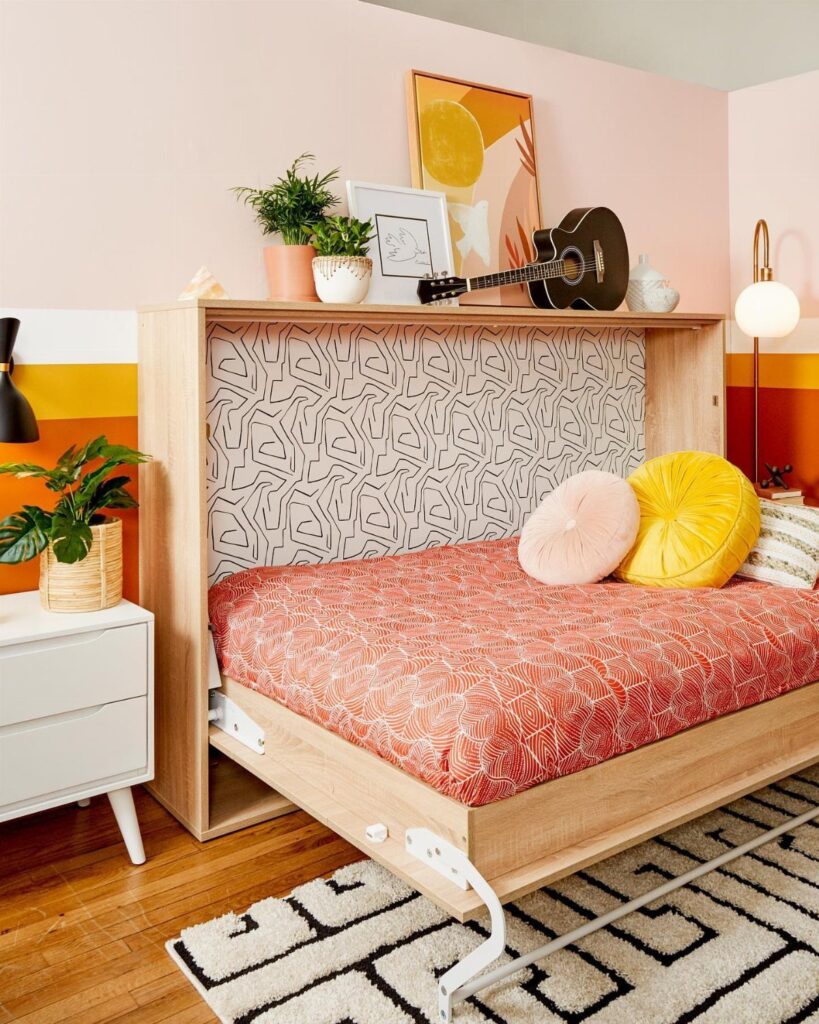
A Murphy bed turns an office into a guest room without splitting the difference on either one.
A horizontal bed folds sideways and clears a low ceiling or a ceiling fan, while planning the layout means figuring out where the desk sits and how much swing space a vertical bed needs.
Choosing the right mattress matters: most frames take a standard queen, and you need 6 inches of buffer beyond the swing clearance to avoid catching the desk chair or the rug edge when the bed folds.
1. Horizontal Murphy Bed
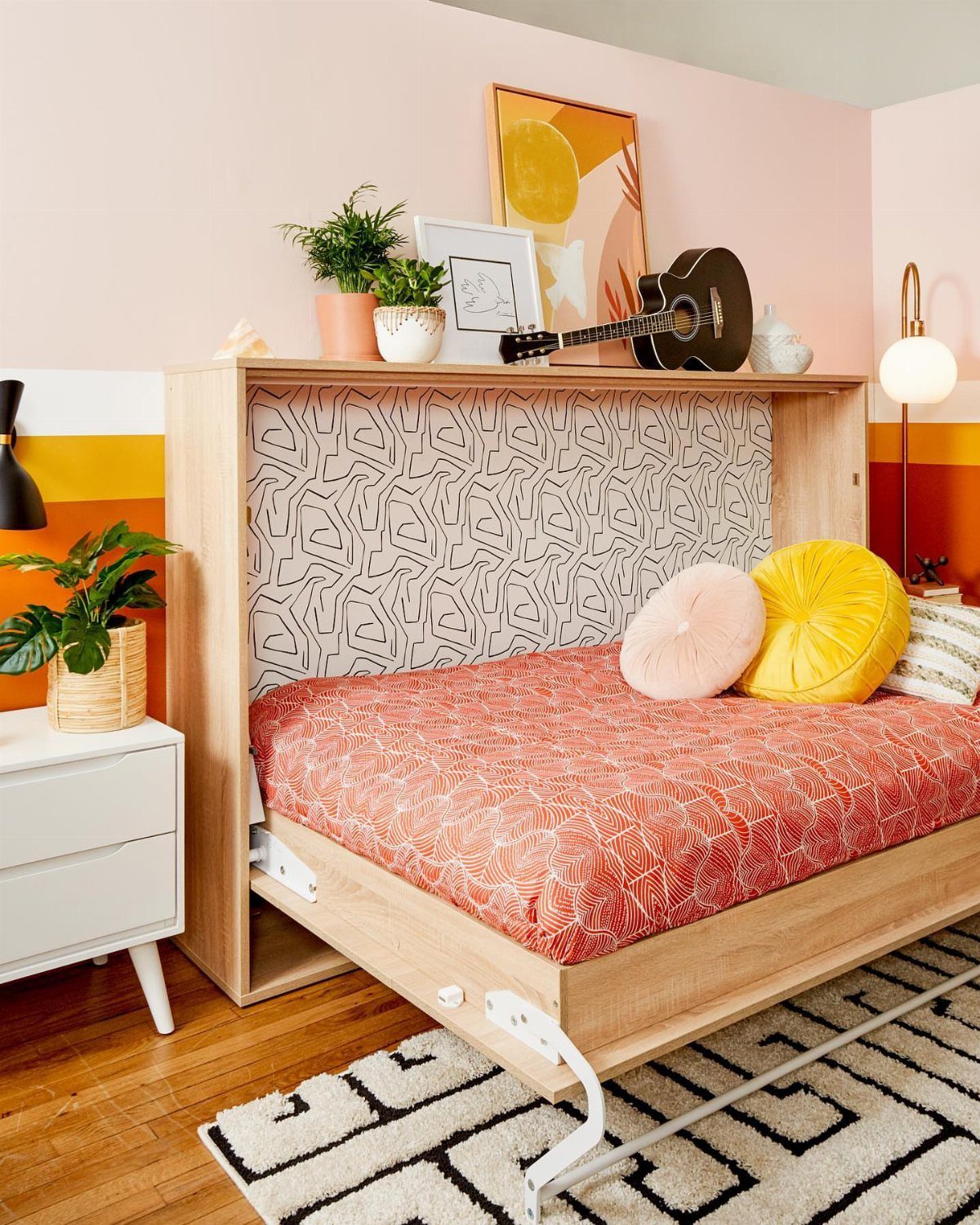
A horizontal Murphy bed folds up sideways instead of lifting toward the ceiling, which changes the clearance you need in front of it. That matters when the desk or chair sits close to the wall.
The bed visible here mounts to the wall and flips left, leaving the floor open when it’s up.
Most horizontal frames fit a queen mattress and need a good stretch of clear wall. The folding mechanism carries the same spring or piston lift as a vertical bed, just turned on its side.
If your ceiling is low or you have a ceiling fan in the way, horizontal is the layout that works.
2. Built-in Murphy Bed

A built-in Murphy bed sits inside a cabinet frame that was either custom-built for the space or assembled from modular panels. The bed and the cabinetry go in at the same time, so the whole unit reads as one piece.
A built-in Murphy bed with surrounding shelving and cabinetry hides the bed completely when it’s folded and gives you display space and lighting where a standalone frame would leave blank wall.
Budget runs higher than a standalone Murphy bed kit.
3. Shelves and Cabinets Around the Murphy Bed
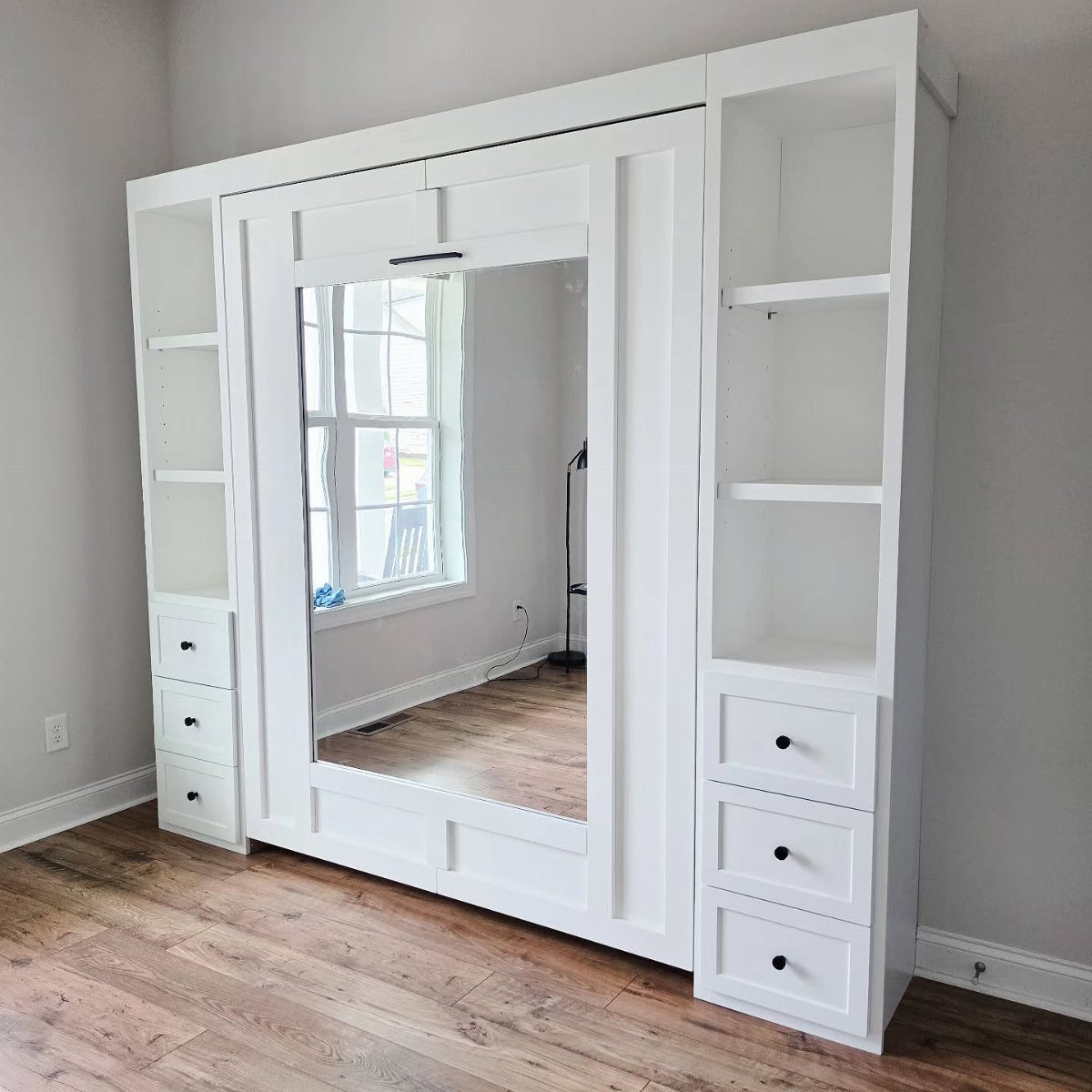
Flanking the Murphy bed with shelves and cabinets gives you storage that stays accessible whether the bed is up or down.
The shelves sit outside the swing path, so books and office supplies do not need to move when a guest arrives.
The white unit visible here puts adjustable shelves on both sides and drawers below, with a mirrored door covering the bed. That mirror doubles the light and makes a small room feel wider.
Most Murphy bed kits offer matching side towers. You can also frame the bed yourself with floor-to-ceiling bookshelves if you are keeping the bed mechanism separate.
4. Murphy Bed with Integrated Desk
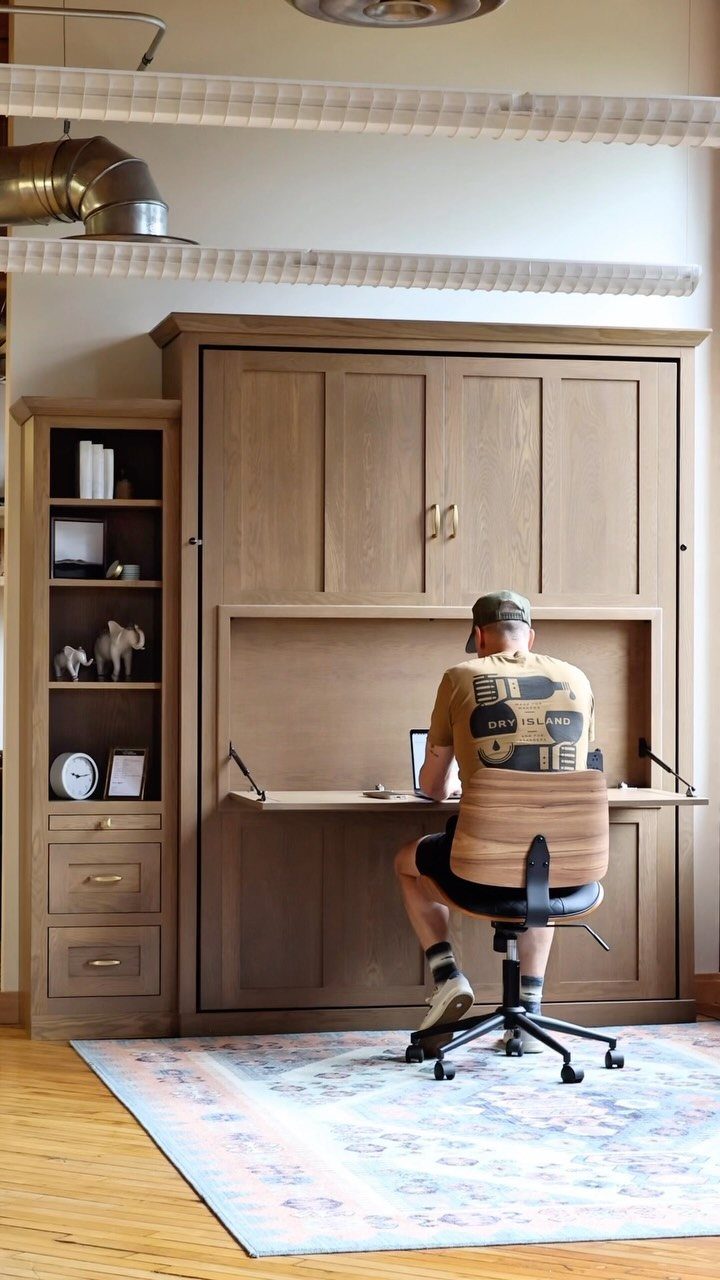
A Murphy bed with an integrated desk puts both work surface and sleeping space on the same wall, and one flips away to make room for the other.
When the bed is up, the desk is usable; when the bed comes down, the desk either folds against the mattress or slides out of the way.
The wooden unit visible here has a fixed desk built into the lower half. The bed swings down right over the desk surface, so anything on top gets moved before company shows up.
But the disappearing beds aren’t just for studios and small square footage. Murphy beds are also great for making a room multi-purpose, like in this home office-slash-guest bedroom redo by Janie McKinney ( @dollyandbud ).
5. Murphy Bed Hidden Behind Bookshelves

A Murphy bed hidden behind a bookshelf disappears completely when folded. The entire bookshelf unit is hinged and swings open like a door, revealing the bed inside.
The wooden unit visible here is floor-to-ceiling and deep enough to hold the folded mattress.
The shelves stay loaded; the hinge carries the weight of both the frame and whatever sits on the shelves, so the hardware needs a serious weight rating.
This layout works when you want the office to look like an office, with no visible bed hardware at all.
Planning the Room Layout
Tape out the footprint of the Murphy bed when it’s down and leave it there for a day.
Walk the path from the door to the desk, then from the desk to the closet. If you’re stepping over tape every time, the bed is blocking too much.
Measure the swing clearance the bed needs and add 6 inches. That buffer keeps the bed from hitting the desk chair or catching the edge of a rug when it folds.
A narrow room often works better with the bed on the short wall, even if that puts the desk on the long side.
A layout where both the work zone and the sleep zone feel like they have enough air, not one where the bed dominates the room half the month.
Choosing the Right Mattress
Most frames take a standard mattress, so guests get the same comfort they would on a regular bed. Memory foam works well because it compresses when the bed folds and does not shift inside the straps.
A queen fits two adults and still leaves floor space in a 10 x 12 room. A full saves another 6 inches of width, which can matter when the desk and bed share a wall.
Skip the pillow top. The added height pushes some frames past their clearance limit, and the extra padding does not compress cleanly when you fold the bed up.
Maintaining Organization
A rolling file cart keeps paper and office supplies contained and moves into the closet when a guest is coming. I use one with a lid so nothing on top slides off when it rolls.
Cord management matters more in a dual-purpose room because you cannot leave charging cables draped across the floor where someone will trip in the dark. Velcro cable ties and adhesive clips keep everything along the baseboard.
Clear the desk surface before the bed comes down. A Murphy bed does not care what’s on the desk, but your guest will notice if they have to move your laptop to unfold their sheets.
Frequently Asked Questions
What is the best bed for a guest room office?
A Murphy bed folds into the wall and gives you back 30 square feet of floor space for your desk, chair and shelves.
A sofa bed takes up floor space whether someone is sleeping on it or not, and an air mattress offers terrible comfort. Murphy beds let guests sleep on a real mattress without turning your office into a permanent bedroom.
Is there a Murphy bed with a desk that stays flat?
Yes, some Murphy beds have a desk that stays level when the bed folds down over it.
The bed swings down above the desk surface, so your computer and papers stay right where you left them, untouched while someone sleeps. You never have to clear the workspace or move anything before a guest arrives.
What are the downsides of a Murphy bed?
Murphy beds cost more than a regular bed frame and require wall installation, which means anchoring into studs and checking weight ratings.
The mechanism needs proper mounting or it becomes a safety problem. If you build one yourself, poor anchoring or weak materials can create risk, so most people buy a manufactured frame with rated hardware.






