
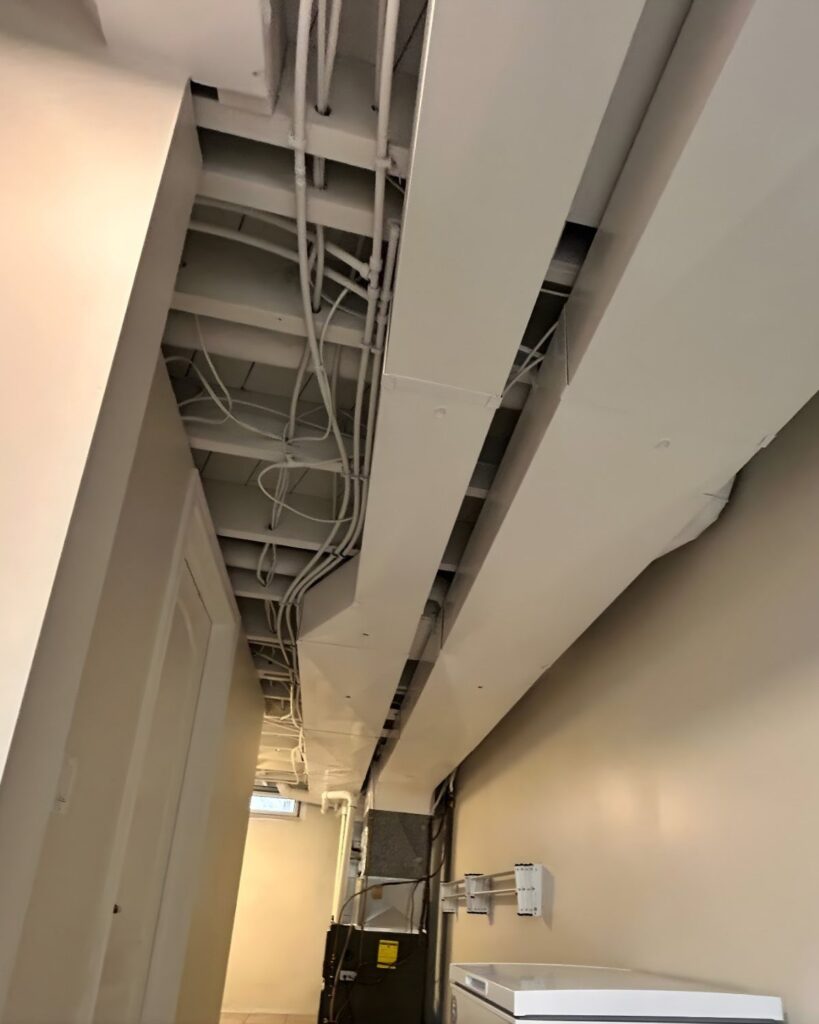
The sections below cover what color does best where, which finish to buy, and what to check before the first coat goes on.
Black pulls a low ceiling back and makes everything above the sightline disappear, white sends light back down into a dim room, and one dark color over all the layers turns pipes and structure into a single surface.
Flat finish is the only sheen that works here because it hides surface flaws on rough-cut lumber and keeps joists from turning into highlight stripes under overhead lighting.
1. Exposed Beams and Pipes Painted in Dark Colors
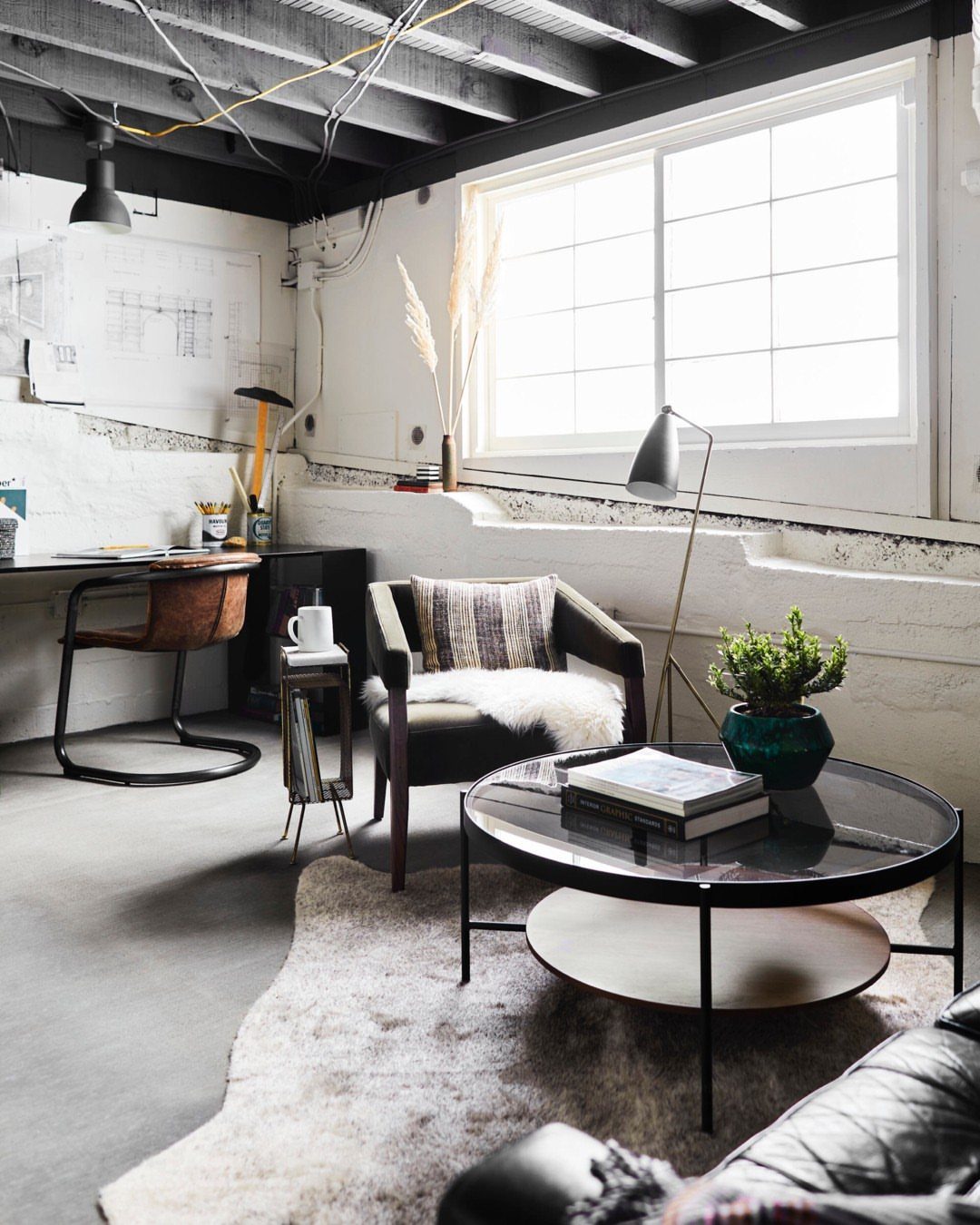
Dark paint pulls exposed structure into the background and makes the ceiling recede visually.
I’ve found charcoal or black works best on ceilings with multiple layers of pipes, ductwork, and joists because it unifies everything into one plane instead of highlighting every individual element.
The approach keeps your budget low since you’re skipping drywall completely. A single coat of latex primer followed by one or two coats of dark ceiling paint covers most surfaces in a weekend.
Spray equipment speeds the job when you have a lot of pipes, but a roller with an extension pole handles joists and beams just fine.
2. Unfinished Basement Ceiling Painted Black
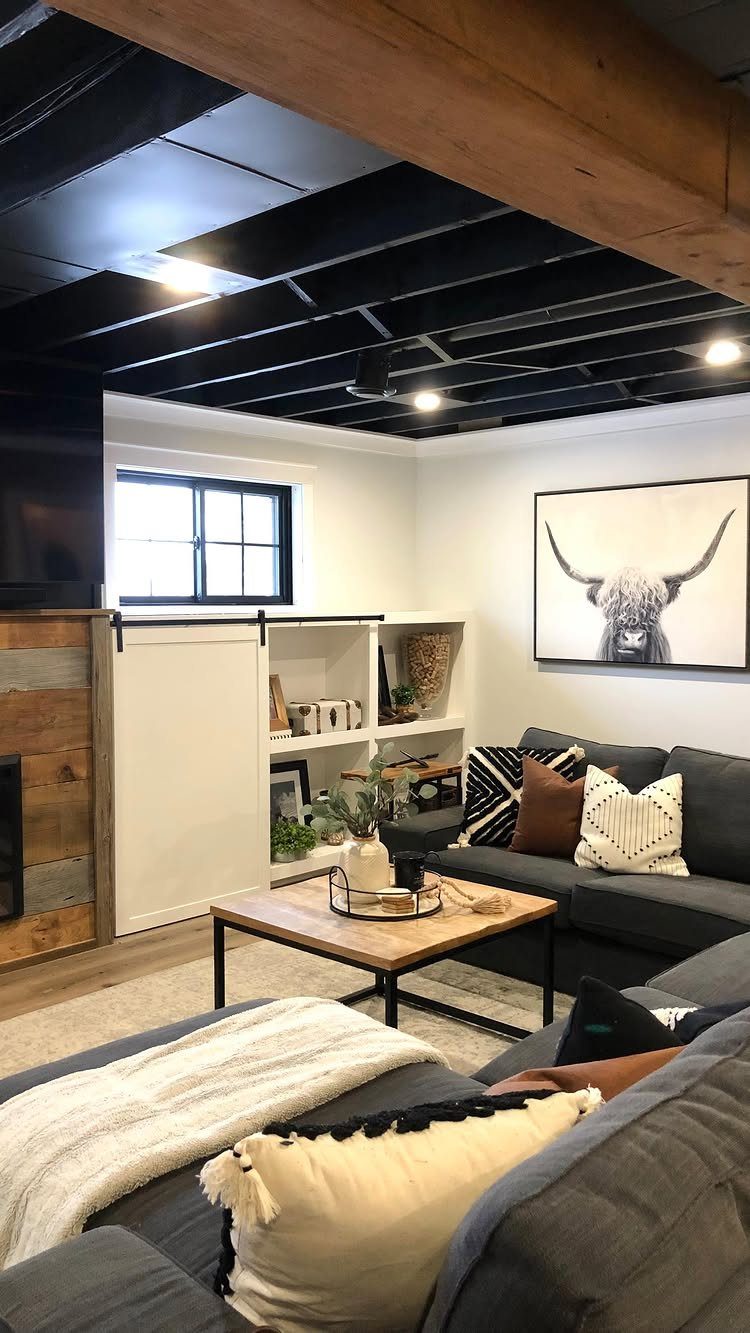
Black ceiling paint on bare joists finishes the space without the cost or headspace loss of drywall. The color makes the ceiling disappear visually, which helps in basements where headroom is already tight.
I’d use flat or matte black latex ceiling paint.
Glossier finishes catch light on every joist edge and make the structure more visible, not less. Plan on 2 coats over bare wood, and a coat of primer if your joists have old stains or knots bleeding through.
A roller on an extension pole gets into the joist bays faster than a brush, and you can cut in around the perimeter with a smaller roller instead of taping everything off.
Most basements take a gallon or two depending on joist spacing and how many runs of ductwork you’re covering.
Professional ceiling painting costs average $250, while paint runs $20 to $30 per gallon, making this a cost-effective way to finish your basement.
— Angi
3. Painted Steel Beam with Natural Joists
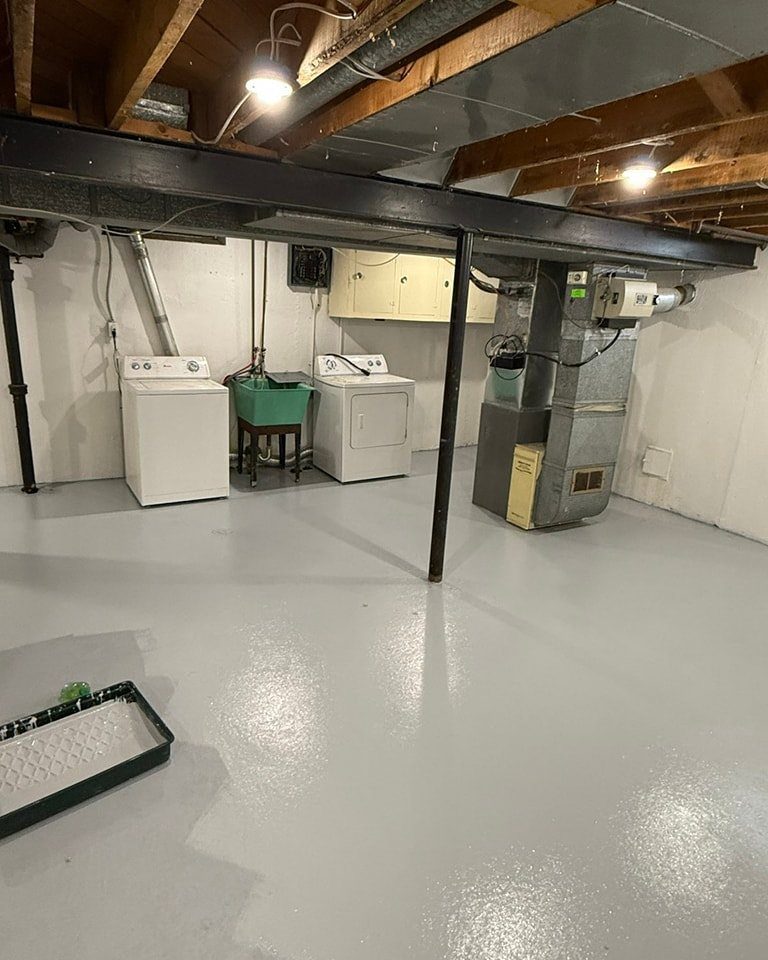
Painting just the steel beam black while leaving the wood joists natural draws the eye to the structural divide without covering everything. The contrast highlights the beam as an intentional design element instead of something to hide.
I’d go with black on the steel so it reads as metal, not just another dark surface.
The wood joists can stay bare if they’re in decent shape, or you can seal them with a clear coat to bring out the grain and keep dust from settling in.
This approach works well in laundry or utility spaces where you want some visual interest but don’t need a fully finished ceiling. The beam gets 2 coats of paint, the joists get a wipedown, and you’re done in an afternoon.
4. White Painted Unfinished Ceiling
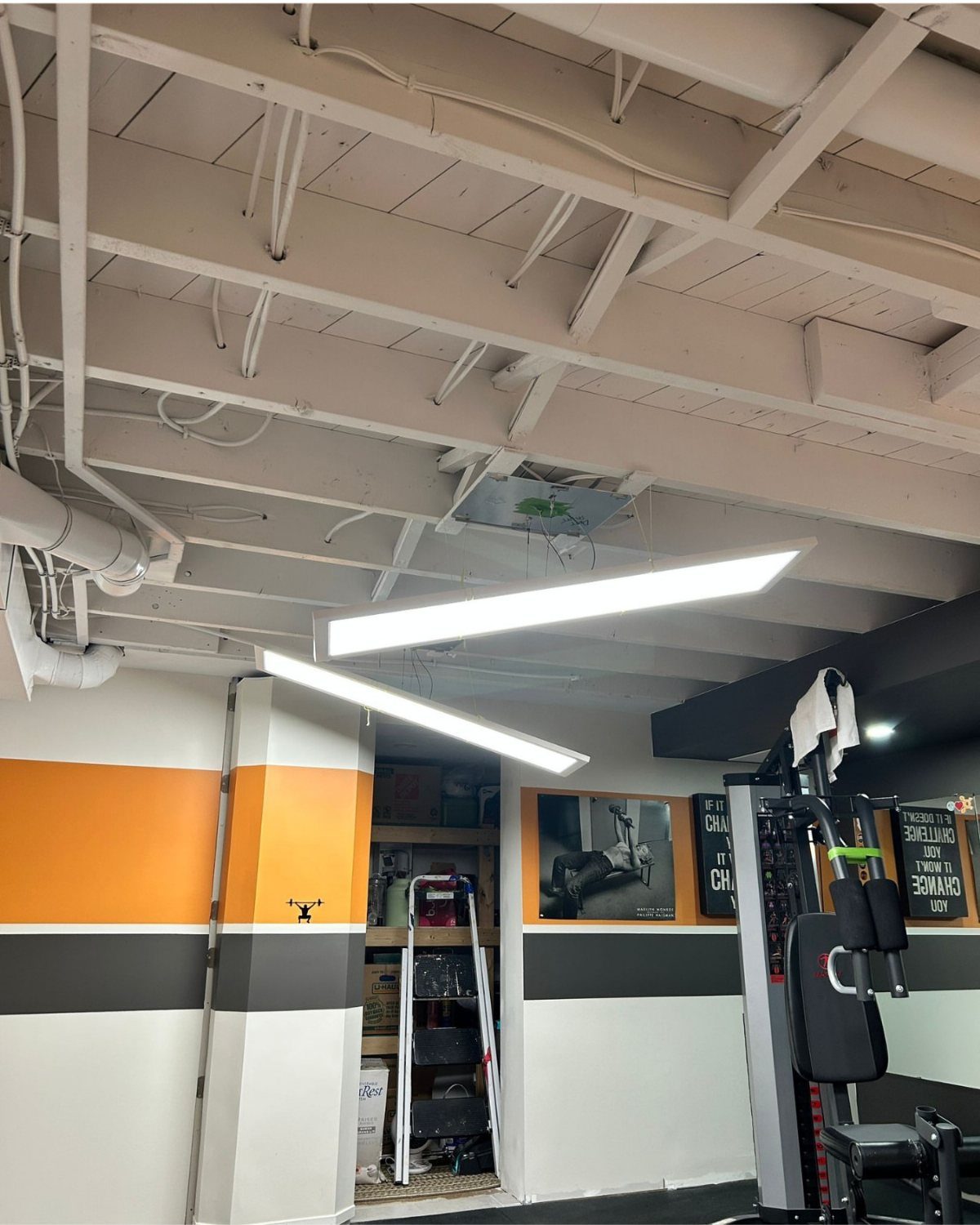
White paint over everything turns an unfinished ceiling into a bright, cohesive surface that reflects light back into the room.
The color choice matters in basements where natural light is limited and you want the space to feel as open as possible.
Flat white ceiling paint covers joists, ductwork, and wiring in one go. I’d use a sprayer if you have access to one, since rollers leave texture on ducts and take longer in tight joist bays.
Two coats usually handle it, and the first coat can look patchy until the second one evens it out.
White shows dust more than dark colors, so plan on wiping down ducts and joists before you start. The brightness gain is worth it in spaces like gyms or workshops where you need good visibility.
Safety Precautions
A respirator is the first piece of gear I’d get for this job, especially if you’re spraying.
Paint mist stays in the air longer than you think, and basements rarely have enough airflow to clear it fast. The primer smell is worse than the topcoat, so keep the respirator on through both.
Goggles matter more on a ceiling than on walls because gravity works against you. Paint drips land on your face, and once the goggles are covered you’ll need someone to wipe them down mid-job or you’re working blind.
A paint suit lets you peel off between coats without dragging black specks upstairs on your jeans. Gloves handle the overspray on your hands, and disposable shoe covers stop dried paint from following you upstairs on your soles.
Choosing the Right Finish
Flat finish is the only sheen I’d use on a basement ceiling you’re leaving exposed.
The lack of sheen also hides surface flaws better than satin or semi-gloss, which matters when you’re painting over rough-cut lumber, old joists with checking, or ducts with visible seams.
Flat absorbs light instead of bouncing it back, so imperfections read as texture instead of mistakes.
This holds for both dark and light colors.
A flat black ceiling disappears, a glossy one shows every edge. A flat white brightens the room, a satin white turns every joist into a highlight stripe.
Future Considerations
Painted open ceilings leave full access to everything running overhead. Plumbing, electrical, and HVAC all stay reachable without cutting drywall or pulling down panels, which matters in basements where those lines often serve the whole house.
If you know you’ll be adding circuits, replacing shutoff valves, or routing new ductwork later, an open ceiling saves you from tearing out finished work.
The paint itself doesn’t block access, and touch-up after a repair is just a quick roller pass over the area you disturbed.
This is one reason the look works well in utility spaces and laundry rooms where maintenance happens more often. You get a finished appearance without locking yourself out of the systems behind it.
Frequently Asked Questions
Can you paint an unfinished basement ceiling?
Yes, painting bare joists, ductwork, and pipes is a common way to finish a basement ceiling.
Raw wood absorbs more paint than sealed surfaces, so count on 2 coats of primer and topcoat to get even coverage. You skip the cost and headroom loss of drywall while keeping full access to everything overhead.
What is the cheapest way to cover an unfinished basement ceiling?
Painting costs less than drywall, drop ceilings, or plank coverings like shiplap.
A gallon or 2 of ceiling paint and a weekend covers most basements, and you’re not paying for framing, panels, or a contractor. The exposed look fits utility spaces better than living rooms, so consider where you want to spend time.






