
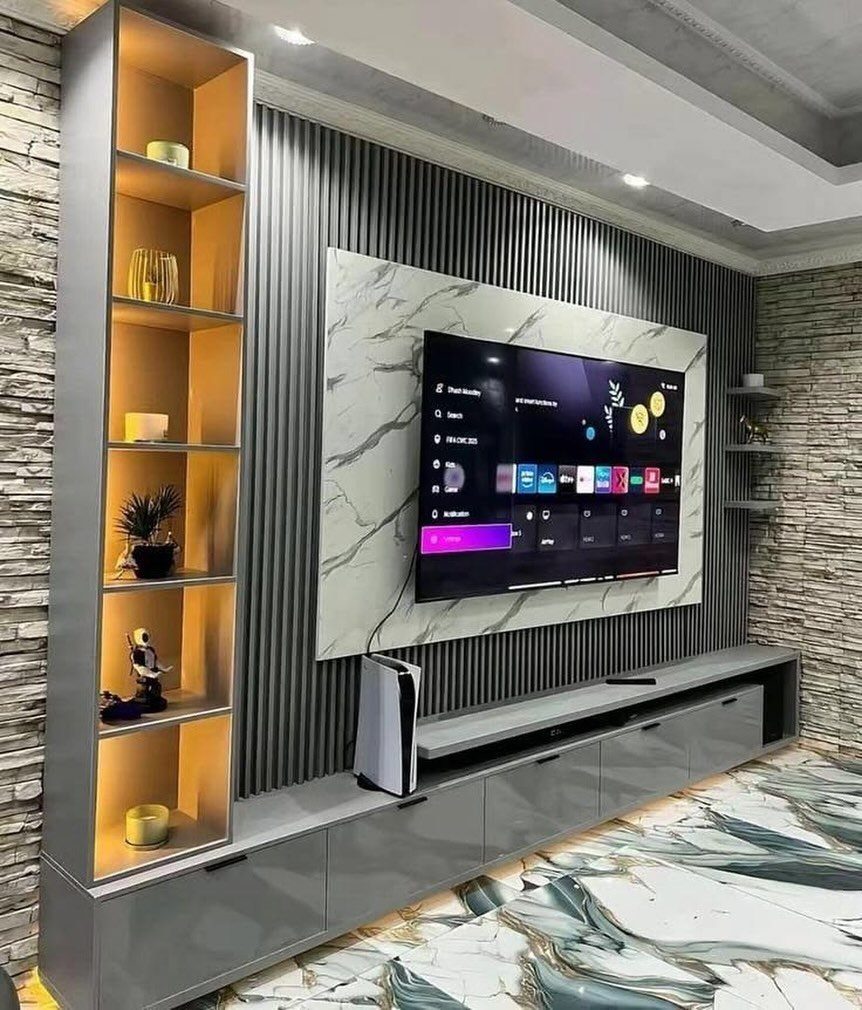
A recessed TV wall can run from a shallow niche with perimeter backlighting to a deep architectural opening framed during construction, with molding, stone, wood slabs, and arched or curved alcoves in between.
The right setup depends on the look you want: backlit niches and curved recesses read modern, while molding and stone slabs feel more traditional.
1. Vertical Rhythm as Padding
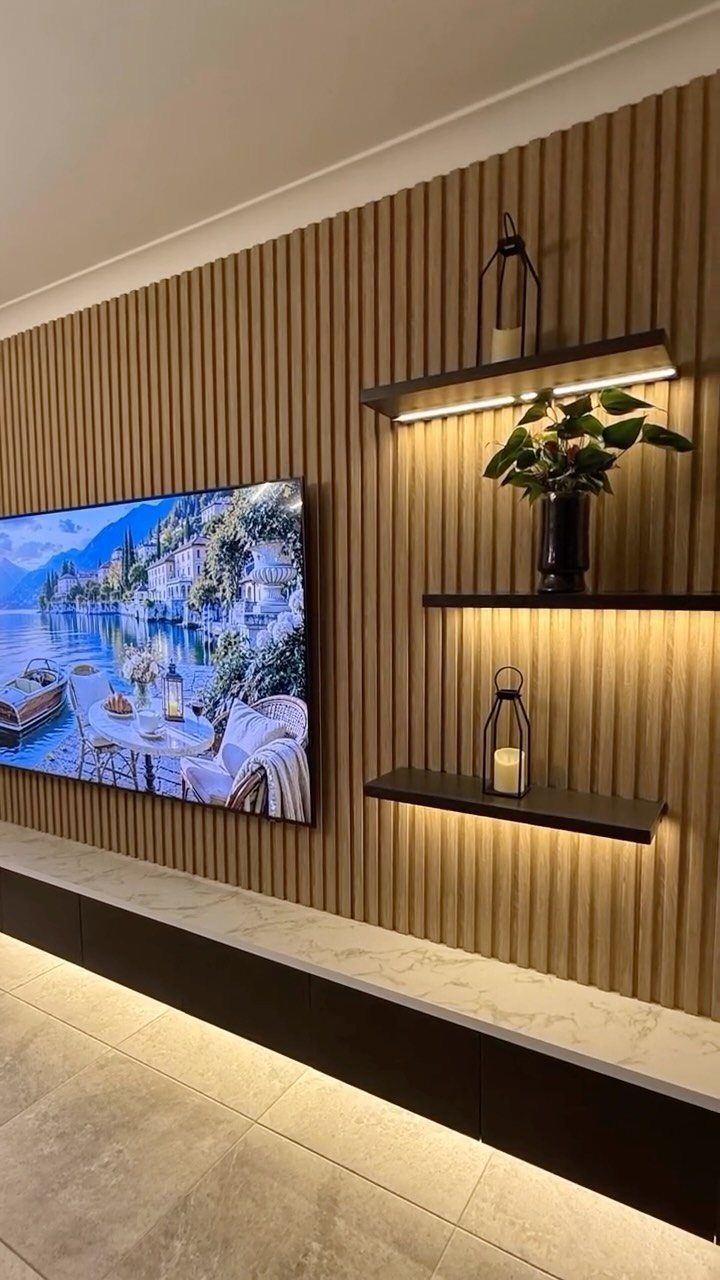
Vertical slats frame the screen without enclosing it. The rhythm pulls your eye up and down, and the TV stays quiet in the middle.
Slats can be full height or stopped short above and below the screen.
Either way, the spacing should stay consistent: 2–3 inches between each slat keeps the pattern from feeling too busy or too spread out. The floating shelves break the wall into layers, and the backlight inside each one adds depth after dark.
This approach works when the wall is already flat and you want texture without committing to a full recess.
2. Marble and Slats
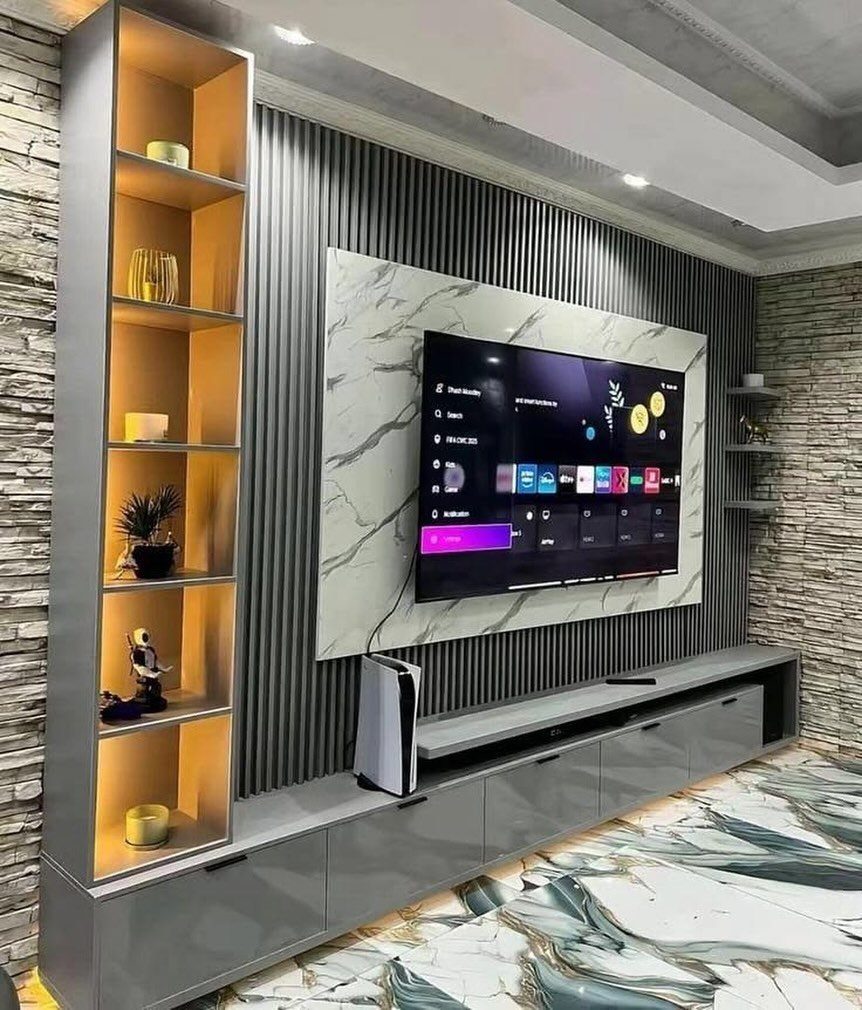
A marble panel behind the TV carries weight, and the slats soften it. The contrast between polished stone and matte wood makes both materials read more clearly.
The marble can be a single slab or book-matched panels mounted flush to the wall.
Grey or beige veining keeps the look grounded. The slats run floor to ceiling on either side, and the long console below stretches the width of the setup to keep the proportions balanced.
This works best in spaces where the TV wall is already the focal point and you want the materials themselves to do the talking.
3. Let the Wall Outrank the Screen
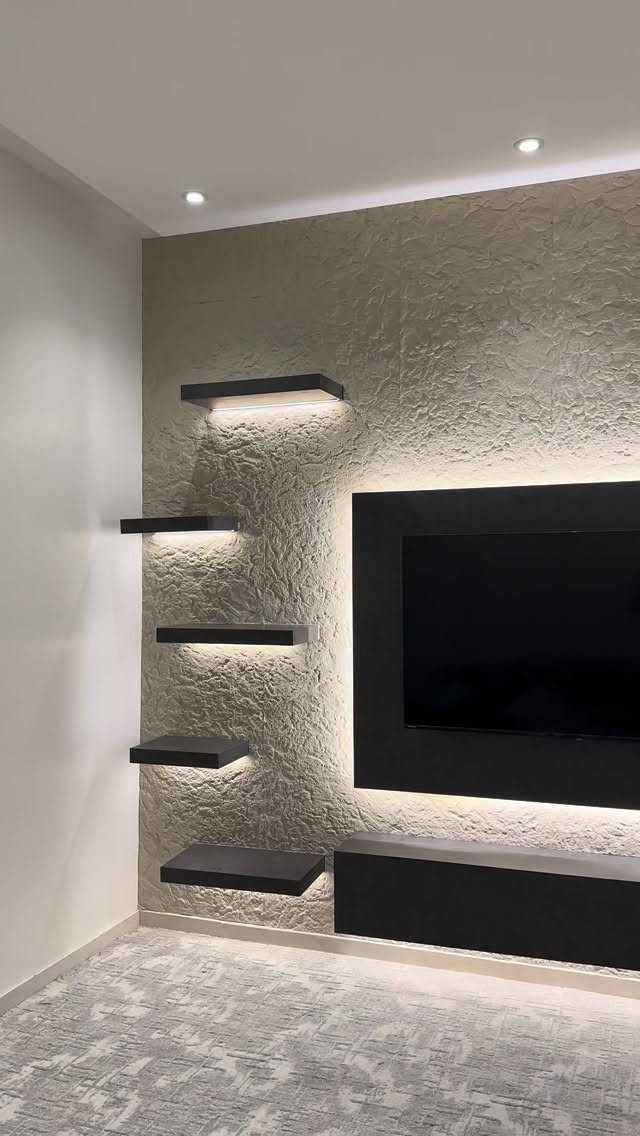
Build the wall for its own sake, then add the TV. A textured stone panel, natural or faux, gives the surface enough presence that the screen becomes secondary.
Stone panels come in sheets or smaller stacked ledger tiles, and most are lightweight polyurethane or fiber-reinforced composites that mount with adhesive.
The floating shelves and console sit against the texture, and the backlight underneath each shelf casts shadows that make the relief more visible at night.
The TV stays black, the cables stay hidden, and the wall does the work.
4. Deep Recessed Opening
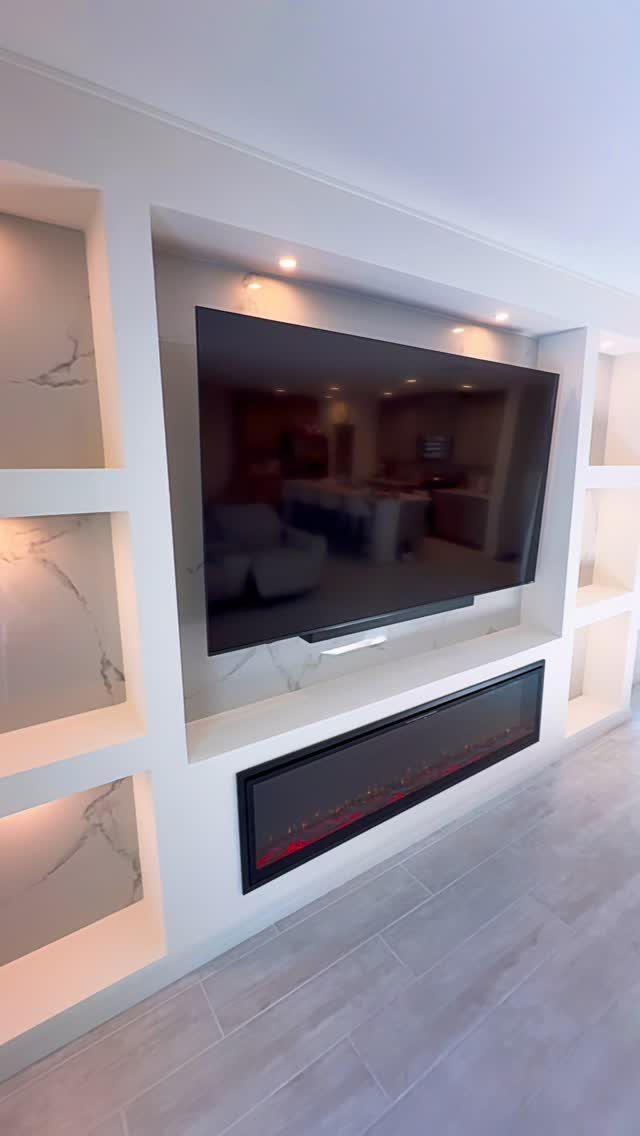
A deep recess treats the TV like architecture. The opening is framed with drywall or MDF, and the screen sits inside it instead of mounted on top.
The depth lets you run all the cables and outlets inside the cavity, and the fireplace below becomes part of the same volume.
Built-in shelving on both sides continues the recess across the wall, and the marble backing inside each niche adds material contrast without competing with the TV.
This setup requires framing the wall out before drywall, so it’s easiest during new construction or a full remodel.
5. Long Base
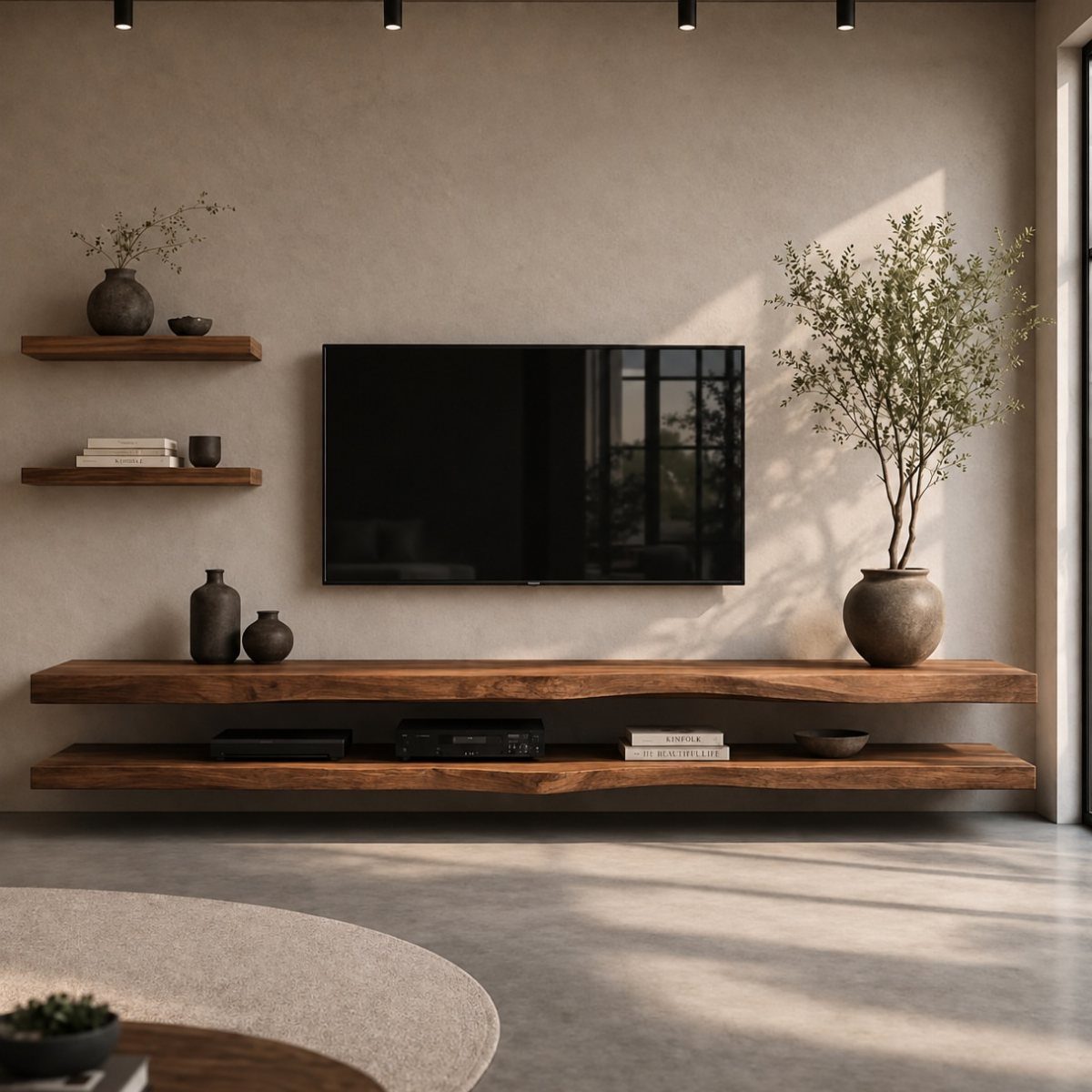
A long shelf under the TV anchors it without adding bulk. The shelf should extend past the screen on each side, and a live edge or natural wood grain keeps it from reading as a generic floating box.
Two-tier shelves add vertical space for remotes, speakers, or plants without stacking things directly under the screen. The shelf depth can hold a soundbar or small objects without jutting too far into the room.
This is the simplest option when you want the TV to feel grounded but the wall itself stays plain.
6. Dark Backdrop
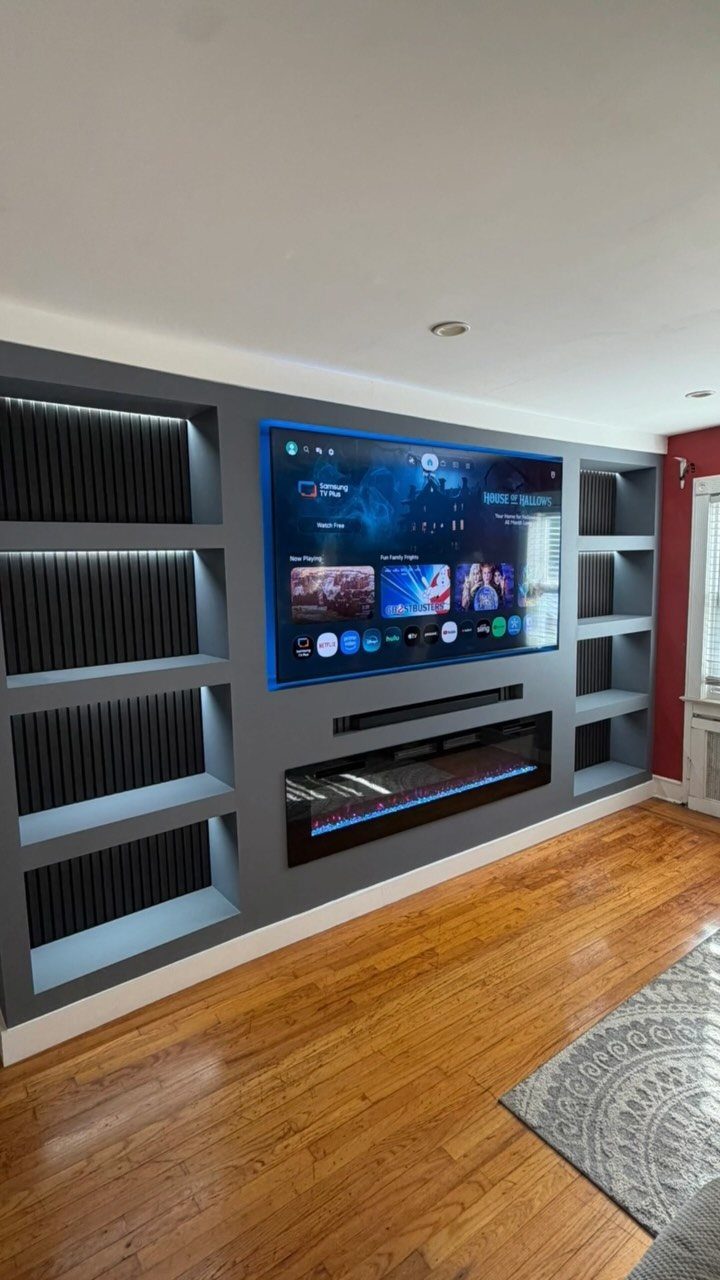
A dark grey or charcoal wall behind the TV reduces glare and makes the screen disappear when it’s off. The recess here is shallow, just enough to set the TV and fireplace into the surface.
The built-in shelving on either side uses dark slatted panels as backing, which keeps the eye moving across the wall instead of stopping at the screen.
The linear fireplace sits directly below the TV, and the shared dark backdrop ties both elements into one plane.
This works in rooms with plenty of natural light, where a dark wall reads as intentional rather than heavy.
7. Curved Recesses
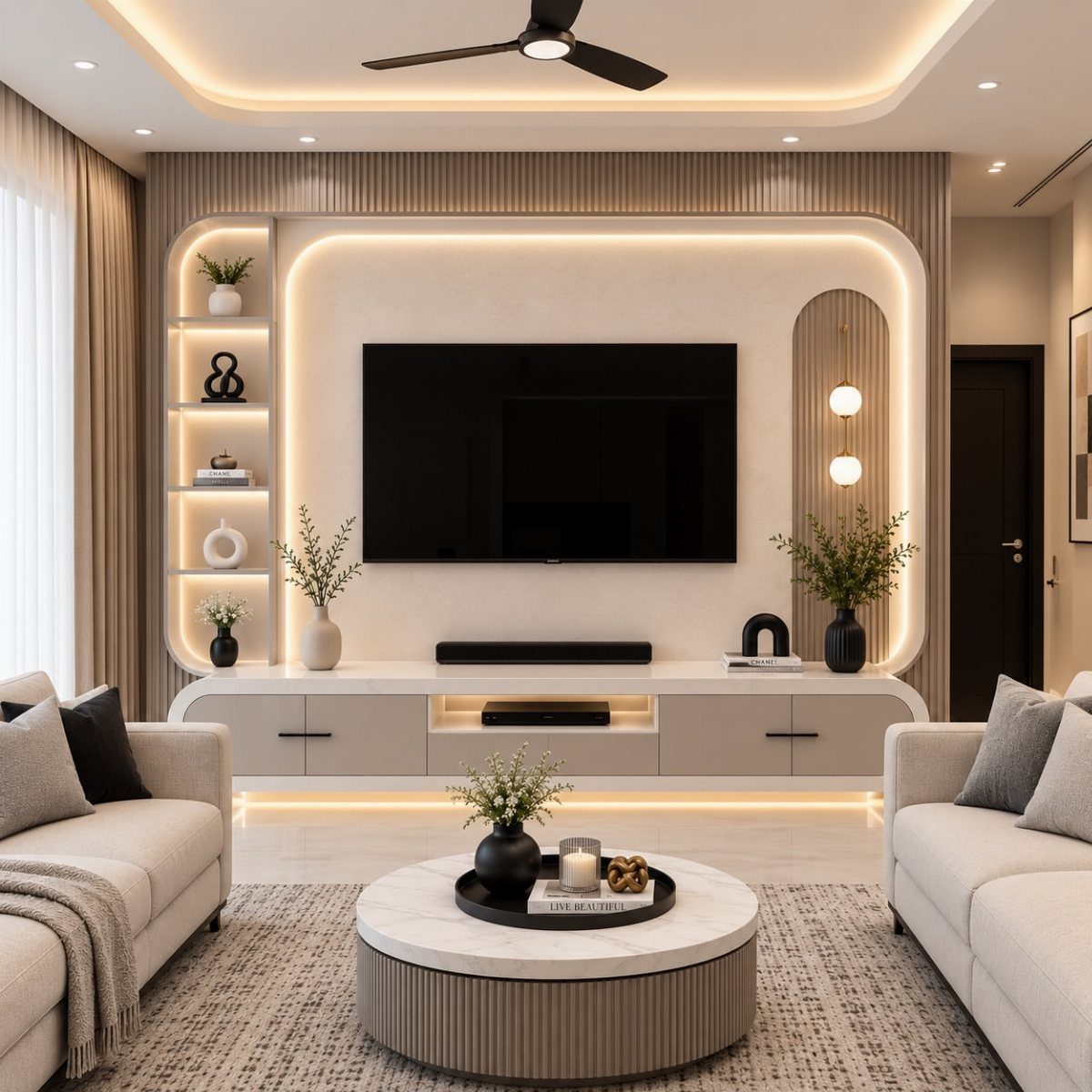
The curve softens the geometry without losing the precision. The recess here rounds its corners instead of stopping hard, and the backlight follows the same arc.
Building this takes bending drywall or MDF around a curved frame, which adds time and skill to the install.
Flexible drywall strips or kerfed cuts on the back of standard sheets let you shape the arc, and the LED strip mounts just inside the lip to light the curve evenly.
The result reads more tailored than a square cutout, and the glow makes the depth visible from across the room.
8. Minimalist Media Wall
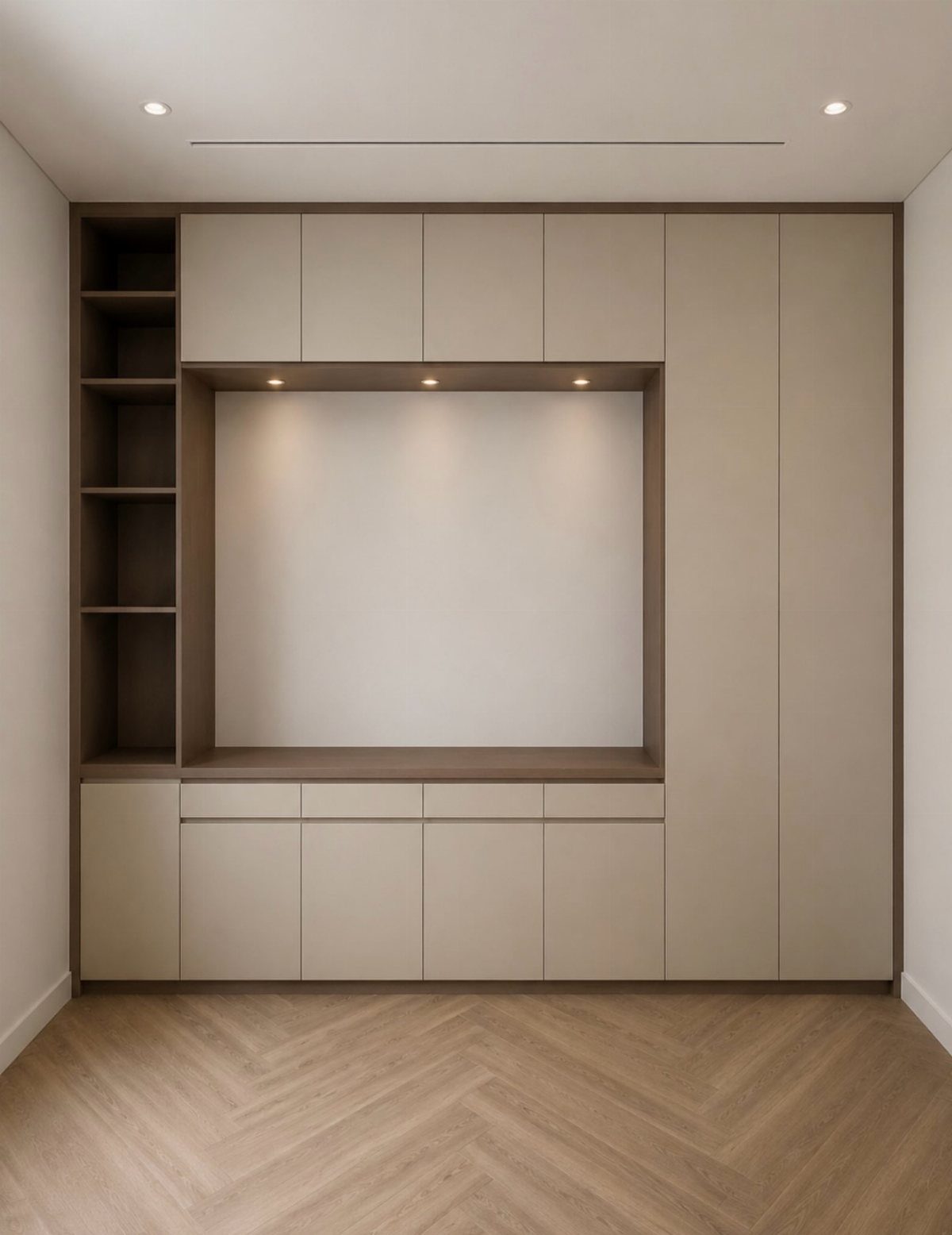
Built-in cabinetry turns the TV into part of the furniture. The recess sits in the center, framed by closed storage below and open shelves to one side.
The entire unit can be custom built or assembled from modular pieces.
Match the finish to the wall color or pick a warm neutral that contrasts with the floor. Open shelves hold books or objects, and the closed cabinets hide cables, remotes, and anything else you don’t want visible.
This setup works when you need storage and the TV wall has the space for it.
9. Floating Oak Mantel
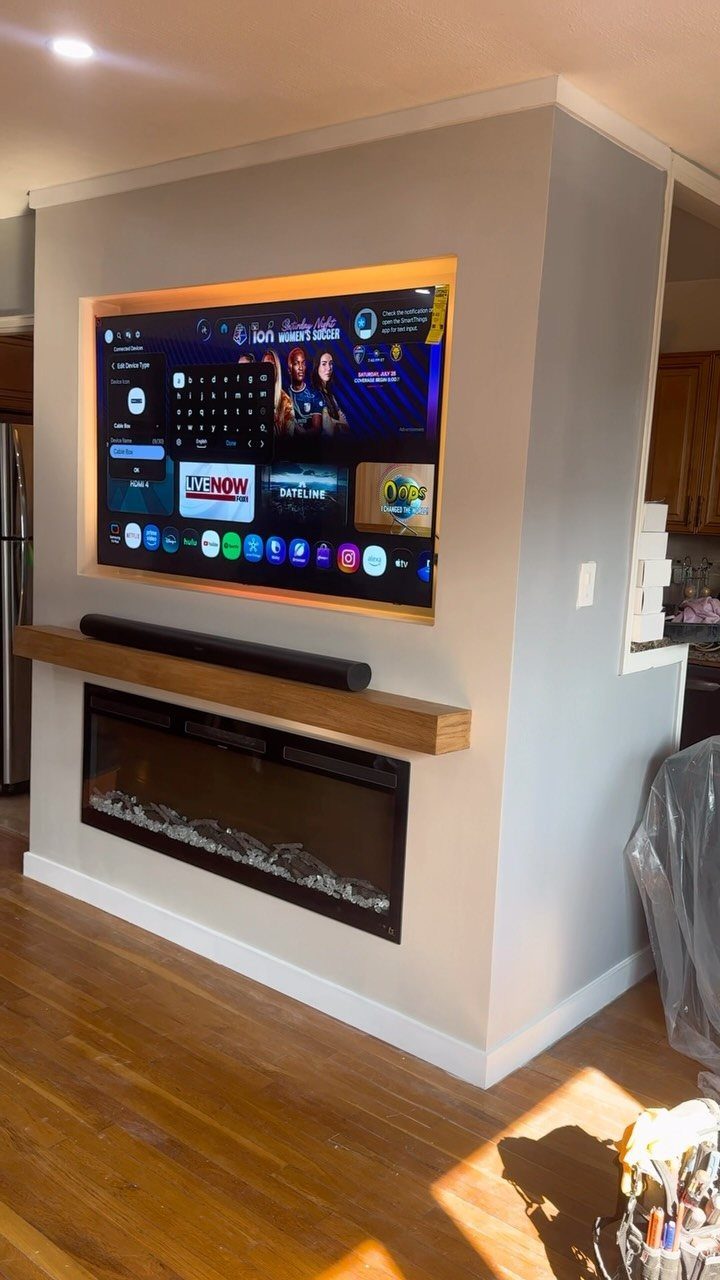
A floating mantel above the fireplace adds a horizontal line that separates the TV from the flames below. The mantel can hold small plants, candles, or nothing at all.
Oak is durable and matches most finishes, but walnut or maple work just as well. The shelf mounts to blocking inside the wall, and the depth should stay shallow enough that it doesn’t stick out past the TV.
The backlight behind the screen adds color without competing with the fireplace glow.
10. Backlit Wood Frame
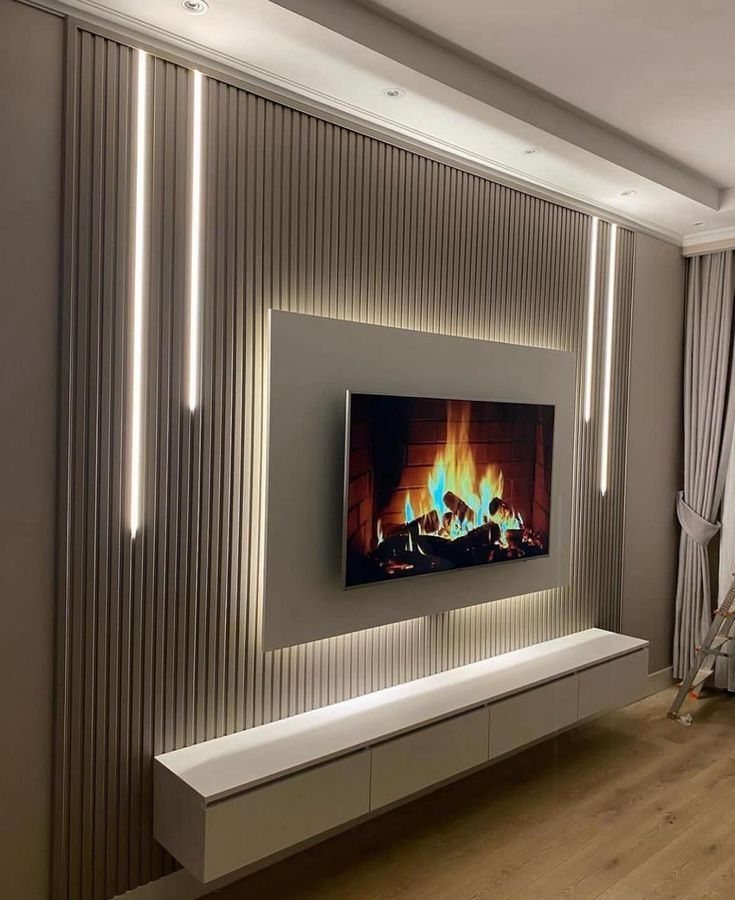
Vertical slats behind the TV catch the backlight and amplify it. The ribbed surface creates shadow lines that shift with the color of the LED strip, and the slats stop just short of the screen to leave a clean edge.
The slats mount over a flat panel or directly to studs, and spacing should stay tight enough that the ribs read as texture, not individual boards.
Grey stain or paint keeps the wall neutral, and the backlight can be white or tuned to any color.
11. Arched Glow Niche
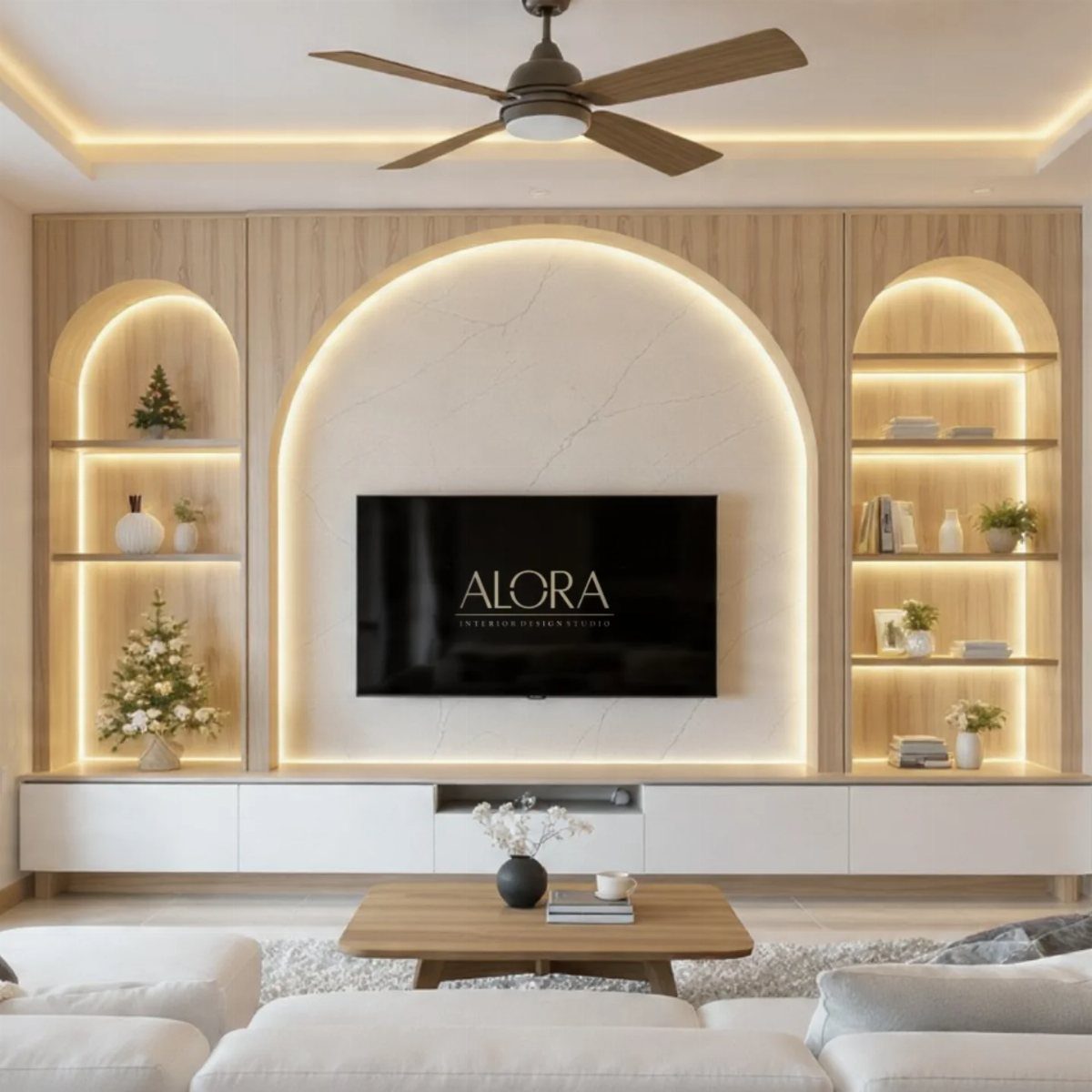
An arched niche gives the TV a frame that feels more permanent than a rectangle. The curve overhead softens the geometry, and the backlight inside the arch casts a glow that defines the shape after dark.
Forming the arch takes bending drywall or cutting plywood ribs to build the curve, then finishing with joint compound. The shelves on either side balance the composition and give you space for objects or books.
This suits rooms where the TV wall is the only architectural feature and you want it to feel intentional.
12. Bookshelf Beside Screen
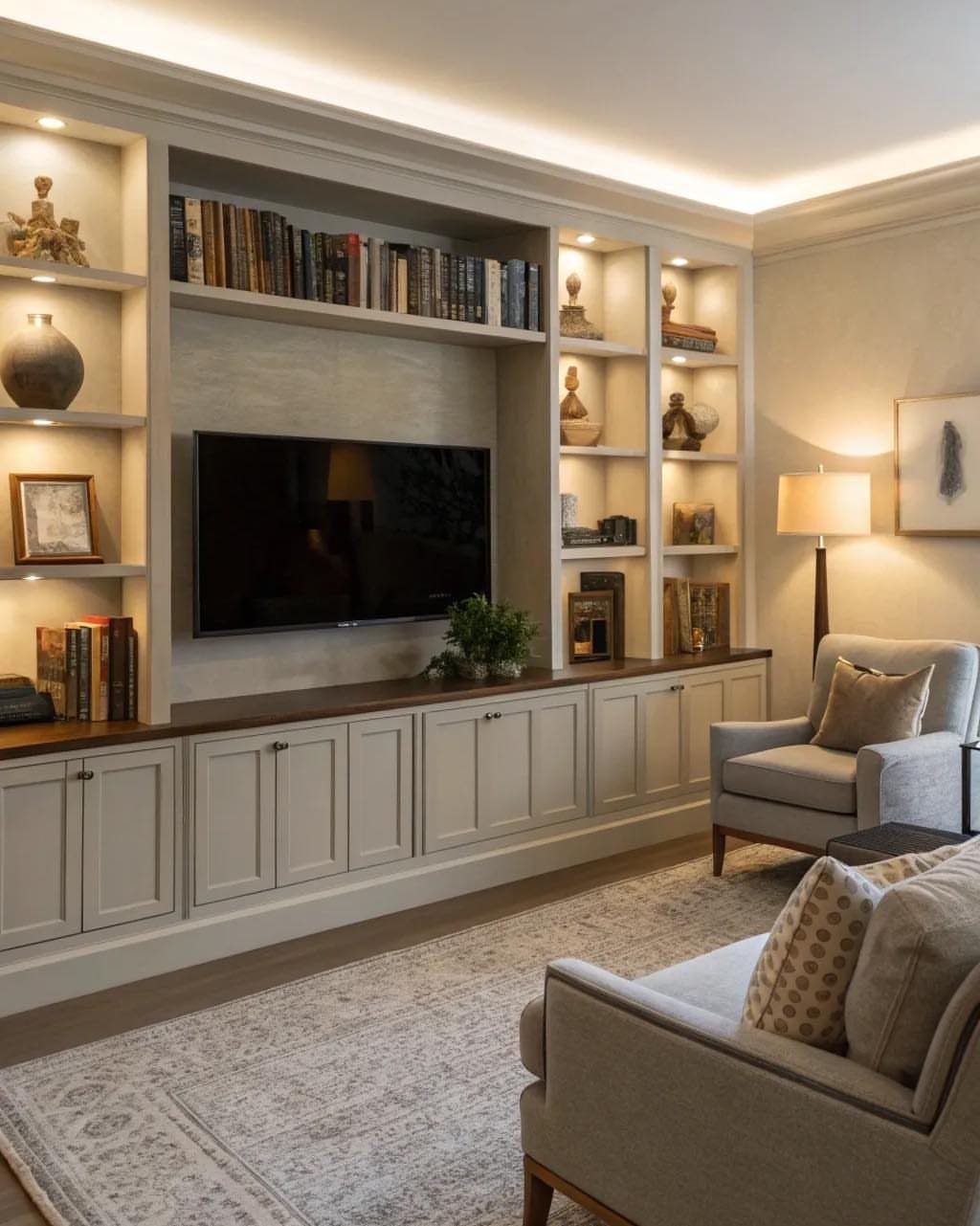
Open shelves beside the TV give you somewhere to put books without adding a separate piece of furniture. The recess keeps the screen flush, and the shelves extend the built-in across the wall.
The shelves can be adjustable or fixed, and the backing inside each one can match the wall or contrast with a darker finish. Closed cabinets below hide clutter, and the symmetry keeps the setup balanced.
This works when you read and want the books visible, and the TV wall has enough width to accommodate both.
13. Full Stone Slab
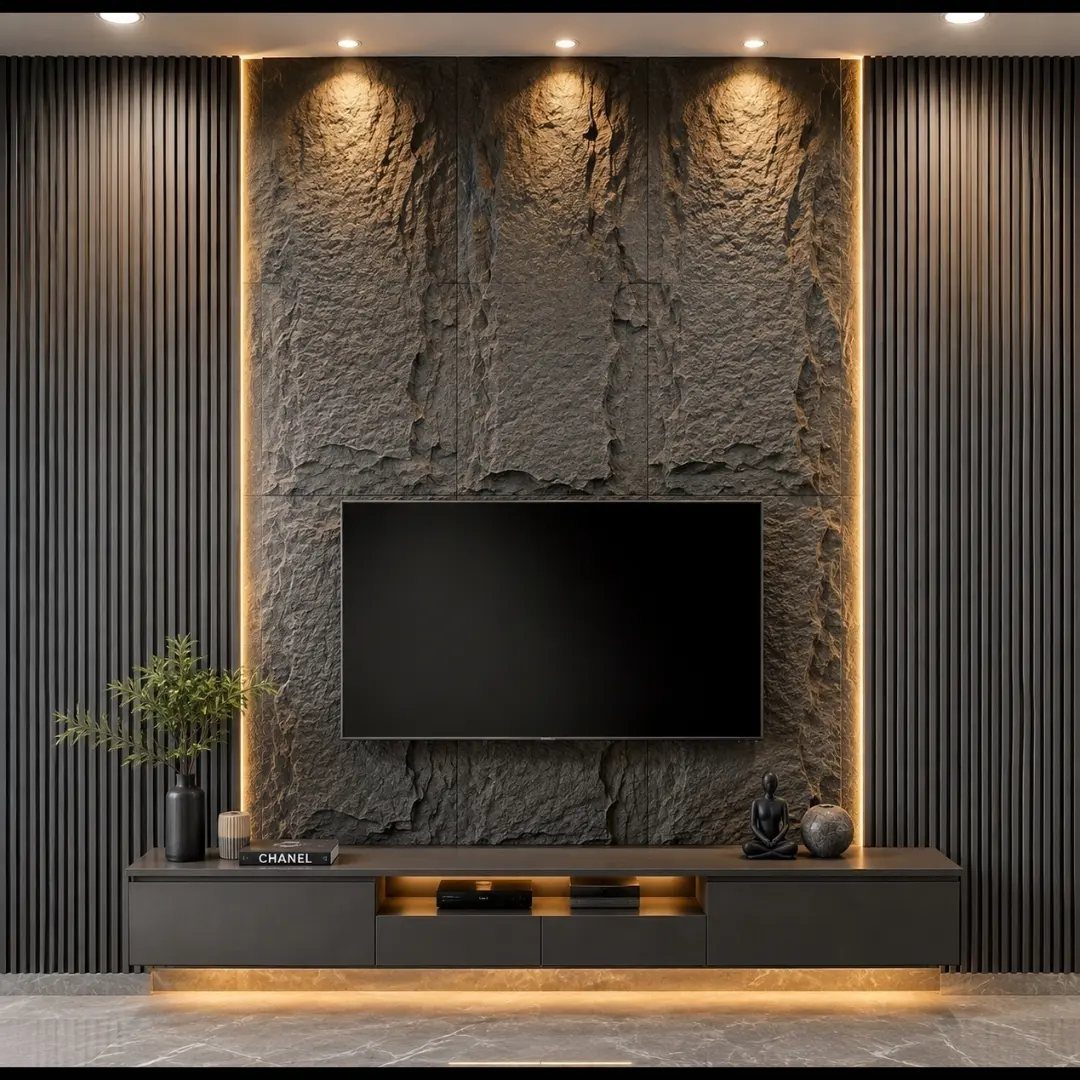
A single stone slab turns the wall into one continuous surface. The TV mounts flush, and the texture behind it makes the black screen less visible when it’s off.
Stone veneer sheets install over drywall with adhesive and are lighter than full-thickness stone.
Dark grey or charcoal finishes absorb light instead of reflecting it, which cuts glare during the day. The console below keeps the setup simple, and the slats on either side add vertical rhythm without interrupting the slab itself.
This approach works when you want the material to define the wall and the TV to stay secondary.
14. Flanked by Backlit Stone Panels
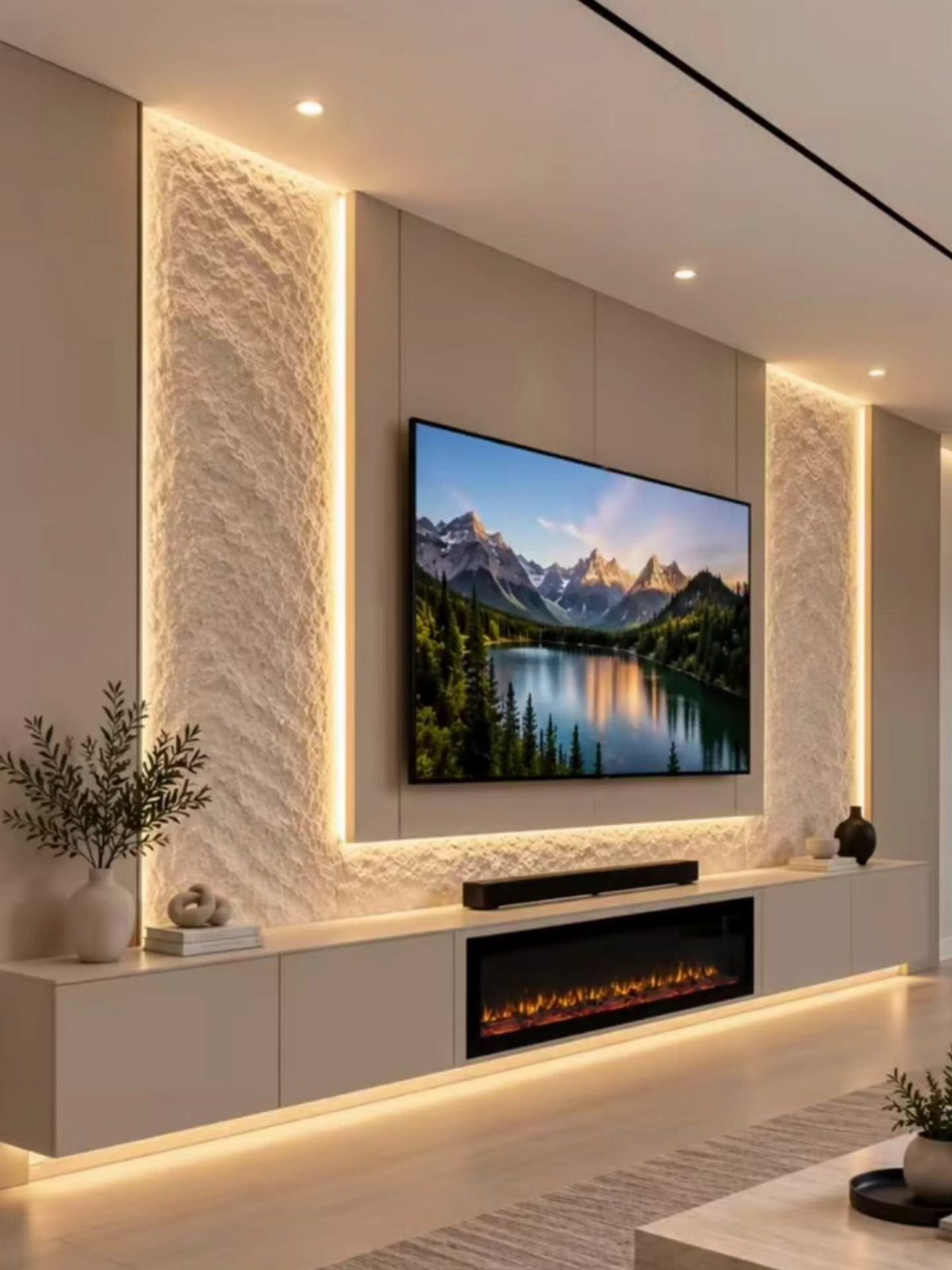
Backlit stone panels on both sides of the TV add height and frame the screen without boxing it in. The glow behind the texture makes the relief visible at night, and the vertical columns pull the eye up.
The panels can be stacked ledger stone or textured composite sheets that mount over blocking inside the wall.
The LED strips sit behind each panel, and the light spills around the edges. The linear fireplace below keeps the center clean, and the floating console ties the levels together.
This setup suits walls with enough width to balance the verticals on both sides.
15. Decorative Molding and Fluted Panels
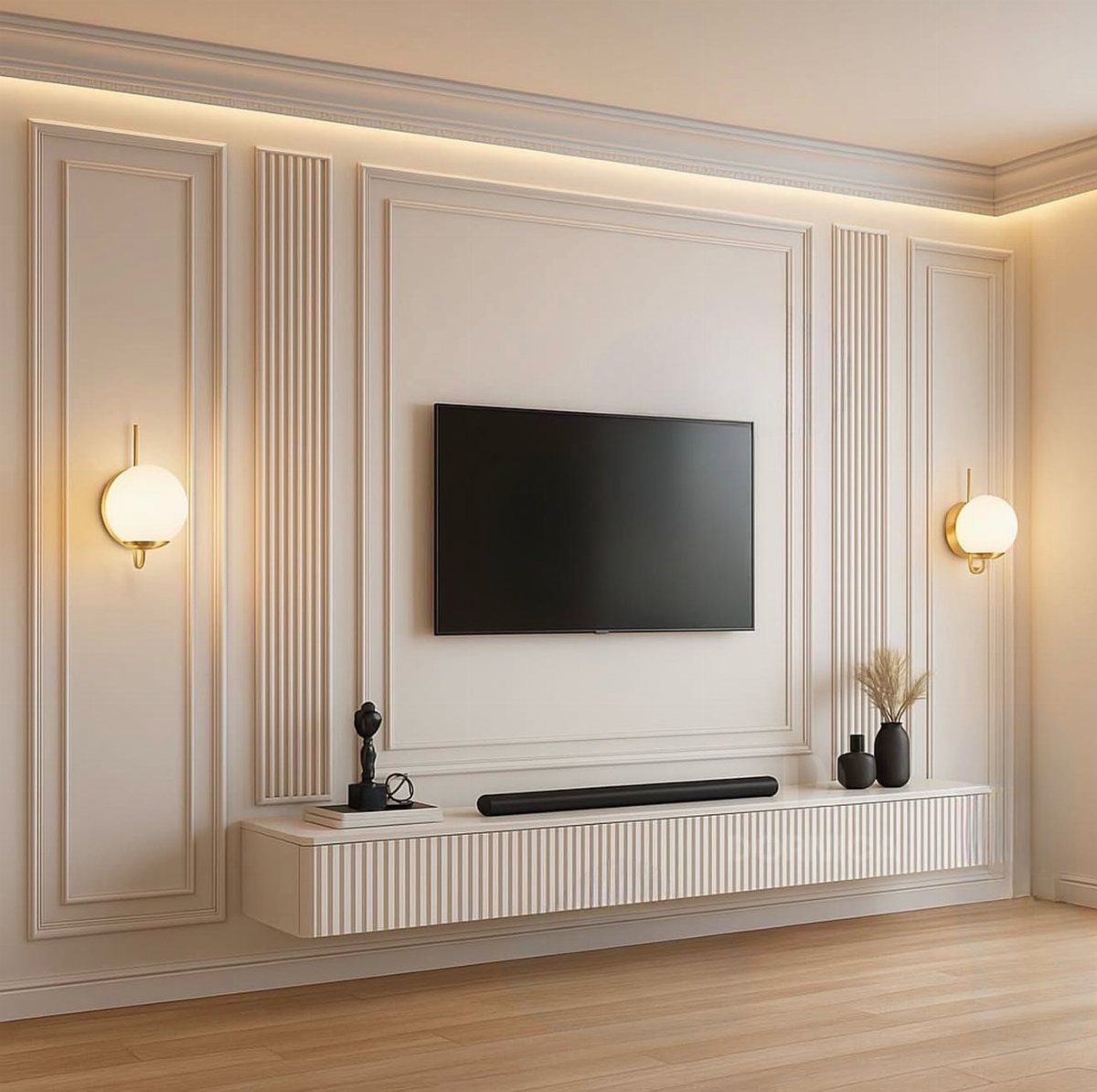
Fluted panels and molding frame the TV without leaning on a dark backdrop. The vertical grooves add texture, and the orb sconces on either side light the wall without glare on the screen.
The fluting can be routed MDF panels or prefinished sheets that mount with adhesive.
Match the molding profile to the room’s trim, and keep the sconces at eye level or just above. The floating console below carries the ribbed detail down and keeps the setup symmetrical.
This fits rooms where traditional finishes run through and a dark feature wall would clash.
16. Backlit White Niche
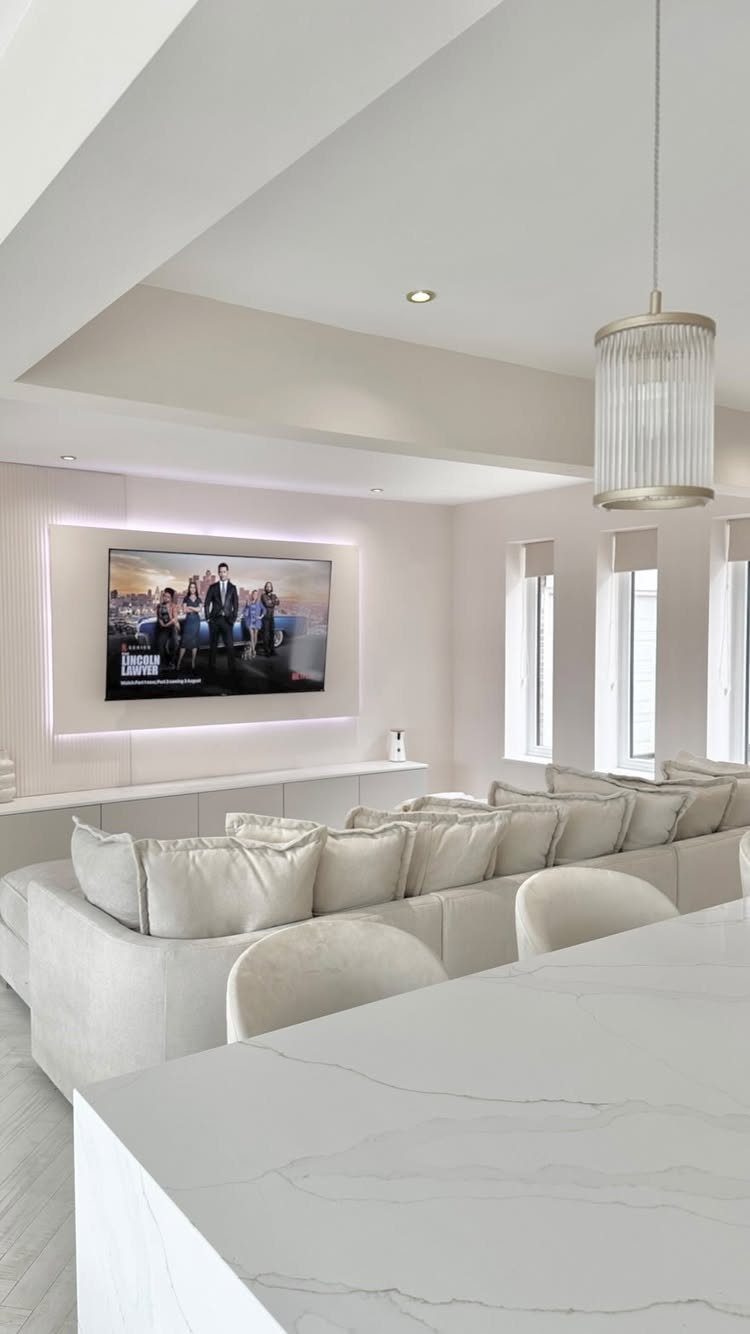
A shallow recess with perimeter backlighting keeps the TV flush and adds definition after dark. The light traces the edge of the niche, and the white wall stays clean.
The recess depth only needs to clear the TV’s mounting bracket and hide the cables. The long console below extends past the screen to balance the proportions.
Frequently Asked Questions
What can I use instead of a TV mount?
A deep recess built into the wall holds the TV inside the opening and hides the cables at the same time.
Custom cabinetry does the same thing, making the TV look like it belongs to the wall rather than hanging off it. Both options let you skip the visible bracket.
How to mount a TV in a recess?
Frame the opening deep enough to clear the back of the TV and fit your outlet and cables inside.
Use a low-profile bracket that pulls the screen flush with the front edge of the recess. Measure twice so the TV sits centered in the opening with even gaps on all sides.
What can I put under my TV that’s on the wall?
A floating shelf or console that extends past the screen on both sides anchors the TV and gives you a place for remotes or a soundbar.
Stacked shelves give you 2 surfaces to work with without crowding the area right below the TV. A linear fireplace fits under the TV when you want warmth and the setup already feels grounded.
What is a TV feature wall?
A feature wall builds the TV into the architecture instead of leaving it on a plain surface.
Recesses, stone panels, vertical slats, or built-in shelving turn the screen into part of the room’s design. The goal is making the wall feel intentional and reducing how much the TV dominates when it’s off.






