
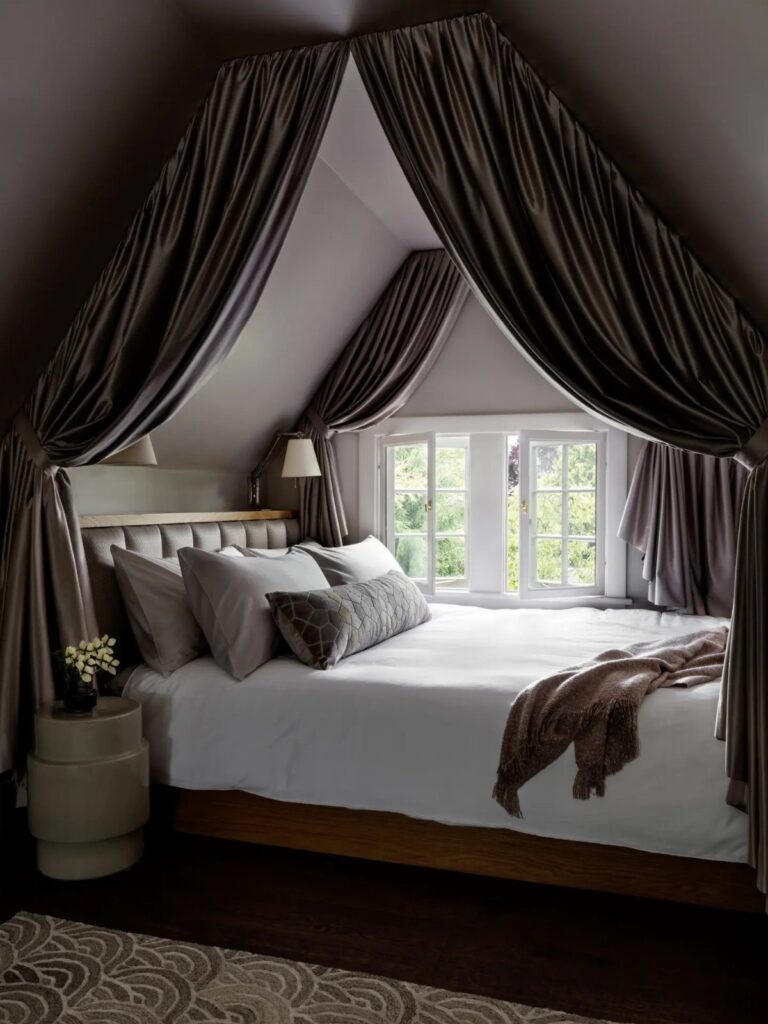
A small attic bedroom works when you use the slope instead of fighting it.
The lowest part of the ceiling is the right place for a bed because you need less headroom lying flat than you do standing up, and knee-wall storage drawers pull straight out to give you full-depth access without crawling.
1. Built-In Bed Nook Under the Lowest Slope
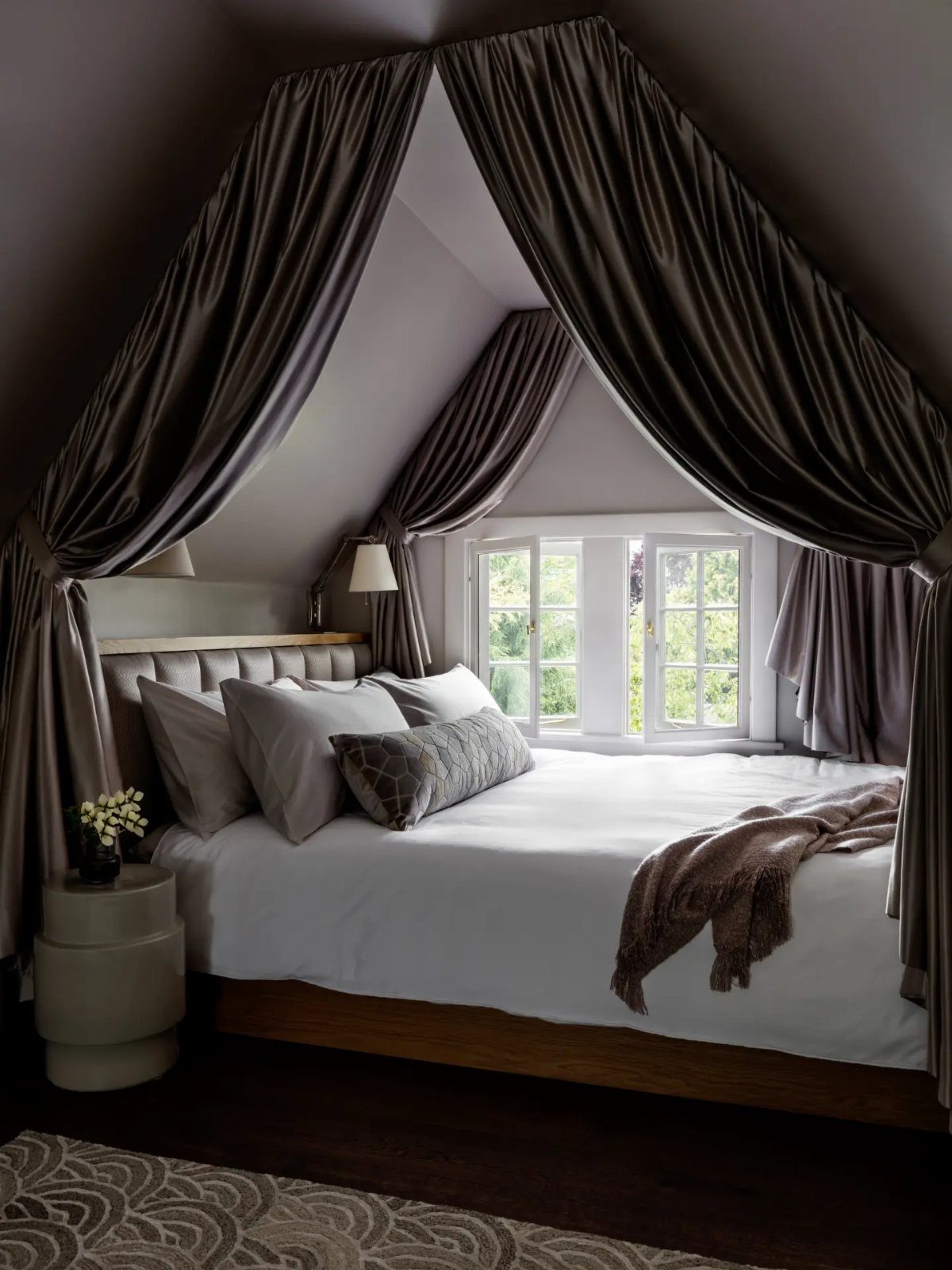
The lowest part of the slope is almost always wasted, but a bed fits there better than any other piece of furniture.
A mattress needs less headroom at the pillow end when you’re lying flat, so you can tuck the bed where the ceiling drops below standing height and leave the taller center of the room open for moving around.
2. Knee-Wall Storage Drawers
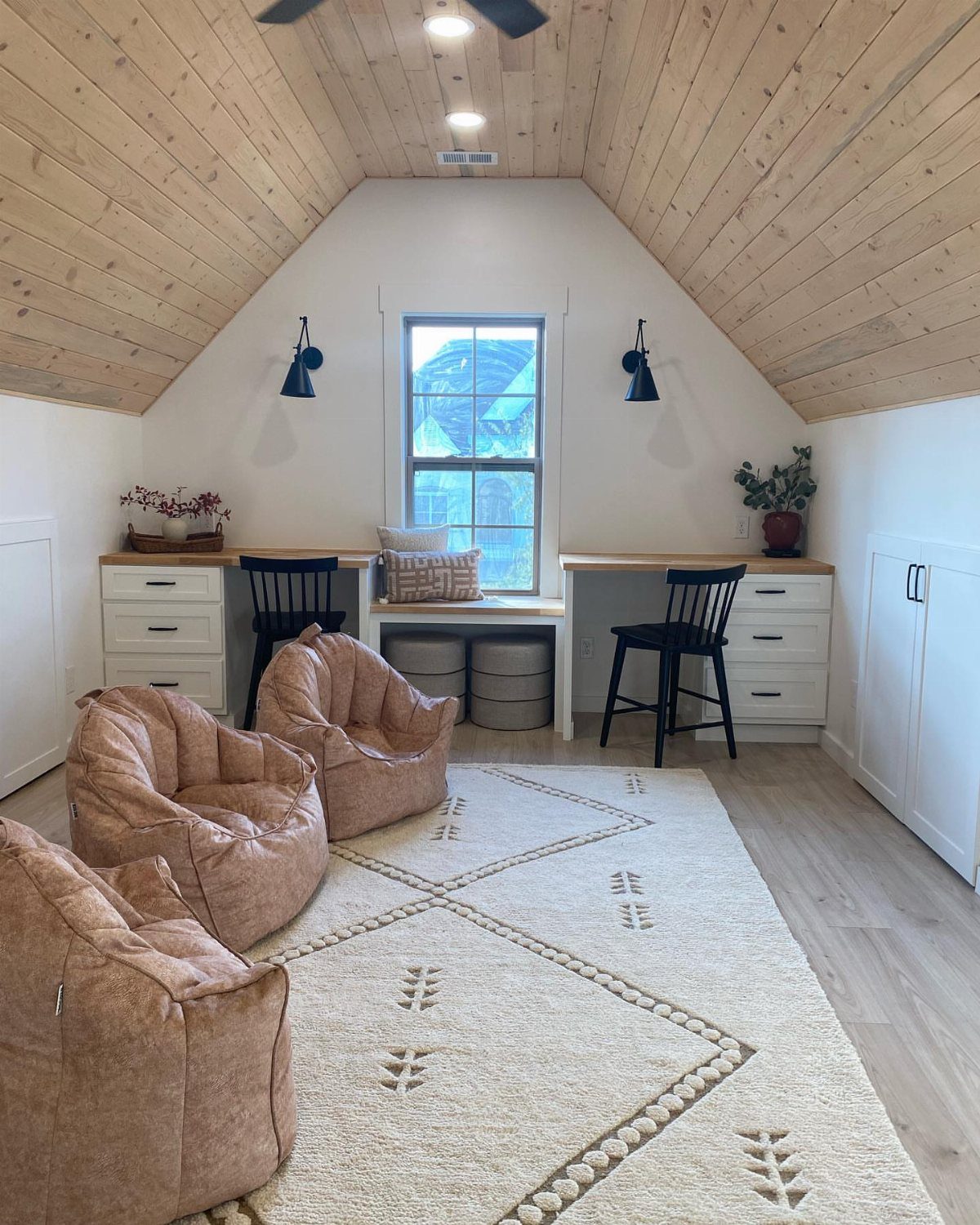
Knee walls sit too low for hanging anything useful but too far forward to ignore, and drawers built into them turn that dead zone into the best storage the room has.
Each drawer pulls straight out from the wall, so you get full-depth access without crawling under the slope.
Standard drawer depth for folded clothes, linens, or shoes runs enough to make these worth building yourself. Install pulls that sit flush or nearly flush so nothing catches your leg when you walk past.
3. Bright Soft White Walls
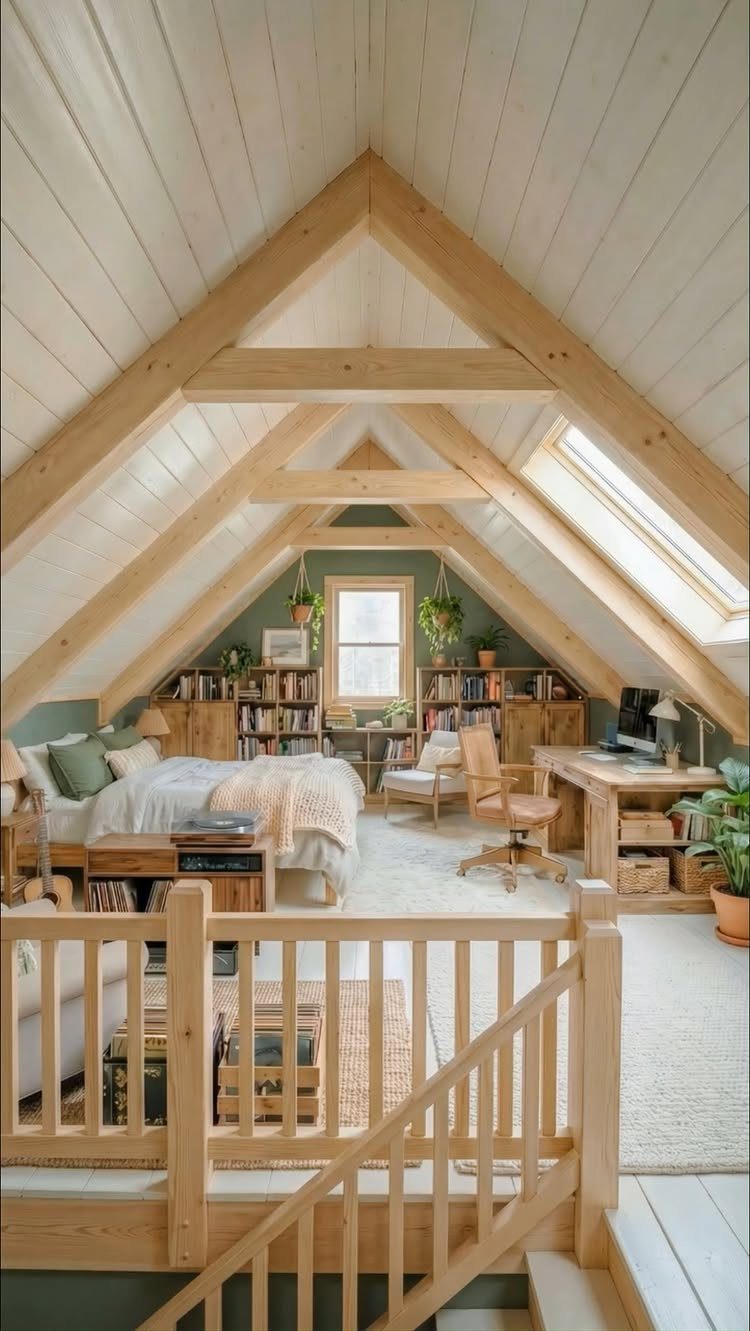
Soft white paint on every surface bounces light around a small attic and makes the ceiling feel higher than it is.
Choose a white with just enough warmth to keep the room from feeling stark: something in the off-white or warm white range, not a cool bright white that reads blue.
Painting the beams the same color as the walls can tie the whole room together instead of chopping it into pieces. Pair it with light wood tones and natural fiber textiles to keep the room feeling grounded.
4. Window Seat Nook
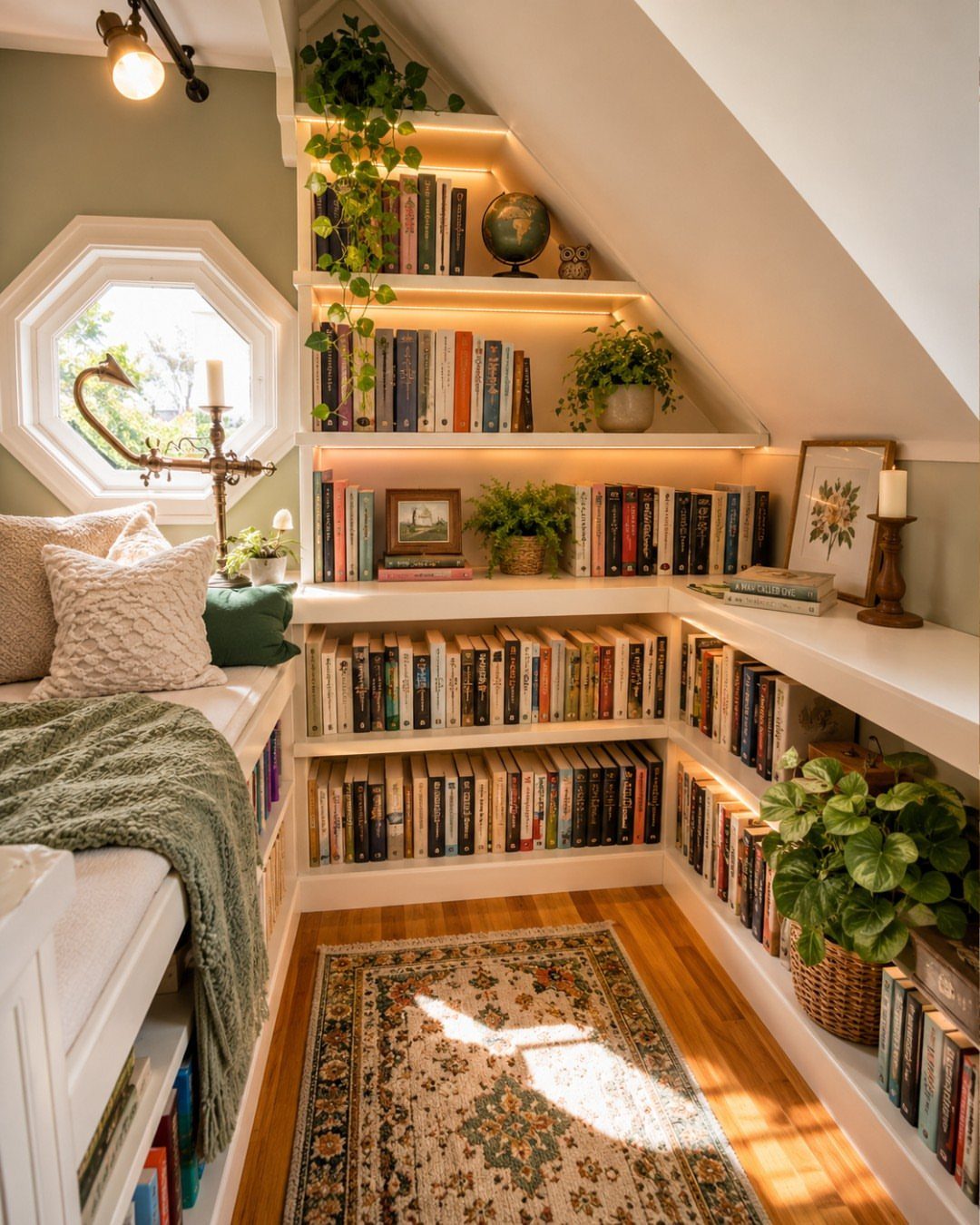
A dormer window almost always wastes floor space because the ceiling is too low to stand there, but a built-in seat turns that spot into the best place in the room.
Add a cushion and a few pillows, and you have a reading nook with natural light and a place to store books or blankets in cabinets underneath.
The L-shaped shelves flanking the window here use the full height of the knee walls without blocking the window itself.
5. Unpainted Exposed Beams
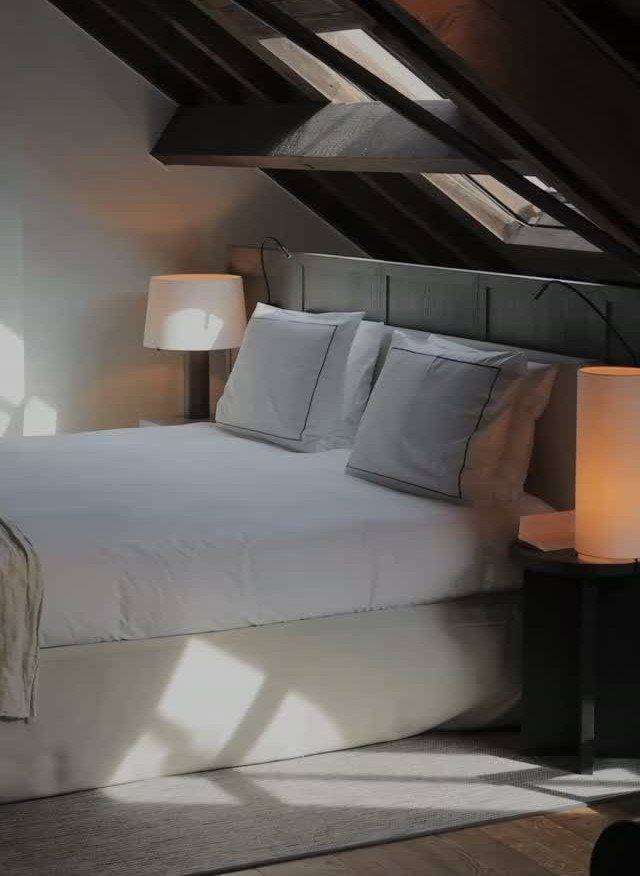
Leaving the beams unpainted shows off the wood grain and breaks up an all-white room without adding pattern or color.
Dark beams against white walls and ceiling make the structure of the roof visible, which gives the room more character than a flat painted surface.
This works best when the beams are in good shape and the wood has some age to it. If your beams are new construction lumber, a stain brings out the grain before you leave them bare.
6. Layered Linen Bedding
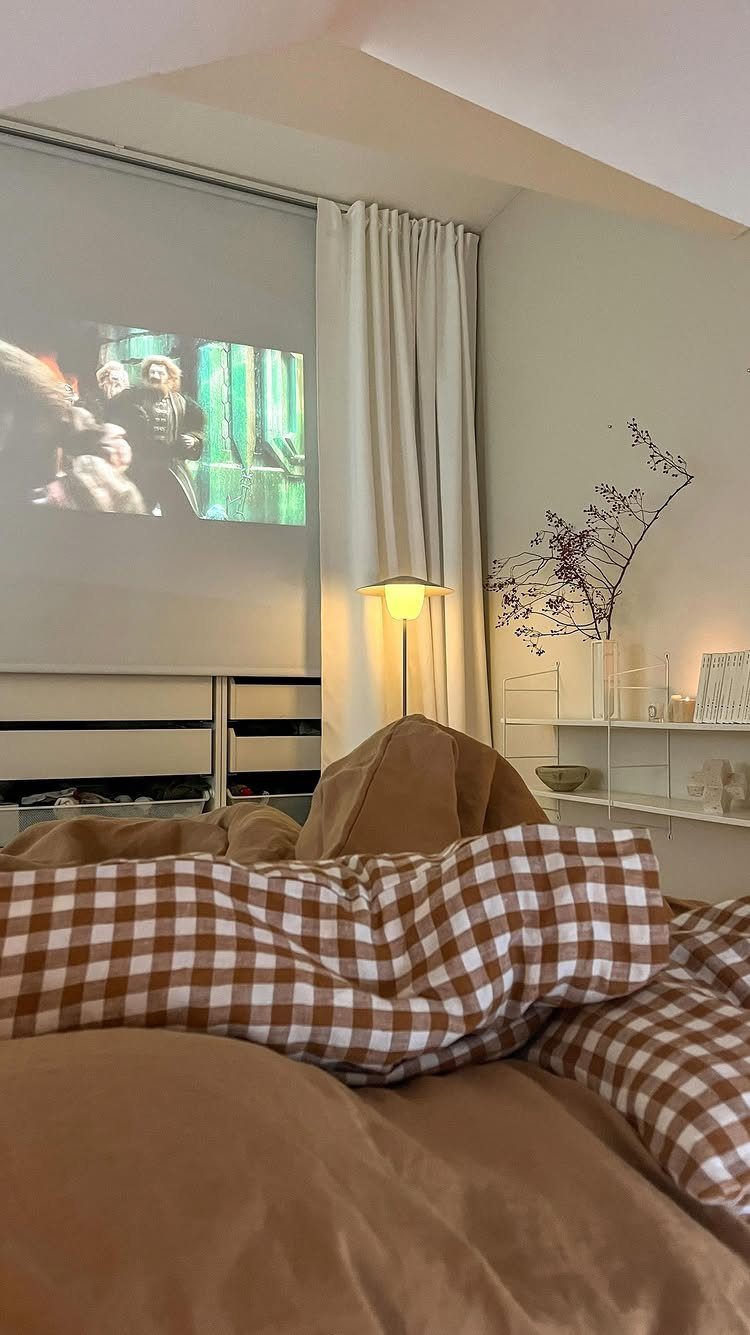
Linen bedding softens a small attic bedroom without taking up any extra space, and layering two or three pieces in different tones adds texture you can see from across the room.
Start with a fitted sheet, add a flat sheet or duvet, then fold a throw or a second duvet at the foot of the bed.
Checkered or striped linen like the brown and white pattern here keeps the look from feeling too plain. Linen wrinkles easily, which is part of the appeal: it looks lived-in instead of stiff.
7. A Wool Area Rug
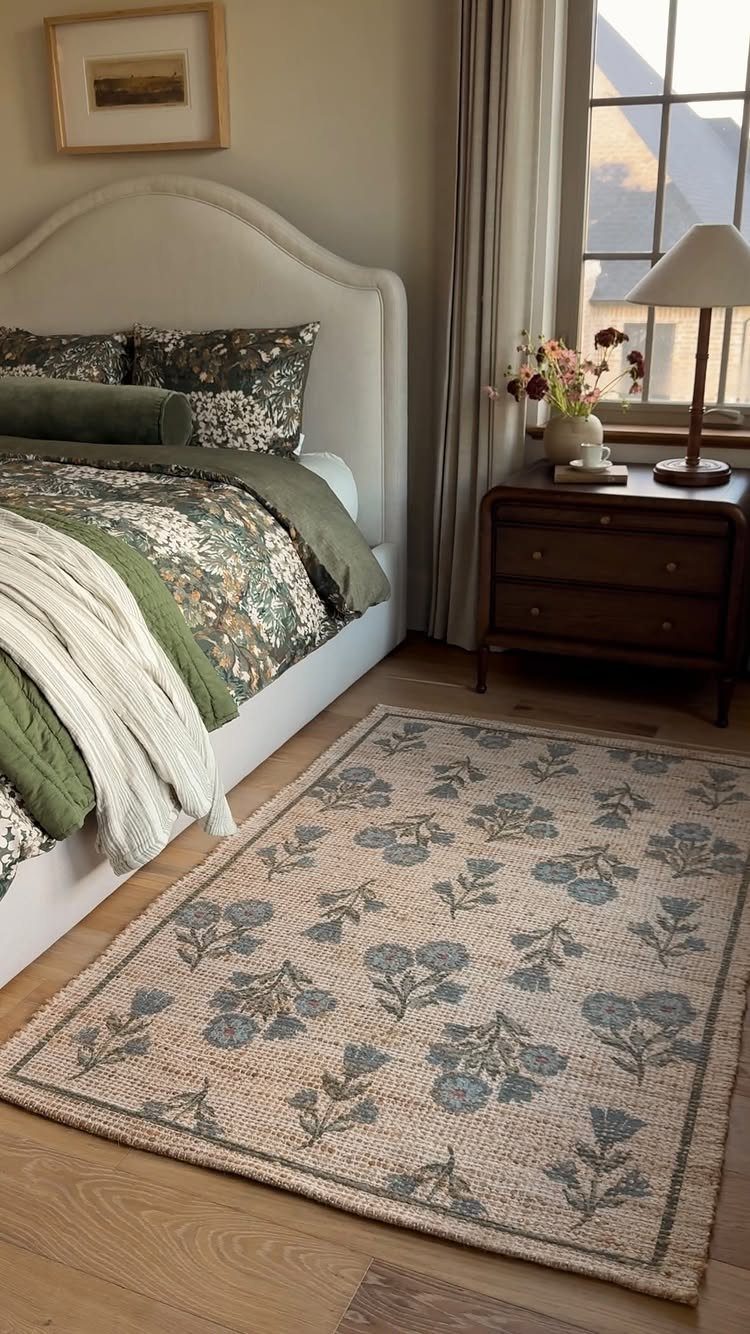
A wool rug anchors the bed and softens the floor without blocking the room’s flow. Wool adds warmth underfoot and holds up better than cotton in a bedroom where you walk barefoot most mornings.
Two smaller rugs work better than one large one if the bed sits off-center or the floor slopes.
Place a 3×5 on each side of the bed so your feet land on something soft the moment you get up. A patterned rug in soft colors adds interest to the floor without hiding the wood completely.
8. Wall-Mounted Sconces
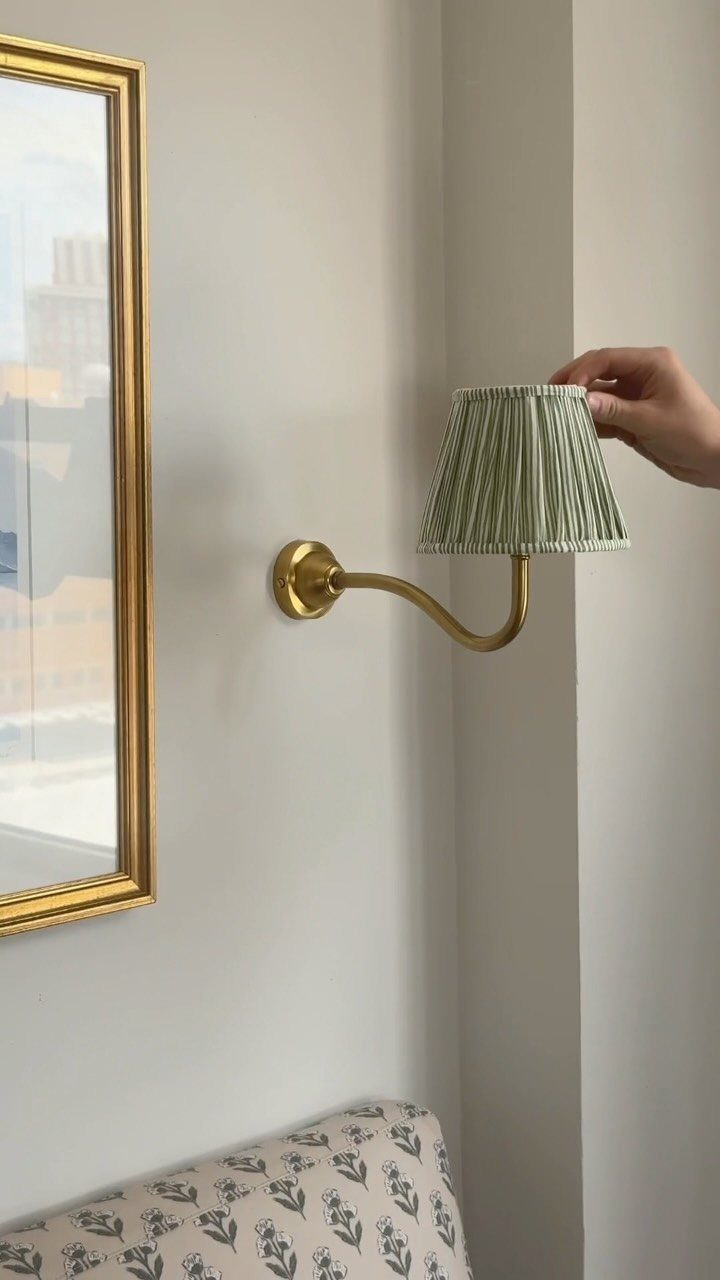
Wall-mounted sconces free up space on a nightstand and give you light exactly where you need it. The arm swings out or the shade tilts down, so you can aim it at a book without lighting the whole room.
Mount them within arm’s reach above the mattress so you can turn them off from bed. A shade in fabric or pleated metal softens the bulb and adds a detail you notice up close.
9. Twin Beds
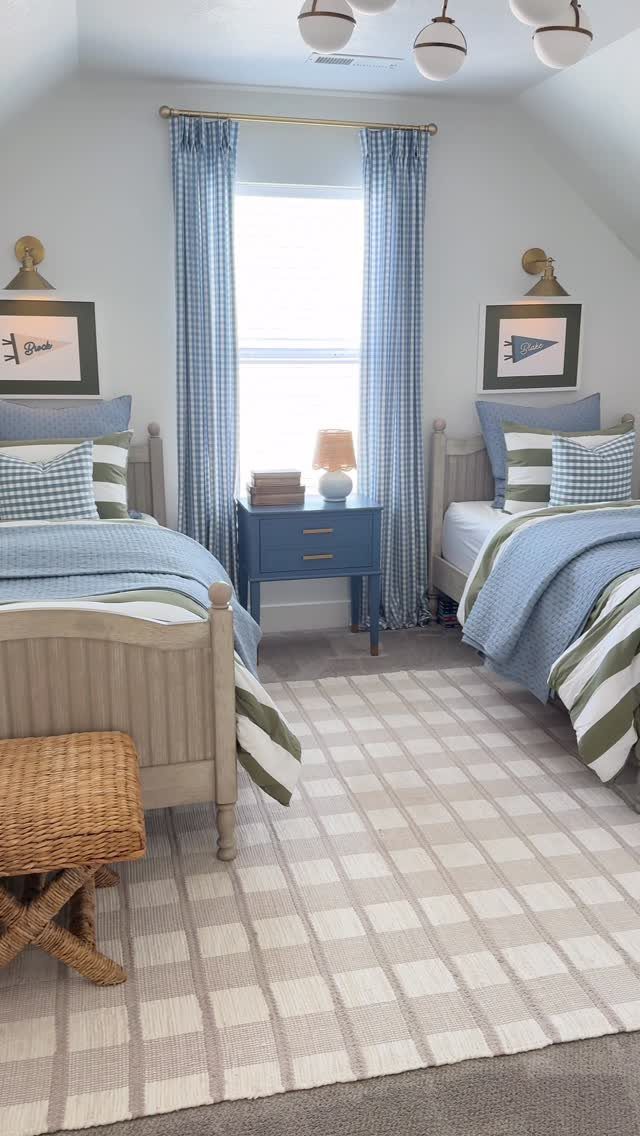
2 twin beds in a small attic make the room feel intentional instead of cramped.
The gap between them gives each sleeper their own zone, and matching bedding in soft blues or greens keeps the room calm without feeling too matchy.
Twins fit better than a queen when the floor slopes on both sides, and a checkered or gingham rug between them adds pattern without crowding the space.
Hang matching curtains if the window sits between the beds to pull the whole setup together.
10. Matching Baskets Under the Bed
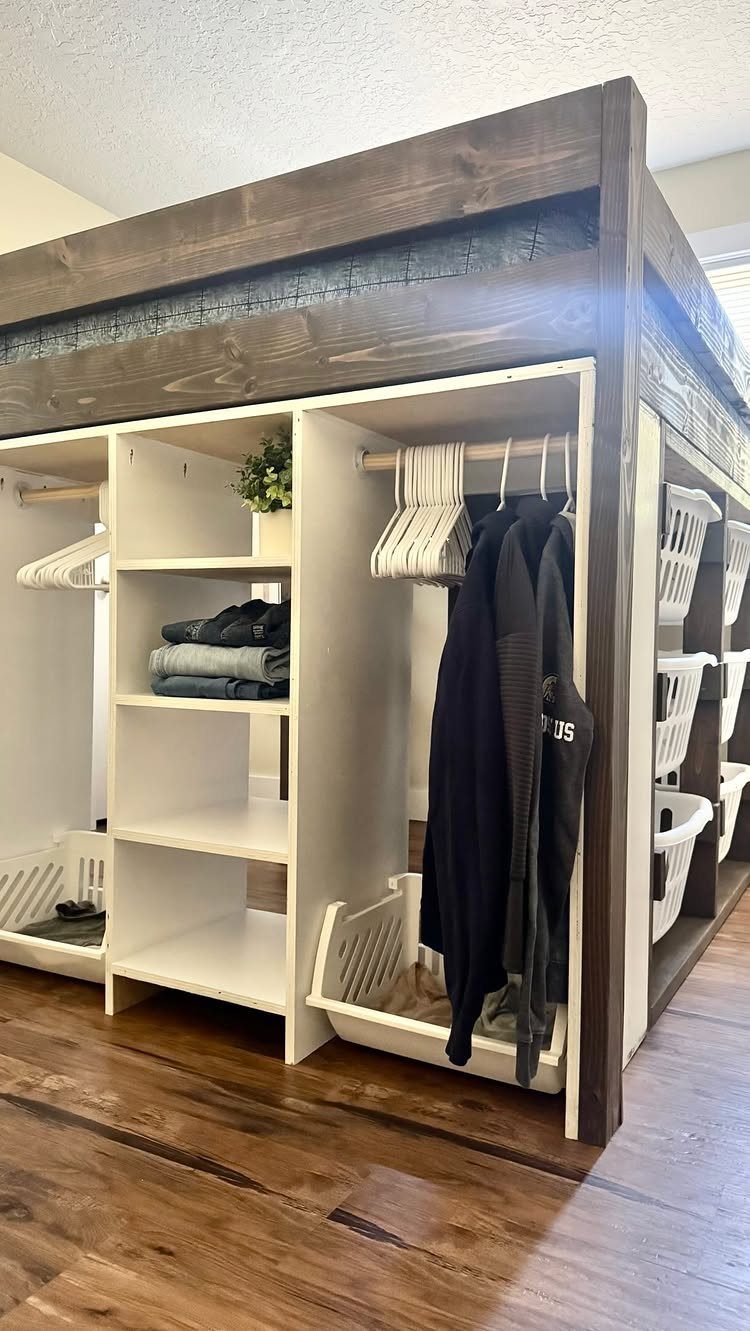
Matching baskets slide under the bed and keep shoes, folded clothes, or extra blankets out of sight without installing drawers. White or woven baskets blend with the bed frame and pull out when you need them.
Choose baskets with low sides so they clear the bed frame, and match the count to the width of the bed: two or three across for a twin, three or four for a full.
11. Compact Wardrobe Built Into the Eave
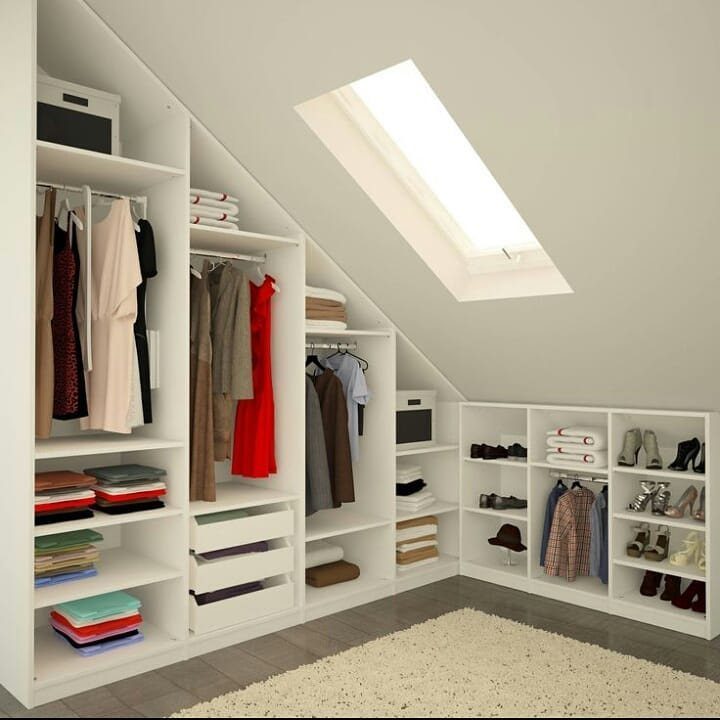
A wardrobe that fits into the eave takes advantage of sloped ceiling space that is hard to use any other way.
Hanging rods go in the tallest section, and shelves step down where the ceiling drops too low for clothes on hangers.
White cabinetry keeps the built-in from feeling heavy, and open shelves at the low end hold shoes or folded items you reach for often. This setup works best when you can commit to a permanent install.
12. A Tiny Vanity or Getting-Ready Corner
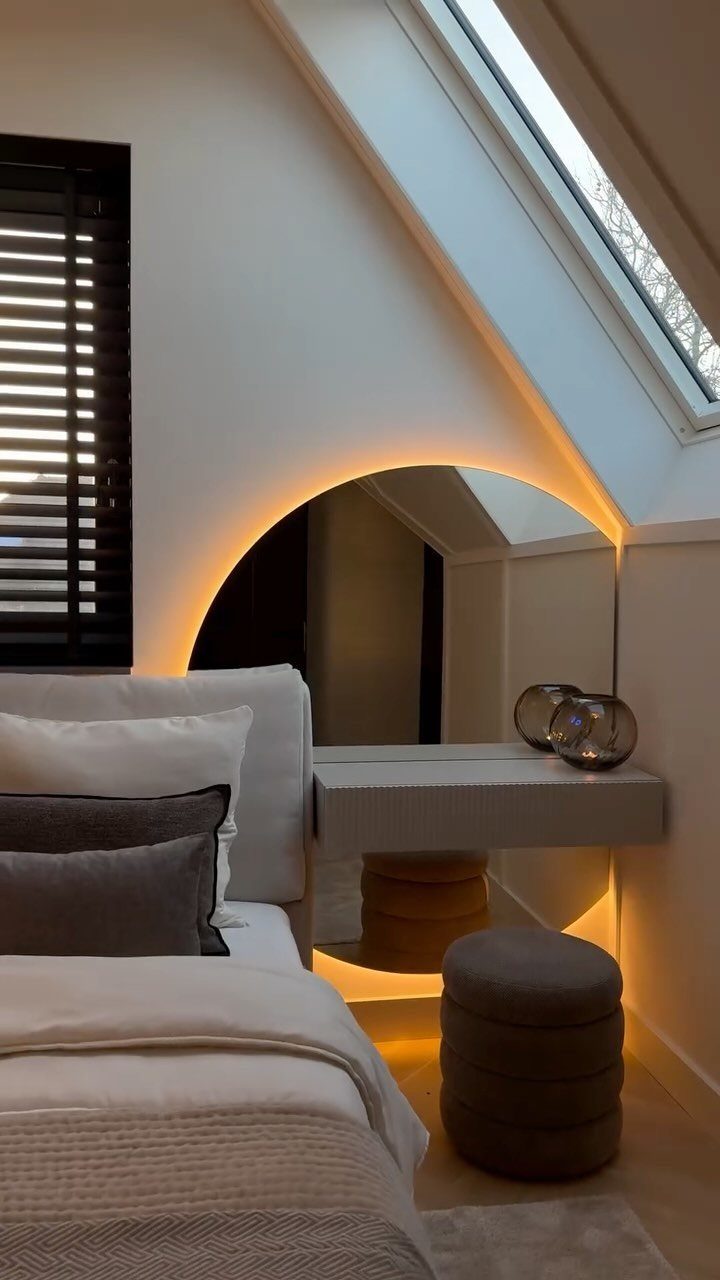
A floating shelf mounted to the wall at desk height gives you a spot to sit and get ready without taking up floor space a freestanding vanity would need.
Add a backlit mirror above it and a low stool underneath, and you have a getting-ready corner that takes up very little wall.
The floating mount keeps the floor clear, which makes a small attic feel less crowded. A round mirror softens the angles of the sloped ceiling.
13. Floating Shelves
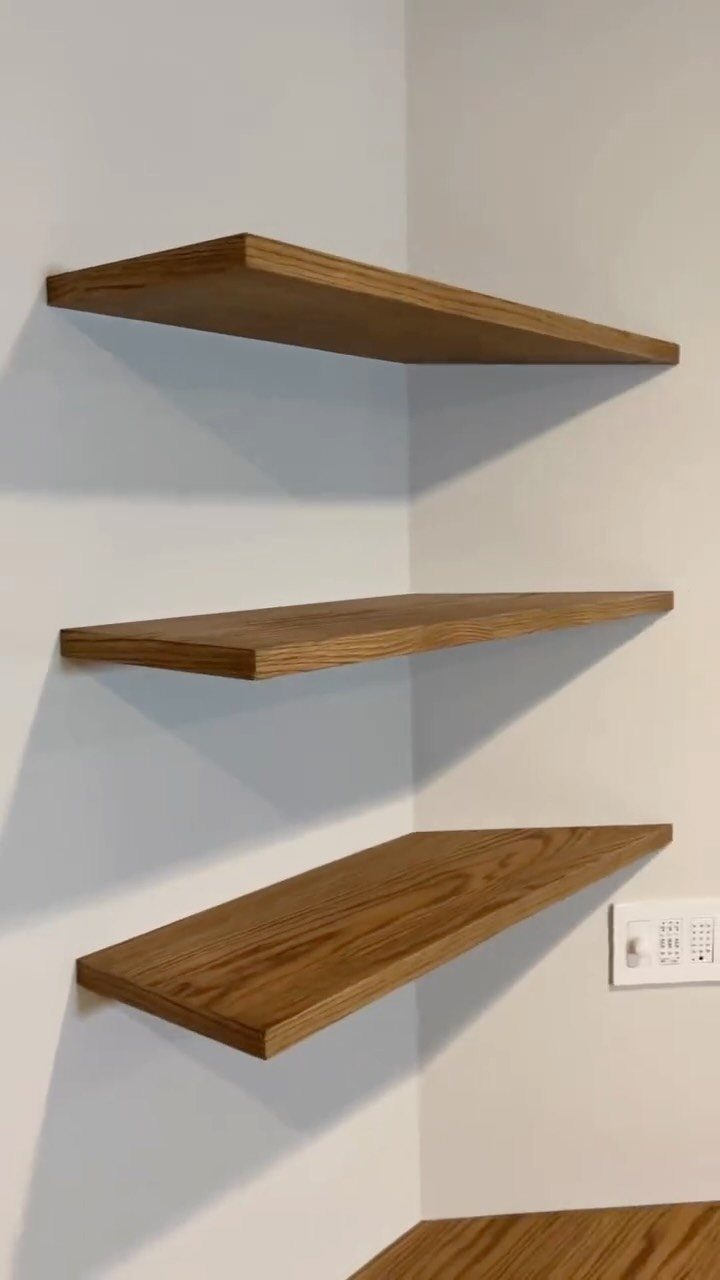
Floating shelves mounted in the corner double your usable wall space without blocking the flow of the room.
The shelves sit on adjacent walls, so you get storage on two sides instead of one, and each shelf holds books, a plant, or folded clothes you want within reach.
Mount them at different heights to follow the slope of the ceiling. Wood shelves in a light finish keep the look soft and add warmth without darkening the room.
14. Patterned Knee-Wall Wallpaper
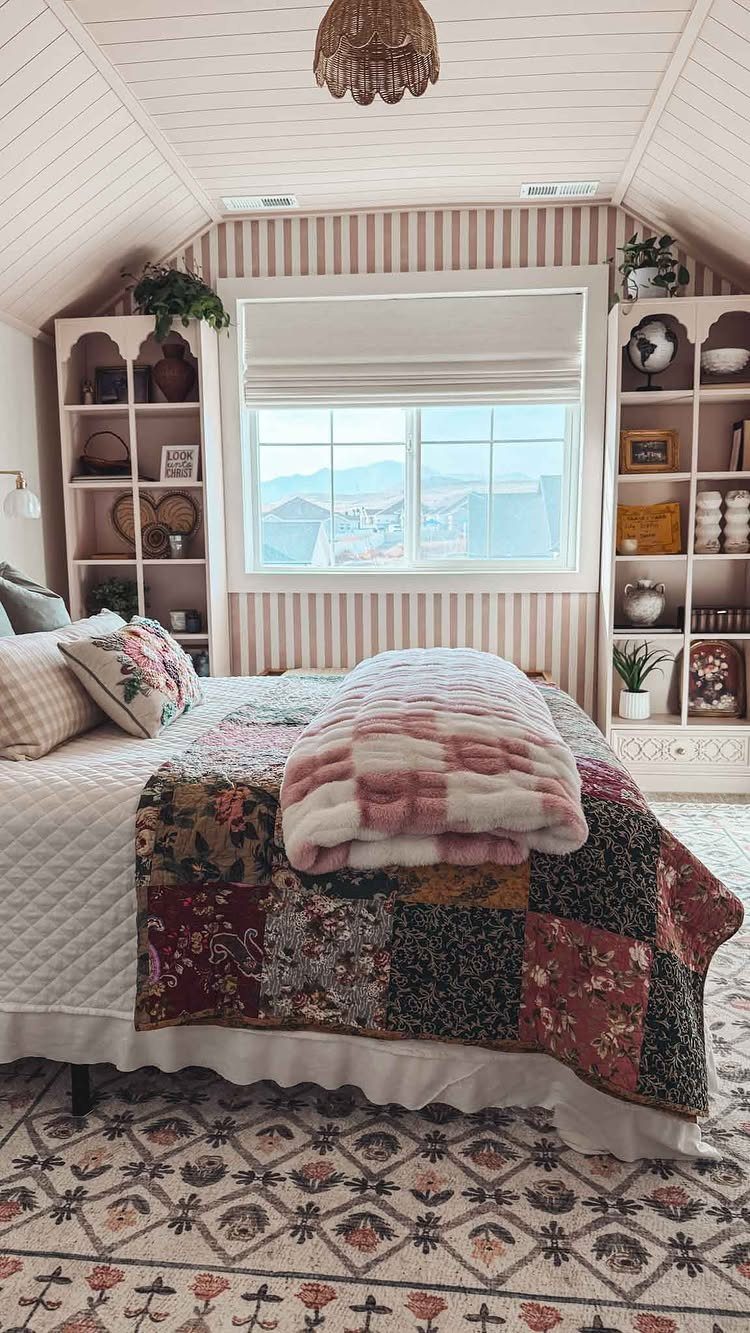
Wallpaper on the knee wall adds pattern where you see it most when you walk in, and stripes run horizontally to make the low wall feel wider.
Pink and white stripes soften the room without adding too much color, and the pattern draws your eye across the wall instead of up to the slope.
Stop the paper at the knee wall and leave the ceiling white so the pattern does not overwhelm the small space. Pair it with a patchwork or colorful quilt to balance the stripes.
15. Built-In Desk Under a Skylight
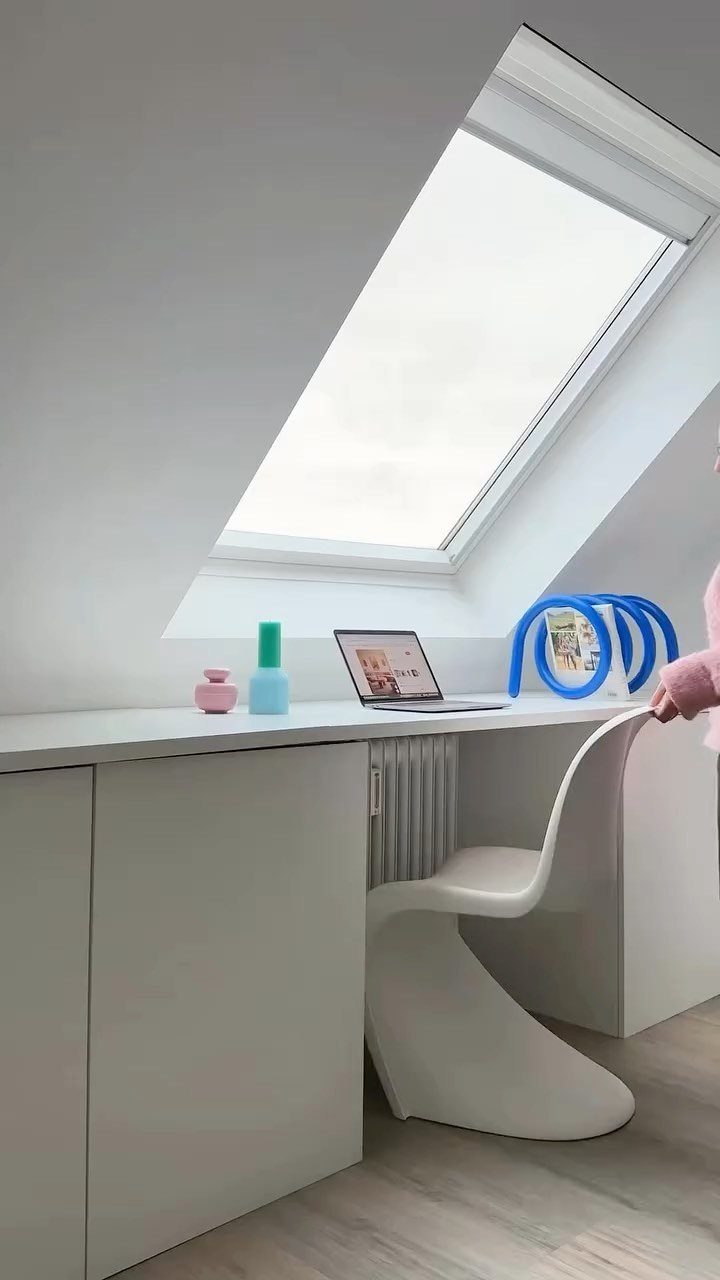
A desk built into the slope directly under a skylight gives you a workspace with natural light overhead and no floor space lost to a freestanding table.
The sloped ceiling makes standing at a desk uncomfortable, but sitting puts your head well below the lowest point of the roof.
Keep the desk shallow so your chair can pull out without hitting the opposite wall. White cabinetry blends with the walls and makes the built-in feel like part of the room instead of furniture added later.
16. Low-Profile Floor Bed Setup
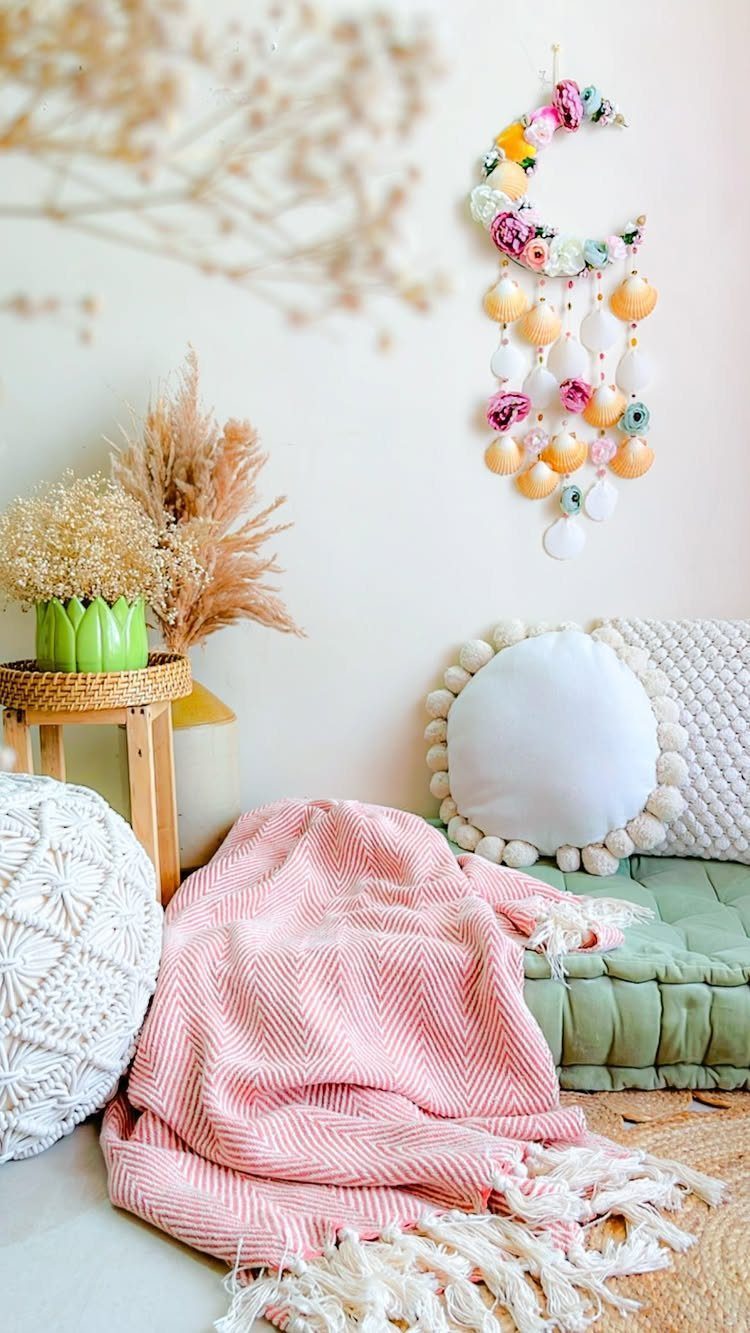
A floor mattress skips the bed frame entirely and gives you more vertical clearance in a room where the ceiling drops low.
The tufted surface adds texture without needing a headboard, and keeping the bed on the floor means you can sit up without worrying about hitting your head.
Pair it with a low side table so everything stays at mattress height.
A throw blanket in a different color than the mattress gives the bed some shape and keeps it from looking like you dropped a cushion on the floor.
Maximizing Natural Light
Skylights bring in more light per square foot than a dormer window because the angle faces straight up, so the sun hits the glass directly for most of the day.
One skylight centered over the bed or desk can replace two small side windows in a room where wall space is already limited.
Light-colored walls reflect whatever natural light you have instead of absorbing it. Paint the ceiling slopes the same color as the walls so your eye does not stop where the wall meets the slope.
Attics flip the proportions you expect: most of the surface area is overhead, not on the walls. A single color across walls and ceiling keeps the eye moving instead of stopping at every angle.
Creating a Cozy Atmosphere
Wall sconces and string lights keep the floor clear and give you light where you need it without adding a tall lamp that crowds the space.
Choose warm bulbs over cool ones.
Layer textiles in warm neutrals to add comfort without taking up extra space. A linen duvet, a wool throw, and a cotton rug in similar tones build texture you can see from across the room.
The tucked-under-the-eaves feeling that makes an attic intimate becomes cozy when you add enough soft materials to balance the hard lines of the roof.
Functional Layout Tips
Storage built into knee walls and eaves keeps the floor clear, which makes a small room feel larger.
Frequently Asked Questions
Can you turn your attic into a bedroom?
Yes, an attic becomes a bedroom when you insulate it properly and plan storage around the low points of the ceiling.
Measure the highest point first, then note every spot where the roofline dips below standing height and decide what belongs there.
How to make a small attic bedroom look beautiful?
Soft white paint on walls and ceiling bounces light around the room and makes the space feel taller than it is.
Layer linen bedding, a wool rug, and natural fiber textiles to add texture without taking up floor space, and keep storage built into the knee walls so the floor stays clear.
Light wood tones and unpainted beams add warmth without breaking up the room.
What are the different types of attic rooms?
Attics work as guest bedrooms, home offices, or creative spaces depending on how much standing height you have and where the windows sit.
A bedroom works well when there’s space under the peak for sitting and standing, while the lower sections along the knee walls can hold built-in storage.
An office goes under a skylight where you can sit at a desk without hitting your head on the slope.






