
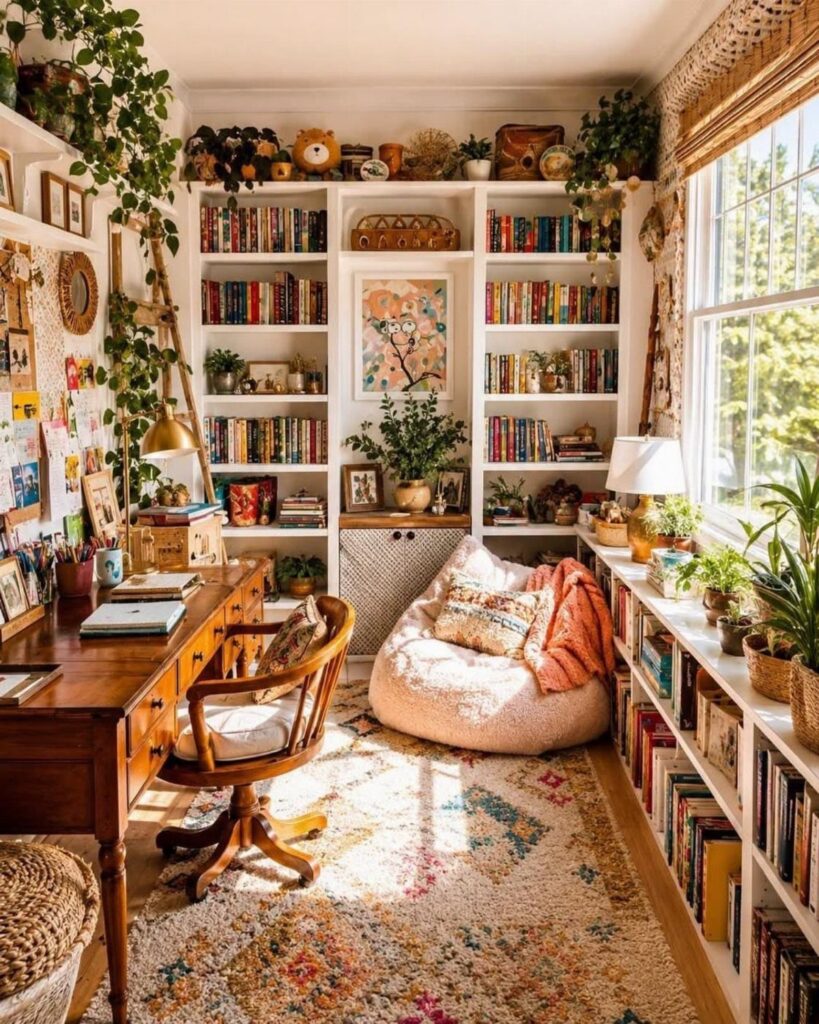
A reading nook with an armchair and lamp uses a corner you already have, while a marble-top desk or floor-to-ceiling bookcase makes the room feel more like a private library than a workspace.
The right setup depends on whether you need open shelves that keep textbooks in reach or a desk with built-in storage that tucks supplies out of sight when you sit down to work.
1. Cozy Reading Nook
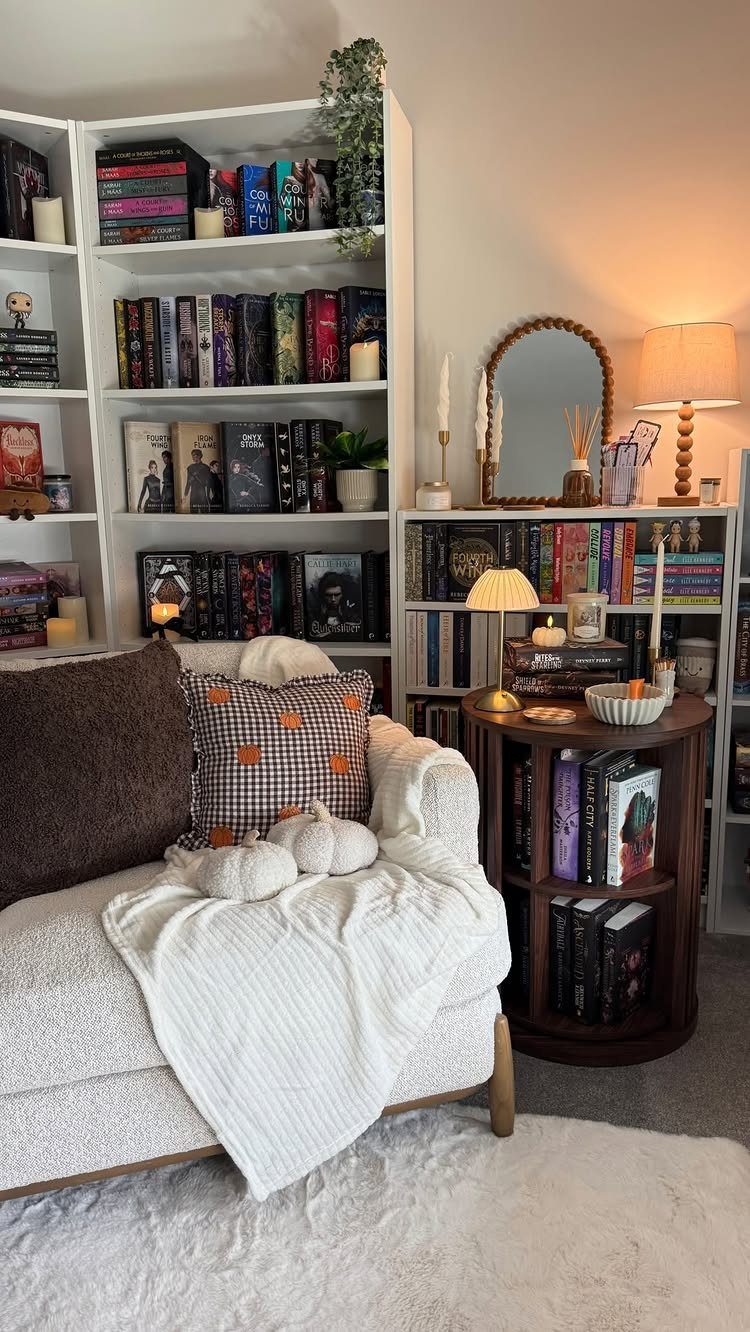
An armchair with a side table and lamp turns a corner near your bookshelves into a place you actually want to sit and read.
The chair here is a classic wingback, but any upholstered seat works as long as it has real back support.
A throw blanket and a couple of pillows make it feel lived-in without cluttering the setup. I keep a small basket next to the chair for whatever I’m reading that week.
The lamp matters more than most people think: you need light that reaches the page without glare, which usually means a shade that directs it downward.
2. Add Cozy Textiles
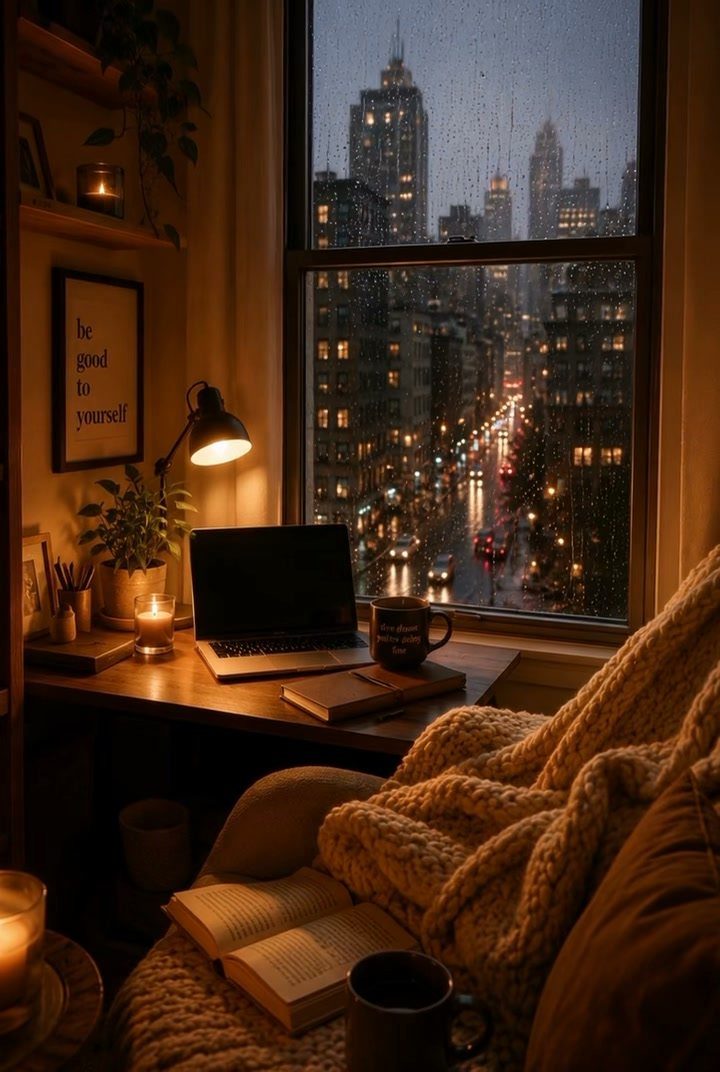
A chunky knit blanket or a wool throw draped over your chair brings warmth without taking up permanent space. A loose-weave knit blanket in a neutral tone is heavy enough to stay put but easy to pull over your lap.
Textiles also help with sound. I notice the difference most in small rooms where every keyboard click seems louder than it should.
3. Shelves, Organizers, and Cable Management
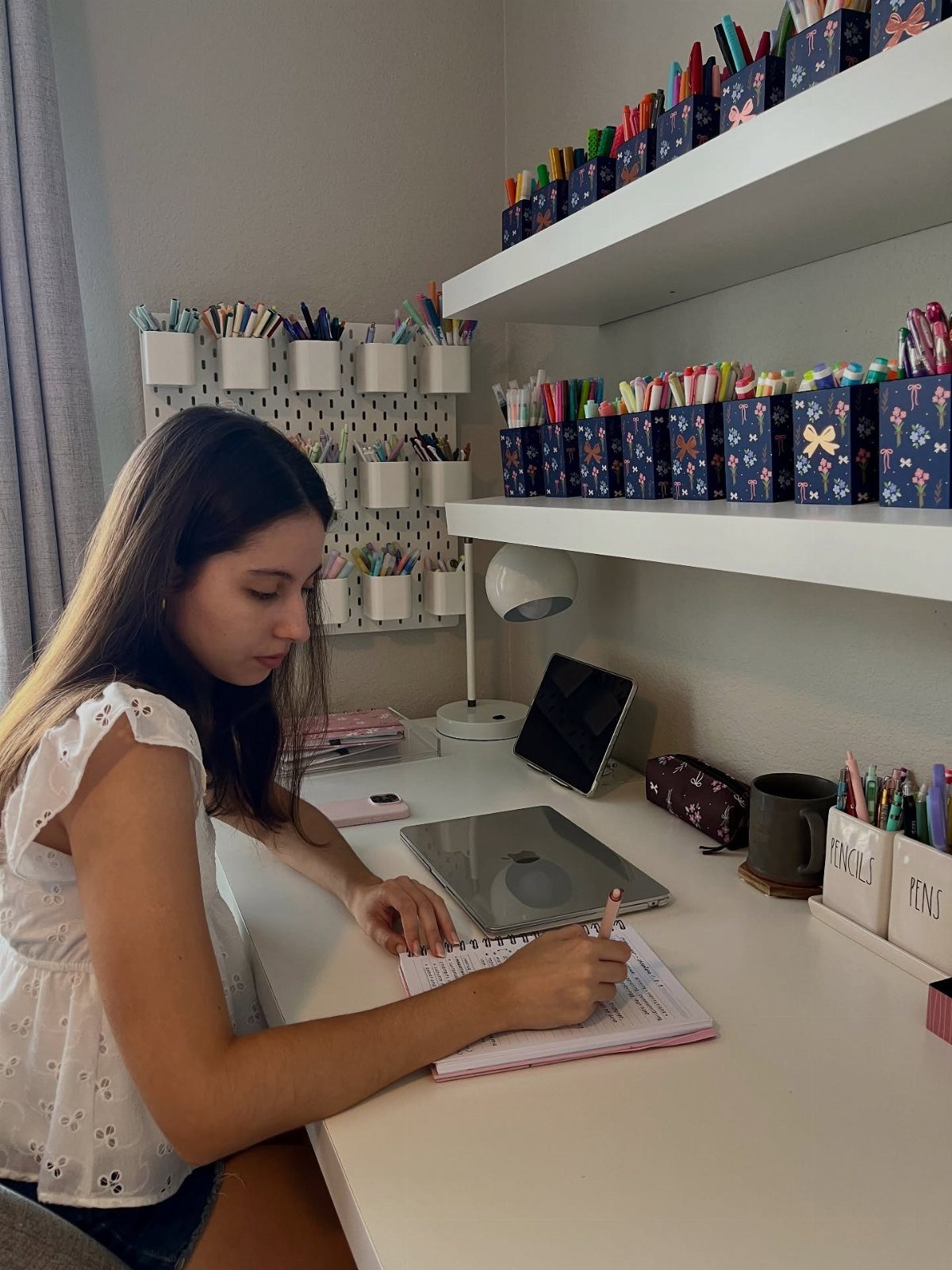
Wall-mounted organizers and labeled holders keep your desk surface clear, which makes a bigger difference in a small room than any decorating choice. The setup here uses shallow shelves above the desk and cup-style holders labeled by type.
Cable clips or a cable sleeve keep cords from tangling behind the desk. I run mine through adhesive clips attached to the underside of the desk, so they drop straight to the outlet without looping across the floor.
4. Gallery Wall
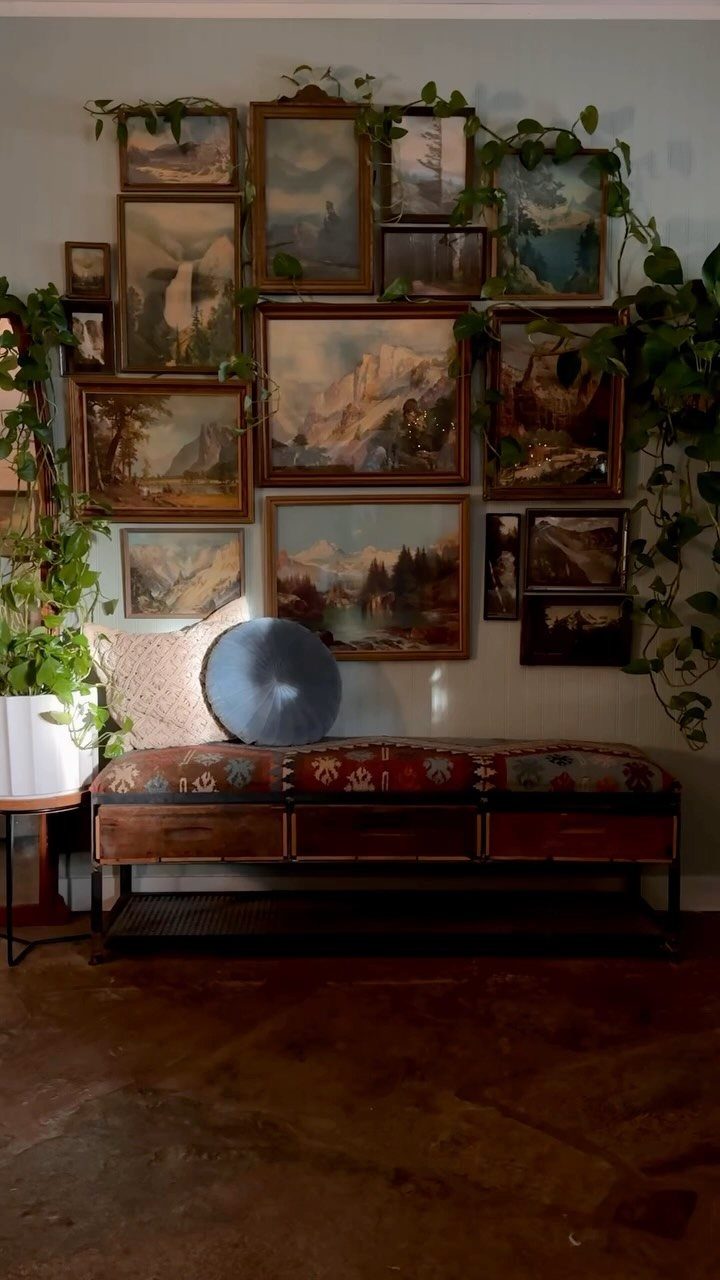
The frames here are all the same size and finish, which keeps the wall from feeling busy even with several pieces up.
The bench below adds seating and storage in one piece.
I’d use the drawers for reference books or supplies you don’t need every day. The plants trailing up the wall soften the straight lines without requiring floor space.
5. Retro Maroon
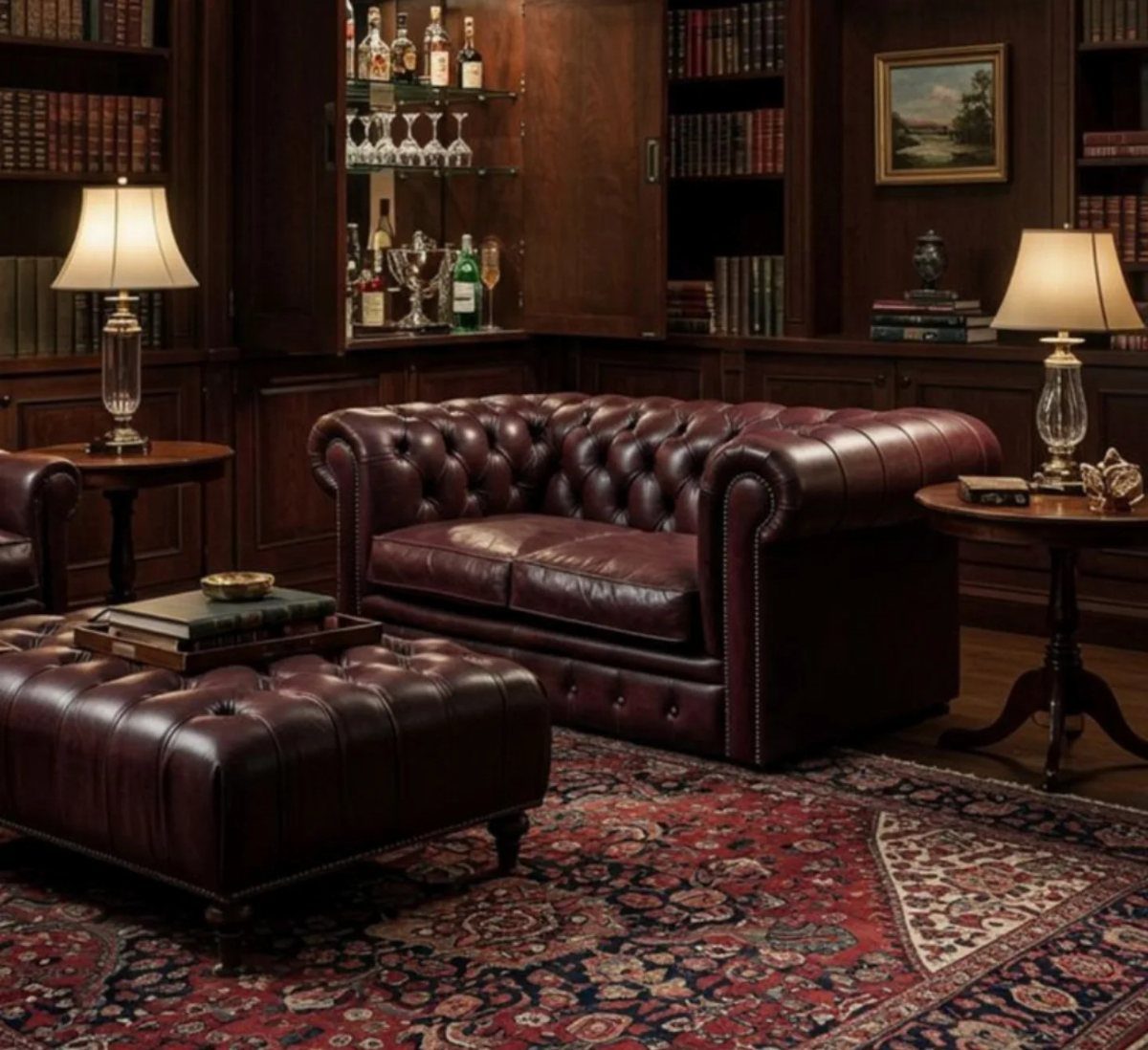
A maroon leather sofa and matching ottoman anchor a study room in a way that feels more like a private library than a home office.
This look works best in larger rooms with high ceilings.
The maroon reads rich rather than dated when it’s balanced with warm wood tones and low, directed lighting from table lamps. A patterned rug in red or burgundy ties the floor to the furniture without matching too closely.
6. Built‑In Window Bay Desk
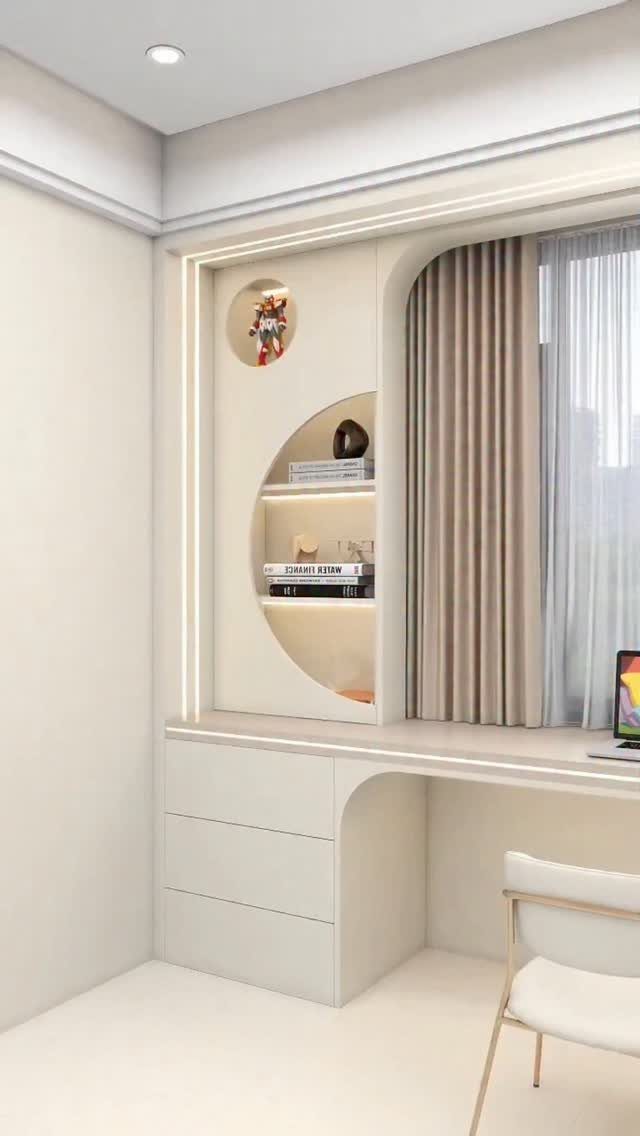
A desk built into a window bay uses space that’s usually wasted and gives you natural light all day.
You can have a carpenter build this or do it with stock shelving and a countertop cut to fit the curve.
I’d add a plug strip inside one of the side shelves so you’re not running cords across the floor to reach an outlet.
7. Full Bookcase
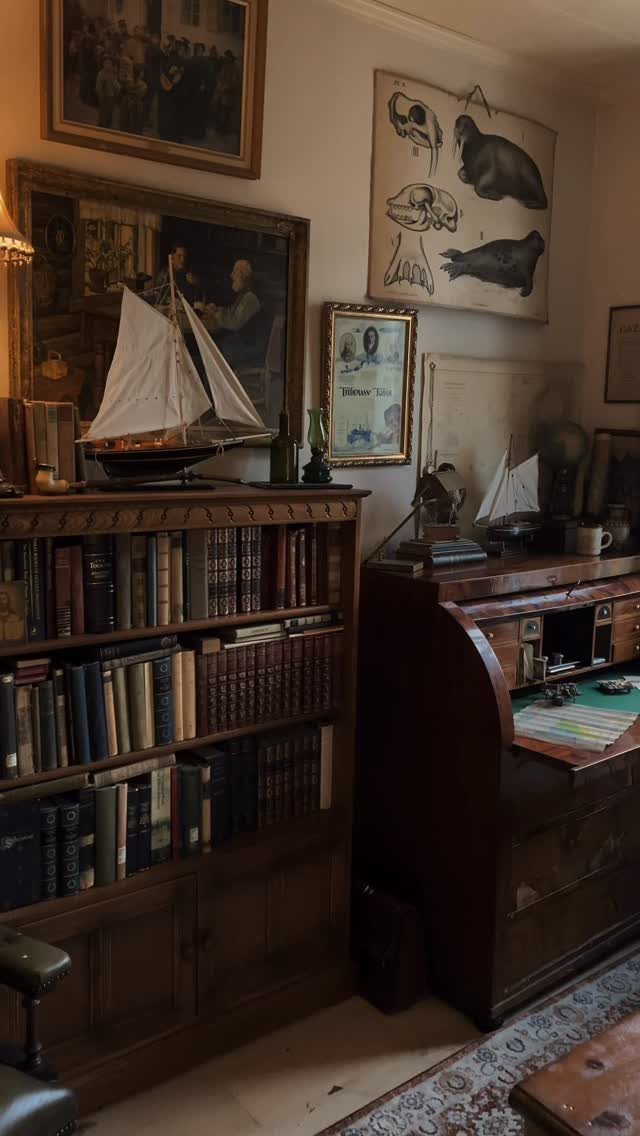
A floor-to-ceiling bookcase turns one wall into storage that holds more than you think. The unit here is freestanding wood, deep enough for hardcovers stacked spine-out, and it anchors the room without built-in carpentry.
I’d fill the lower shelves with reference books and working files, then let the upper shelves carry things you use less often. A model or a few objects on top break the grid without taking up desk space.
8. Luxury Marbled-design Study Table
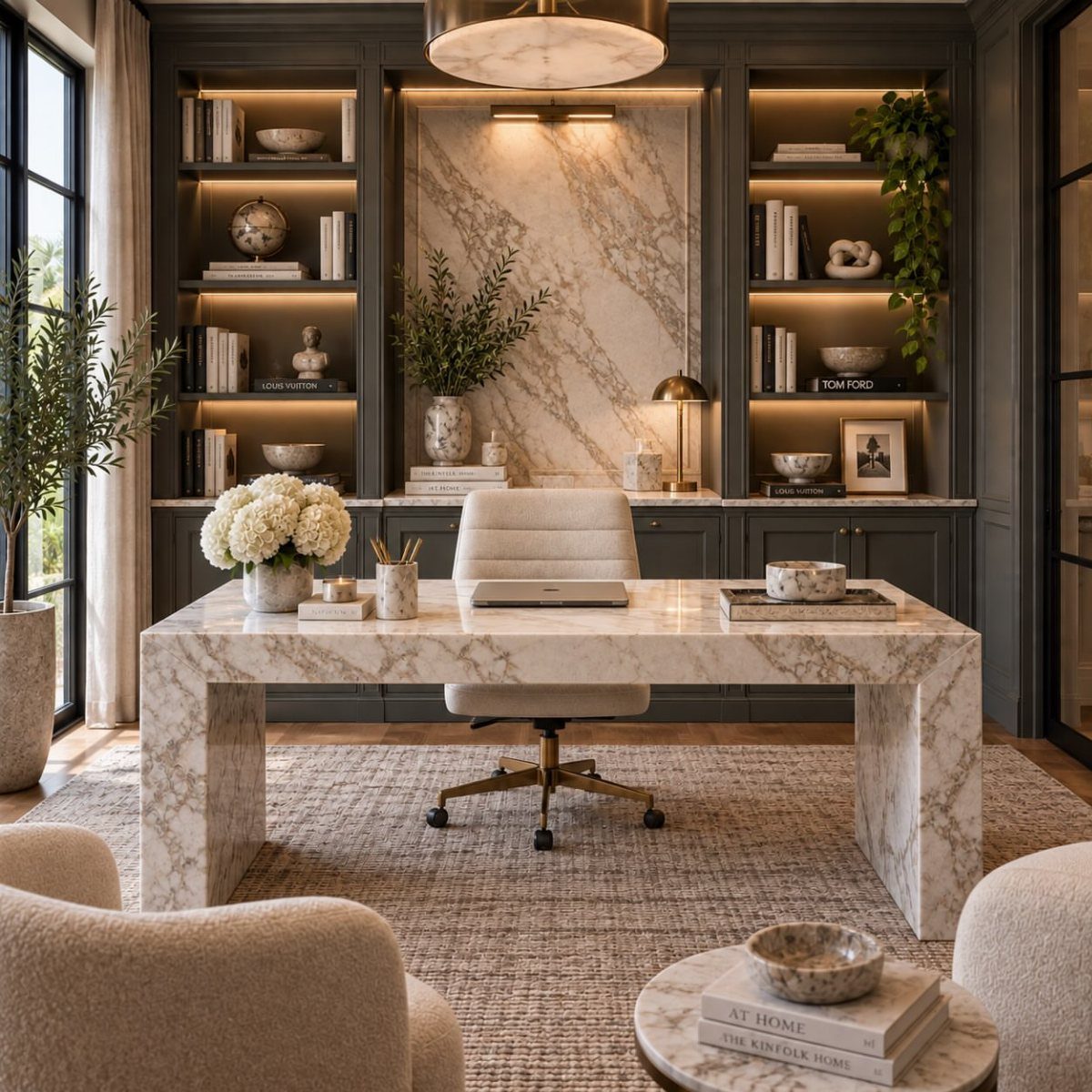
A marble-top desk makes the room feel finished in a way laminate or wood veneer doesn’t. The slab here is white marble with gray veining, set on a simple base that lets the surface do the work.
Real marble scratches and stains if you set a mug down without thinking, so I’d seal it or use a desk pad where the laptop sits.
Marble-look porcelain gives you the same look with none of the maintenance if you’re working with a tighter budget.
9. Incorporate Plants
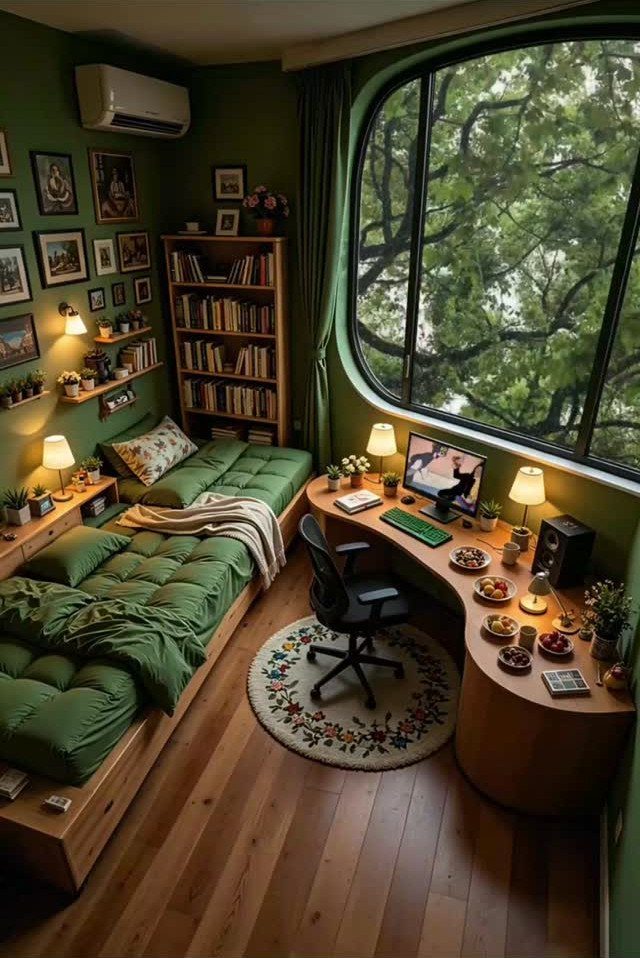
Plants soften hard edges and improve air quality without taking up much floor space. Small potted plants on the desk or bookshelf work in tight rooms, and a larger floor plant fills a corner that would otherwise sit empty.
I stick with low-light plants like pothos or snake plants if the room doesn’t get direct sun. They need water once a week and tolerate missed waterings better than most.
10. Desks with Built-in Storage
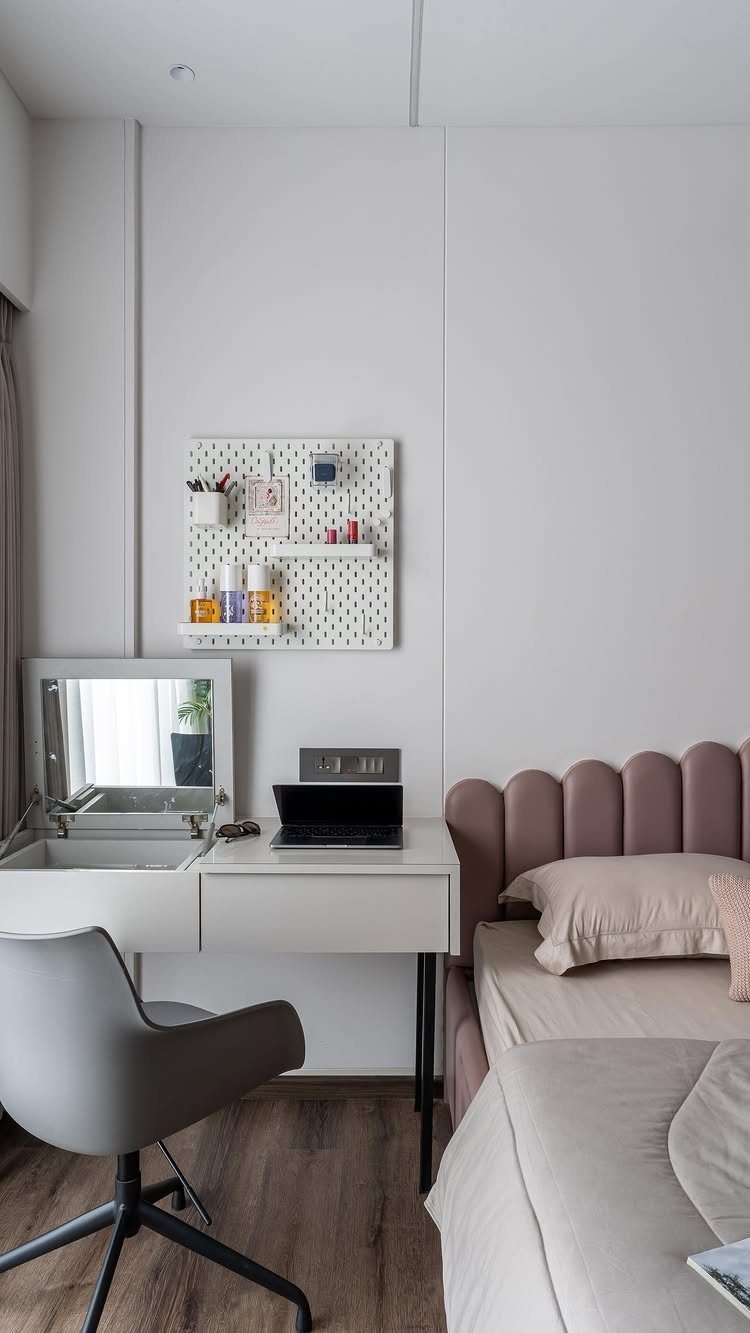
A desk with a drawer or lift-top compartment keeps supplies off the surface and out of sight when you’re done working.
The drawer here is shallow, sized for pens and cables, and the flip-top mirror adds a second function without taking up more floor space.
Small rooms benefit most from this kind of dual-purpose furniture. I’d use the drawer for anything you reach for daily, then keep backup supplies in a bin under the bed or in a closet.
11. Wire Grid Memo Board
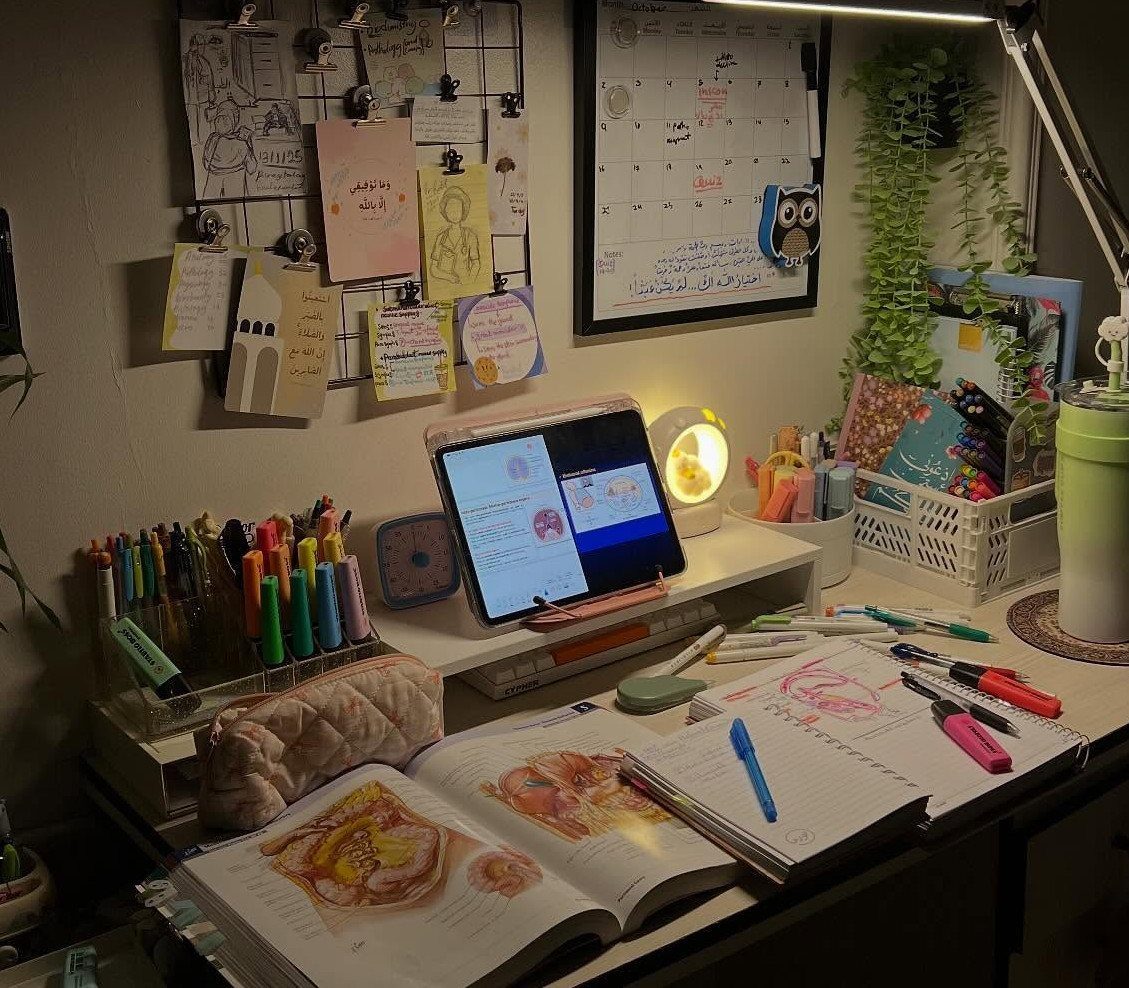
A wire grid mounted above the desk holds notes, printed photos, and reminders without permanent holes in the wall. The grid here is black metal, attached with adhesive hooks, and it keeps everything at eye level.
Clips or S-hooks let you swap things in and out as projects change. I’d keep the board tight to the desk so you’re not reaching across the room to grab a pinned page.
12. Corner Desk with LED Floating Shelves
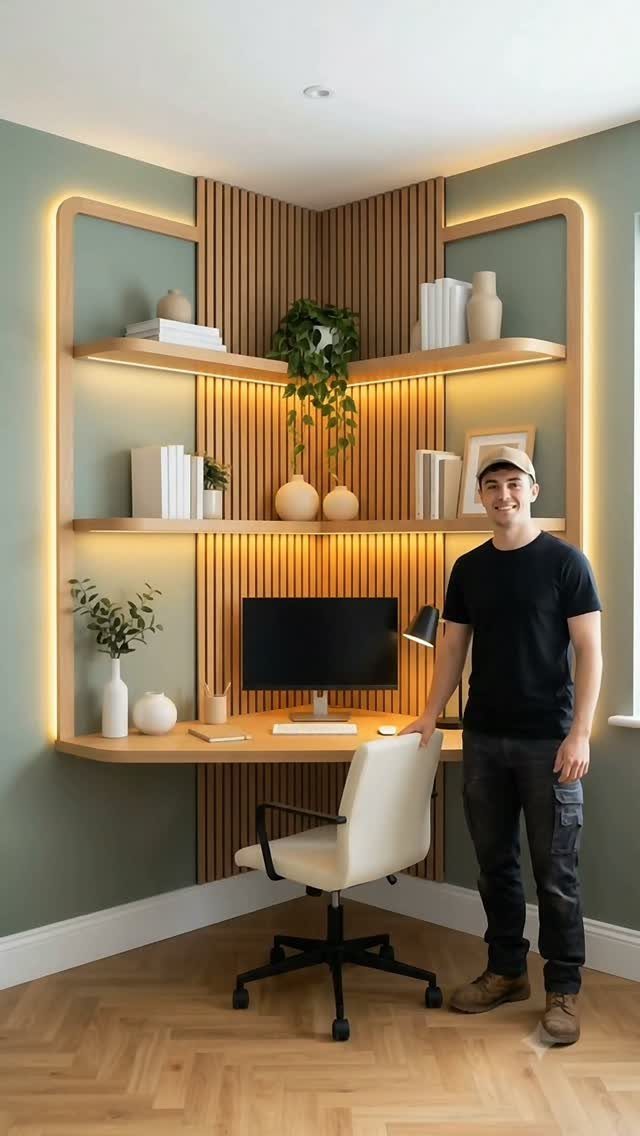
A corner desk with floating shelves above makes use of space that usually sits empty and gives you room to spread out.
The shelves here have LED strips underneath that light the desk without a separate lamp, and the sage green wall adds warmth without pattern or texture.
I’d run the LED strip along the front edge of each shelf so the light falls on the desk, not the wall behind it.
The corner setup works best in small rooms where a centered desk would block the door or window.
13. Floral Wallpaper and Pastel Palette
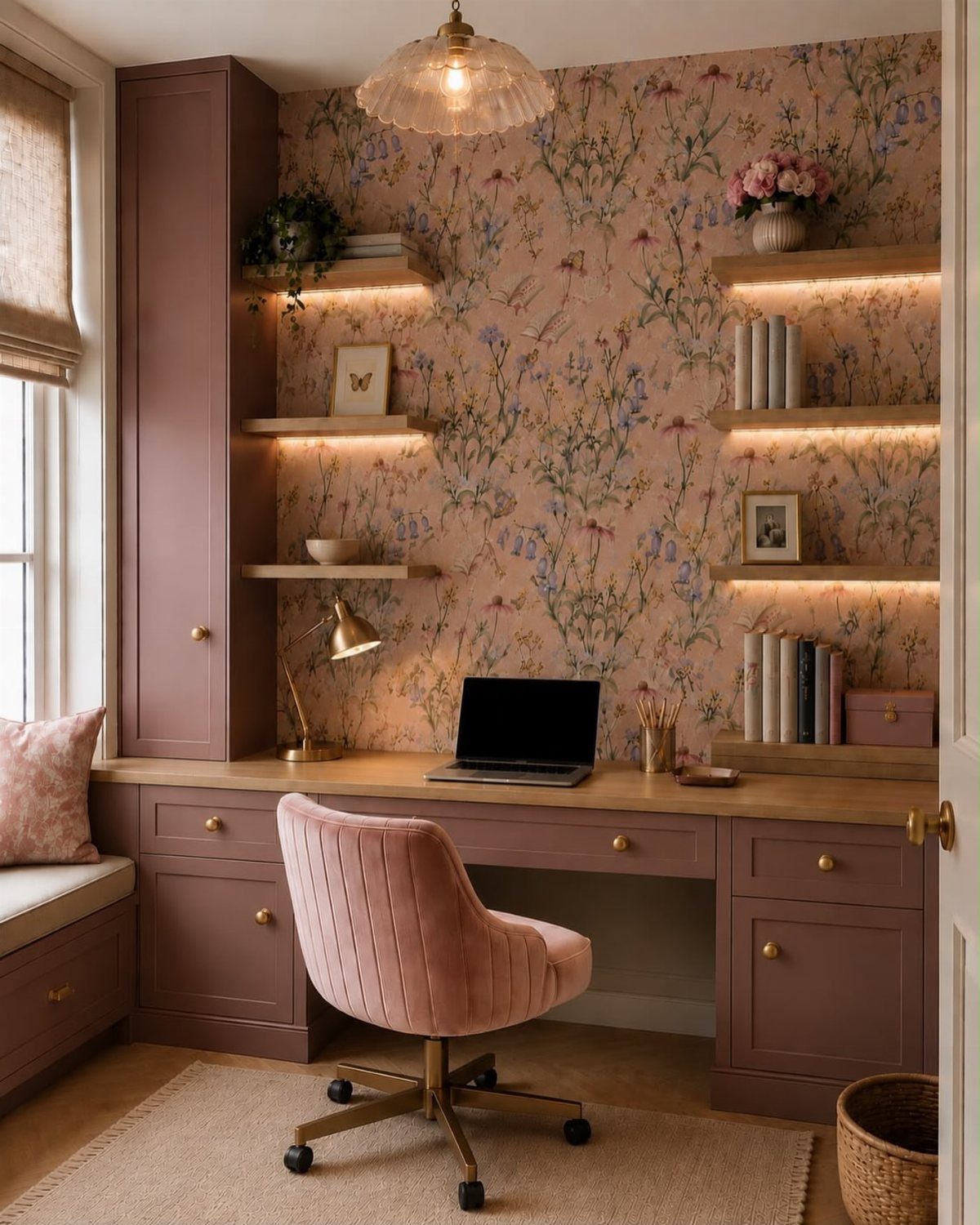
Floral wallpaper in soft pinks and greens sets a tone you notice the moment you walk in. The pattern here is delicate enough to cover the full wall without overwhelming a small room.
Mauve cabinets and a pink velvet chair pick up colors from the wallpaper and keep the palette cohesive.
I’d choose one upholstered piece in a jewel tone like this rather than matching everything to the wall, which can flatten the look.
The floating shelves with under-cabinet lighting double as task light if your desk faces away from the window.
14. Bedroom Study Desk Setup
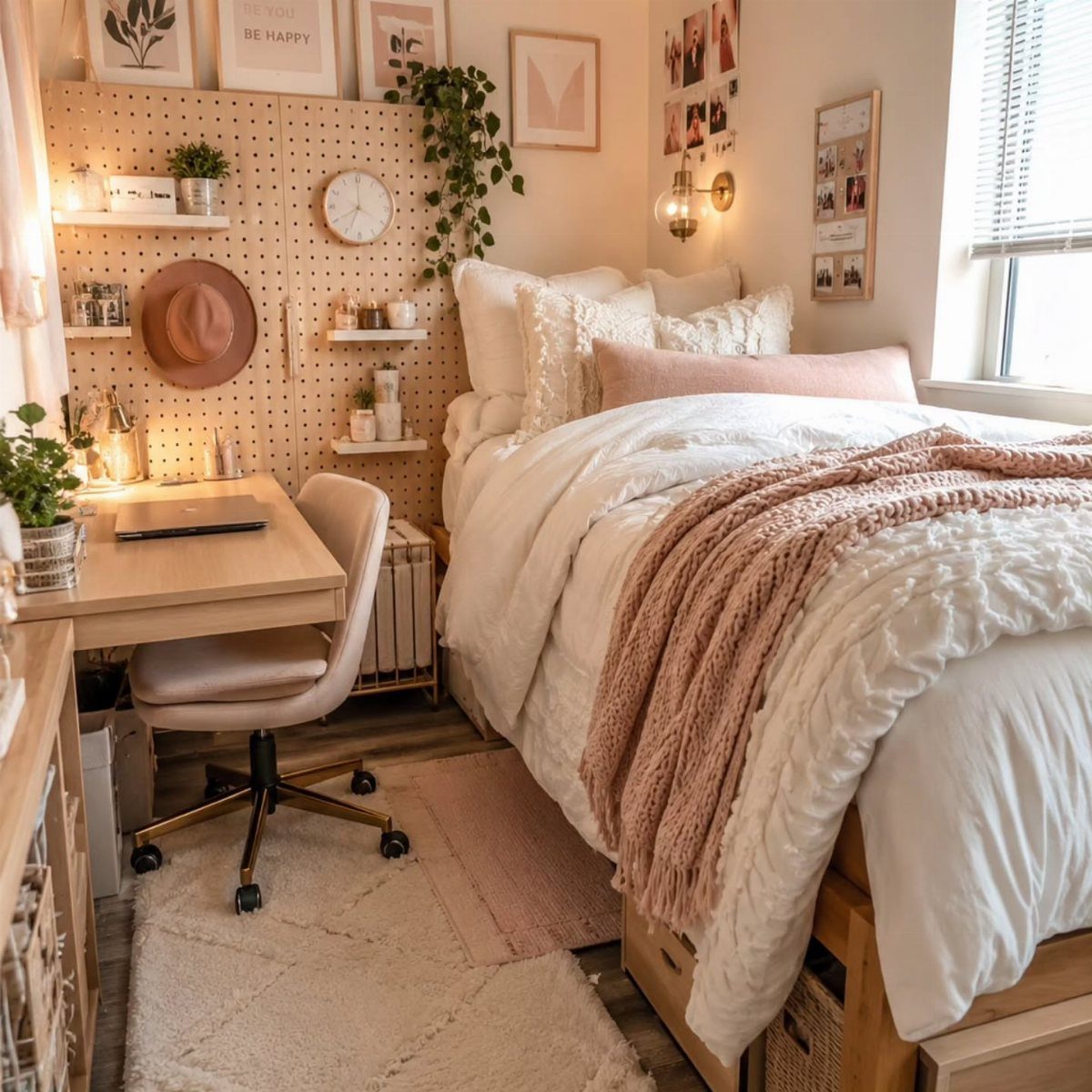
A light wood desk next to the bed uses floor space you already have and keeps your work surface separate from where you sleep.
The desk here is narrow enough to fit between the bed and the wall without blocking the walkway.
A pegboard above the desk holds supplies and notes without requiring a shelf that sticks out into the room. Peach walls warm up a small space better than white without making it feel darker.
The setup works when you don’t have a separate room but need a surface that stays clear for actual work.
15. Artist’s Creative Study Desk
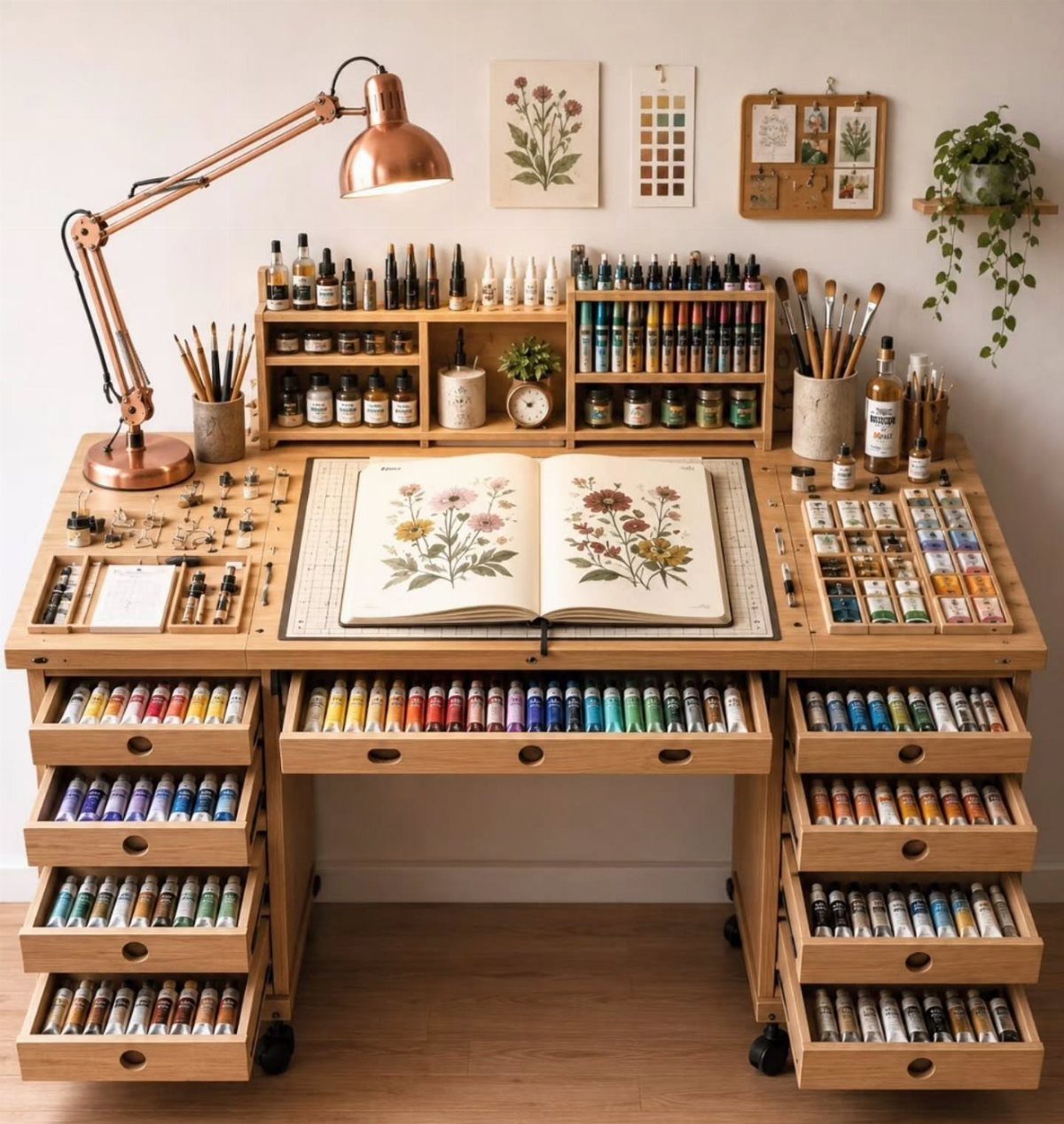
A wooden desk with shallow drawers keeps art supplies sorted and within reach. Divided compartments in a desk organizer mean you can grab the right pen without digging through a bin every time you sit down to work.
Botanical prints pinned above the workspace and an open sketchbook on the surface make the setup feel like a working studio rather than a storage zone. The copper lamp directs light where you’re drawing without glare on the page.
This layout suits anyone working with physical materials who needs tools out but organized.
Home Office Vs. Study Room
A home office holds a desk sized for a monitor and printer, storage for files and supplies, and seating built for long days.
A study room centers on learning.
The desk can be smaller, the chair less specialized, and the shelves carry textbooks instead of binders. The space sits away from household traffic and screens that pull attention.
The two overlap when someone works from home and also studies, but the furniture and layout should match what happens most.
A student finishing a degree doesn’t need a filing cabinet. Someone running a business from home doesn’t benefit from motivational posters aimed at homework time.
If the room does both, I’d separate them by function: professional tasks at the desk, study materials on a separate surface or shelf.
With 58% of Americans working from home either full-time or part-time (via McKinsey & Co.), odds are your kitchen table or living room won’t always cut it. That’s where a home study room comes in handy.
Best Colors for Studying
Blue calms the nervous system, which helps when you’re trying to hold focus through dense material. Green improves reading comprehension and memory recall, which is why it shows up in so many libraries and testing centers.
White walls add calm but can feel clinical if nothing breaks them up.
Yellow and orange improve mental productivity and inject energy without the anxiety red brings. Red can raise stress for some people, so test how it feels before committing to a whole room.
The right color depends on whether you need to stay alert or settle into long reading sessions.
I’d use blue or green as the dominant wall color, then bring in yellow through a lamp, a chair cushion, or art if the room feels too flat.
Importance of Organization
A clear desk surface means you can sit down and start working without clearing space first. Cupboards, drawer units, and wall shelves keep books and supplies within reach but out of sight when you’re not using them.
Cable management matters more than it seems. Loose cords across the desk create visual clutter that pulls attention even when you’re not looking at them.
Compact storage works better in a study room than deep bins or tall stacks.
Shallow trays, labeled containers, and vertical file holders let you grab what you need without digging. A system where everything has a spot and putting it back takes less effort than leaving it out.
Frequently Asked Questions
How to make a study room more cozy?
Start with a warm-toned lamp that directs light where you need it, then add a throw blanket or knit textile over your chair.
A pothos or snake plant tucks into a corner or shelf and gives you green texture that breathing room air through actual leaves. Textiles also dampen sound, which makes a small room feel quieter when you’re working.
What are some ideas for a small study room?
A corner desk with floating shelves above uses space that would otherwise sit empty, and a narrow desk next to the bed fits between furniture without blocking the walkway.
Paint in white, cream or pale gray bounces daylight around and pushes the walls out visually. Stick with compact furniture like a desk with a single drawer and wall-mounted organizers instead of deep bins or tall stacks.






