
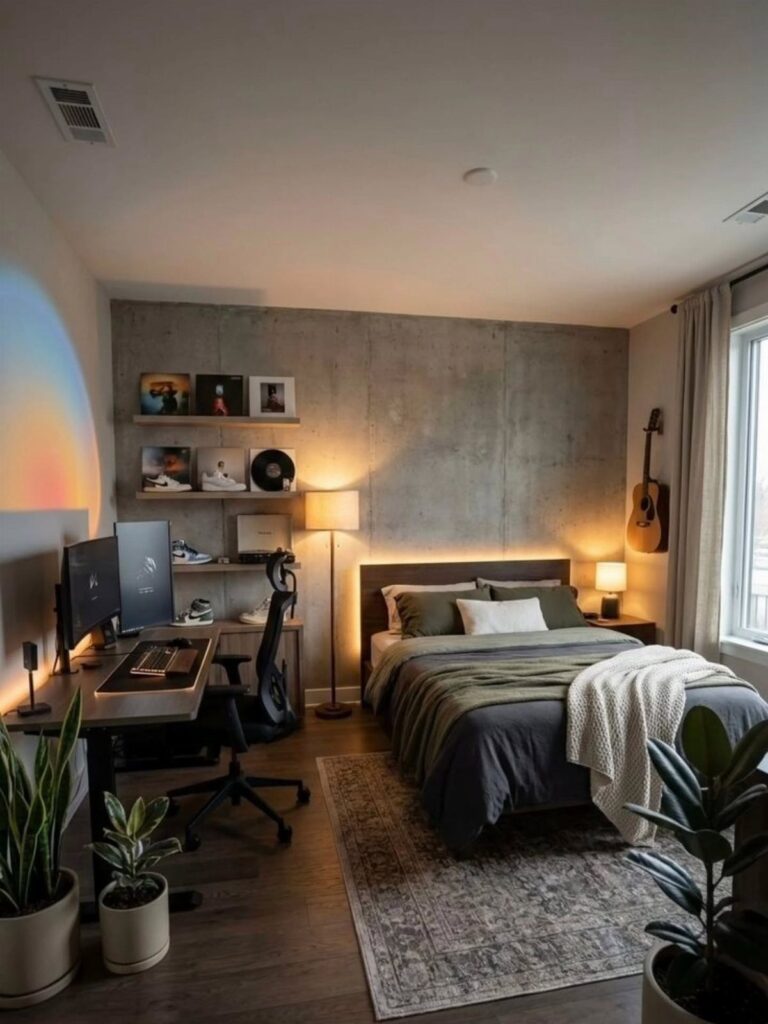
A desk in the bedroom ranges from a slim console that fits beside the bed to a wall-mounted shelf that keeps things narrow, a cable tray setup that hides the wires, or a full dual monitor station when you have the floor space for it.
The layout you choose depends on how much floor space you can give up without making the room feel crowded.
A loft bed with a desk underneath claims vertical space when the floor plan is tight, while a wall-mounted shelf keeps the work surface wide without eating into walking room.
1. Desk Near Windows
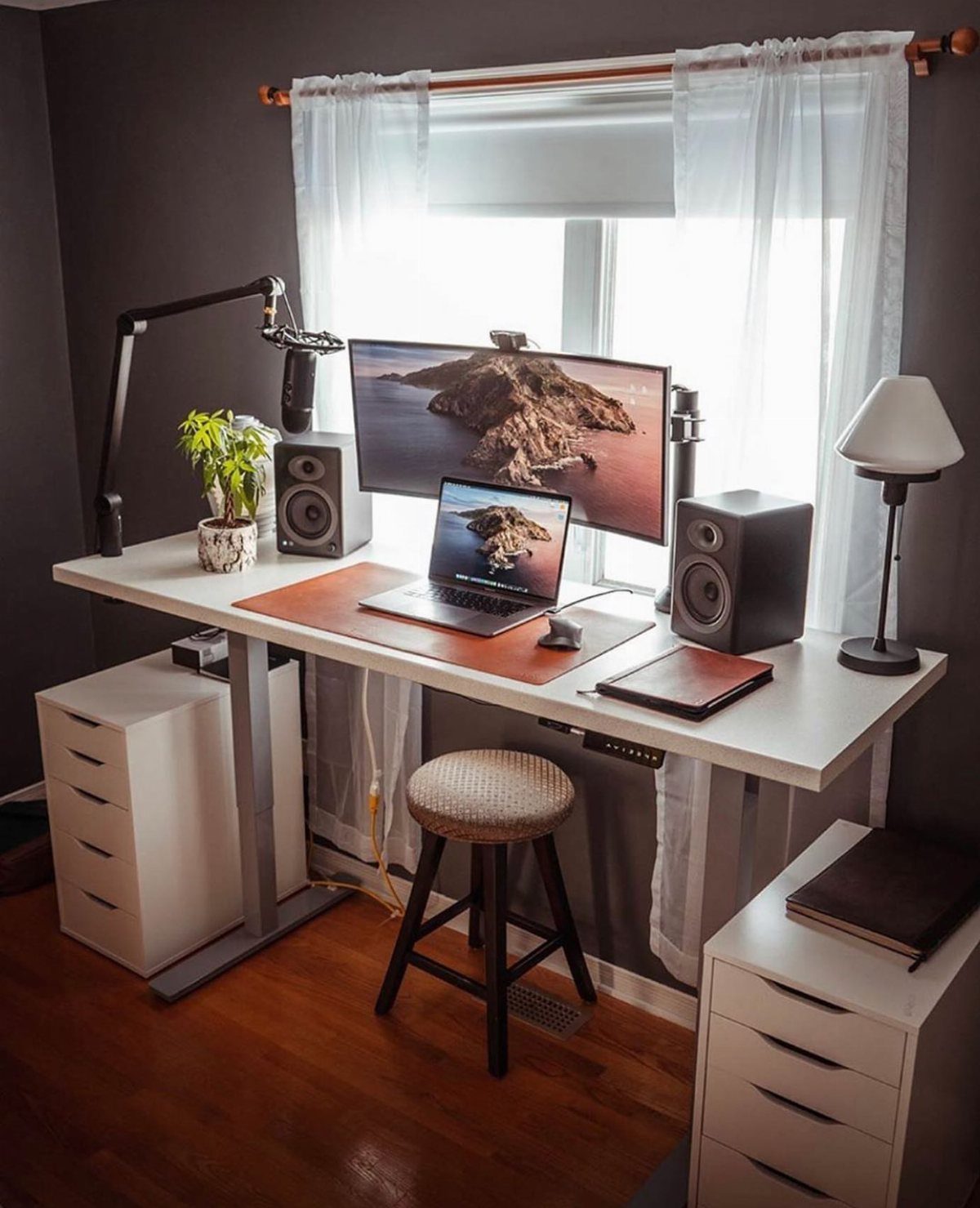
Positioning a desk near a window brings in natural light, though you’ll want to angle it so the screen isn’t facing direct sun.
If the window faces strong afternoon sun, a sheer curtain helps. The grey walls here make the white desk stand out without feeling stark.
2. Wall-mounted Shelves
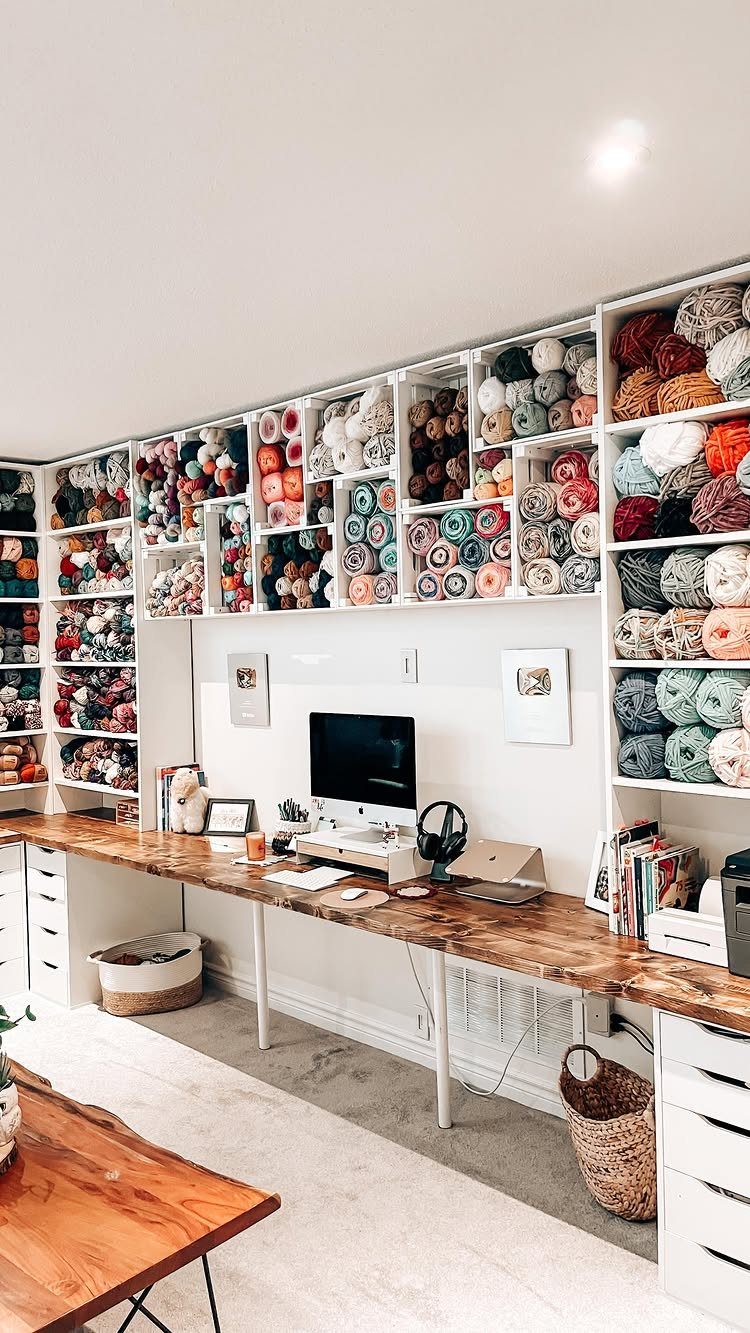
Wall-mounted shelves turn the space above your desk into storage without taking up floor area. A grid of cubbies holds yarn, books, craft supplies, or office folders.
Mounting shelves to studs keeps them stable when fully loaded. A long desk underneath gives you a wide work surface and room to spread out.
3. Slim Desks
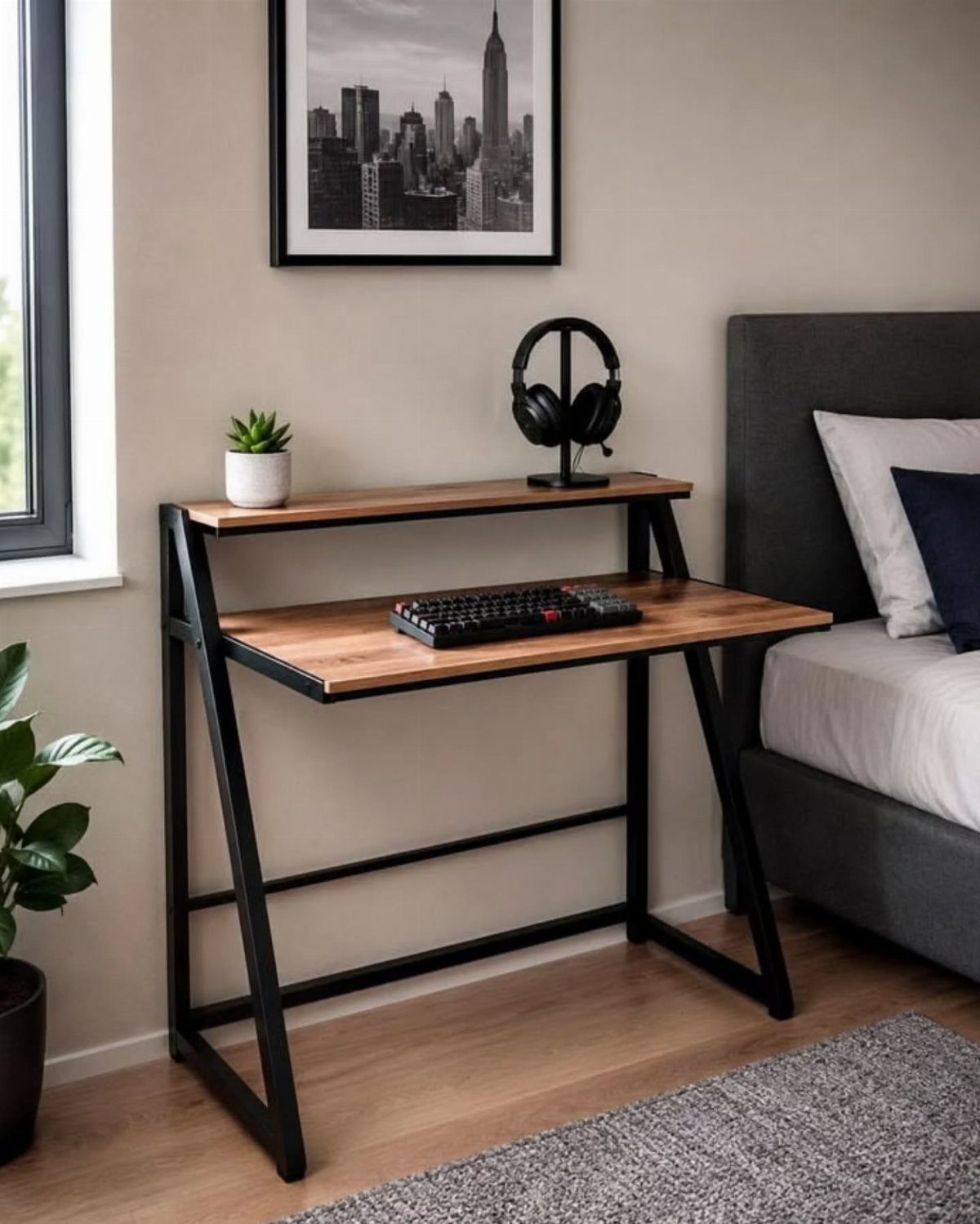
Slim desks fit beside a bed without crowding the room.
The wood top warms up the metal frame and matches furniture you might already have.
4. Cable Trays
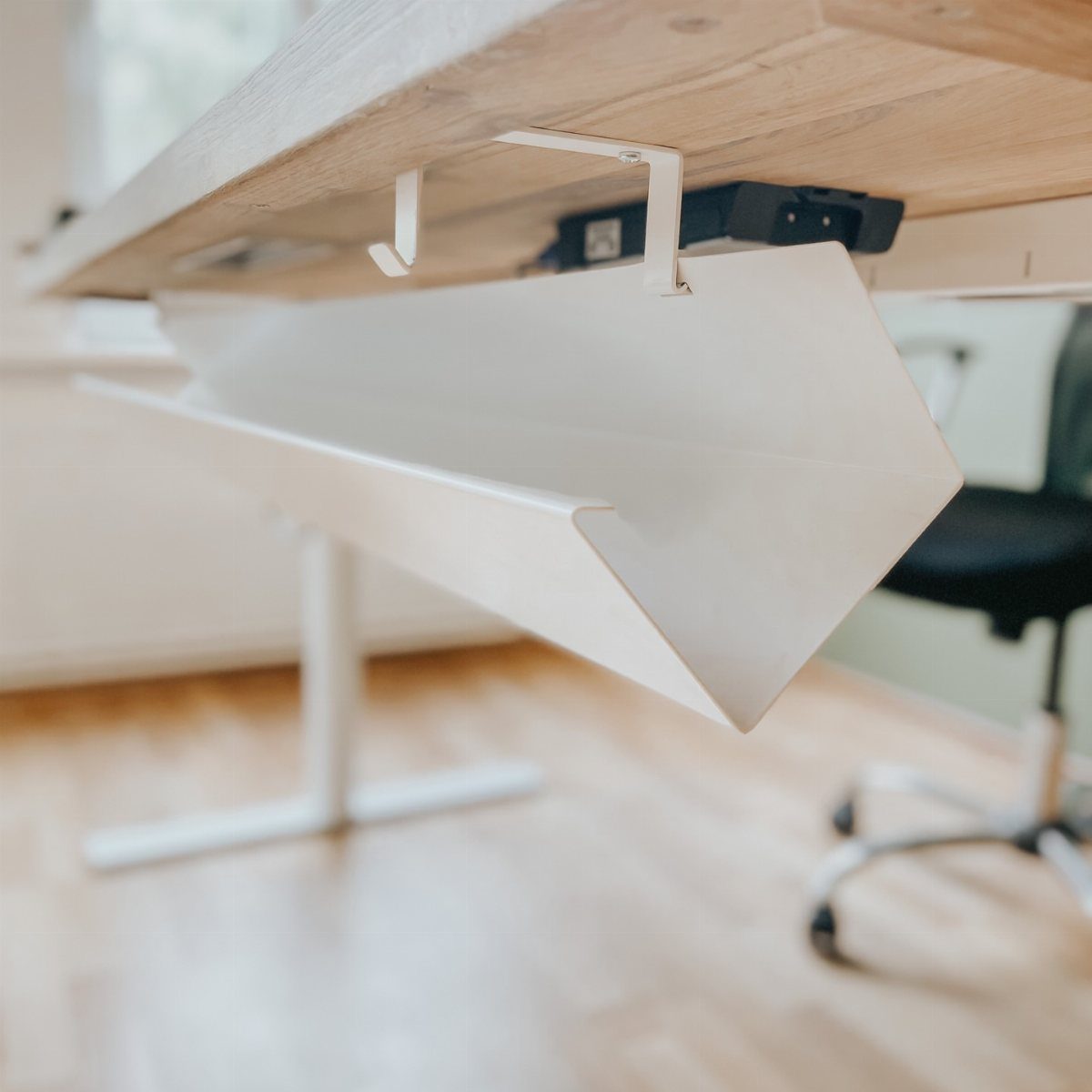
A cable tray screws to the underside of your desk and keeps power strips and excess cable length off the floor.
Routing cables through the tray instead of letting them drape keeps the floor clear for cleaning and makes the whole setup look more finished.
5. Dual Monitor Desk by the Bed
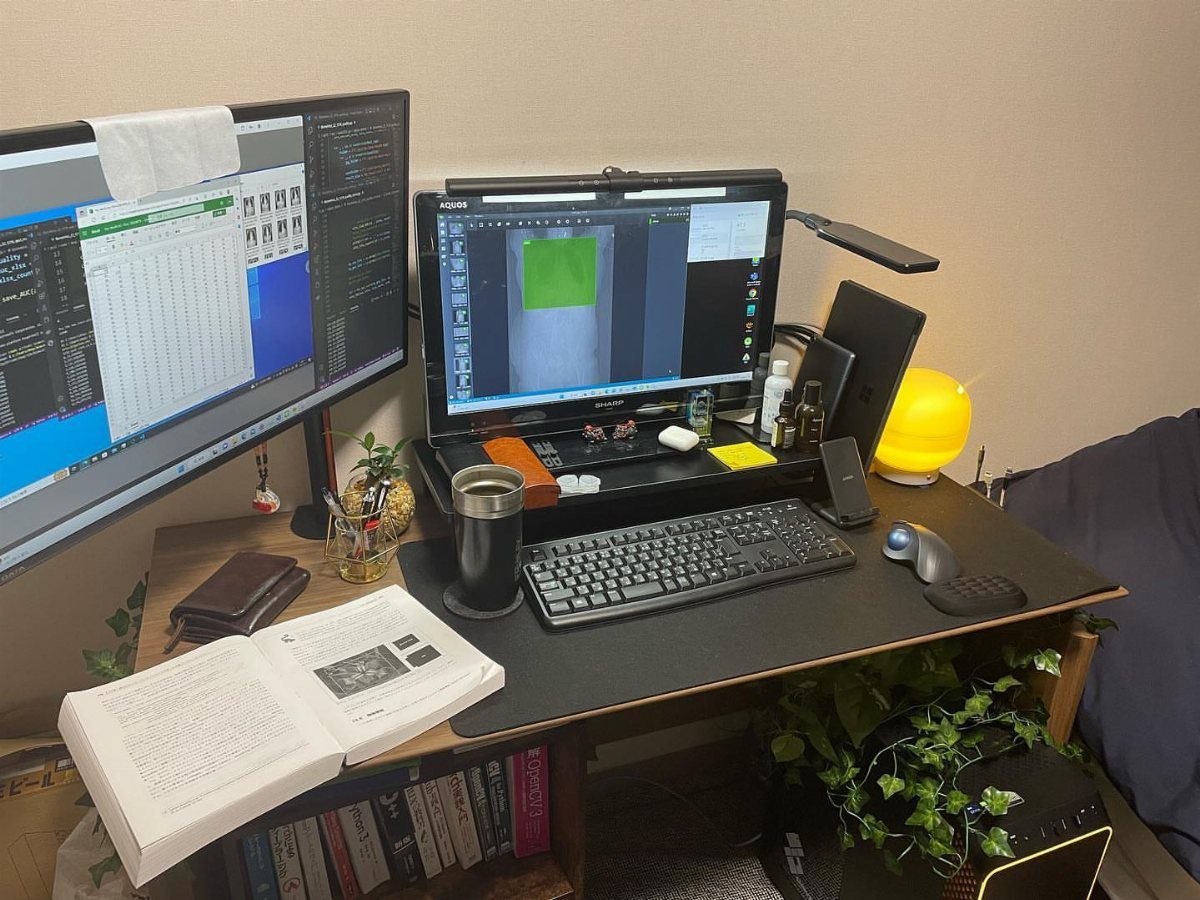
Placing a dual monitor setup right next to the bed works when floor space is tight and the bedroom doubles as an office.
Positioning the desk at the side of the bed instead of the foot leaves a clear path to the door.
If light from the monitors bothers you at night, an adjustable desk lamp lets you work without turning on overhead lights.
6. Dark-toned Bedroom Office Layout
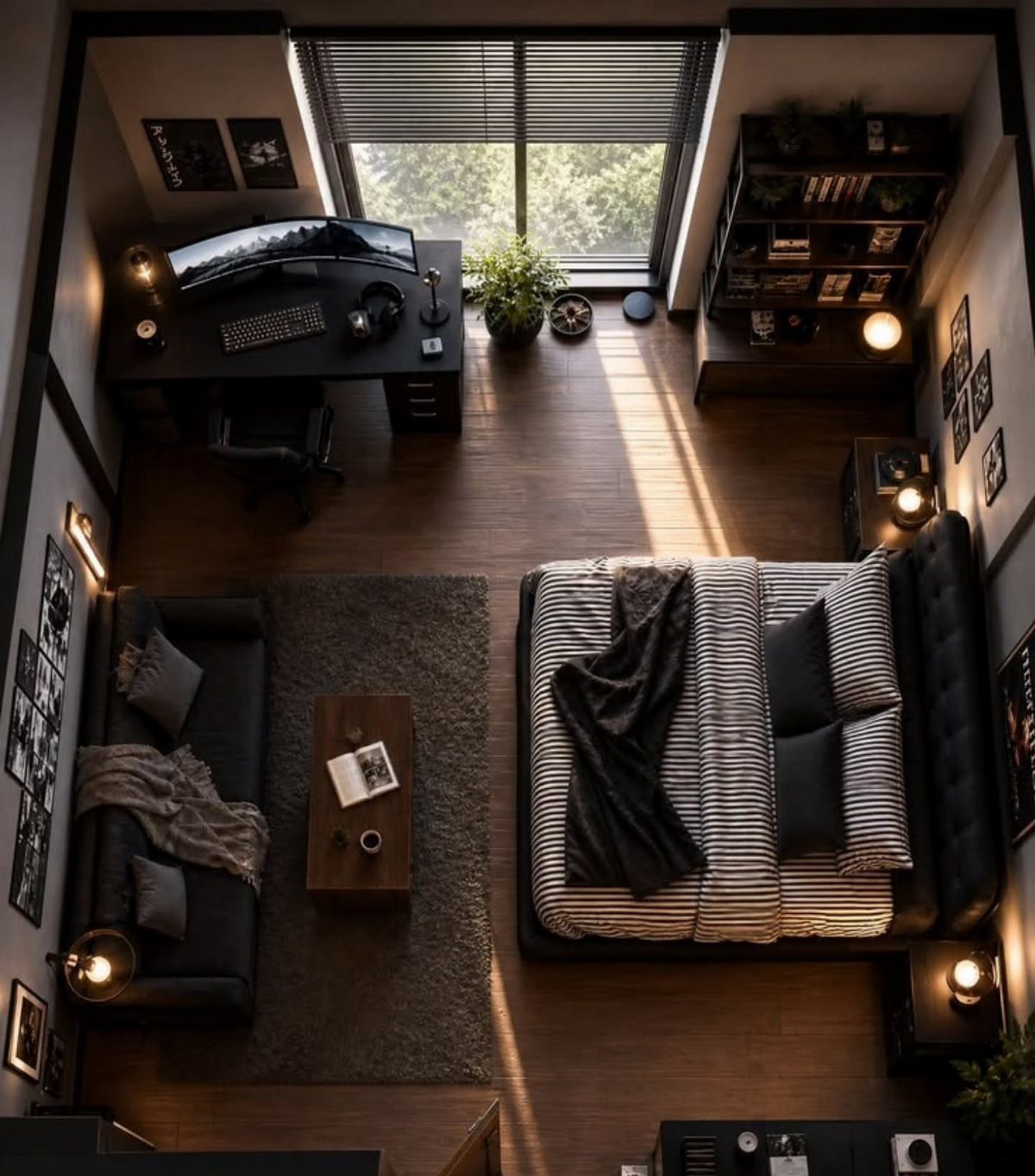
A dark color scheme unifies the bedroom and office area when both share the same room. Black desk, dark walls, and striped bedding create a cohesive look that does not feel divided.
Dark tones absorb light, which helps the space feel quieter and more focused during work hours. Adding a black sofa gives you a place to sit away from the desk without leaving the room.
7. Coordinated Pink Bedroom Desk
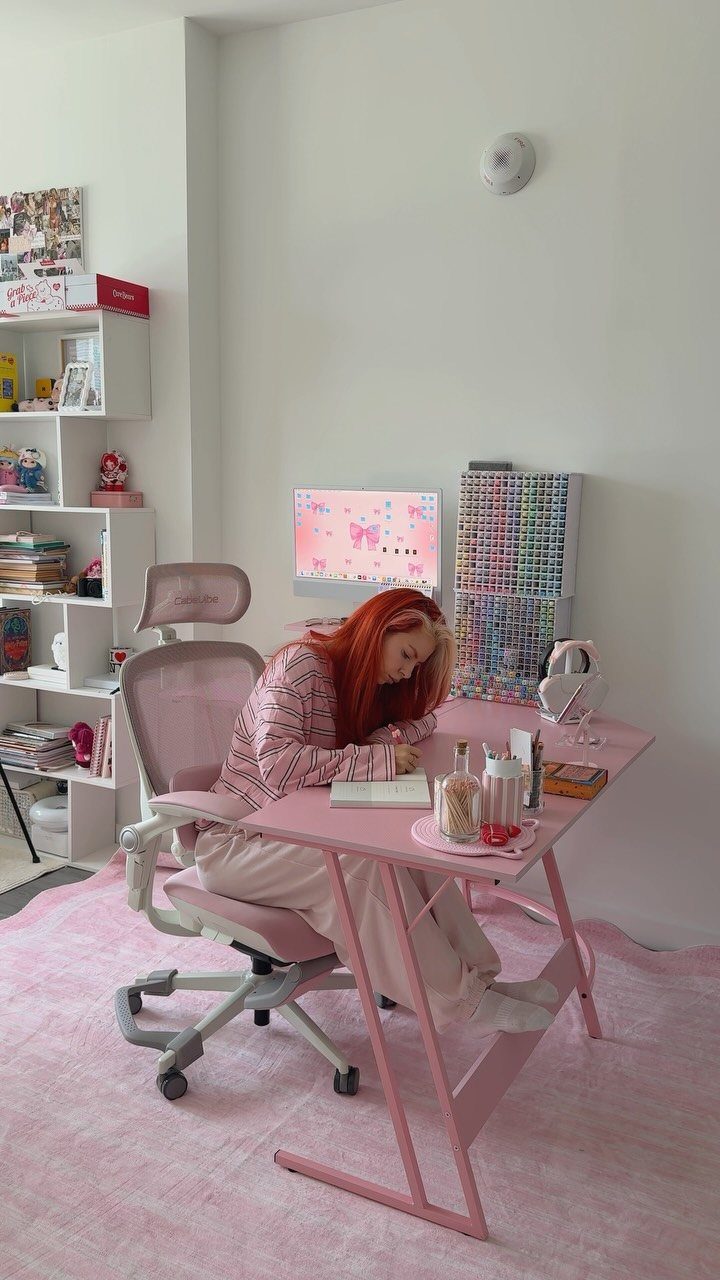
A pink desk paired with a matching chair and rug ties the workspace into the bedroom palette instead of making it feel like borrowed office furniture.
Choosing one accent color for all three pieces keeps the setup cohesive without needing to match wood tones or metal finishes.
If pink feels too bold for the whole room, keeping the walls neutral lets the desk area stand out on its own.
8. White Bedroom Study Desk
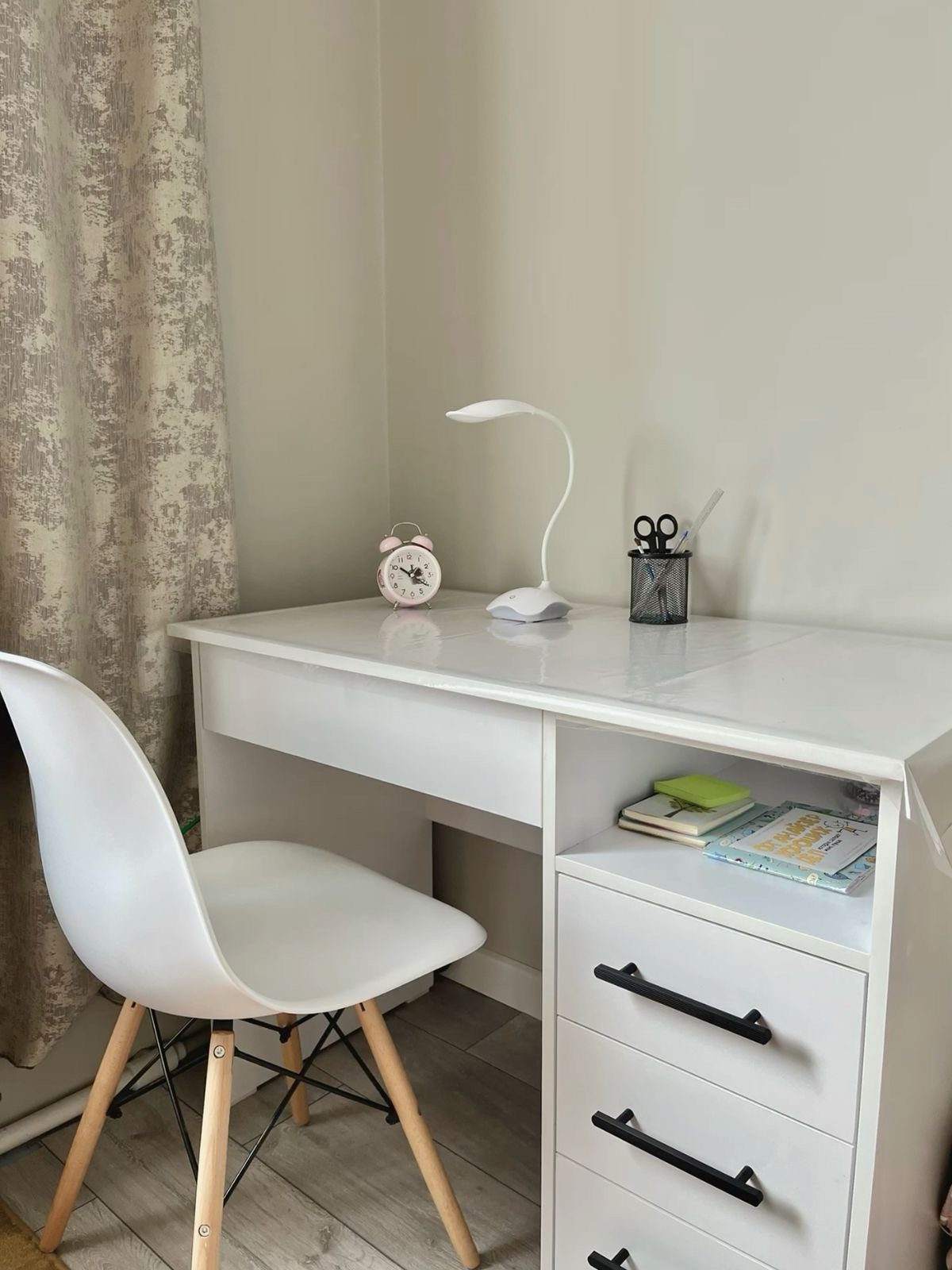
A white desk with built-in drawers gives storage for files and supplies without adding a separate cabinet. The matching chair keeps the look clean when everything shares the same finish.
White reflects light in smaller bedrooms and does not compete with patterned bedding or curtains. Drawers on one side leave leg room on the other, which matters if you sit at the desk for long stretches.
9. Loft Bed with Desk Underneath
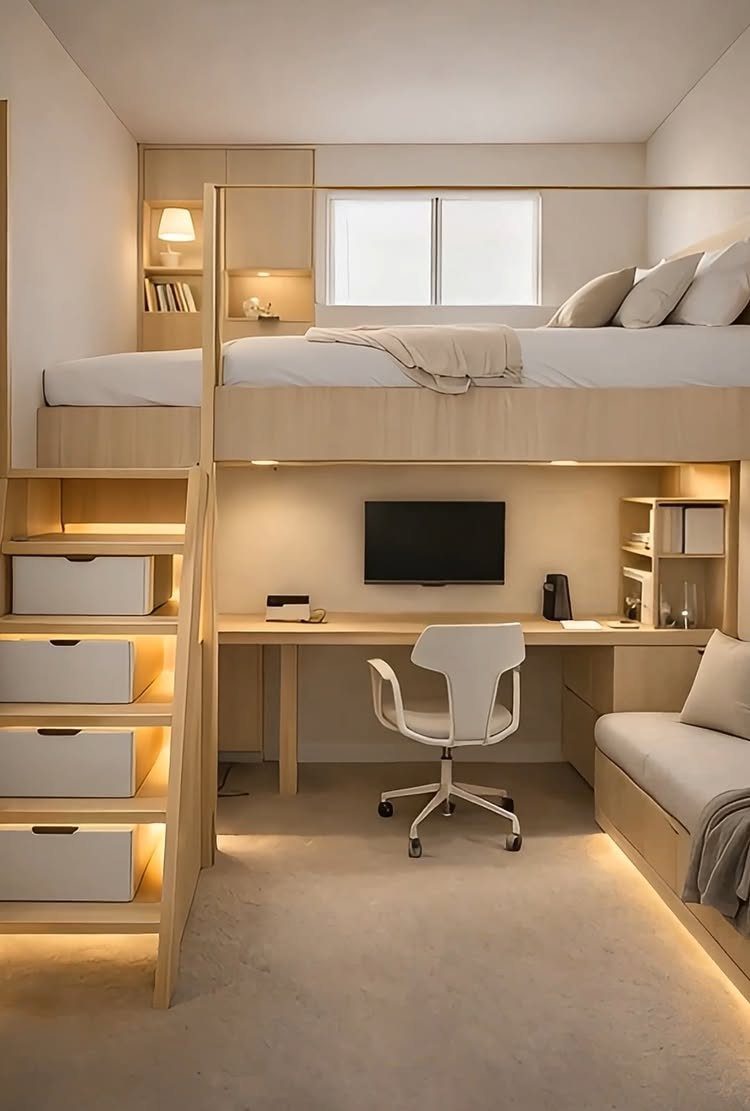
A loft bed puts the mattress on top and claims the space underneath for a desk, chair, and shelving. This layout works in small bedrooms where fitting both a bed and a workspace side by side is not practical.
The desk sits ready to use without folding or clearing anything away.
Benefits of a Bedroom Desk
A dedicated desk creates a boundary between work and rest even when both happen in the same room. Sitting at a proper surface signals focus, which improves concentration throughout the day.
A desk with drawers or shelves gives your notebooks, cables, and loose papers a place that isn’t your mattress. When everything has a place, the bedroom feels more organized and the workspace stays clear.
Ergonomic desk options support better posture.
Sitting twisted on a bed or low couch for hours catches up with your neck and lower back. A real desk and chair line your spine up properly and cut down on the ache that builds over weeks.
The right desk finishes the room instead of just filling it.
Common Layout Mistakes
Placing the desk too close to the foot of the bed can crowd circulation and make the room feel cramped. Even a small buffer helps the brain treat each zone differently.
Bedroom floors don’t forgive the big L-shaped station you’d use in a home office. Choosing a desk sized for the available space leaves room to move around comfortably.
If you can’t roll the chair back without hitting the bed frame, you’ll feel it every time you sit down. Leave enough space to push the chair back and stand without bumping into the bed or wall.
Poor lighting strains your eyes during long work sessions. A desk lamp positioned to light the work surface directly makes a difference when overhead lights are not enough.
Unmanaged cables create visual clutter and make cleaning harder.
Frequently Asked Questions
Where should a desk be placed in a bedroom?
I put mine between the window and the corner, keeping it well away from the bed itself.
Window light makes a real difference for screen work, and the physical separation tells your brain the desk is not part of the bed.
Corners hold a desk without cutting through the room, which matters when you’re working with 120 square feet instead of 200.
How much space does a desk chair need?
I leave 3 feet clear behind the chair so I can get up without dragging it forward first. Enough clearance matters for posture and daily movement around the room.






