
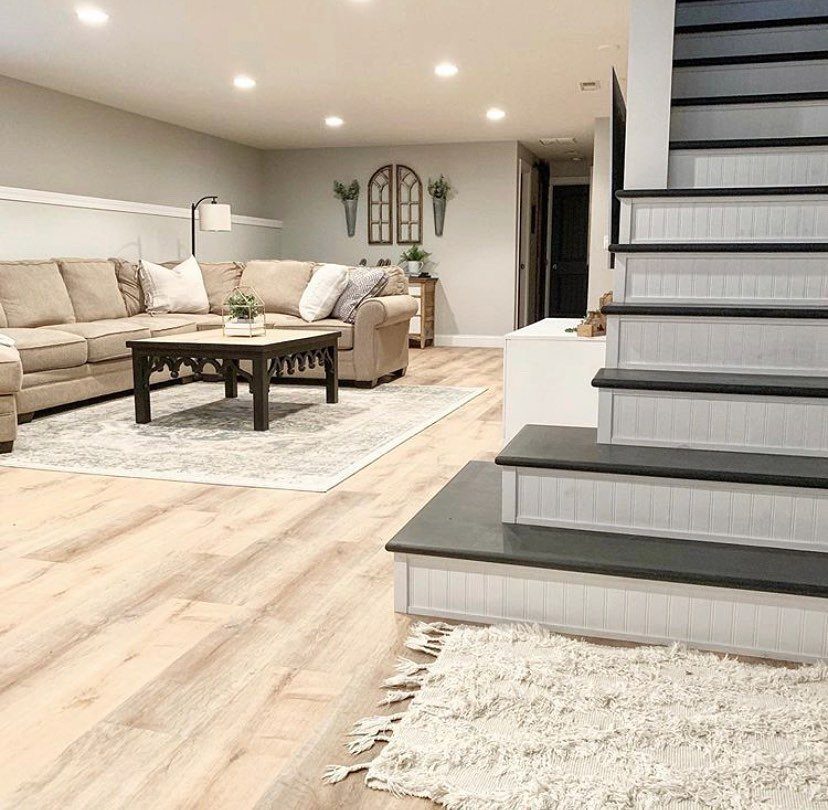
A runner adds pattern and cuts noise, while custom cabinets built into the space under your stairs turn every inch of that angled area into permanent storage.
The right choice depends on whether you want the wall itself to carry pattern and color or the stairs and railings to set the look.
1. Stair Runner
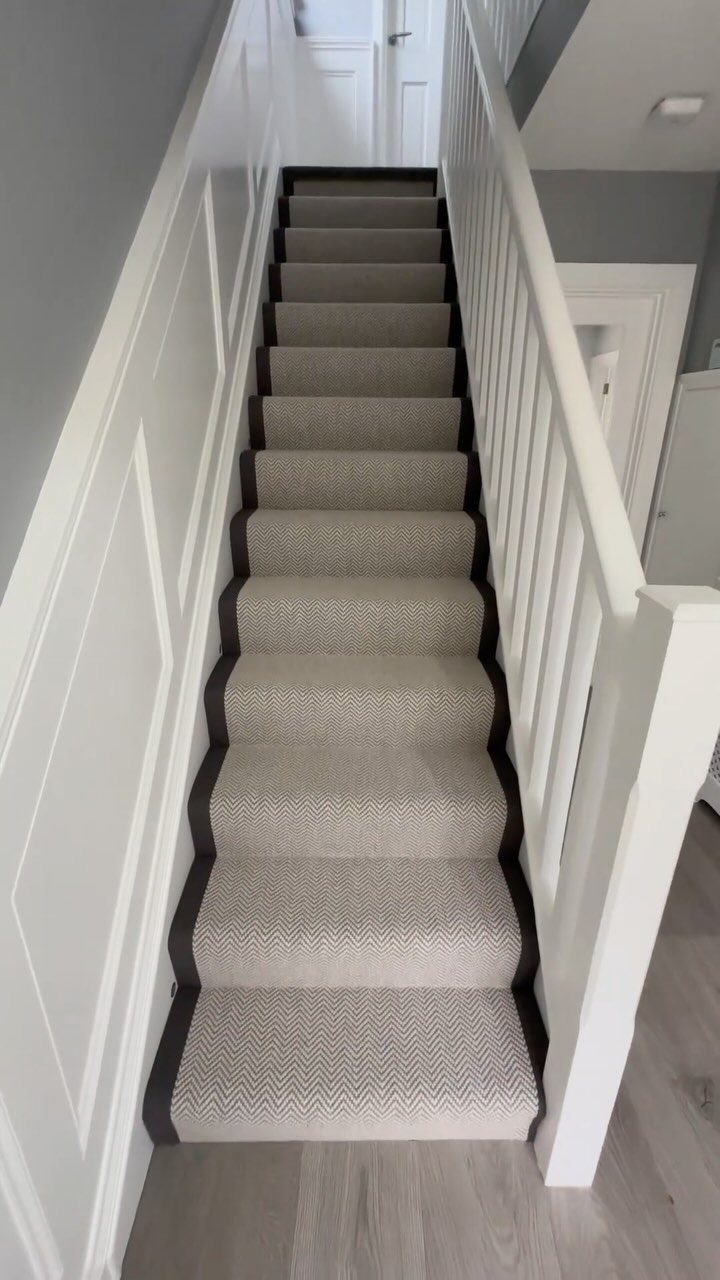
A runner down the center of your stairs softens the look and cuts down on noise every time someone walks up or down. The pattern adds visual interest without needing to paint or refinish anything.
Runners come in widths that leave a few inches of tread visible on each side.
I like a bordered style with a contrasting edge. It frames each step and lasts longer than wall-to-wall carpet because the wear spreads across a narrower path.
Install it with stair rods for a finished look, or use carpet tacks if you want a cleaner line.
2. Painted Risers
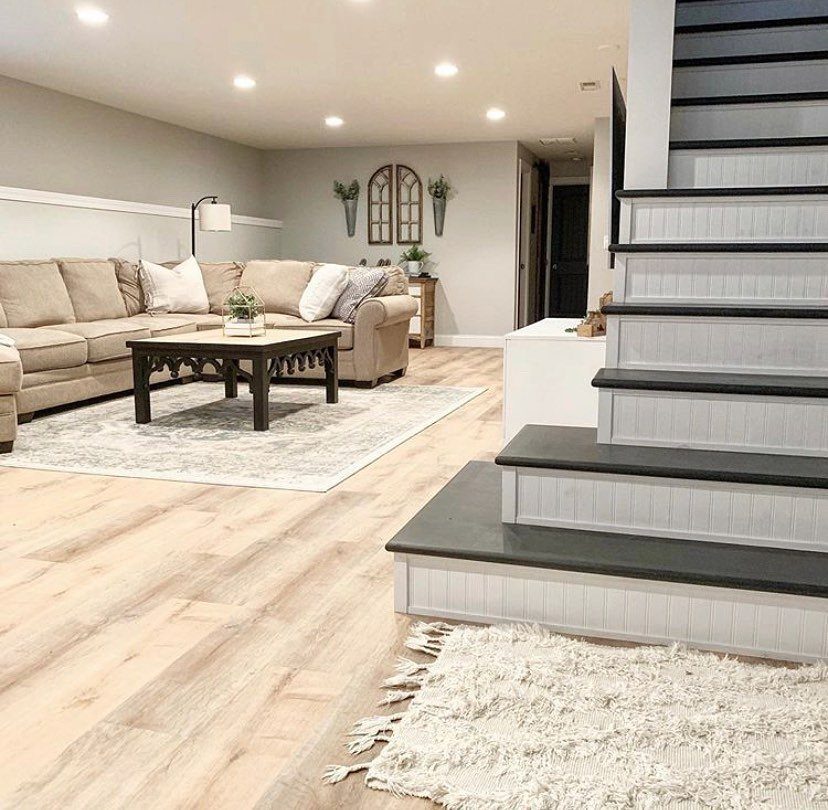
Painting the risers gives you contrast without changing the treads. White risers against dark treads open up the staircase and make each step easier to see, which matters in a basement where the light is sometimes low.
The paint takes an afternoon.
Sand the risers lightly, prime if the wood is bare, then roll on 2 coats of satin or semi-gloss. I go with a finish that wipes clean, since risers get scuffed by shoes.
If your treads are already dark, keep the risers light. A soft grey works when you want something warmer than white.
3. Eclectic Gallery Wall
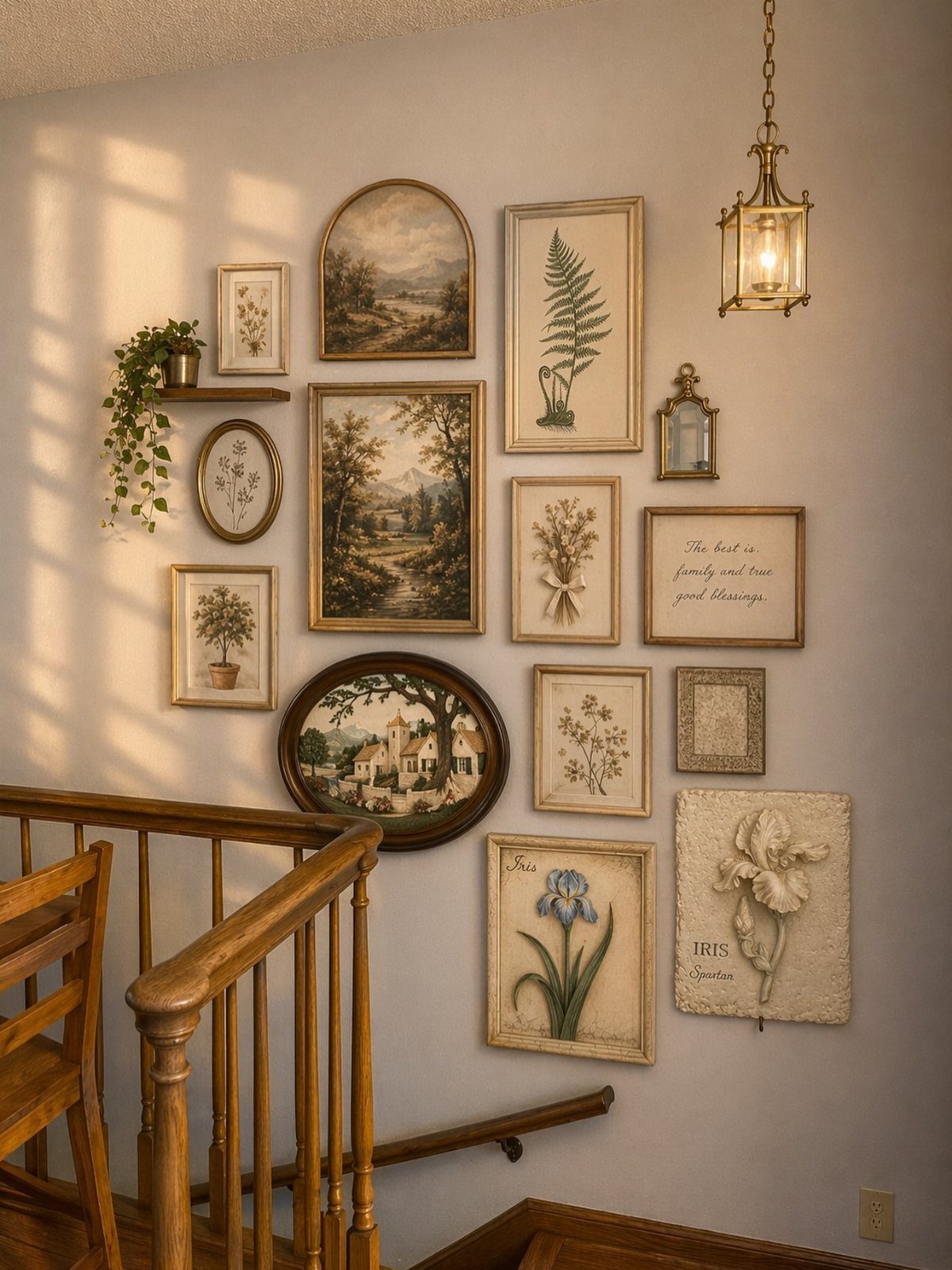
A gallery wall turns the space beside your stairs into something worth looking at. Frames in different sizes and finishes feel collected rather than matched, and you can swap pieces in and out without starting over.
Start by laying everything out on the floor until the arrangement feels balanced.
Hang the largest frame first, then fill in around it. Keep the spacing between frames consistent.
Mix framed prints, photos, and small shelves. The variety keeps it interesting, and a shelf gives you a spot for a plant or a small object that adds depth.
4. DIY Storage Drawers
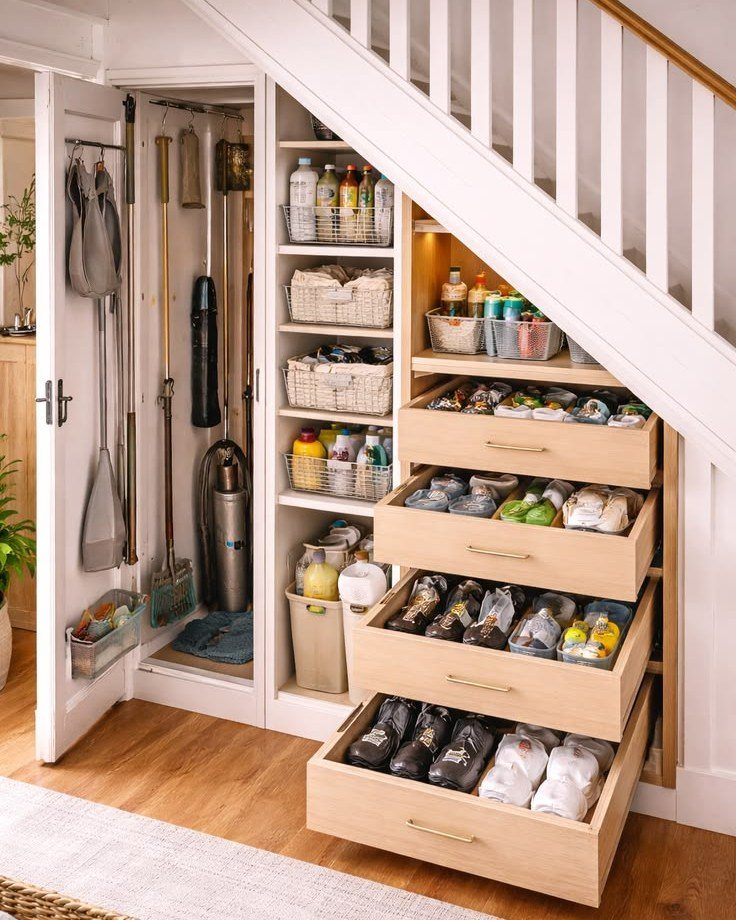
Pull-out drawers built into the space under your stairs turn dead space into storage you will actually use. Shoes, cleaning supplies, and seasonal gear all fit without needing a separate closet.
Each drawer needs a frame that matches the height of the riser above it. I build the boxes from plywood, add slides rated for the weight, and face each one with a drawer front that matches the stair trim.
Measure the depth carefully. Most under-stair spaces taper, so the back of each drawer will be shallower than the front.
5. Wooden Handrail
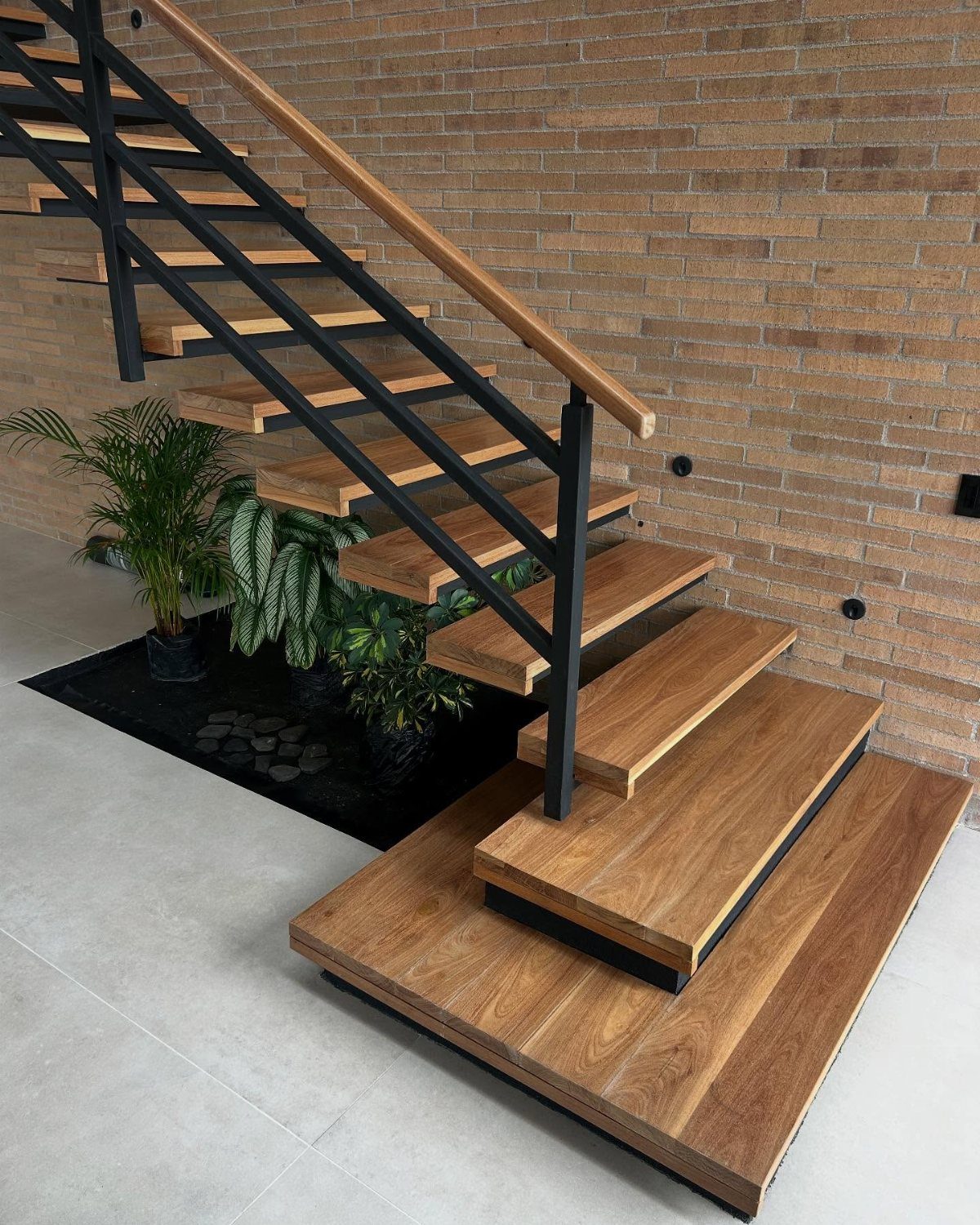
A wooden handrail warms up a staircase that otherwise feels industrial. The grain and finish bring in texture, and your hand lands on something solid every time you reach for it.
Oak, walnut, and maple all hold up well. Sand the rail smooth, finish it with polyurethane, and mount it to the wall with brackets spaced along the length.
If your stairs already have metal railings, the wood rail mounts to the top of the metal posts and softens the whole look without tearing anything out.
Stain it to match your treads, or leave it natural if the metal stays black.
6. Statement Lighting
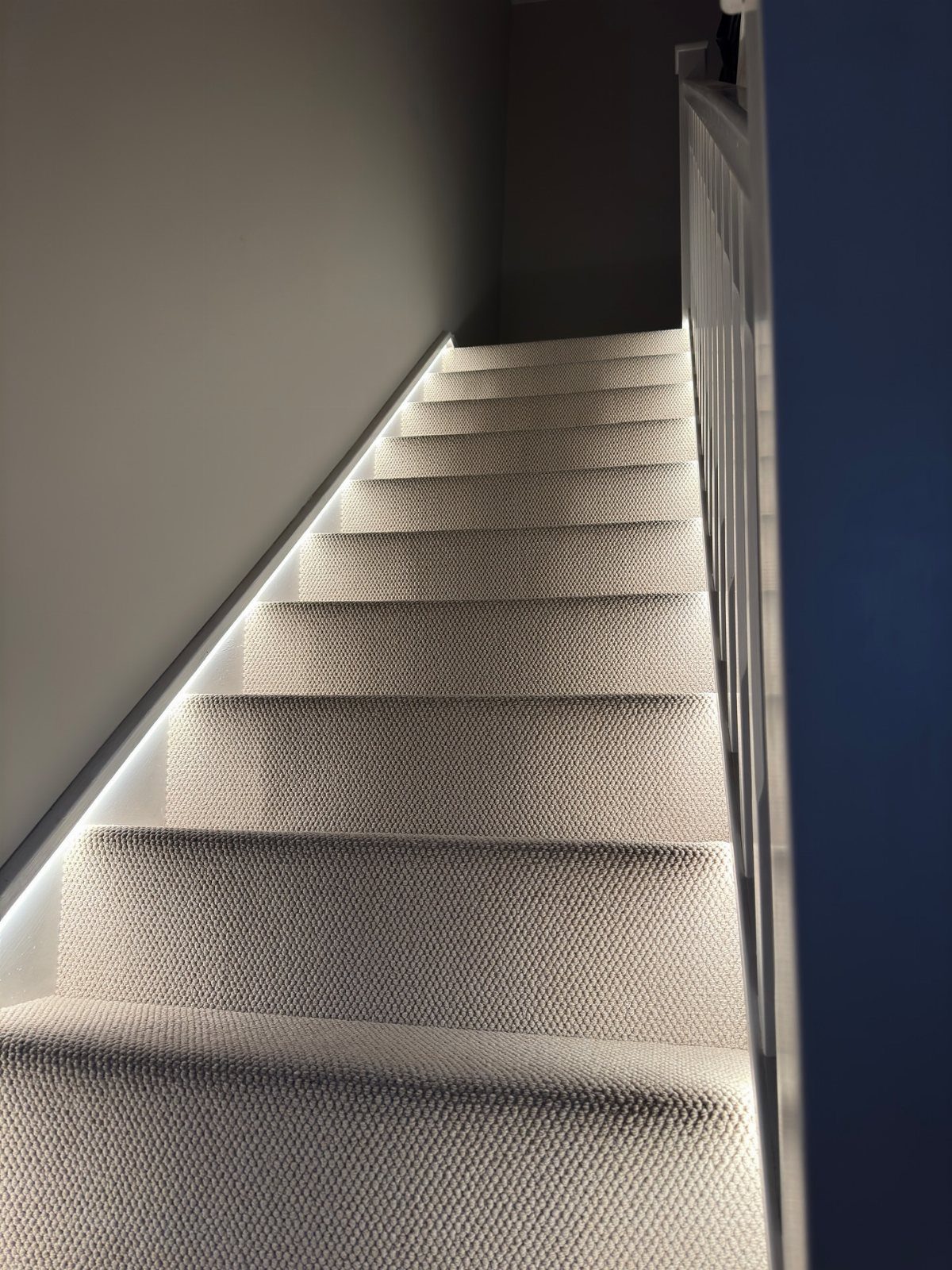
LED strip lighting along the wall turns your stairs into something that feels intentional, and it makes each step visible at night without overhead fixtures that glare.
The strips tuck into a channel or run along the baseboard, so the light washes across the wall rather than shining in your eyes.
Most strips are adhesive-backed and plug into a low-voltage transformer.
Measure the length of your staircase, buy a strip that fits, and mount it a few inches above the treads. Wire it to a dimmer if you want control over the brightness.
The effect is subtle during the day and useful after dark. I prefer warm white over cool white because it feels less clinical.
7. Vertical Spindles
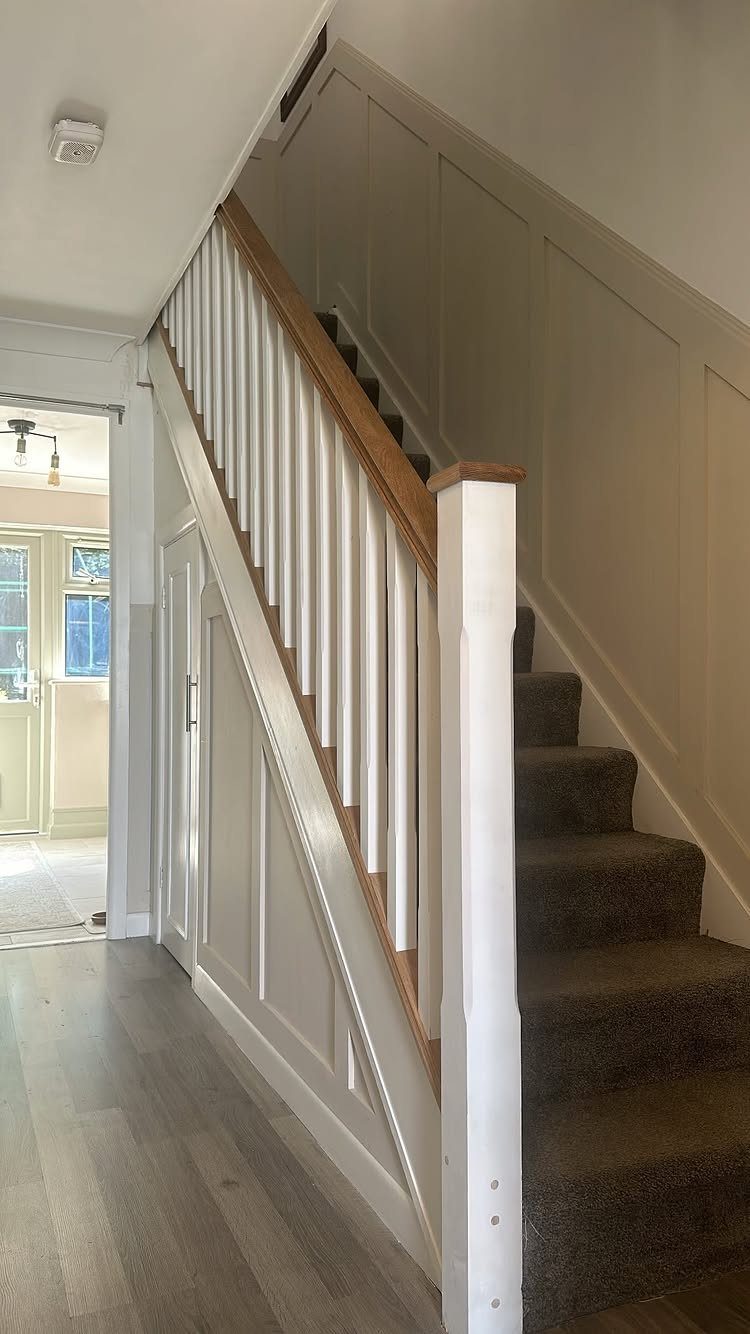
Vertical spindles fill the gap between your handrail and treads without blocking the view down the staircase. They keep the space open while meeting code requirements for spacing.
White spindles paired with a wood handrail is a clean combination that works in most basements. The wood adds warmth, and the white keeps the whole structure from feeling heavy.
Space them according to your local building code, which sets the maximum gap. Measure carefully so the spacing stays even from top to bottom.
8. Sleek Metal Balusters
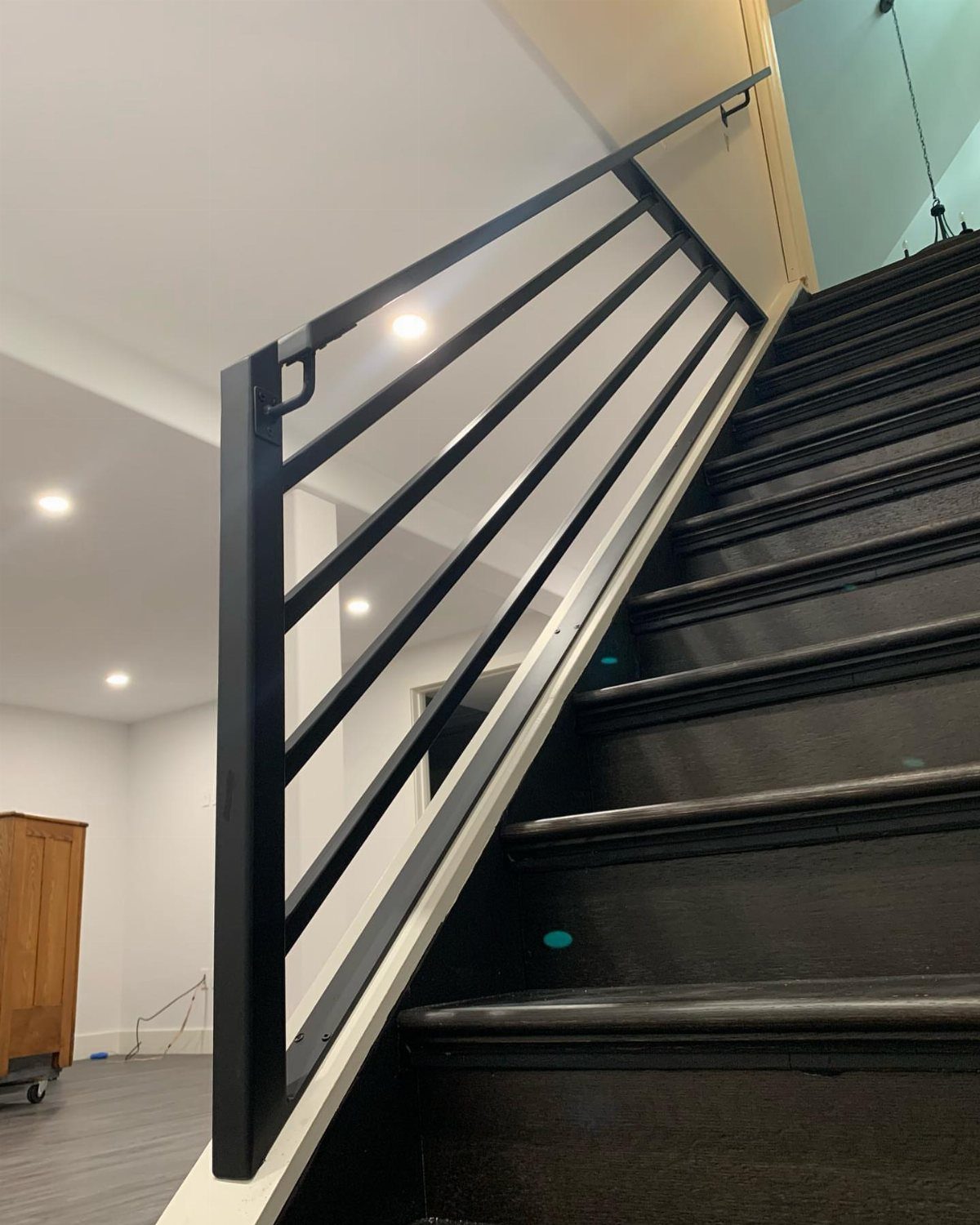
Metal balusters give you a modern look that feels lighter than wood spindles. Black metal against dark treads creates a continuous line that makes the staircase feel taller.
Horizontal bars work when you want an uninterrupted view. Vertical balusters are easier to install because you can space them evenly without worrying about alignment across the length of each tread.
Most metal balusters come with mounting hardware that fits standard handrails. Measure the distance between your top and bottom rails before ordering.
9. Wallpaper on Stair Walls
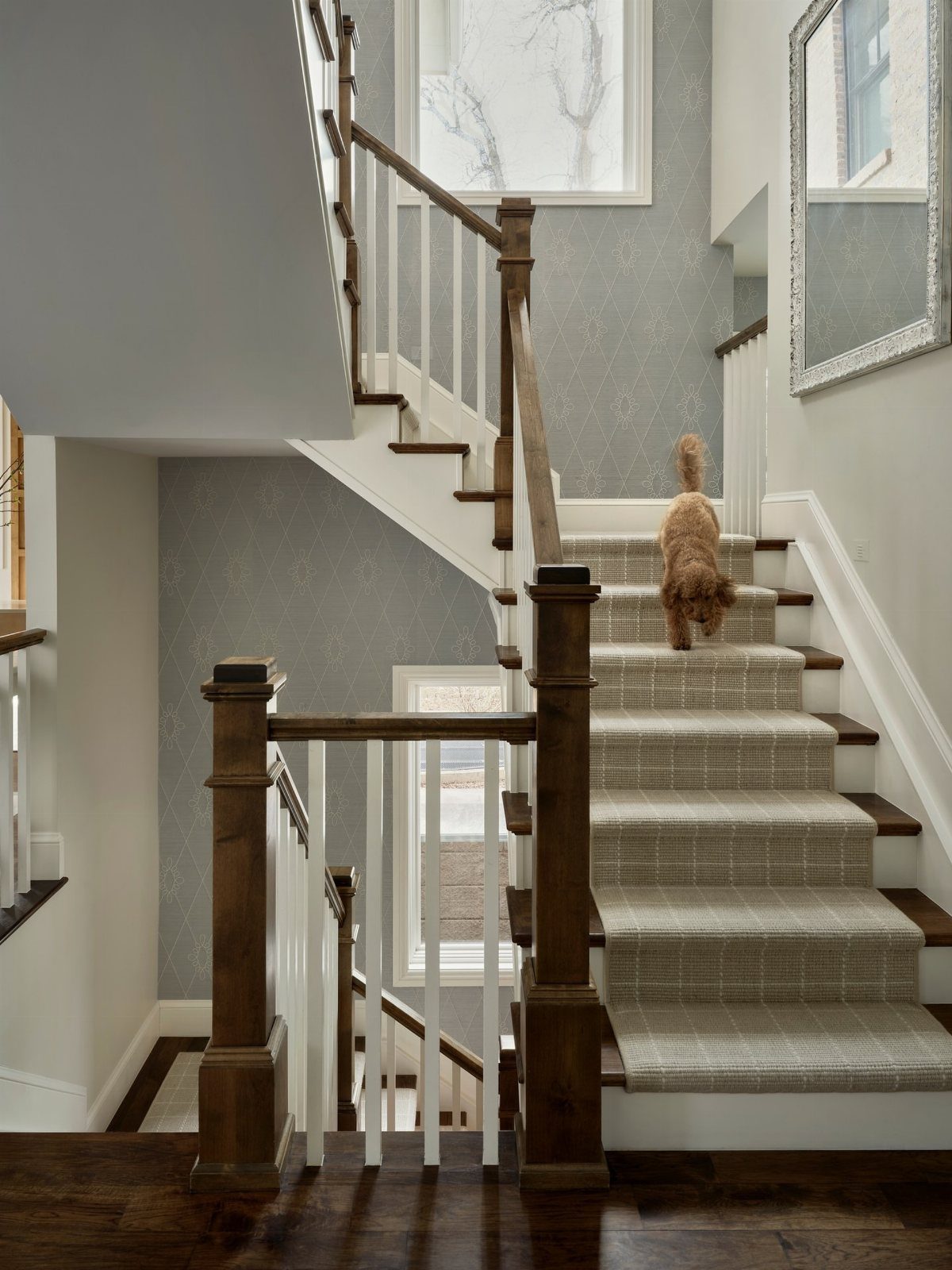
Wallpaper on the stair wall adds pattern where you would otherwise have a blank stretch of drywall. A geometric or tone-on-tone print brings in texture without competing with the rest of the space.
Pick a pattern with some contrast so it reads from a distance, but not so bold that it feels busy in a narrow stairwell. Peel-and-stick wallpaper works here because you can remove it without damaging the wall.
Start at the top of the stairs and work down so the seams line up as you go.
10. Stair Slide
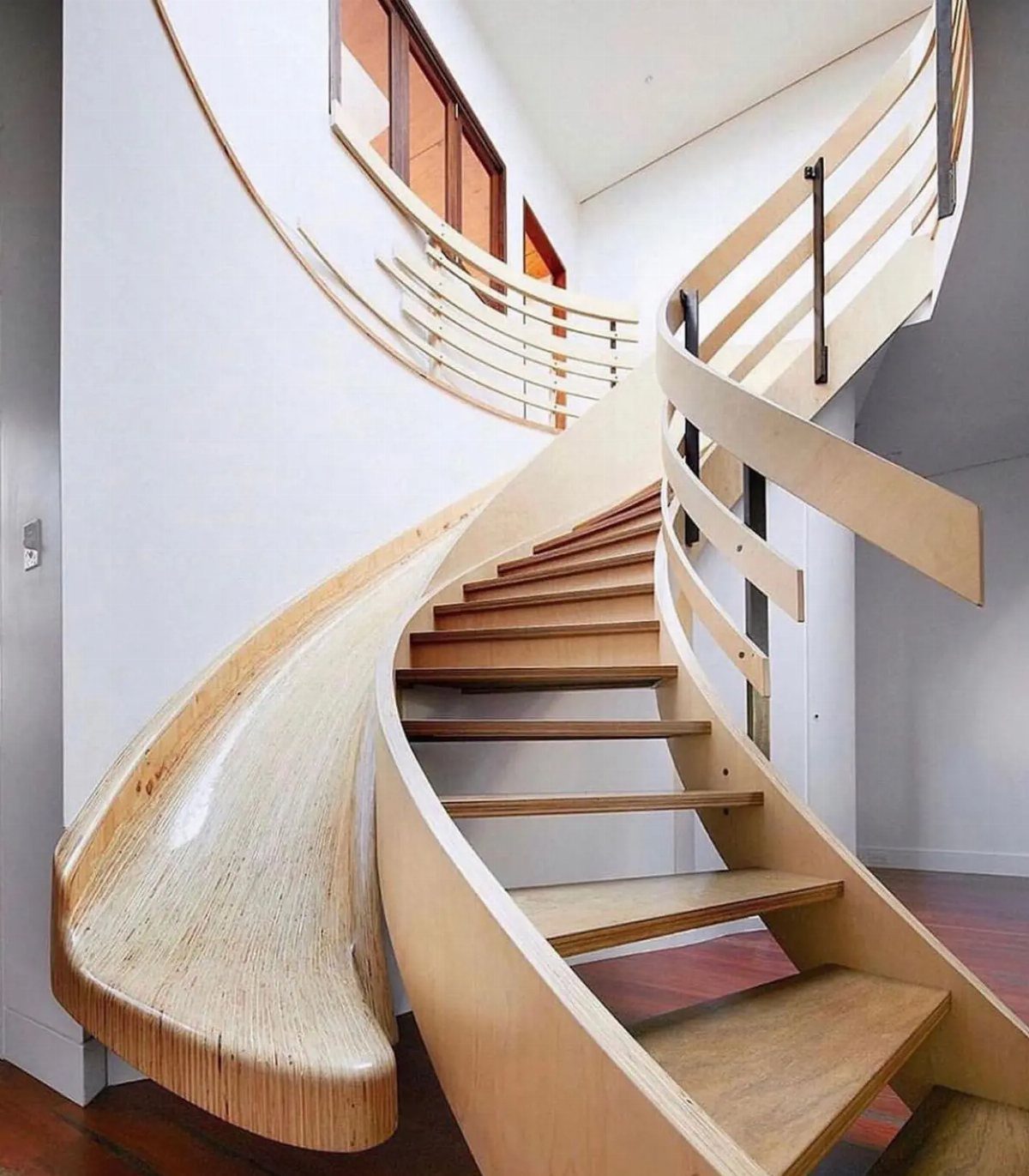
A slide next to your stairs turns the trip down into something kids will use over and over. It fits along the wall or inside the curve of a spiral staircase, depending on your layout.
The slide needs a smooth finish and a gentle curve at the bottom so it slows down before the landing. Most are custom-built to match the pitch of your stairs.
This one works best if your ceiling height gives you enough room for a safe exit at the bottom.
11. Stair Rods
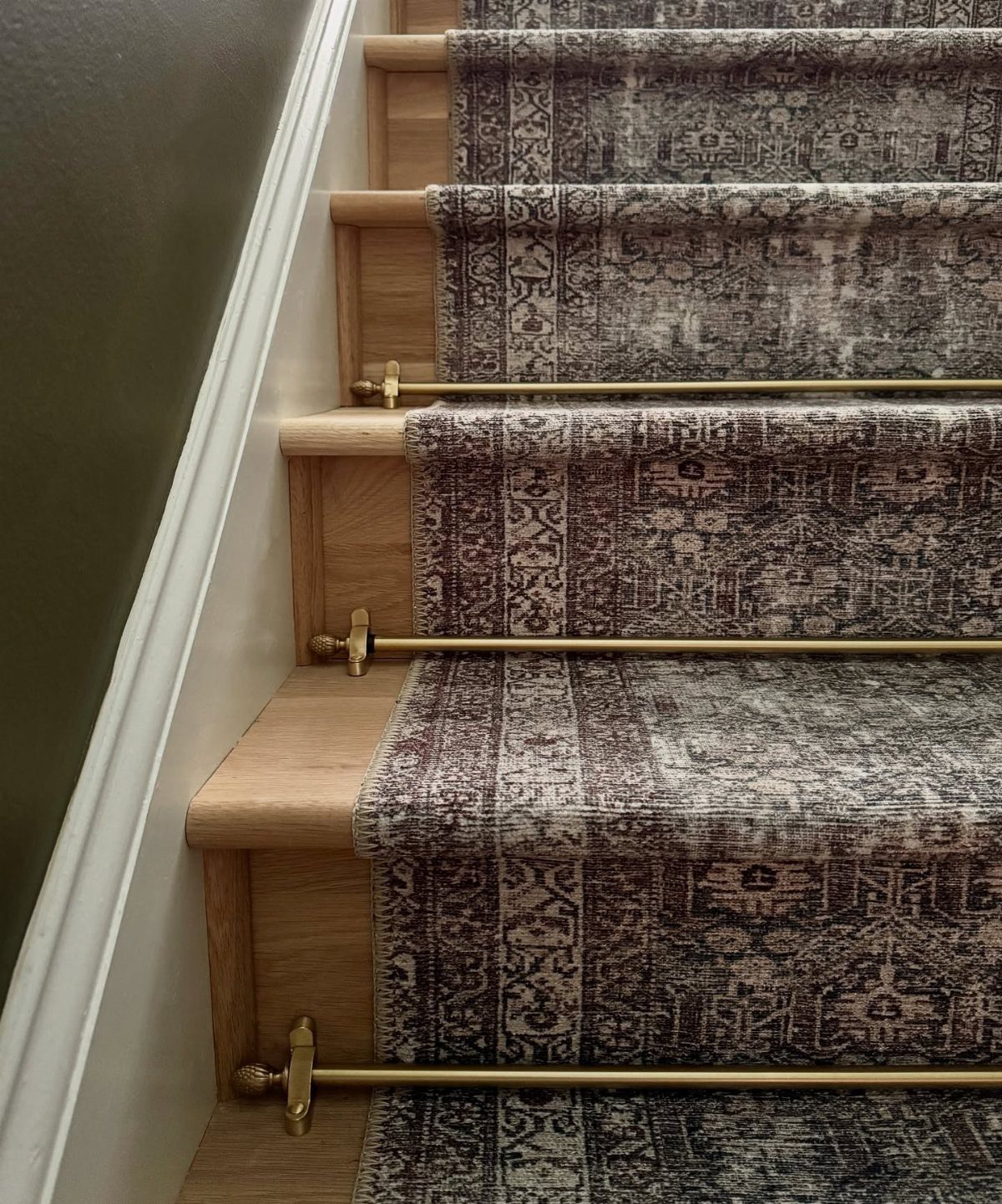
Stair rods add a finished line across each tread and give the runner a tailored, anchored look. The metal catches the light and gives the whole staircase a more tailored look than tacks or adhesive.
Gold and brass warm up a patterned runner. Black or brushed nickel works when your handrail and spindles are already dark.
Mount the rods with brackets that screw into the tread just above the riser. Space them evenly so the runner stays taut across the width of each step.
12. Wood Treads and Risers
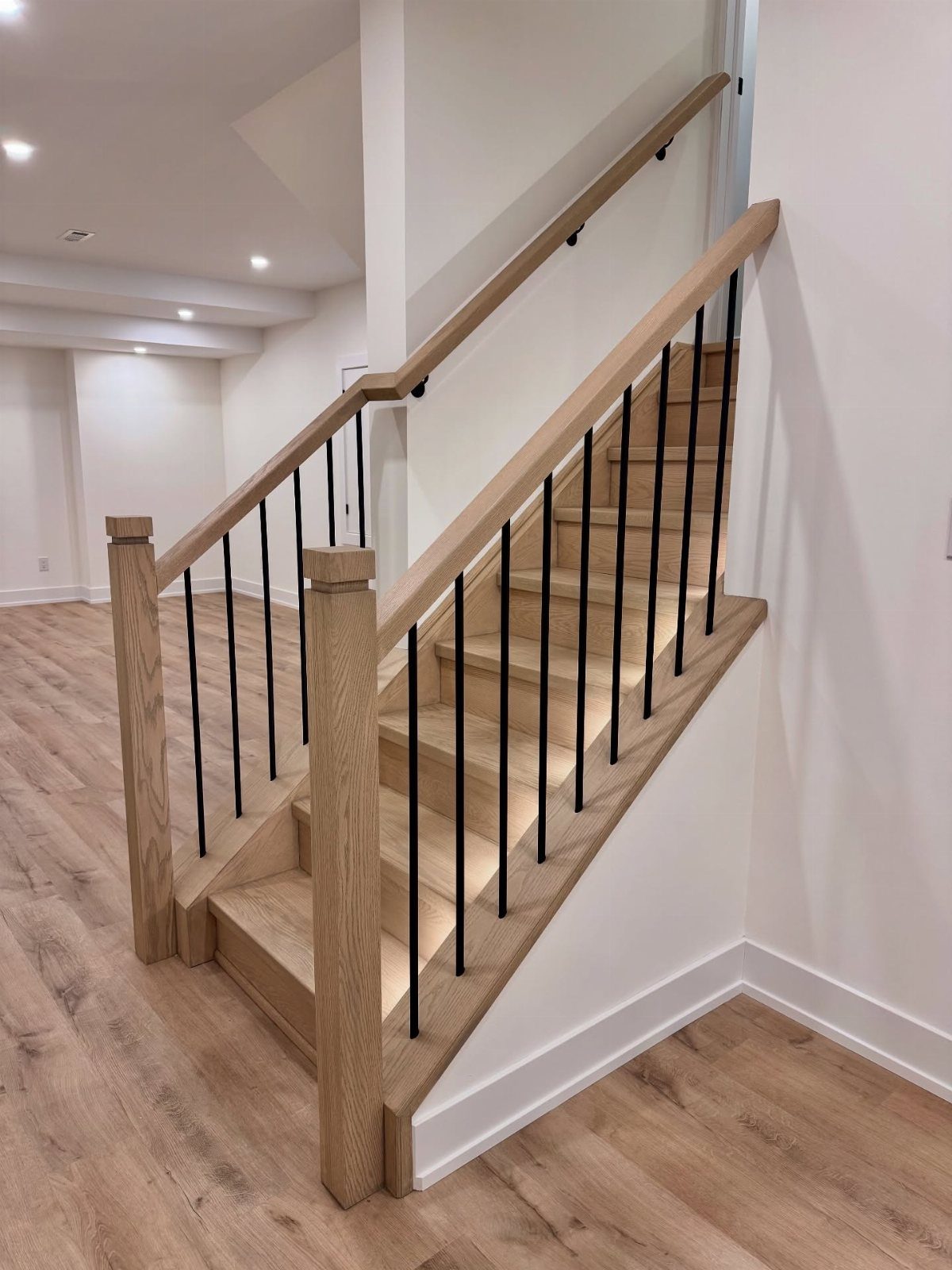
Replacing your treads and risers with solid wood covers up worn carpet or damaged plywood and gives you a finished surface that lasts. Light wood keeps a basement staircase from feeling closed in.
Sand and finish them before installation, then nail them down through the top of each tread into the stringer below.
If your risers are already in good shape, you can refinish them to match and only replace the treads.
13. Custom Cabinets
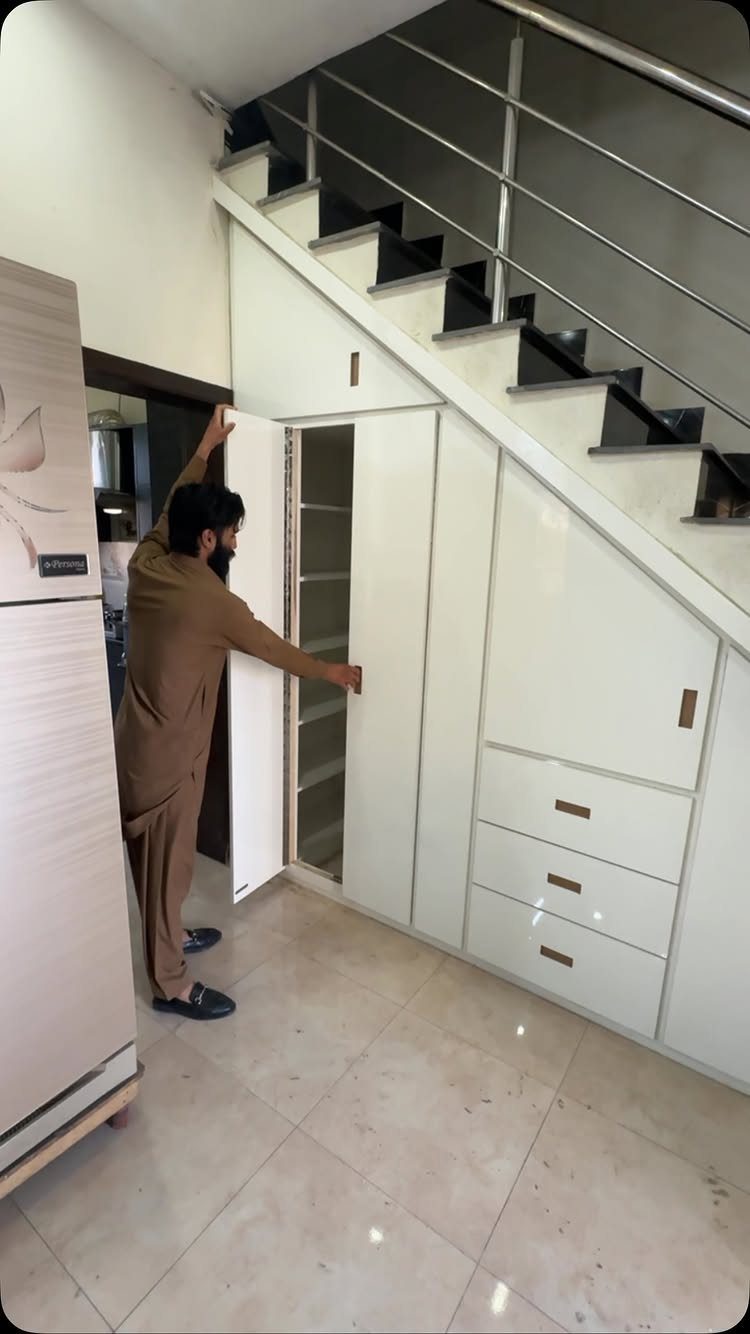
Cabinets built into the space under your stairs give you storage that feels permanent and hides clutter behind doors instead of leaving it on open shelves. The fit is exact, so every inch of that angled space gets used.
Face-frame cabinets work best here because the frames hide gaps where the ceiling slopes. Finish them in white or a color that matches your trim so they read as part of the architecture.
Add shelves inside for shoes or bins. Drawers pull out sports gear and tools without having to crouch and dig.
Safety Considerations for Kids
Code sets a maximum spacing for spindles so a child’s head cannot fit through.
Plexiglass or tempered glass keeps the view open while blocking access completely.
Mount it to both the handrail and the bottom plate with brackets that hold the panel secure. The material costs more than spindles, but it solves the problem in one plane instead of leaving gaps between vertical bars.
If you have a landing that overlooks the basement floor, treat it the same way. A low wall or railing that feels fine for adults leaves too much open space for a child who climbs.
Maintaining Visual Openness
Cable railings hold tension between posts and disappear from most angles, so you keep the view across your basement without leaving the staircase exposed.
Each cable runs horizontally and locks into fittings at both ends. Spacing follows the same code limits as spindles, with a tight gap between cables that keeps the view clear while meeting safety requirements.
Glass panels do the same thing with a single surface instead of multiple lines. Frameless glass mounts to the top and bottom rails with standoffs or a channel, and tempered glass handles the lateral load without flexing.
Both options cost more than wood or metal spindles, but the sight line stays clear from the top of the stairs to the far wall.
Pick tempered glass over acrylic if the panel sits where someone could lean or push against it.
Choosing Materials Wisely
Nylon and wool runners hold up better than synthetic blends in a basement staircase that gets daily use.
Nylon resists stains and dries fast if your basement holds any moisture. Wool costs more but wears evenly and keeps its texture longer.
Low pile carpet lasts longer than high pile because the fibers stay upright under foot traffic. A looped weave spreads wear across more surface area than a cut pile, which crushes over time.
For handrails, oak and maple take finish well and resist dents better than softer woods like pine. Finish them with polyurethane in satin or semi-gloss so the surface wipes clean and the grain still shows through.
Frequently Asked Questions
How can I make my basement stairs look good?
Add a runner down the center for pattern and warmth, or paint the risers white for contrast against dark treads.
If your budget allows, replace worn treads with solid wood and finish them before installation. The warmth of wood paired with a low-voltage light strip gives you a finished feel for less than the cost of tearing anything out.
What are some DIY ideas for basement walls?
Hang what you already own in a mix of frame sizes and you turn builder-grade drywall into something people stop to look at. Wallpaper adds pattern where you need texture, and peel-and-stick versions remove cleanly if you change your mind.






