
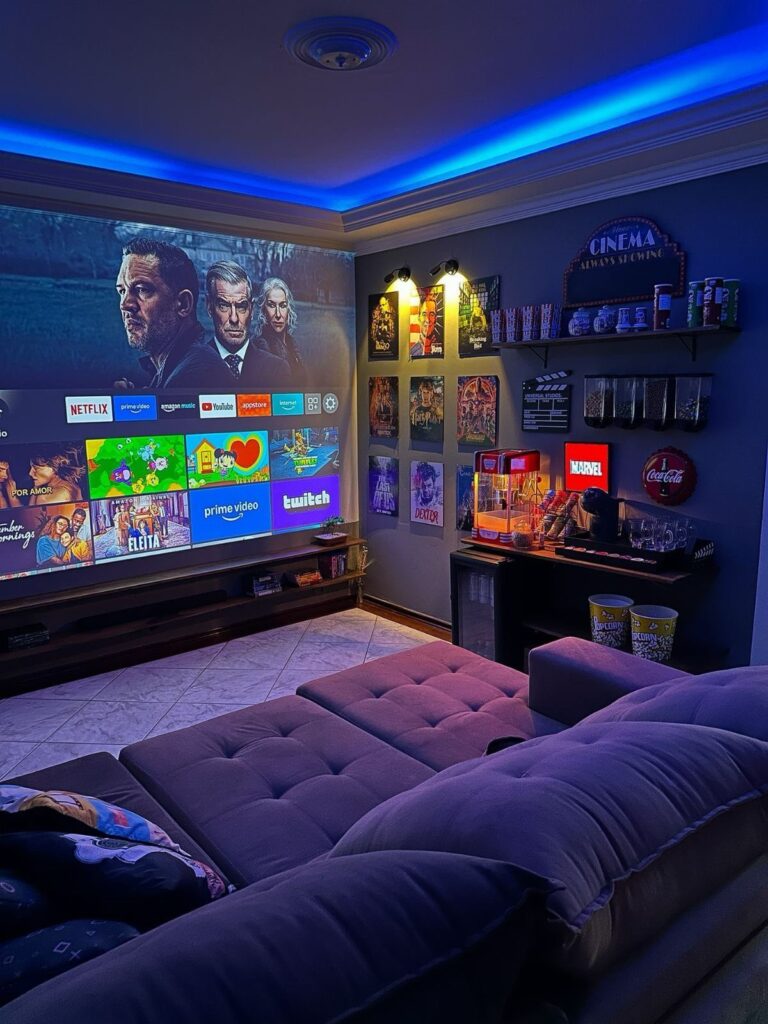
A home cinema fits anything from the alcove under a staircase to a basement with tiered rows that lift the back seats above the front.
The decision comes down to which space you can close off from daylight and hallway noise most easily.
1. Dark Colors for Walls
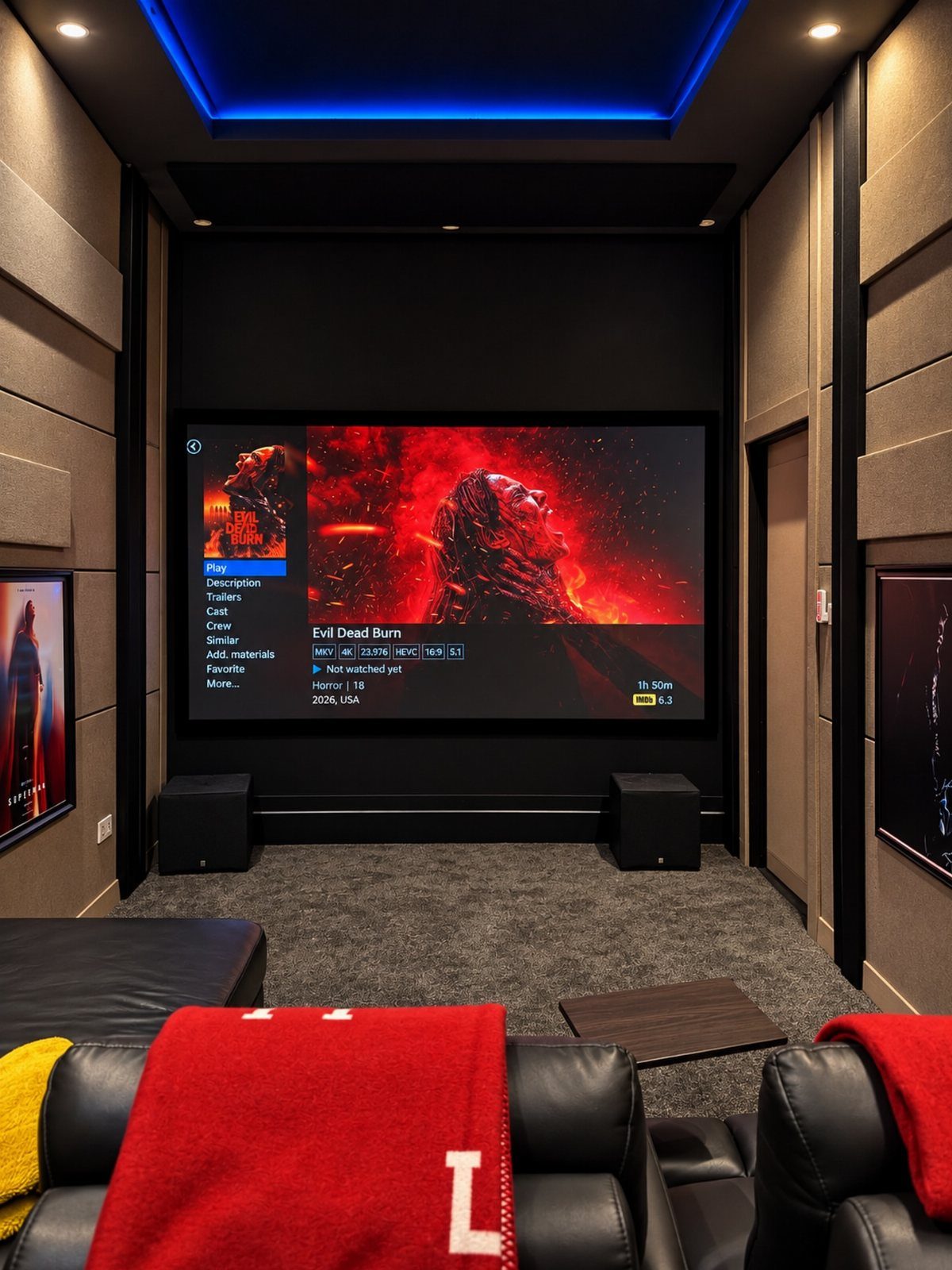
Dark walls pull light into the screen instead of bouncing it around the room, so what you see stays sharp and colors look deeper.
The deep charcoal or near-black finish works in any small space without adding visual weight the way bright colors can.
Paint is the simplest route and a small room takes an afternoon. Matte or flat sheen absorbs the most light, though it shows scuffs more easily than eggshell.
If the room doubles as something else during the day, test the color in that light first. A shade that reads pure black at night can feel heavy when the overhead lights come on.
2. Wall-Mounted Screens
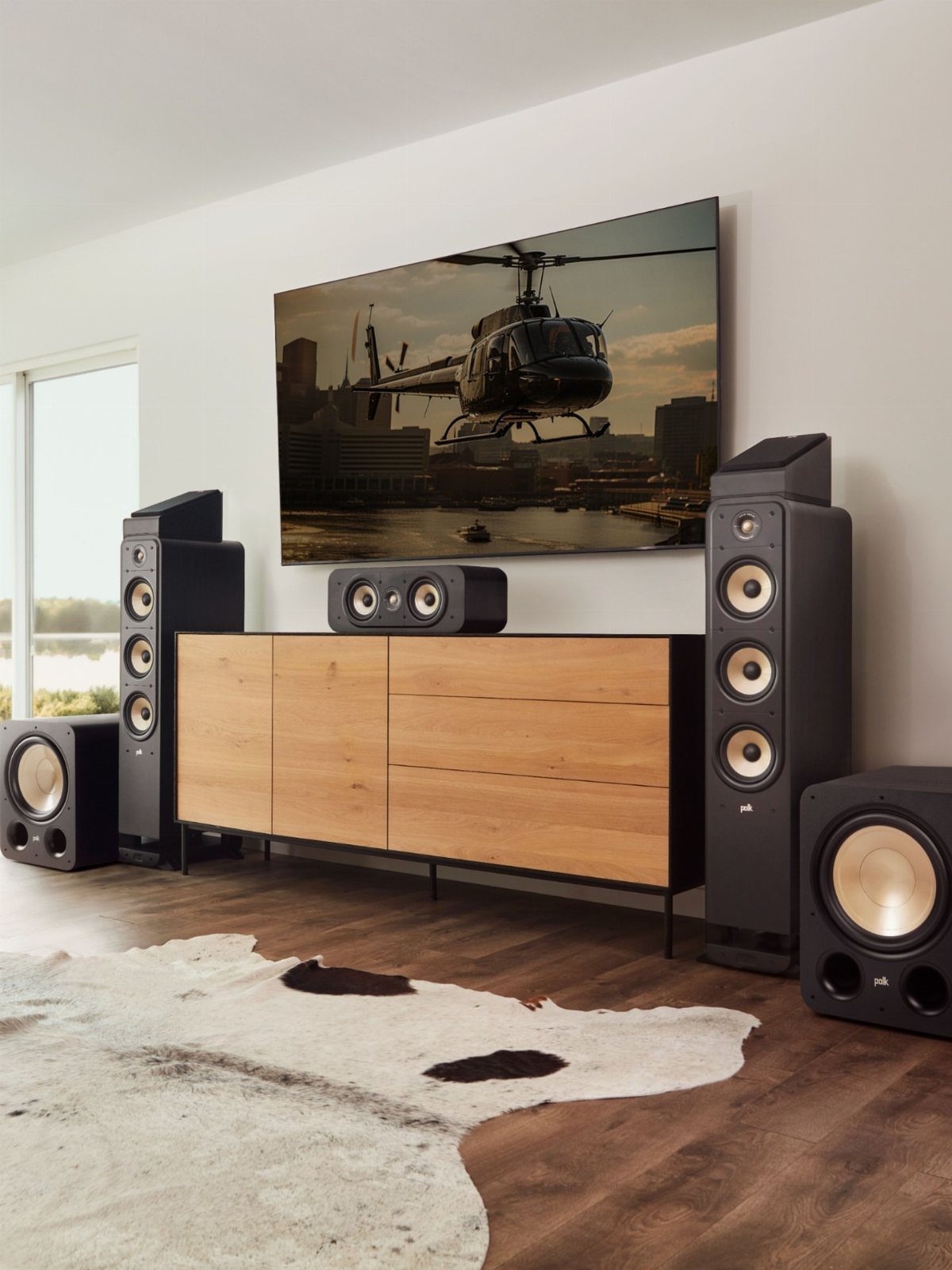
Mounting the screen flat to the wall clears the floor and makes a narrow room feel less crowded. The setup keeps the screen at a comfortable height without taking up floor space.
A fixed mount sits flush and works when the viewing angle stays consistent. Tilting or articulating mounts let you adjust the angle if seating spreads across different heights or the screen sits above eye level.
Run cables through the wall for a cleaner look, or use a surface-mounted raceway if you rent or want to move the setup later. Most mounts hold a range of screen sizes, so check the weight rating before you buy.
3. Tiered Seating
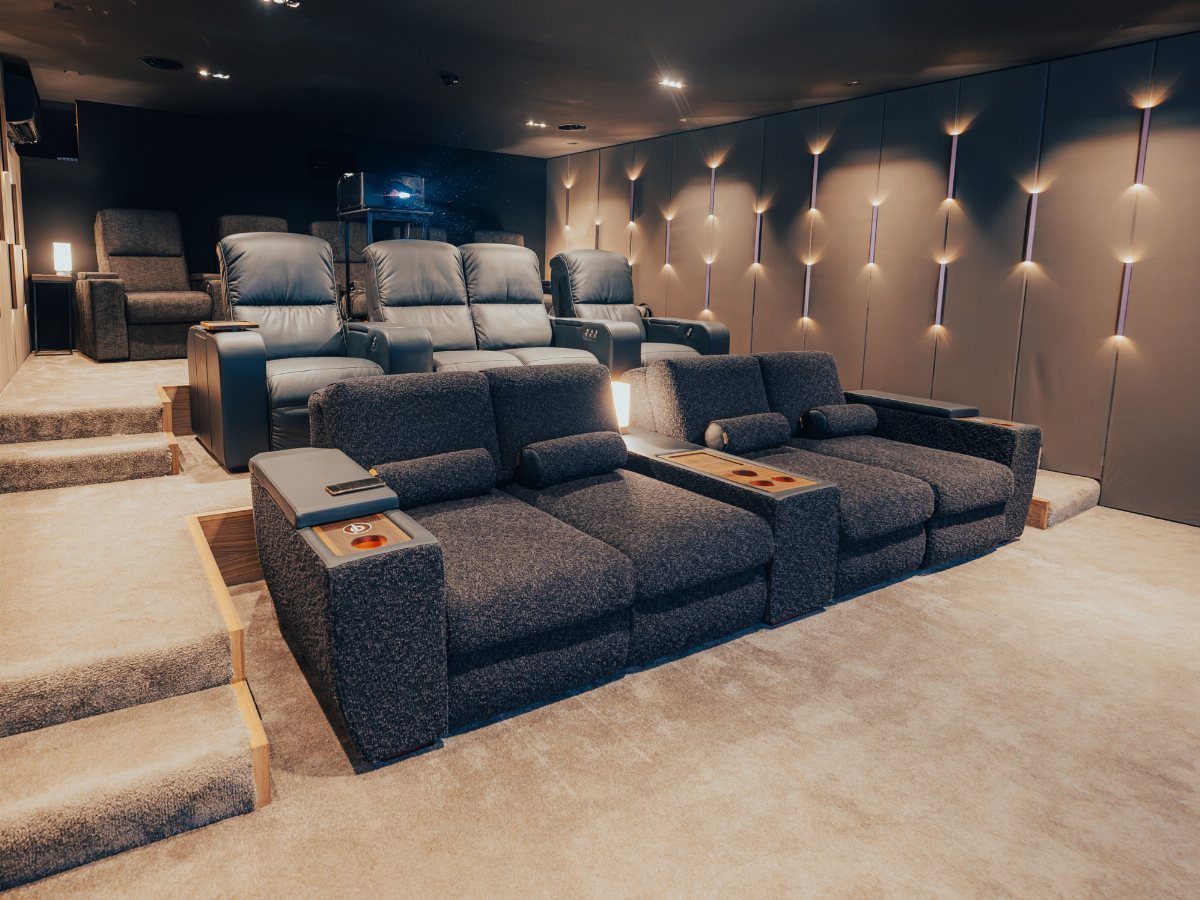
2 levels of seating let everyone see the screen without craning around heads in front of them. The back row sits higher than the front, which mimics the sightlines in a commercial theater without needing a tall room.
Build the riser from 2×4 framing and plywood, or buy a pre-built platform if you want to skip the saw work. Carpeting the riser cuts down on footfall noise and makes the step edge easier to find in the dark.
In a shallow room, a single riser with one row of seats behind it usually gives enough lift. Deeper rooms can fit 2 risers, but each step eats floor space quickly.
4. Multi-Purpose Media Room
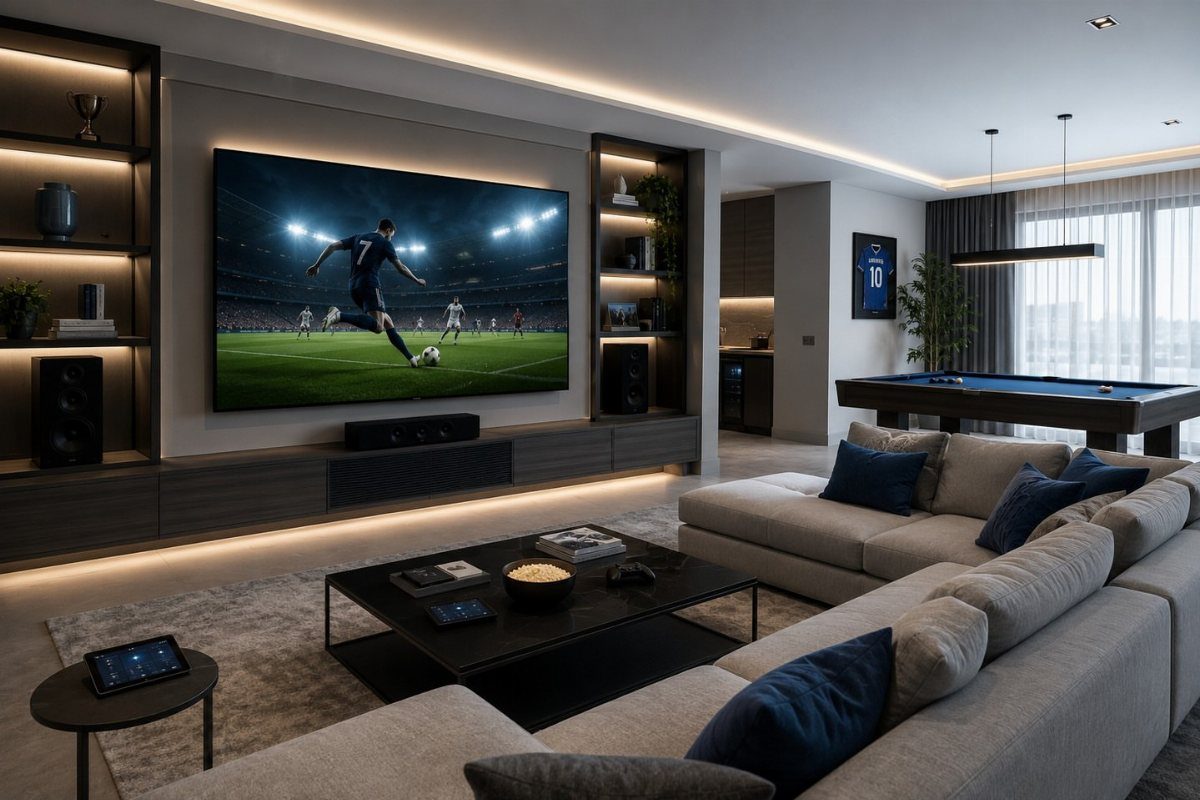
A room that holds a screen and a game table or a bar lets the space earn its keep when no one is watching. The layout keeps both functions visible, so switching between them takes seconds instead of rearranging furniture.
Place the seating to face the screen, then position the secondary piece where it does not block the view.
A pool table or foosball table works behind or beside the main seating; a bar or snack counter fits along a side wall.
The approach makes sense in a basement or bonus room where dedicated theater use would leave the space empty most of the week. If the room is small, choose a table that folds or a console that doubles as storage.
5. Under-Stair Micro-Theater
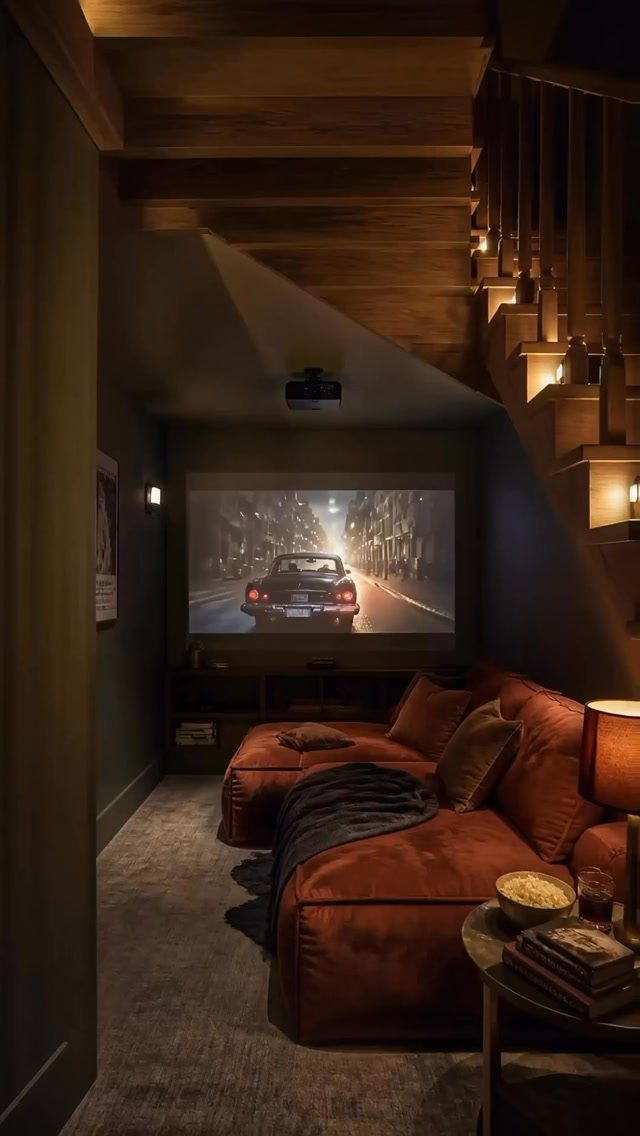
The dead space under a staircase often runs deep enough for a row of seating and a screen, and the ceiling height drops where you need it least.
The back wall is ready-made, and the angled soffit overhead adds a built-in feel without framing anything new.
Measure headroom at the front edge first: comfortable clearance for sitting accounts for the height of the seating itself. If the slope cuts too low, move seating forward and mount the screen higher.
A projector keeps the setup compact since it mounts to the ceiling or sits on a low shelf.
6. Starry Ceiling Lighting
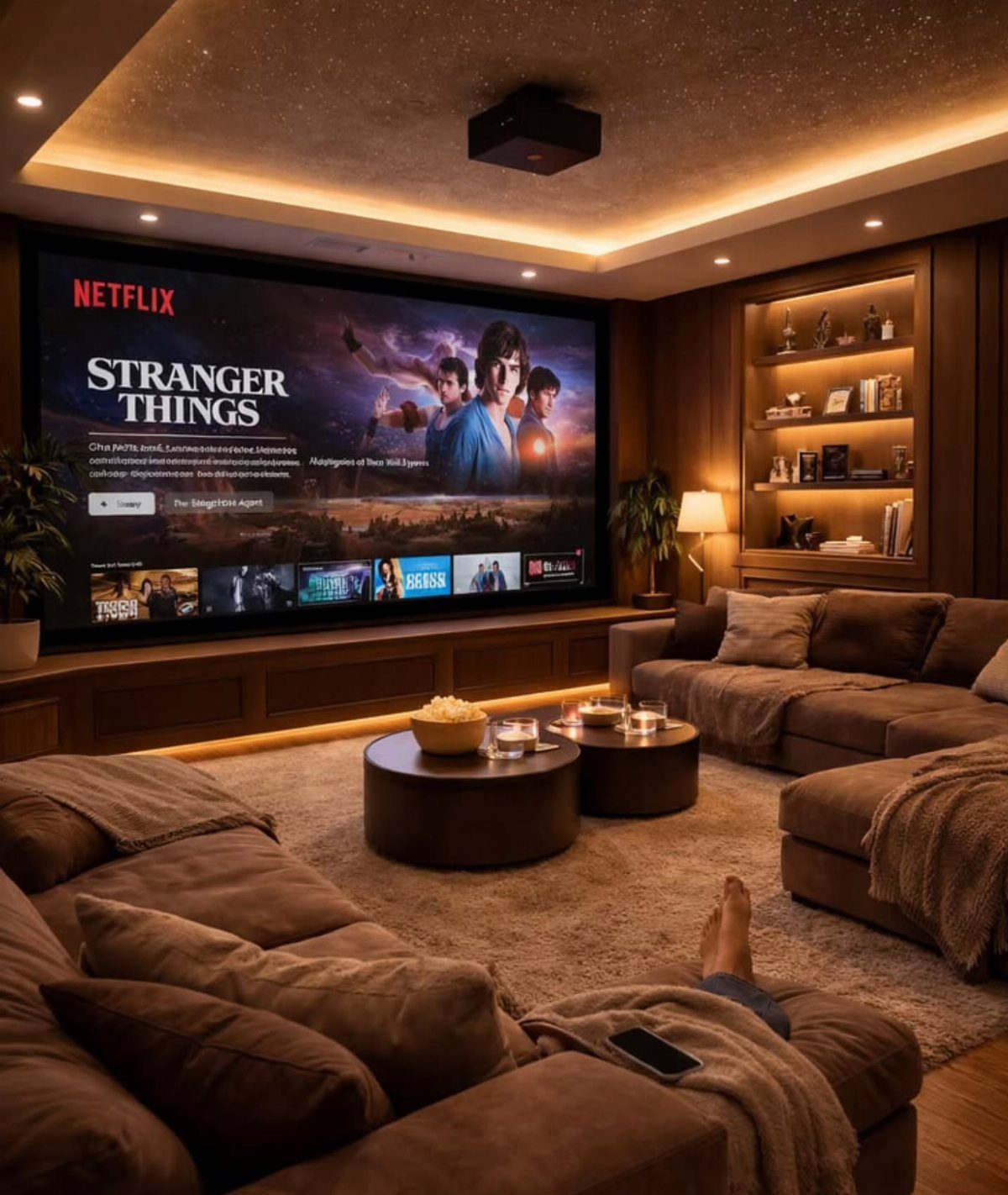
Fiber optic stars scattered across the ceiling give the room a planetarium feel without adding brightness that competes with the screen.
The lights stay dim enough to leave during a movie, and they fill the space with detail when the screen is off.
Install fiber optic cable through small holes drilled in drywall or acoustic panels, then connect the strands to a light source tucked in a closet or behind trim.
Randomize the pattern instead of spacing stars evenly; real constellations cluster and scatter. Some kits add a twinkle effect that cycles brightness, which looks less static than a fixed glow.
7. Pit Sofa Seating
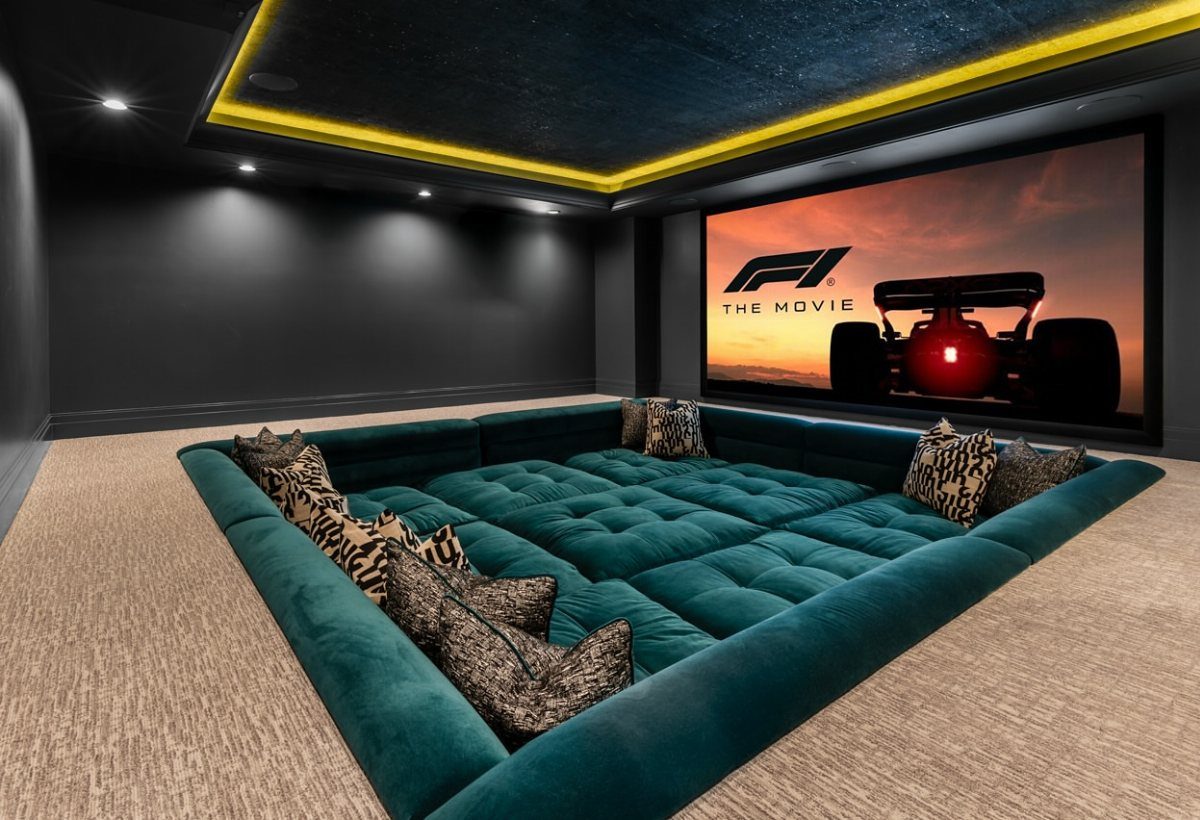
A single oversized sofa sunk low to the floor seats the whole room without dividing people into rows. The deep cushions let you stretch out or pile in, and the low profile keeps sightlines open even when someone shifts forward.
Teal velvet softens sound slightly and adds texture to a dark room.
Most pit sofas come modular, so you can fit the shape to the wall layout. If you build custom, aim for deeper seats so shorter viewers can still lean back comfortably.
8. Cinema Room Wet Bar
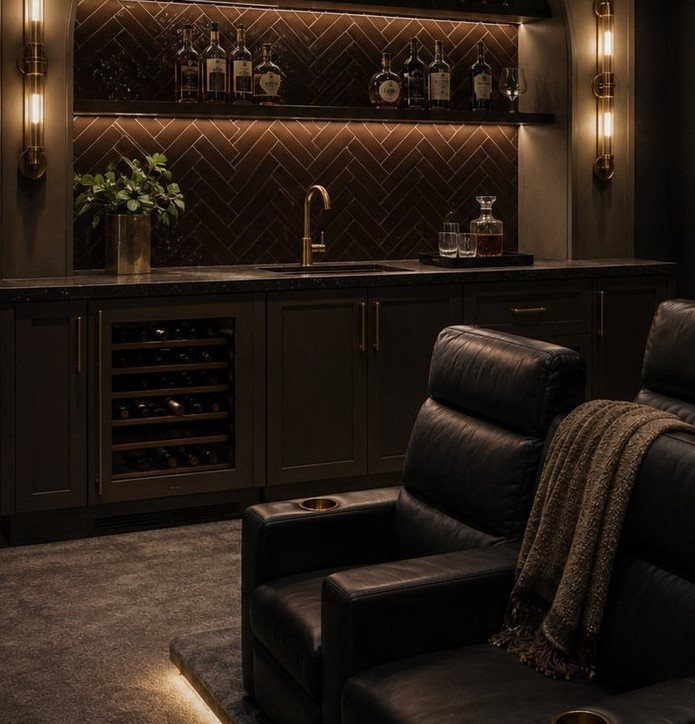
A wet bar built into the theater wall keeps drinks and snacks close and cuts trips to the kitchen.
The setup here includes a wine cooler and a small counter, which is enough for glassware and bottles while leaving seating space open.
Dark tile on the backsplash hides spills and matches the rest of the room.
If plumbing is accessible, add a small sink; if not, a mini-fridge and a countertop ice maker cover most needs. The bar sits beside the seating so someone can refill without crossing in front of the screen.
9. Sectional Sofa Layout
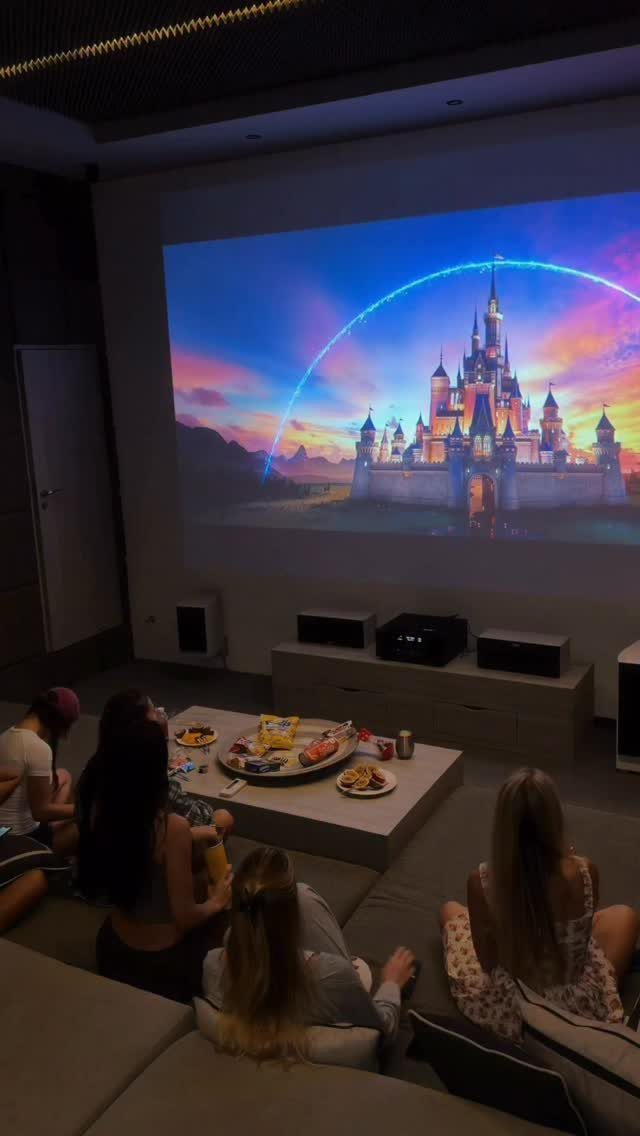
A sectional wraps the room and holds more people than separate chairs without leaving gaps in the seating line.
The L or U shape keeps everyone facing the screen, and the open center works for a coffee table or a low snack cart.
Gray fabric reads neutral in low light and does not show wear as quickly as lighter colors.
If the sectional backs up to a wall, leave a few inches of clearance so the cushions do not compress against it. Modular sections let you reconfigure the layout when the room changes use.
10. Classic Leather Recliners
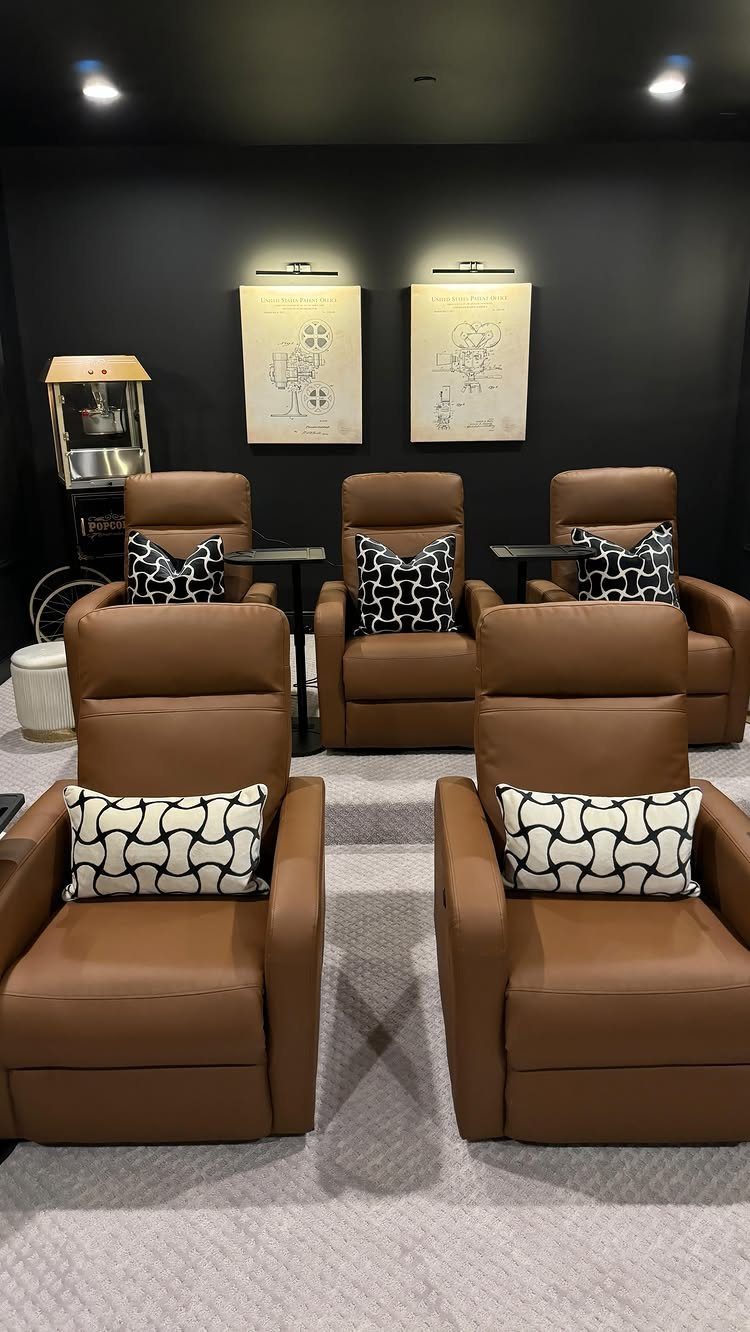
Leather recliners give each person their own footrest and armrest, which matters when a movie runs past 2 hours. The brown leather here ages visibly instead of looking worn, and the recline mechanism lets you adjust angle without getting up.
Theater-style recliners lock into position, so they do not rock or slide during action scenes.
The patterned pillows break up the solid color and add lower back support where the seat meets the backrest. Space the chairs close if the room is tight, or leave a few feet between pairs for a more open layout.
The screening room of a Texas ranch devised by John Cattrell accommodates 36 guests in leather-upholstered, motorized seats.
11. Ambient LED Cove Lighting
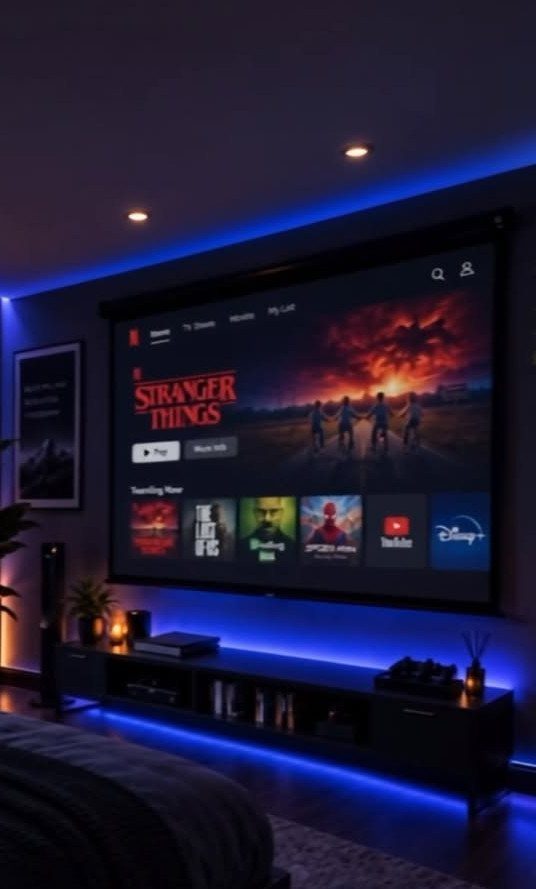
LED strips hidden behind a ceiling cove or under the media console add soft color without lighting the room enough to wash out the screen.
Blue reads cooler than warm white and helps your eyes adjust faster when the movie starts.
The strips here run along the top of the wall and under the console, which lights the perimeter without hitting the seating directly.
Most LED kits dim with a remote, so you can drop the brightness during a film and bring it up between features. Adhesive-backed strips stick to clean drywall or wood and plug into a standard outlet.
12. Cinema Snack Station
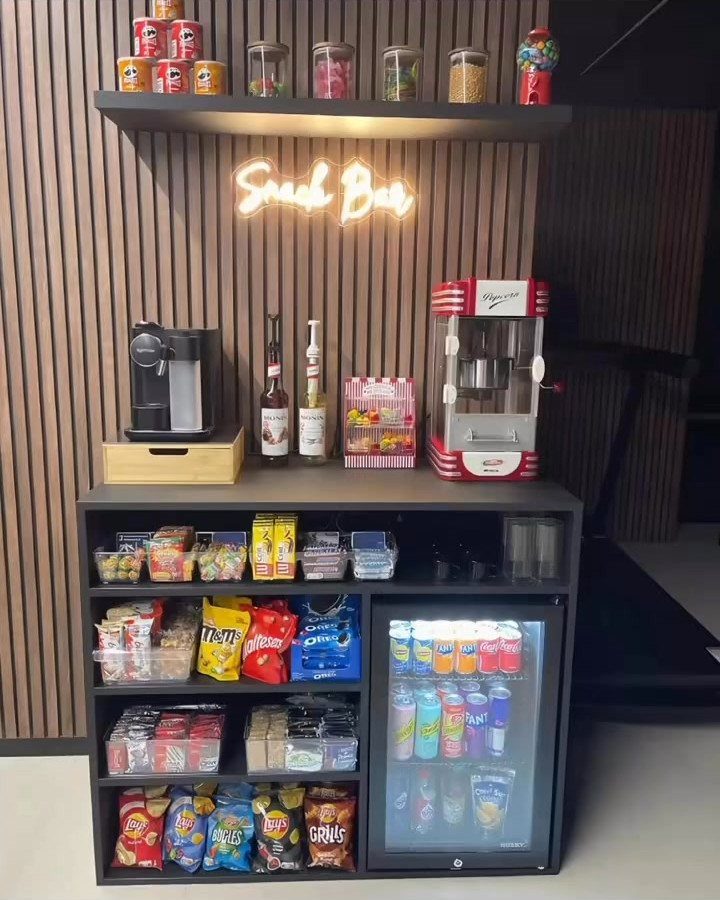
A counter stocked with a popcorn maker, candy and a mini-fridge turns the snack run into part of the setup instead of a detour.
The neon sign marks the spot and adds light that stays low enough not to compete with the screen.
The wood-slat wall here gives the counter a backdrop that hides outlets and keeps the snack gear from sitting against a bare wall. Keep the counter at standard height so pouring and serving stay comfortable.
13. Plush Velvet Seating
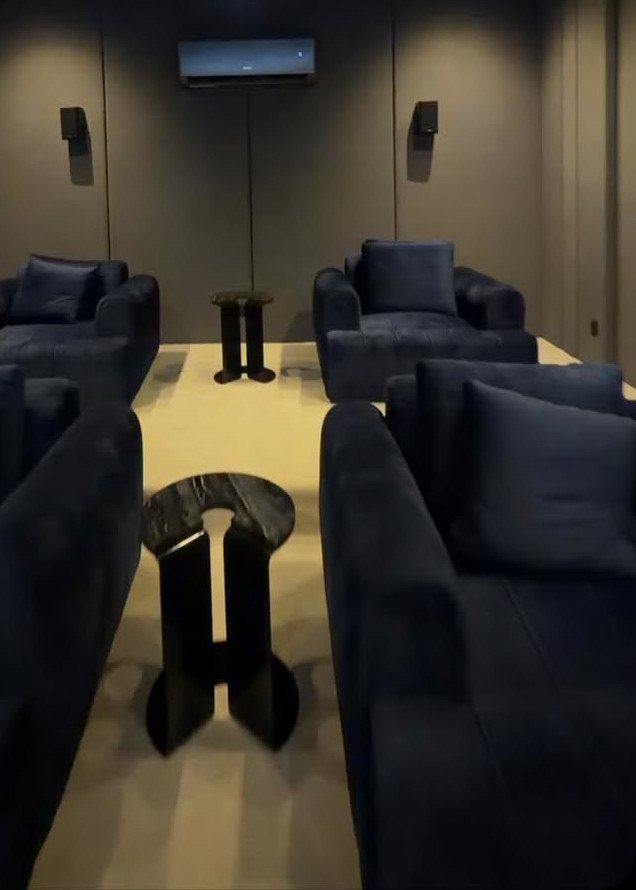
Blue velvet absorbs sound better than leather or linen and adds color that still reads dark when the lights drop. The fabric here covers both armchairs and a small sofa, so seating stays cohesive without matching every piece exactly.
Velvet shows wear along armrests and seat edges faster than tighter weaves, but it hides lint and dust between cleanings. If the room gets heavy use, look for performance velvet with a tighter pile.
14. Cozy White and Neutral Palette
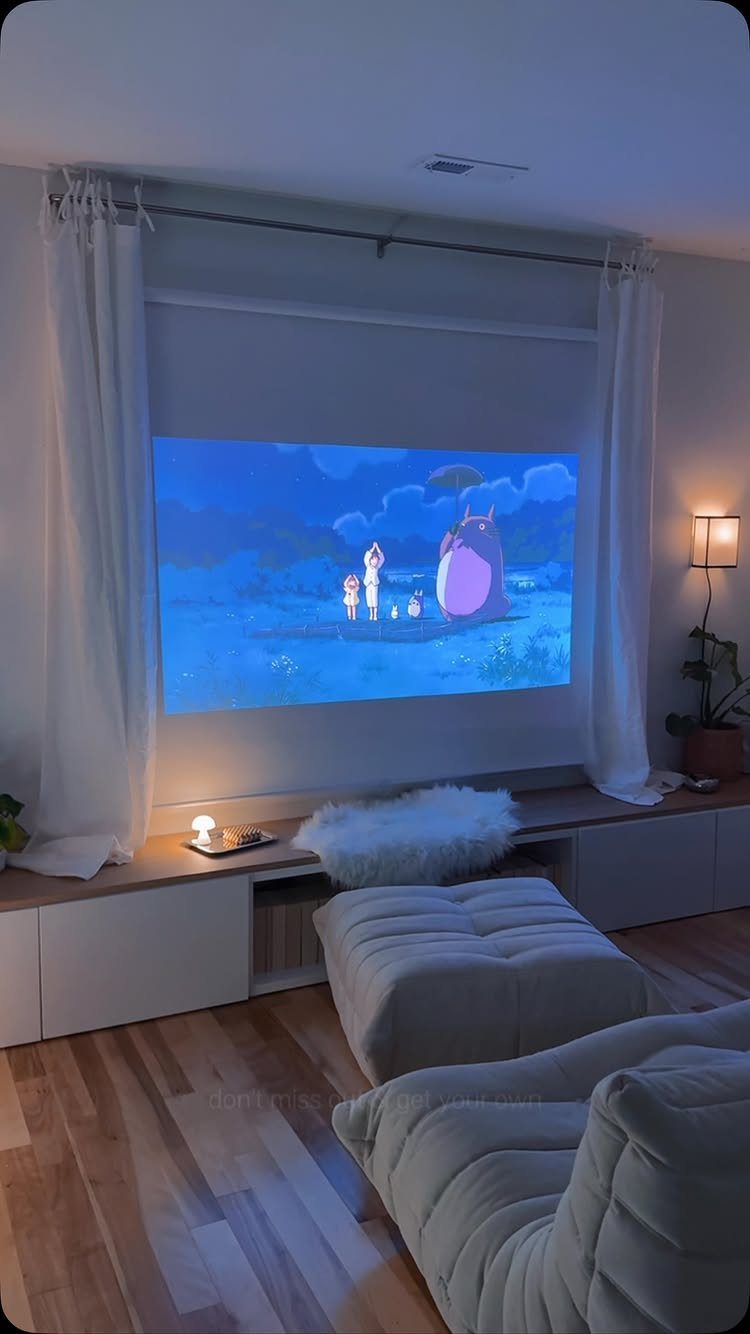
White walls and pale seating keep a windowless space open and breathable, and the look works when the projector replaces a TV you would rather not see all day.
The low modular lounger here lets you stretch out flat or sit upright depending on what is playing.
Blackout curtains behind the screen block ambient light during the day and let you pull the projection surface tight when it hangs from a roller. The faux-fur rug softens footfall noise and gives bare feet somewhere warm to land.
If the room doubles as a guest bedroom, the lounger works better than theater recliners that take up floor space when not in use.
15. Bedroom Cinema Setup
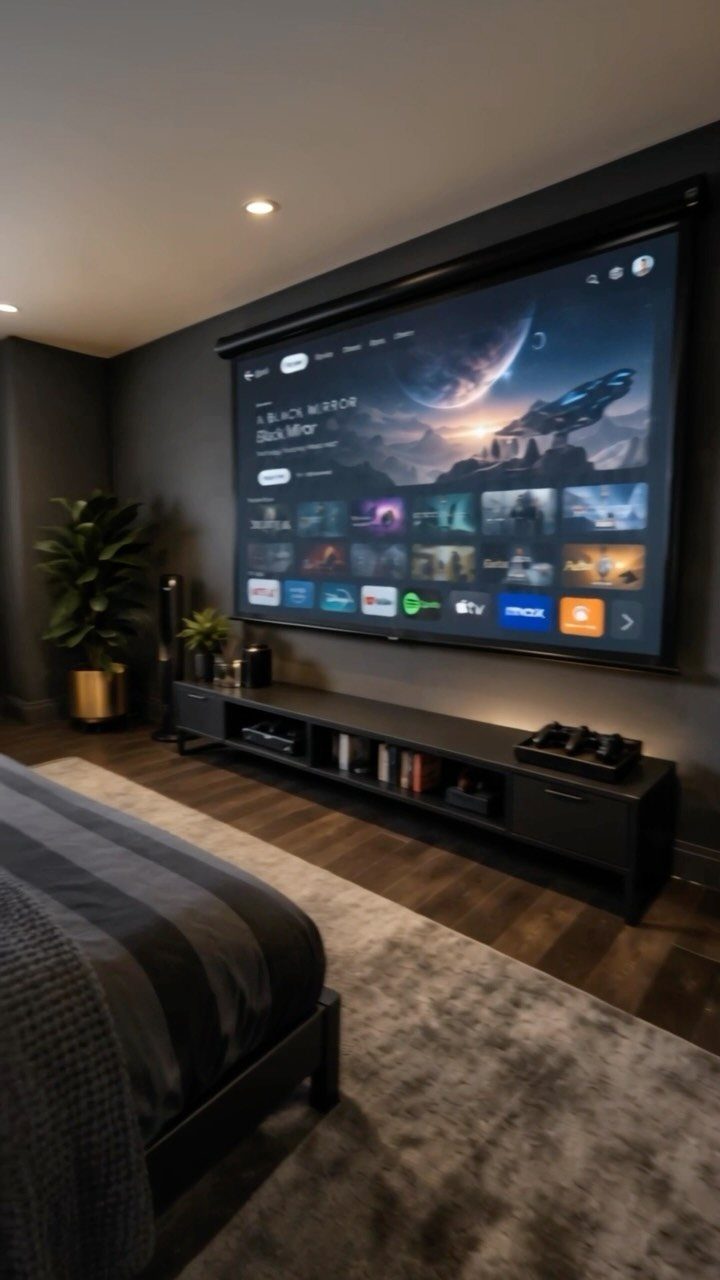
Mounting a projector and screen at the foot of the bed turns any bedroom into a viewing room without adding furniture.
The black console here holds the streaming device and gaming gear, and the screen pulls down over the wall when you need it.
The projection surface sits high enough to clear the footboard, so you can watch from bed without propping pillows at an awkward angle. When the screen retracts, the room reads as a bedroom again.
This setup makes sense if the bedroom is large enough that the projector mounts far enough back for a sharp image.
Choosing the Right Space
A basement works best because daylight stays out without curtains or shades, and the space usually sits away from foot traffic that pulls attention off the screen.
If windows exist, blackout treatments need to seal completely at the edges or light leaks through when the sun hits directly.
Spare bedrooms offer similar control when the door closes and the window gets covered. A room on the north side of the house sees less direct sun, which makes daytime viewing easier if you skip the blackout install.
Lofts and attics get minimal natural light if the windows face away from the street, though sloped ceilings can limit screen height and speaker placement.
The room does not need to be large, but it should close off from the rest of the house so sound stays contained and hallway light does not spill in.
Sound System Setup
Front speakers mount at ear level when you sit, and the center channel sits close to the screen since it carries dialogue.
The subwoofer handles deep bass and can sit anywhere along a wall, though corner placement amplifies low frequencies if the room feels thin. Smaller surround speakers go near the seating to catch effects without overpowering the main channels.
A soundbar replaces multiple speakers when wall mounting is not an option or the room is too small to space them evenly. It delivers clear audio in one piece and skips the wiring that runs through walls or along baseboards.
Hidden speakers tuck under seats or behind panels, leaving the room visually simple while sound still reaches every corner.
Budget-Friendly Options
Couches and bean bags seat a group without the cost of theater recliners, and they move easily when the room needs to flex for something else.
Lounge chairs with ottomans give each person their own space and cost less than powered recliners that tilt and raise.
Movie posters frame out and hang for less than custom art, and they reinforce the theme without looking unfinished.
DIY acoustic panels cut from foam or fabric-wrapped insulation boards improve sound for the cost of materials, and they mount with adhesive strips if you rent.
Frequently Asked Questions
What is the minimum size for a home cinema room?
A room as small as 8 by 10 feet can hold a single row of seating, a screen, and speakers without feeling cramped.
Anything smaller starts competing for floor space once you add equipment and leave a path to the door. Basements and spare bedrooms work well because they block natural light and sit away from hallway traffic.
How can I build a low-cost home theater room?
A sectional or a handful of beanbags cost a fraction of theater seating and rearrange when you need the room for something else.
Framed posters run $20 to $40 each and fill the walls with something that belongs there. Foam panels wrapped in fabric cost about $3 per square foot in materials and stick to the wall with command strips if the landlord cares.
What is the best home theater setup for a small room?
Mounting the screen to the wall opens up floor space and lets you rearrange seating without planning around a stand. A pull-down screen hides completely when the room switches back to playroom or guest space.
What are some ideas for a home cinema room?
Dark paint pulls stray light into the screen instead of bouncing it around, and a flush-mounted screen leaves more room to walk.
Risers give the back row a clear view over the front, and a small bar built into the side wall means no one has to leave for refills.
Fiber optic ceiling stars add atmosphere without throwing light that washes out the picture.






