
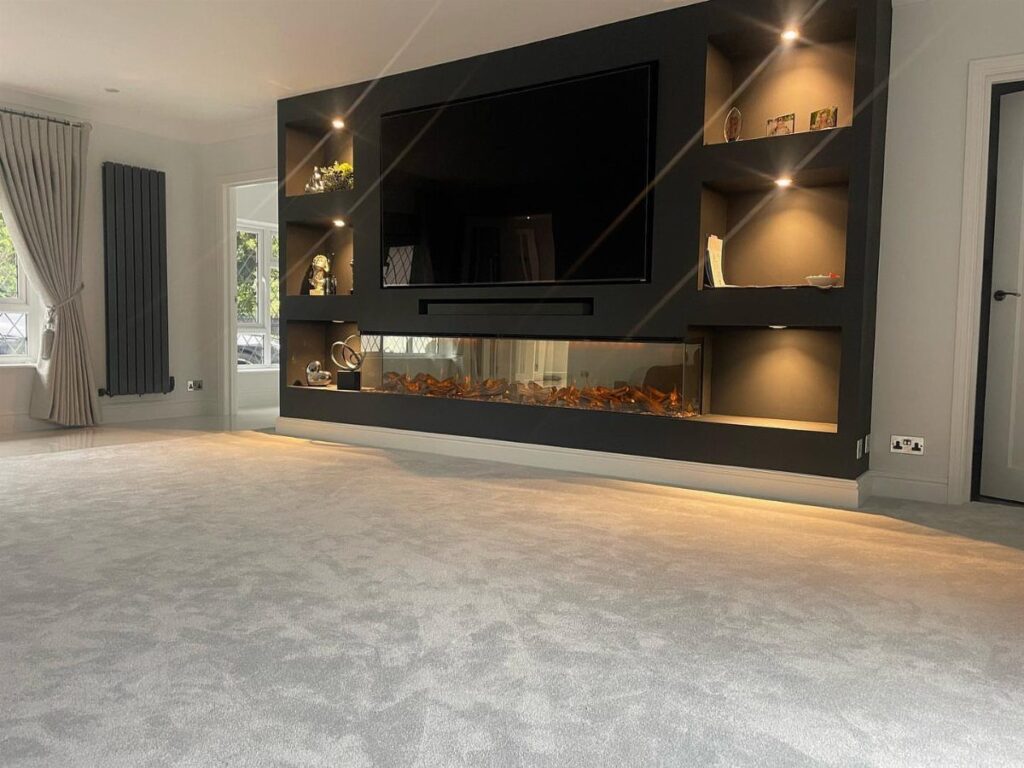
Carpet for a media room runs from wall-to-wall installation over tiered platforms at several hundred dollars to a shaggy area rug laid over existing hardwood for under two hundred.
Pick based on pattern, color, pile height, and whether you want wall-to-wall coverage or an area rug over your existing floor.
1. Patterned Carpets
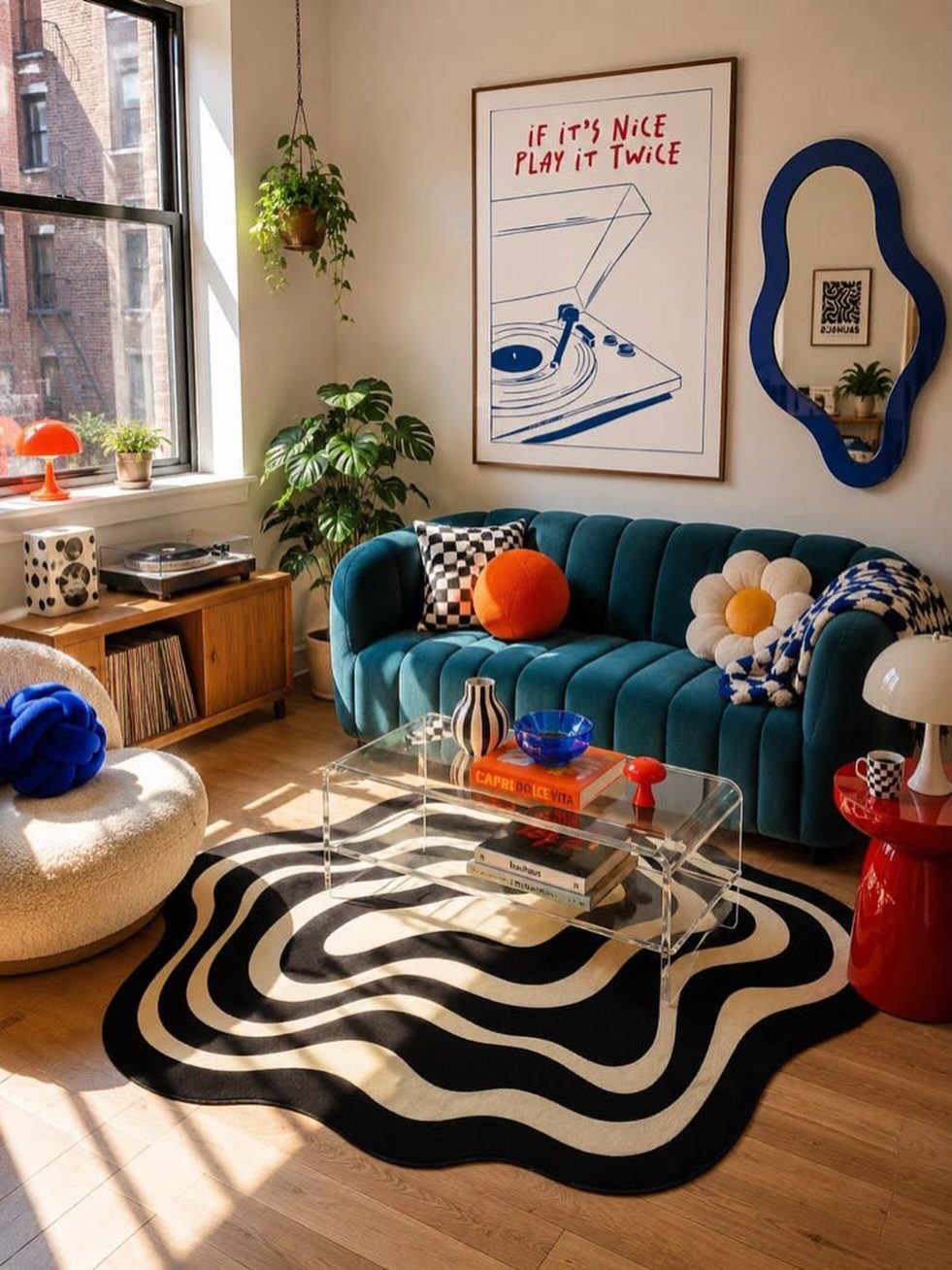
A bold pattern across the floor pulls together furniture that otherwise might not match. The wavy black and white design visible here adds movement without needing color, which works when the walls and seating already carry strong hues.
Patterned carpet hides stains better than solid colors. Spills blend into the design rather than announcing themselves, which matters in a room built for snacking and long movie nights.
Geometric patterns read modern. Florals or traditional motifs skew formal, and most media rooms call for something that feels casual enough to stretch out on the floor.
2. Light Grey Textured Carpet
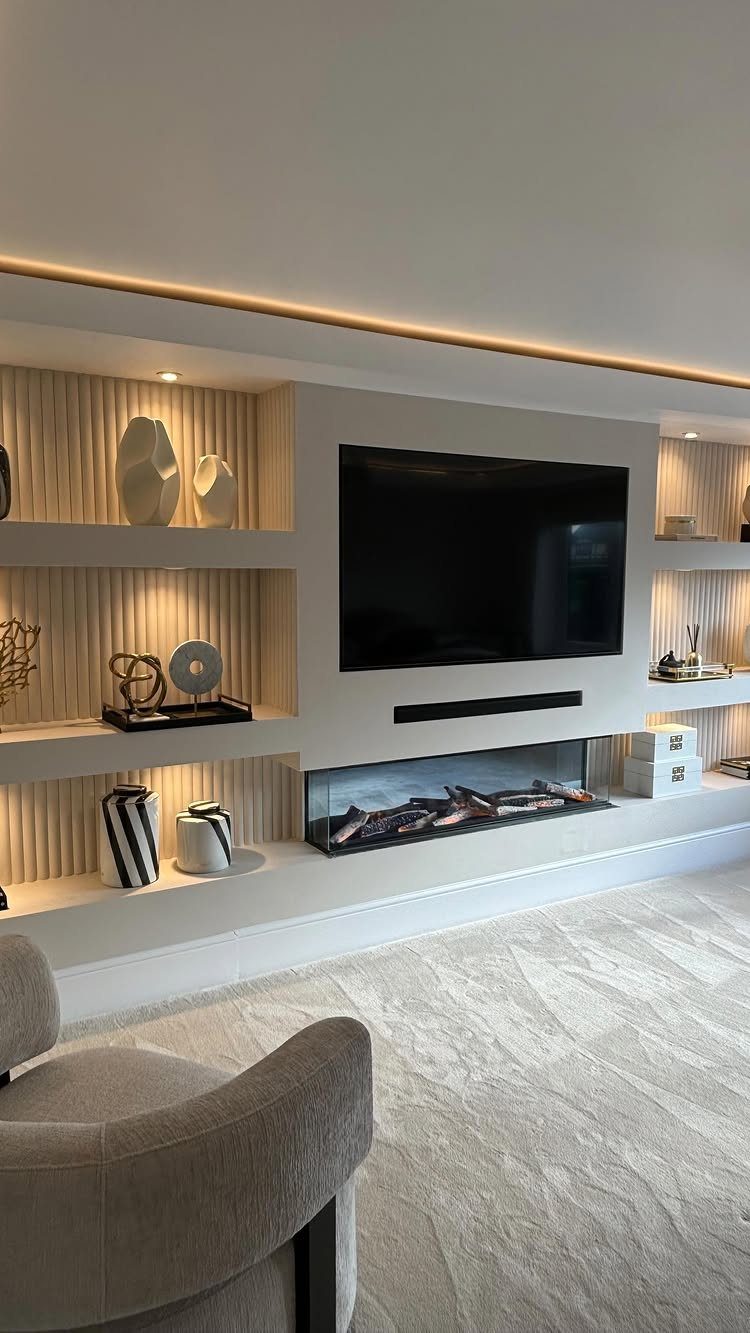
Light grey reads neutral but shows texture in a way beige does not. The woven surface visible here catches light at different angles, so the floor looks dimensional rather than flat.
Textured carpet grips underfoot, which prevents slipping when you stand up from low seating or walk across the room mid-movie. Smooth finishes slide more, especially in socks.
Grey works with any screen size. It does not reflect light back toward the viewer the way white or cream can, and it stays dark enough that the TV remains the brightest surface in the room.
3. Dark Grey Wall-to-Wall Carpet
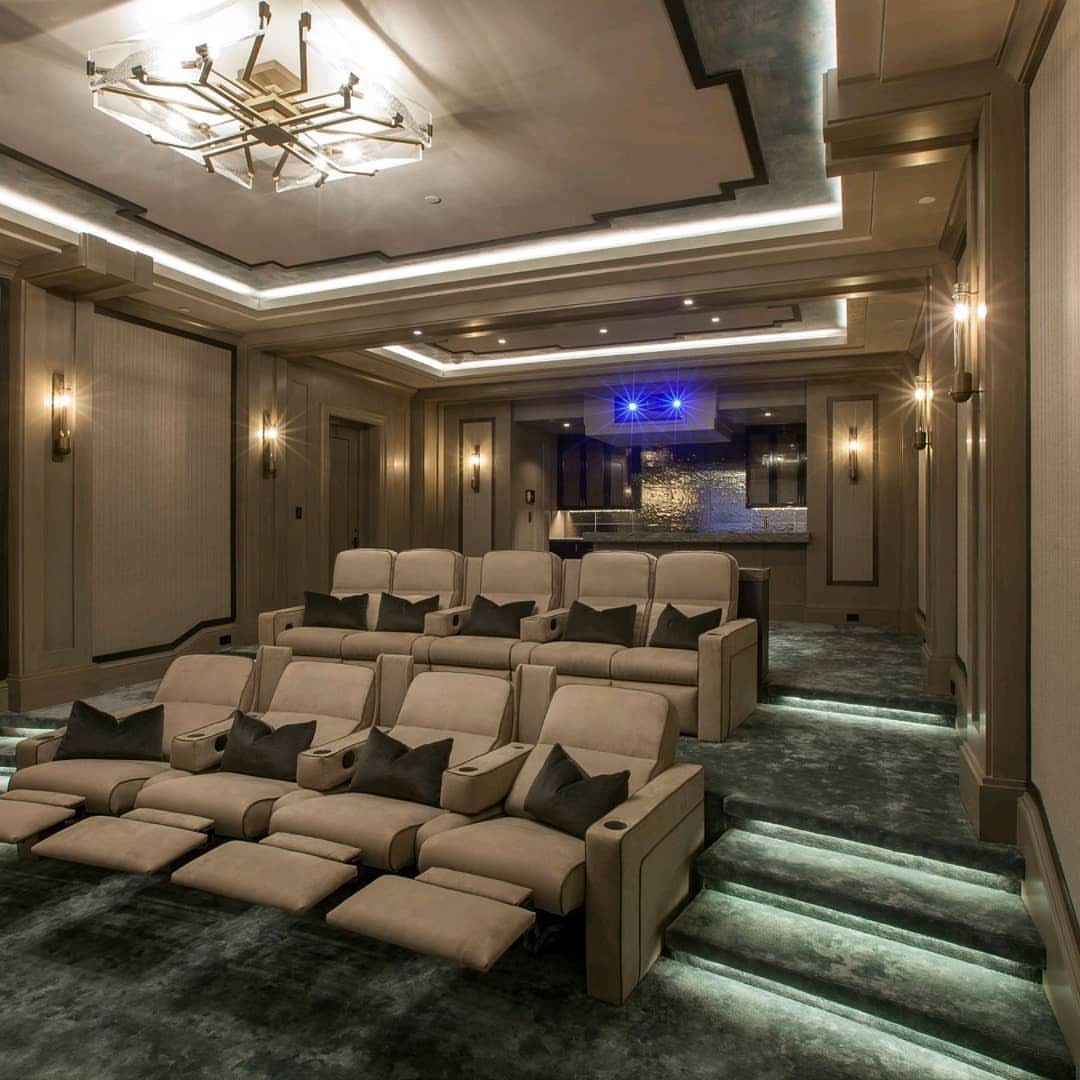
Dark grey carpet across the entire floor, including the stepped platforms, keeps the room visually quiet. Nothing competes with the screen, and the floor recedes rather than drawing attention.
Wall-to-wall installation on tiered seating is a carpentry decision as much as a flooring one.
Each riser needs precise cuts and tack strips anchored to the frame before the carpet stretches over it. Most installers charge more for stairs and platforms than for flat runs.
Darker carpet shows dust and pet hair more than mid-tones.
If you vacuum weekly, it stays sharp. Less often and you will see the buildup.
4. Neutral Beige Carpet
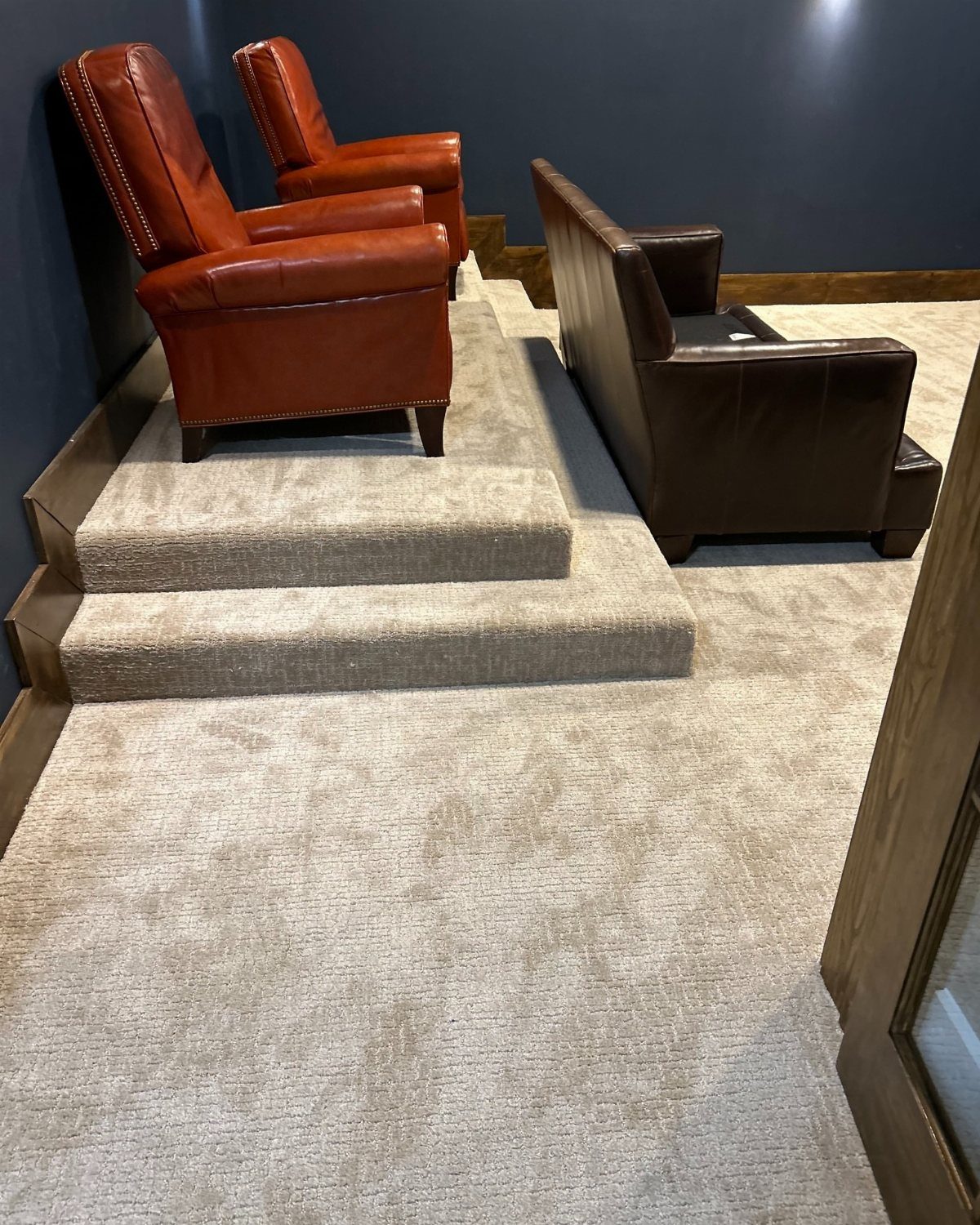
Beige carpet warms a room without competing with accent colors. The neutral floor visible here lets the orange chairs and blue walls do the talking, which matters when your furniture already makes a statement.
Installing carpet over tiered platforms requires careful measuring.
Each step edge needs to align cleanly, or the seams show every time someone walks past. Corners on risers are the hardest part and usually need a knee kicker to stretch the material tight.
Beige shows less wear than white but more than grey. Medium traffic holds up fine; heavy use or pets will darken high-contact areas over time.
5. Classic Red Theater Carpet
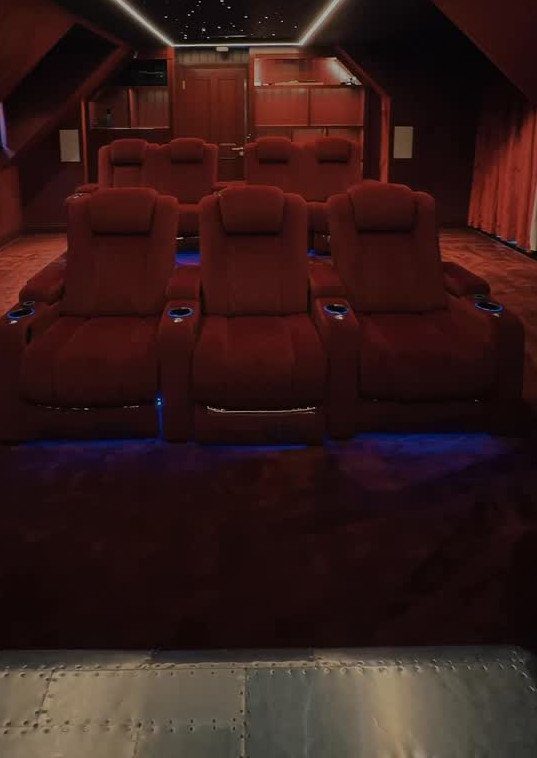
Red carpet announces that this room has one job. The shade visible here matches traditional cinema lobbies, so the space reads as theater rather than multipurpose basement.
Dark red hides spills better than lighter tones. Soda, wine, and chocolate all blend into the color, which keeps the floor looking cleaner between deep cleans.
Matching the carpet to the seats locks in a single mood.
If you ever want to change the seating style or color, the floor will still read as theater-specific. Grey or black carpet gives more flexibility down the line.
6. Deep Blue Cinema Carpet
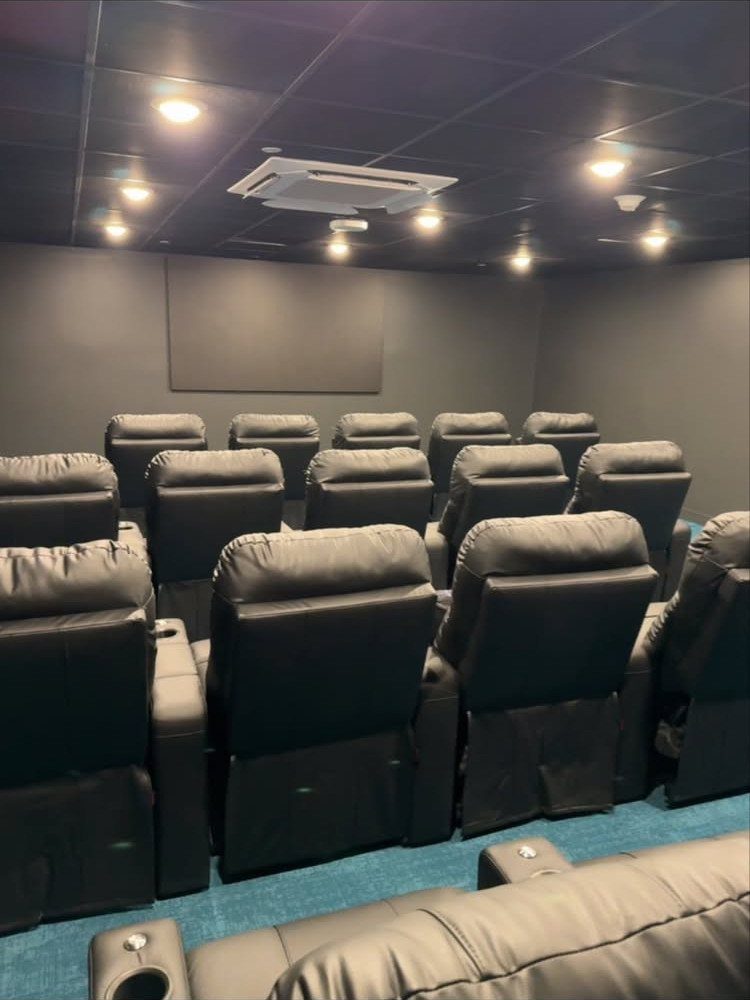
Deep blue carpet under black leather seating keeps the room cool-toned and focused. Blue absorbs light without going as heavy as black, so the floor stays visible but does not distract from the screen.
Wall-to-wall installation over tiered platforms takes longer than a flat room.
Each riser needs its own cut, and seams on step edges wear faster than flat runs. Budget extra time for corners and expect the installer to charge for the added complexity.
If you have pets or wear socks, plan to vacuum before every movie night.
7. Shaggy Area Rug Over Hardwood
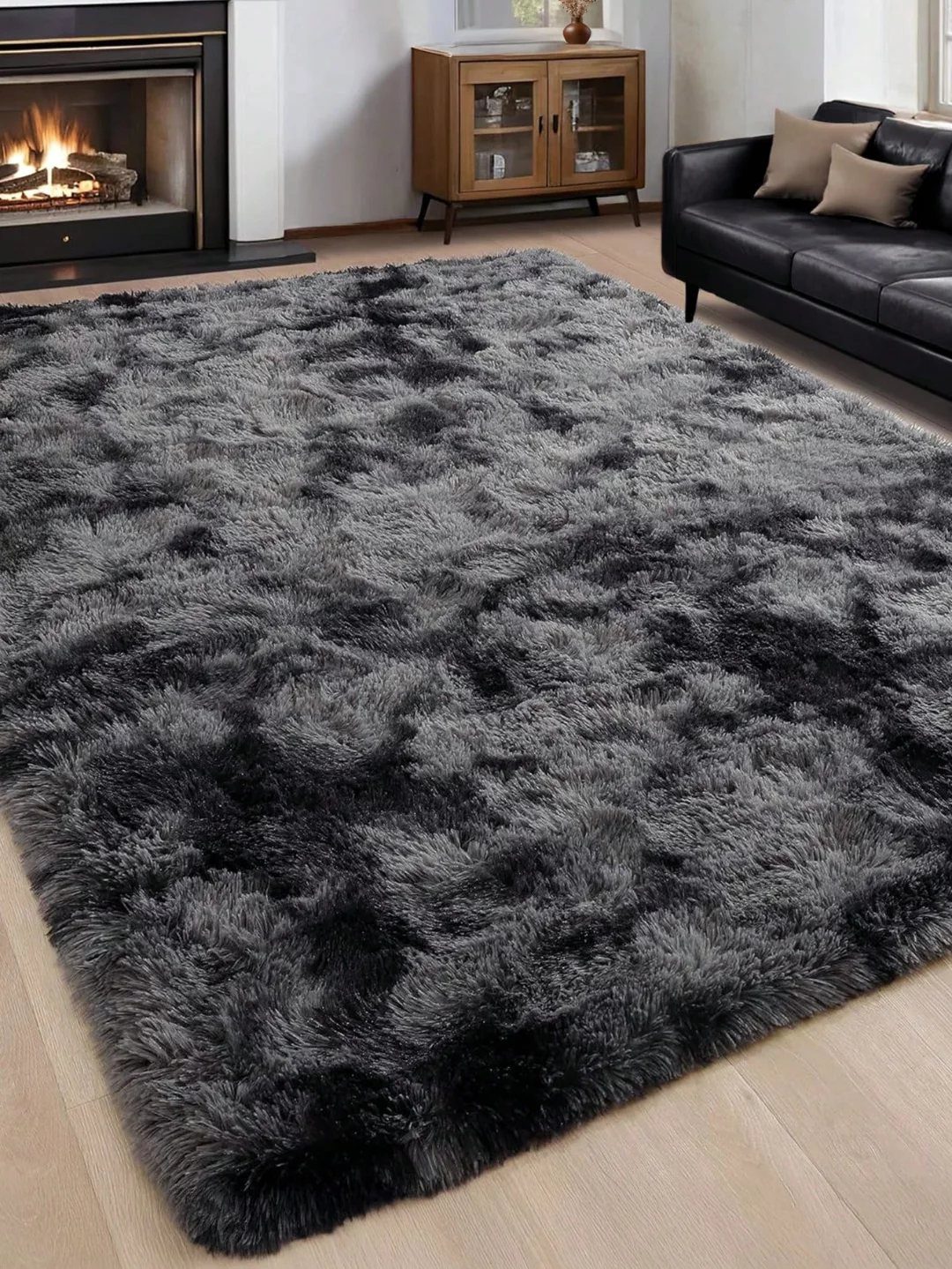
A shaggy rug over hardwood gives you softness where you sit without committing the whole floor to carpet. The high pile absorbs sound better than low-pile or flatweave, which matters when the TV volume climbs.
Layering a rug leaves the wood visible at the edges, so the room keeps its original flooring character. If you move or change the layout, the rug lifts and the floor underneath stays intact.
Shag shows footprints and vacuum tracks. Rake it with your fingers or a carpet rake between sessions to reset the pile.
Carpet Installation Advice
Professional installation costs more up front but saves you from stretched seams, visible tack strips, and corners that pucker after a few months.
Measure twice before ordering material. Carpet sold by the roll often requires more square footage than the room’s length times width, especially if the room is wider than 12 feet or the pattern needs to line up at seams.
Ask the installer how they plan to handle step edges before they start.
If you already own a knee kicker and have laid carpet before, flat rooms are manageable. Platforms are not.
Carpet Maintenance Tips
Padding sits between the carpet and the subfloor, and it determines whether a spill stays surface-level or soaks through.
Good padding blocks liquid from reaching the underlayment, so you can blot the stain without worrying it will wick back up through the fibers a week later.
Stain-resistant carpet treatments repel liquid for the first few seconds, which gives you time to grab a towel.
After that window closes, the padding takes over. Cheap foam padding absorbs spills and holds them, which means the stain can reappear even after the surface looks clean.
Ask for moisture-barrier padding if the room sits over concrete or if you expect frequent spills. It costs more per square foot but keeps odors and stains from setting into the underlayment.
Room Size Considerations
Most carpet ships in 12-foot-wide rolls. If your media room is wider than that, the installer will need to seam 2 pieces together, and pattern alignment at the seam drives how much extra material you pay for.
That 15 by 17 room has 255 square feet of floor, but the way rolls line up and patterns match can push your order to 400 or even 500 square feet.
The repeat is how far you go before the pattern starts again: 1 inch on a tight texture, sometimes 48 inches if the geometry is big and bold.
Larger pattern repeats mean more overage, because the installer has to align the design across seams. Small rooms with big patterns often waste more material than large rooms with small repeats.
Frequently Asked Questions
What is the best carpet for a media room?
Soft fibers and dense padding catch sound waves instead of letting them ricochet, so voices stay intelligible and bass notes land without the muddiness hard surfaces cause.
Darker colors like grey, deep blue, or red hide spills and wear better than light tones, and they keep the floor from reflecting light back toward the screen.
What is the average cost to carpet a 12×12 room?
A 12×12 media room runs between $1,000 and $2,300 installed, depending on the carpet grade and padding you pick.
Patterns that need alignment can add 10–15% to the footage you pay for when seams are involved, since the installer has to waste material to make the design match.
What is the best flooring for a theater room?
Carpet controls sound reflection better than hard surfaces, so movie soundtracks and dialogue stay clear instead of bouncing around the room.
It adds warmth and comfort underfoot, and you can layer a rug over hardwood if you want softness without covering the whole floor.






