
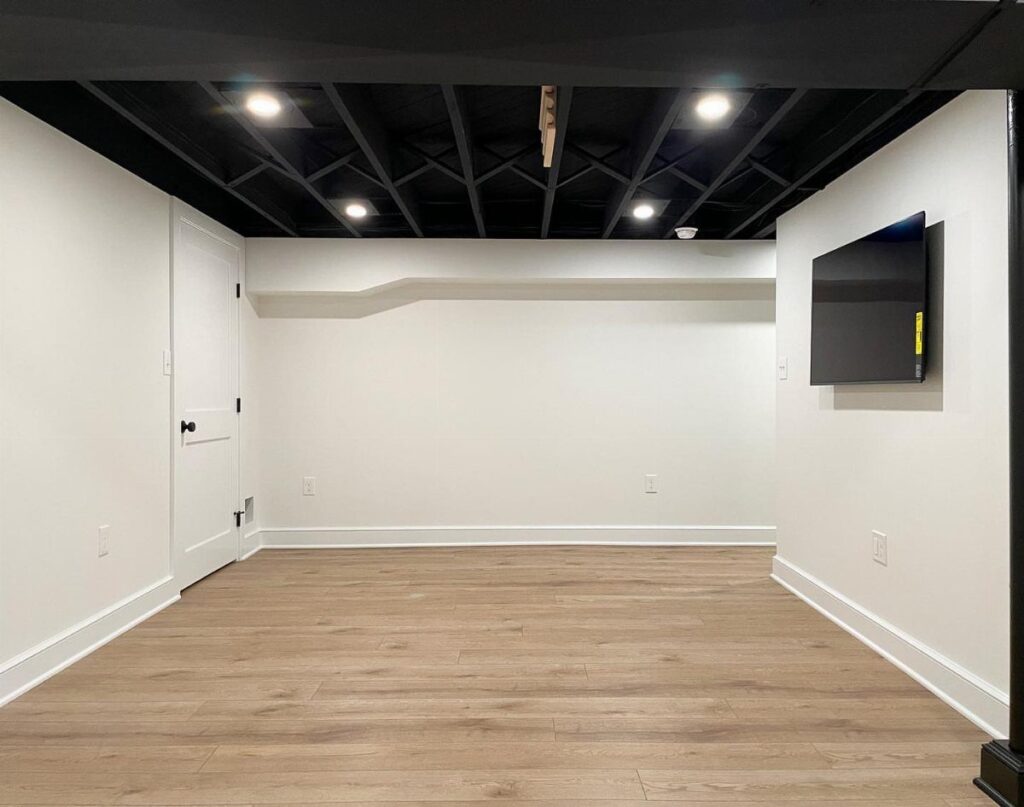
A black ceiling in a basement can cost as little as 2 coats of matte paint or as much as a coffered grid with recessed lighting.
The choice comes down to what sits overhead right now: drywall takes paint directly, exposed joists can be sprayed or left visible, and drop ceiling grids take black tiles that lift out for access.
1. Black Ceiling Paint
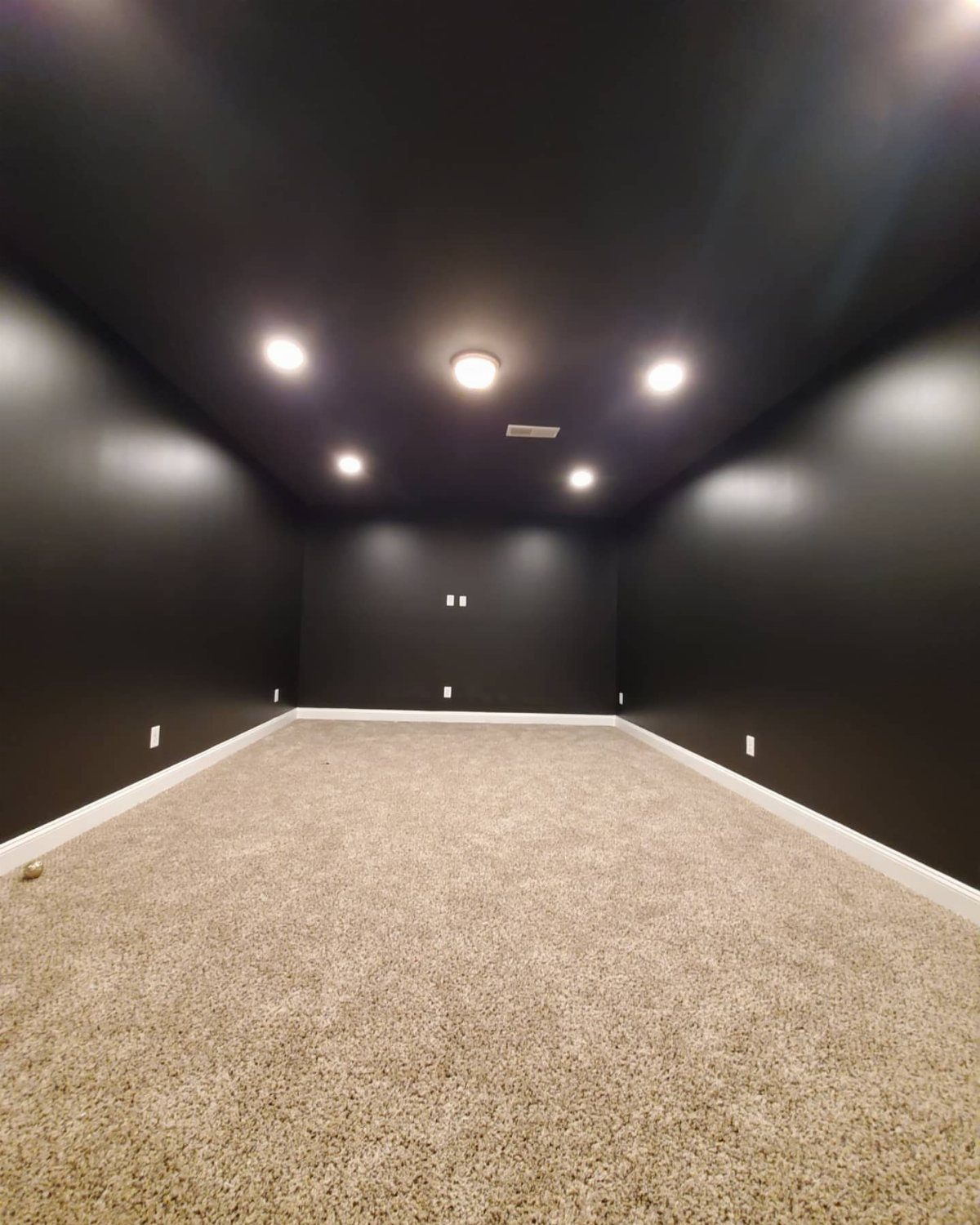
Black paint on the ceiling turns the biggest overlooked surface in a basement into part of the design.
The matte finish absorbs light instead of bouncing it around, which makes recessed fixtures read as intentional spots rather than general overhead glare.
I like this approach when the basement already has drywall ceilings.
One coat of primer and two coats of black ceiling paint cover it completely. The beige carpet and white baseboards stay light, so the room keeps contrast without feeling closed in.
The black pulls your eye up and makes low ceilings feel less obvious.
2. Black Ceiling Tiles
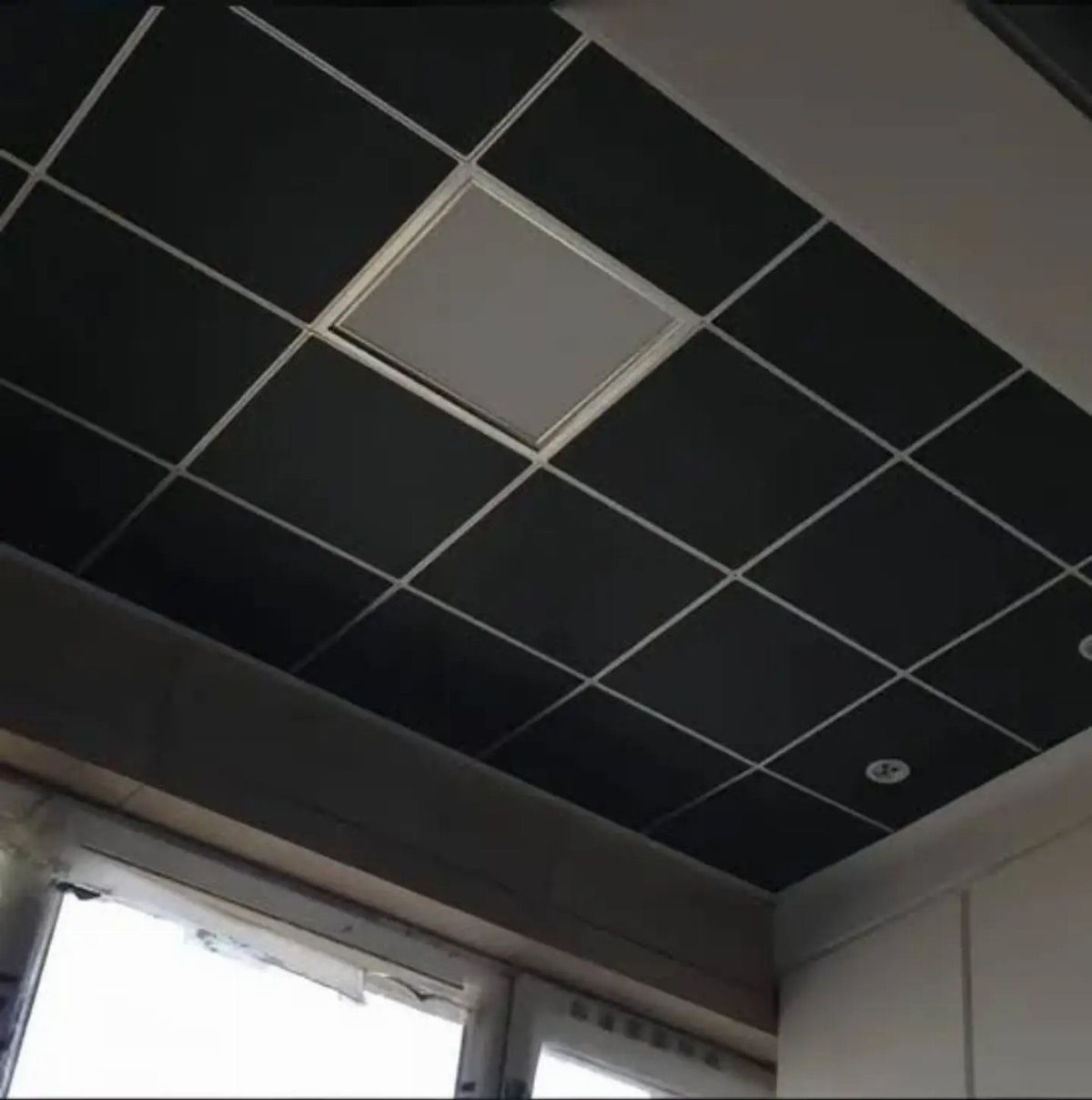
Drop ceiling tiles in black give you the grid system with a finished look. Each tile lifts out for access to wiring or plumbing above, which matters in basements where mechanicals run overhead.
The grid itself stays visible, so you get a geometric pattern across the ceiling. Swapping one tile for a white recessed light panel, the way this ceiling does, keeps the fixture flush and the look clean.
Black tiles cost about the same as white ones.
Installation goes the same way: hang the grid, drop in the tiles. This works best when you need that access or when the ceiling is already framed for a drop system.
3. Light Walls
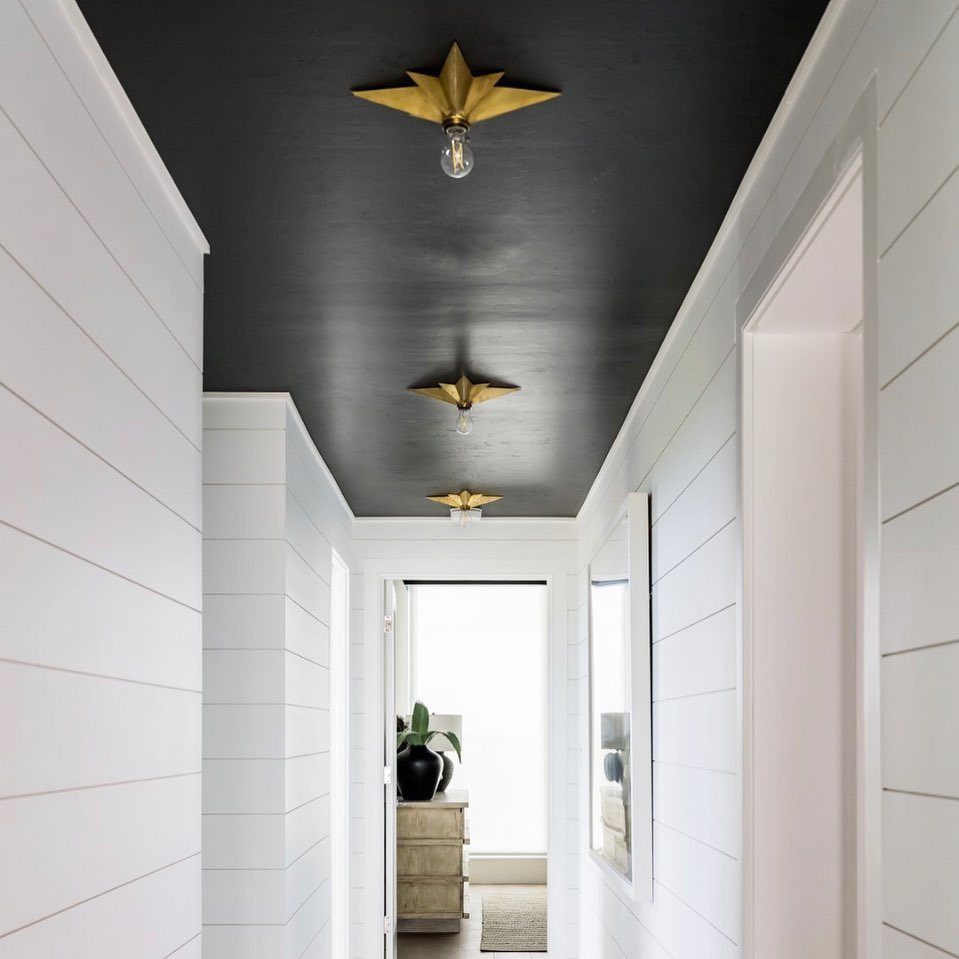
Light-colored walls against a black ceiling give the room vertical contrast without adding paint to every surface. White shiplap, like the planks running down this hallway, reflects enough light to stay bright while the ceiling recedes.
The black ceiling draws less attention than a white one would in a basement with exposed mechanicals or low joists.
Pairing it with a crisp white wall treatment makes the ceiling choice feel intentional rather than like something you were covering up.
Gold or brass light fixtures add warmth between the two. Matte black on the ceiling keeps the focus on the walls and the fixtures instead of on the ceiling plane itself.
4. Black Painted Beams
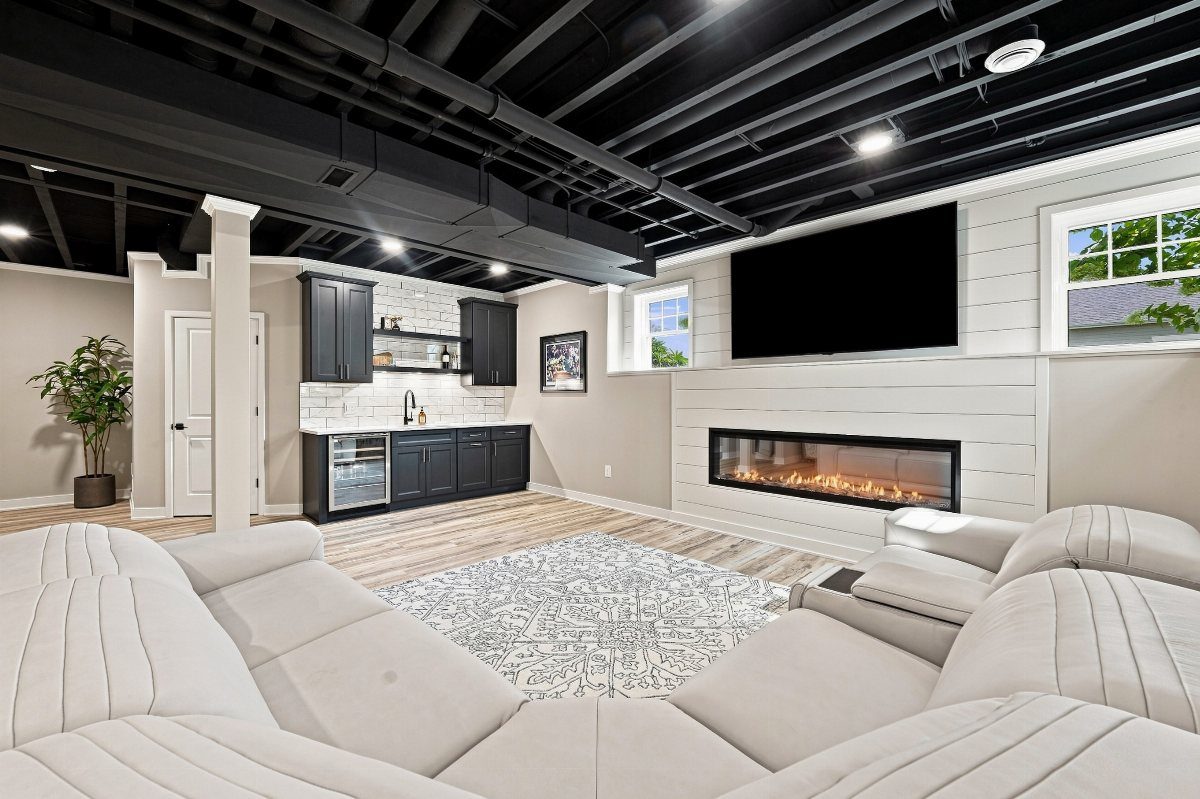
Painting the beams black while leaving the spaces between them unifies an open-joist ceiling without hiding the structure. The black pulls the eye across the entire plane instead of letting each beam stand out on its own.
This approach works when your basement already has exposed joists and you want a finished look without furring out a new ceiling. The white sectional and light walls keep the lower half of the room bright.
Black beams read as modern next to a sleek fireplace and built-ins. The ceiling becomes one continuous surface instead of a grid of raw wood.
5. Plush Furnishings
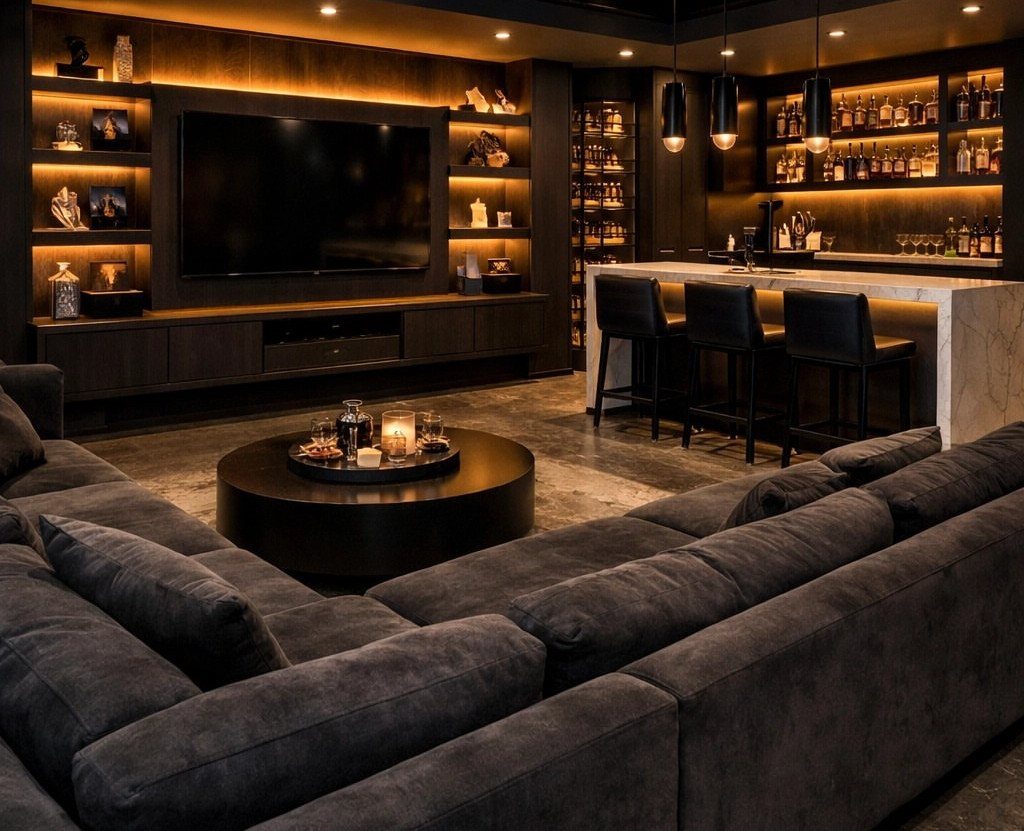
A dark ceiling pairs with deep upholstery to ground a basement lounge without losing comfort.
The grey sectional in this space fills most of the seating area, and its plush cushions soften the harder finishes around it: black ceiling, marble bar top, dark wood shelving.
Oversized sectionals work in basements because they turn an awkward or narrow layout into built-in seating. Pairing soft grey fabric with a black ceiling avoids looking too stark while still reading as intentionally dark.
The light marble bar breaks up the palette. I like this balance when the basement serves as a lounge or media room rather than a bright multipurpose space.
6. Black Coffered Ceiling
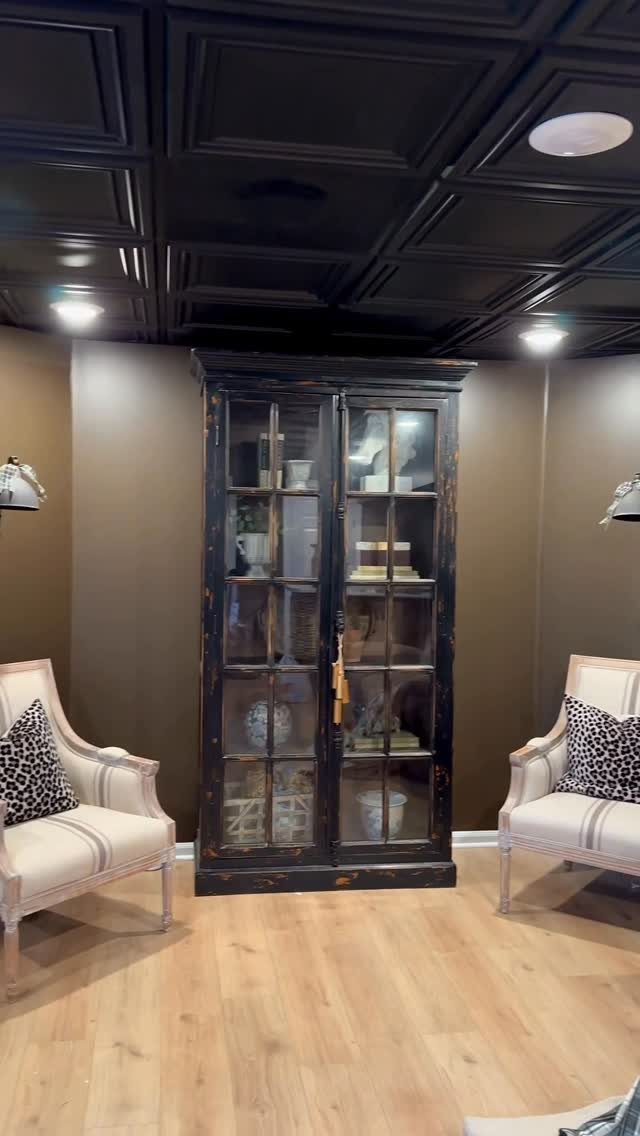
A coffered ceiling in black adds depth through shadow rather than through color contrast.
The recessed panels and trim create a grid of squares that breaks up the flat plane, and painting the whole assembly black emphasizes the geometry instead of the material.
This works best in basements with enough ceiling height to build out the coffers without crowding you. The recessed lights sit inside the panels, so the fixtures stay integrated and the grid remains uninterrupted.
Light wood floors and white or neutral furnishings open up the lower half visually. The black coffered ceiling anchors the space without competing with the furniture or the built-ins below it.
7. Gold Chandelier Statement
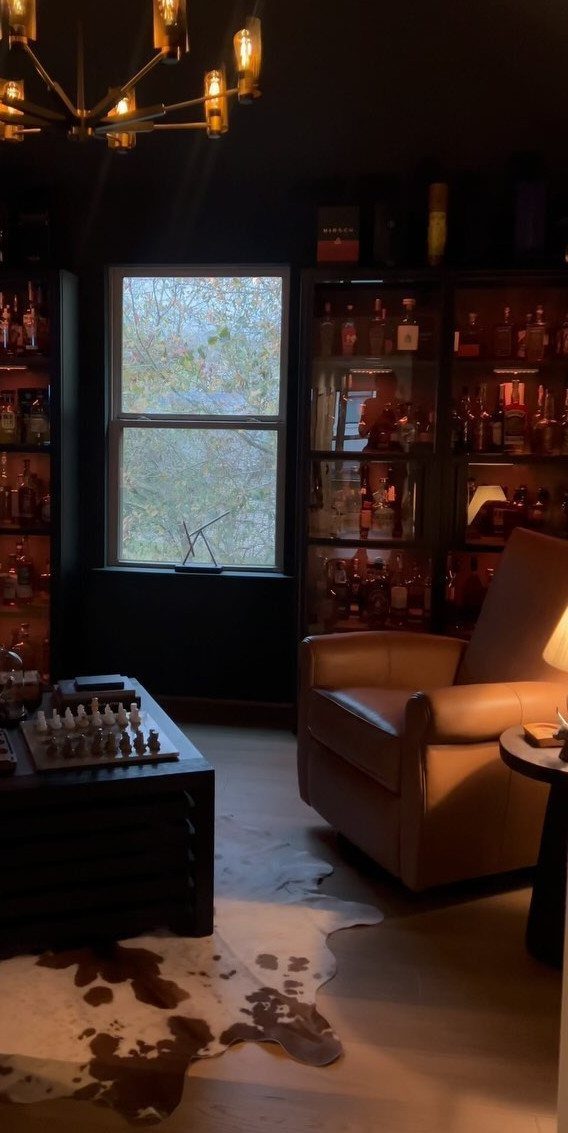
A gold chandelier against a black ceiling gives you one strong focal point instead of competing finishes.
The metallic frame catches light and pulls attention upward, which works when the rest of the room leans dark: leather seating, wood shelving, low-contrast rugs.
This setup fits best in a basement bar or lounge where the lighting can stay dramatic. The chandelier provides enough ambient light for drinks and conversation without needing bright overhead fixtures.
Matte black paint on the ceiling keeps the gold from looking too shiny. The 2 finishes stay distinct without clashing.
8. Black Exposed Joist Ceiling
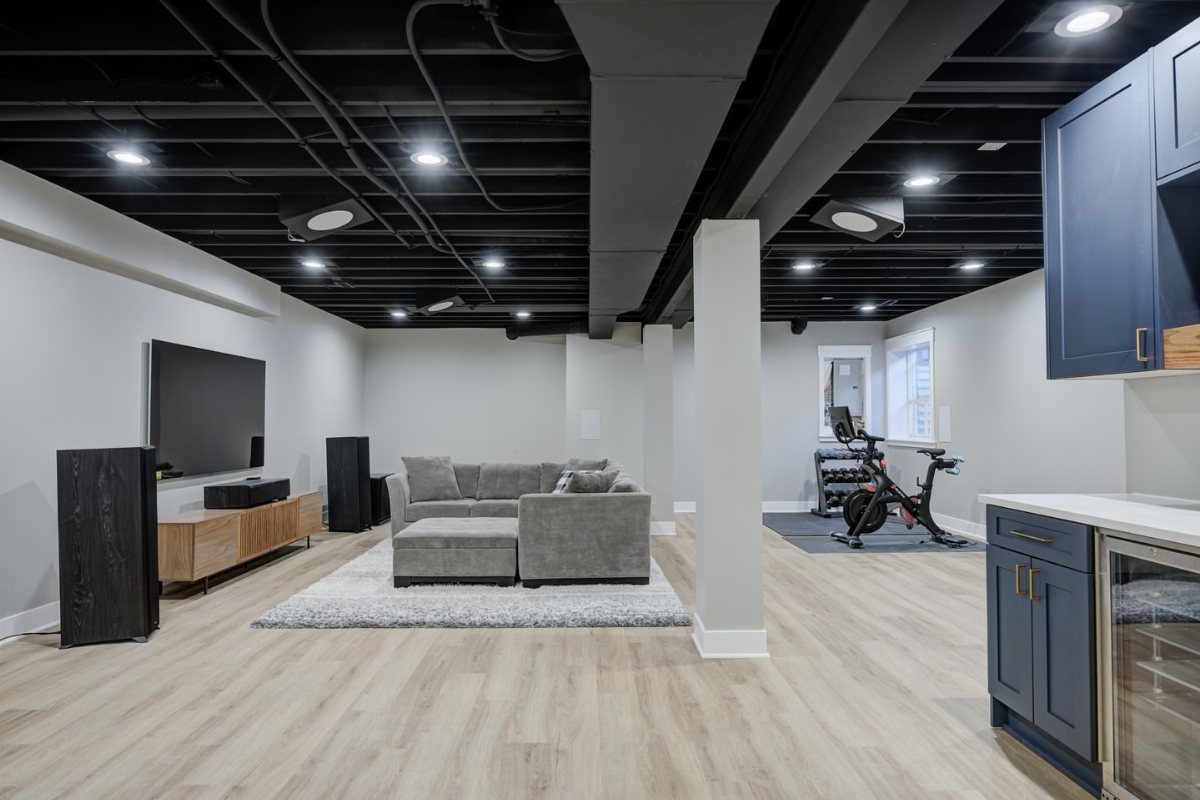
Spraying the entire ceiling structure black turns exposed joists, ducts, and pipes into one continuous surface. Matte black paint covers everything at once, so nothing reads as unfinished or in the way.
This approach saves ceiling height compared to a drop ceiling or drywall.
The black ceiling recedes visually, so the space feels taller than it measures.
9. Integrated Linear Light Strips
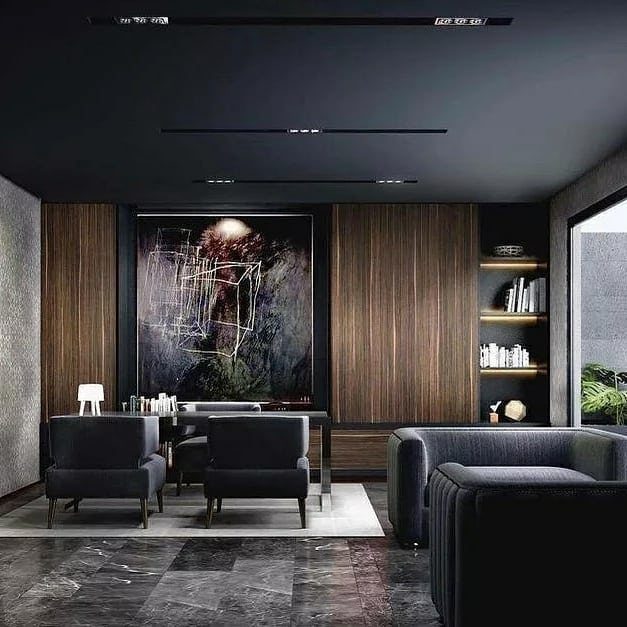
Linear light strips recessed into a black ceiling provide even lighting without visible fixtures. The strips sit flush with the ceiling plane and cast light downward in clean lines, which suits a modern basement with minimal furniture and hard finishes.
This works when you are building out the ceiling or adding recessed lighting during a remodel. The strips require a channel cut into the drywall and wiring run to each one.
Dark furniture and wood-paneled walls pair with the black ceiling to keep the palette tight. The lighting defines the space and skips decorative fixtures that would interrupt the clean lines.
10. Glossy Reflective Black Ceiling
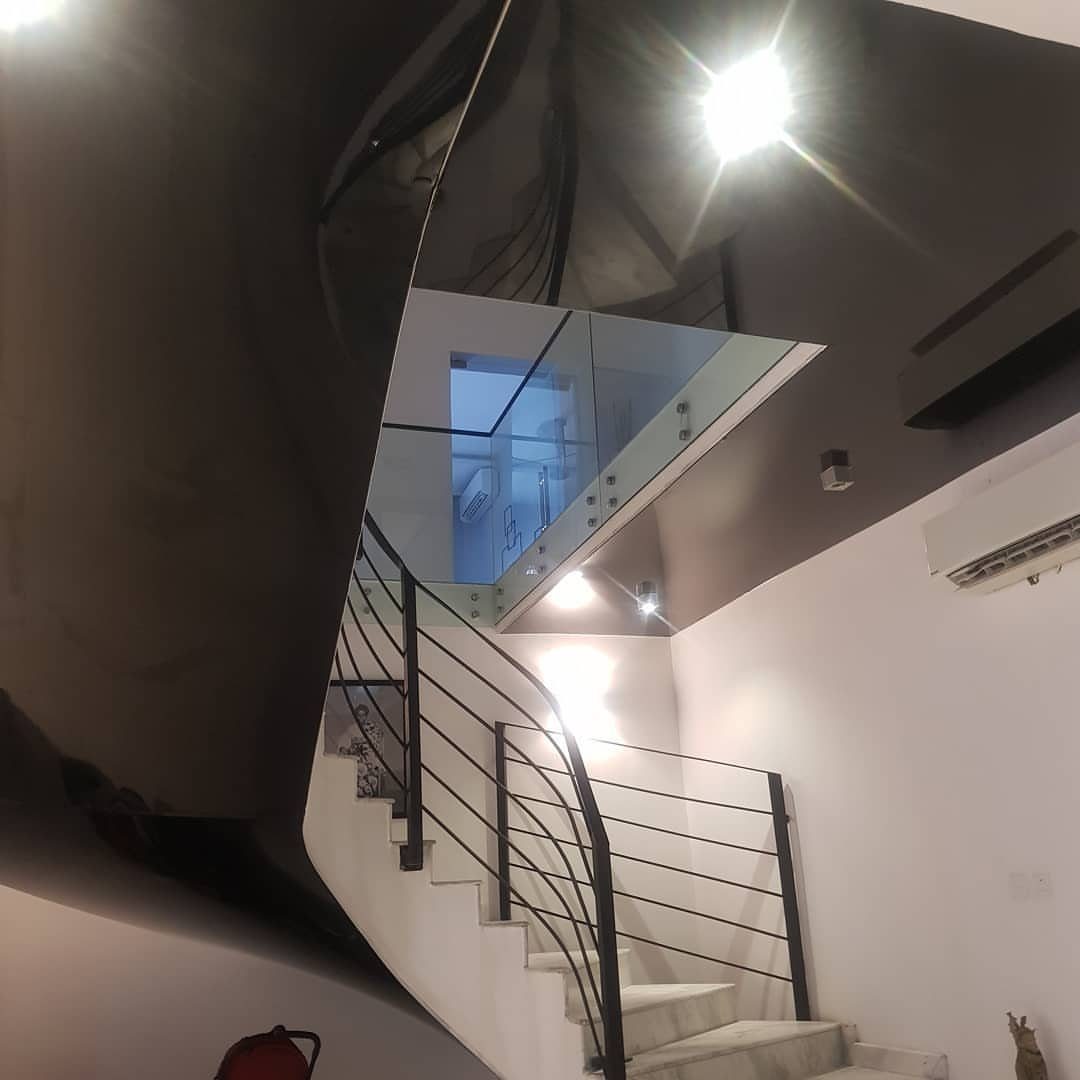
Glossy black paint on the ceiling reflects light and architectural details instead of absorbing them. The high-gloss finish bounces fixtures and stair railings back, which adds depth without adding color.
This finish shows every imperfection, so it requires a smooth drywall ceiling in good condition. 2 coats of gloss paint over a primed surface give you the reflective effect.
Pairing glossy black with white trim and bright overhead lights keeps the reflection sharp. The ceiling acts like a dark mirror, which works best in a stairwell or entry where you want the vertical space to feel taller.
11. All-Black Walls and Ceiling
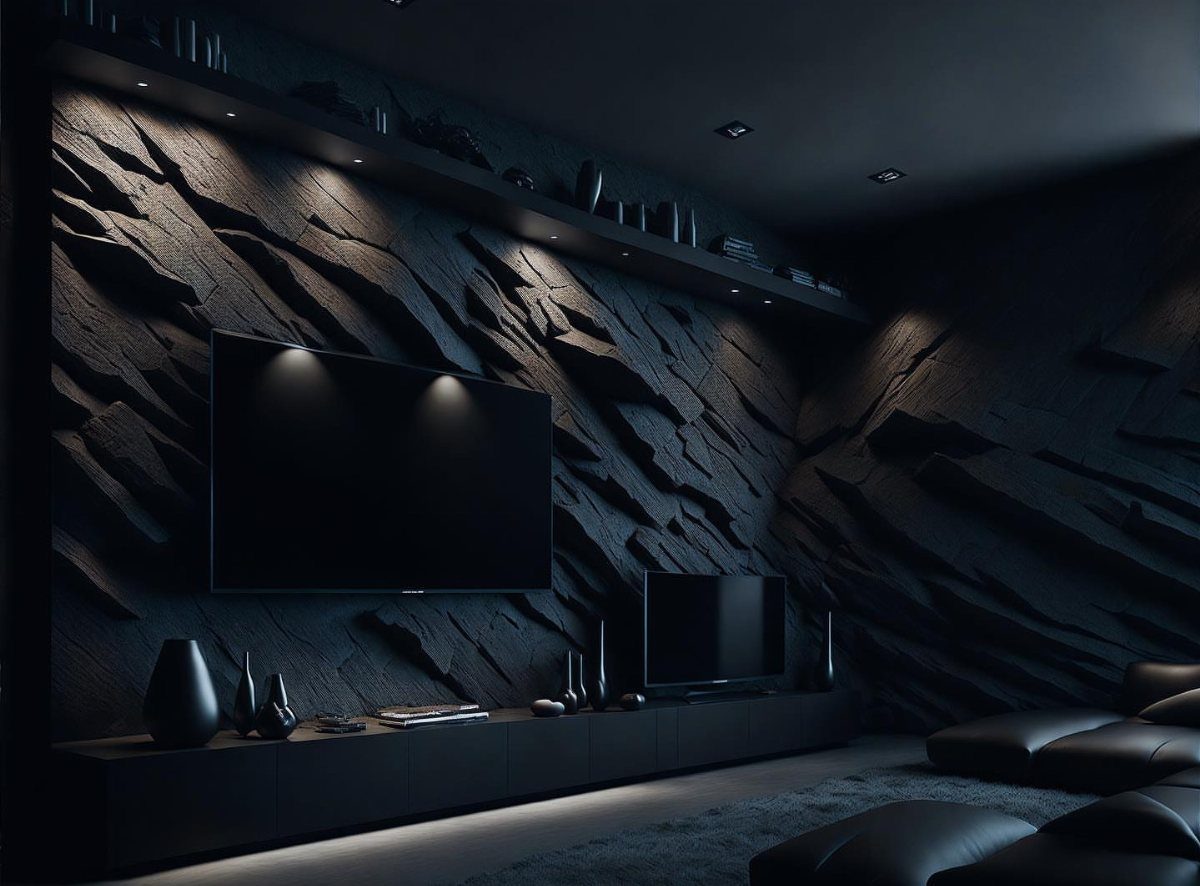
Painting both the ceiling and walls black commits to a single dark envelope. The textured black walls in this setup add dimension without introducing color, and the matte black ceiling completes the surround.
This suits a media room or entertainment space where you want minimal light reflection. Dark surfaces absorb screen glare, and black furniture blends into the background rather than standing out.
2 televisions and black leather seating keep the focus on the screens. The room stays functional without needing lighter walls to define the space.
Pros and Cons of Black Ceilings
The dark surface blends imperfections that stand out on white ceilings, which saves prep time if you’re painting over textured drywall or an older finish.
Dust shows up faster on black. A matte black surface shows lint and cobwebs faster than a lighter color, so you’ll wipe down the ceiling more often if the space gets regular use.
Recessed lights, pendant fixtures, or track lighting placed strategically counter that effect.
Reflective surfaces like mirrors or metallic light fixtures bounce light around and prevent the space from feeling confined. Adding color through furniture or rugs breaks up the dark envelope without diluting the ceiling choice.
Best Practices for Painting
A paint sprayer gives the most even coverage on a large ceiling surface. Brushing or rolling a ceiling leaves streaks that show up worse on black than on lighter colors.
Clear the room or throw drop cloths over anything that has to stay.
Tape off or remove trim, baseboards, and switch plates you’re not painting. Wear a respirator, goggles, and a hat; ceiling work kicks up more overspray than wall painting.
Thin the paint if the sprayer spits or clogs.
Primer goes on first, usually 2 coats to seal the surface. Spray the first coat of black in one direction and the second coat perpendicular to it for full coverage.
Let each coat dry fully before starting the next.
Choosing the Right Paint Color
Sherwin-Williams Urbane Bronze and Iron Ore both read as black on a ceiling without being true black. Urbane Bronze leans slightly warm, Iron Ore stays cooler and closer to charcoal.
Sampling the color on a section of ceiling matters more than testing it on a wall.
Ceiling paint looks different under overhead light than it does on a vertical surface, and a color that works in a photo might read too brown or too blue in your basement’s lighting.
Paint a 2-foot square in the corner of the ceiling and let it dry for a full day.
Check it under your basement’s actual lighting at different times: overhead recessed lights, table lamps, daylight from a window well if you have one.
Frequently Asked Questions
Is painting a basement ceiling black a good idea?
Yes, black paint on a basement ceiling hides imperfections like ductwork and pipes while making the room look larger and more open.
What is the cheapest way to cover a basement ceiling?
Painting the existing ceiling black is the cheapest option when you have drywall already in place or exposed joists you want to leave accessible. Black paint hides imperfections and mechanicals without building out a new ceiling structure.






