
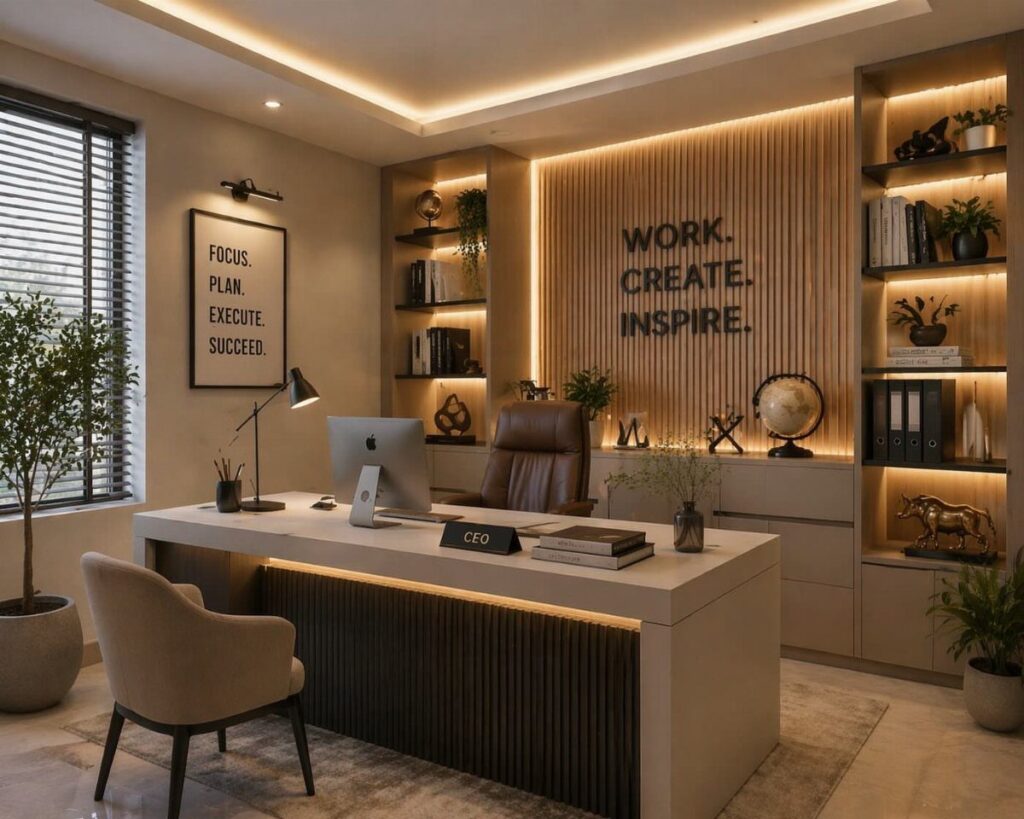
Office decor that works in a professional space splits between pieces that stay put when you move and surfaces you can change in an hour.
The choice depends on whether you rent or own, how much wall and floor space you control, and whether one person or a rotation of coworkers uses the desk.
1. Low-Maintenance Plants
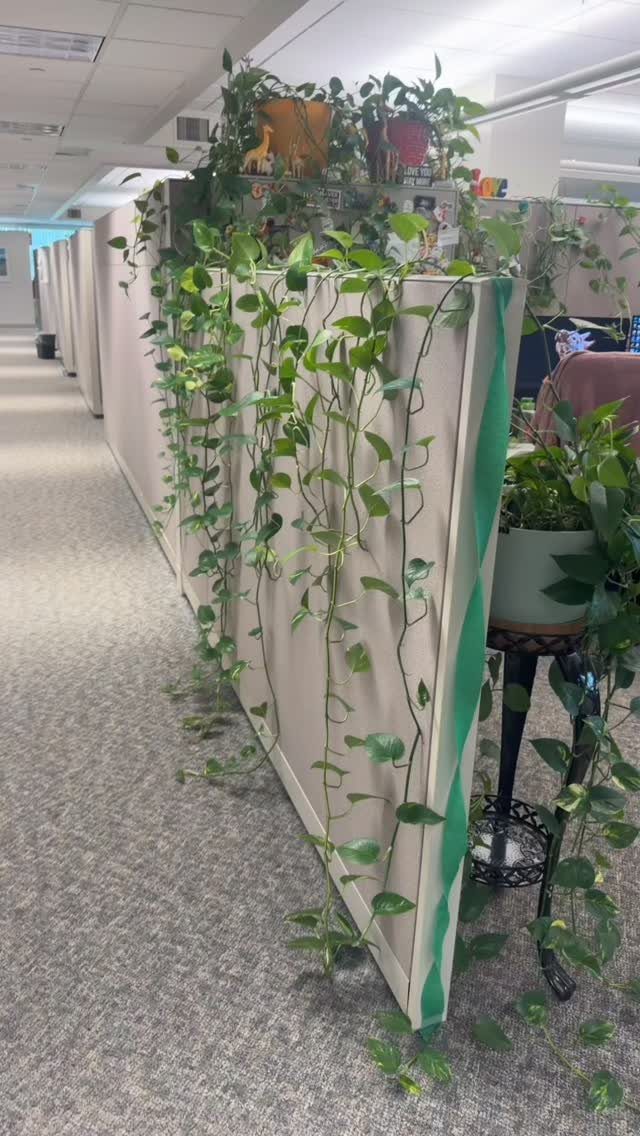
A trailing plant softens the hard edges of a workspace without taking up desk real estate.
Pothos, snake plants, and ZZ plants handle low light and irregular watering better than most, which matters when you’re focused on work instead of plant care.
Set a small pot on top of a cubicle wall or file cabinet if desk space is tight.
If the office allows drilling, a simple wall-mounted planter opens up vertical space. A single trailing vine adds life to the backdrop without crowding your monitor or keyboard.
2. Wall Art
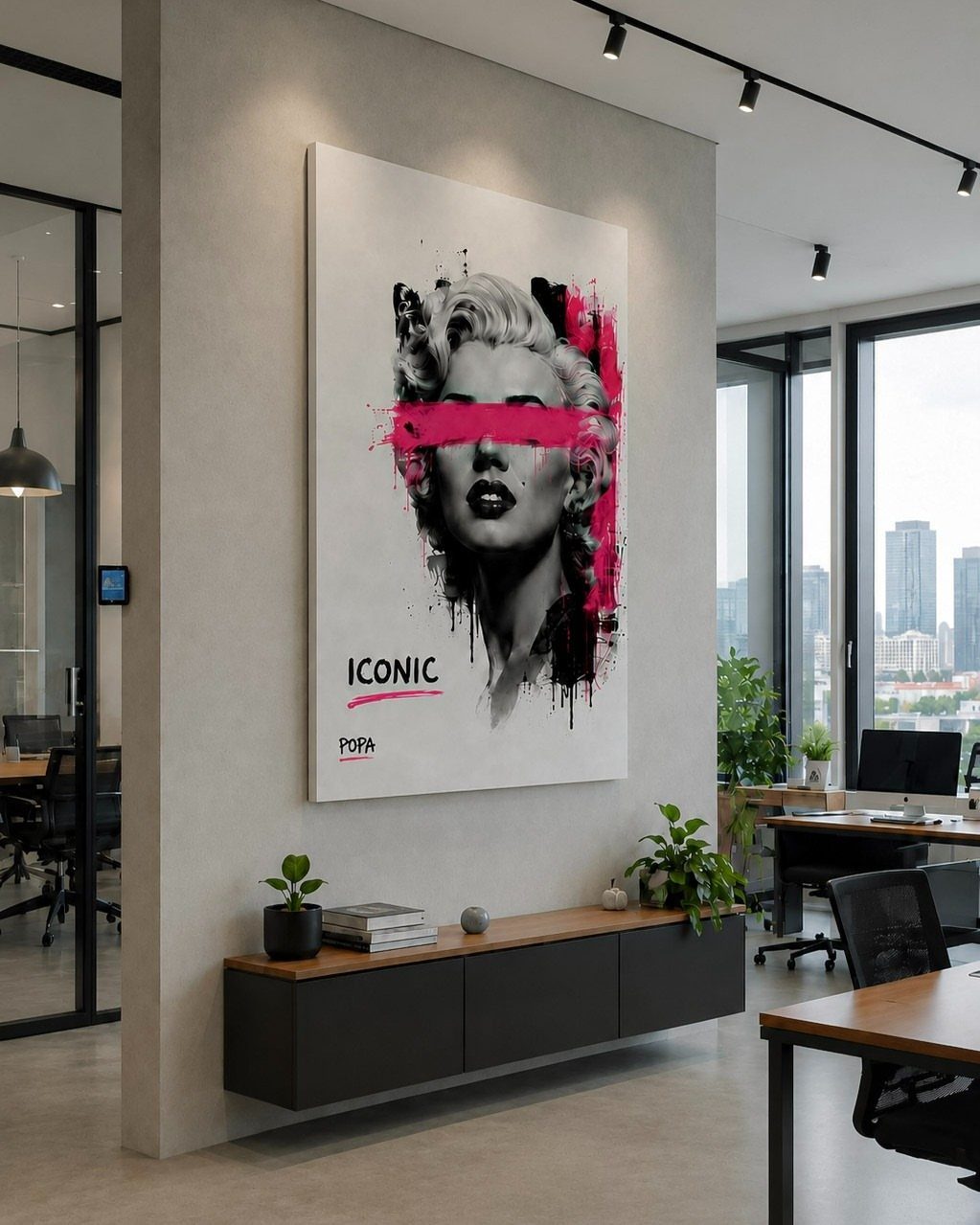
One large piece carries more weight than a gallery of small prints, especially on a grey or neutral wall where the art becomes the focal point.
A bold graphic or high-contrast image anchors the space and gives your eye somewhere to land when you look up from the screen.
Look for canvas prints large enough to fill the space without crowding the edges. Framed posters work just as well and cost less.
Pick something that actually means something to you, not generic motivational text. The right image keeps the room from feeling sterile without pulling focus during calls.
3. Accent Walls
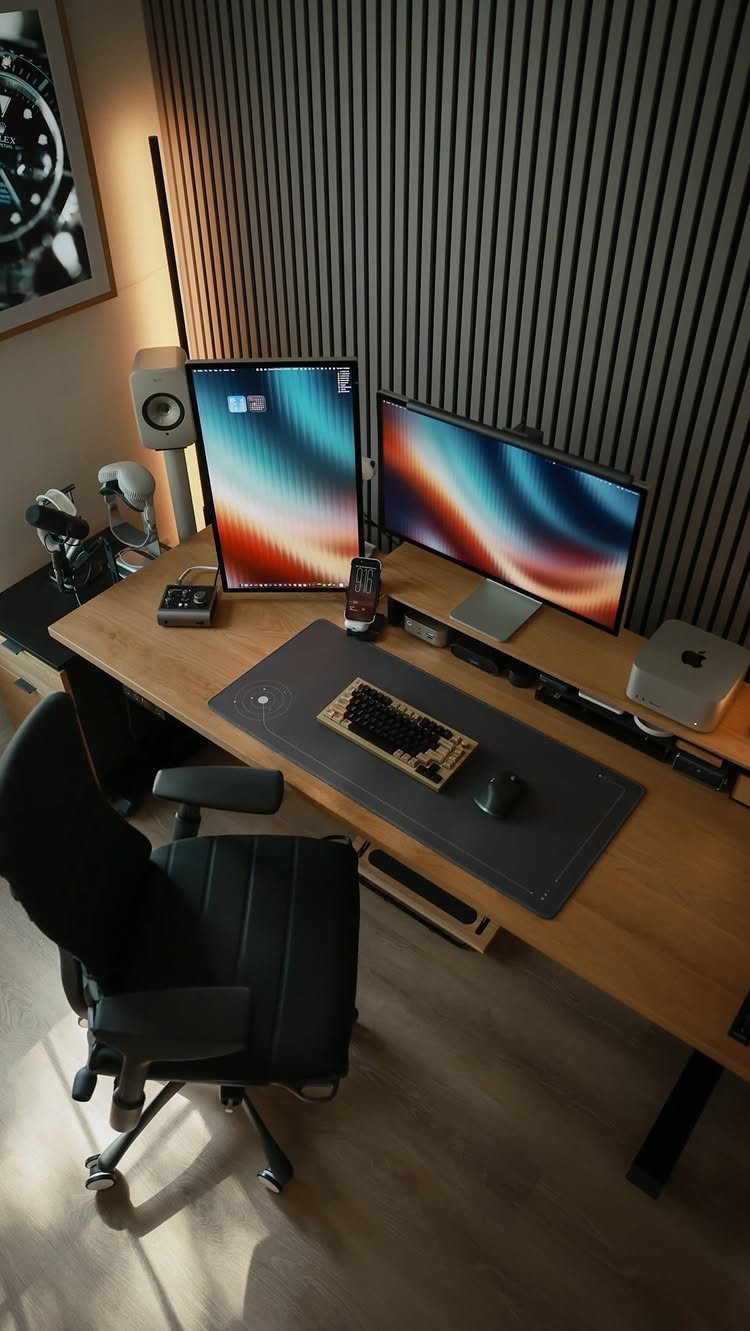
A slatted accent wall adds depth behind a desk without paint or permanent changes. Vertical slats in wood or MDF create rhythm and texture, and the narrow profile keeps the wall from feeling heavy in a small home office.
You can buy prefabricated slat panels that mount with adhesive strips or screws, or cut your own from 1 x 2 inch boards with even spacing between them.
Grey or natural wood tones sit behind monitors without competing for attention. If you’re renting, adhesive panels peel off cleanly when you move.
4. Task Lighting
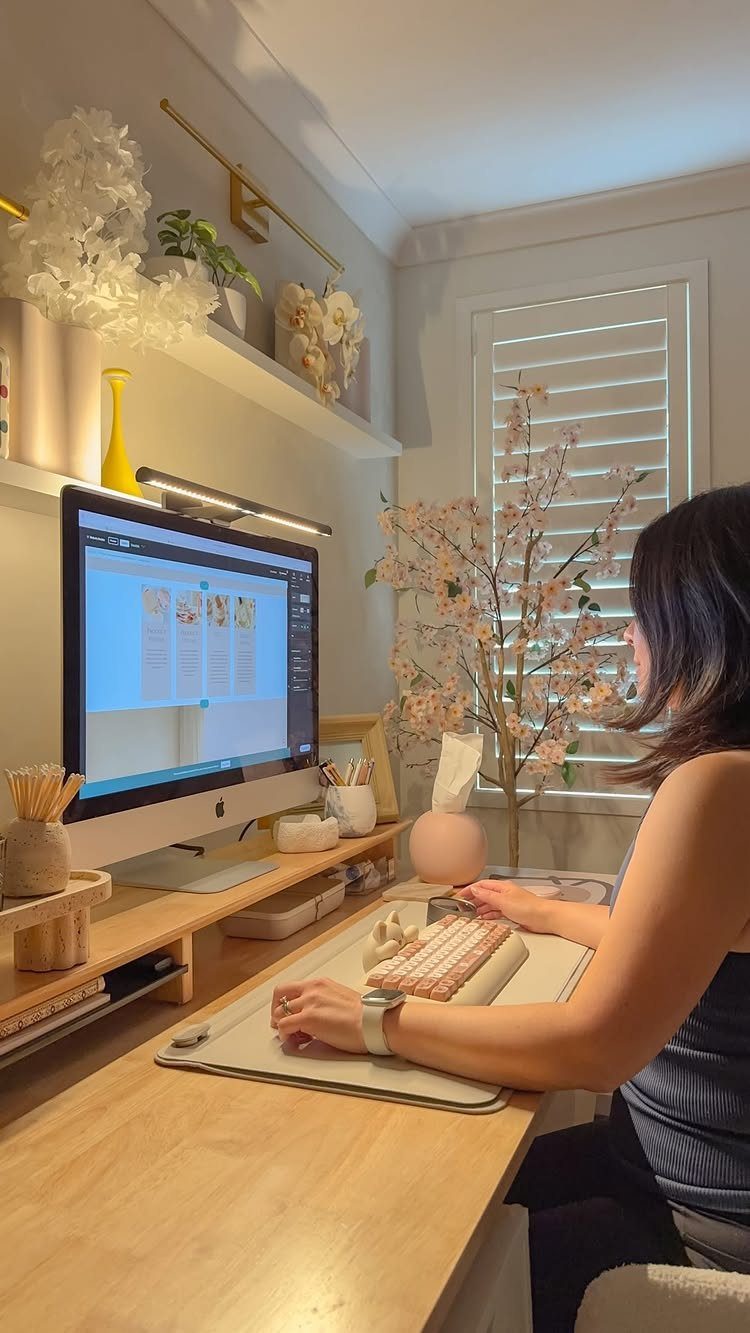
Overhead light alone leaves shadows on your keyboard and makes screens harder to read.
A desk lamp or monitor-mounted LED bar puts light exactly where you need it, and a second source on a shelf or behind the monitor fills in the room without glare.
Adjustable arms let you angle the light toward paperwork or away from the screen depending on the task.
Warm white (around 3000K) feels comfortable for long hours; cooler daylight tones work better if you’re matching colors or reviewing photos. Layering 2 light sources gives you control without the flatness of a single ceiling fixture.
5. Wall Decals
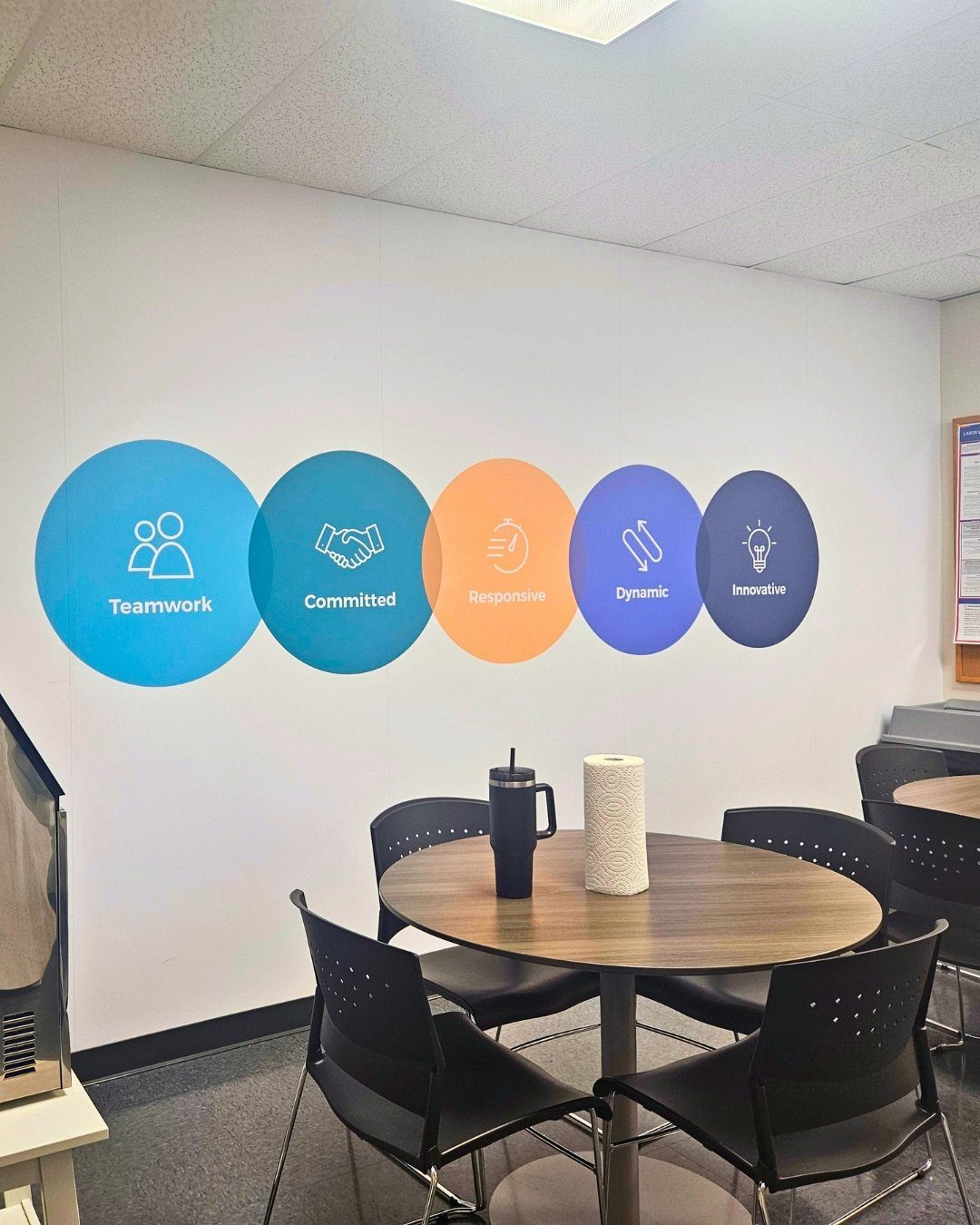
Vinyl decals stick directly to painted walls and peel off without damage when you need a change.
Round decals with single words or short phrases break up blank space in conference rooms or shared offices, and you can arrange them in a grid or scatter them asymmetrically.
Order decals printed with your company’s values or team goals, or choose motivational words that fit the work you do.
Size the decal so it reads clearly from across the room without overwhelming the wall. Peel and reposition within the first few minutes if the placement is off.
6. Ergonomic Task Chairs and Desks
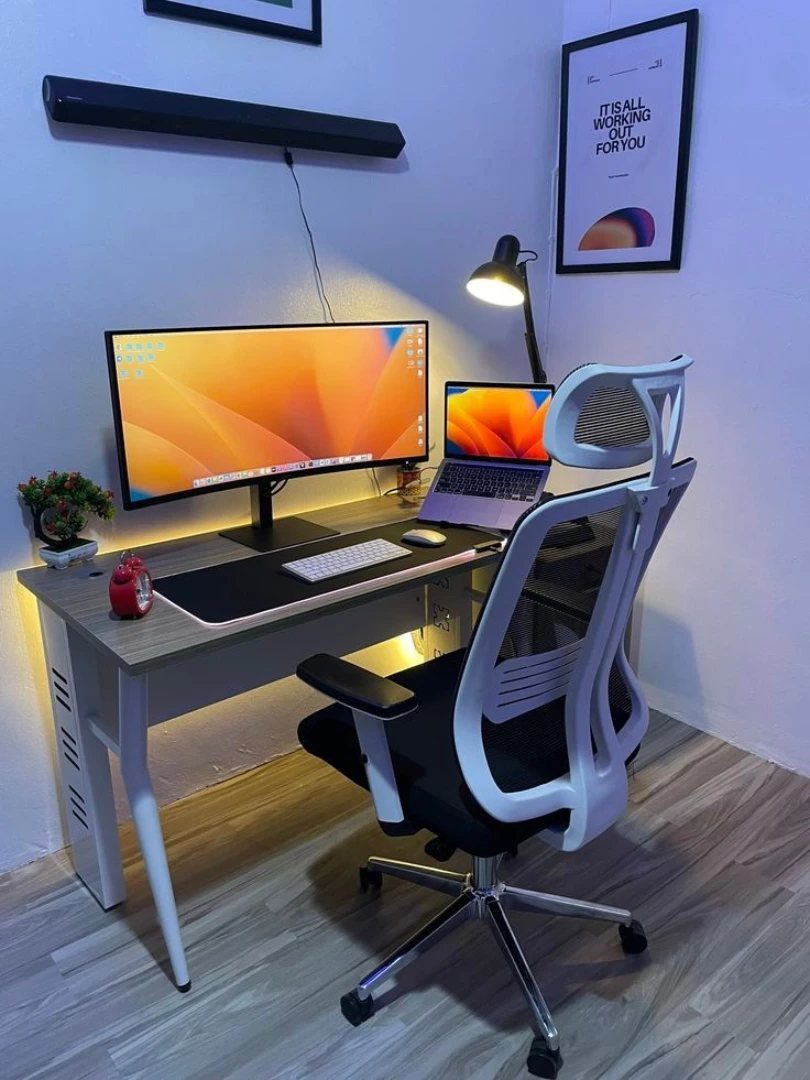
An ergonomic chair and an adjustable desk let you sit or stand without fighting your furniture. Mesh backs breathe better than foam during long calls, and lumbar support keeps your lower back in place when you’re typing for hours.
Look for chairs with seat height and armrest adjustments at minimum. A desk that raises to standing height gives you the option to move when sitting starts to feel stiff.
If a full sit-stand desk is out of budget, a desktop riser brings your monitor and keyboard up without replacing the whole surface. Good posture tools pay off in comfort by the end of the day.
7. Colorful Office Supplies in Holders
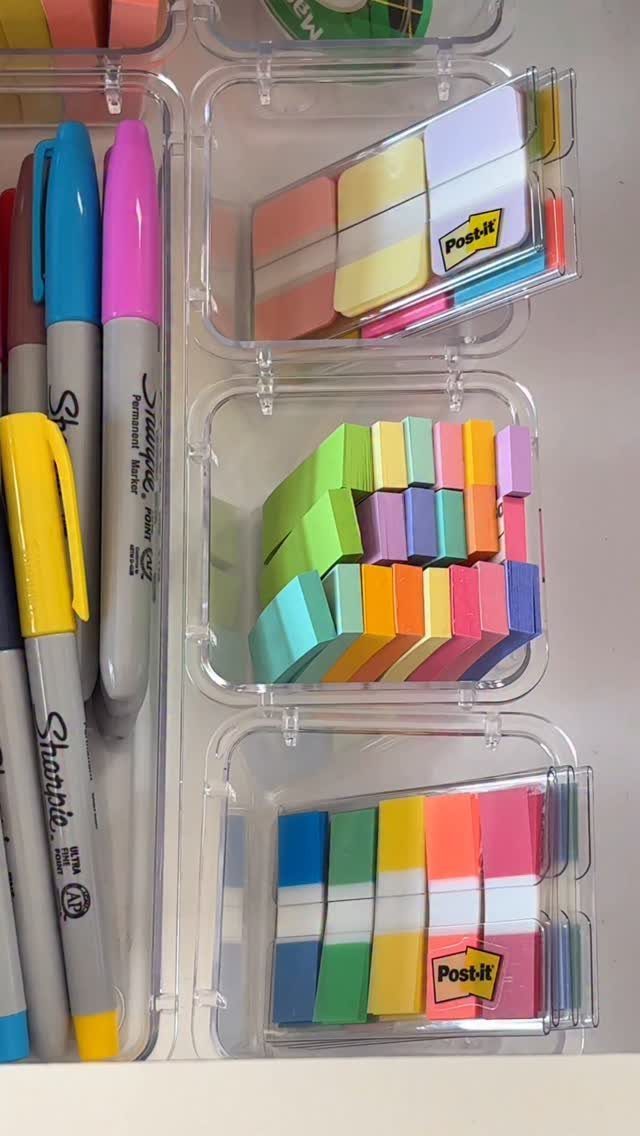
Bright pens, sticky notes, and markers make the practical parts of your desk easier to look at. Clear containers let you see what you have at a glance, and sorting by color keeps the setup from looking random.
Group markers in one holder, sticky notes in another, and pens in a third so you’re not digging for the right tool mid-task.
Stackable or drawer-style organizers work when desk space is tight. The color does the decorating here without adding another object to the surface.
8. Desk Near Natural Light
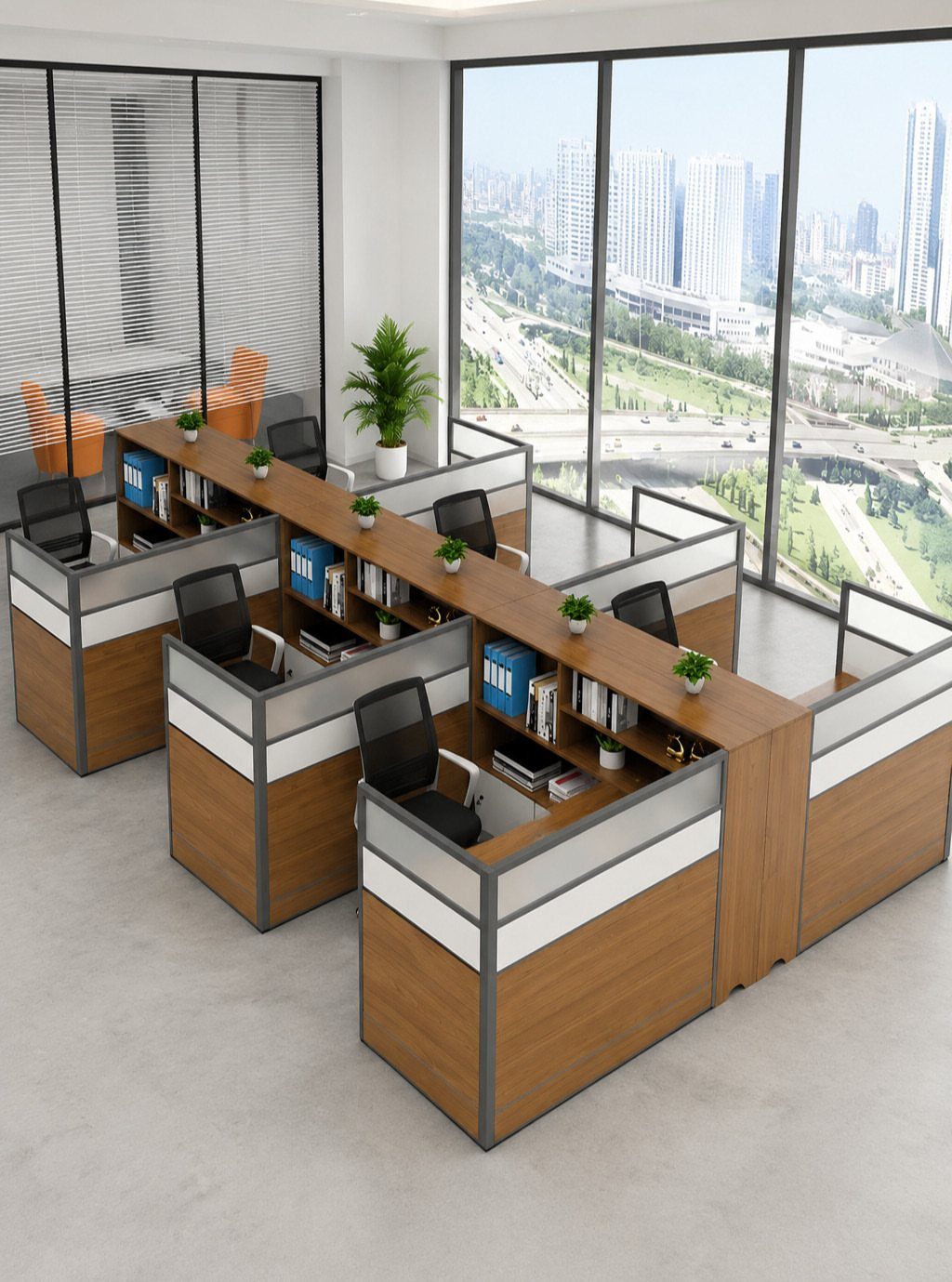
Placing your desk next to a window cuts down on artificial light during the day and gives your eyes something farther away to focus on between tasks.
Natural light makes the room feel bigger and less closed-in, which matters in a cubicle or a home office that doubles as something else.
Face your desk perpendicular to the window if glare on the screen becomes a problem.
A sheer curtain or adjustable blind lets you control the brightness without losing the view. The setup works best when the window is large enough to actually light the desk, not just a narrow slice above it.
9. Texture with Rugs
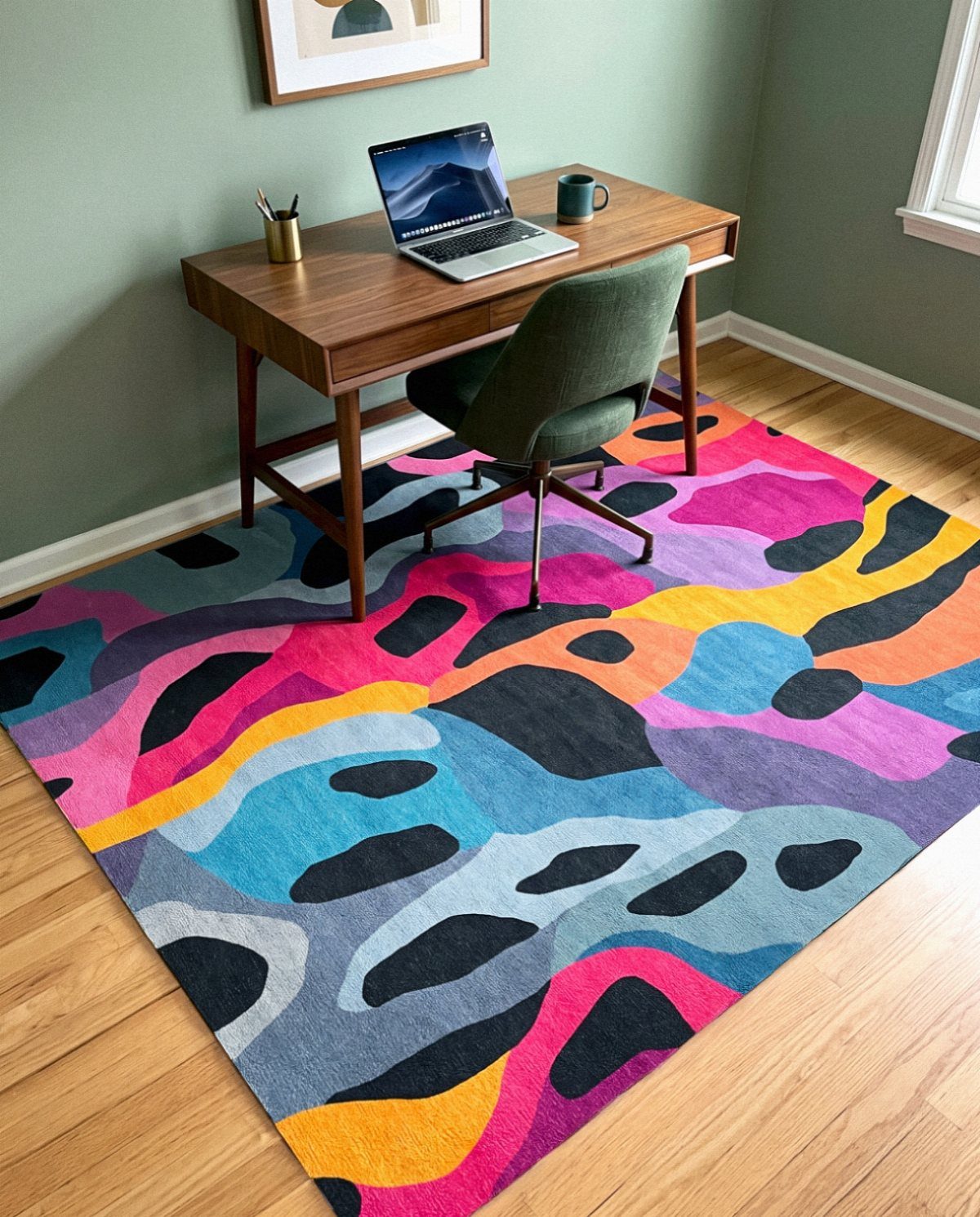
A rug under your desk softens hard flooring and marks the office zone in a room that serves more than one purpose. An abstract pattern with multiple colors ties together mismatched furniture without forcing everything to match exactly.
Size the rug so your chair stays on it when you roll back from the desk.
A low-pile or flat-weave rug rolls easier than thick shag and stays flat under chair legs. If you’re in a rental, a rug adds color and texture without touching the walls or floor permanently.
10. Folding Tables
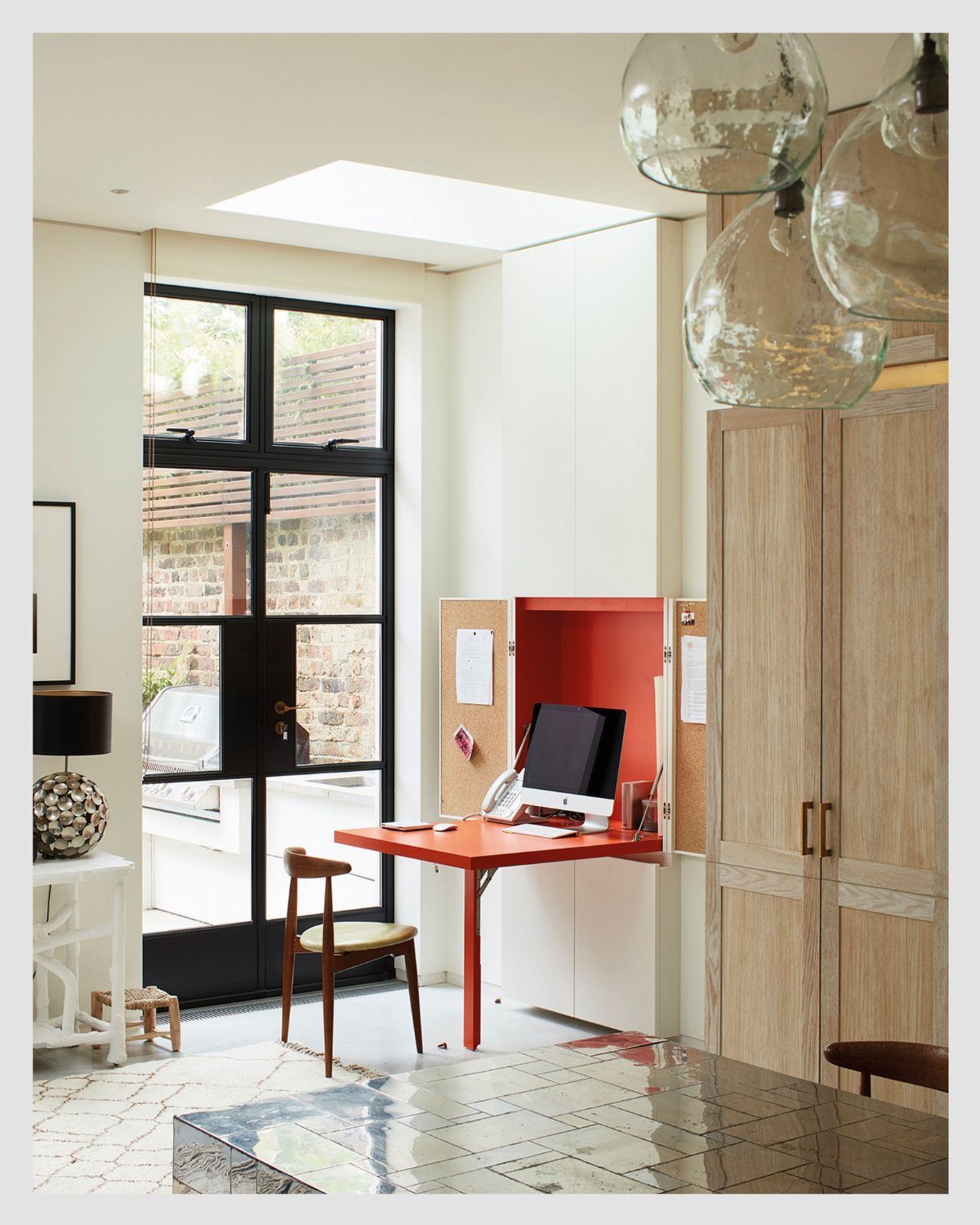
A fold-down desk mounts to the wall and stows flat when you’re done working. It suits a bedroom, hallway, or kitchen corner where a permanent desk would block traffic or make the room feel smaller.
Secure the hinges into wall studs so the surface holds a laptop, monitor, and paperwork without sagging.
Most fold-down desks include a small lip or edge to keep items from sliding off when the surface is down. You can paint the front to match the wall so it disappears when folded.
11. Mission Statement Display
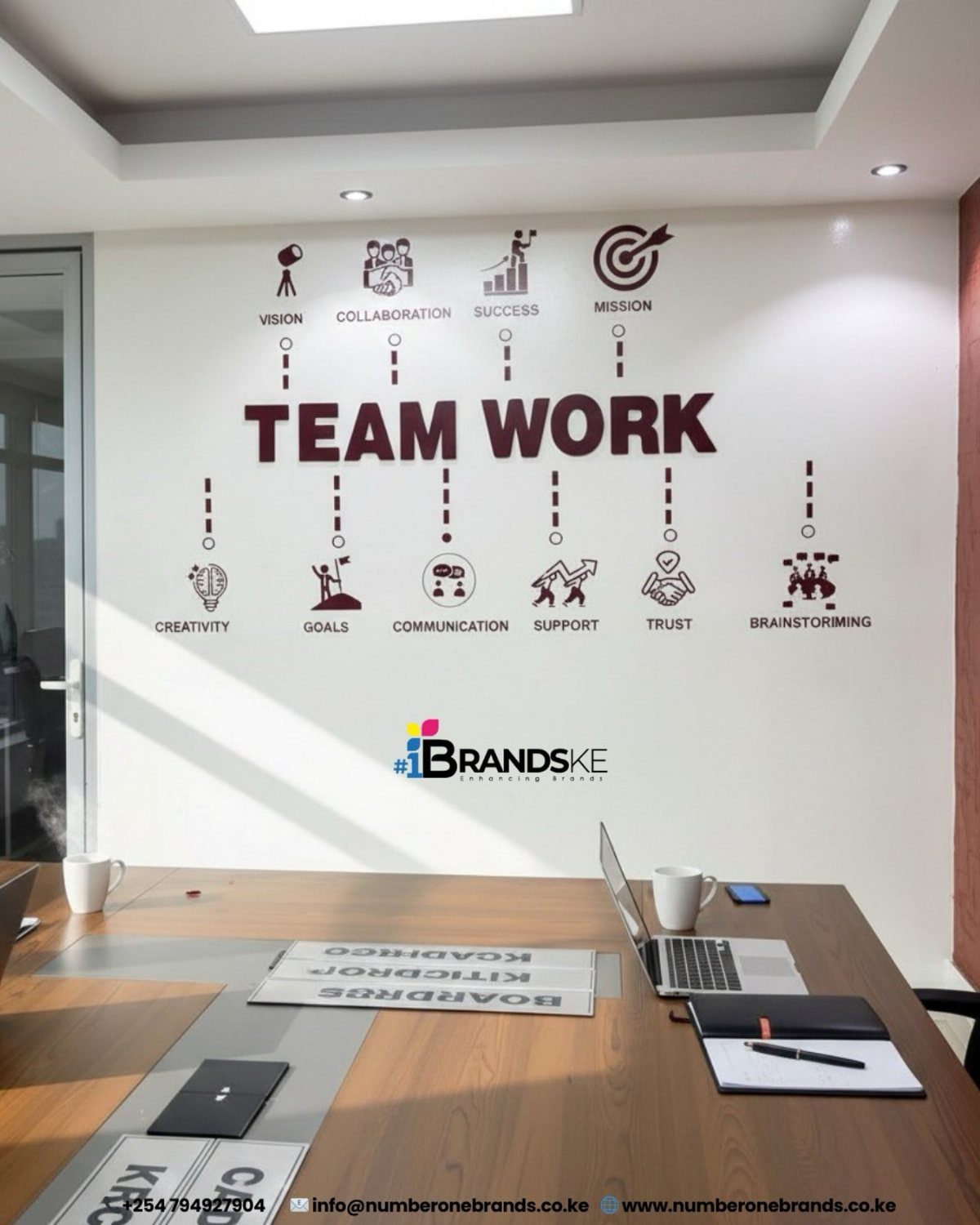
Displaying your team’s mission or values on the wall keeps shared goals visible during meetings and calls. A simple text layout with icons or short phrases reads clearly from across the room without feeling like a poster you’d skip over.
Use vinyl lettering applied directly to the wall or a printed panel mounted on standoffs for a more finished look.
Keep the text large enough to read from a seated position at the table. This works best in a shared office or conference room where the message applies to everyone who uses the space.
12. Desk Pegboard Organizer
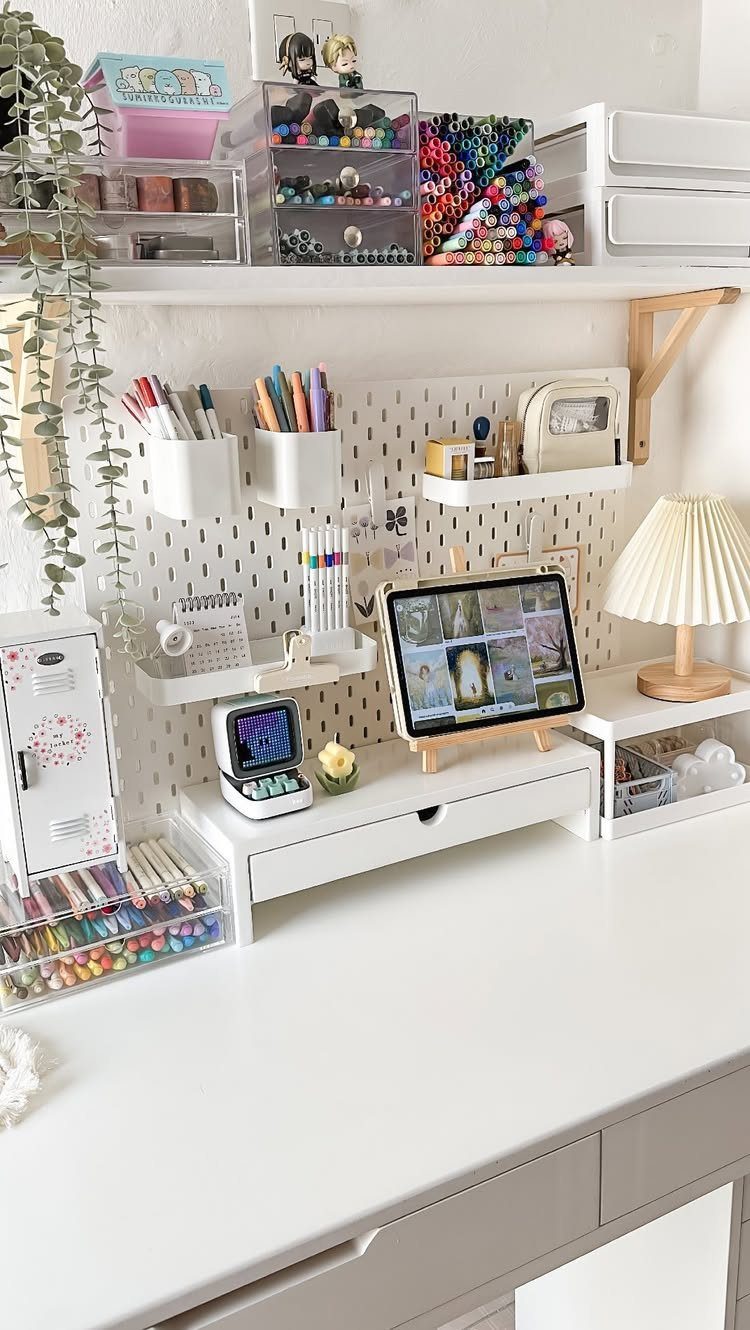
A pegboard mounted above your desk holds supplies in reach without taking up surface space.
Add small shelves, cups, and hooks to the pegs so pens, tape, scissors, and charging cables each have a fixed spot instead of migrating across the desk.
Paint the pegboard to match your wall or desk, or leave it white for a clean backdrop.
Space the pegs close enough that standard pegboard accessories fit without adapters. If you’re renting, mount the board to a thin plywood backer and lean the whole assembly against the wall instead of drilling into it.
13. Seasonal Cubicle Decor
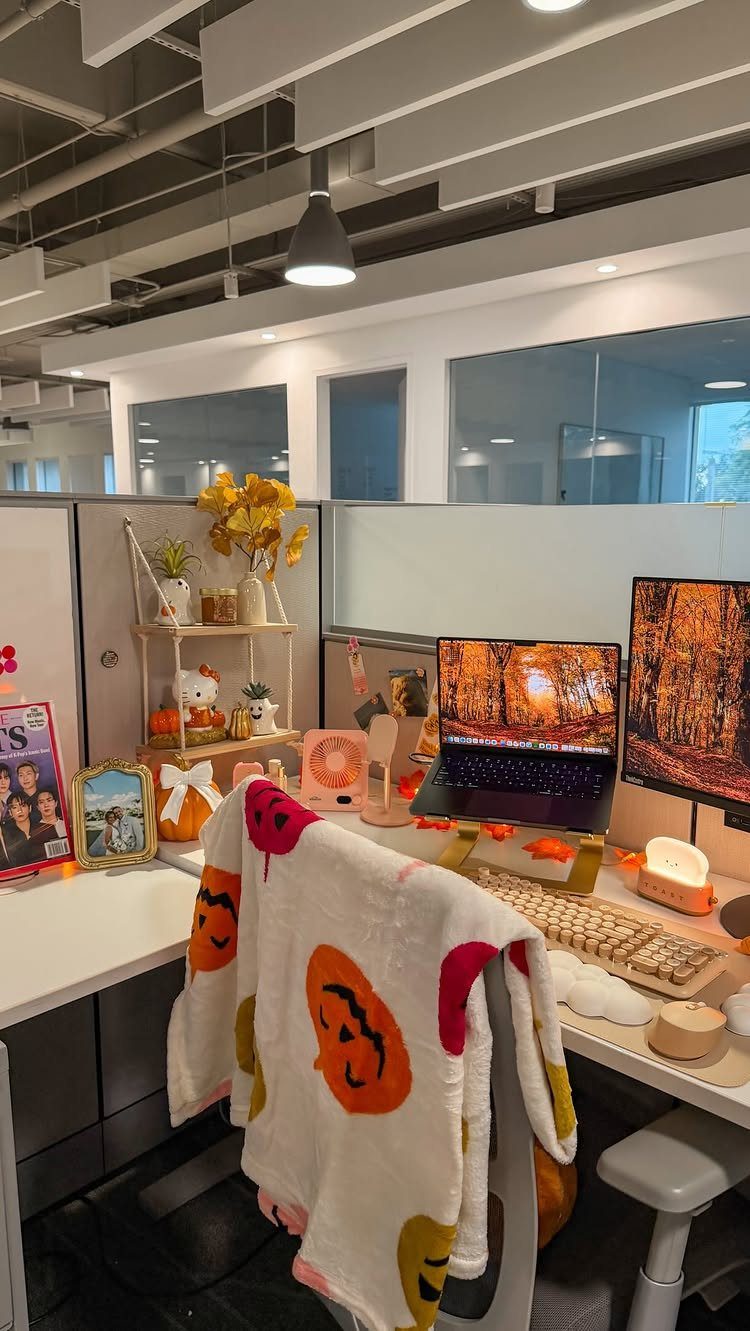
Rotating decor with the season keeps a cubicle from feeling static without committing to permanent changes. Small pumpkins, a throw blanket in autumn colors, and a few stems in a jar mark the shift without taking over the desk surface.
Keep the rotation light so the space still reads as a workspace. A blanket draped over the chair back adds texture, and a single pumpkin or seasonal accent on a shelf or monitor top anchors the theme.
Swap everything out when the season ends and store it for next year. The flexibility suits renters and shared offices where drilling or paint is off the table.
14. Corkboard and Basket Storage Station
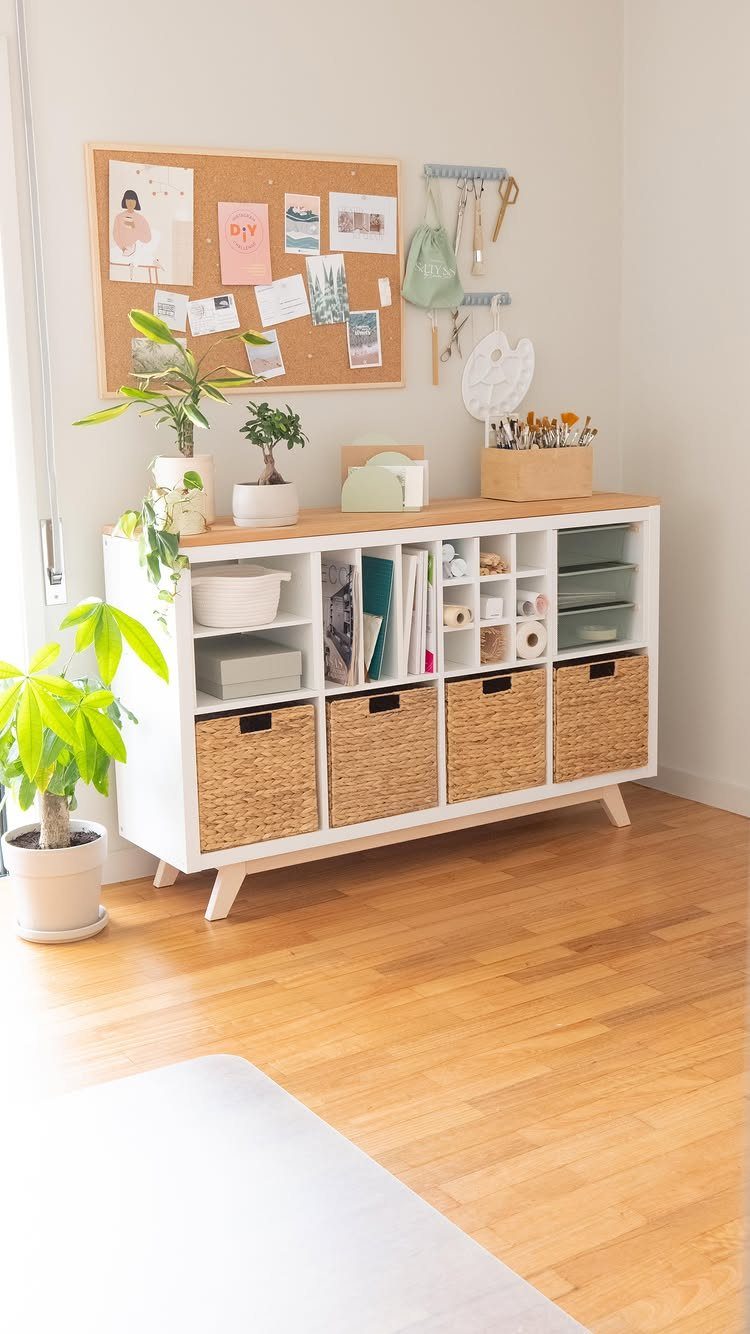
Pinning notes and reminders to a corkboard keeps them visible instead of buried under papers or lost in a drawer.
Pairing the board with a low console and baskets below gives you open storage for supplies and closed storage for everything that doesn’t need to be seen.
Mount the corkboard at eye level so you can reach pins without leaning. Woven baskets on the console hold notebooks, chargers, or project files that cycle in and out.
Label the baskets if more than one person uses the space. The setup works in a corner or along a short wall where a full desk wouldn’t fit.
Importance of Office Decor
A workspace that feels intentional affects how you show up to the work itself. When the room is set up with real thought behind it, distractions drop and the day moves with less friction.
Comfort and function balance better when the space reflects what the work actually requires.
A client walking into a meeting reads the room before anyone speaks, and a team working in a shared office picks up on whether the environment supports focus or fights it.
Small updates shift the feel of a room without touching the structure.
A single light source in the right spot, a surface cleared and organized, or a wall that finally has something on it can reset a space that has felt stuck for months. Budget follows intent, not the other way around.
Curating home office decor that reflects your personality, encourages you to embrace creativity, and supports productivity.
Budget-Friendly Tips
Most office updates happen with tools and materials already in reach. A can of paint costs less than replacing furniture, and repositioning what you already own often solves the problem before you buy anything new.
Look at the furniture first. Moving a desk closer to a window or angling it away from a doorway changes how the room works without spending a dollar.
Swapping out drawer pulls, painting a tired bookshelf, or covering a dated chair with fabric you like turns old pieces into ones that fit the space you want.
Supplies become decor when they are organized and visible. A set of matching containers or a simple shelf unit takes items off the desk and onto the wall, which opens up work surface and makes the room feel larger.
Natural Light Benefits
A window changes how a room feels throughout the day, and positioning furniture to take advantage of it means fewer hours under overhead lights.
Building layout matters here.
Placing open work areas near windows and keeping enclosed offices toward the interior brings daylight to the people who need it most. If the office has blinds, leaving them open during work hours makes the most of what is available.
Artificial light still plays a role once the sun sets or on overcast days.
Frequently Asked Questions
What are some ideas for wall decor for a small office?
A single large canvas or framed print holds a small wall better than a gallery of smaller pieces scattered across it.
Removable vinyl decals let you add pattern or text to a wall without touching the paint underneath, so they work in rentals and borrowed corners.
Slatted wood panels lean against a wall or mount with strips, bringing texture and shadow lines behind a desk without nails or commitment.
What are some cool things to have in a home office?
A pothos draped from a shelf or a snake plant tucked in a corner brings green into the room without taking up desk real estate, and both survive neglect.
A standing desk converter lifts your keyboard and monitor 15 inches when you need to get up, and it costs a fraction of a motorized frame.
A small rug under the desk chair absorbs sound and separates the work corner from the rest of the room when the office shares space with a bedroom or living area.
How to create a calming office space?
Set the desk perpendicular to a window so daylight reaches your work surface without glare on the screen, and you get a view when you look up.
A patterned rug in 3 or 4 colors bridges mismatched furniture and brings warmth underfoot without making every piece coordinate. Low-maintenance plants like ZZ plants or snake plants add life to the backdrop without demanding attention when you’re focused on work.






