
A corner bar that fits into an angle uses space differently than a wall-mounted shelf that takes no floor footprint at all, and a credenza bar sits low where a bar table stands counter height.
The deciding factor is how much room you have and whether the bar needs to move: a standalone table or barrel bar can shift when you need the space, while built-in cabinetry under stairs or a recessed bar nook stays where you put it.
1. Corner Bar with Wine Storage
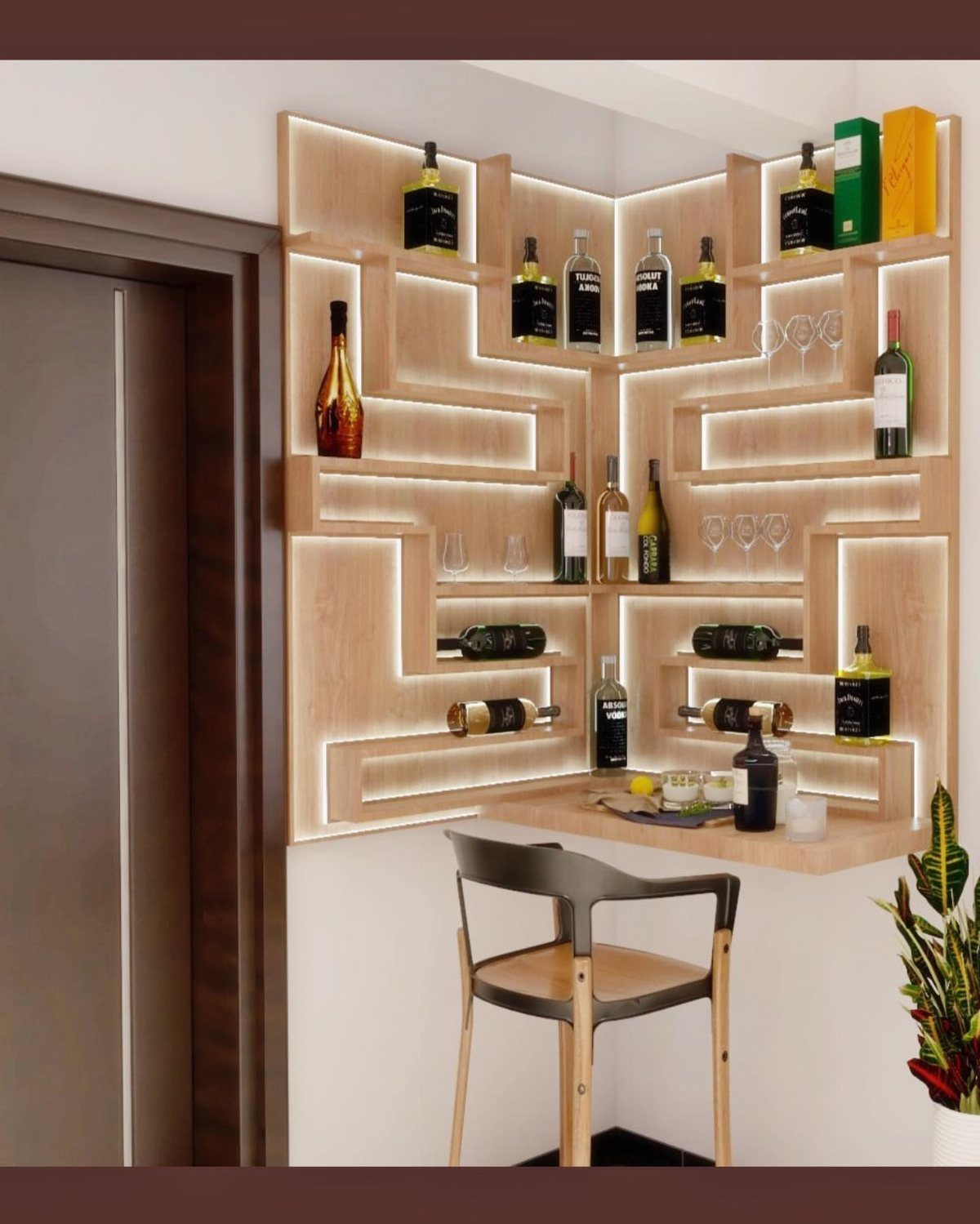
A corner bar fits into the angle and uses vertical space instead of spreading along the wall. The shelves here hold bottles upright and glasses hanging stem-up, which keeps everything visible and within reach and saves floor space.
The LED strips inside light up the shelves and make the bottles easier to see at night.
Most corner units come with a small countertop that extends out, giving you a spot to set drinks or mix them without needing a separate surface.
This works well in small apartments or finished basements where wall space is already spoken for.
2. Small Marble Top Bar
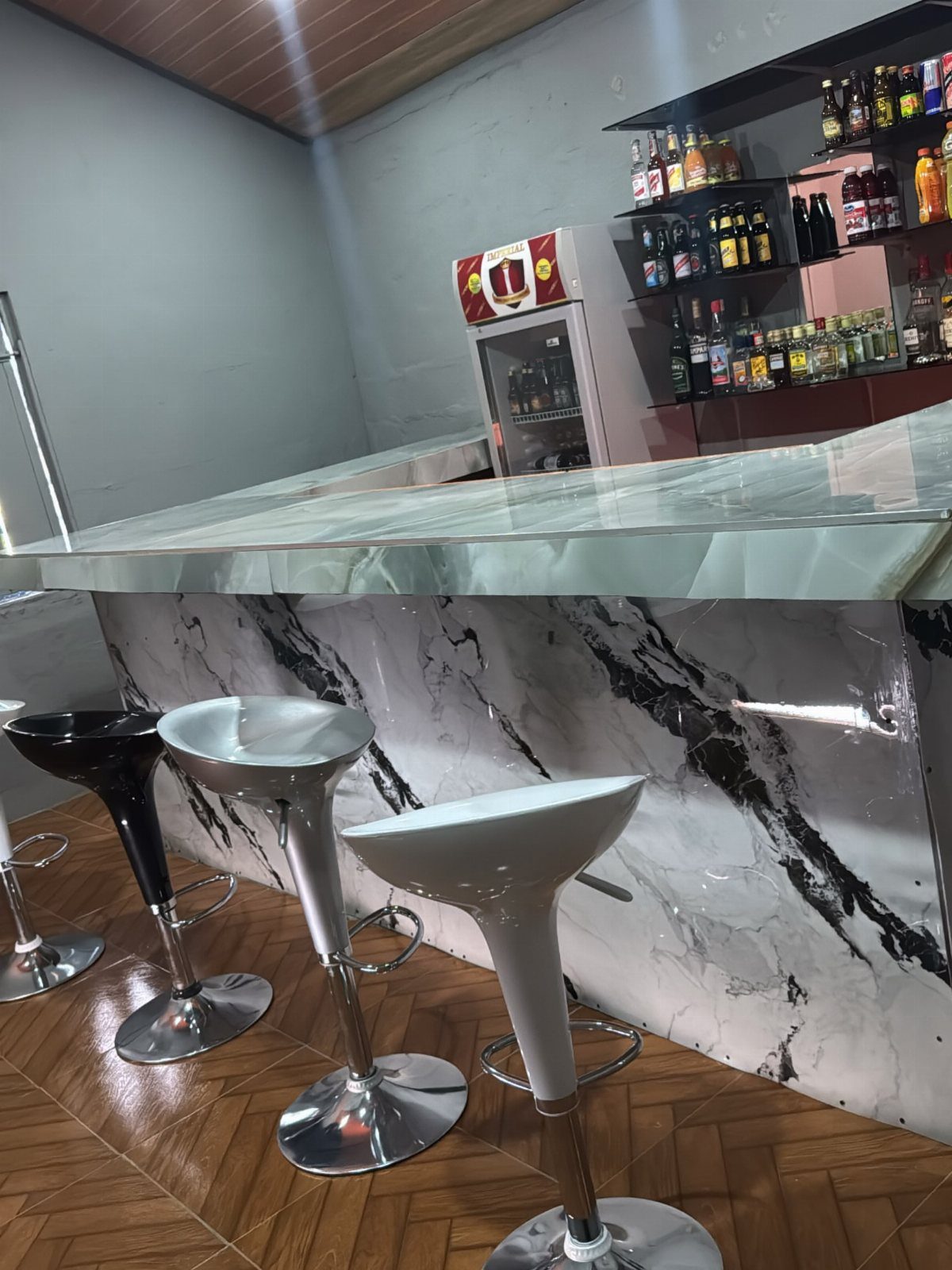
A marble top gives you a surface that wipes clean and looks sharp in any light.
Marble naturally stays cool, so it works well for mixing drinks or setting down cold glasses without leaving rings. The veining in real marble varies from slab to slab, so no 2 bars look identical.
If you want the look for less, engineered quartz gives you a similar appearance with less maintenance and a lower price per square foot.
3. Rustic Industrial Standalone Bar Table
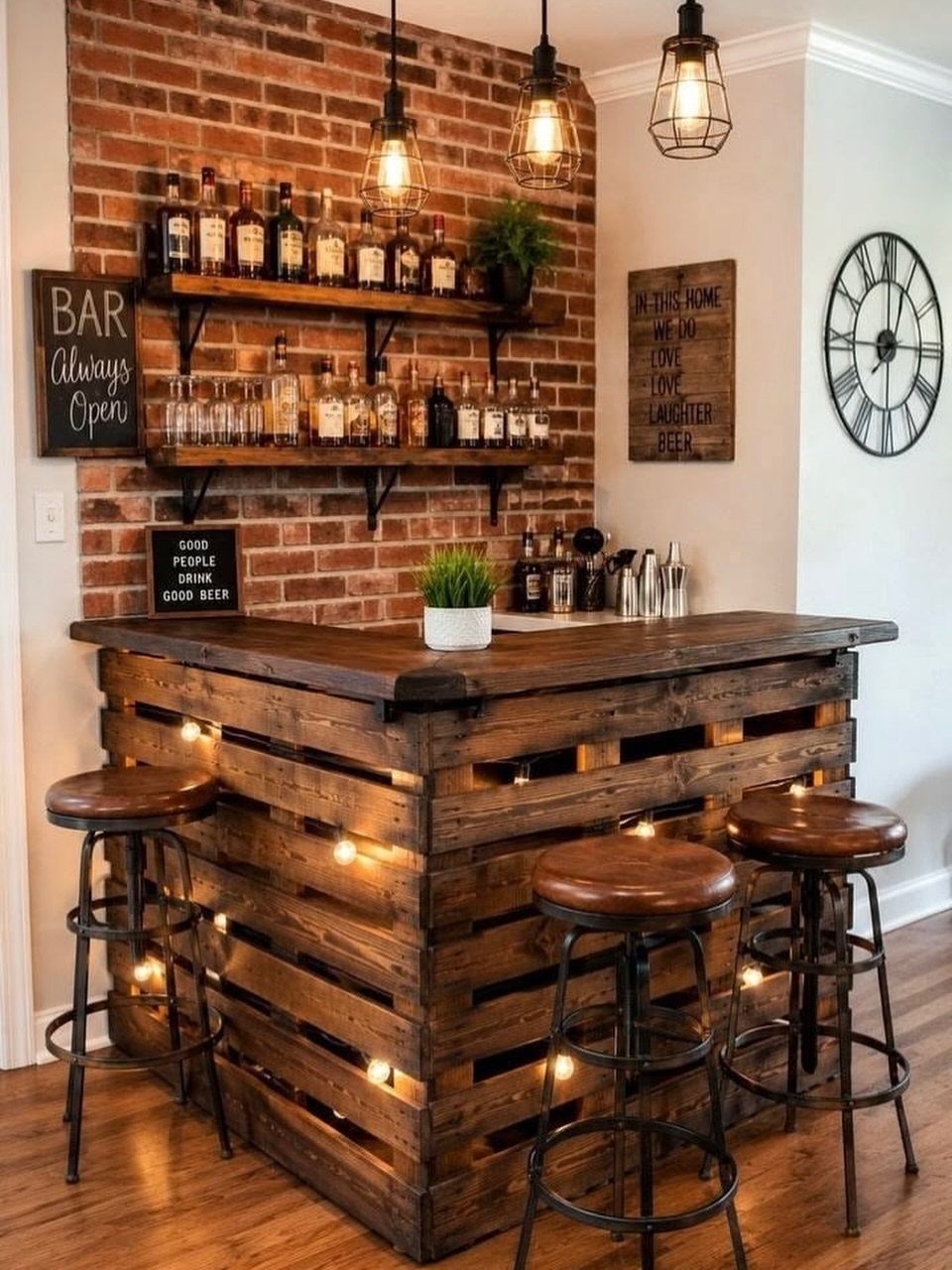
Pallets stacked and finished with a dark stain give you a bar that looks like it belongs in a brewery. The wood shows visible grain and gaps between slats, which reads as intentional texture rather than rough construction.
The brick wall and pendant lights here add to the industrial side, but the bar itself works against drywall too. 3 stools fit along the front, and the open lower shelf holds cases of beer or a small cooler.
Pallet wood is soft, so seal it with polyurethane after staining to keep it from absorbing spills.
4. Black Industrial Mini Bar
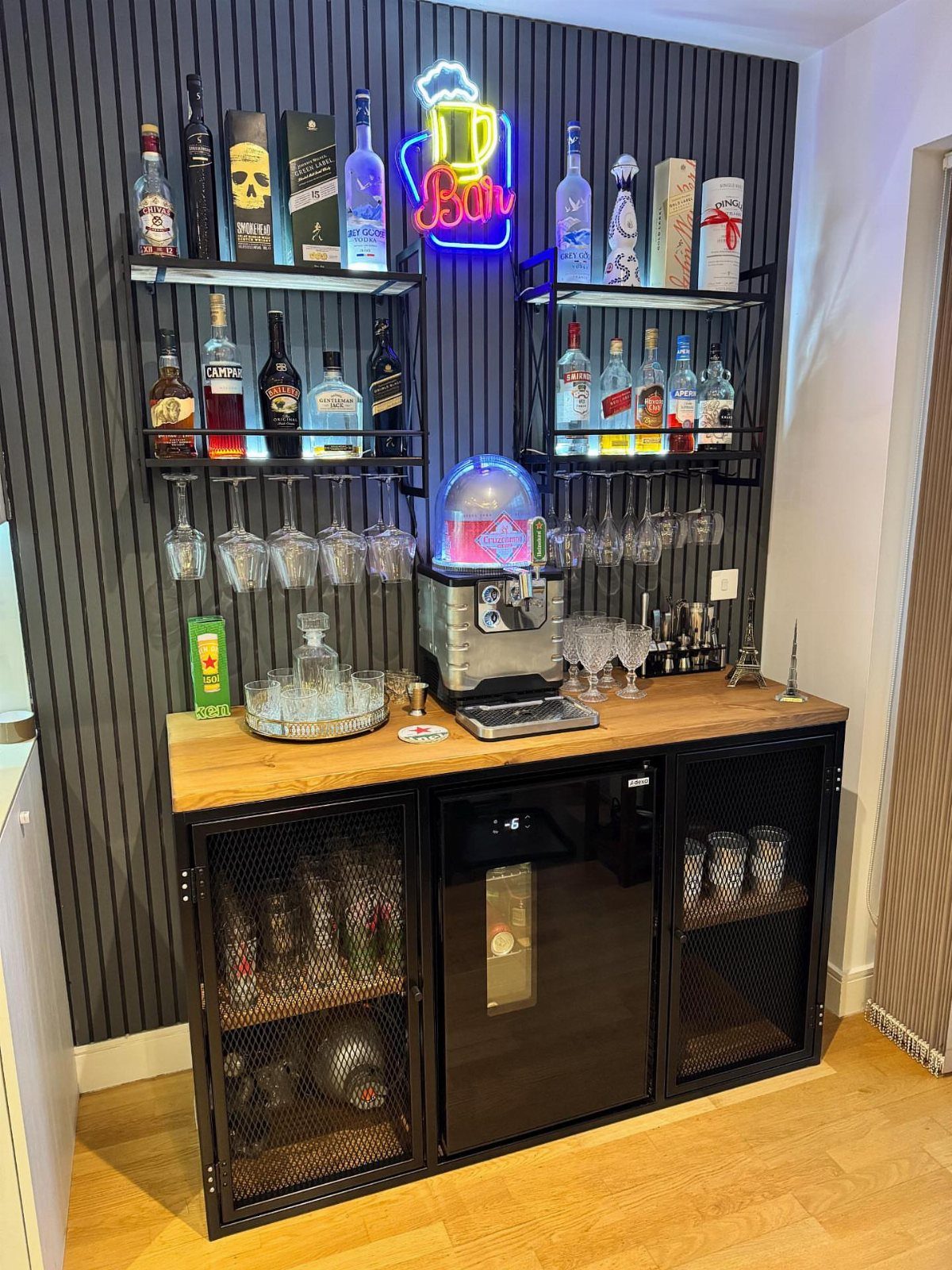
This bar stands on casters, so you can roll it toward the wall or pull it out into the room depending on how much space you have.
The black metal frame and wood top fit into a footprint under 3 feet wide, which leaves room for a fridge or storage underneath.
The shelves hold bottles, glasses, and bar tools in vertical tiers, and the slatted wall behind it adds a backdrop without requiring built-in construction. A neon sign mounted above keeps the look consistent.
If you rent, this setup works because nothing attaches permanently to the wall.
5. Barrel Bar
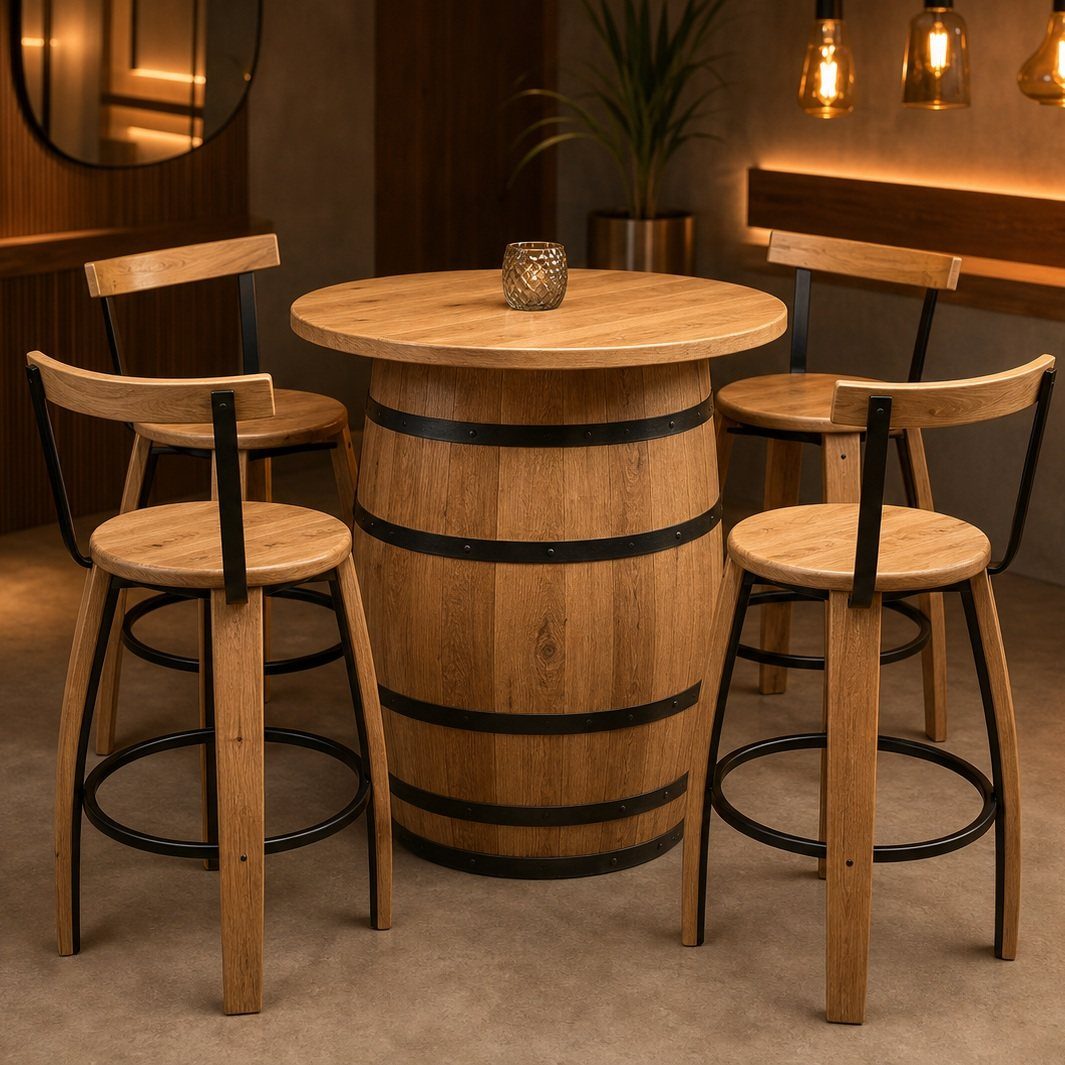
A wine barrel cut in half and topped with a round wood surface gives you a table and matching stools that all share the same oak construction.
The barrel staves curve outward, and the metal hoops stay visible, so the piece reads as a repurposed barrel rather than new furniture.
The round shape seats several people without corners, which works well in tight spaces where you need to walk around all sides.
The stools here match the barrel finish, but mismatched seating works too if you have bar stools on hand.
Real oak barrels are heavy, so this is not a bar you move often.
6. Small Elegant Bar Cabinet
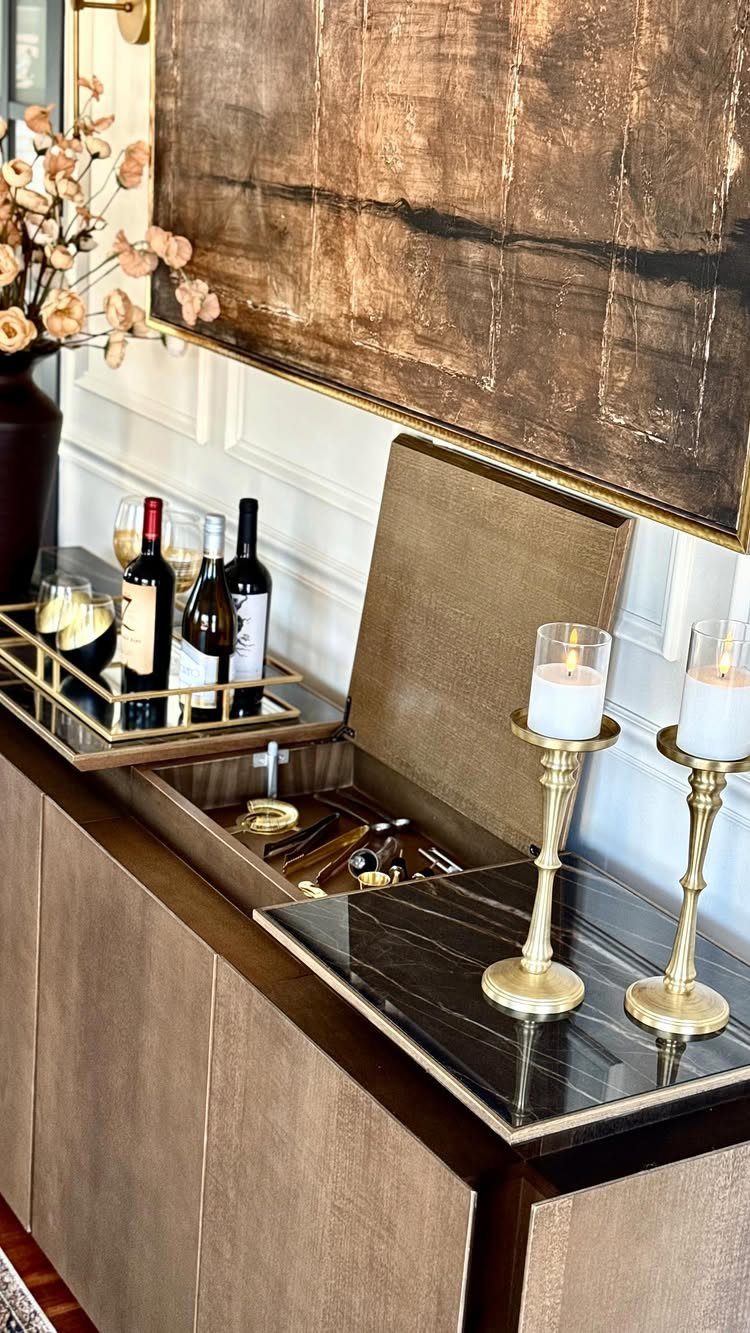
This cabinet closes when not in use, so it looks like furniture rather than a bar until you open the doors.
The black marble top contrasts with the wood panels, and the antique brass hardware and legs give it a finished look that fits into a living room or dining room.
Inside, there is space for bottles, glassware, and bar tools arranged on fixed shelves. The top holds candlesticks and a vase here, but it also works as a serving surface when you need it.
A closed cabinet keeps bottles out of sight and away from direct sunlight, which matters if you store liquor for months at a time.
7. Traditional Style Home Bar with Classic Design
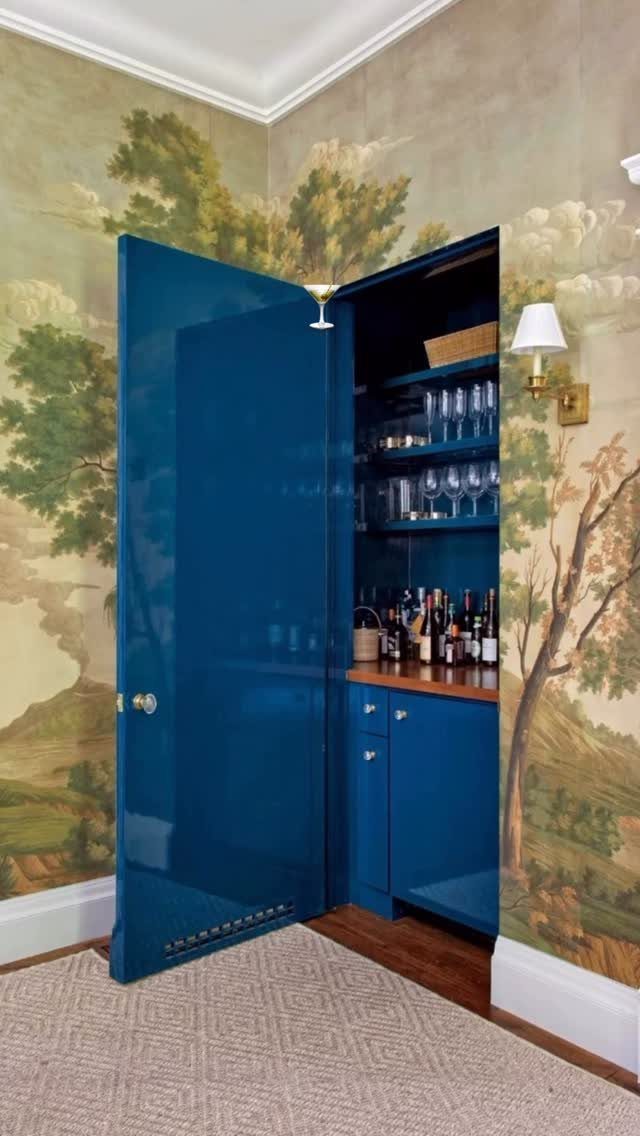
Built-in cabinetry with a glossy lacquered finish gives you storage that reads as part of the room rather than furniture you brought in.
The blue cabinetry sits against a landscape mural, which anchors the bar in the space and keeps it from looking like an add-on.
A closed cabinet hides bottles and glassware when the bar is not in use, so the room can shift to other purposes without the bar taking over visually.
This setup suits a finished basement or bonus room where you have wall depth to recess the cabinets.
The glossy paint reflects light and makes the small footprint feel larger than flat paint would.
8. Walnut Wood Home Bar
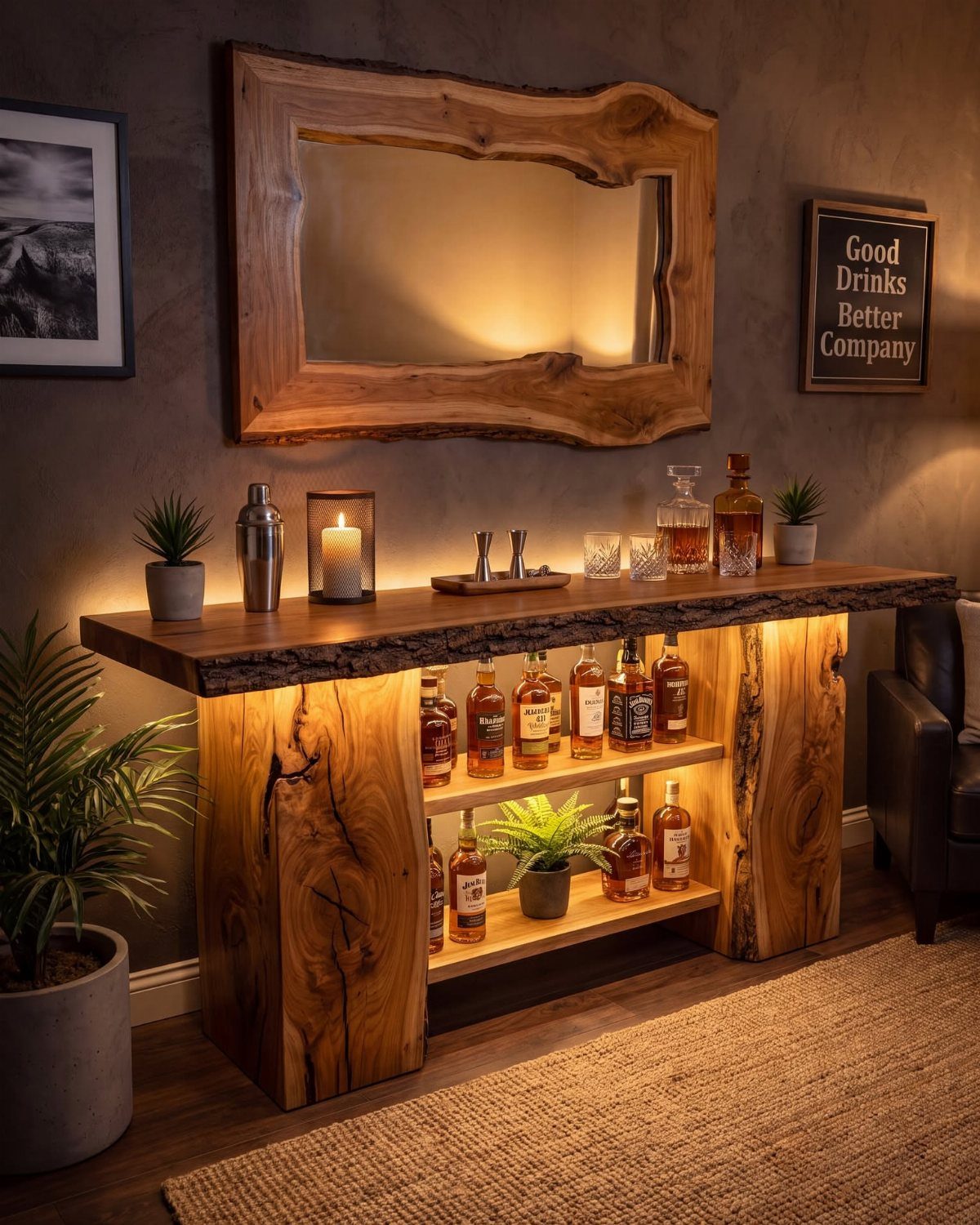
Walnut gives you a deep brown grain with natural color variation that darkens over time. The live edge, where the natural contour of the tree remains visible, adds texture without requiring additional finish work.
Under-counter lighting mounted below the countertop casts light upward onto the bottles and downward onto the floor, which separates the bar from the back wall and makes the walnut appear to float.
Walnut costs more per board foot than oak or maple, but the grain is tighter and more consistent, so you get fewer knots and less waste when cutting.
9. Wall Mounted Liquor Shelf
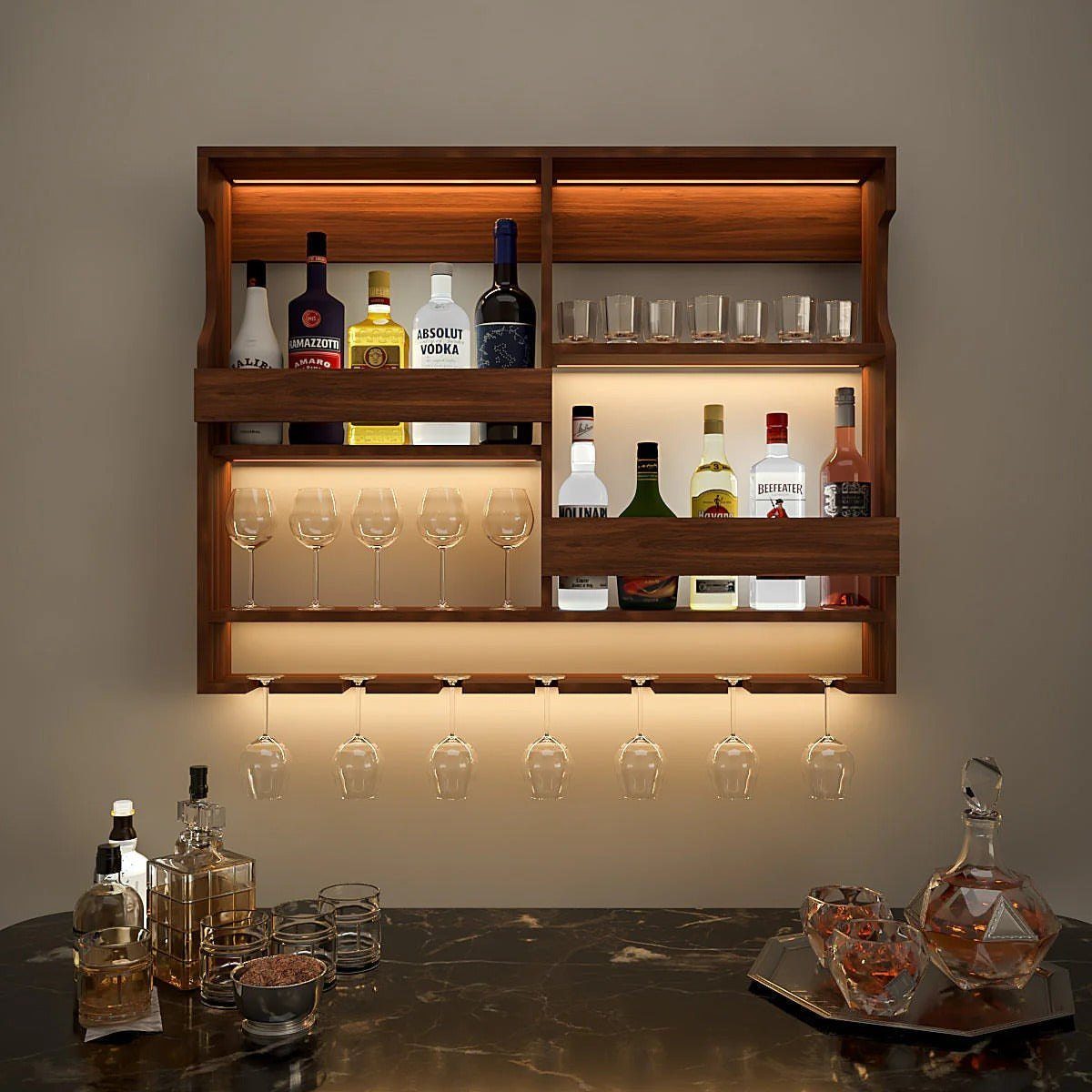
Mounting the shelves to the wall instead of building a standing bar opens up floor space and keeps the room from feeling divided.
The bottles sit on fixed shelves, and the glasses hang upside down from slotted rails underneath, which uses vertical space without adding depth.
A wall-mounted liquor shelf requires studs or blocking behind the drywall to support the weight of bottles and glassware, so locate them before you mount the brackets.
The marble countertop below adds a serving surface without connecting to the shelf itself.
10. Modern Built in Bar Nook
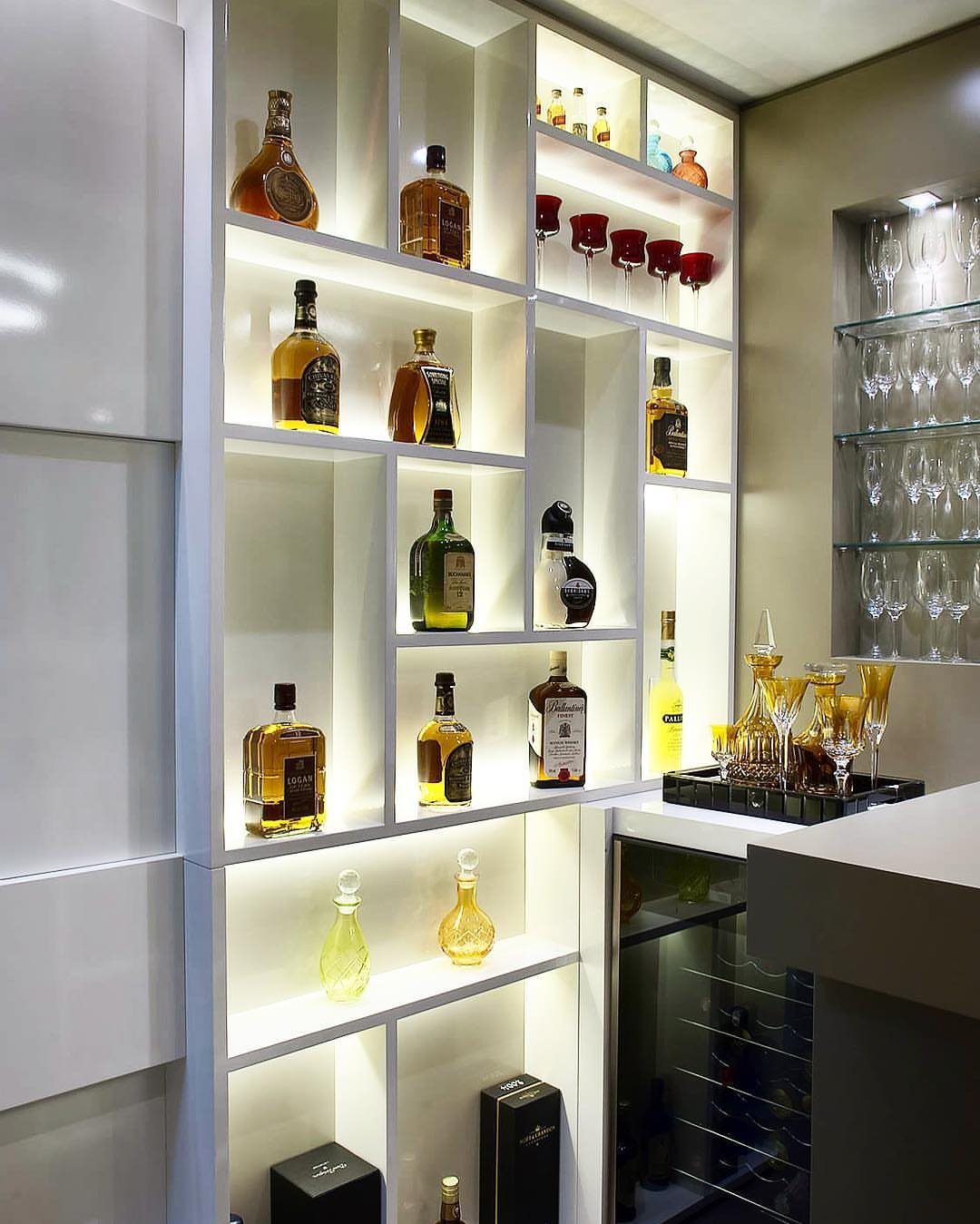
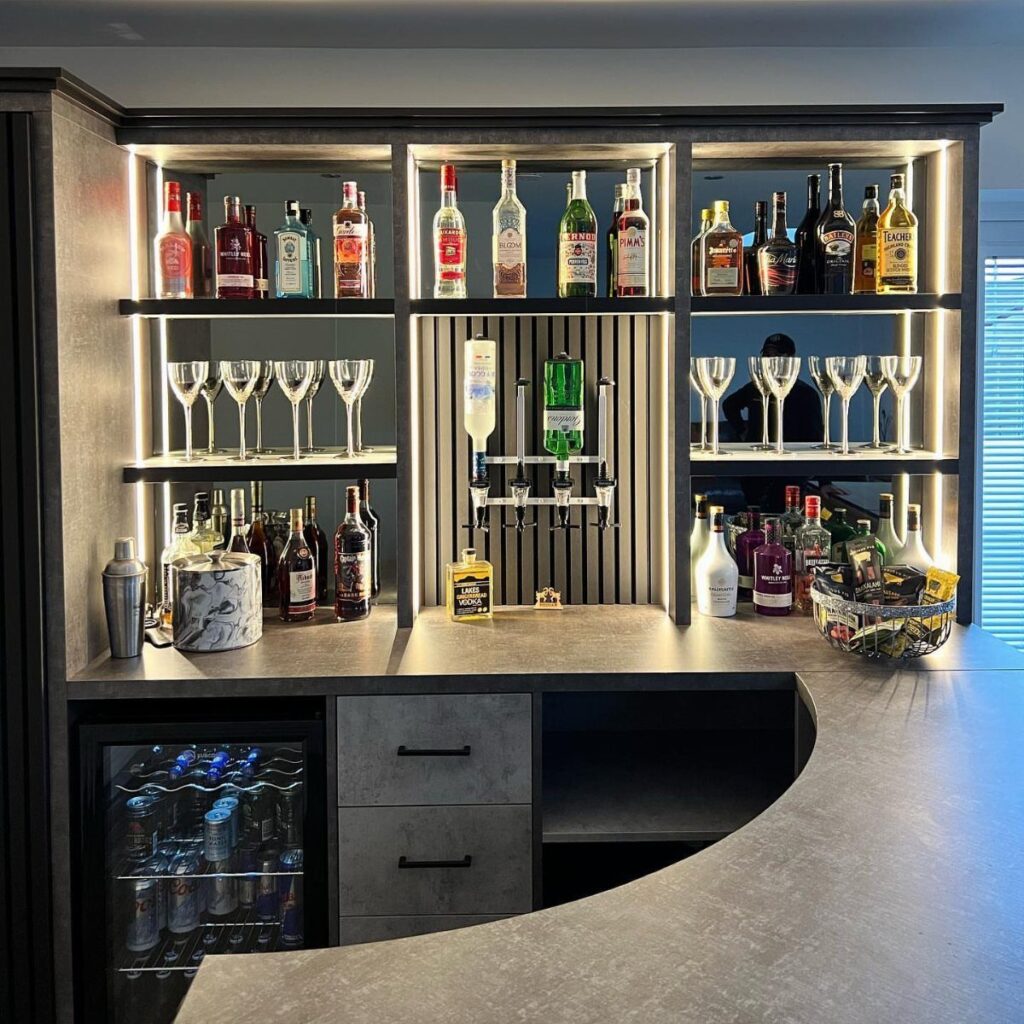
Recessed shelves with backlighting use wall depth instead of projecting into the room, so the bar stays out of the walkway. The asymmetrical layout here, with shelves at different heights, fits bottles and glassware without wasted vertical space.
The warm LED strips behind the shelves light the bottles from behind, which highlights the liquid inside and makes labels easier to read.
A wine cooler built into the base keeps bottles at serving temperature without a separate appliance on the floor.
This works in new construction or a renovation where you can frame the recess before drywall goes up.
11. Rustic L Shaped Pallet Bar
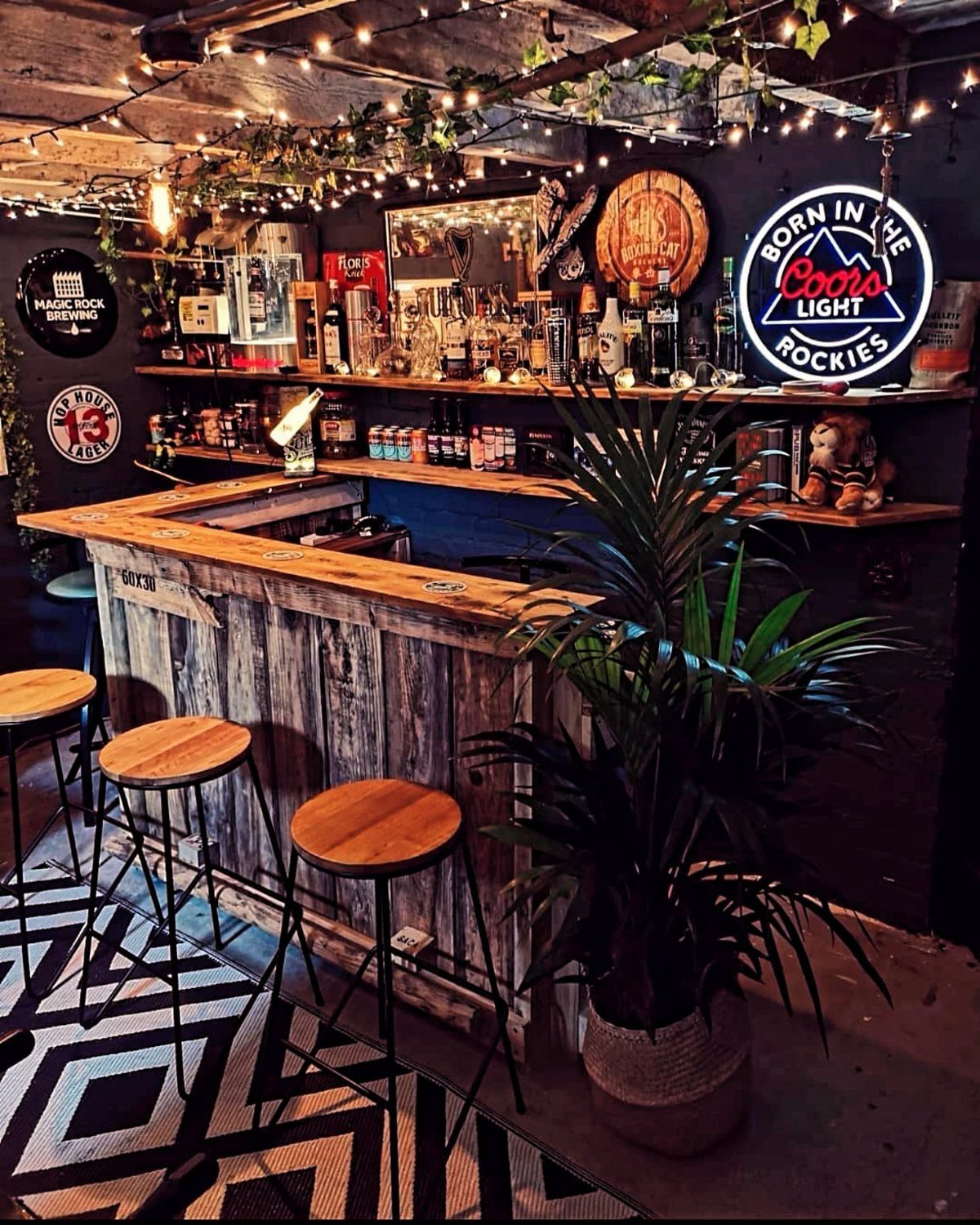
The L shape tucks into a corner and gives you 2 surfaces that meet at a right angle, so you can face the room from either side.
Weathered wood planks with visible grain and gaps read as reclaimed material, which suits a basement or garage bar where a polished look would feel out of place.
String lights strung overhead add ambient light without requiring electrical work inside the bar itself.
Pallet wood or fence boards already weathered outdoors skip the aging step, but check for splinters and sand rough edges before applying a topcoat.
12. Curved Backlit Onyx Counter
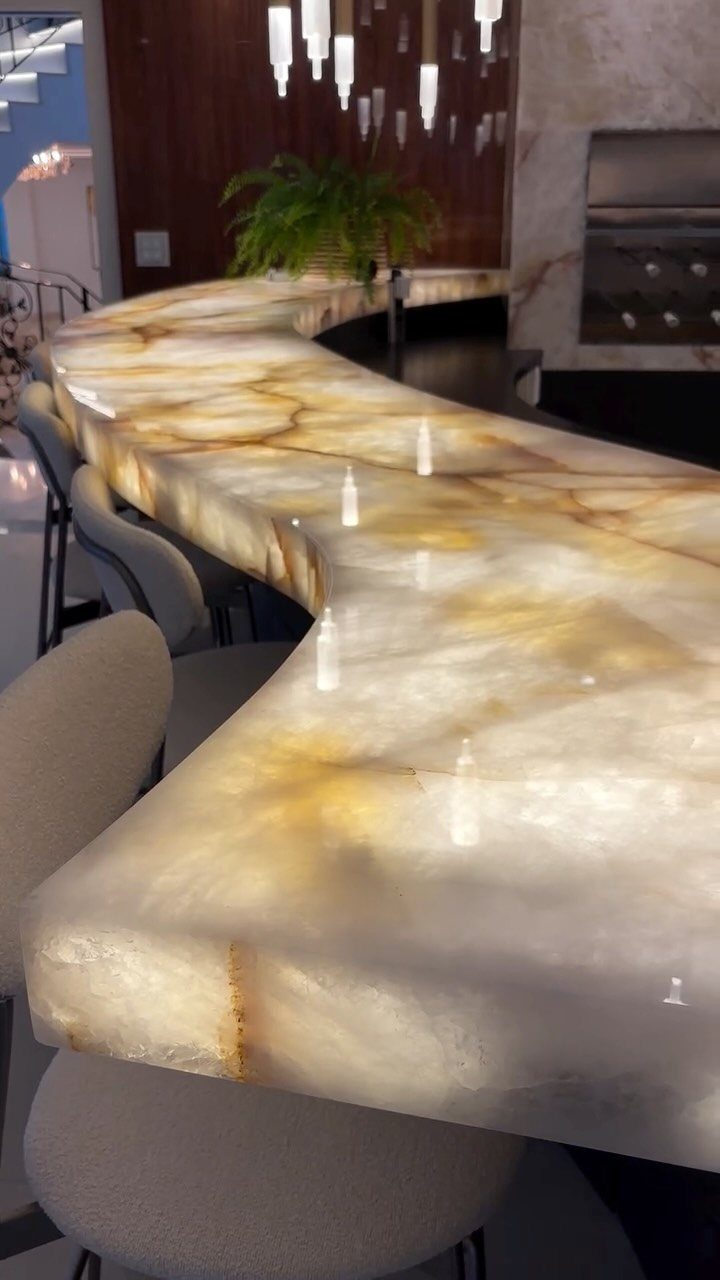
Backlit onyx or marble slabs glow when LED strips sit behind them, which turns the stone into a light source rather than just a surface.
The translucent quality of the stone lets light pass through the veining, so the pattern becomes visible even in a dark room.
The curved front here follows a radius rather than meeting at angles, which takes more cutting but eliminates sharp corners in a small space. White stools keep the focus on the glowing counter without adding competing color.
Onyx costs more than standard marble and requires professional cutting to fit curves, but it transmits more light through thinner slabs.
13. Live Edge Wood Home Bar
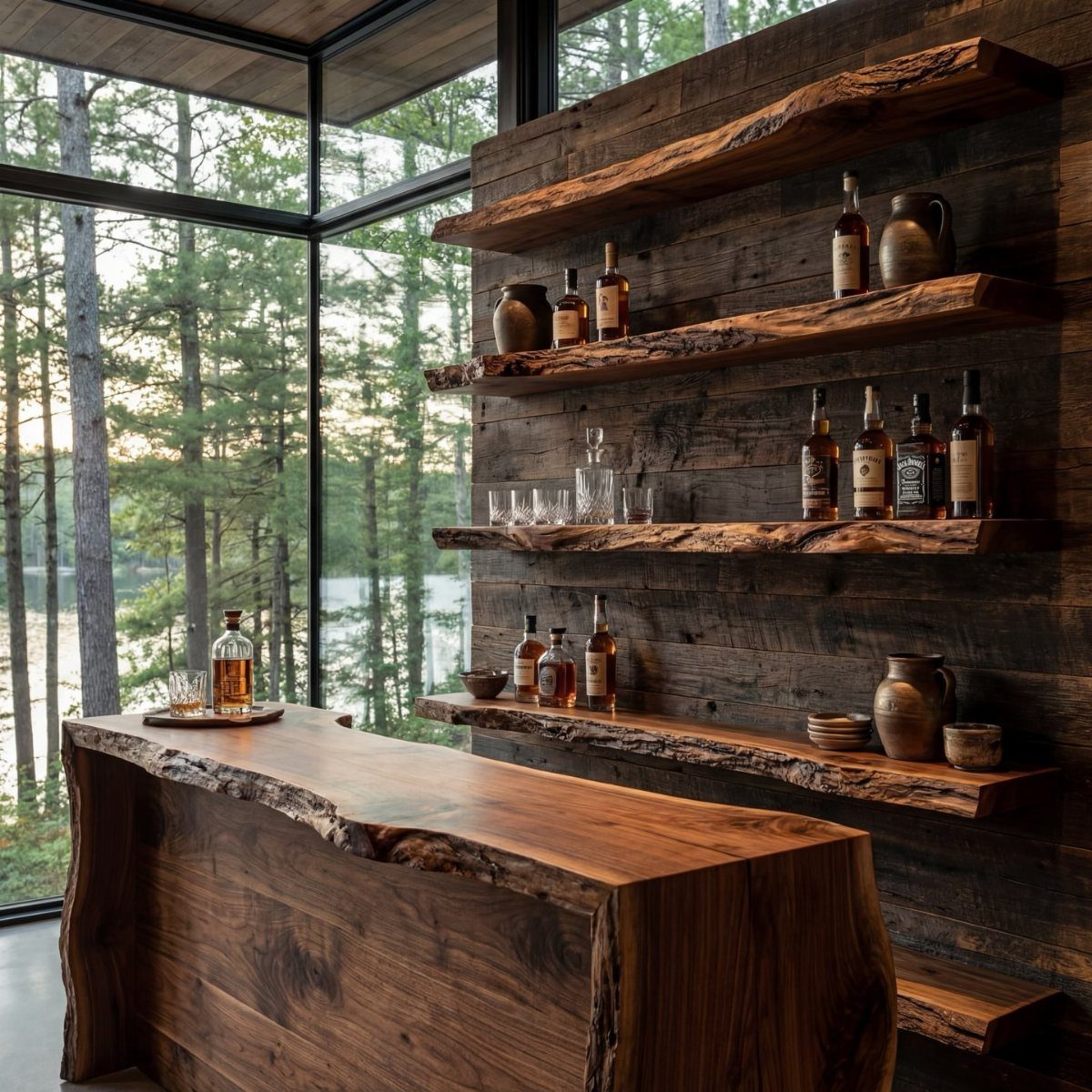
The irregular edge where the bark once sat stays visible along the counter, so no 2 bars look the same. Wood with the natural curve left on gives you a surface that reads as custom rather than milled.
Floating shelves mounted to the wall eliminate the need for a standing backbar, which keeps the floor clear and puts bottles in reach. The wood wall behind adds warmth without competing with the counter.
Live edge wood needs sealing on all sides, including the bark edge, to keep moisture from getting into the grain.
14. Under Stairs Home Bar
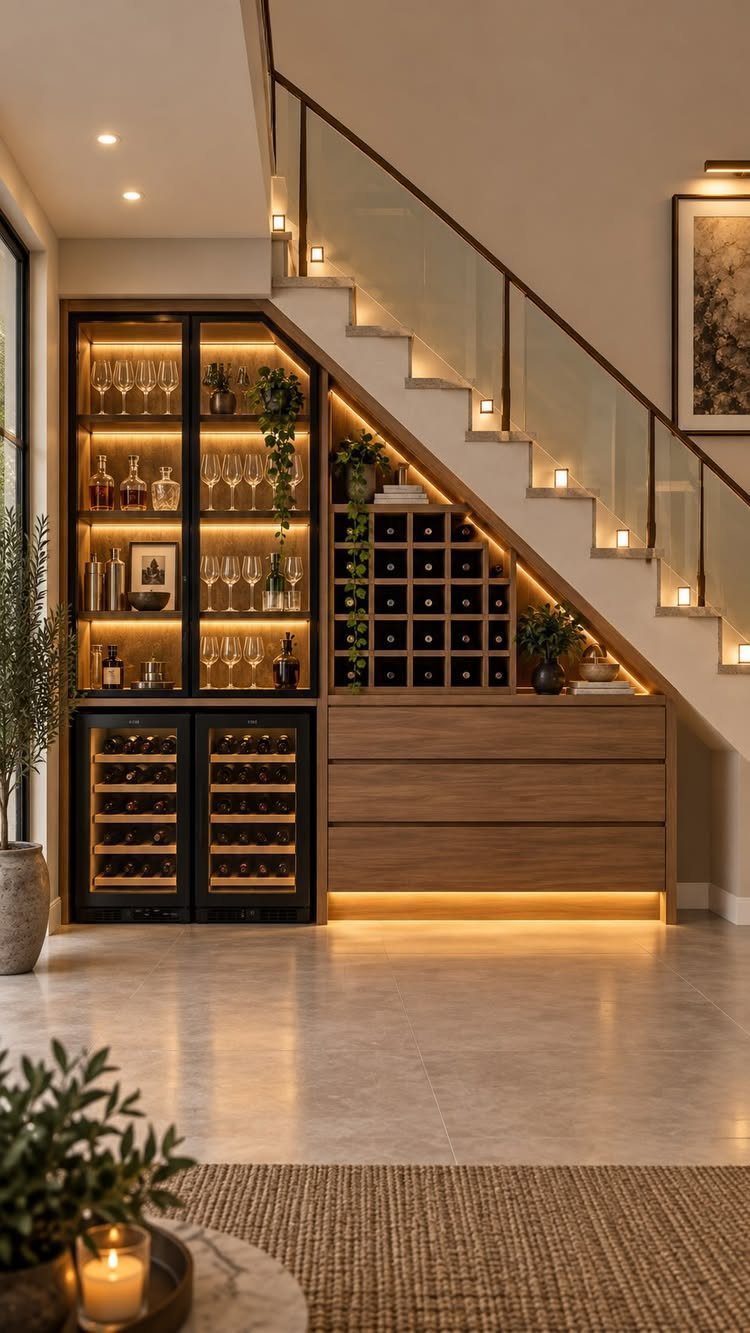
The angled ceiling under stairs usually goes unused, but building cabinetry into that slope gives you a bar that fits the exact dimensions of the staircase.
Glass doors with backlighting make bottles visible without opening the cabinet, and wine coolers built into the base keep bottles cold in the same footprint.
Drawers at counter height hold bar tools and linens out of sight. The wood finish here matches the flooring, so the bar reads as part of the original construction rather than an add-on.
Stair depth limits how far the counter can project, so measure before ordering cabinetry.
15. Gold Wall Mounted Bar Cabinet
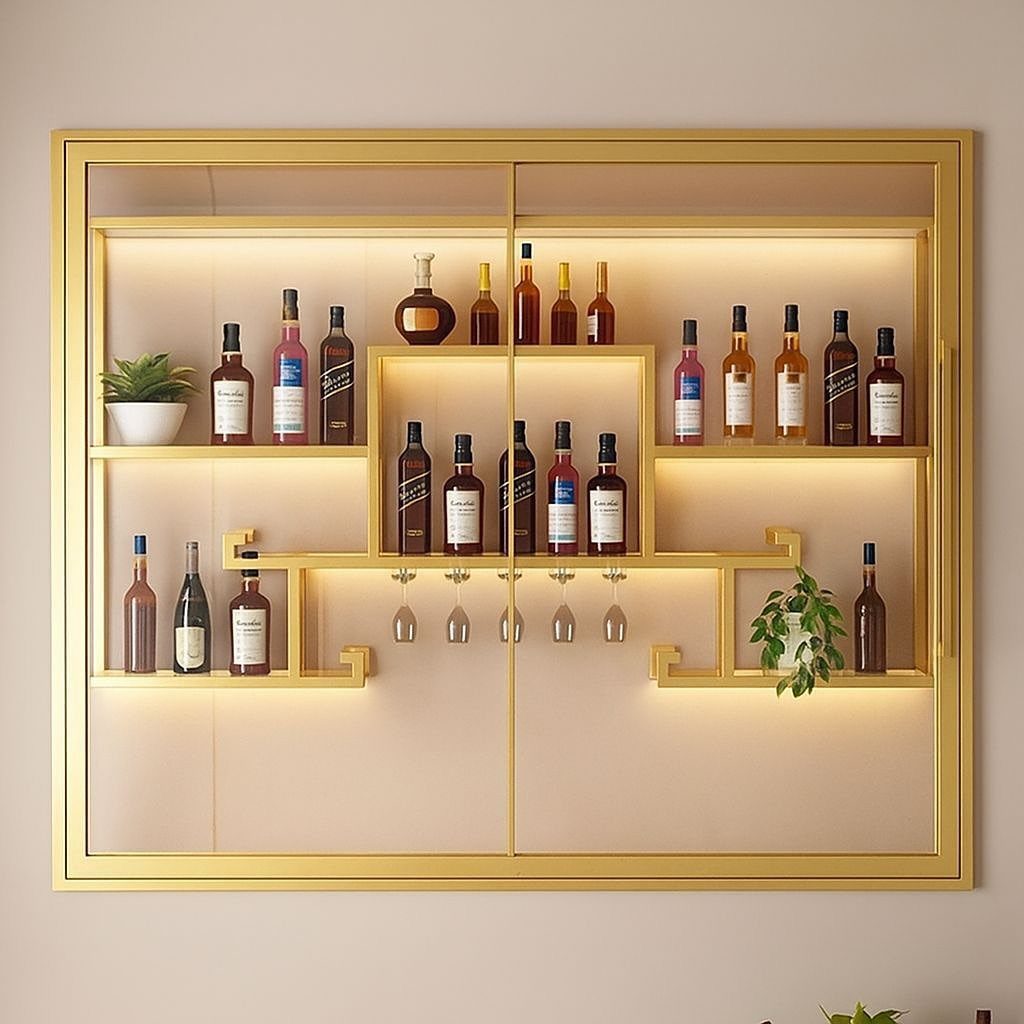
A glass-front cabinet with a gold frame mounts to the wall, so bottles and glassware stay visible and the floor stays clear. The frame here holds 2 shelves for bottles and a slotted rail underneath for stemware hanging upside down.
The glass doors keep dust off the bottles while leaving everything on display.
This works in a dining room or hallway where a standing bar would block traffic.
16. Compact Bar with Built in Sink
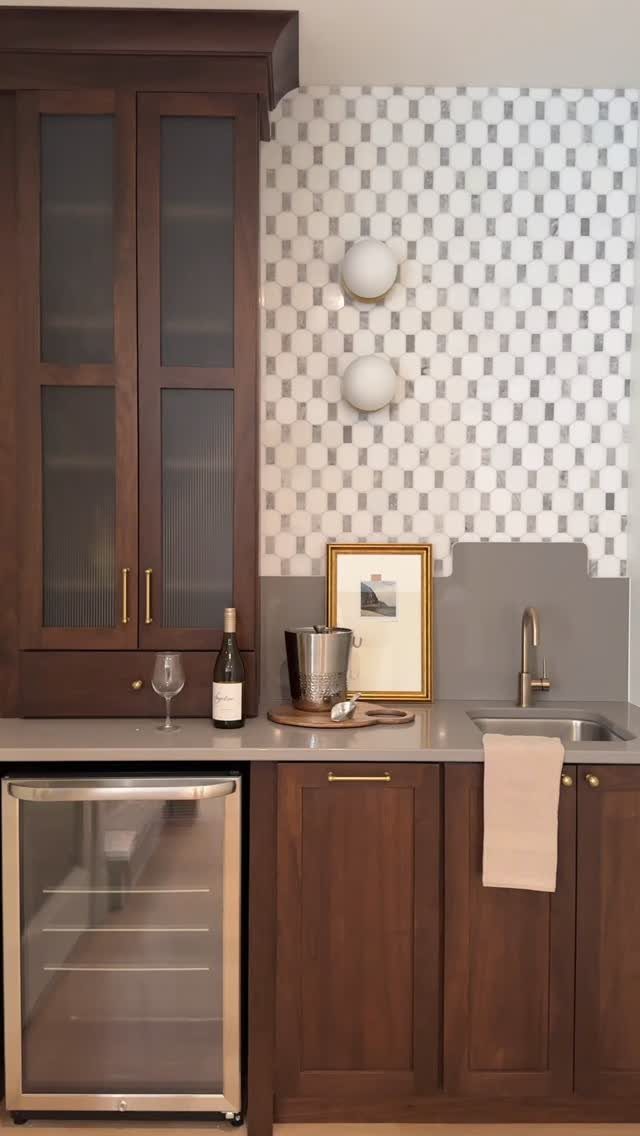
A sink built into the counter lets you rinse glasses and mix drinks without walking to the kitchen, which matters if the bar sits in a basement or bonus room.
The wine fridge below holds bottles at serving temperature, and the patterned tile backsplash protects the wall from splashes without requiring a full tile job around the room.
Dark wood cabinetry keeps fingerprints less visible than light finishes, and closed doors hide clutter when the bar is not in use.
Plumbing a sink requires running supply and drain lines, so this works best during a renovation when walls are open.
17. Rustic Branch Shelf Bar
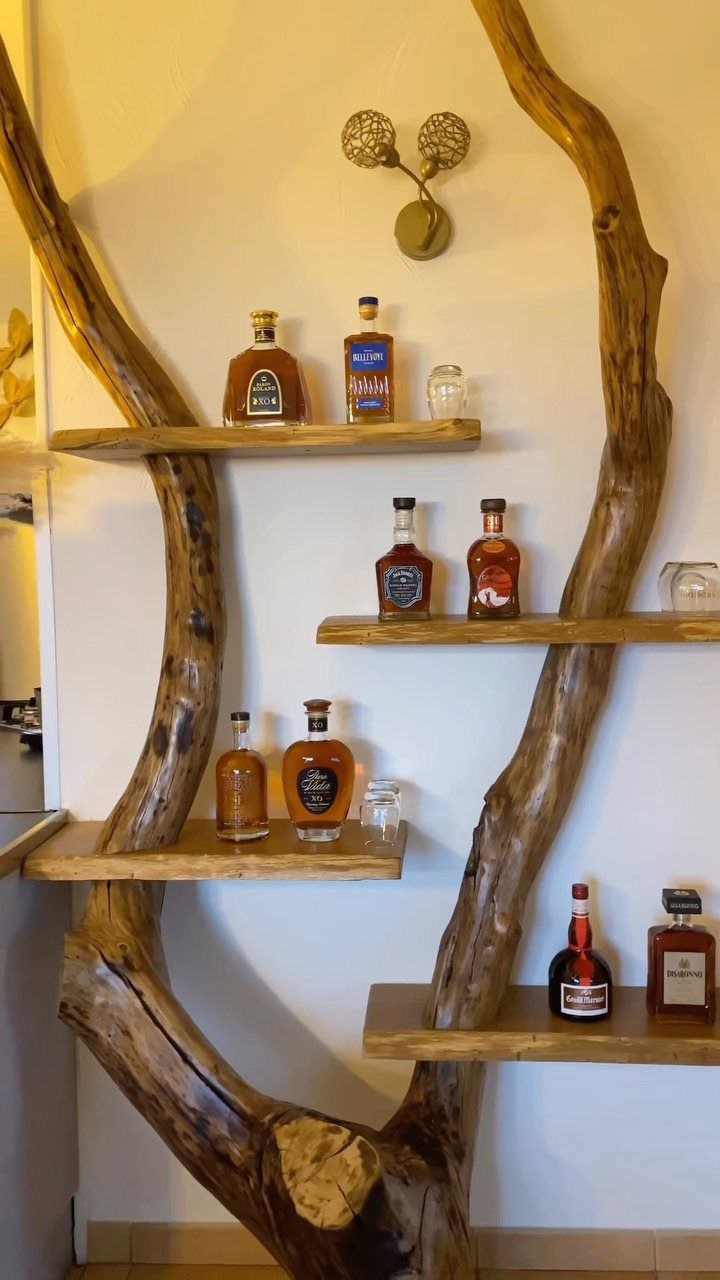
Real branches bolted to the wall support wooden shelves, so the bar looks like it grew there rather than getting mounted with standard brackets.
The irregular shape of the branches adds texture, and the shelves hold bottles and glassware without requiring a countertop below.
This setup uses wall space only, which keeps the floor open and works in narrow hallways or small rooms where a standing bar would not fit.
The branches here are left natural, but staining them to match the shelves is another option.
Use branches thick enough to support the weight of full bottles, and bolt them into studs rather than drywall alone.
18. Navy Blue Credenza Bar
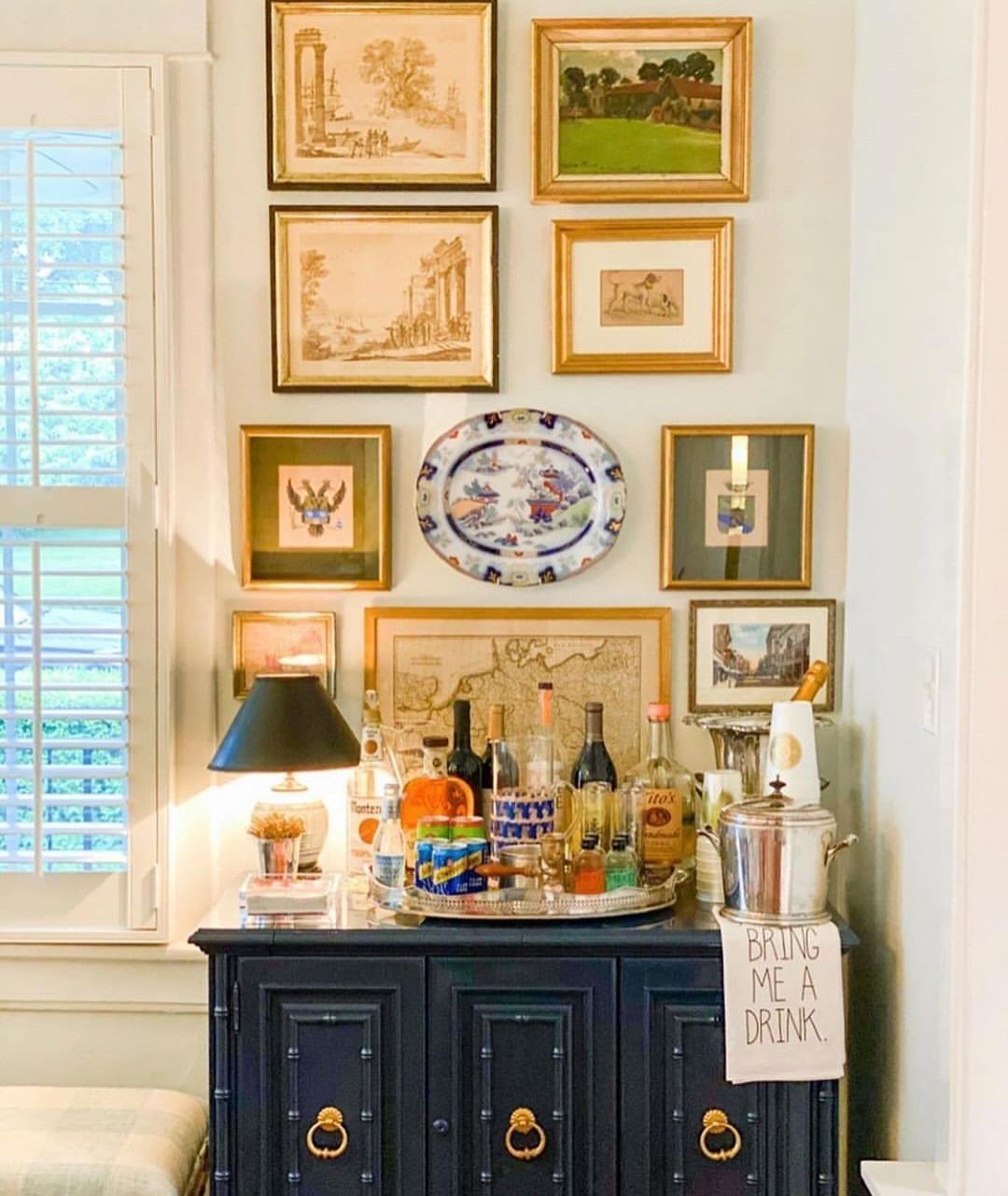
The closed cabinet keeps bottles out of sight when guests are not around.
The flat top holds a tray for bottles and a lamp, which adds task lighting without requiring a plug-in fixture mounted to the wall.
A towel draped over the side adds a casual touch that softens the formality of the gallery wall.
Any credenza with doors works for this, so shop secondhand if you want the look for less.
Frequently Asked Questions
What is the best bar cabinet for home use?
Closed doors also keep dust off glasses and give you flexibility to store mixers or snacks that you’d rather not leave visible.
Pick one that fits your available wall or floor space and matches the room’s finish, whether that’s glossy lacquer, walnut, or a credenza style that doubles as furniture.
Glass-front cabinets show what you have without opening the doors, while solid doors hide clutter completely.
What can I put in my home bar?
Stock bottles of liquor, wine, and mixers on the shelves, along with glassware that hangs stem-down or sits upright depending on your setup.
Open shelving works well for bottles you reach for often, and a small ice bucket on the counter saves trips to the kitchen mid-party. If your bar has a sink, keep a towel and a rinse cup nearby.
What is a good height for a home bar?
Standard bar height is 42 inches, which matches commercial bars and most bar stools sold at furniture stores. That height lets you stand comfortably to mix drinks and sit on a stool with your feet on the footrest.
If you build a bar into existing cabinetry or under stairs, the ceiling or countertop may limit your height, so measure before ordering stools.
How to create a bar area in your home?
Pick a spot where the bar does not block traffic, like a corner, an alcove, a finished basement wall, or under stairs where the angled ceiling usually goes unused.
A finish that echoes your existing furniture or trim helps the bar feel intentional instead of dropped in as an afterthought.






