
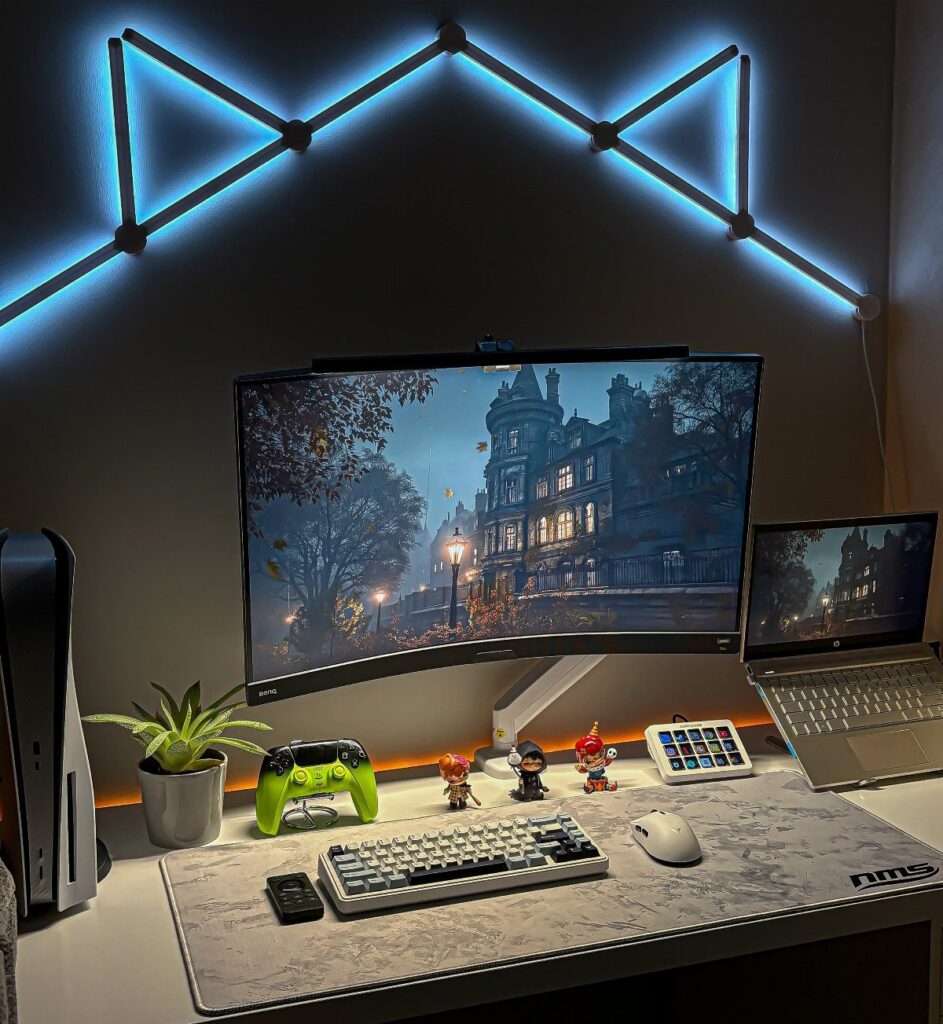
A racing simulator, a golf simulator with projection tracking, or LED strips that change the whole mood cost different amounts and take different square footage.
If the room has 5 feet of clearance around the table itself, a pool table fits and gives you something to do between rounds.
Keep snacks and drinks in reach with a mini-fridge, a vending machine, or a shelf of bottles so no one has to leave the room.
1. Posters, LED Lights, and Themed Furniture
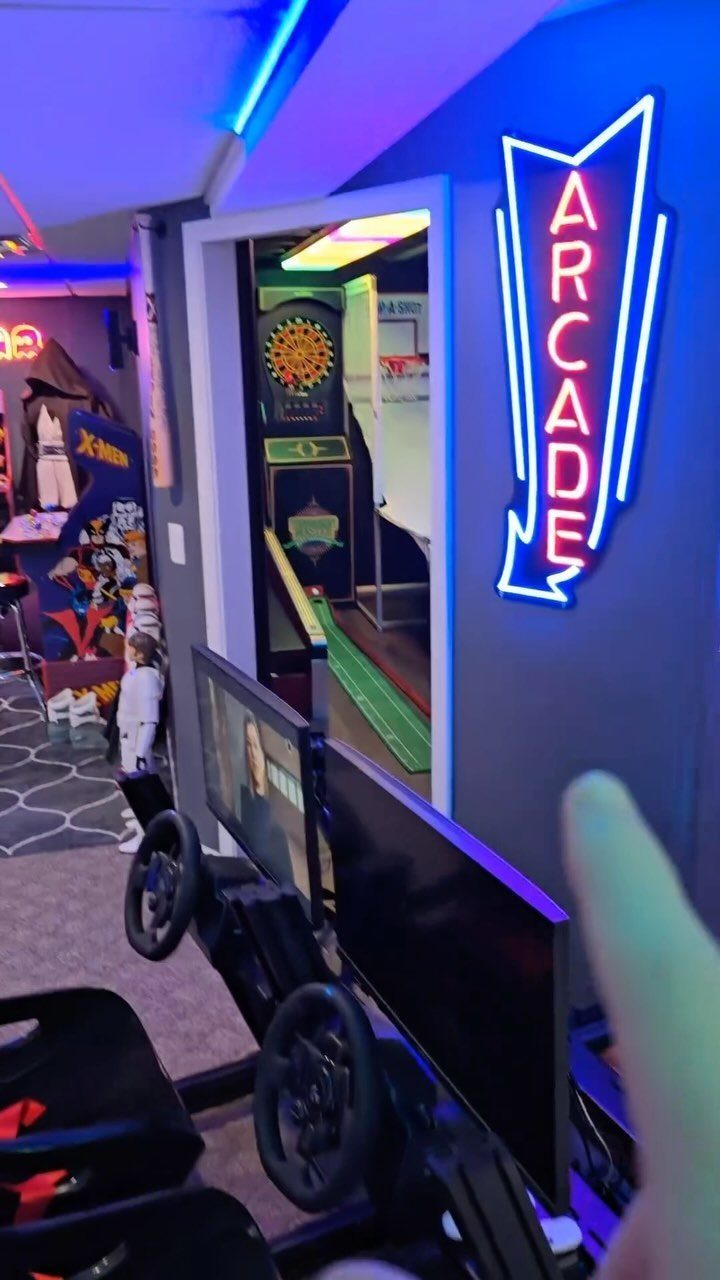
The neon sign names the space and sets the tone right at the door. LED strip lighting runs along the ceiling, giving a blue glow that changes the mood without rewiring overhead fixtures.
A racing simulator anchors one side, and the dartboard gets its own doorway behind. Each piece says something specific about what happens here, and the mix of arcade, racing and darts gives more than one reason to stay.
The room works because the parts share a color and a vibe without matching exactly.
2. Gaming Chairs, Recliners
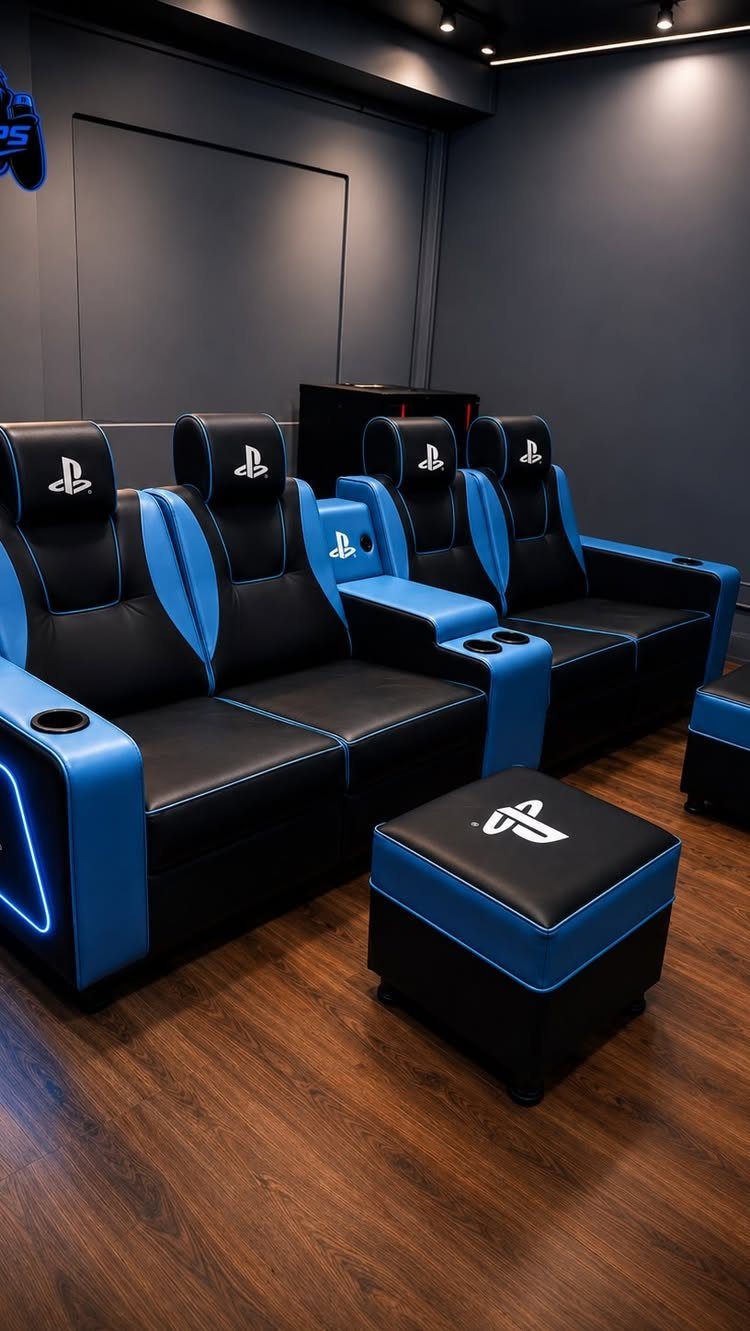
4 matching recliners turn a gaming session into a lounge. Each chair has its own ottoman and leans back far enough to handle a long tournament or a movie afterward.
PlayStation branding ties the set together, but the real gain is space for 4 people who each get their own spot. No sharing a couch, no fighting over the good seat.
Dark walls keep the focus on the screens, and the blue accent stitching shows up without taking over.
3. Gaming Setup
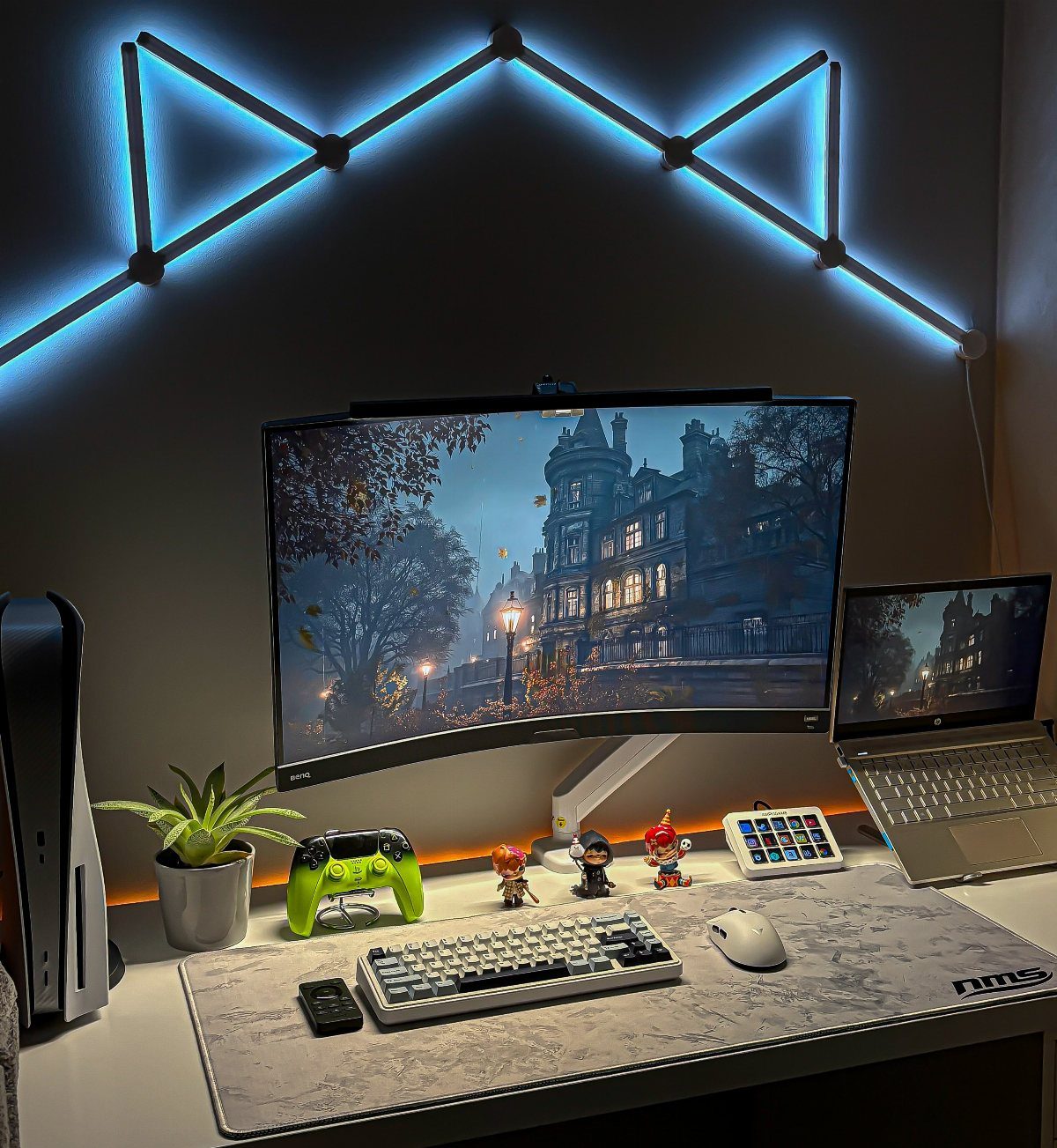
A curved monitor wraps your field of view and pulls you into the frame. Pair it with a mechanical keyboard, a high-DPI mouse, and a console within arm’s reach.
Geometric LED panels on the wall behind the desk add color and depth without glare on the screen. Small figures and a plant keep the surface from looking like a server rack.
Cable management matters here.
4. Game Collection
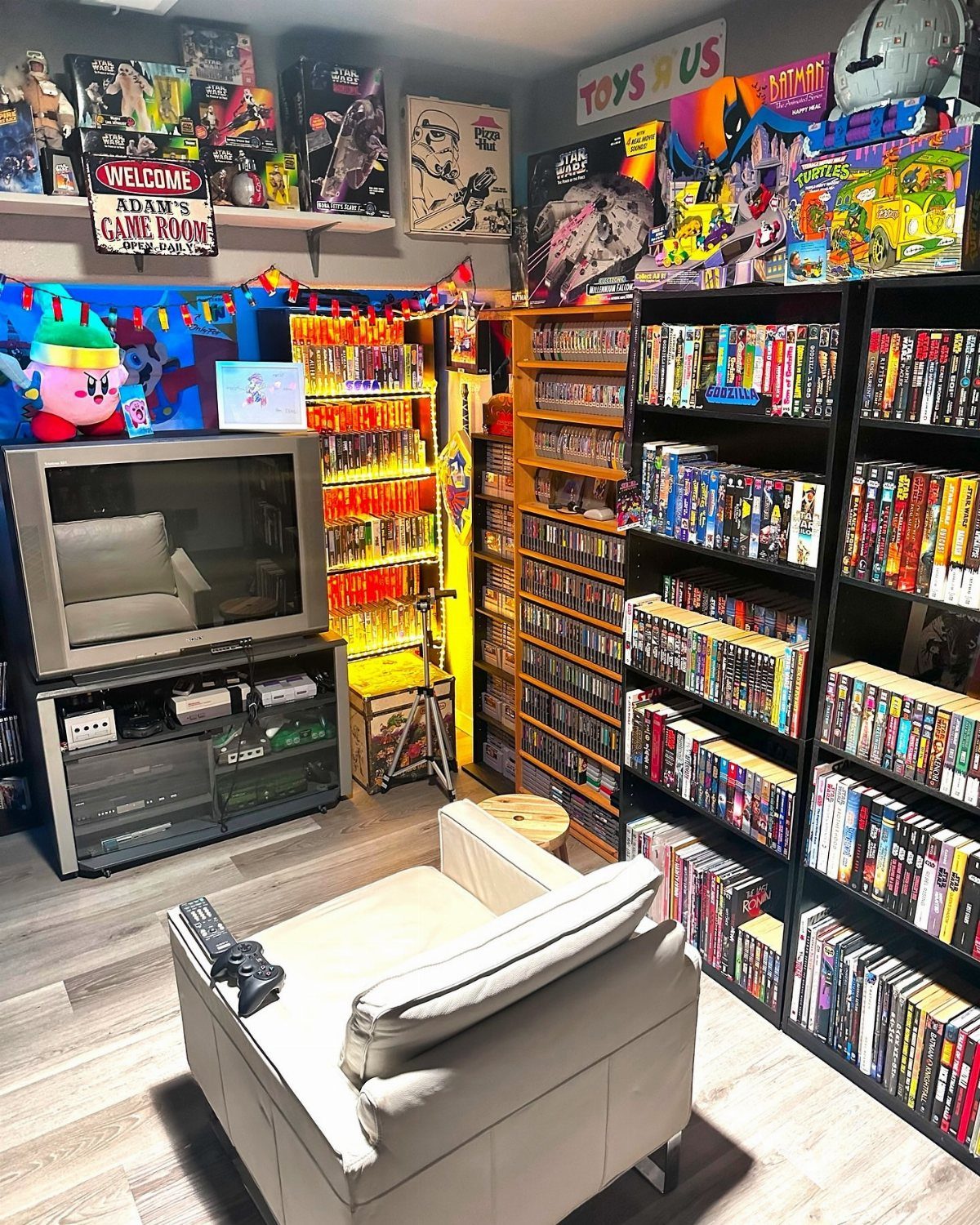
Shelves lined with physical games give you something to browse when you’re done scrolling. Arrange them by console, by series, or by spine color if that’s what looks right.
A CRT TV sits on the lower shelf for retro systems that look wrong on modern displays. Posters, plush toys and a custom sign fill the gaps between shelves and make the room feel like yours.
The collection grows over time, and the shelves let you see what you own instead of paging through a digital library.
5. Snack and Beverage Station
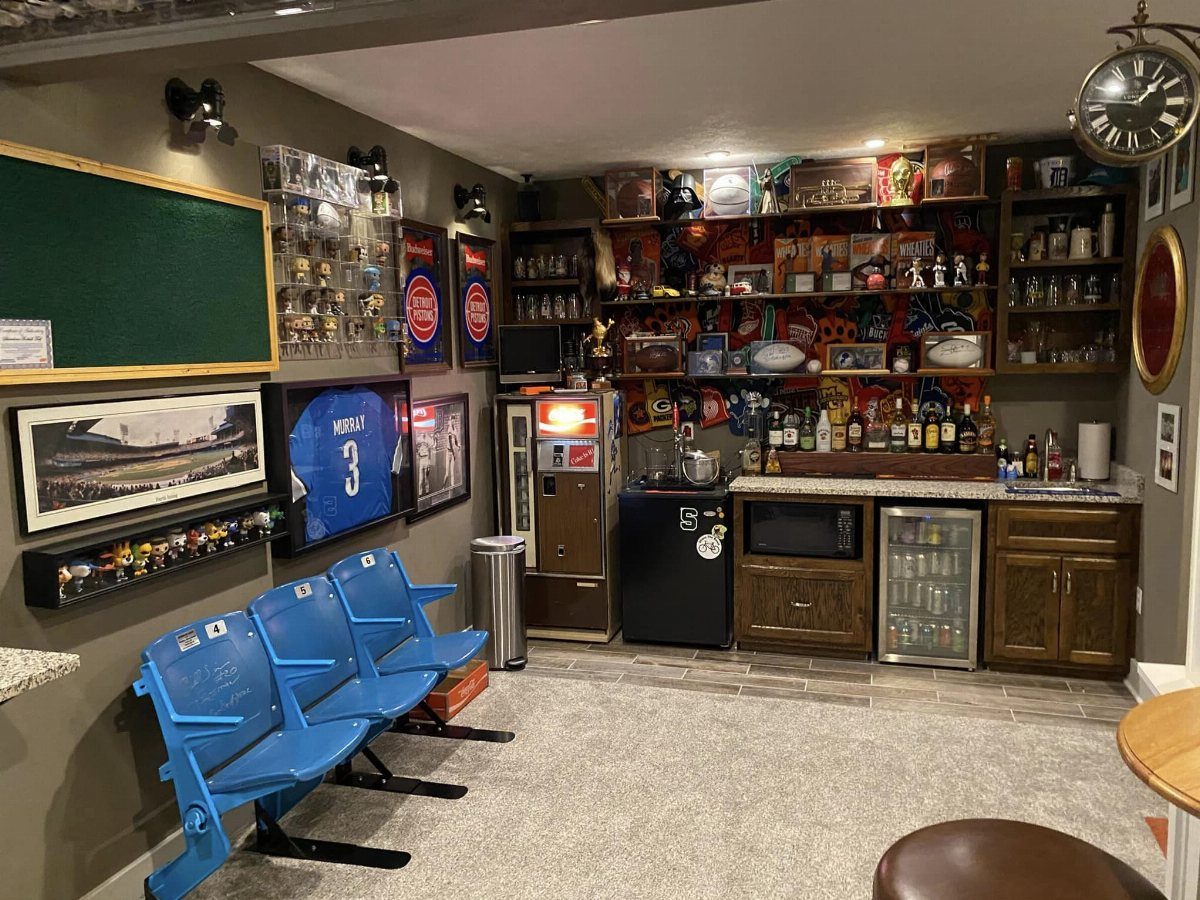
A mini-fridge holds drinks at eye level, a shelf above it keeps liquor bottles lined up, and a vending machine dispenses snacks without a trip upstairs.
This setup works best in a basement or garage where you can add a wet bar without tearing into finished living space. The fridge plugs into any outlet, and the vending machine runs on a standard 120V circuit.
Stock the vending machine with single-serve bags and keep cold drinks in the fridge for longer sessions.
6. Pool Table Gaming Lounge
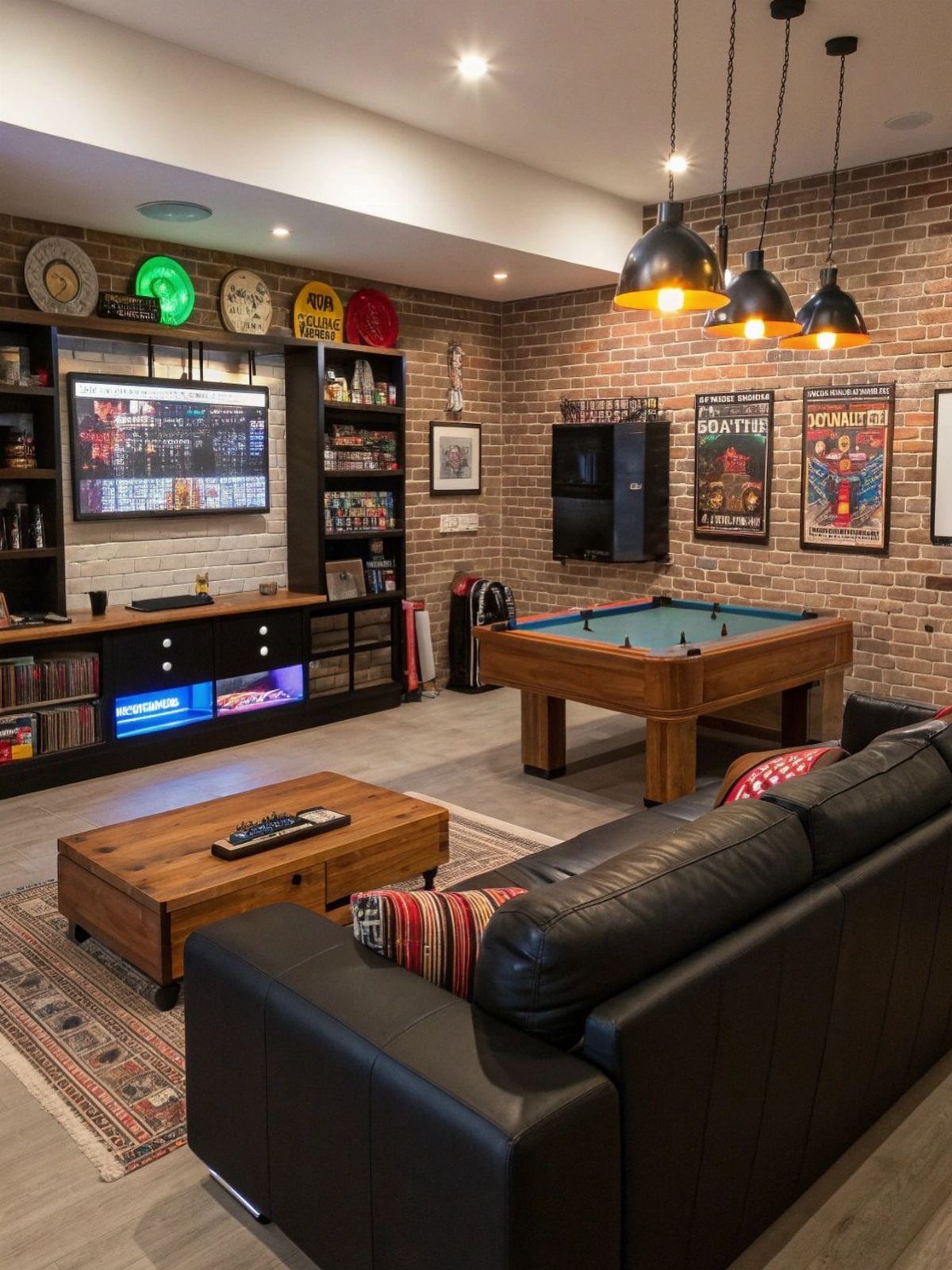
A pool table in the center gives you something to do between rounds or while the next game loads. Black leather seating along the wall keeps sports or streams in view from anywhere in the room.
The wooden coffee table stores remotes, coasters and cues.
This layout suits a basement or bonus room with enough clearance to shoot from all sides of the table.
7. Multi-screen Sports Viewing Wall
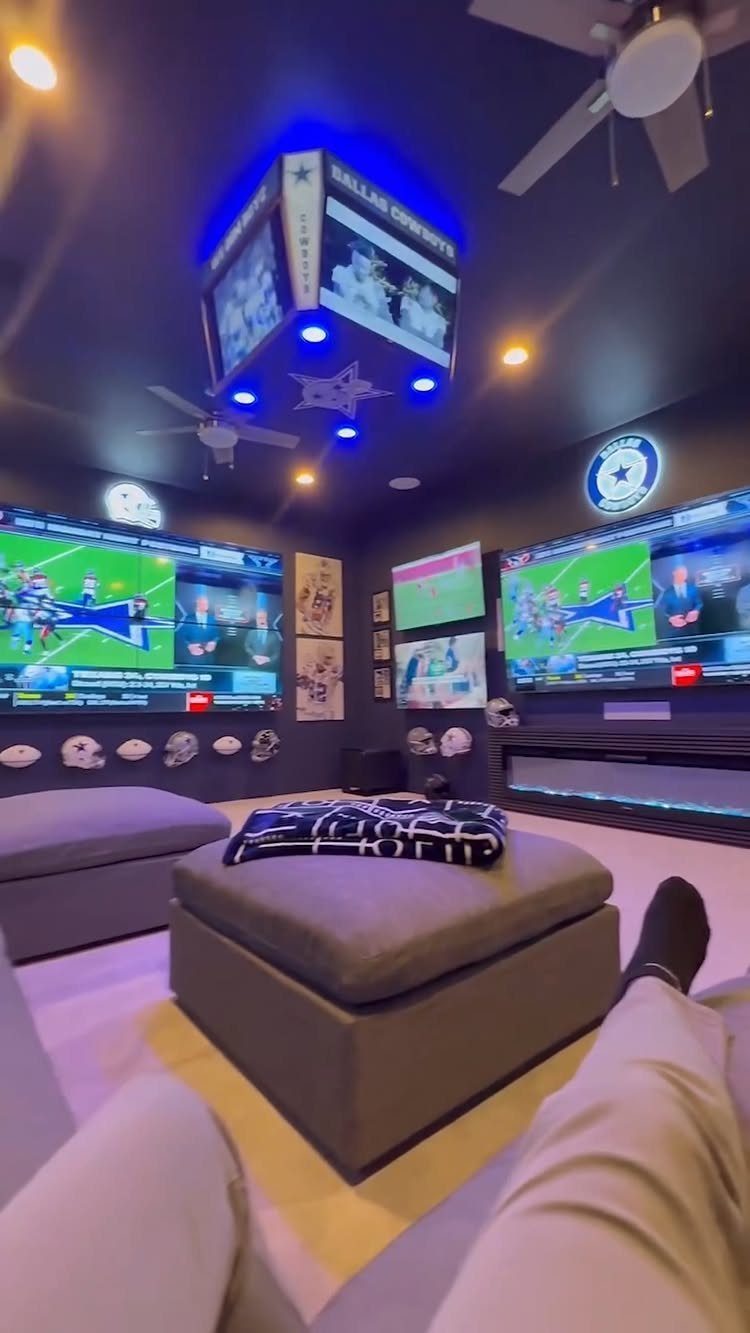
Multiple screens let you track several games at once without flipping channels. Mount multiple TVs on one wall, each with its own input, and run the standings, the live game, and the backup matchup side by side.
The setup needs a power strip, enough HDMI cables to reach each screen, and either cable boxes for each feed or streaming devices that can run independently. The ottomans keep the middle of the room clear for moving between screens.
Dark walls and blue LED strips keep the glow from washing out the picture.
8. Golf Simulator Setup
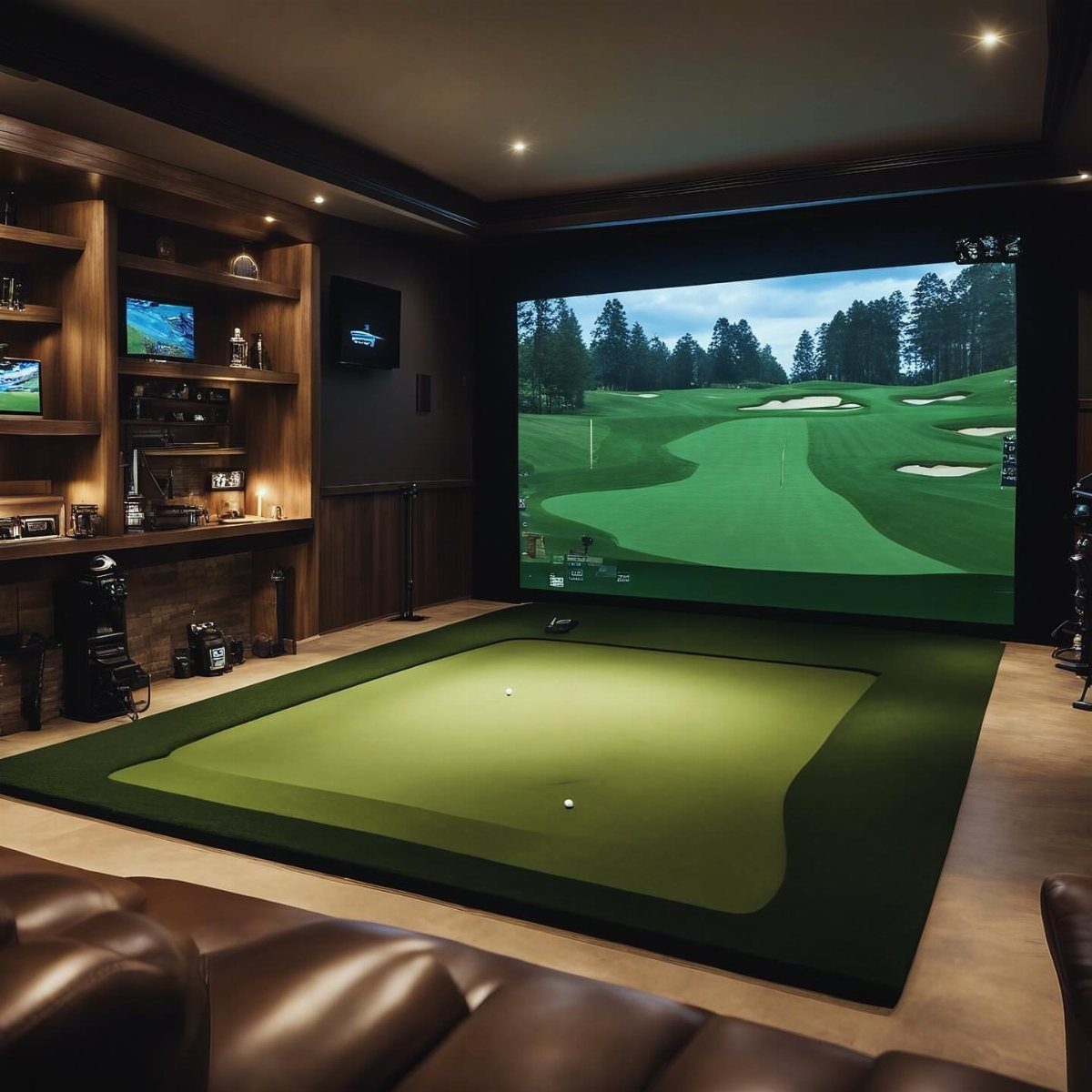
A projection screen and turf mat bring the driving range indoors. Golf simulator software tracks swing speed, ball flight, and landing distance, and most systems project the course on the same screen you’re hitting toward.
The turf needs enough depth for a full swing and enough ceiling height to clear a driver. Built-in shelving holds monitors for stats, and the leather seating gives others a place to watch between turns.
9. Wood Slat Accent Wall
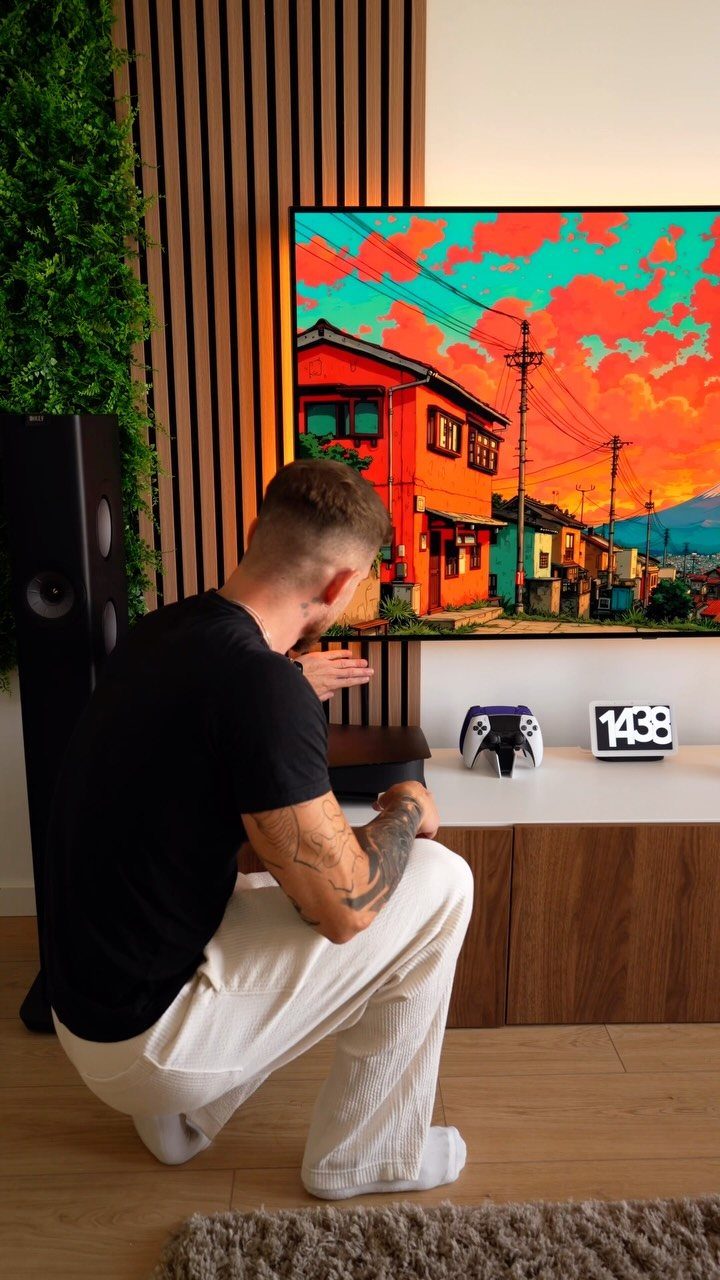
Vertical wood slats add texture behind the TV without competing for attention. The slats run floor to ceiling in evenly spaced rows, and the gaps between them break up a flat wall.
Mount the TV on the slats or hang it in front of them. White storage below holds consoles and controllers, and a potted plant softens the wood grain without taking up floor space.
The slats install with a French cleat or adhesive backing, and prefinished slats save you the staining step.
10. Electric Fireplace Media Wall
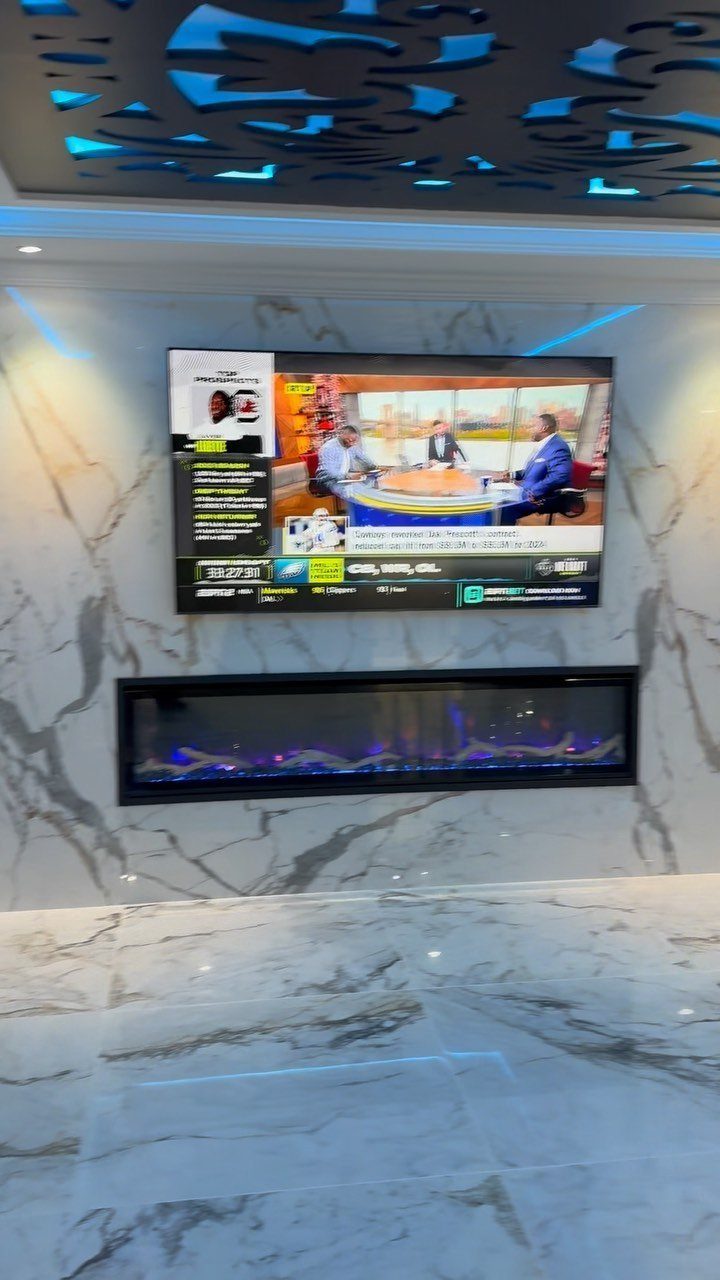
An electric fireplace mounted below the TV adds warmth and light without venting or a gas line. The flame effect runs independently from the heat, so you can keep the glow going year-round.
Linear models fit under wide TVs and sit flush with the wall. The blue accent lighting here runs along the base and highlights the marble-look surround.
Most units plug into a standard outlet and heat a typical bonus room or basement corner. Mount the TV high enough that the fireplace doesn’t block the lower third of the screen.
11. LED Strips
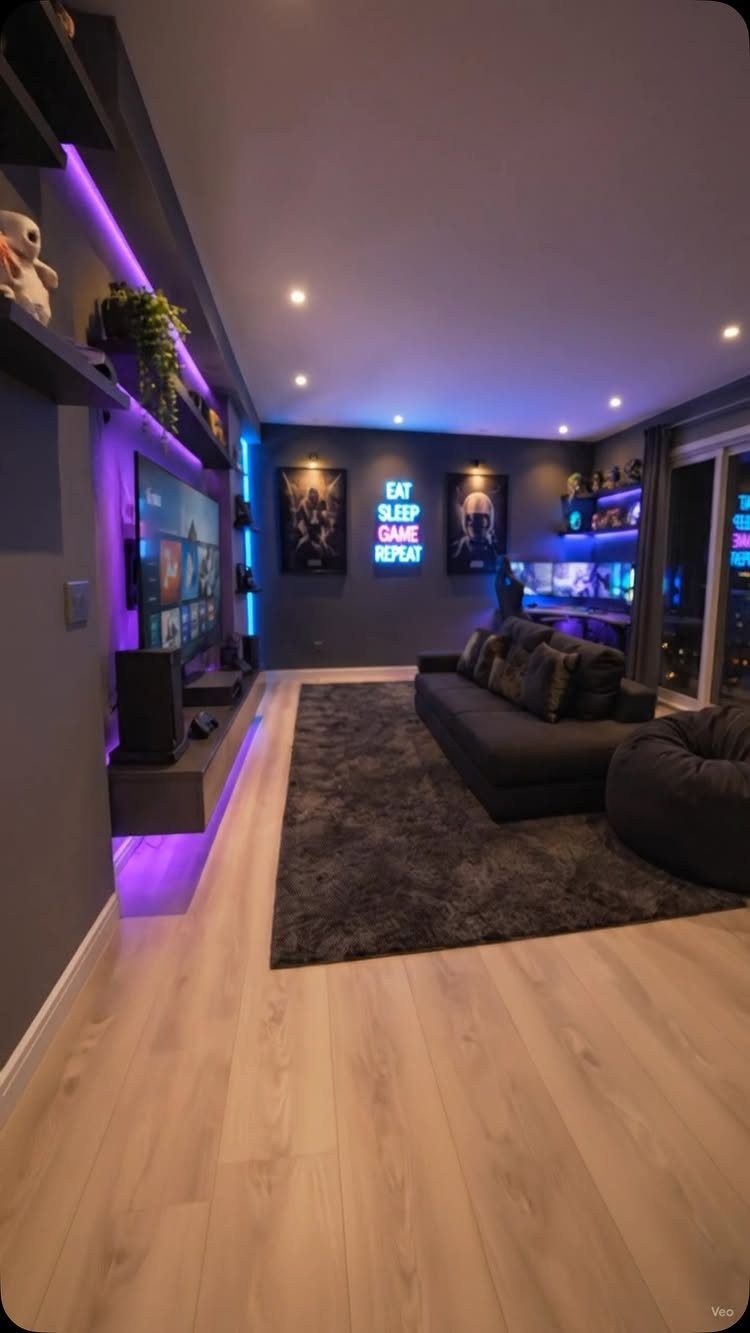
LED strips line the ceiling, the shelves, and the back of the TV to wash the room in one color. Purple here sets a low-light mood that doesn’t reflect on the screen.
Strips with a remote let you change the color or dim the brightness mid-session. Peel-and-stick backing holds them to any clean edge, and most kits come with corner connectors to turn corners without cutting.
Run the power cord to an outlet behind furniture so it stays out of sight.
Creating an Immersive Experience
Sound carries as much weight as the picture.
A 5.1 or 7.1 surround system places speakers around the room so directional audio comes from where the action is. A soundbar with a subwoofer costs less and takes up less space, but it won’t give you the same positional detail.
Adjustable lighting lets you shift between a dim glow for late-night sessions and brighter light when you need to see the controller or read a card.
Smart bulbs change color and brightness from your phone, and task lighting over a desk or bar keeps those areas visible without lighting the whole room.
Decor that ties to the games you play makes the space feel specific. Posters, figures, and wall art should reflect what you’re actually into, not a generic gamer aesthetic.
Planning Your Layout
Start with the main screen. It needs a clear sightline from wherever you’ll sit, and enough distance that you’re not craning your neck.
Mark where the seating goes next, leaving room to move between the chair and any table or console shelf in front of it.
If you’re adding a pool table, a dartboard, or a second screen, map out the clearance each one needs.
A pool table requires 5 feet of open space on all sides for a full cue stroke. A dartboard needs enough throw distance and width that a missed dart doesn’t hit furniture.
Zones work when each activity has its own footprint and you can move between them without crossing someone else’s line of play.
Frequently Asked Questions
What are some cool things to add to a gaming room?
Keep drinks and snacks within reach by adding a mini-fridge or vending machine so you never have to leave mid-session.
Pool tables and dartboards fill the gaps between rounds, giving you something physical to do when you step away from the screen.
Posters, neon signs, and figures from the games you actually play turn a room into your space instead of a catalog spread.
What should be in a man cave?
Comfortable seating that fits the number of people you’ll have in the room, whether that’s recliners with ottomans or a sectional along the wall.
A gaming setup with a screen, console or PC, and proper cable management so it doesn’t look like a mess.
Personal decor that reflects what you’re into, like game collections on shelves, posters, or a wood slat accent wall behind the TV.
What is a gamer room?
A gamer room is a dedicated space set up for playing video games, with a screen, consoles or a PC, and seating positioned for long sessions.
Most include LED lighting, themed decor, and shelving for controllers, games, or collectibles. The room is built around gaming as the main activity, with everything from the layout to the lighting chosen to support that.






