
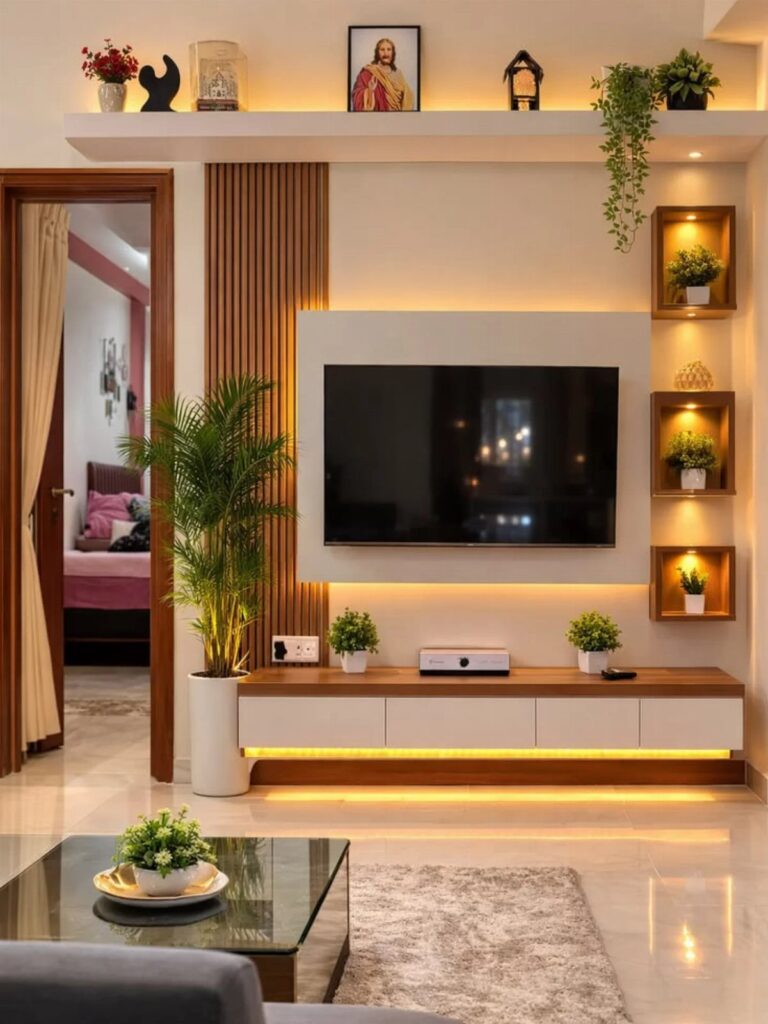
A wall TV unit can be a floating console hung in an afternoon, a built-in that frames the screen like architecture, or a modular grid you assemble and rearrange as the room changes.
Pick based on how permanent you want it: wall-mounted and modular systems move with you, while built-ins and stone-clad panels stay with the house.
Open shelves put your media gear and décor on display, while closed cabinets tuck remotes, cables and game consoles out of sight behind doors.
1. Wall-Mounted TV Unit
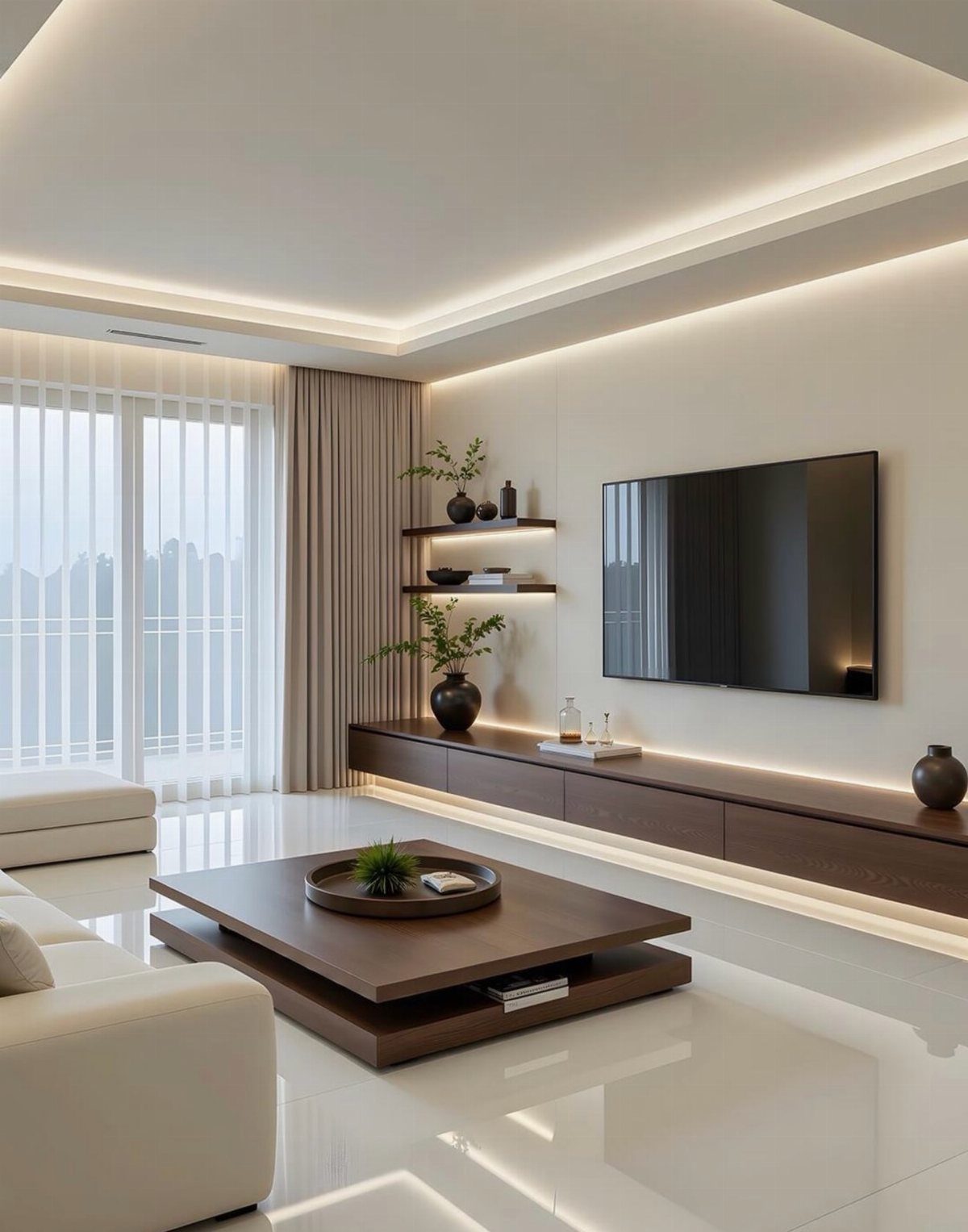
A wall-mounted TV clears the floor and gives you room to move around without tripping over a bulky stand. The floating console underneath holds your streaming box and remotes while keeping cables out of sight.
Mount the TV so the center of the screen sits level with your line of sight when you’re seated.
Run power and HDMI cables through an in-wall kit if you want a completely clean look, or use a raceway channel if fishing wires through drywall feels like too much.
Importantly, always consider your cables, says Gary Walmsley, managing director at Designer Walls: ‘Often modern TVs only require power as they work on Wi-Fi – a recessed box behind the TV is very helpful when tidying up cables.
2. Built-In TV Wall Unit
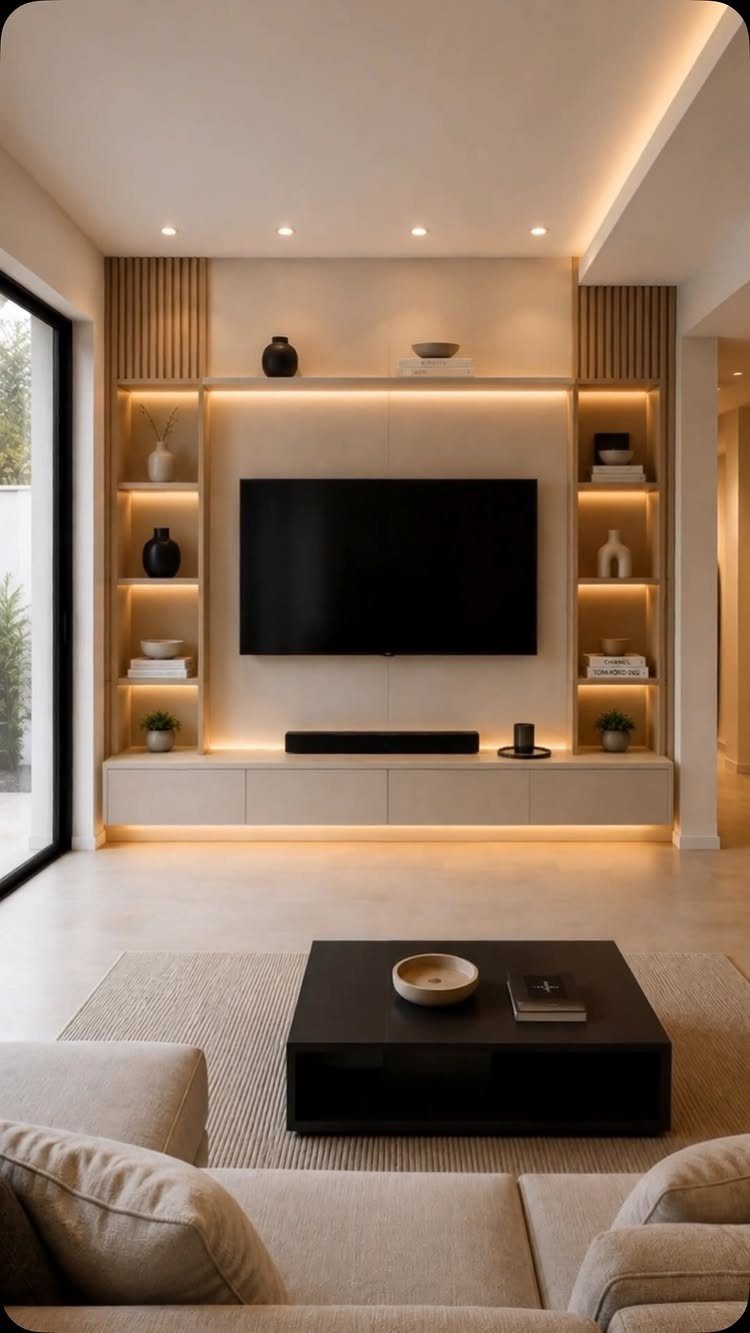
Built-in cabinetry turns the TV into part of the wall instead of an object sitting on it. Shelves and closed cabinets flank the screen, giving you places to put books, speakers and anything you’d rather not see.
This setup works best if you own the place or plan to stay a while.
Building it in means cutting, fitting and finishing the unit to match your wall dimensions exactly. You can hire a carpenter or buy modular systems that lock together and get installed as one piece.
I like how the lighting lifts the whole unit off the wall and softens the room at night.
3. TV Unit with Open Shelves
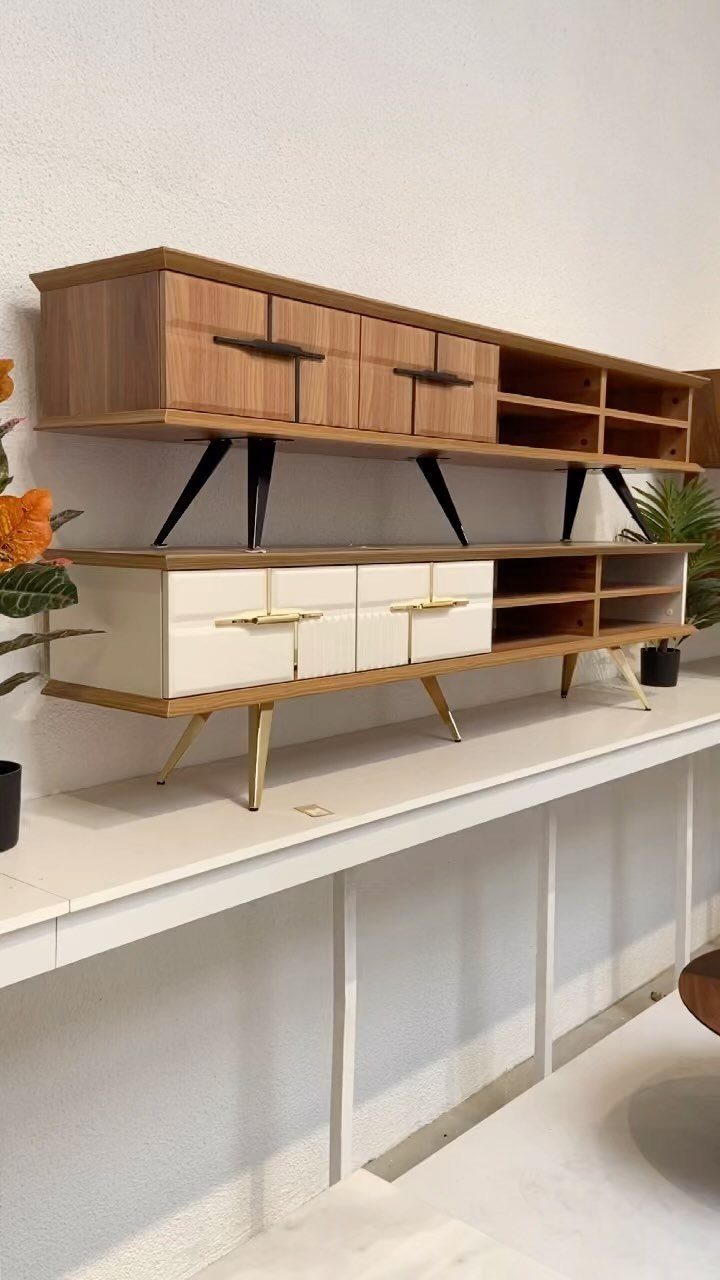
Open shelves give you quick access to everything you use with the TV: soundbar, game console, a stack of remotes.
The mid-century legs and tapered edges keep the look light, and the mix of open and closed storage means you can show off what you want and hide the rest.
These units sit low, which puts the screen at a comfortable height if your couch sits low.
Wood veneer in walnut or oak keeps the budget down compared to solid hardwood, and most come ready to assemble in under an hour.
Stack two if you need more height or want an asymmetric layout.
4. Concealed TV Behind Cabinet
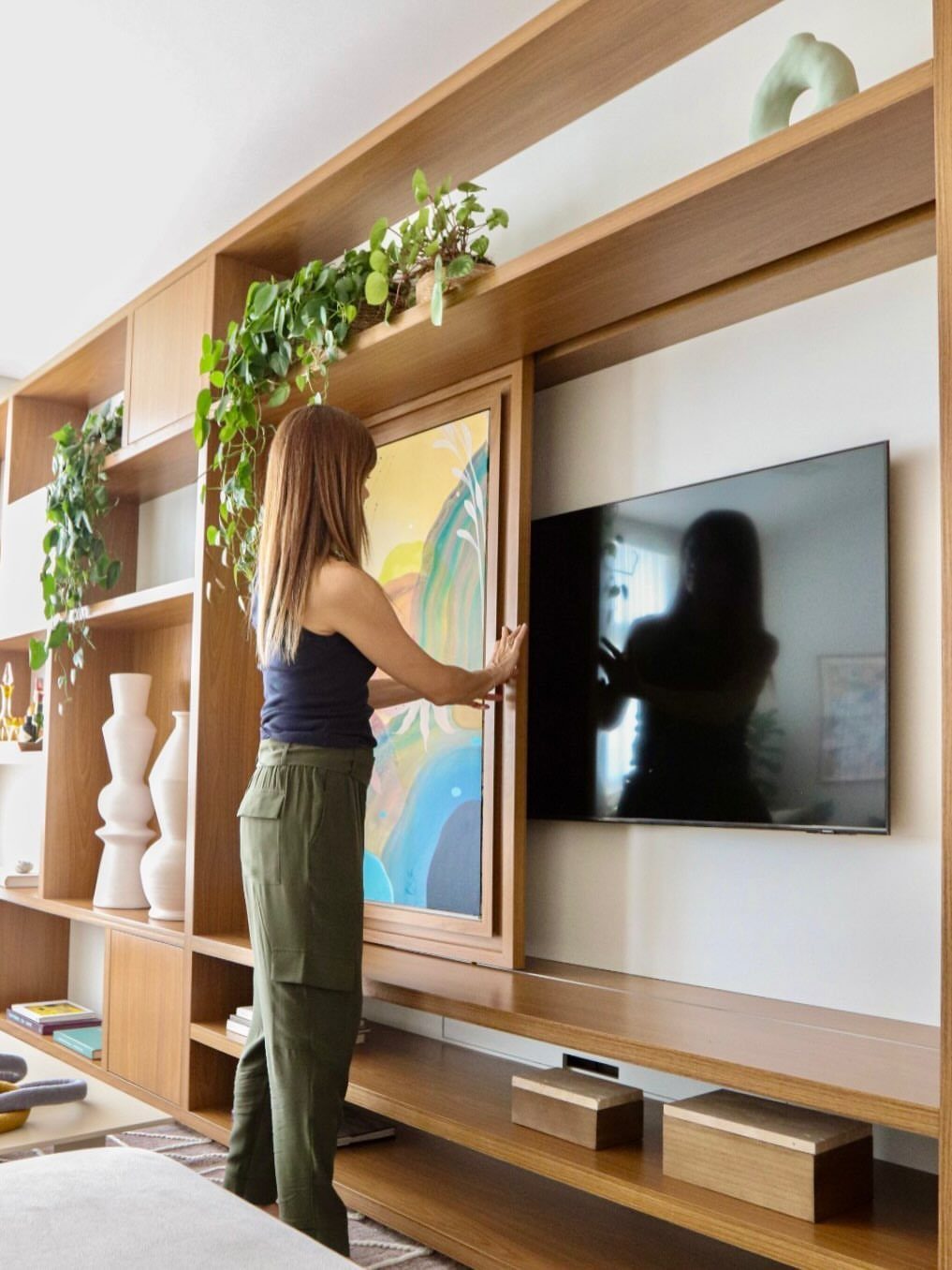
A sliding panel hides the TV when you’re not watching and turns the wall back into a bookshelf or a gallery.
The panel can be a piece of framed art, a mirror, or a board finished to match the surrounding cabinetry.
You’ll need a track system mounted to the top and bottom of the opening, with rollers that let the panel glide sideways without dragging.
Soft-close hardware keeps it from slamming. The TV sits recessed into the wall or inside a built-in niche so the panel slides past without sticking out.
This works if the TV feels like visual clutter when it’s off.
5. Grid-Style Modular Design
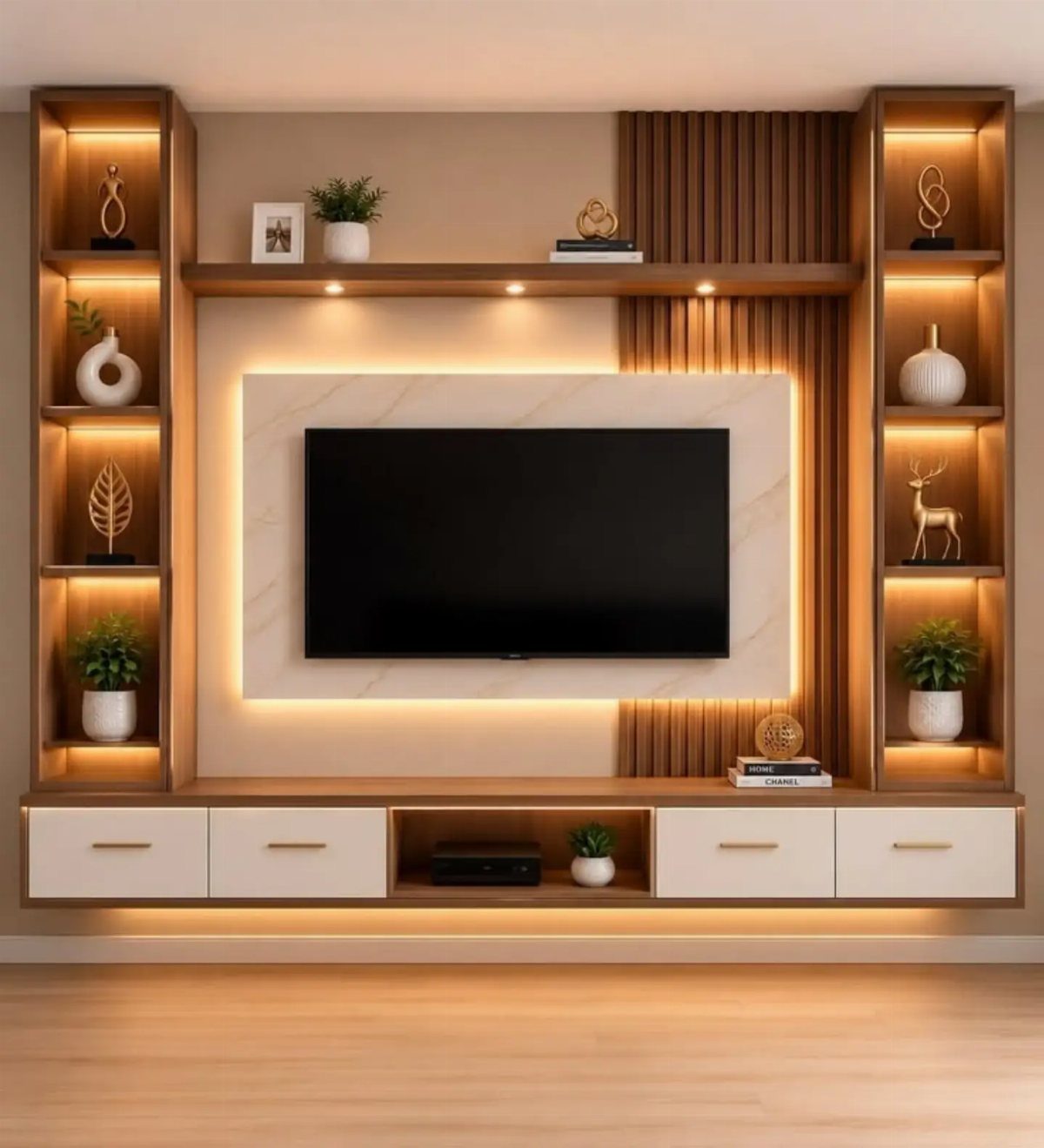
Squares and rectangles in different sizes break up the wall and give you room to arrange books, plants and decor however you want. The modular boxes mount individually, so you can shift the layout as your needs change.
Start by mapping the grid on paper: mark where the TV goes, then fill in around it with cubes sized to fit your wall.
Mount each box with hidden brackets or keyhole slots, and keep the spacing between them consistent so the whole thing reads as one unit.
The backlit panel behind the TV adds depth and makes the screen feel less heavy.
6. Minimalist TV Stand
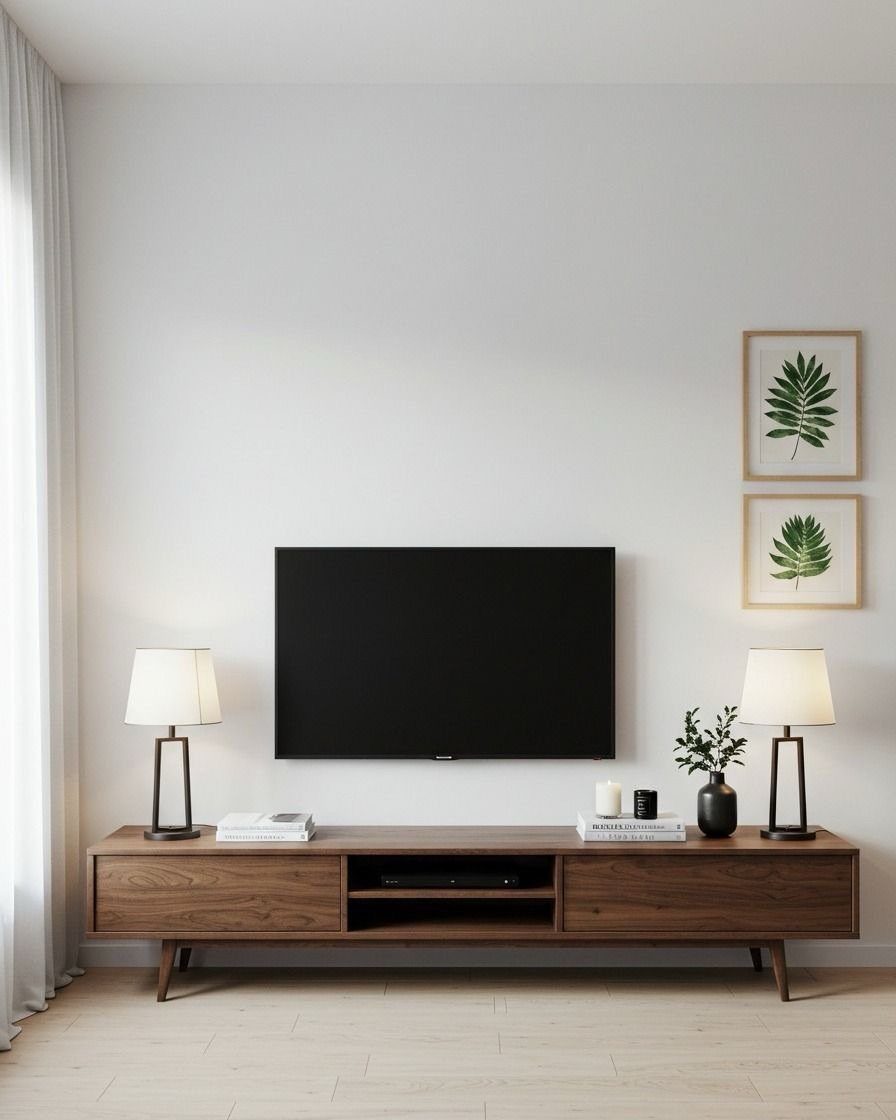
A low wooden stand with slim legs keeps the focus on the TV and nothing else. 2 cabinets with cutouts for ventilation hold your gear, and the top stays clear except for the screen and a pair of lamps.
This style sits low off the floor, which works if your seating is low or if you mount the TV on the wall above it.
Walnut, oak or teak veneer over engineered wood gives you the look of solid hardwood at a fraction of the cost.
The simplicity makes it easy to move or replace when you want a change.
7. Luxury Marble TV Unit
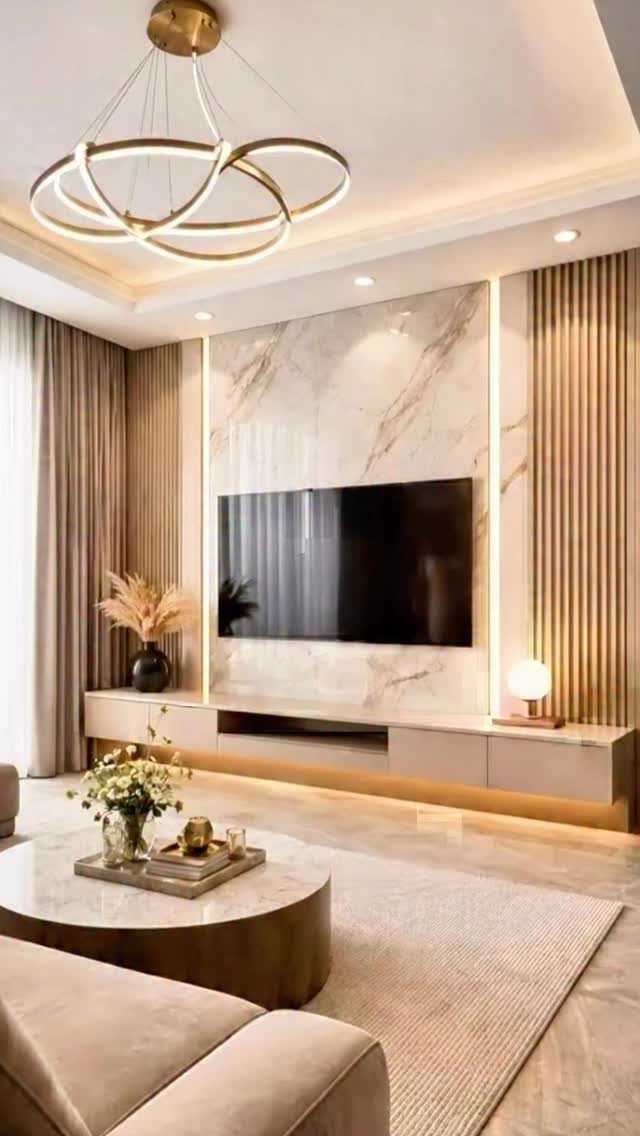
Marble turns the TV wall into a statement piece. A full-height panel in white, grey or black veining frames the screen and runs floor to ceiling, giving the room a high-end finish without needing built-ins.
Real marble slabs run thousands of dollars and need professional installation.
Porcelain tiles in marble patterns cost a fraction and go up the same way subway tile does: thin-set mortar, spacers and grout. Large-format tiles mean fewer seams.
Float a console below the TV to keep the marble visible all the way down.
8. TV Unit with Wallpaper Back Panel
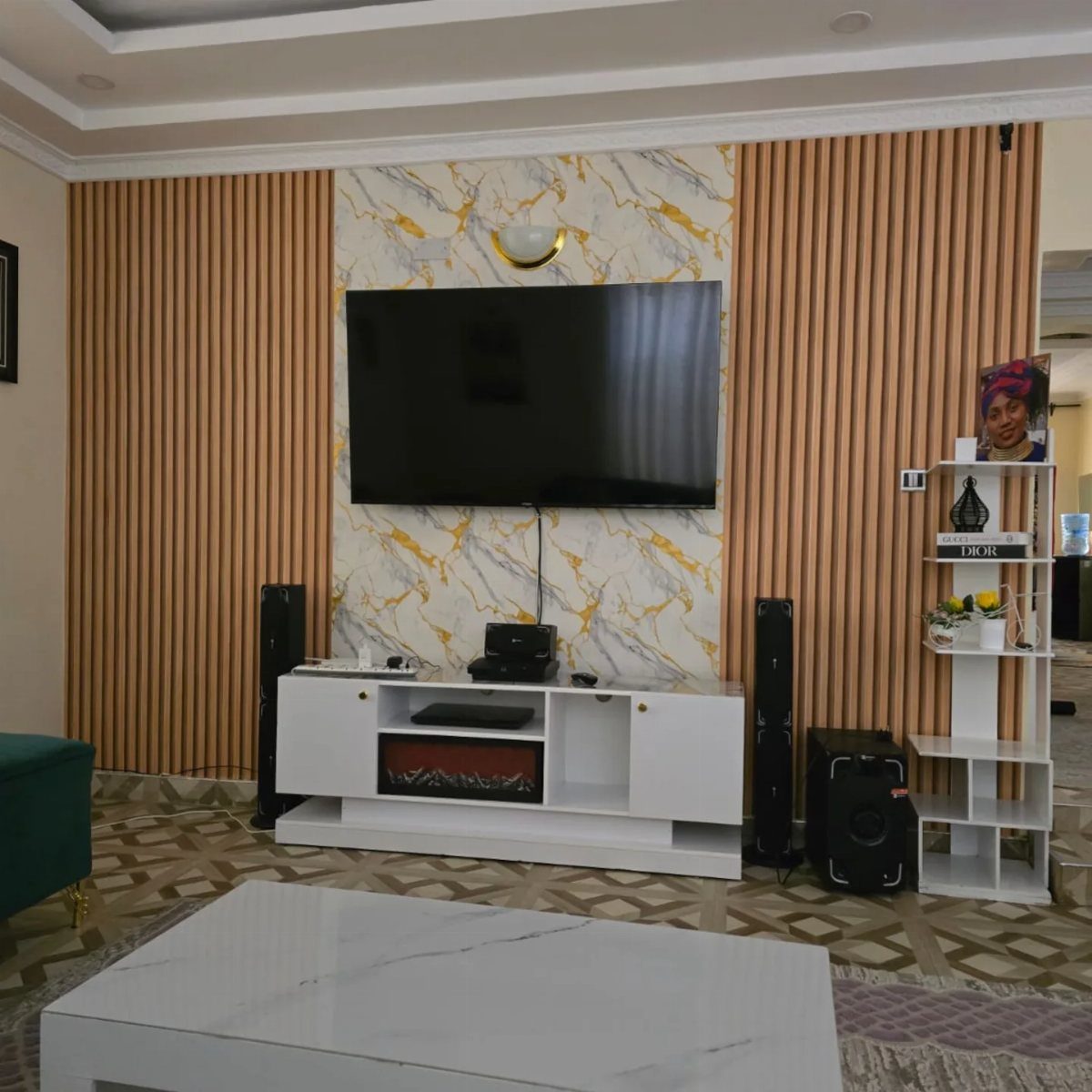
Wallpaper behind the TV draws the eye without the cost or permanence of tile. A single panel in marble, geometric or textured patterns defines the screen area and gives the wall depth.
Cut the panel to size and paste it like you would any accent wall.
Peel-and-stick versions go up faster and come off clean when you move. Frame the edges with trim or wood slats if you want a more finished look.
Leave the surrounding wall plain so the pattern reads as intentional, not busy.
9. Stone-Clad Wall TV Unit Design
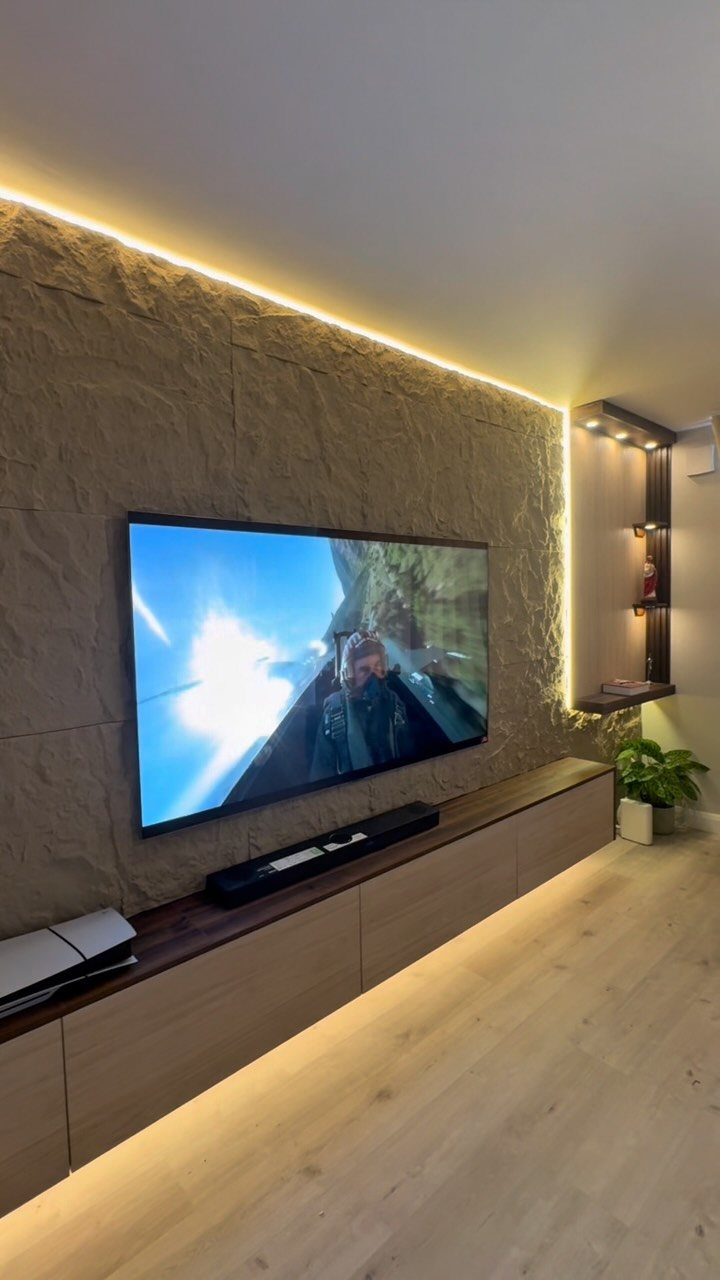
Stacked stone gives the TV wall texture you can see from across the room. The rough surface catches light differently than drywall and adds weight without needing furniture to fill it.
Stone veneer panels install over drywall with construction adhesive and go up faster than individual stones. LED strips tucked behind the console or along the top edge graze the surface and bring out the texture at night.
Plan the TV mount before you install the stone so the bracket hits studs, not just the veneer.
10. Curved or Wavy Design
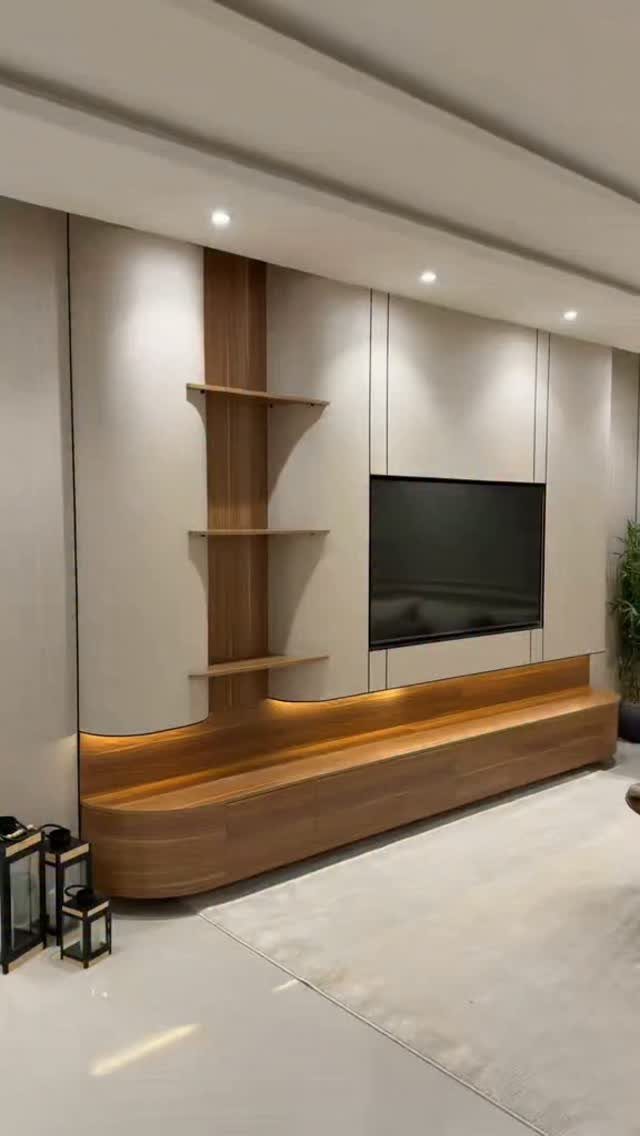
Curves soften the geometry of a rectangular screen. A wavy wooden base wraps the TV in one continuous line and breaks up the hard edges most media units carry.
CNC-cut plywood or MDF gives you the shape, and veneer or paint finishes it.
Mount the TV to the wall behind the curve so the screen sits centered, then run cables through a channel cut into the back of the unit.
Backlit shelves balance the curve and give you spots for a few objects without cluttering the line.
11. Elegant TV Cabinet with Glass Showcase
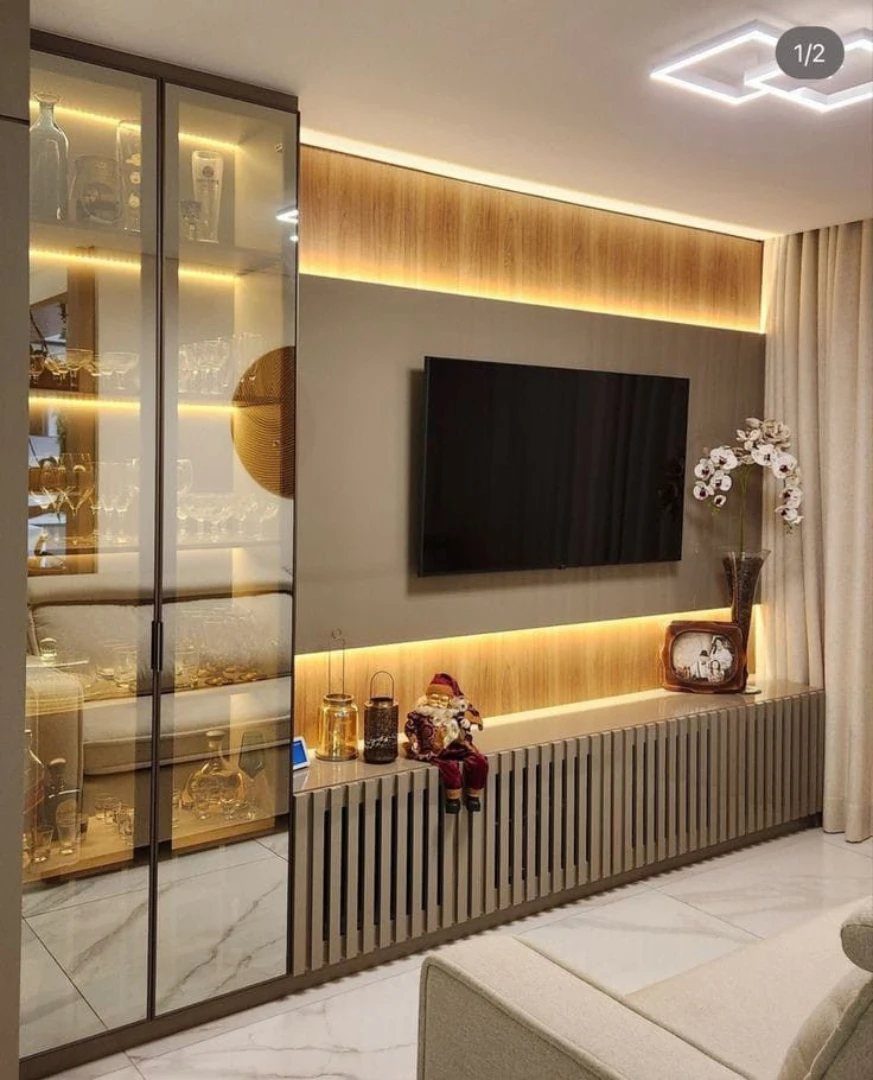
A tall glass cabinet next to the TV turns storage into display. Backlit shelves inside show off glassware, books or anything worth looking at, and the clean lines keep it from feeling heavy next to the screen.
Glass-front cabinets need interior lighting to read as intentional instead of empty, so add LED strips along the back or under each shelf.
This setup works if you have objects you want visible and a wall wide enough to fit both pieces.
12. Contemporary Luxury TV Cabinet with Storage
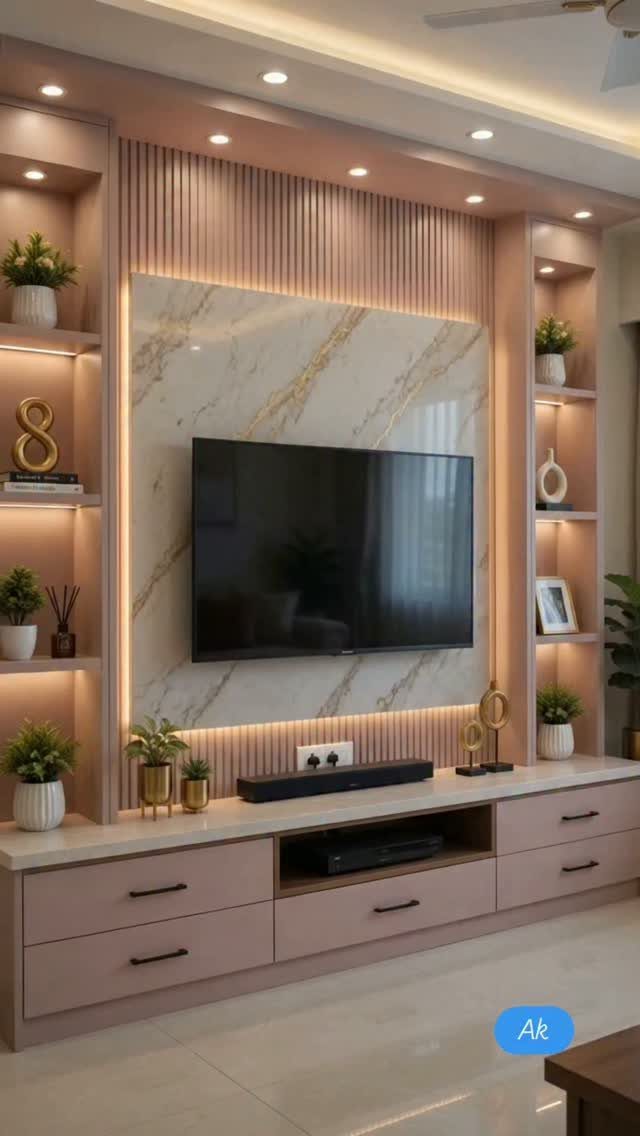
Built-in storage below the TV keeps the floor clear and gives you drawers for remotes, cables and anything else that piles up around the screen.
The long cabinet spans the width of the wall and sits flush with the marble or wood panel behind it.
Slatted wood along the sides adds texture without blocking ventilation, and backlit shelves break up the solid cabinet fronts. Soft-close drawer slides cost more up front but save you from slamming every time you close one.
This works if you need serious storage and want the TV to feel like part of the architecture.
13. Multi-Functional Media Center
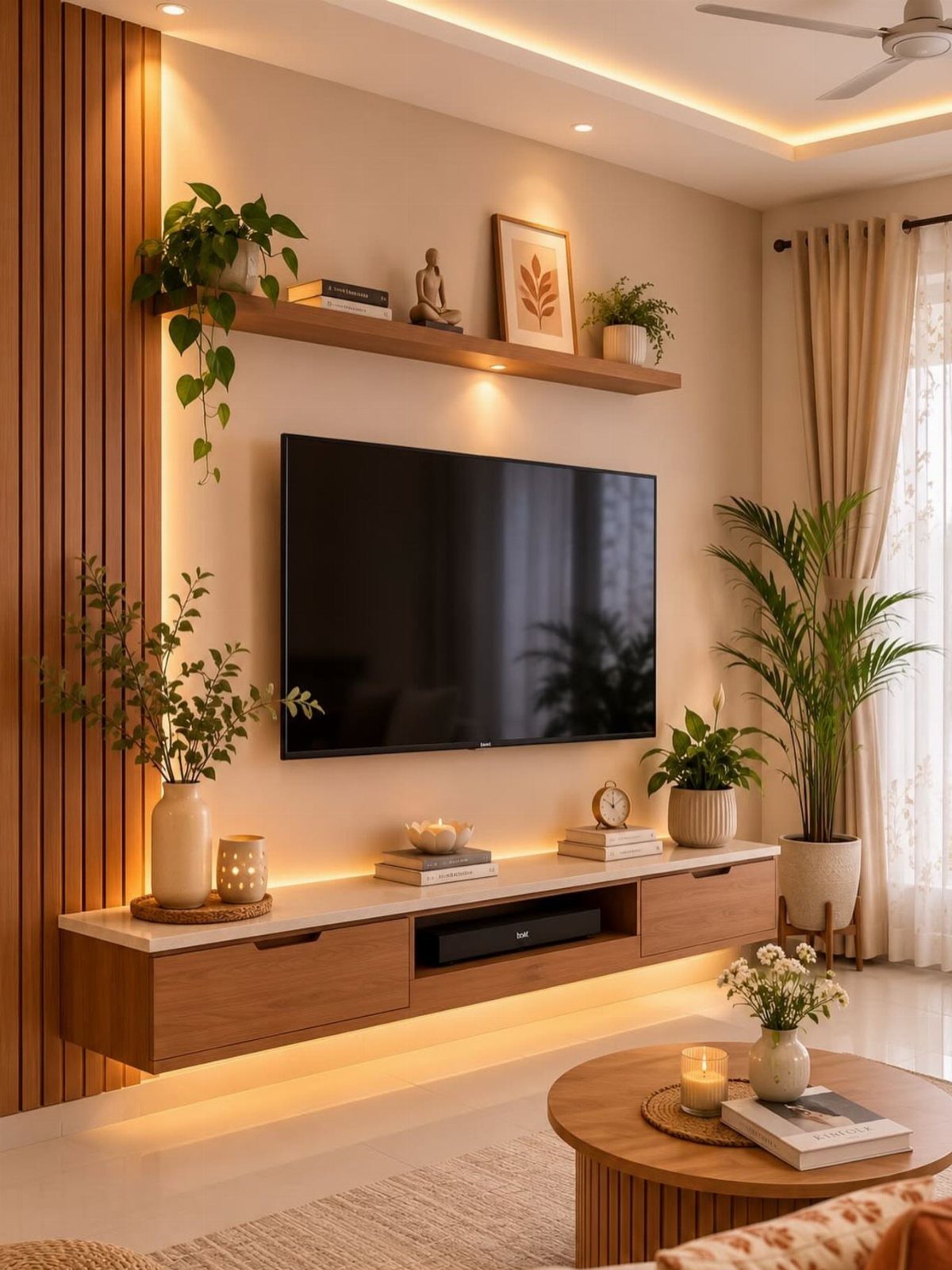
A floating shelf above the console adds a second layer for plants, books or a picture frame without eating up cabinet space below.
The setup keeps media gear on one level and decor on another, so you’re not shuffling remotes around vases.
Mount the shelf with hidden brackets so it reads as part of the wall, and keep the depth shallow enough that it doesn’t stick out past the TV.
This works if you want storage that breathes instead of one solid unit from floor to ceiling.
14. Sleek Matte Finish TV Cabinet
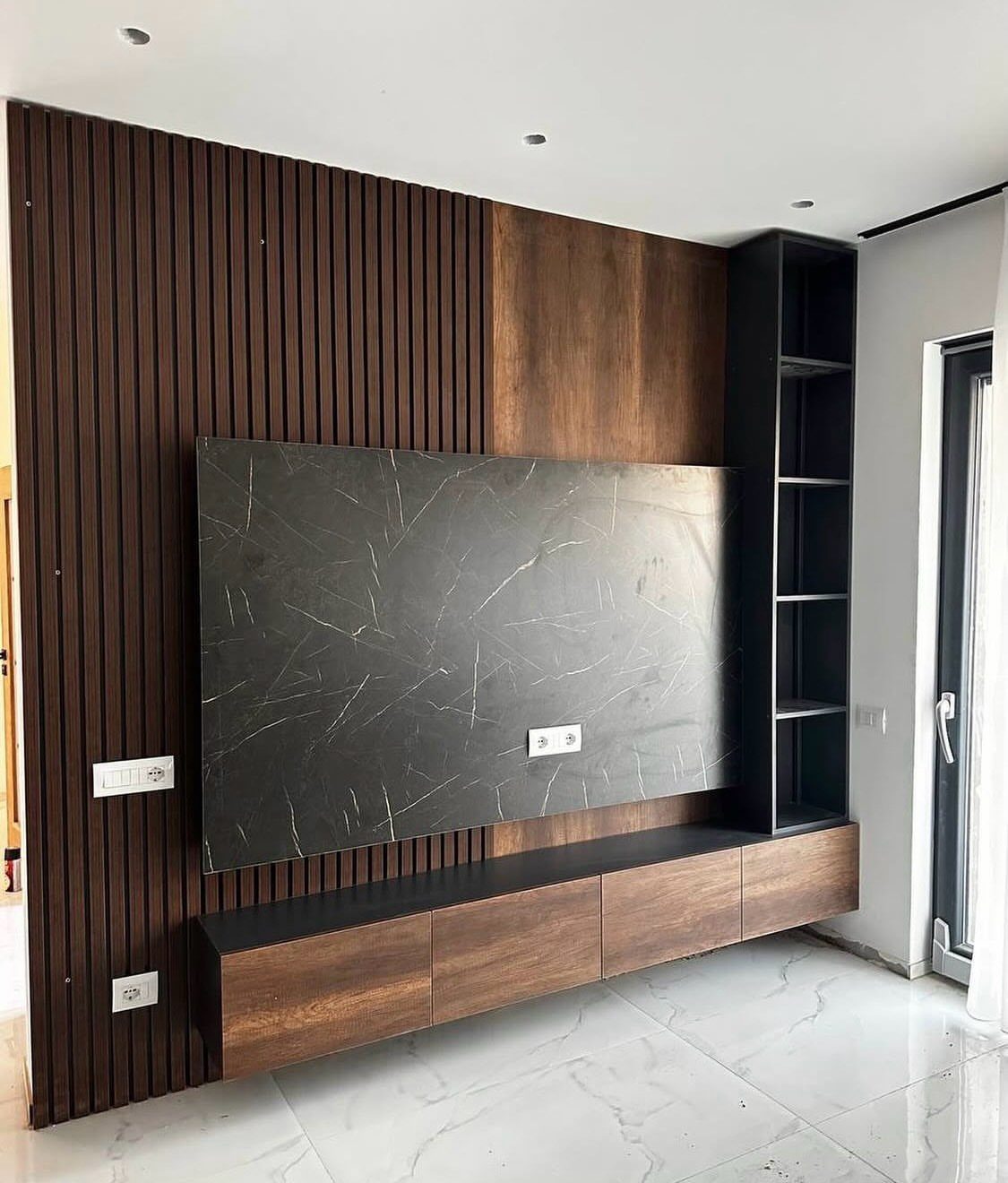
Matte finishes hold up better in a house with kids or anyone who touches surfaces while walking by. No streaks, no shine bouncing off the screen when the lights are on.
The black shelf floats in front of the marble panel and gives you one spot for a soundbar or a single object you want centered. Dark wood slats add texture on the sides without covering the whole wall.
Clean matte surfaces with a damp microfiber cloth instead of spray, which can leave residue even when it dries.
15. Rustic Wooden TV Unit
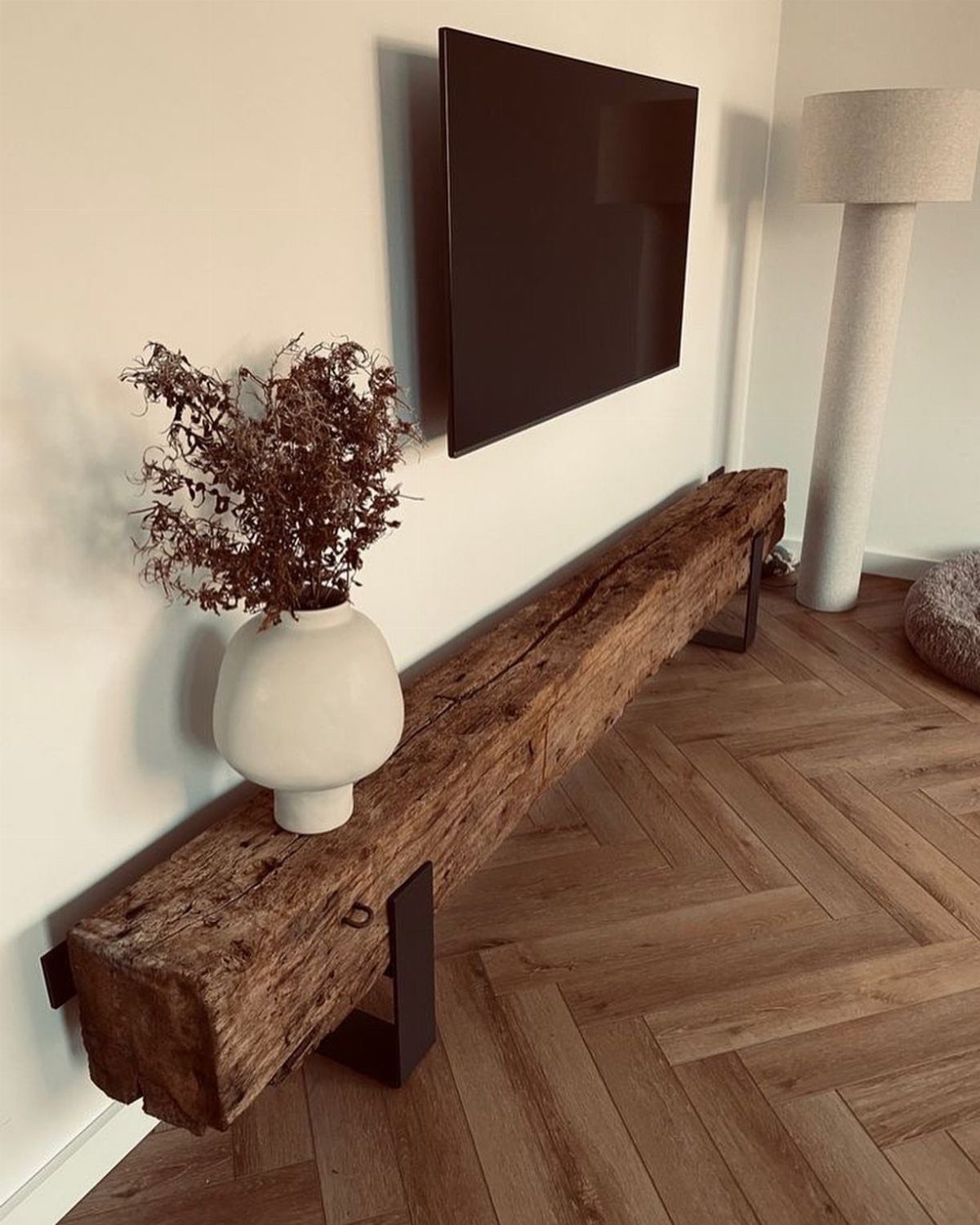
Reclaimed wood brings in the grain and weathering of old barn beams or fence posts, so no 2 units look the same. The rough texture and natural cracks give the piece character solid lumber can’t match.
Metal legs keep the profile light and lift the wood off the floor so it doesn’t block baseboard heat or crowd a small room.
The top is wide enough for the TV and a couple of small objects without turning into a catchall.
Sand the edges smooth if splinters are an issue, but leave the rest as it comes.
16. TV Unit with Integrated Fireplace
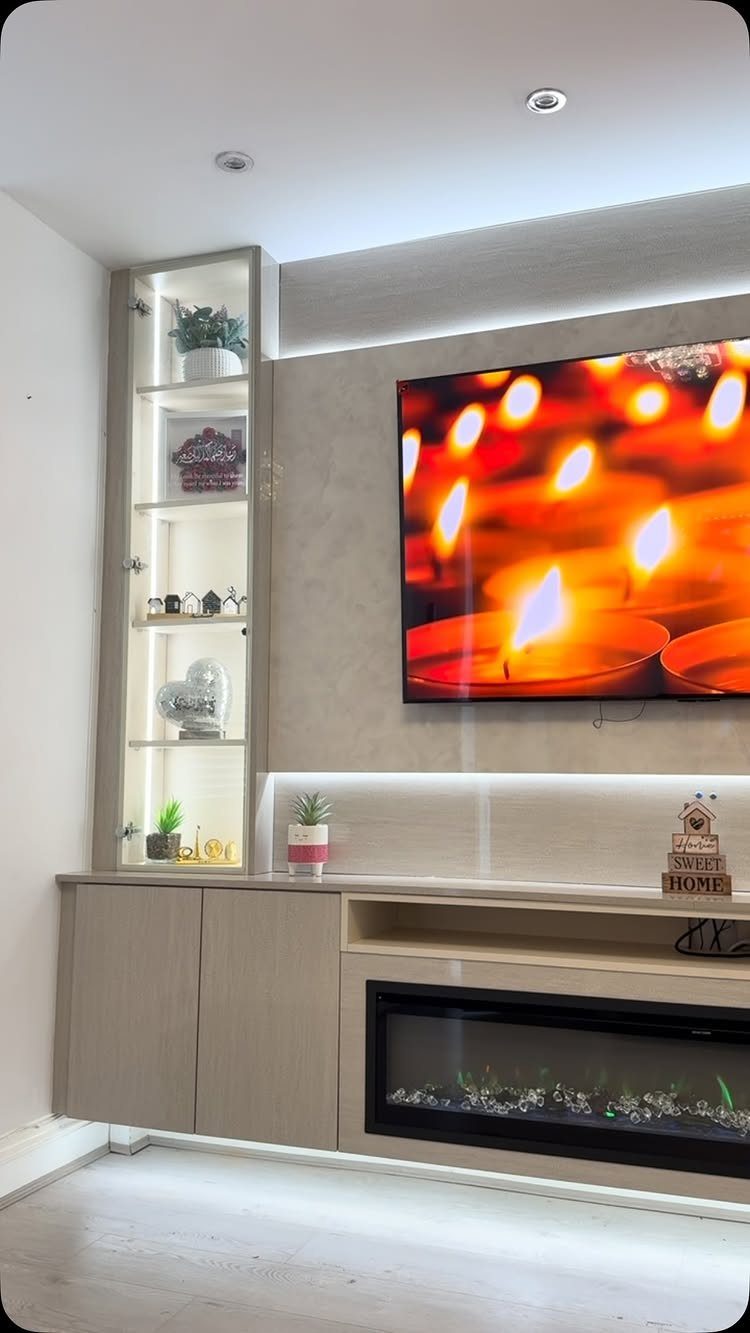
An electric fireplace drops into the cabinet below the TV and runs on a standard outlet, no gas line or chimney needed. Heat output ranges from decorative flame only to 4,600 BTUs, enough to take the chill off a small room.
The glass cabinet on the right holds decor you want lit, and the backlit panels behind the TV soften the wall at night. Wire everything through the back of the unit so cords stay hidden.
This setup works if you want the room to feel finished in winter without adding a freestanding heater.
17. Corner TV Unit Design
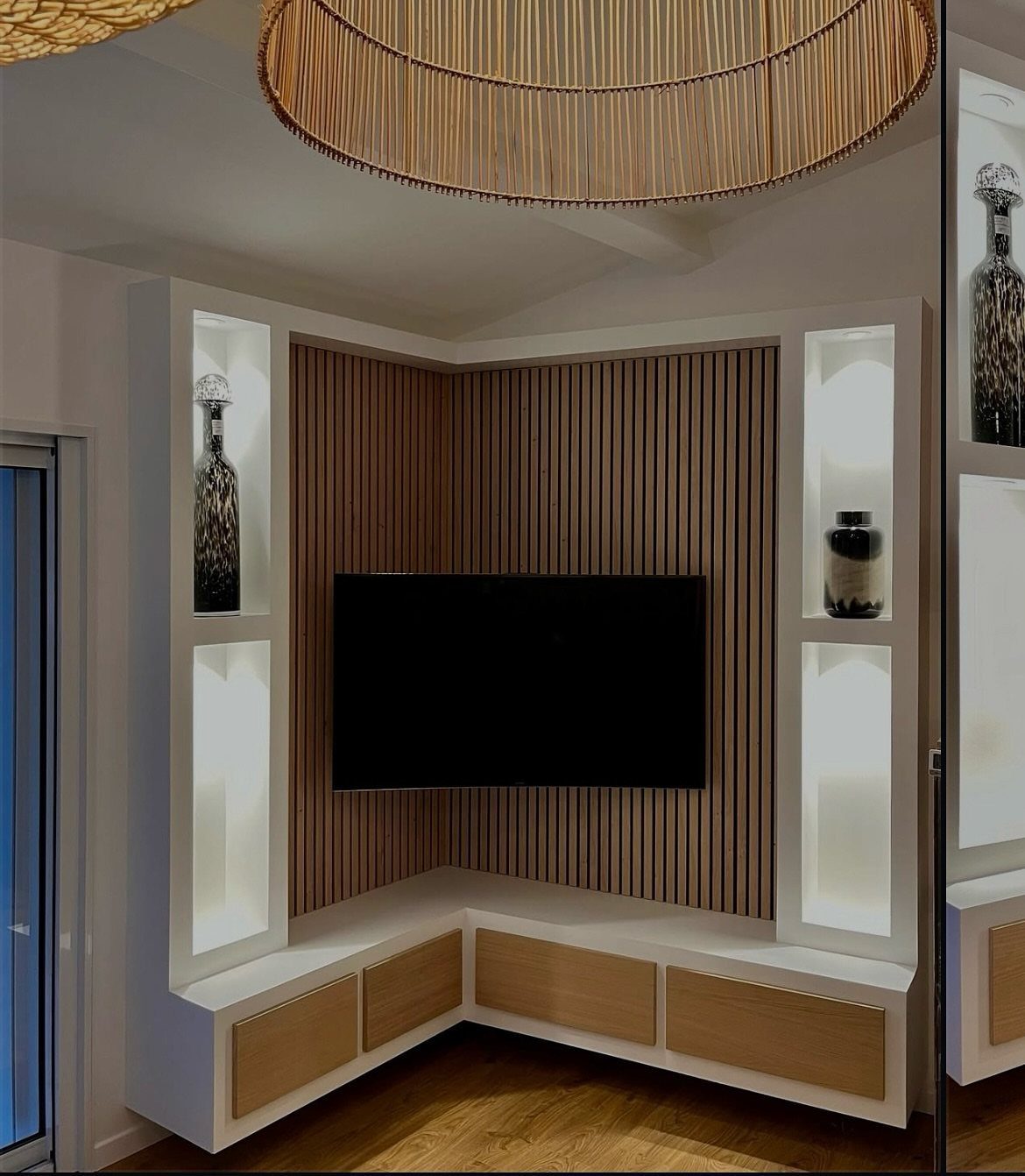
Corners usually sit empty or hold a plant that gets forgotten. A corner unit pulls the TV out of the main wall and opens up space for shelving that wraps both sides.
Build the shelves into the walls if you own the place, or use a modular system that fits the angle and mounts with brackets. The slatted wood backdrop adds depth and hides cables that run down to the cabinet below.
Angled seating works better here than a couch facing straight on.
18. Dynamic Bookshelf TV Stand
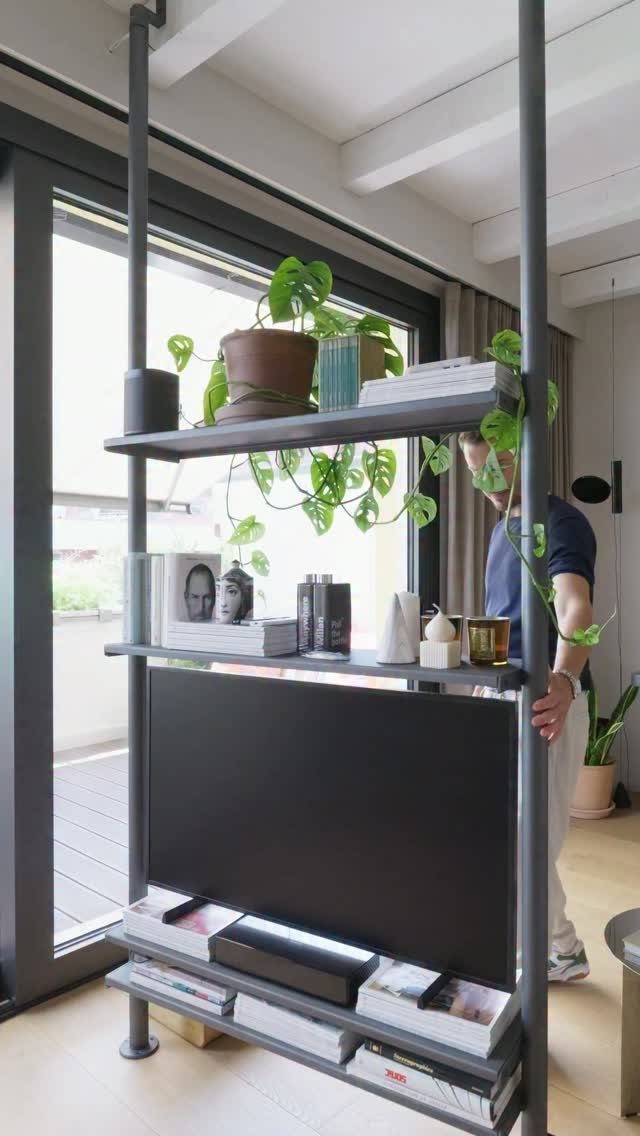
Metal shelving offers a frame you can rearrange as your gear changes. Add or remove a shelf, shift the TV up or down, and the whole unit adjusts without tools.
Industrial-style units in steel or powder-coated frames hold more weight than wood and cost less than built-ins. The open sides let you run cables wherever you need them and keep air moving around electronics.
Stack books and plants on the shelves around the TV so the screen doesn’t sit by itself in the middle of an empty grid.
19. TV Unit with Ambient Cove Lighting
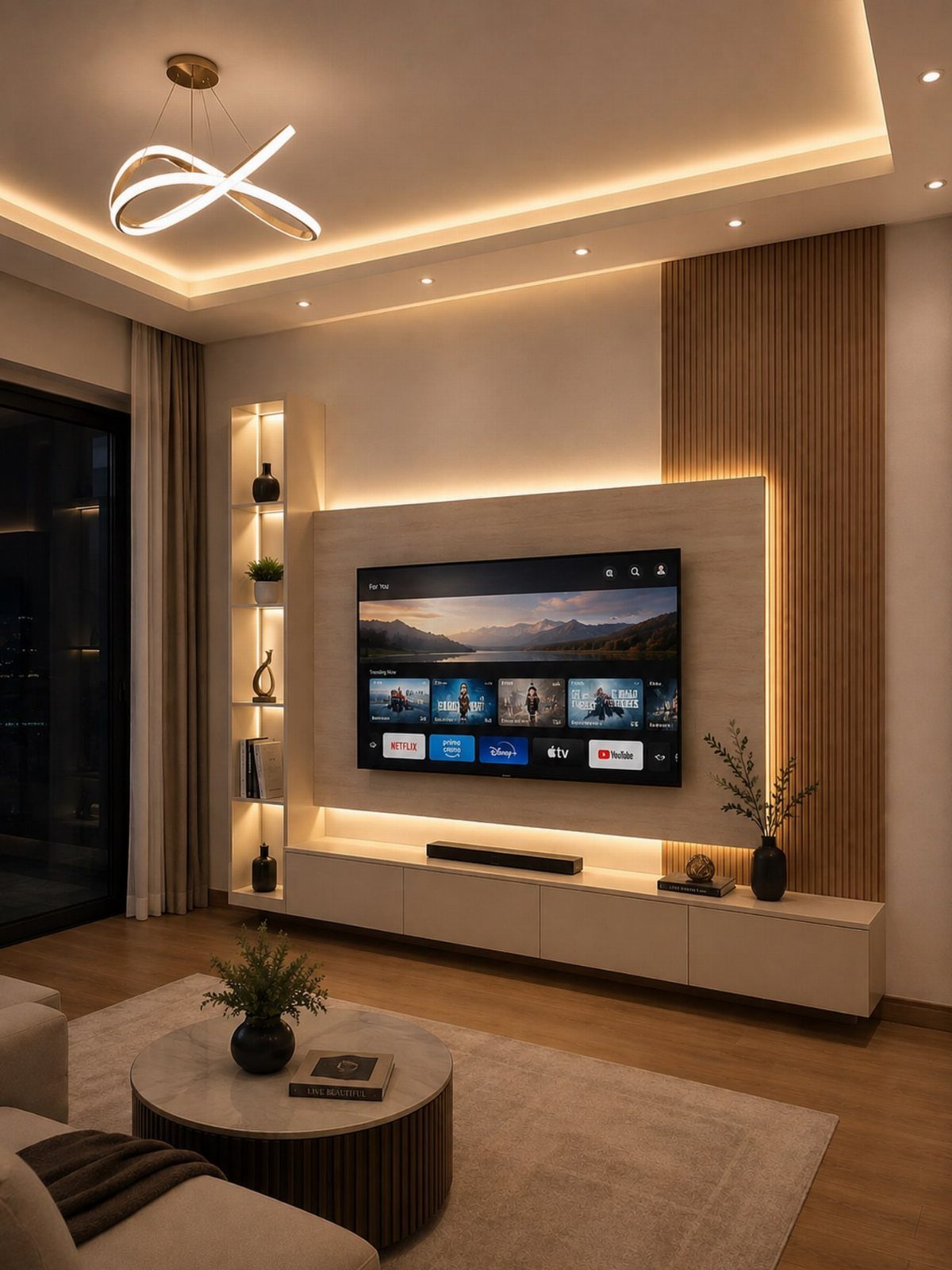
LED strips behind the TV and along the top of the console wash the wall in soft light that fills the room without glare on the screen.
The glow separates the unit from the wall and makes the wood slats read as texture instead of flat paneling.
Stick the strips to the back edge of the TV mount and the underside of the floating shelf, then run the wires down through a channel cut into the slats or behind them if the wall is hollow.
Warm white at 2700K matches incandescent bulbs and keeps the room feeling lived-in.
Dim the strips when the TV is on so they don’t wash out the picture.
20. Asymmetrical Wall Unit Design
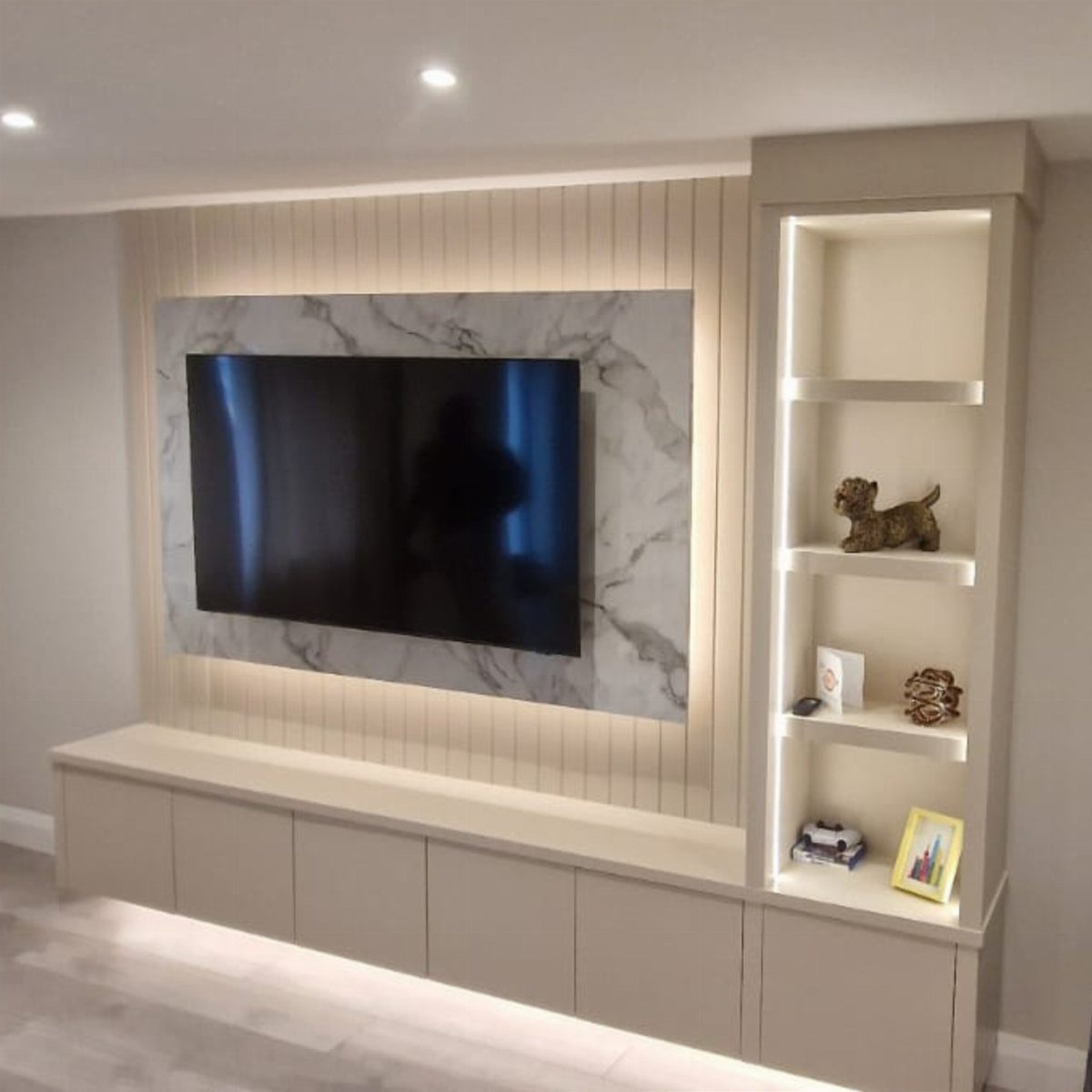
One tall cabinet next to a long low one breaks the symmetry most TV walls follow and gives you storage that fits different things.
The vertical unit holds books or decor on lit shelves, and the horizontal piece below the TV hides cables and media gear.
Mount the TV to the marble panel so it sits centered in its own zone, not in the middle of the whole wall. The backlit shelves on the right balance the screen without mirroring it.
This layout works if you have a wide wall and want the TV to feel like part of a larger composition instead of the only thing there.
21. TV Wall with Framed Artwork
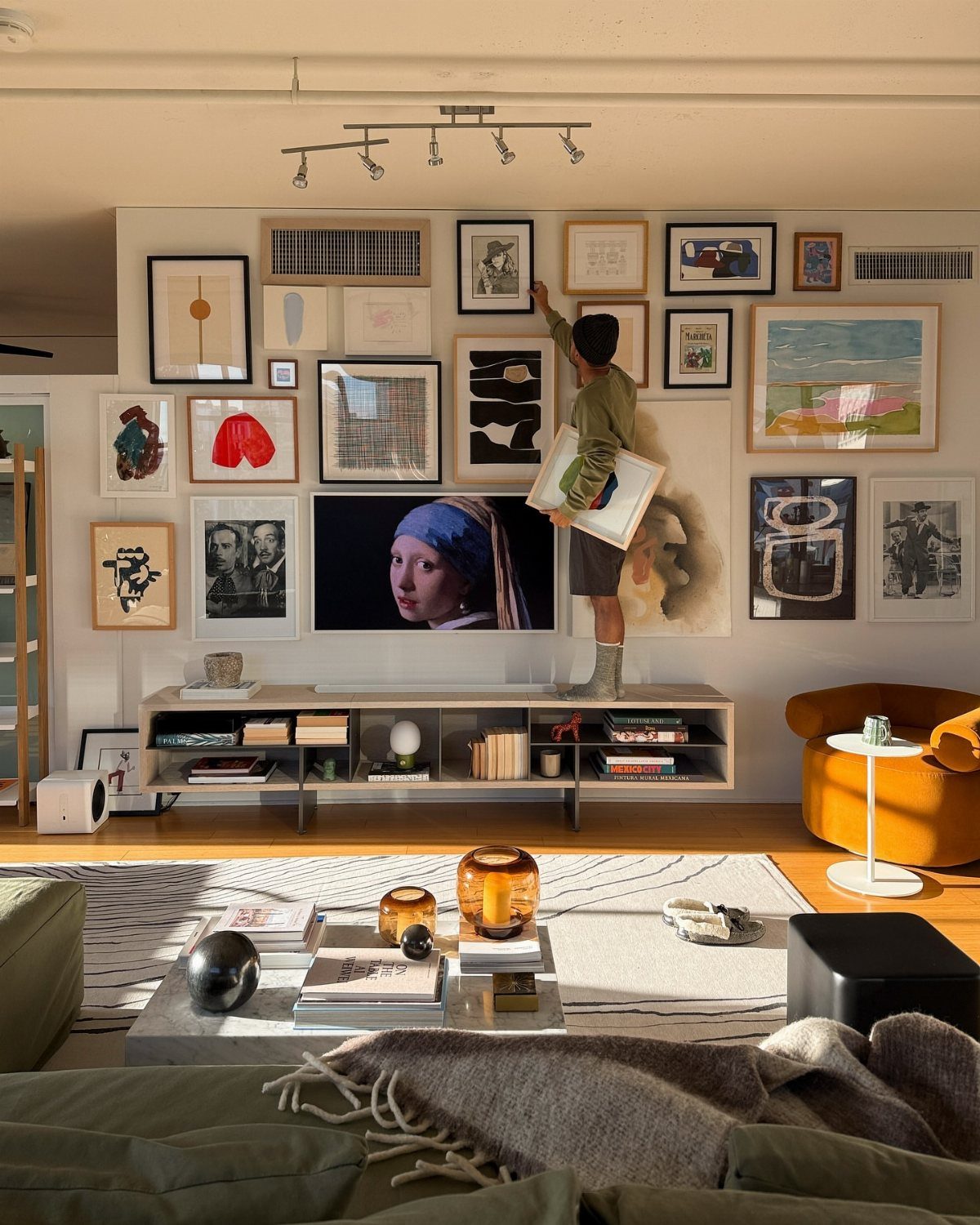
Frames in different sizes turn the TV into one piece in a gallery instead of the center of attention.
Mix family photos, prints and art you like, and leave the arrangement loose so it feels collected over time instead of planned in one afternoon.
Start by laying the frames on the floor in the shape you want, then measure from the TV and transfer the layout to the wall. Picture-hanging strips hold frames without nails if you rent.
This works if the TV feels too stark on its own and you want the wall to hold more than one thing worth looking at.
How to Style a TV Unit
A single object placed with intention reads better than five things crowded onto one shelf. If you want minimal, pick one piece that matters and let it sit alone.
Plants add life and stay compact. A potted fiddle leaf or snake plant on an open shelf balances the hard edges of the screen and the cabinet below it.
Books stacked horizontally in twos or threes fill empty spots without turning the unit into a library. Add a small vase or a candle next to the stack if the shelf feels bare.
Photo frames work best in odd numbers and different sizes. Lean one against the wall instead of hanging everything so the arrangement feels less permanent.
Keep the items you add related to what the room is for.
A reading lamp and a few books make sense next to a TV. A collection of random objects does not.
Maintenance Tips for TV Units
Dust settles on flat surfaces faster than you notice it, and a weekly wipe with a dry microfiber cloth keeps the buildup from turning into grime. Hit the top of the unit, the shelves and the front of closed cabinets.
Fingerprints show up on glass and matte finishes.
A damp cloth takes them off without leaving streaks. Wring it out well so no water sits on wood veneer or seeps into joints.
Cables pile up behind the unit and collect dust you can’t see. Pull the unit away from the wall once a month, coil loose cables with a velcro strap and wipe down the baseboard while you’re back there.
Don’t let the cabinets turn into junk drawers.
Frequently Asked Questions
What is the best design for a TV unit?
The best design depends on your space and how you use the room.
Wall-mounted units clear the floor and work well in smaller spaces, while built-ins offer more storage and make the TV feel part of the architecture. Modular systems give you flexibility to rearrange as your needs change.
What are the trends for TV walls in 2026?
Floating consoles, fluted panels and profile lighting are showing up in most new designs.
Marble-texture back panels and mixed materials like wood and metal keep the wall from feeling heavy. The shift is toward cleaner layouts with hidden storage instead of cabinets that crowd the wall.






