
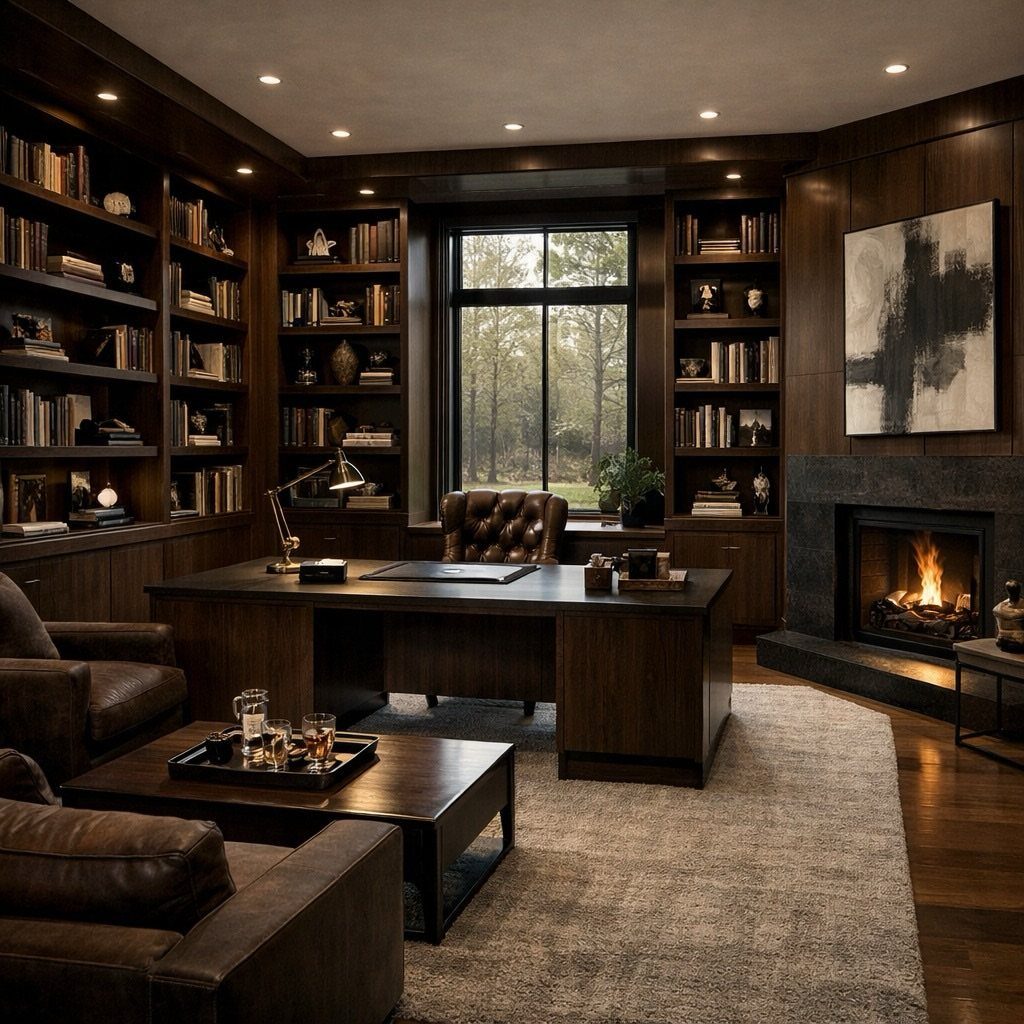
A luxury home office can run anywhere from built-in shelves and layered lighting on a modest remodel budget to custom metalwork ceilings and marble desks that cost as much as a car.
The choice is whether you lean into long-focus ergonomics and task lighting, or treat the room as a place that balances real work with enough visual weight to impress anyone who steps inside.
A tufted leather chair and dark hardwood desk bring the warmth of materials that improve with age, while built-in shelves, bold paint, and statement lighting turn the space into something closer to a private study than a typical home office.
1. Leather and Hardwood Desks and Chairs
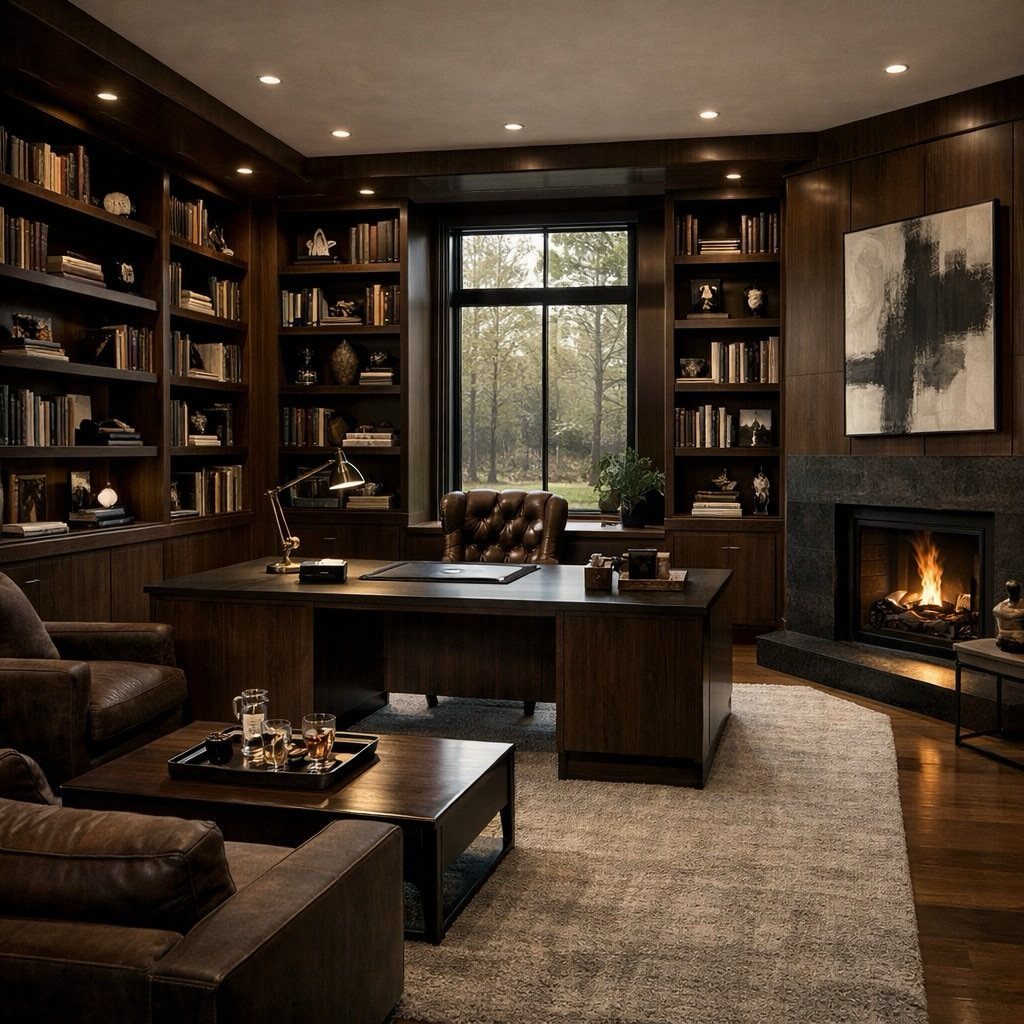
A dark hardwood desk paired with a tufted leather chair sets a tone that feels serious about the work done there.
The combination works because both materials age well: leather develops patina, and a solid wood desk takes decades of use without looking tired.
If the budget allows it, look for full-grain leather in the chair and a desk made from walnut, mahogany, or cherry. Veneer over engineered wood costs less and still reads as substantial if the edges are finished cleanly.
2. Ambient, Task, and Accent Lighting
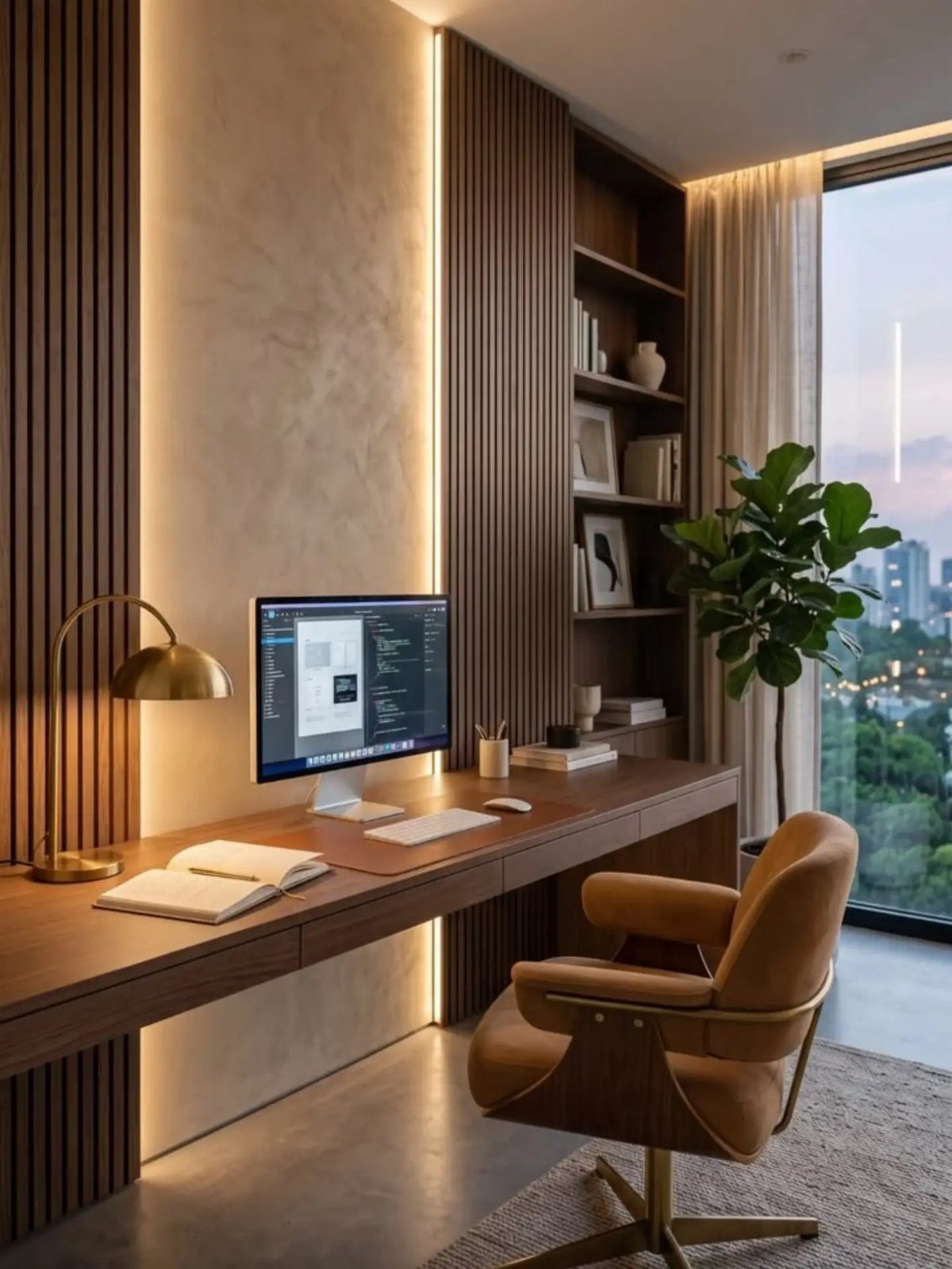
Overhead lighting alone flattens a room. Layering 3 types gives you control: ambient light from recessed fixtures or a chandelier, task lighting at the desk, and accent lighting to highlight shelves or architecture.
A single adjustable lamp at the desk finishes the layering. Dimmers on each circuit let you shift the mood depending on whether you’re working or on a video call.
3. Built-in Shelves
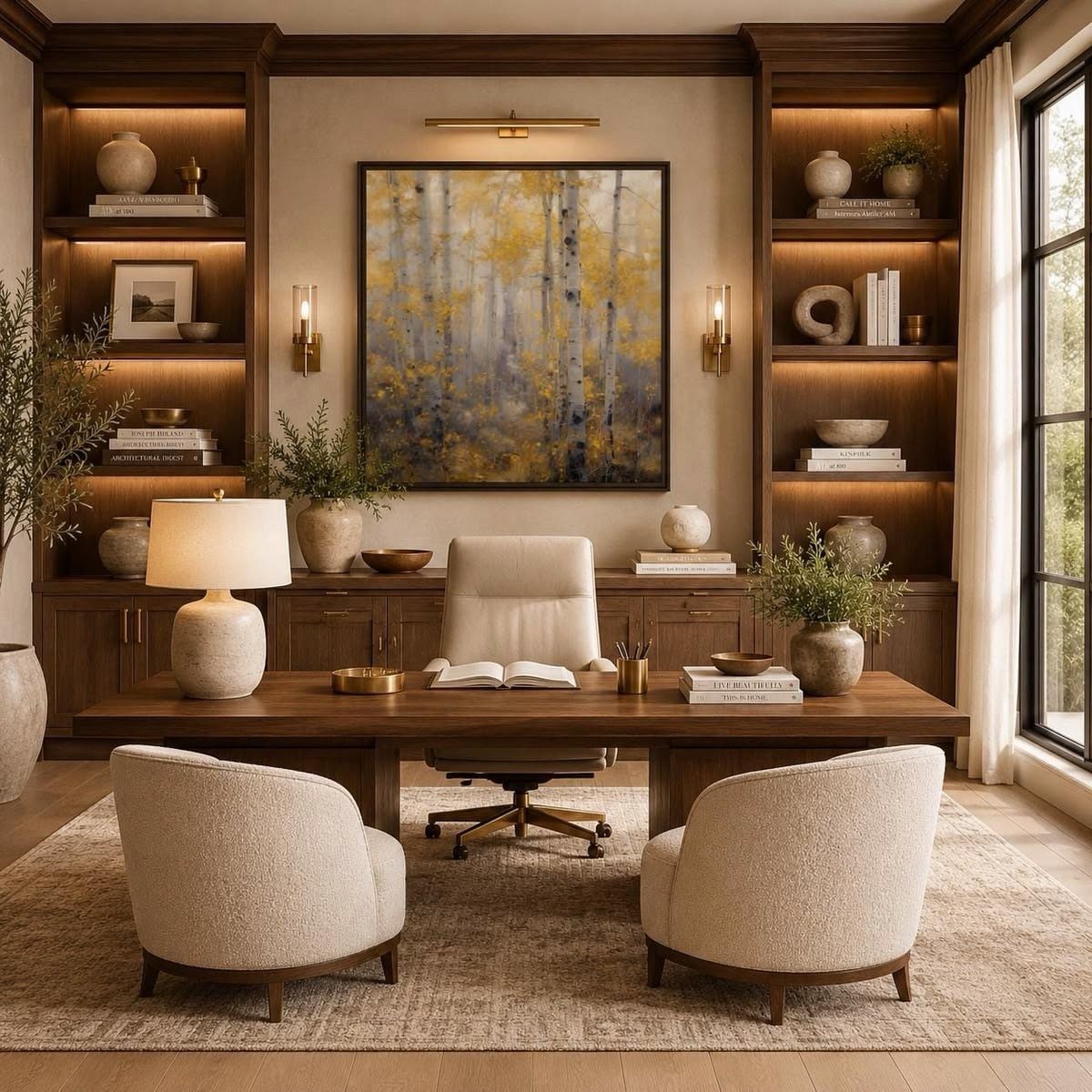
Built-in shelving uses the full height of the wall and frames the desk as part of the architecture. The result feels permanent in a way freestanding bookcases don’t, and you gain storage without losing floor space.
Painted MDF costs less; stained hardwood costs more but matches higher-end furniture. Either way, plan the layout around what you’ll actually store: books, binders, and objects each need different shelf spacing.
4. Custom Artwork and Personal Artifacts
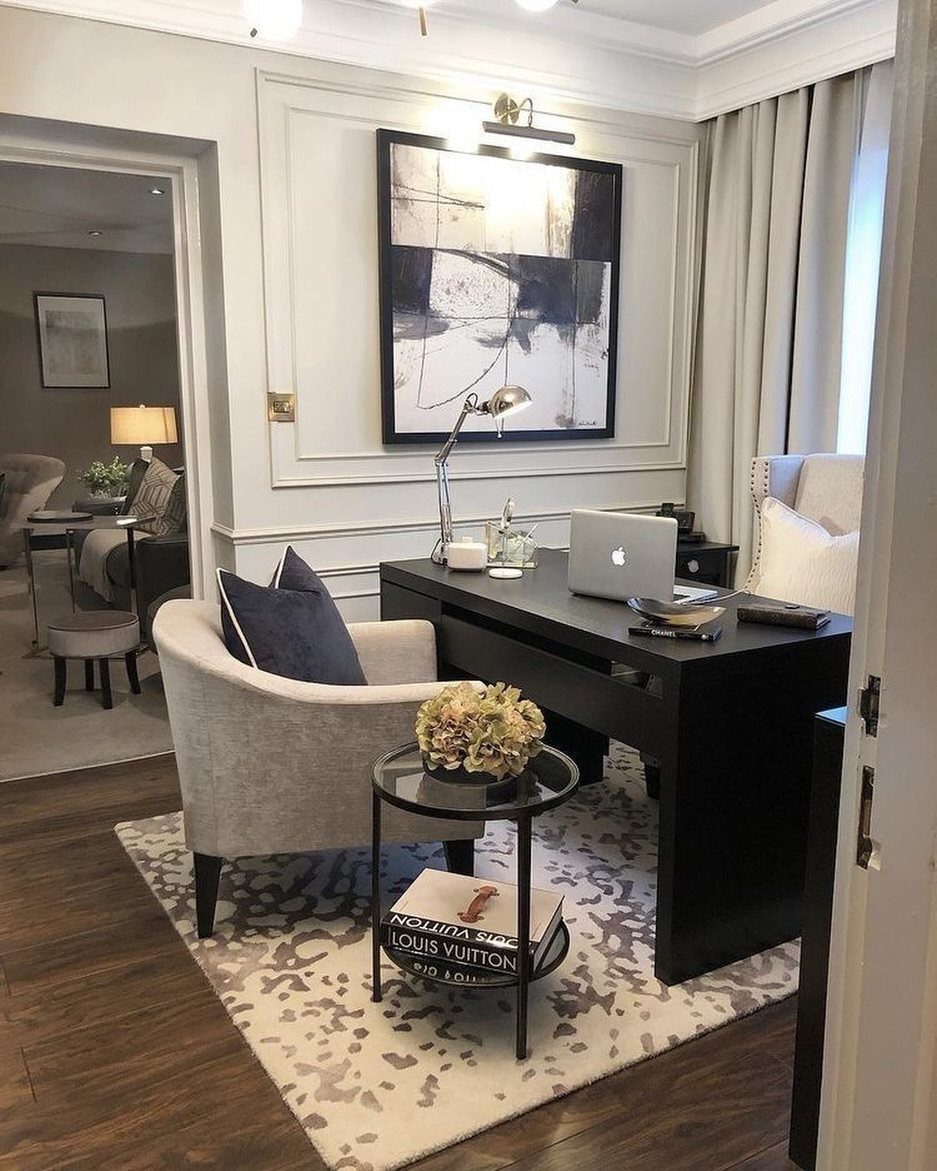
A large piece of art anchors the wall behind the desk and pulls the room together faster than a gallery wall of small frames.
Personal artifacts, whether a sculpture, a stack of design books, or something collected over time, make the space feel like yours instead of staged.
The scale matters.
A piece that’s too small gets lost; aim for something at least half the width of the desk. Original work and one-of-a-kind finds carry more weight than mass-produced prints, and that difference shows.
5. Ergonomic Luxury
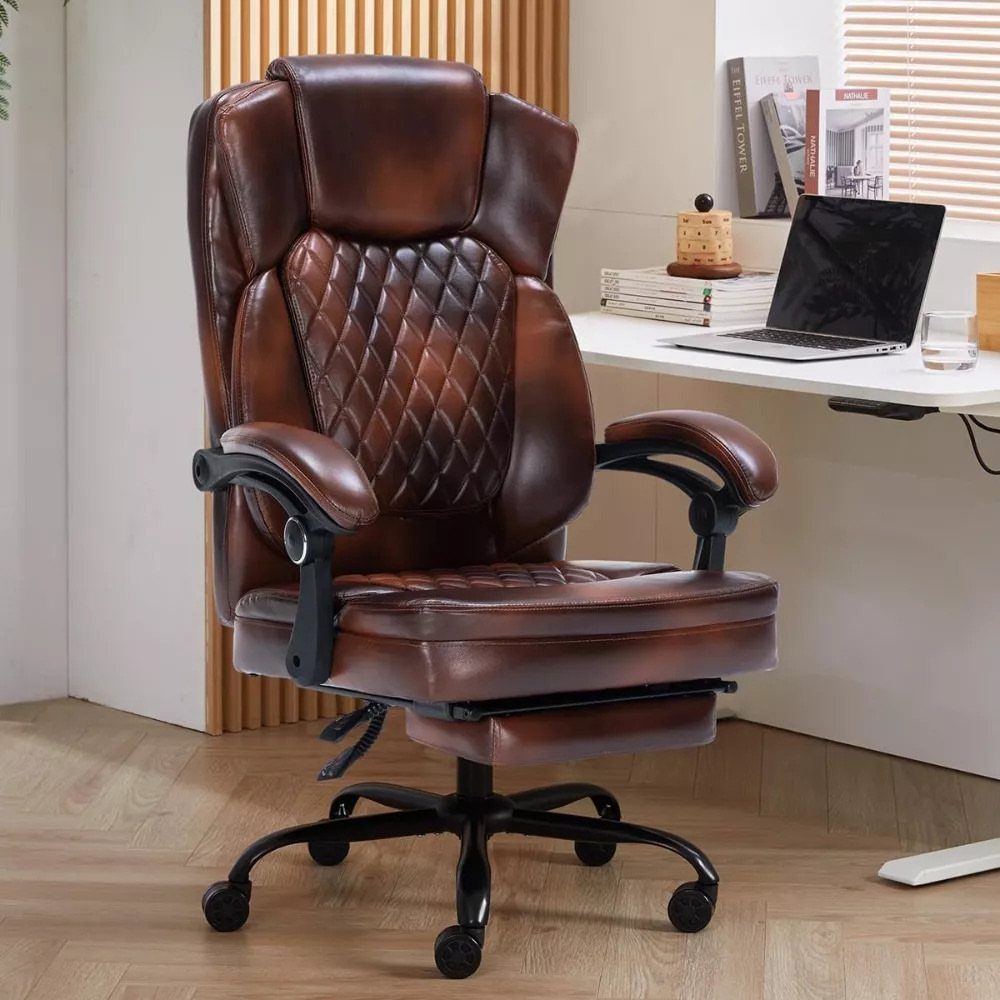
An ergonomic chair designed for long hours keeps your back and neck from paying for it later.
The visible upgrade here is a reclining leather executive chair with lumbar support and an integrated footrest, which lets you shift positions without leaving the seat.
If the budget is tighter, spend on adjustable lumbar support and seat depth first; those 2 features do more for comfort than padding alone.
6. Plants and Natural Elements
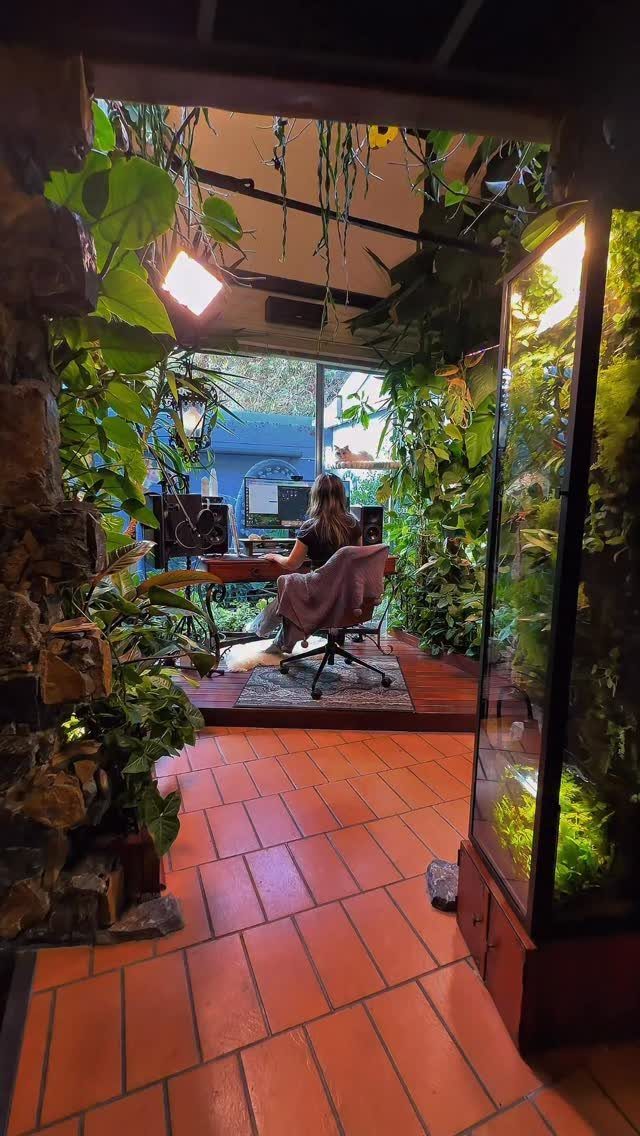
Filling the office with live plants softens hard surfaces and improves air quality at the same time.
A stone accent wall, a large vertical terrarium, and plants at multiple heights create a space that feels more like a conservatory than a cubicle.
This approach needs natural light and regular care, but it delivers a room that doesn’t feel like work. Start with low-maintenance varieties like pothos, snake plants, or monstera if daily watering isn’t realistic.
7. Carpets, Curtains, and Wall Panels
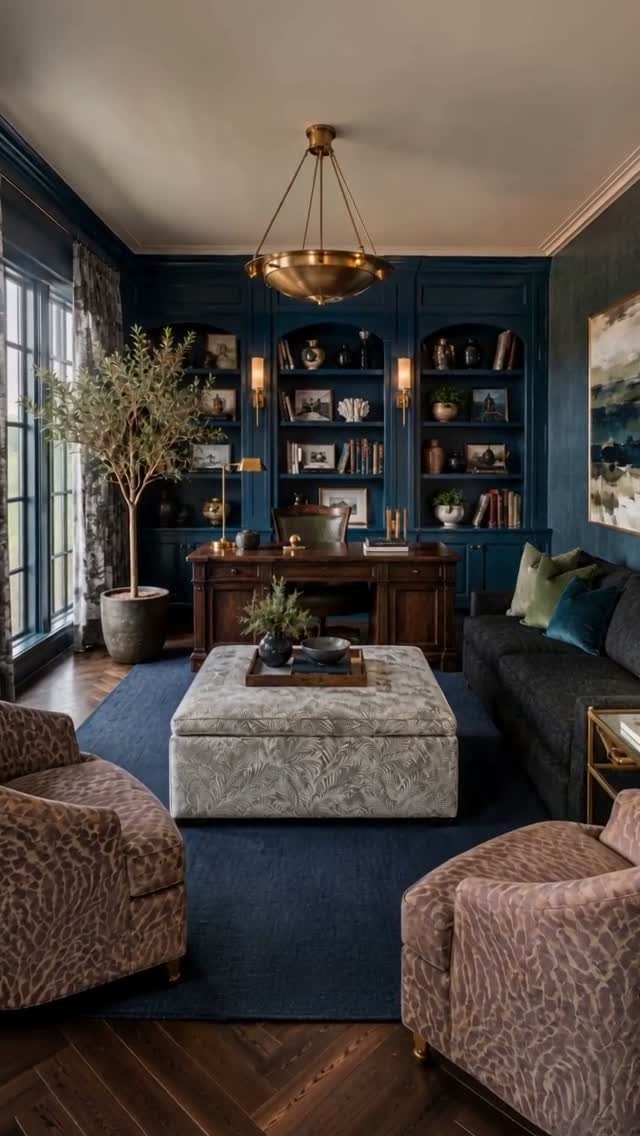
Navy wall panels and a matching area rug create a room that feels enclosed without closing in.
The color choice here anchors everything else: curtains, chairs, and smaller details can run wilder because the walls and floor hold the palette steady.
Fabric-wrapped acoustic panels cost more than paint but absorb sound and give the walls texture.
If panels aren’t in the budget, a single saturated color on every wall does similar work, and a large rug in the same family ties it together without matching exactly.
8. Home Music Studio and Office
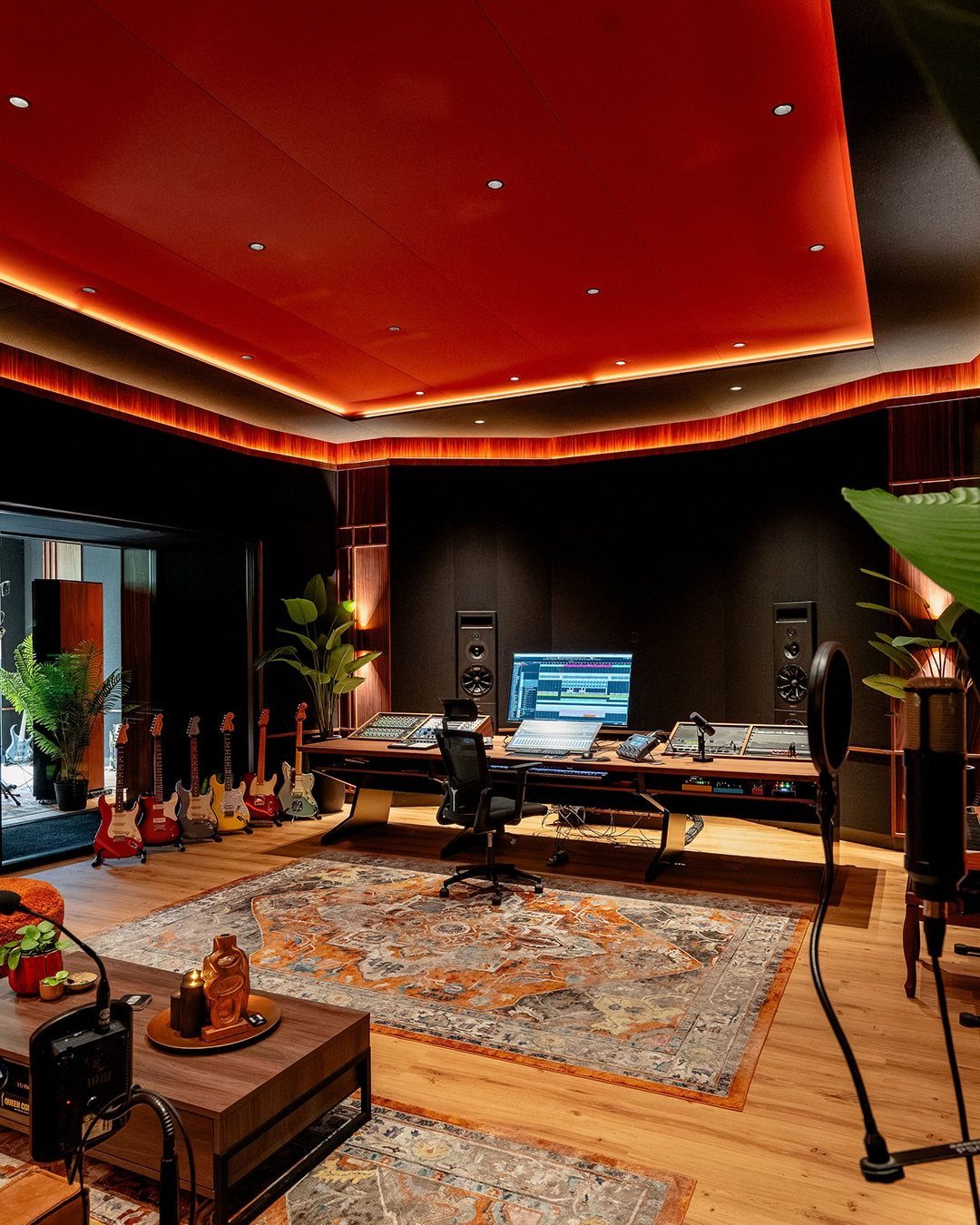
Combining a music production setup with an office means the workspace doubles as a creative studio. Guitars on wall mounts, a mixing console, and studio monitors turn the room into something functional for both tracking and day work.
The red ceiling lighting sets the mood but needs a separate switch so it doesn’t interfere with video calls or detail work.
Acoustic treatment matters here: even light foam panels on the walls will tighten the sound and make it usable for recording.
9. Dramatic Statement Ceiling
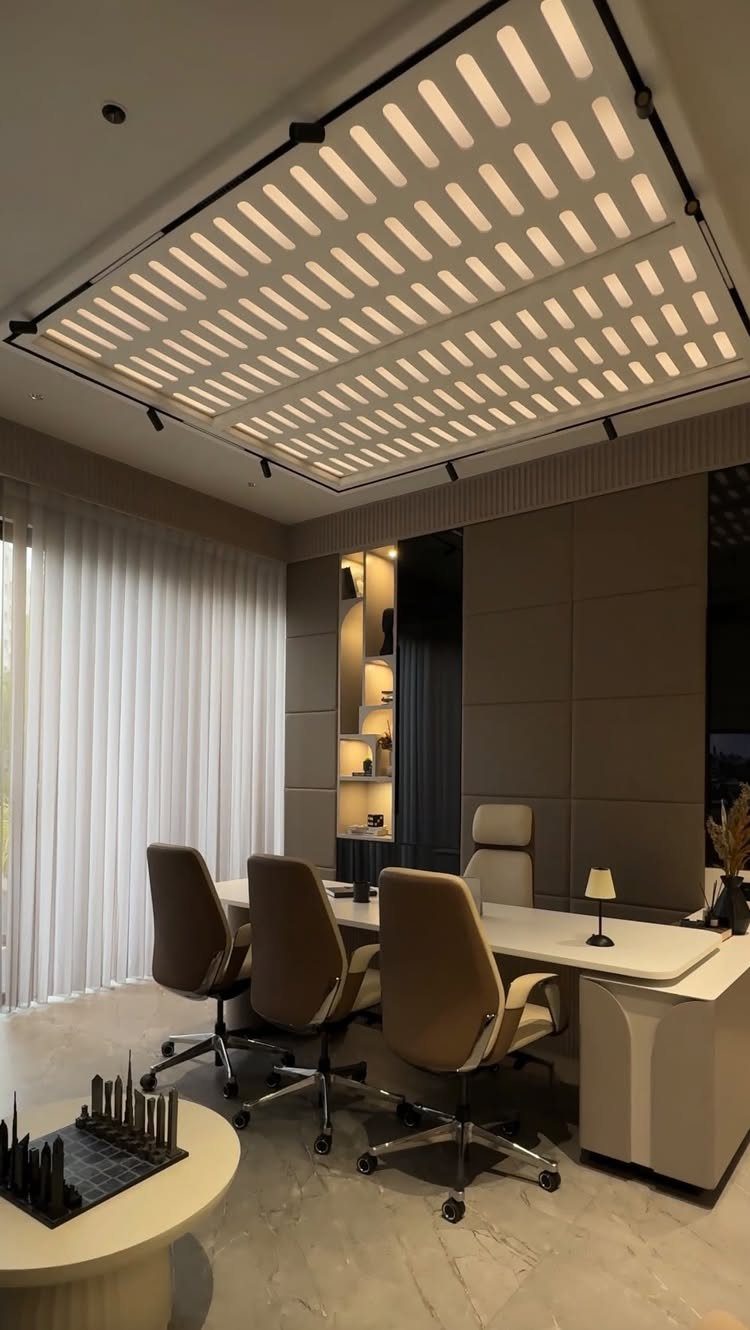
An illuminated grid ceiling changes the entire feel of the room by pulling your eye up instead of keeping it at desk level.
The fixture here is architectural, built into the ceiling rather than hung, and it casts even light across the workspace without glare.
This approach works best with high ceilings where the fixture has room to breathe. Installation usually means custom metalwork and wiring run during a remodel, so budget and timeline both go up compared to standard lighting.
10. Bold Color Palette
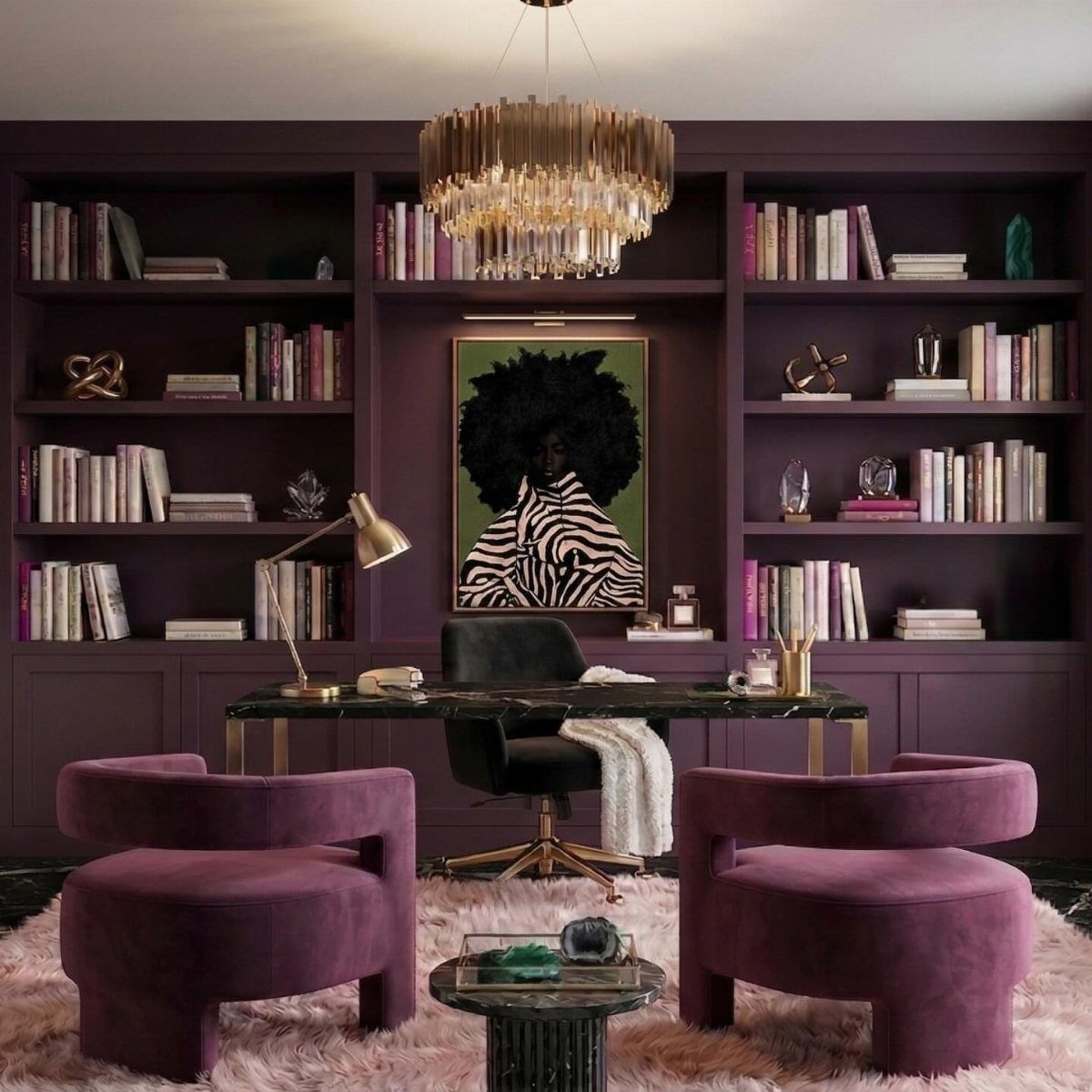
Deep purple walls paired with black marble and gold accents create a space that skips neutral entirely. The velvet armchairs and chandelier push the look further, and the result feels more like a private library than a standard office.
This palette demands commitment.
Purple reads differently depending on the light, so test samples in the actual room before you commit to painting. The marble desk grounds the color and prevents it from tipping into too much softness.
Creating a Distraction-free Setup
A separate room with a door does more than block noise.
It sets a boundary the rest of the household can see, and it lets you close the space off at the end of the day instead of leaving work visible from the couch.
Avoid doubling the office as a guest room or media room if the floor plan gives you the choice.
A bed in the corner invites an afternoon nap when focus drops, and a TV on the wall competes for attention during hours you’d rather stay on task.
The mental shift matters as much as the physical one. Walking out and shutting the door signals that work is over, and the separation makes it easier to return the next morning without the space feeling like it never stopped.
Maintaining a Luxury Home Office
Coordinated desk accessories in marble or hardwood keep the surface looking intentional instead of cluttered. Framed photos, tasteful memorabilia, and a plush neutral rug add warmth without softening the room’s purpose.
Textured wallpaper gives the walls depth, and houseplants bring a little nature indoors while keeping the atmosphere relaxed. Each piece should feel chosen, not leftover from another room.
Regular cleaning and organization preserve both the look and the function.
Dust on dark wood shows faster than on lighter finishes, and leather needs occasional conditioning to keep it from drying out. A space that looks this deliberate only stays that way with consistent upkeep.
A luxury home office is more than just a workspace; it’s a reflection of your style and a testament to your commitment to quality and productivity.
— Resident
Frequently Asked Questions
How to make a home office look nice?
Start with quality furniture like a hardwood desk and leather chair, then add layered lighting that includes ambient, task, and accent sources. A large area rug and houseplants soften hard surfaces and add warmth without cluttering the room.
What are the top office decor trends for 2026?
Biophilic design that brings plants and natural elements indoors is gaining ground, along with adaptive spaces that handle multiple types of work.
Smart technology integration has moved from optional to standard, and flexible layouts that let you shift between tasks are replacing rigid desk setups. These trends focus on spaces that support both productivity and comfort over long hours.
What are the different types of office interior design?
Office interiors range from traditional setups with dark hardwood and tufted leather to bold modern spaces that use saturated color and architectural lighting.
Some combine music production gear with desk work, turning the room into a creative studio, while others lean on natural elements like stone walls and live plants to feel more like a conservatory.
The palette and materials set the direction: neutral tones keep things calm, while deep purple or navy creates drama.






