
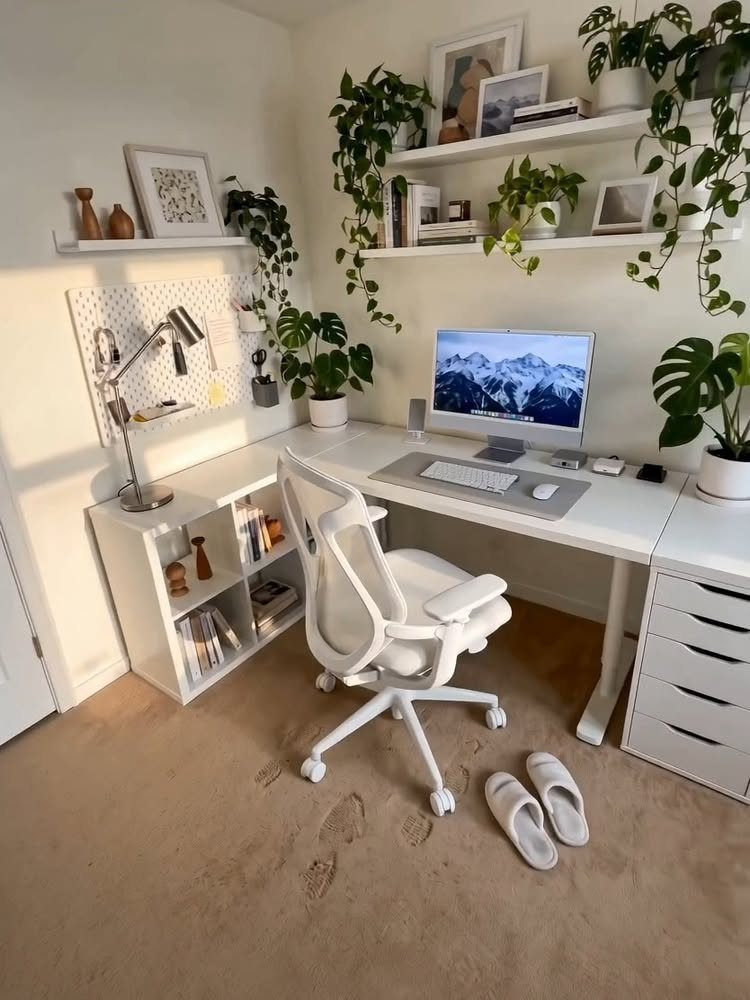
Ikea office setups for small spaces range from floating desks that fold away when you’re done to long Alex configurations with dual drawer units supporting a tabletop wide enough for dual monitors and paperwork side by side.
The right fit depends on whether you need the desk to disappear completely, share the room with furniture already there, or claim a permanent corner without blocking walkways.
1. Closet Office
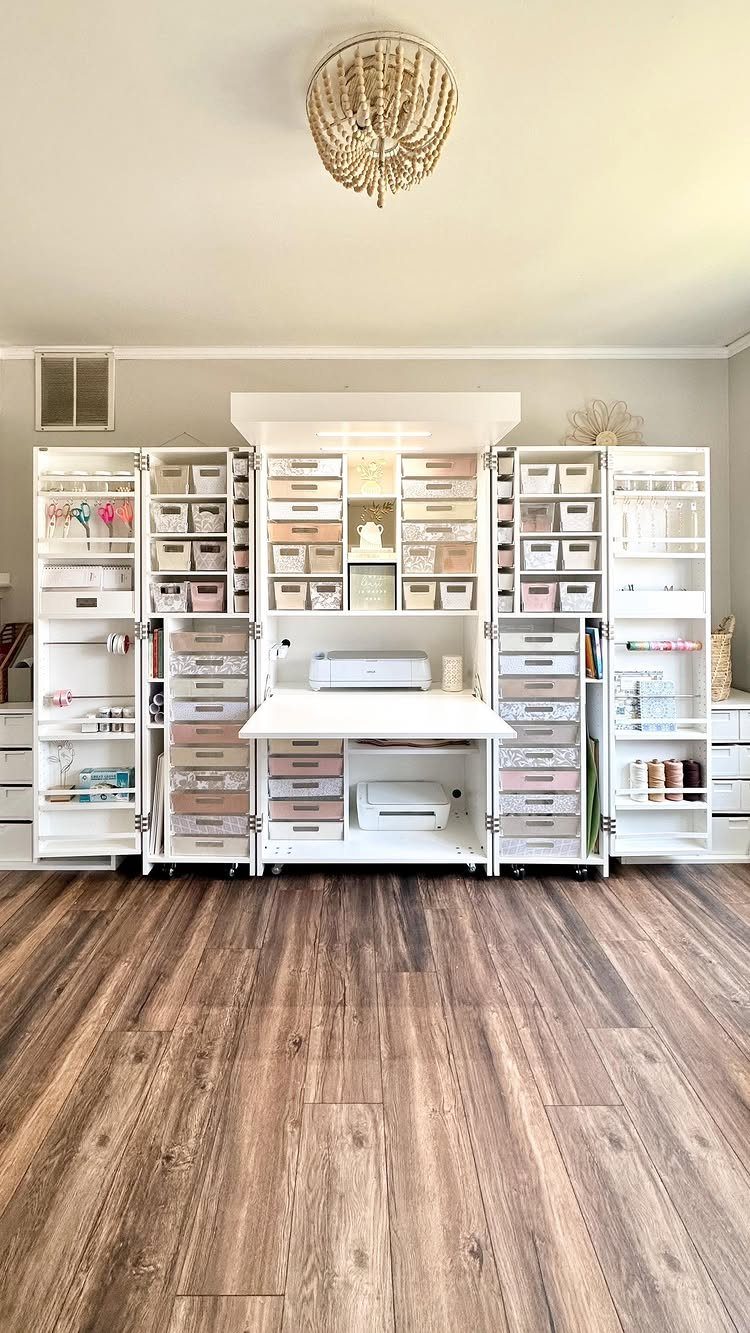
An unused closet turns into a dedicated work zone without stealing floor space from your bedroom or living area.
Remove the door if the closet is shallow, or keep it on if you want the office hidden when you close up for the day.
A desk at counter height fits most closets.
Add a small printer, bins on upper shelves, and a task light clipped to the frame. Closet offices work best when the opening is wide enough to sit comfortably and roll a chair in and out.
2. Modular Ikea Shelves and Cabinets
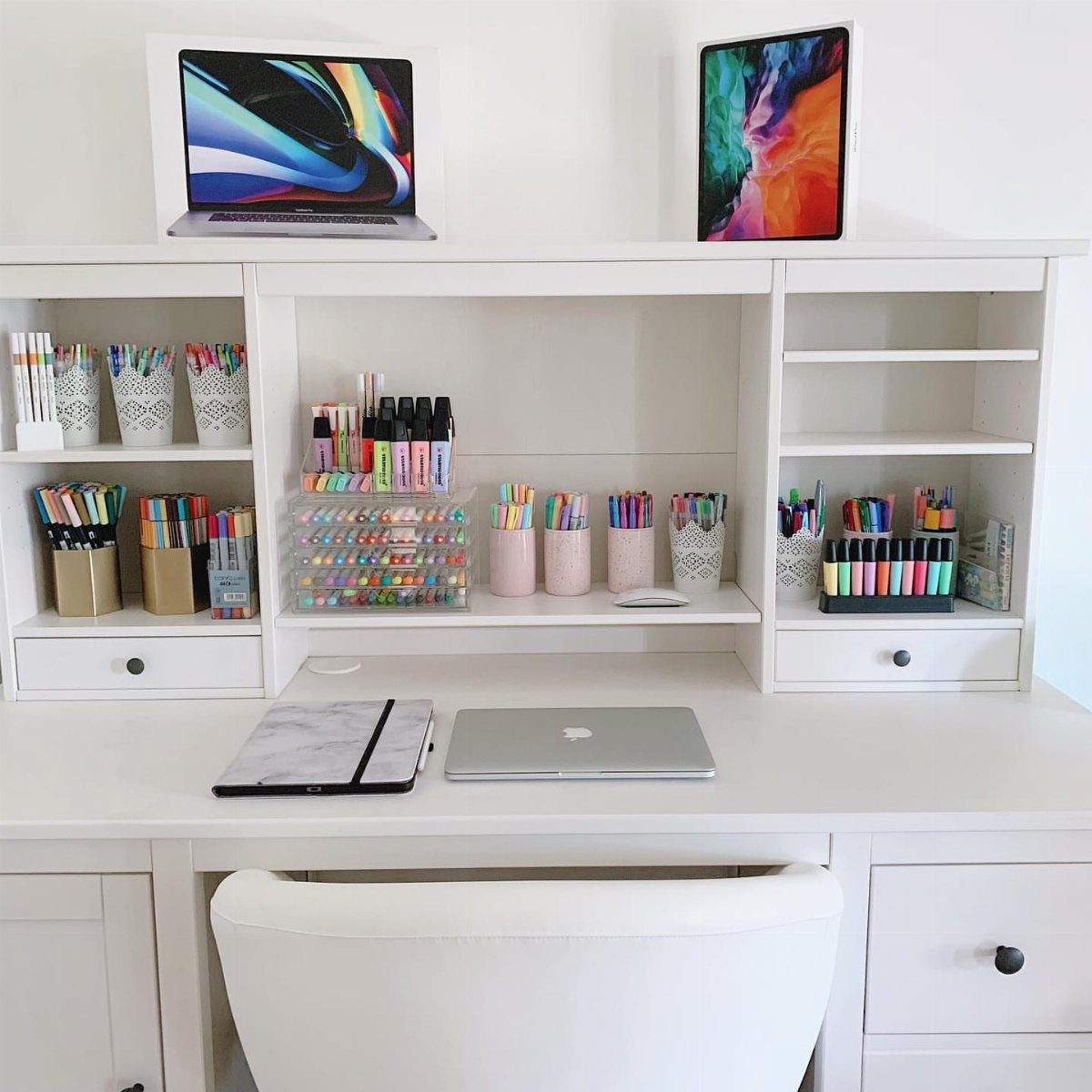
Modular pieces let you adjust height and configuration as your storage needs shift. Stack cabinets with open shelves, add a desktop on top, and build upward instead of outward when floor space is tight.
Closed cabinets at the base hide clutter while open shelves above keep supplies in reach. Reconfigure the modules later if you add equipment or change how you work.
3. HELMER Drawer Unit
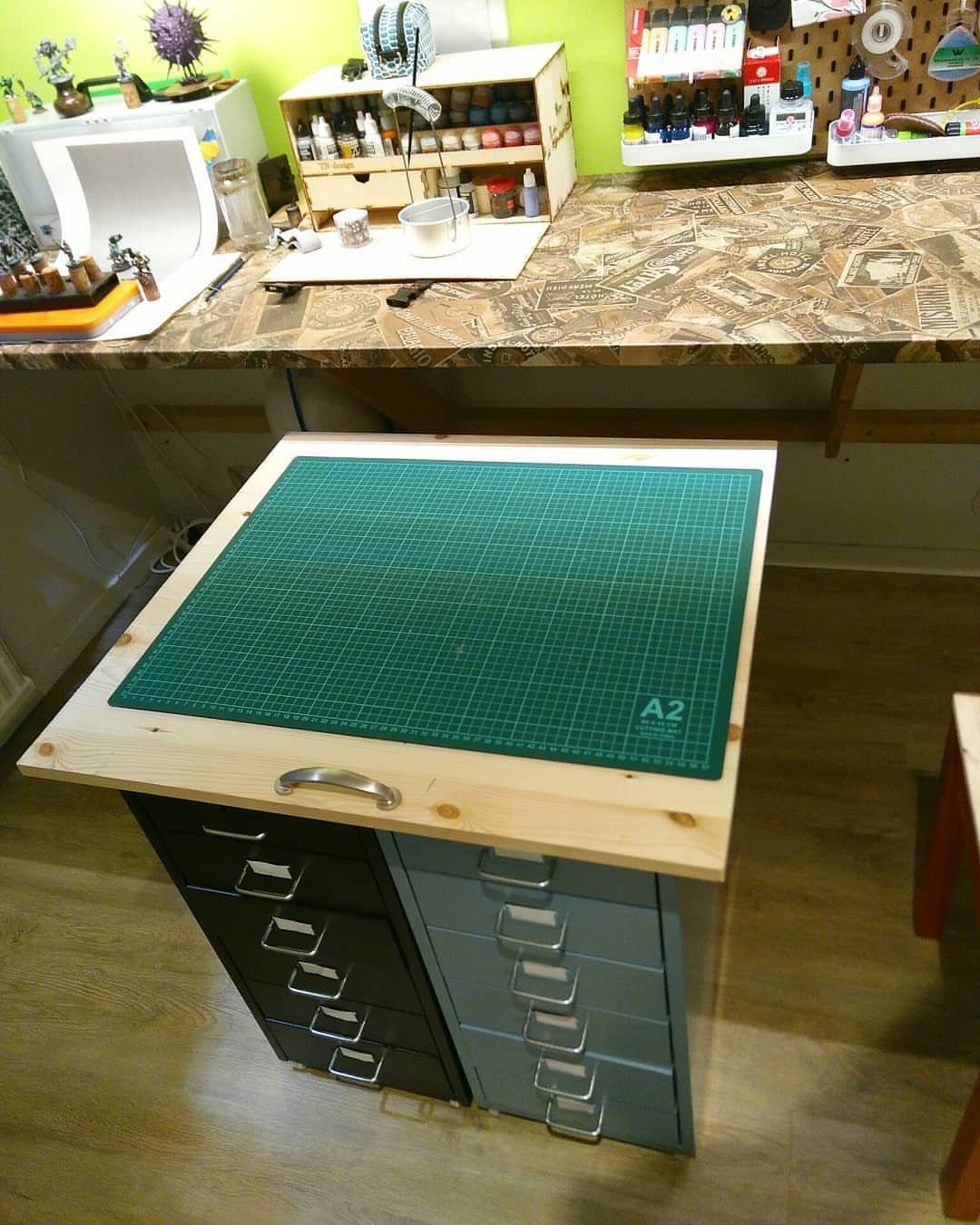
This six-drawer metal unit rolls on casters. Two of them side by side support a tabletop and give you a mobile desk with drawers underneath when you need to shift the layout.
Casters lock in place when you sit down to work.
The drawers pull out fully, which matters when you store flat items like paper, mats, or fabric. Roll one unit away from the desk and use it as a supply cart in another part of the room.
4. Long Ikea Alex Desk
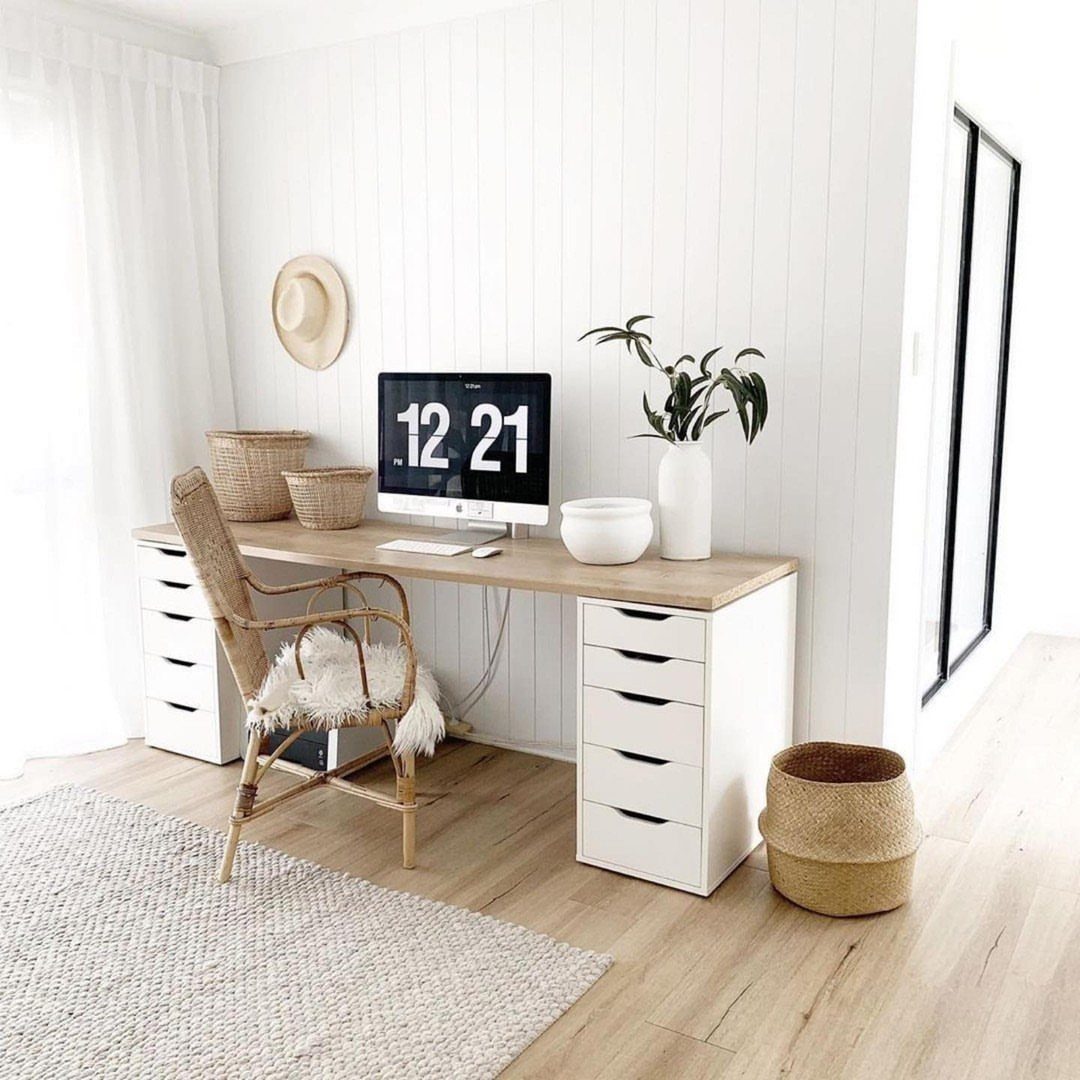
Two Alex drawer units spaced apart support a long tabletop, creating a desk with room for dual monitors, a laptop, and paperwork all at once. The drawer units anchor the desk and provide storage without adding a bulky cabinet.
Choose a butcher block or laminate top cut to the length you need. A long span fits most small offices and seats more than one person if you ever need to work side by side.
The Alex units sit flush with the floor, so you get knee clearance underneath the countertop and can roll a chair across the full length of the desk.
5. DIY Floating Desks
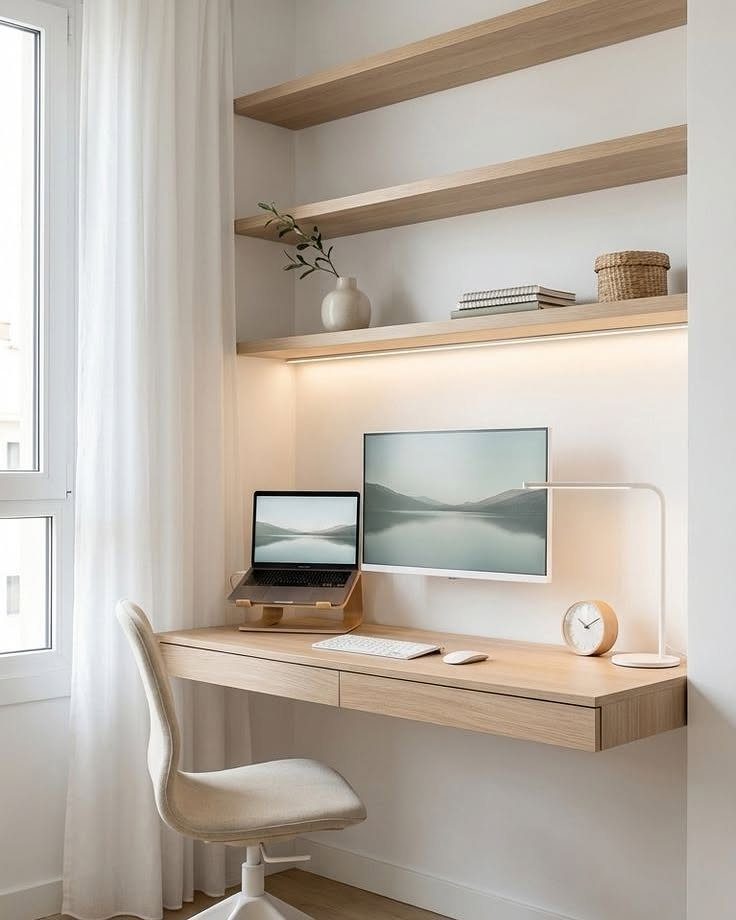
A wall-mounted desk folds down when you need it and stays out of the way when you don’t, or mounts permanently as a slim ledge with just enough depth for a laptop and keyboard.
Pair it with floating shelves above to keep office supplies off the desk surface.
Anchor the brackets into studs.
A deeper surface gives you workspace for a monitor and notebook; go shallower if the desk is only for a laptop. Floating setups suit renters who want a dedicated work surface that a chair can share with the room.
6. RÅSKOG Utility Cart
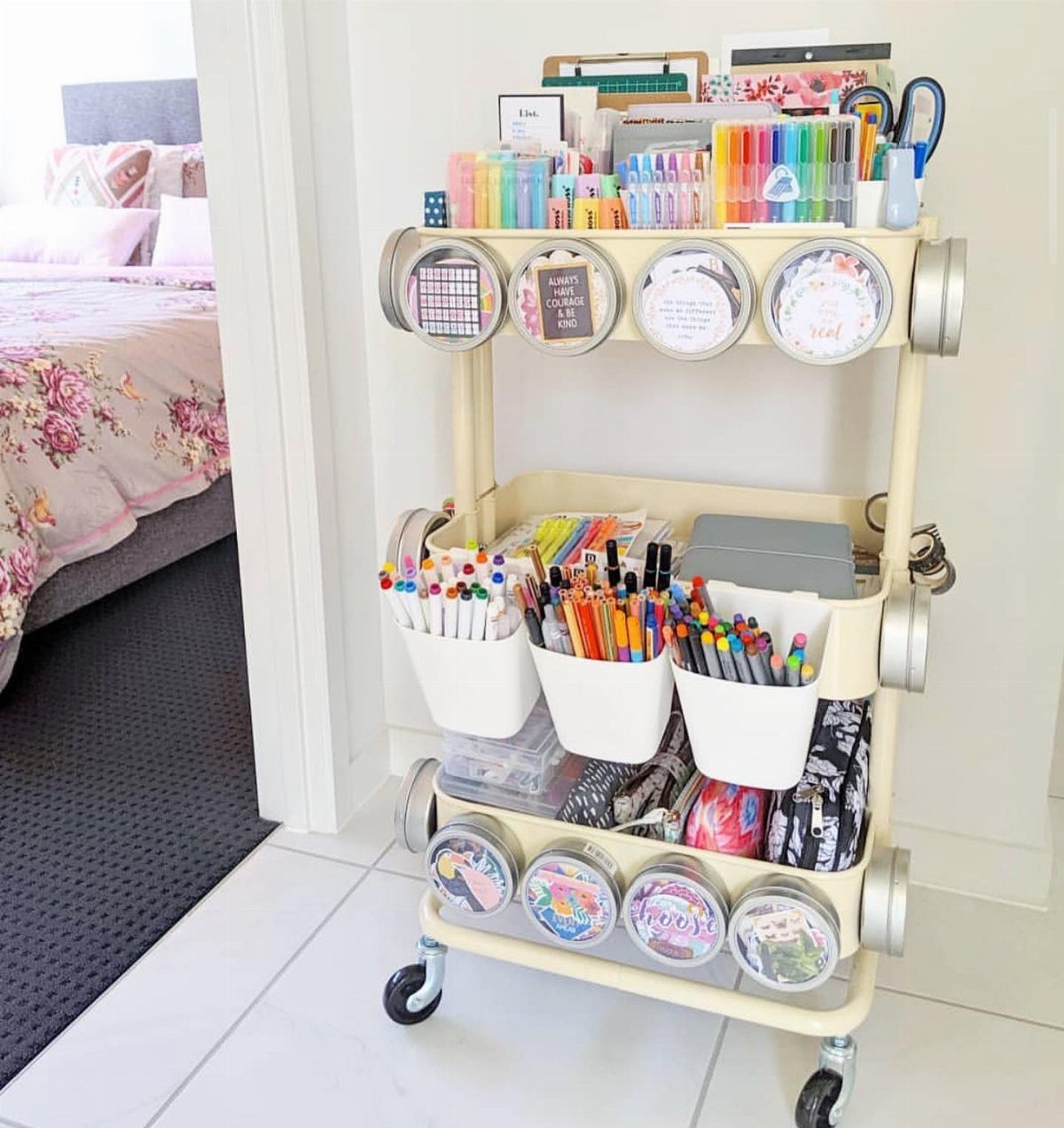
The RÅSKOG is a three-tier steel cart that rolls under a desk or into a corner when not in use. Fill the baskets with pens, notebooks, charging cables, and anything else that tends to scatter across your workspace.
The perforated sides hold magnetic clips and hooks for hanging scissors or headphones.
The narrow cart fits beside most desks and tucks into tight gaps. Use it as a mobile supply station that moves between rooms if your office doubles as a craft space or kid’s homework area.
7. Pegboard Desk Organization
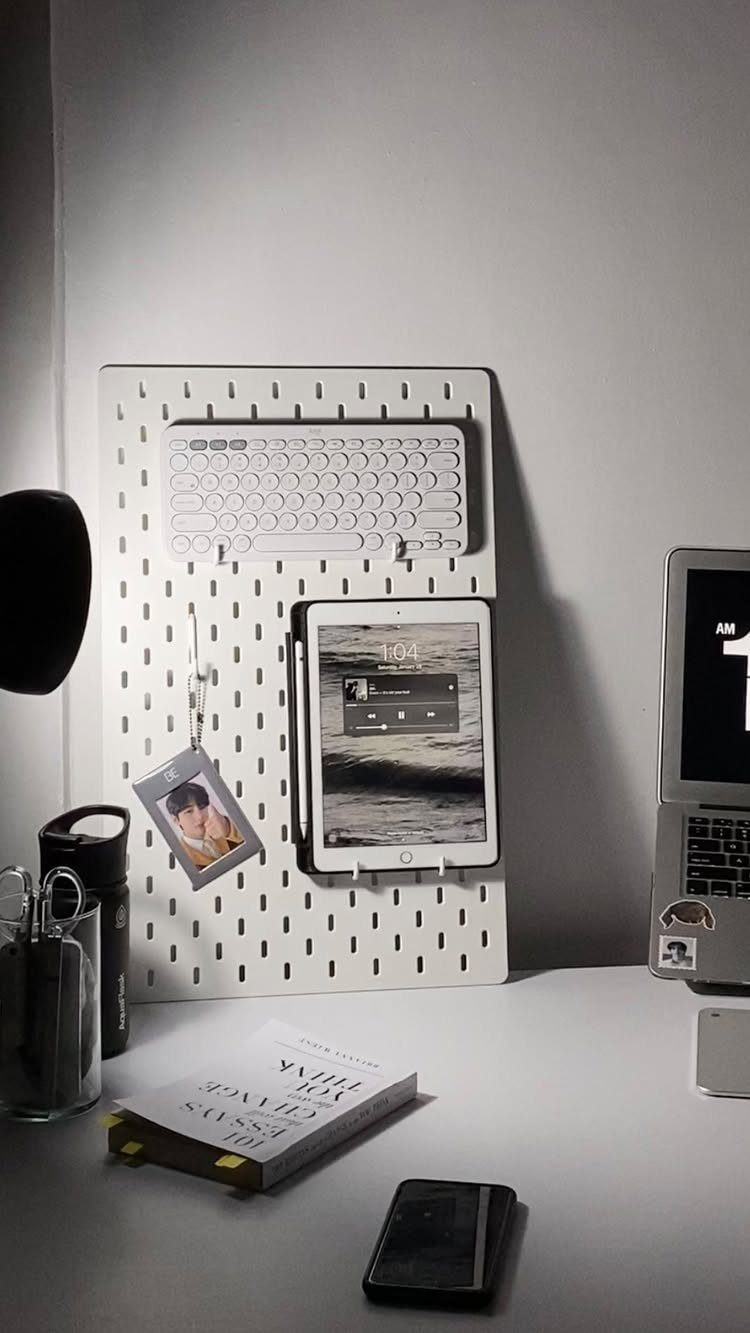
A pegboard mounted on the wall above your desk holds items vertically and keeps them off your work surface. Hang keyboards, tablets, and small tools on hooks so they stay visible and within reach.
Mount the pegboard into studs or use heavy-duty wall anchors if studs are spaced too far apart.
The perforated board accepts standard pegs and baskets, which you can reposition as your setup changes. Pegboards work well in tight spaces where drawer units or shelves would block access to the desk.
8. Desk with Built-In Hutch
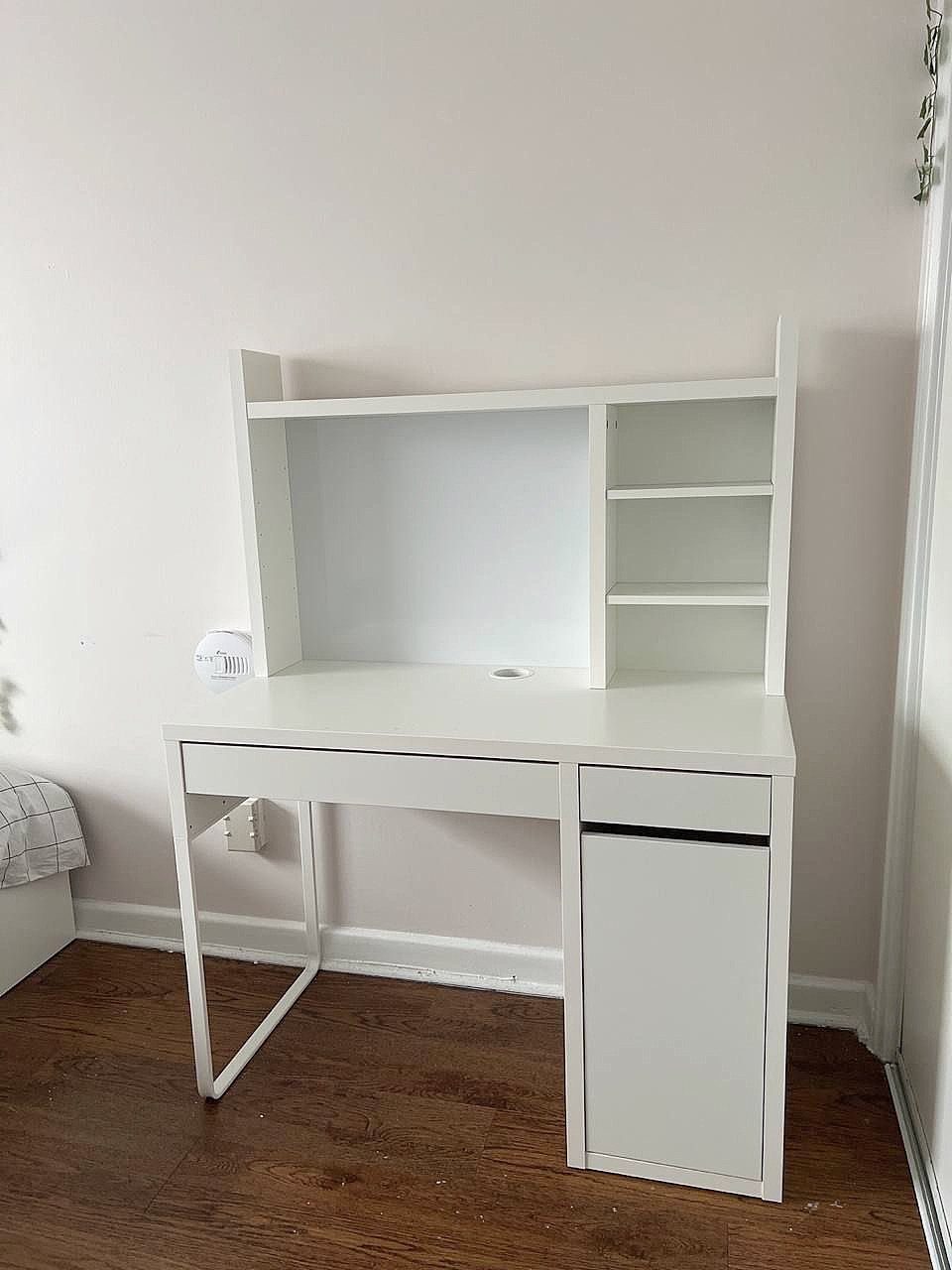
A desk with shelves built into the frame stacks storage directly above your workspace. The hutch holds books, office supplies, and a few decorative items without requiring separate wall-mounted units.
This setup suits renters who cannot install shelving and anyone working in a space too small for a bookcase.
The integrated design keeps everything close and clears the desktop for actual work. Look for models with at least one drawer if you need to lock away documents or small electronics.
9. Mobile Bookcase Desk Extension
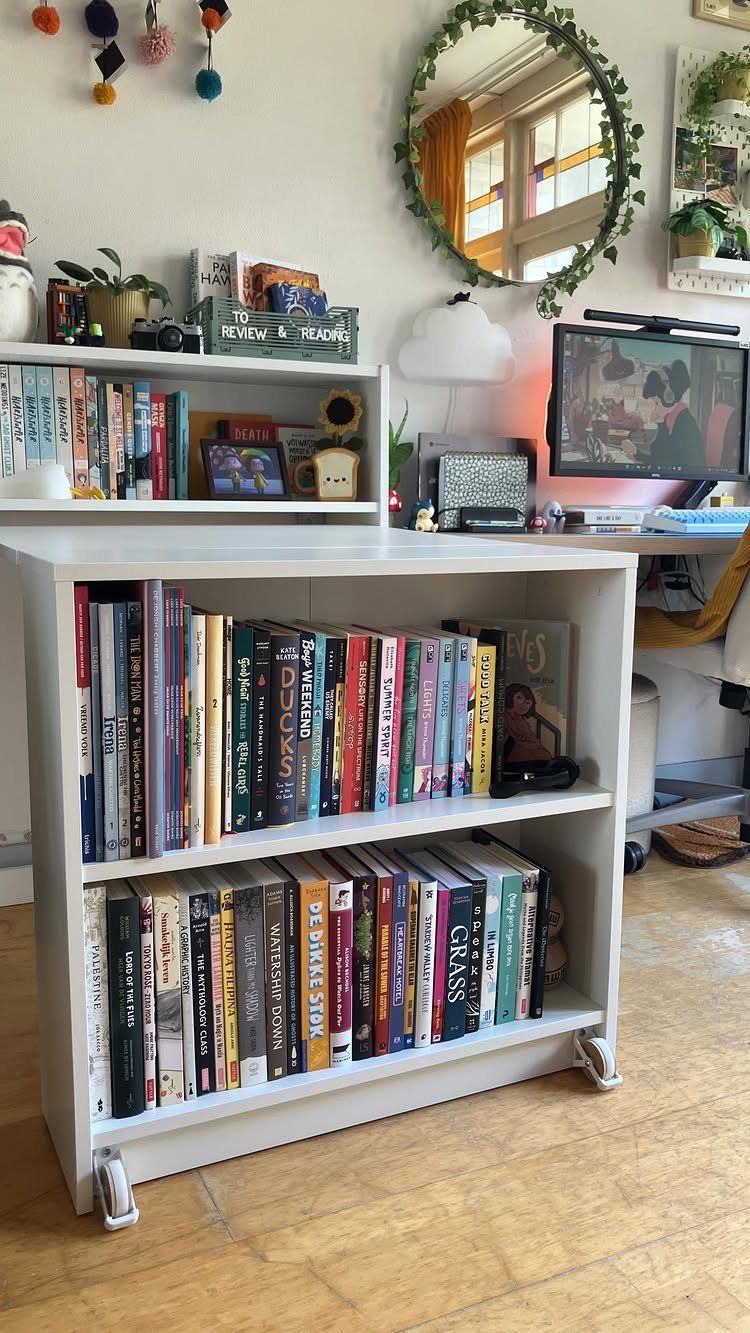
A narrow bookcase on casters rolls right up to the edge of your desk and holds reference books, binders, or supplies that would otherwise crowd the surface.
The shelves sit at chair height, so you can grab what you need without standing up.
Wheels let you shift the unit out of the way when you need floor space or move it to another room if your office doubles as guest quarters.
Choose a bookcase slim enough to fit between your desk and the wall.
10. Compact Corner Desk Setup
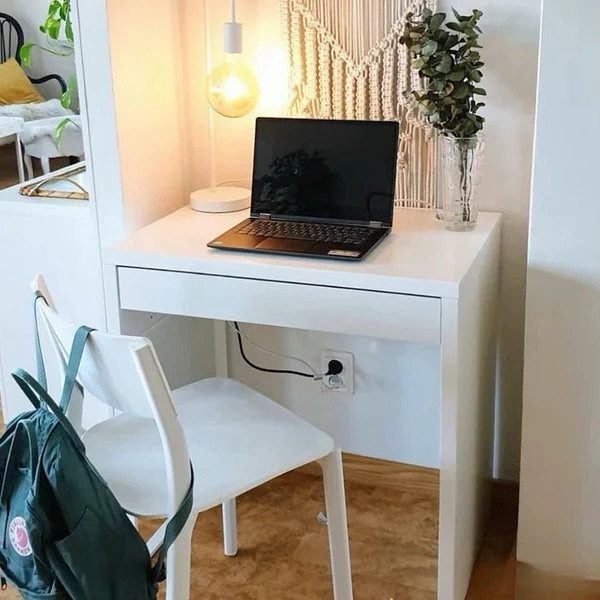
A small desk tucked into a corner claims underused space without blocking walkways. Place the desk against 2 walls so you can mount shelves or a lamp on either side and keep the center of the room open.
Corner setups suit apartments where the office shares square footage with a bedroom or living area.
A chair slides under the desk when you finish working, and the corner location keeps the workspace out of sight from the main seating area.
Add a task light on one side and a small plant or notebook rack on the other to avoid a bare look.
Importance of Ergonomics
A desk at the right height and a chair that supports your lower back matter more than most people think when they first set up a home office.
Sitting for hours without proper support adds strain to your spine and shoulders, and a screen positioned too low forces your neck forward.
Position monitors at eye level so you can look straight ahead without tilting your head down.
The screen should tilt back 20–30 degrees to reduce strain on your neck and shoulders. A monitor stand lifts the screen and often includes a drawer underneath for your keyboard, keeping the desk surface clear when you step away.
Adjustable desks that let you alternate between sitting and standing improve circulation and break up long stretches in one position. Changing your posture throughout the day reduces the effects of sitting still for extended periods.
Storage Solutions
Keep the supplies you use daily close enough to grab without standing up.
Pens, notebooks, and charging cables belong in a drawer or bin next to your keyboard, not across the room where you have to stand up every time you need them.
Items you pull out once a week or less can sit on higher shelves or in closed cabinets further from the desk. Separate everyday tools from archive files and seasonal paperwork so your main workspace stays clear.
Movable storage gives you flexibility when floor space is tight.
Storing office supplies in multi-purpose furniture like benches with hidden compartments or wall-mounted cabinets keeps your office organized without dedicating permanent square footage to bins and filing cabinets you only touch occasionally.
Multi-functional Spaces
A freestanding shelving unit placed perpendicular to the wall creates a visual boundary between your desk and whatever else happens in that room.
The shelves hold books and office supplies on the work side while the back faces the living area, separating the 2 zones without construction or permanent fixtures.
A narrow table behind the sofa works as a console most of the time and becomes a desk when you pull up a chair and open your laptop.
Concealing the work area helps maintain separation between work hours and personal time, especially when the office sits in a bedroom or living room.
Frequently Asked Questions
What are some good decorative ideas for a small office?
Use stylish storage that doubles as decor, like metal carts or pegboards with hooks, and add a small plant or lamp to stop it looking bare.
Personal touches matter more when space is tight, so choose pieces that work and look good at the same time.
What are some creative desk ideas from IKEA?
Mount a floating desk on the wall to save floor space, or support a long tabletop with 2 drawer units spaced apart for a custom-length work surface.
Roll drawer units under a tabletop to create a mobile desk, or use a foldable wall-mounted option that stays out of the way when not in use. Modular shelving and cabinets stack vertically and adjust as your needs change.






