
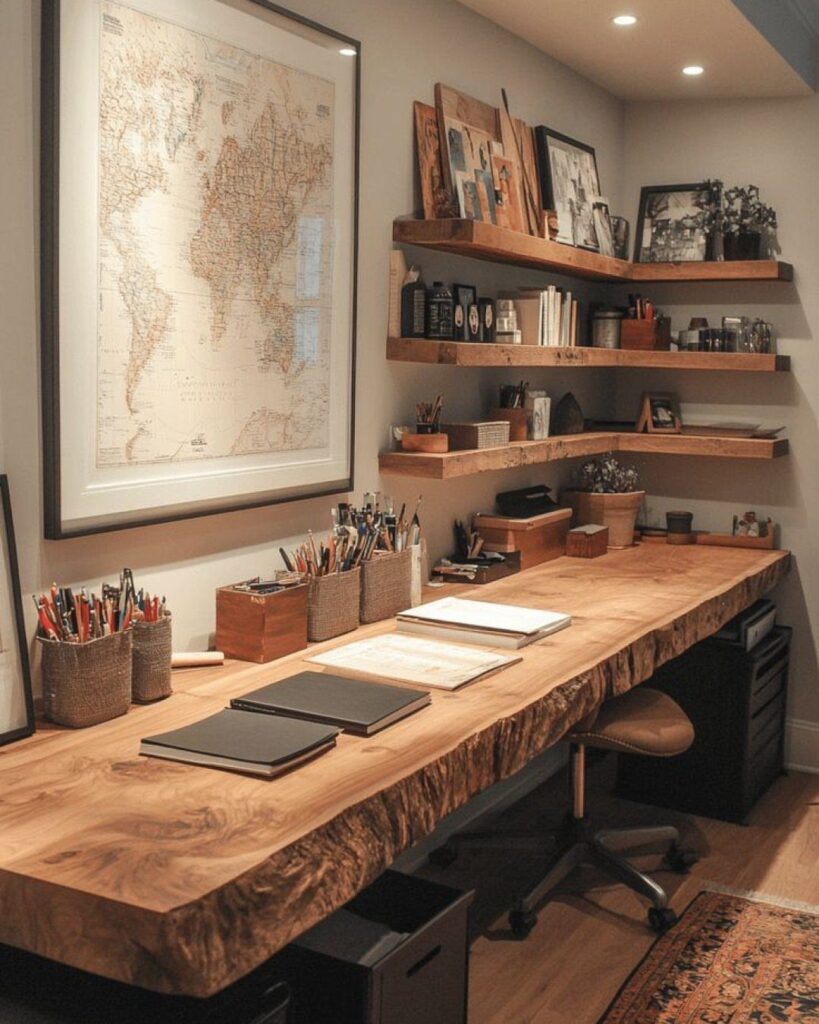
A basement renovation can start with paint and vinyl plank flooring and stretch all the way to a full bathroom, gym, or home theater.
The decision comes down to what you need the space to do: a home office or playroom needs dry walls and decent lighting, while a gym or theater asks for flooring that handles impact and a way to control sound.
1. Basement Office
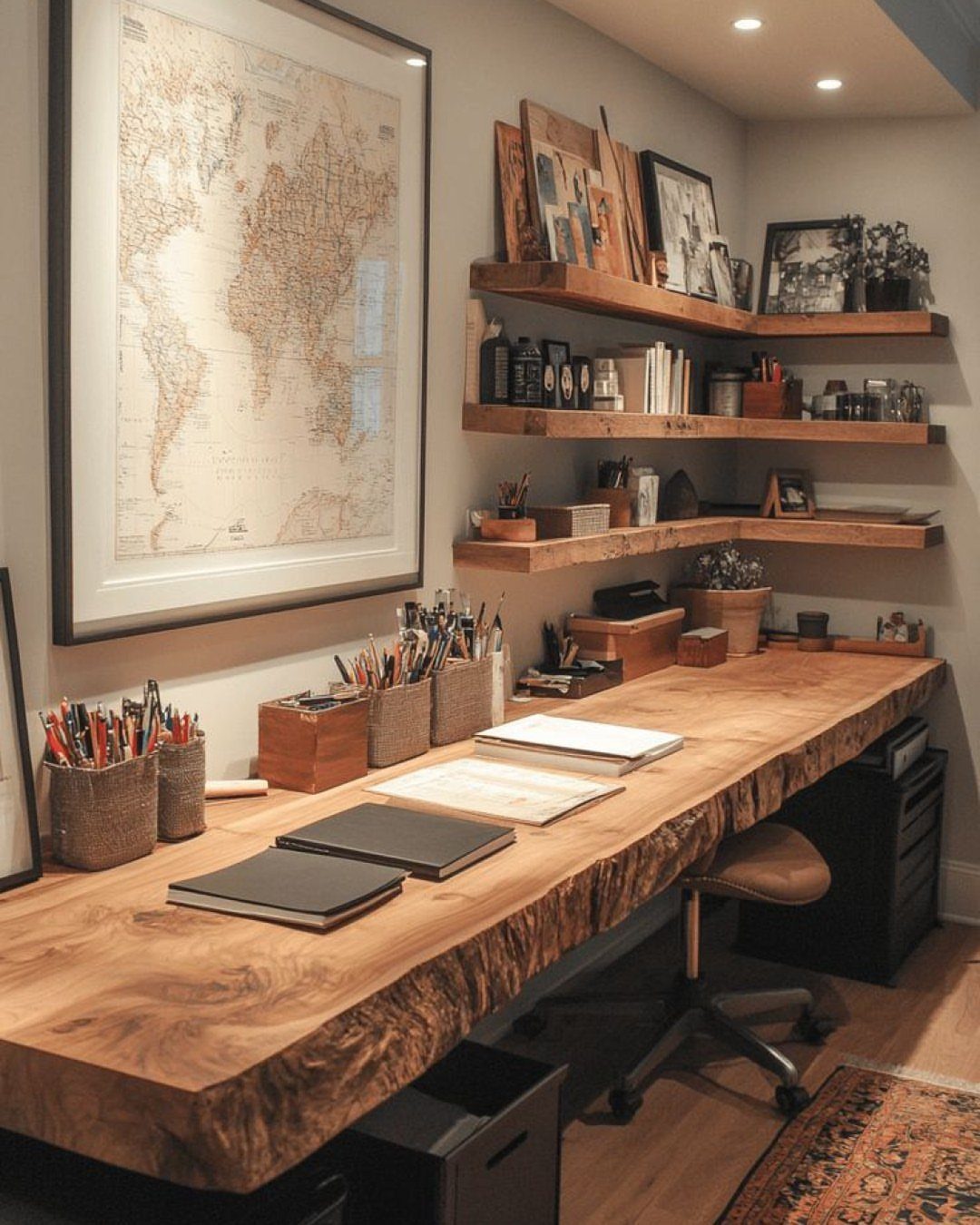
A finished basement office gives you square footage you already own, no addition required.
The live-edge desk and floating shelves keep the look clean without filling the floor, and the natural wood brings warmth into a below-grade room that needs it.
Basements stay cooler year-round, which helps when you’re running a computer and a lamp for hours. The only real concern is light: add a desk lamp and consider painting the walls a shade lighter than you would upstairs.
2. Basement Gym
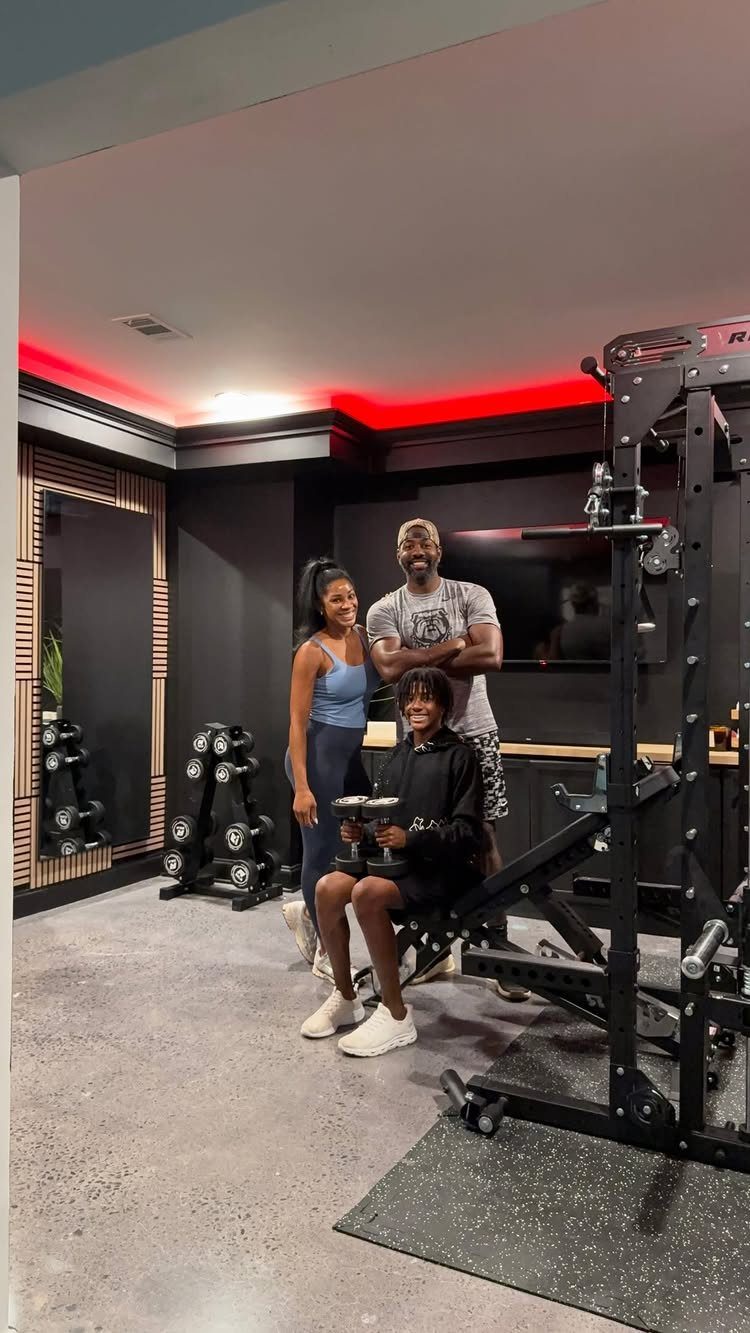
Gym equipment belongs where you can drop it, and a basement slab handles that better than any upstairs floor. The black walls and red LED strips make the space feel intentional, not leftover.
Rubber flooring in 3/4-inch or thicker tiles absorbs impact and protects the concrete underneath.
Buy enough to cover your lifting zone, not the whole room. Basements run damp, so skip carpet and anything that traps moisture.
A window or a small exhaust fan keeps the air moving. You’ll want it.
3. Basement Playroom
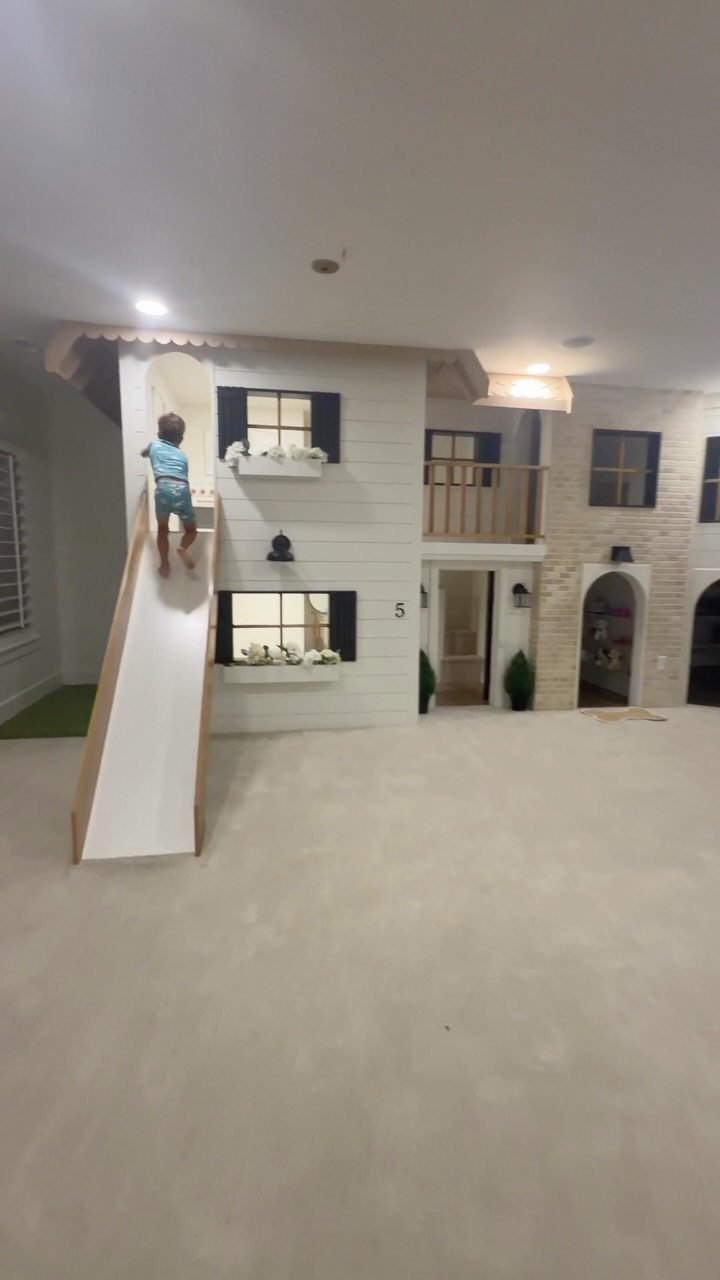
Kids outgrow toys but not square footage, and a basement playroom buys you back the main floor. The custom playhouse with a built-in slide turns the room into something they’ll actually use instead of the corner of the living room.
If you’re building something this size, anchor it to the wall studs and check the ceiling height first. Most basements give you enough clearance for a basic structure, but anything taller risks cutting into headroom on the upper level.
Vinyl plank flooring takes spills and wipes clean. Foam mats work when they’re small, but a full room looks better with a real floor.
4. Home Theater

A basement theater works because you can control the light. No windows to cover, no glare to fight, just a projector and a screen as wide as your wall allows.
The fiber-optic star ceiling pulls off the night sky effect with individual strands threaded through the ceiling panels.
You can buy kits with enough strands to cover a typical ceiling. They plug into a small transformer and don’t generate heat, so they’re safe to leave on during a movie.
Projectors need throw distance: measure from the screen to where you’ll mount it and match the spec sheet.
Short-throw models work in tighter basements. Sound matters more than you’d think, so add a soundbar at minimum or run in-wall speakers if you’re opening drywall anyway.
5. Basement Bathroom
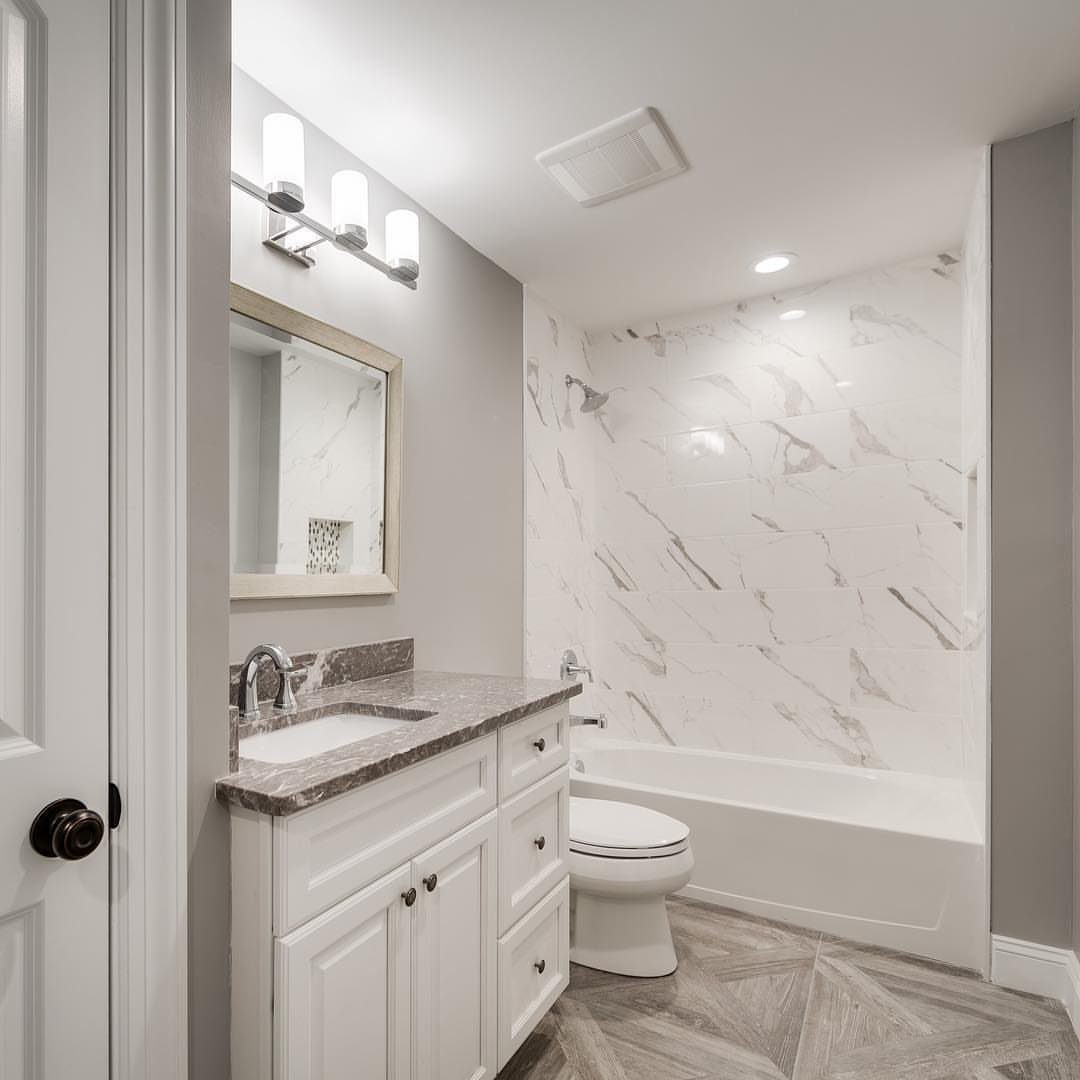
Adding a bathroom makes a basement livable, not just usable.
Most basements need an up-flush or sewage ejector pump unless your floor drain sits above the sewer line. Plan for a vent fan, GFCI outlets, and waterproof backer board behind any tile.
Stick with a shower if the ceiling height is tight. A tub fits, but lower ceilings make it feel cramped.
6. Cozy Basement Living Room
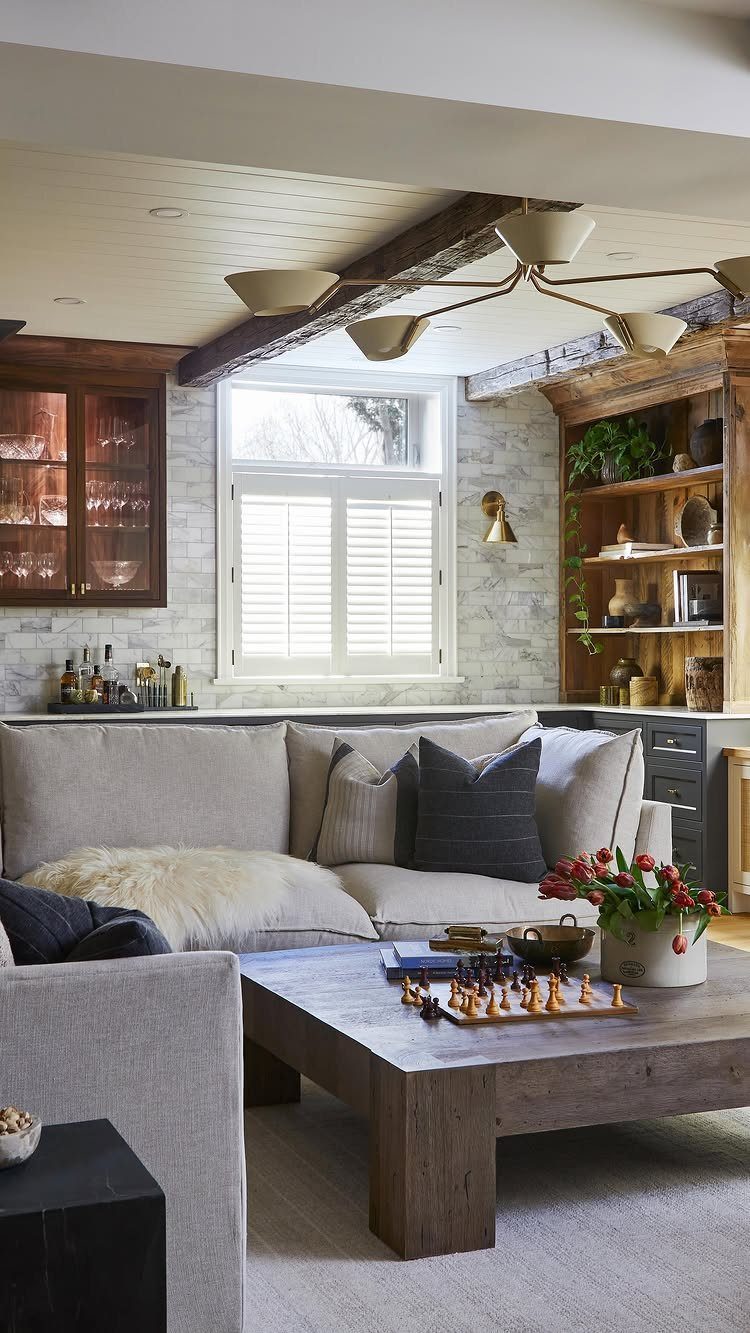
Stone accent walls warm up a basement faster than paint, and they suit the cooler air and lower light down there. The grey sectional fits the scale: basements need furniture that anchors the room, not pieces borrowed from upstairs.
Real stone veneer costs more but reads as permanent.
Faux panels in stacked stone or ledgestone install with construction adhesive. Both need a flat, clean surface and a wet saw for cuts.
Rustic wood shelving keeps the look grounded. Open shelves work better than closed cabinets in a room with limited natural light.
7. Wallpapered TV and Fireplace Wall
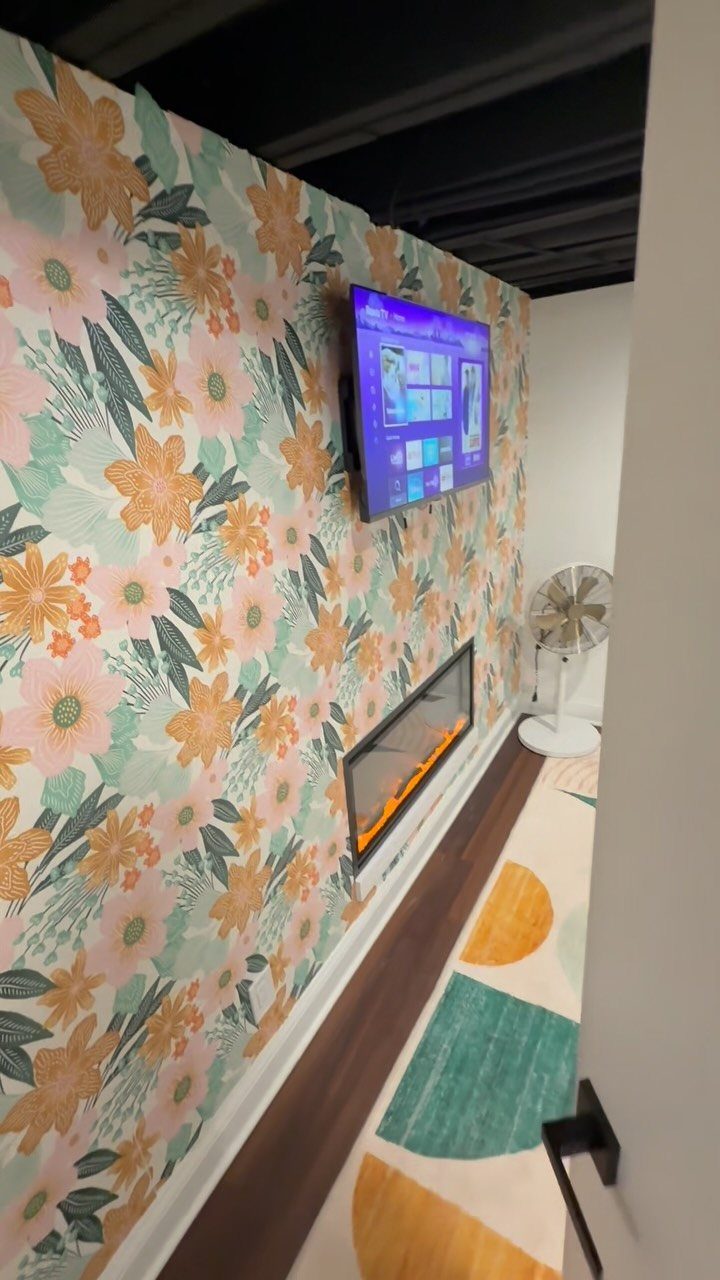
Floral wallpaper turns a TV wall into a focal point instead of a black rectangle on beige drywall.
The pattern pulls attention across the whole surface, and the linear fireplace below it adds both heat and a second light source in a space that tends to run dim.
Electric fireplaces need a standard 120V outlet and sit flat against the wall. Most mounted TVs leave room for a mantel underneath without crowding the screen.
Position the fireplace first to respect clearance requirements, then mount the TV above it. You want wallpaper showing between them so neither feature fights for attention.
8. Basement Gaming Room
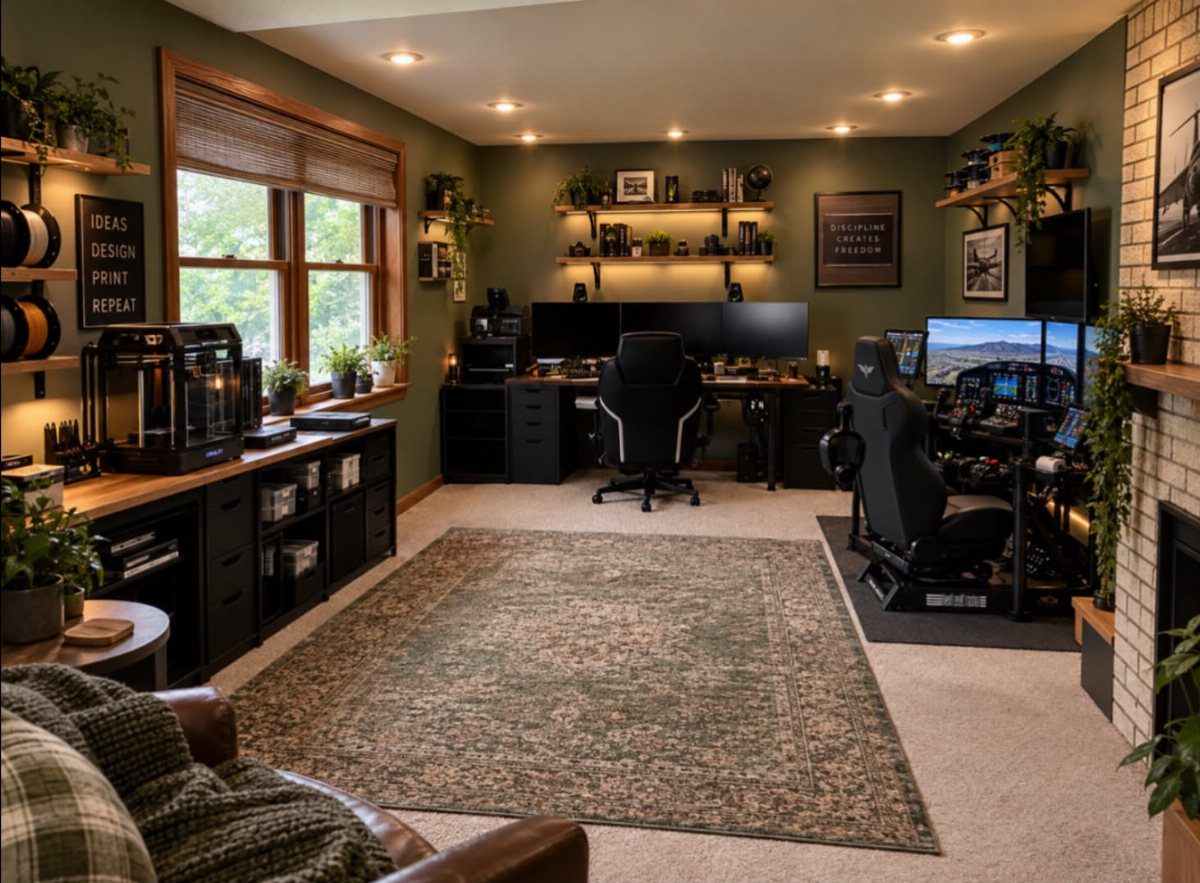
Racing simulators belong in basements where road noise and late-night sessions don’t travel upstairs. The olive green walls frame the equipment without competing, and the beverage station keeps drinks off the desk.
Sim rigs need solid mounting.
Bolt the frame to a plywood base if the floor shifts under hard braking. Dual monitors work better than one wide screen for peripheral vision, and you’ll want them on adjustable arms.
Budget for the pedals and wheel before you spend on the seat. Input quality matters more than comfort when you’re learning lines.
9. Wainscoting and Staircase Renovation
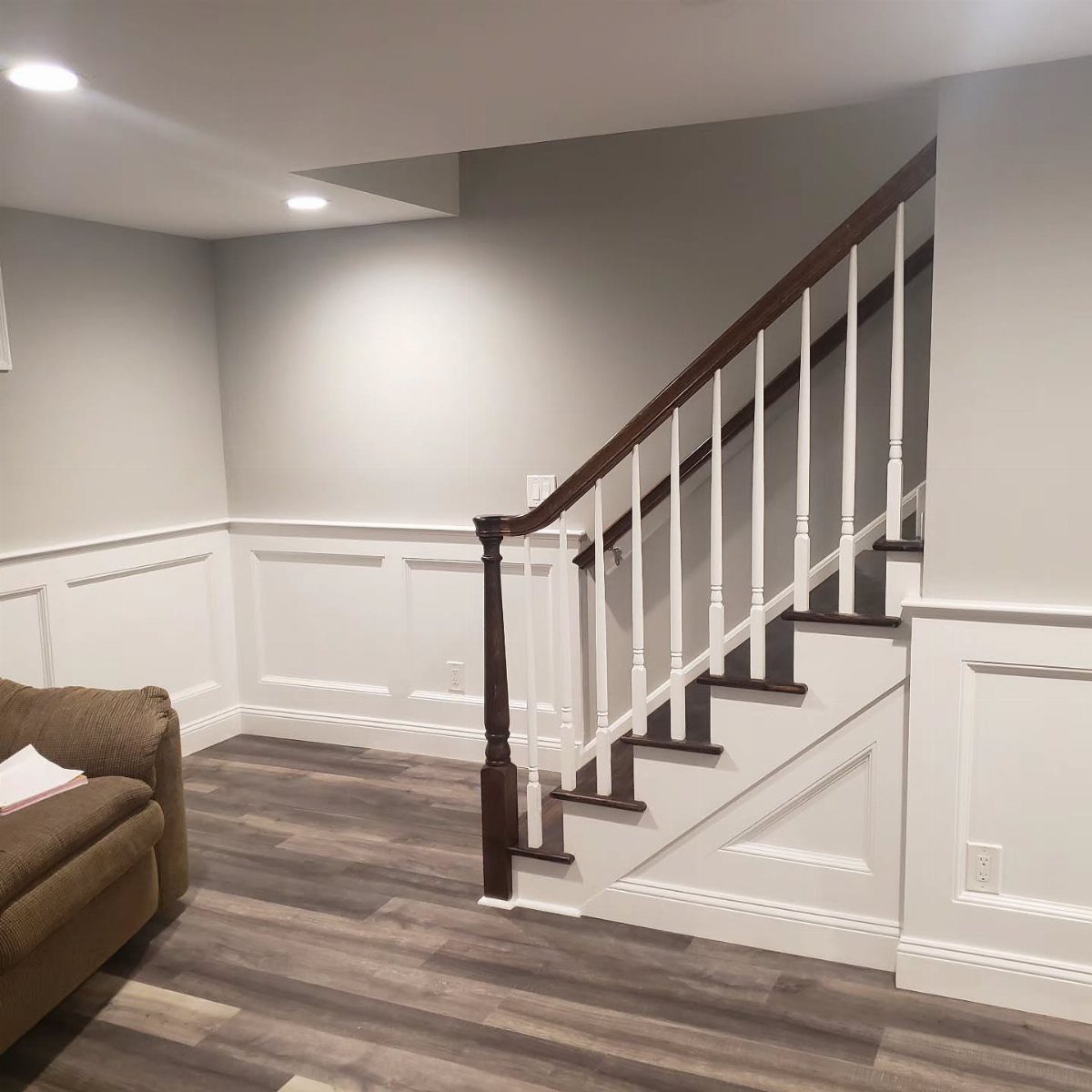
Wainscoting dresses up a basement staircase wall without adding furniture, and the white panels lift a grey room that gets limited daylight. The contrast railing keeps the stairs visible while matching the floor tone.
Panel wainscoting installs over drywall with adhesive and brad nails.
Run it chair-rail height and cap it with a flat rail. Paint before you install if you’re working alone.
Grey vinyl plank flooring hides basement dust better than light wood, and it installs as a floating floor over concrete with no glue.
Moisture Control
Check for water before you touch drywall.
Check the soil grade around your foundation and make sure it slopes away from the house. Keep gutters clear and run downspouts far enough out that water drains away from the foundation.
Inside, a damp smell or efflorescence on the concrete means water is finding a way in.
Fix it at the source. Exterior waterproofing costs more but solves it permanently; interior sealants buy time.
Once the space is dry, use materials that can handle humidity. Closed-cell foam insulation won’t absorb moisture.
Mold-resistant drywall costs a few dollars more per sheet and matters in a below-grade room. Vinyl or engineered flooring over a vapor barrier keeps the floor from trapping condensation underneath.
Skip organic materials like untreated wood or natural-fiber carpet in direct contact with concrete.
Water is the nemesis of any basement renovation. Address any water issues before moving forward with your renovation to prevent future damage and mold growth, recommends Tom Silva, This Old House’s general contractor.
Budgeting for Renovation
Budget for materials, labor, and surprises; basement work can add up fast depending on how finished you want the space. Framing and drywall sit at the low end; bathrooms and kitchens push the high side.
List every material and task, then set aside extra money for problems you’ll find once walls come down. Concrete cracks, old wiring needs replacement, and permits take longer than the county says they will.
Labor eats half the budget if you’re hiring out. Doing your own framing, painting, and flooring installation brings the cost down, but leave room in the estimate for the trades you can’t do yourself.
Track spending as you go. A detailed budget tells you when to stop before the project runs past what the space adds in value.
Professional Help
Hire a licensed electrician for anything beyond replacing a fixture.
Basements need GFCI outlets near water sources, proper load calculations, and permits. Running new circuits or upgrading a panel is not a YouTube-tutorial job.
Plumbing follows the same rule.
Adding a bathroom means venting, drainage, and often a sewage ejector pump. A bad install floods, and insurance won’t cover DIY work that wasn’t permitted.
Structural changes need an engineer’s signature.
HVAC work should go to a contractor who can size ducts and calculate airflow for your square footage. An undersized system runs constantly and never catches up.
Frequently Asked Questions
What are some creative and fun ideas for decorating my basement?
Turn it into a home theater where you control all the light, a gym with rubber flooring that can take dropped weights, or a playroom with built-in structures that free up your main floor.
Basements work best when you match the use to what the space does well: cooler air suits offices and workout zones, no windows means projectors perform without glare, and a concrete slab holds heavy equipment without flexing.
Is it worth getting a basement?
The square footage sits there already, and finishing it adds rooms you can use today and equity you’ll see at resale.
You skip the cost of an addition and gain space that works for offices, gyms, theaters, or extra bedrooms. The return depends on controlling moisture first and spending on finishes that match what buyers expect in your market.
What is the average cost to finish an unfinished basement?
Costs depend on the size of the space and what you’re adding, with bathrooms and kitchens driving the price up and basic framing and drywall sitting at the low end.
Put money aside for what you’ll uncover during demo, and keep a running total so you can pull back before you spend more than the finished space will return.
Labor takes half the budget if you hire out, less if you handle framing, painting, and flooring yourself.






