
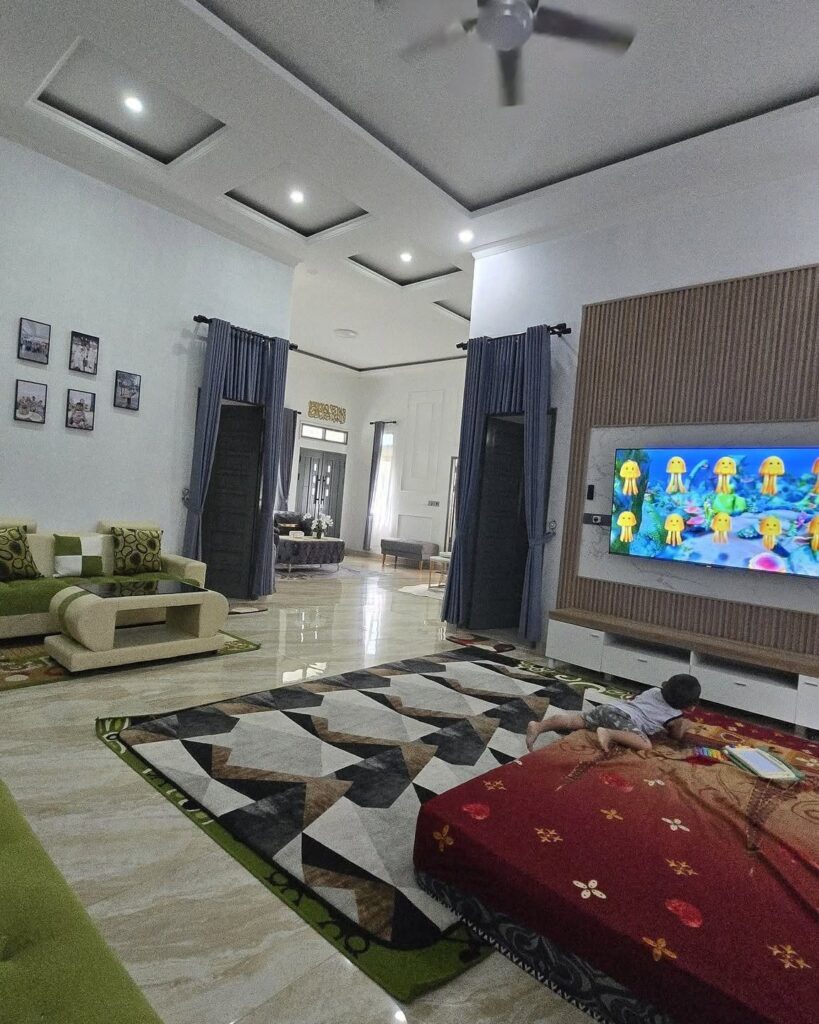
Family TV rooms range from a $200 rug and some ottomans to a full media wall with built-ins running floor to ceiling.
Viewing distance decides screen size: measure from your seat to the wall, then divide by 1.5 to find the largest diagonal that stays comfortable.
A sectional seats 6 or 7 in less floor space than separate pieces because the L-shape uses the corner, and wall-mounting the TV opens up the area where a console used to sit.
Warm paint in terracotta or rust holds up better than bright white in a room with heavy use, and layered lighting gives you control over glare and mood.
1. Large Sectional Sofa
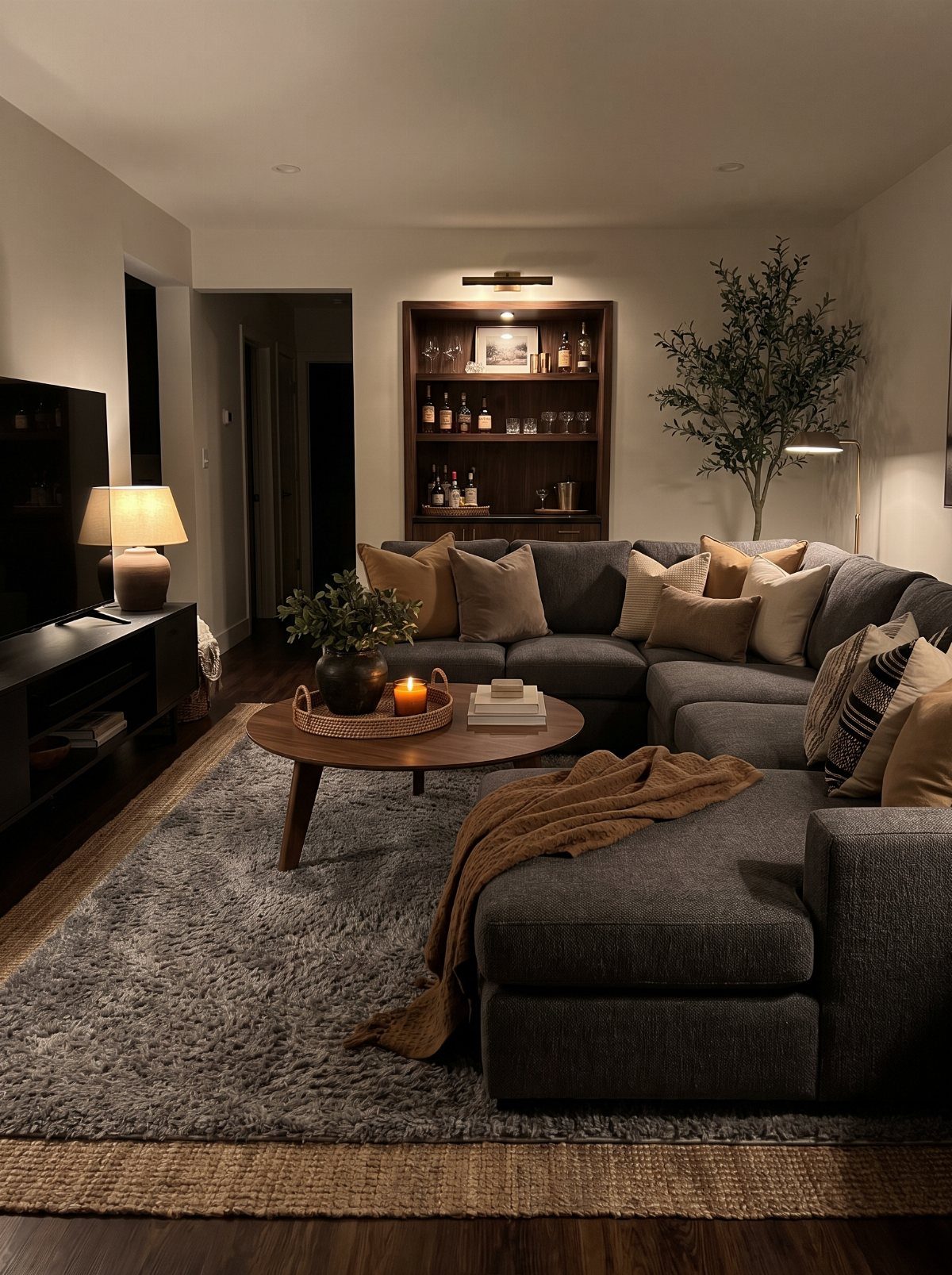
A sectional fits more people in less square footage than separate pieces because the L-shape uses the corner. This one runs the full width of the wall, seating 6 or 7 without the room feeling crowded.
The chaise end gives someone a place to stretch out during a long movie, and kids claim it first. I like a sectional with removable cushion covers so spills come out in the wash.
If your room is narrow, measure first: sectionals need enough length on the long side or they block the walkway.
2. Wall-mounted TV
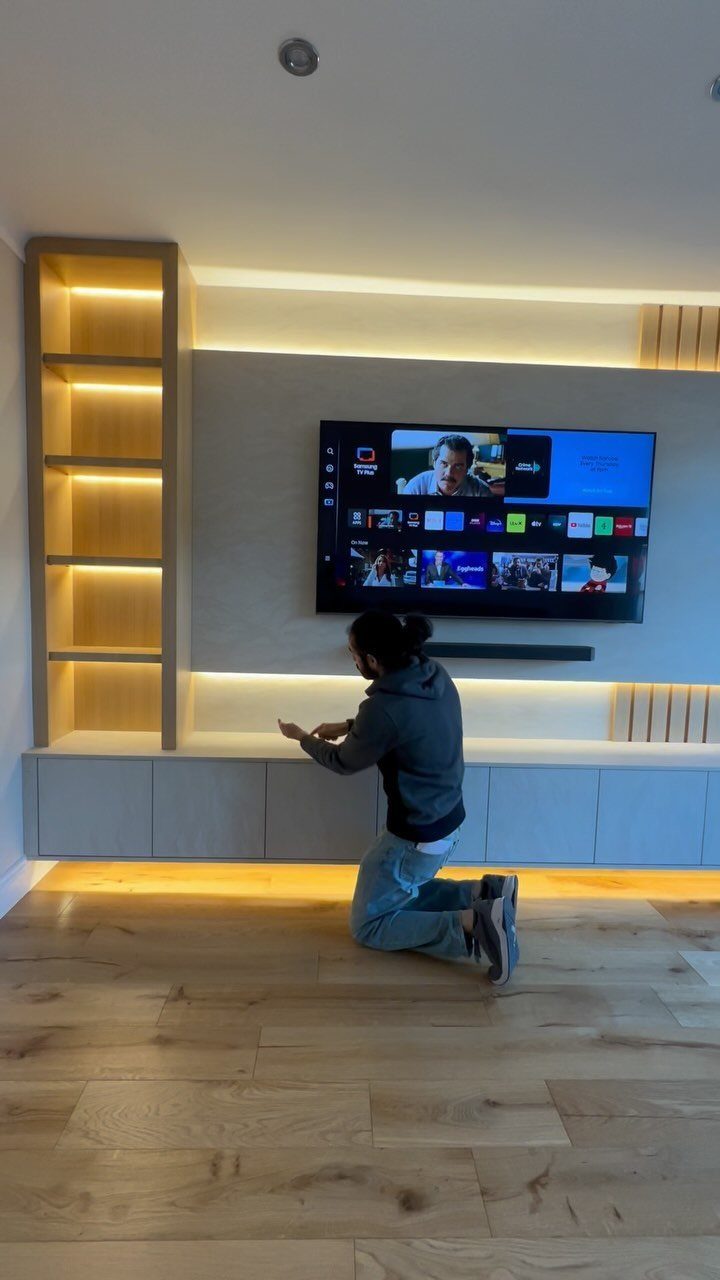
Mounting the TV opens up floor space where a stand used to sit, and that makes a small room feel bigger. The screen sits where you mount it from the floor to the center, so no one cranes their neck.
This one has LED strips behind the panel that soften the glow and cut down on eye strain during night viewing. The floating console below holds the router and remotes without clutter.
Studs need to be spaced for a mount to grip safely, and a tilt bracket lets you adjust the angle if there’s glare from a window.
3. Built-in Media Wall
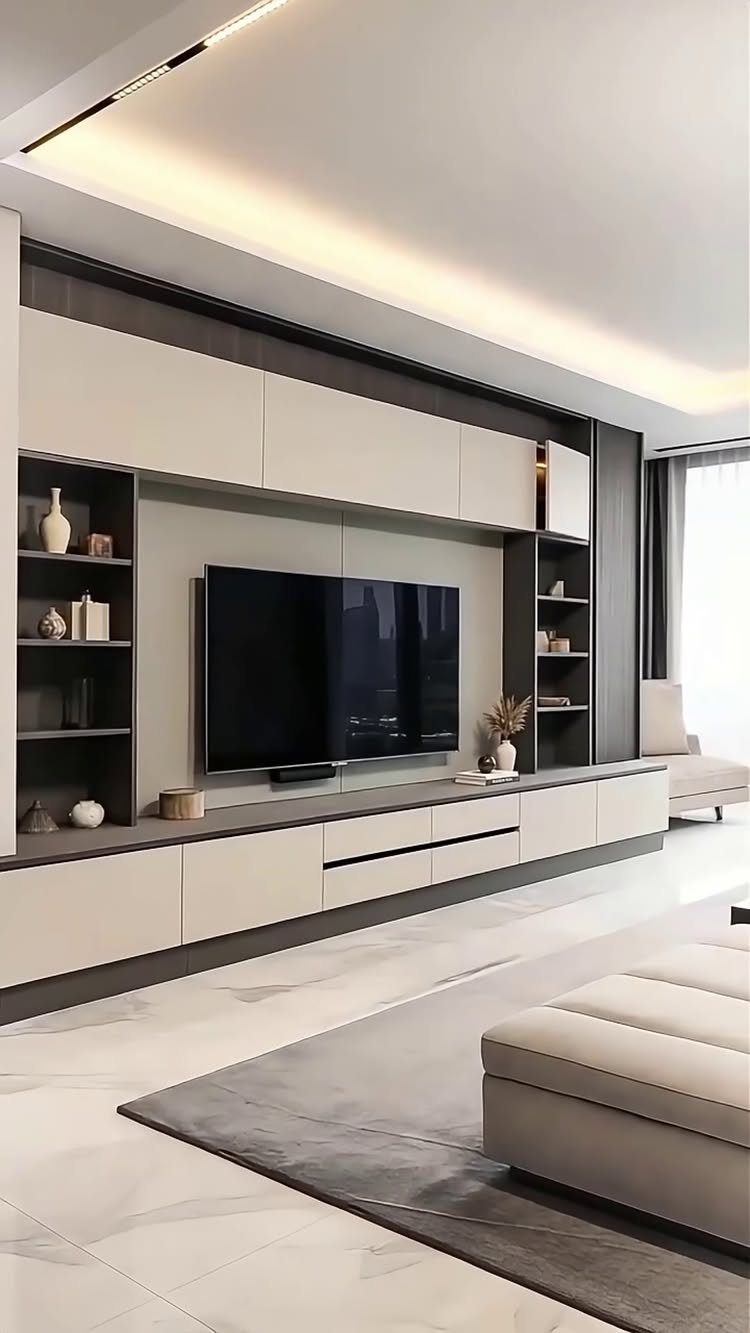
A media wall puts the TV, shelves and closed storage in one unit so you skip the need for separate furniture. This one runs floor to ceiling and uses the full wall, keeping cables and devices hidden behind cabinet doors.
The open shelves frame the screen with books and a few objects, and the closed base keeps bins, games and extra controllers out of sight.
I like this when the TV room doubles as a playroom because everything has a place.
Custom built-ins vary in cost depending on size, or you can use modular units like IKEA Besta on a tighter budget.
4. Accent Wall with TV
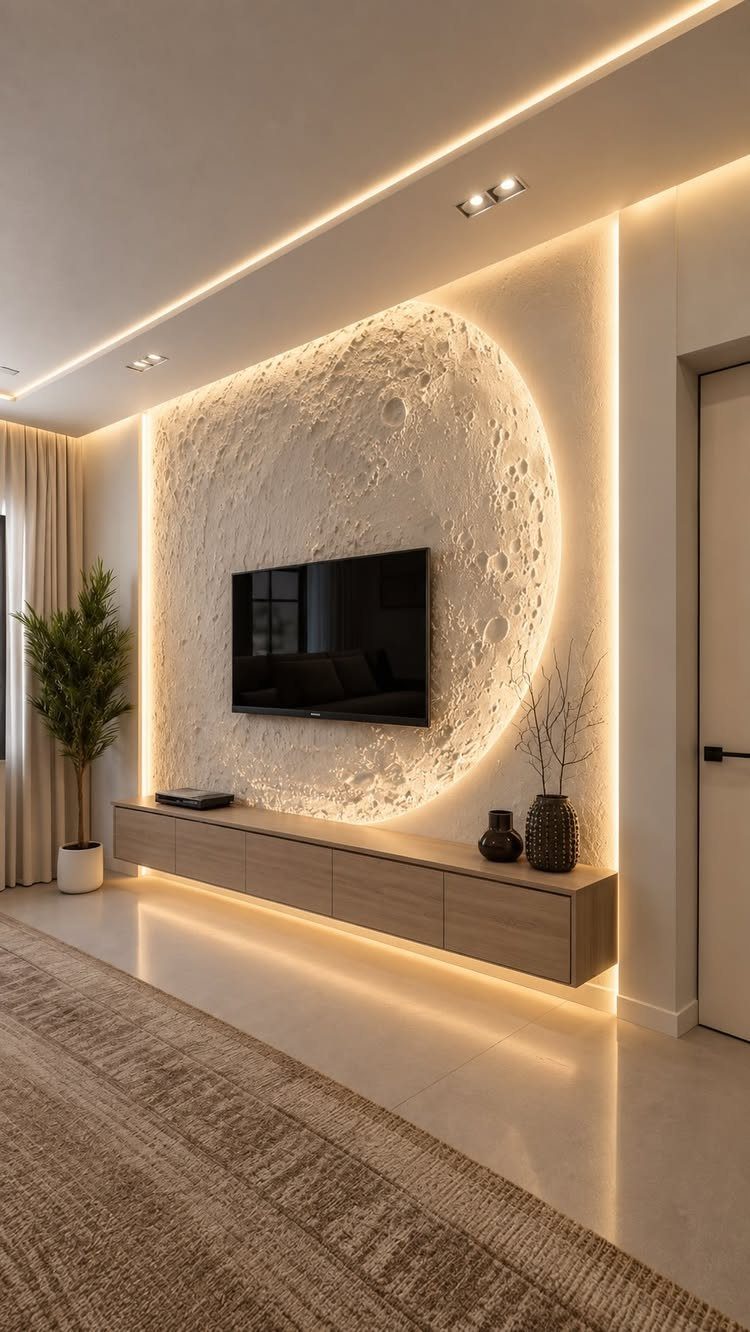
The accent wall turns the TV into part of the room’s design instead of a black rectangle that just sits there.
The glow adds depth and makes the wall feel sculptural, and it doubles as soft ambient lighting when you dim the overhead.
Other options include wood slats, stone veneer or a bold paint color that sets the TV apart from the rest of the walls.
Keep the console simple so the wall stays the focus, and run the power and HDMI cables through conduit before you finish the surface.
The TV doesn’t look like a big black box anymore because it blends into the wallpaper.
5. Movable Ottomans
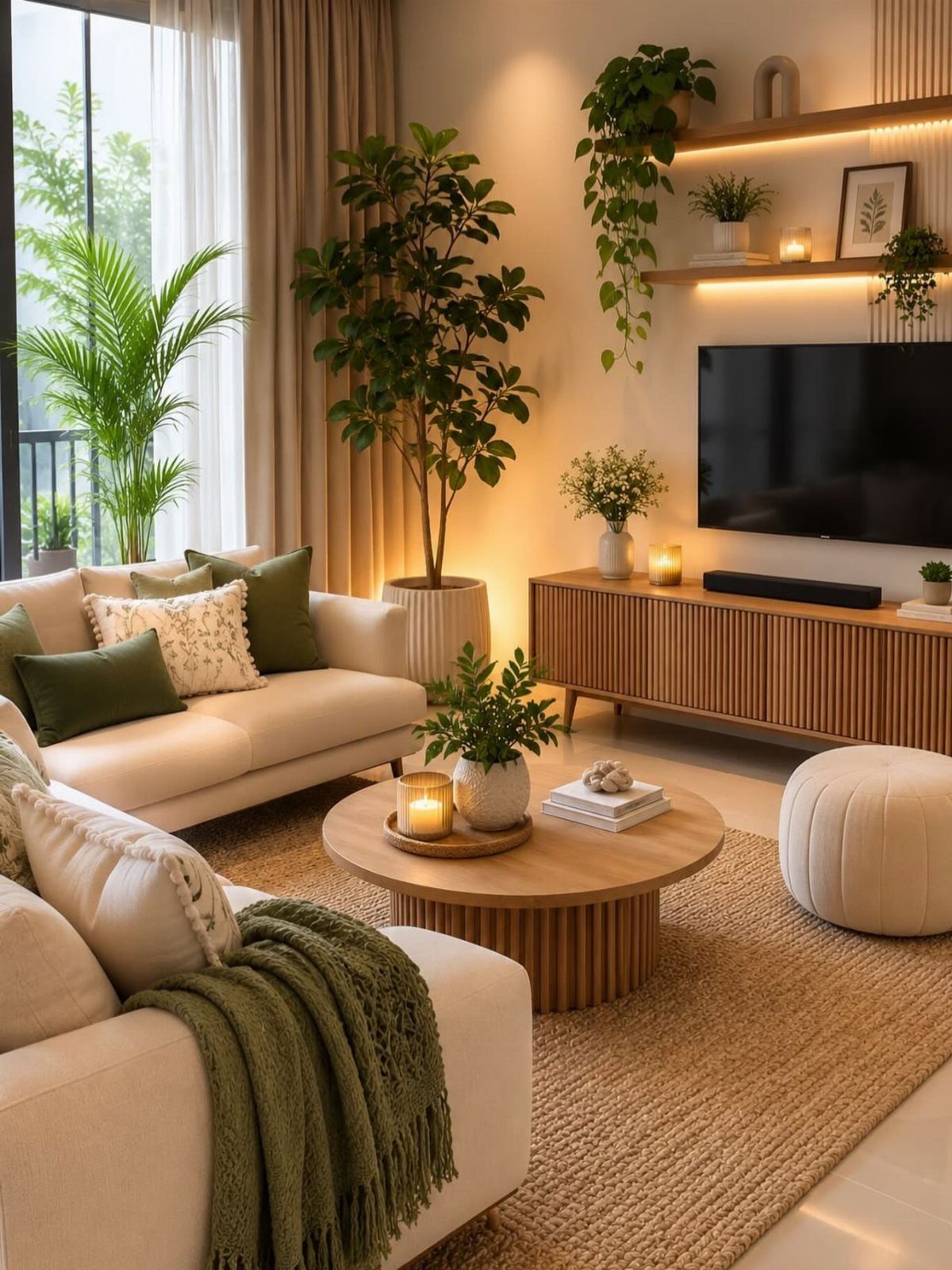
Ottomans move wherever you need them, so kids pull them close for game night and adults push them back when the floor needs clearing. This round pouf is light enough that a child can drag it wherever you need it.
They work as extra seating, footrests or a place to set a drink, and they tuck under the coffee table when not in use. I keep 2 or 3 in a TV room because they adapt to however many people show up.
Poufs with flat tops hold a tray steady, and ones with handles are easier to move around.
6. Plush Rugs
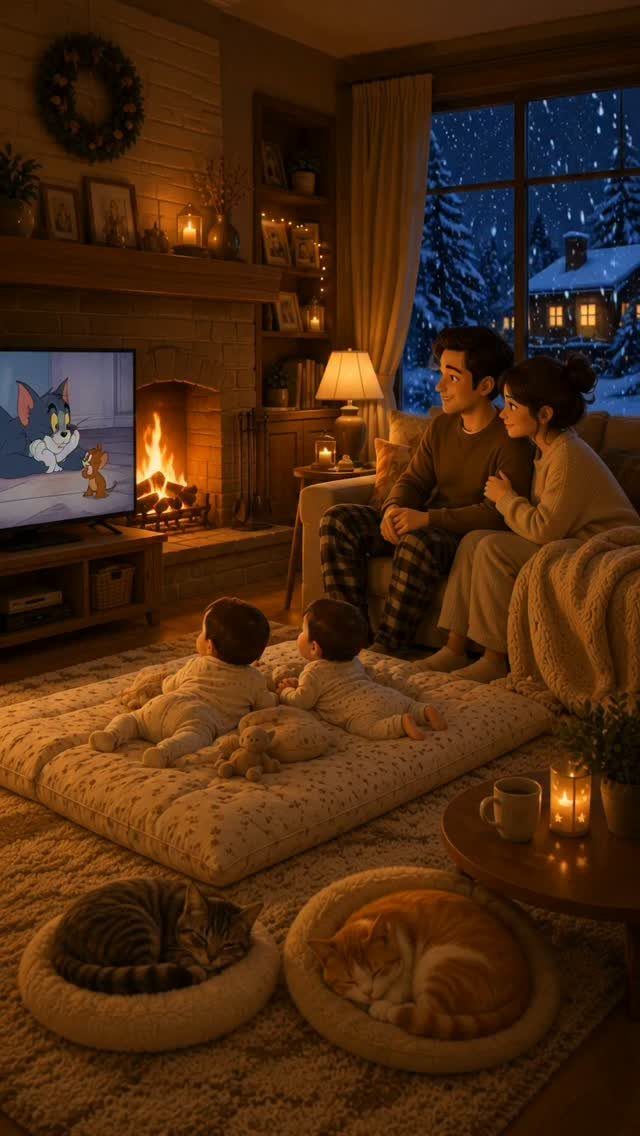
A plush rug makes the floor comfortable enough for kids to sprawl out during cartoons or for the whole family to sit during board games. This cream one is thick enough that you feel the cushion through socks.
It anchors the seating area and keeps the space from feeling too hard or echo-prone, which matters in a room with a TV running most of the day.
I go for washable rugs in high-traffic rooms because spills happen, and machine-washable options now come in large sizes.
Place the front legs of the sofa on the rug so the layout feels tied together, or go large enough that the whole furniture group fits on top.
7. TV Above a Fireplace
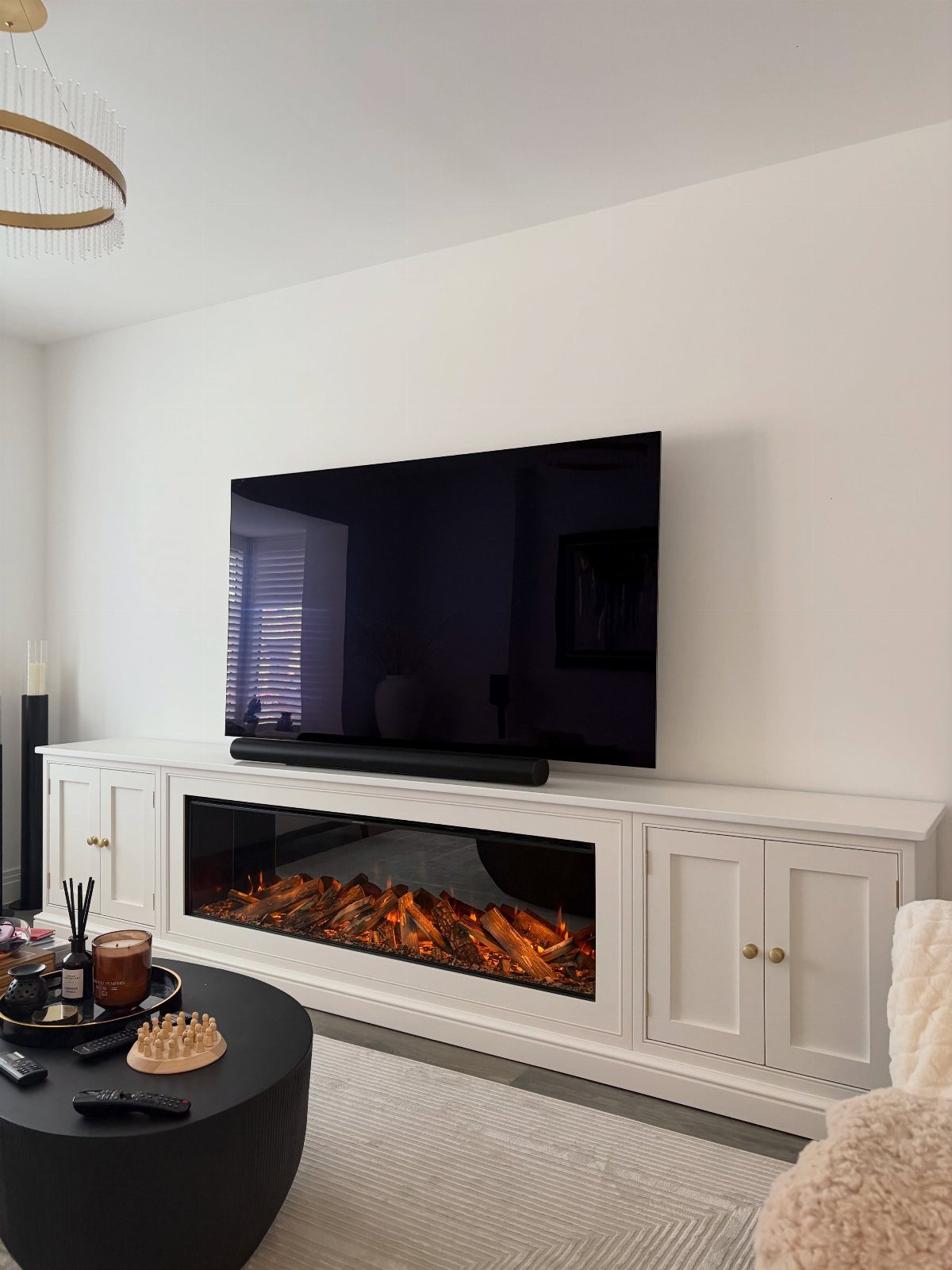
Placing the TV above the fireplace gives you a focal point that serves double duty: warmth below, entertainment above. The electric insert here runs independently, so you can light it on a cold night without turning on the screen.
Mount height matters more with this setup because the mantel raises the screen.
If the TV sits too high, you’ll tilt your head back during a full movie. Measure so the center lands at seated eye level, or use a pull-down mount that drops the screen when you watch.
Electric fireplaces plug in and need no venting, making them easier to install than gas or wood-burning options.
Creative TV Placement
Corner placement works when the room has 2 open walls that meet and you want to leave the main wall free for windows or shelves.
The TV angles toward the seating, and you save floor space where a console would otherwise jut out.
Integrated setups tuck the screen into cabinetry or behind sliding panels that close when the TV is off, keeping the room from looking like it exists only for watching.
I see this most often in formal living rooms that also serve as family TV spaces.
Viewing angle matters more with creative placement. A swivel mount or a pull-down bracket fixes most angle problems without moving furniture.
Best TV Size for Family Room
Viewing distance sets the size.
Measure from where you sit to where the screen will hang, then divide by 1.5 to get the largest diagonal that stays comfortable. Match the screen size to how far back you sit: bigger screens need more distance to stay comfortable.
Smaller rooms max out sooner because going too large in a tight space makes you move your eyes instead of just watching. I measure twice because returning a mounted TV is harder than returning one that sits on a stand.
Resolution also affects how close you can sit: 4K screens let you move closer without seeing pixels, so the same size works in a slightly smaller room than it would with 1080p.
Cozy Family Room Atmosphere
Warm paint colors in terracotta, rust or soft gold make the walls feel close and inviting, and they hold up better than bright white in a room with heavy use.
Neutral tones in cream or greige work if you layer in warm accents through pillows, throws or wood furniture.
Soft textures on the sofa, rug and window treatments absorb sound so the room feels quieter even with the TV on.
Fabric softens hard surfaces, and a chunky knit throw or a shaggy rug adds weight that makes the space feel grounded.
Layered lighting gives you control: overhead lights for cleaning or game night, table lamps for reading, and dimmable sconces or LED strips for movie watching.
I skip single-source ceiling fixtures in TV rooms because they create glare on the screen and leave no way to set a mood.
Frequently Asked Questions
Where is the best place to place my TV?
Wall mounting at seated eye level opens up floor space and prevents neck strain, while above a fireplace gives you a dual-purpose focal point if you keep the mount height right.
Corner placement saves space when 2 open walls meet, and integrated setups behind sliding panels work when you want the TV hidden while it’s off.
Viewing angle matters more than the wall you pick, so use a swivel or tilt mount if glare or seating position requires it.
What are some good ideas for a small living room layout with a TV in the corner?
A sectional sofa angled toward a corner-mounted TV seats more people without blocking walkways, and a wall mount frees up the floor space a console would take.






