
A Murphy bed with a built-in desk lets one room work as both office and guest bedroom, and a closet conversion tucks a workspace into a bedroom or hallway without claiming a separate room.
A closet office with a curtain on a tension rod hides the workspace when you draw it closed.
A fold-down wall desk takes up almost no floor space, and a sloped ceiling nook often fits a chair and work surface in just a few feet.
Lighter blues work well in small offices, and sage or olive green keeps a larger room calm without feeling cold.
1. Built-In Shelves
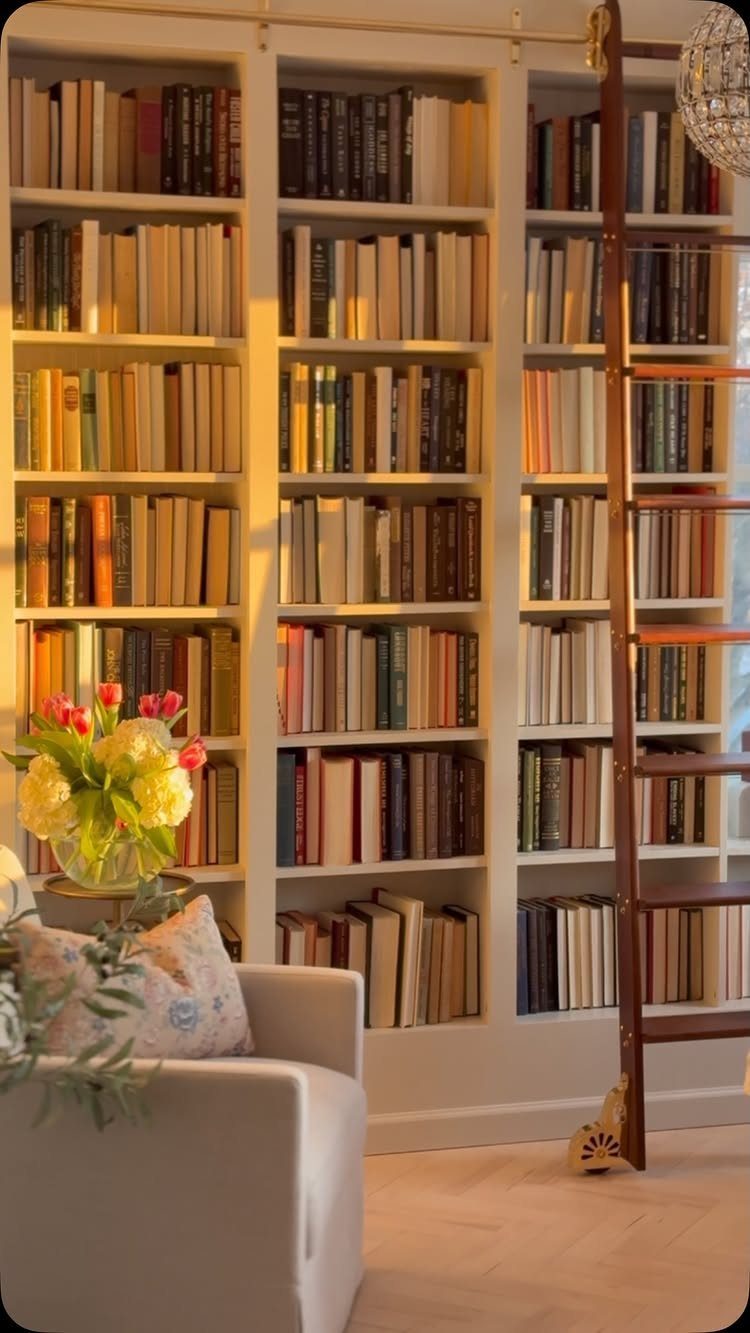
Built-in shelving runs floor to ceiling and gives you room to store books, binders, and office supplies while leaving the floor clear. The setup here uses 1×10 pine lumber, which keeps the construction simple and the cost down.
You can add a rolling library ladder if the shelves reach higher than you can comfortably access. The ladder doubles as a focal point and makes the top shelves useful instead of decorative.
If you don’t want to frame and install the shelving yourself, a local carpenter can build it in place. Budget a weekend for a straightforward install if you’re doing it alone.
2. Desk Near Windows
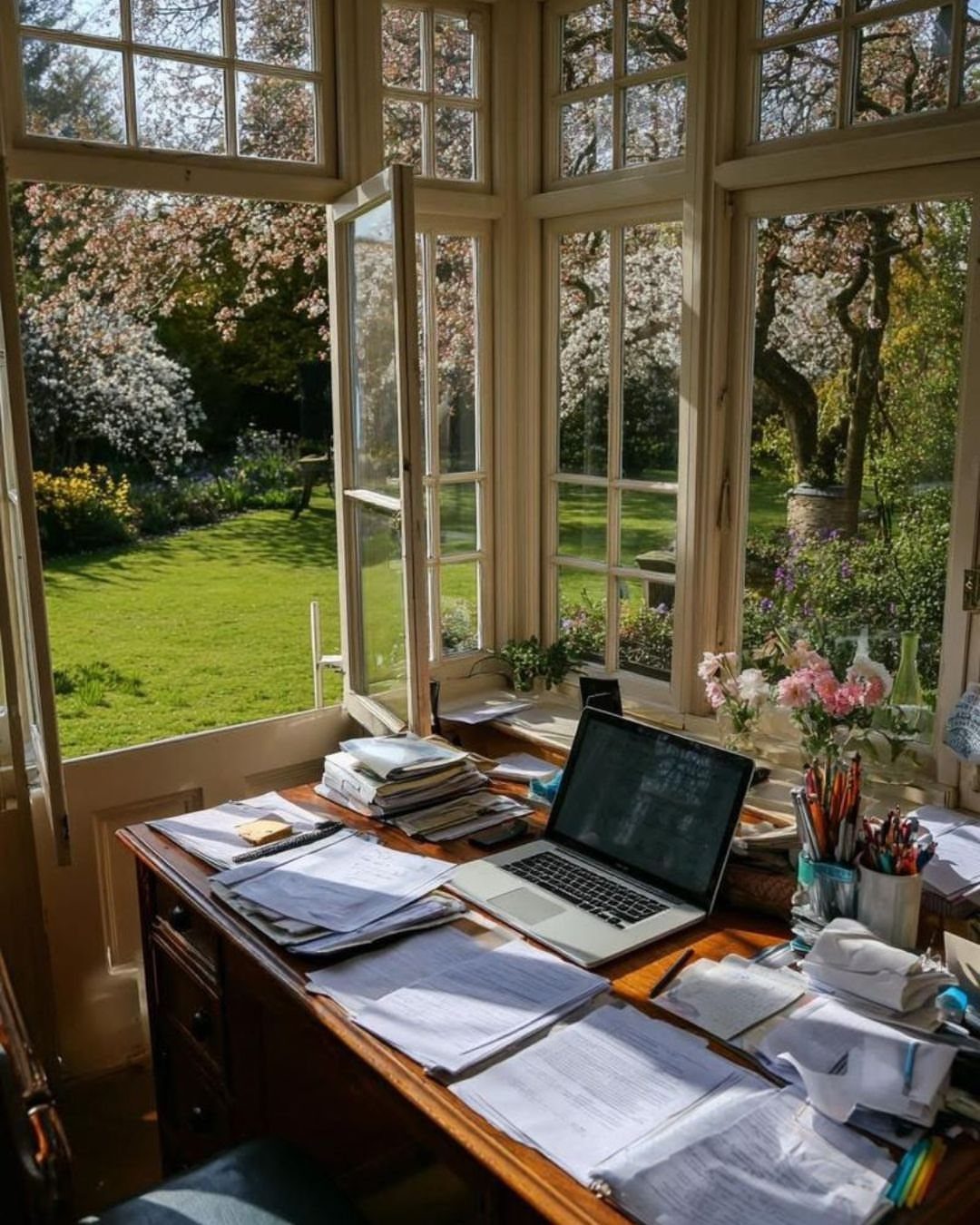
A desk placed near windows brings in natural light, which reduces eye strain and keeps the space from feeling closed in during long work sessions.
Position the desk so the window is to your side rather than directly behind the screen. That placement avoids glare on your monitor while still giving you a view and plenty of daylight.
If the window faces south or west, consider a sheer curtain or adjustable blinds to cut harsh afternoon light without blocking it entirely.
3. Ergonomic Chairs
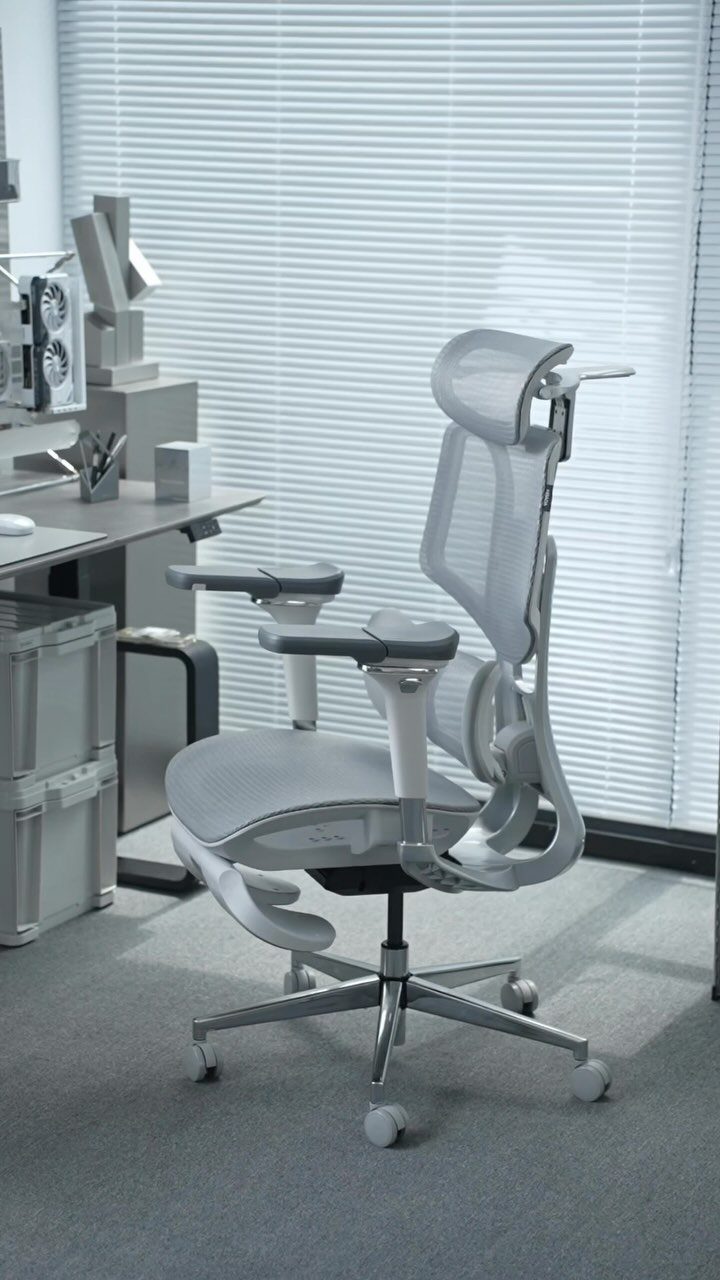
An ergonomic chair with lumbar support and a headrest keeps your back and neck aligned when you’re sitting for hours at a time.
Look for a chair with adjustable seat height, armrests, and tilt tension so you can dial in a position that fits your desk height and posture. Mesh backs stay cooler than padded upholstery in warmer months.
Ergonomic chairs with adjustable lumbar support, armrests, and seat depth let you dial in a position that holds up through long days.
4. Overhead Lighting, Task Lamps, and Ambient Lights
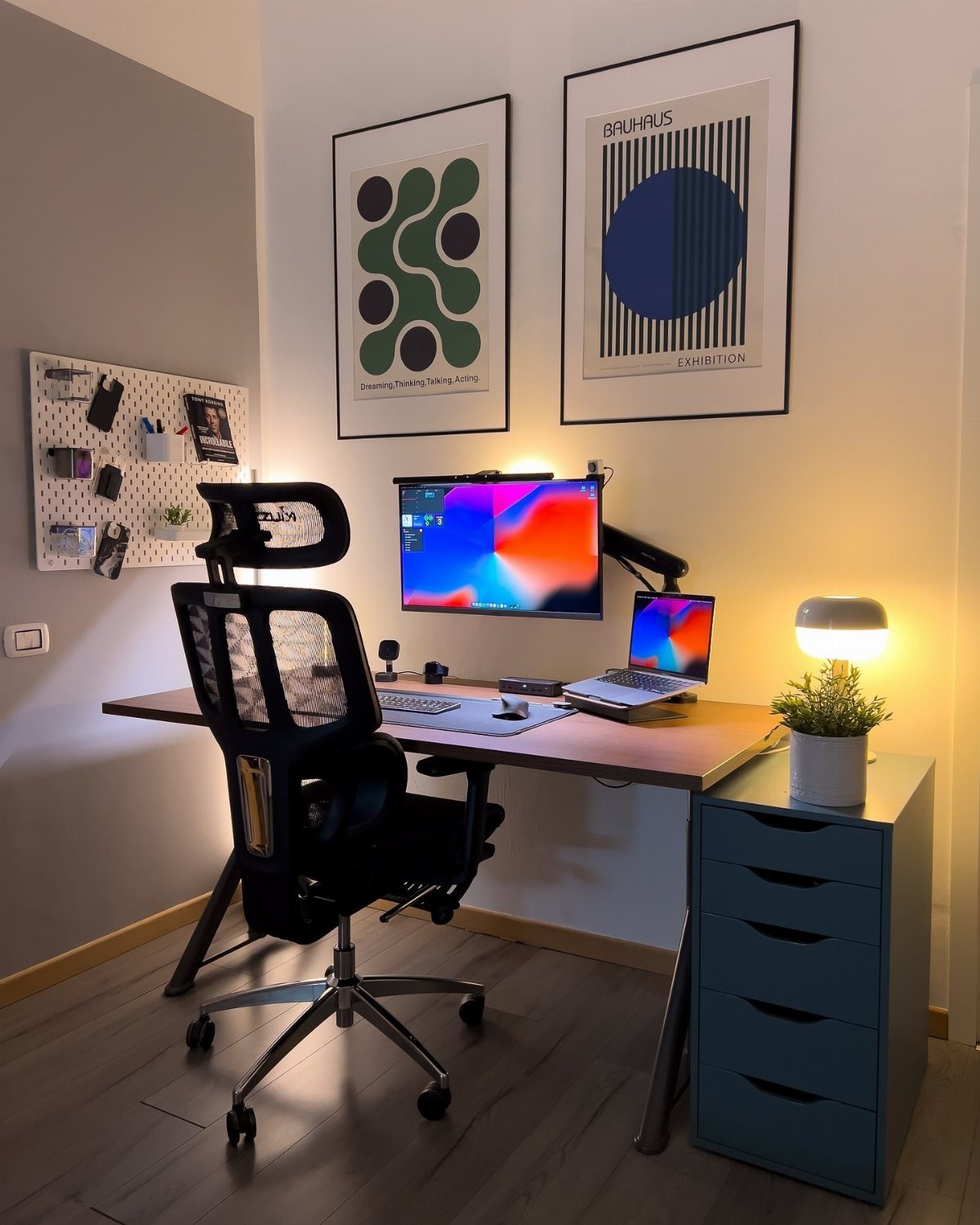
Layering overhead lighting with task lamps and ambient lights lets you adjust the brightness based on the time of day and the work you’re doing.
A desk lamp with a dimmer or adjustable arm directs light where you need it for reading or detail work.
Overhead fixtures light the room evenly, and a floor lamp or sconce adds softer fill to reduce shadows and screen glare.
Set each light on its own switch or plug so you can turn them on and off independently.
5. Use of Plants
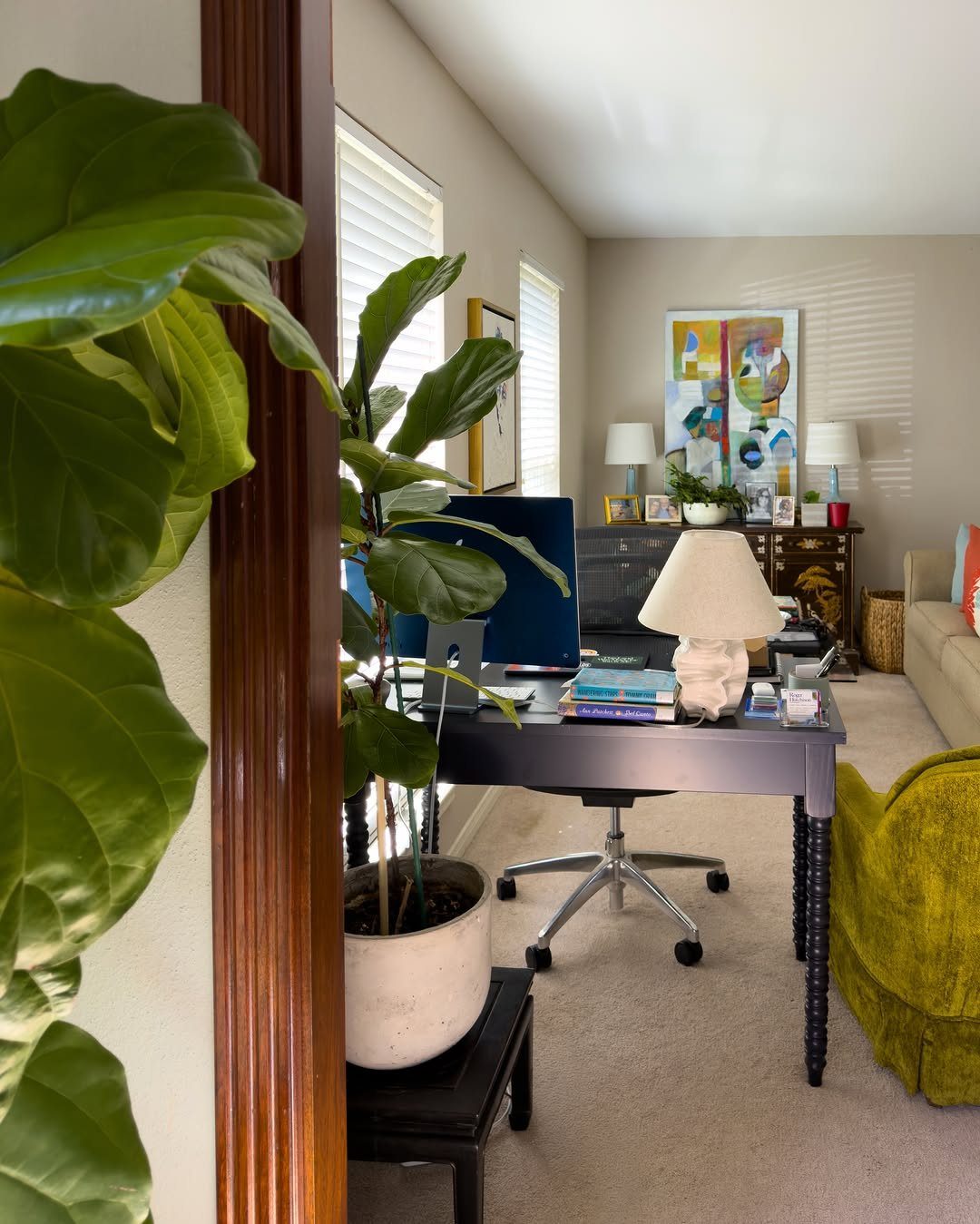
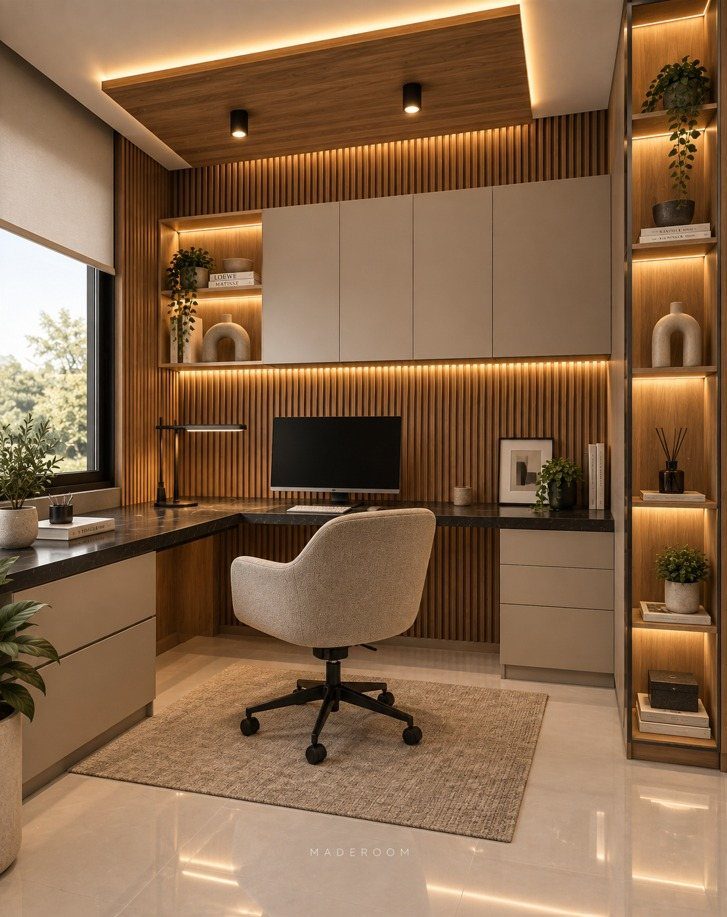
Plants add color and texture to a home office and improve air quality while you work. A fiddle leaf fig or snake plant fills a corner and keeps the desk area open.
Place larger plants on the floor near windows where they get indirect light. Smaller potted plants fit on shelves or the desk itself and need less space.
Water requirements vary by species, so check the care tag before you bring one home. Low-maintenance options like pothos or ZZ plants tolerate missed waterings better than fussier varieties.
6. Wall-Mounted Desk
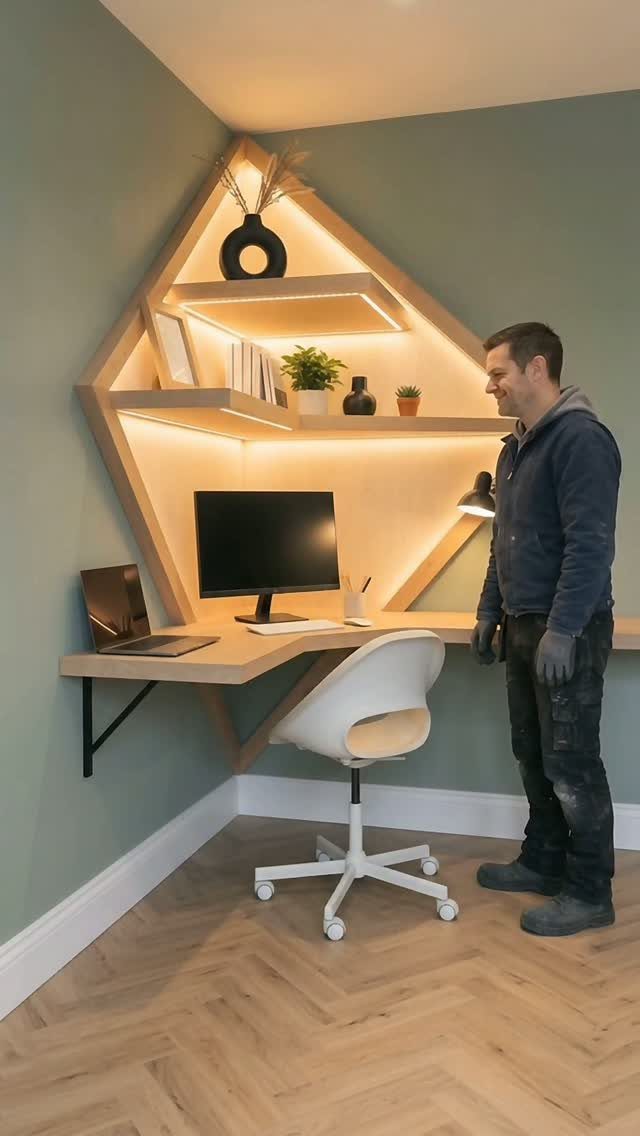
A wall-mounted desk folds up or stays slim against the wall and frees up floor space in a tight room.
Mount the desk at a height that lets you sit or stand comfortably, testing the position with your chair before you fix it to the wall. Anchor it to wall studs with lag bolts so it holds weight without sagging.
If you need more surface area, add a fold-down leaf or a pull-out tray underneath the main work surface.
7. Calming Color Palette
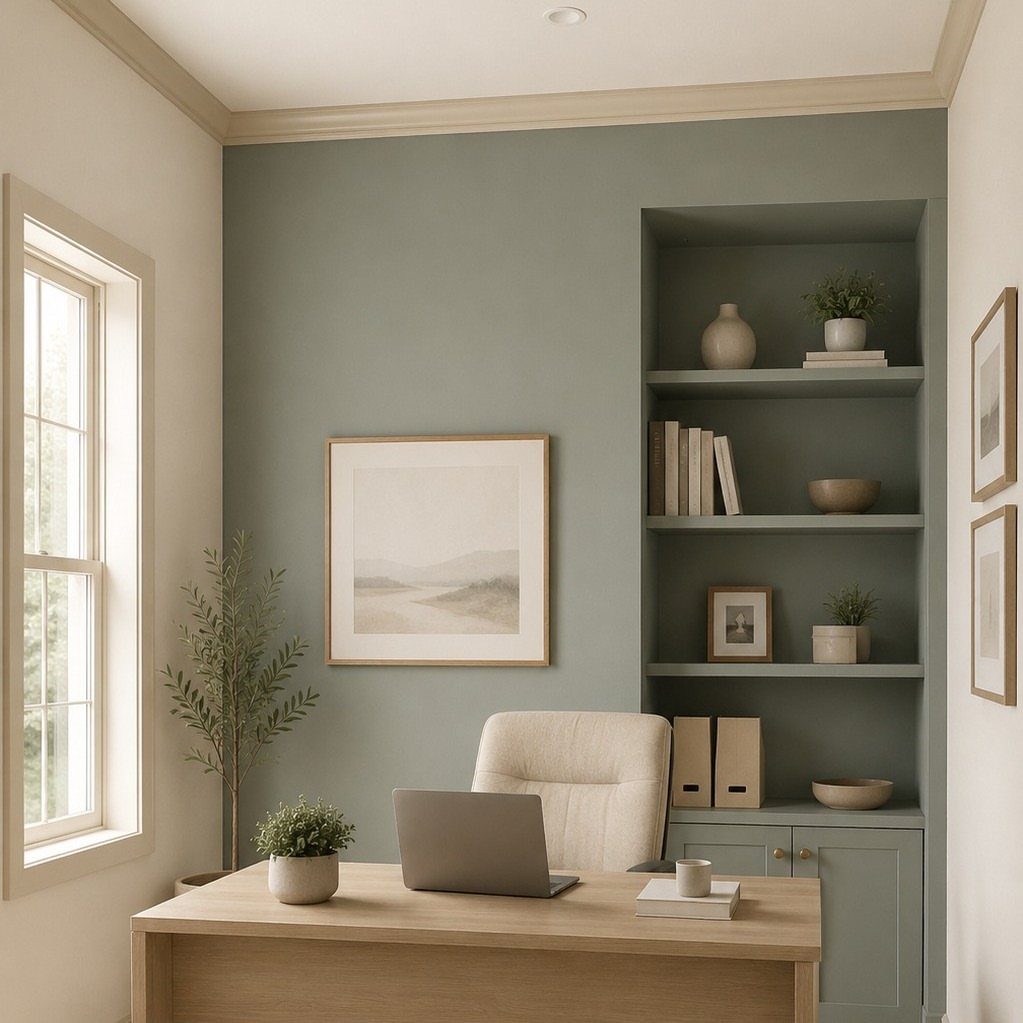
Soft, muted colors like sage green or warm gray keep a home office calm and help you stay focused during long stretches of work.
Paint the walls a single color rather than mixing several tones, which keeps the room cohesive and lets the desk and shelving define the space.
Light neutrals reflect natural light better than dark shades and make a small room feel larger.
If you want more contrast, add it through furniture or accessories instead of the walls.
8. Cozy Nook
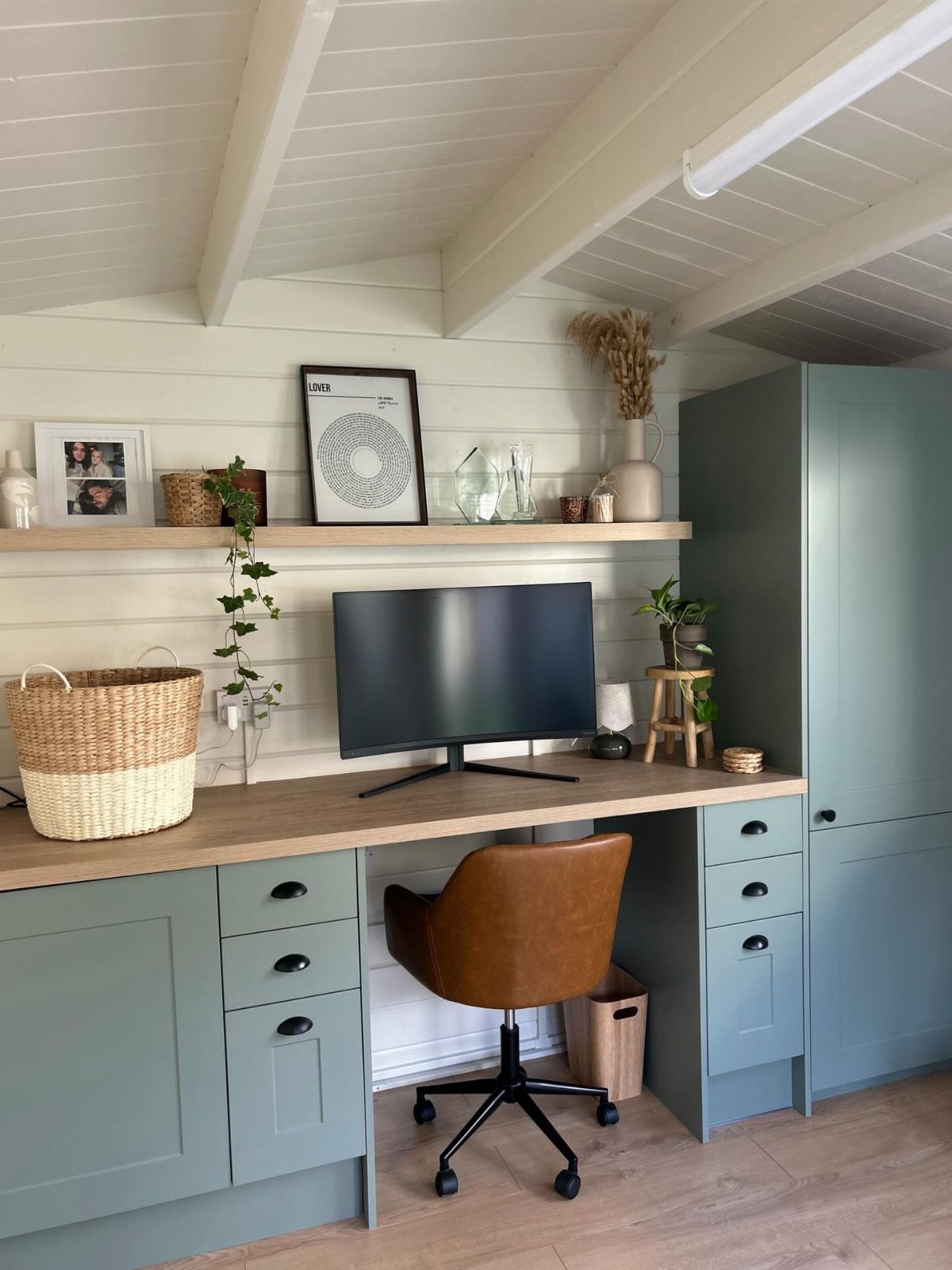
A nook under a sloped ceiling or in an alcove fits a desk and chair in a few square feet, and built-in storage around it keeps office supplies within reach.
Measure the nook before you order or build the desk to make sure the depth and width give you enough surface area for a monitor and keyboard.
If the ceiling slopes low, test your sitting position to confirm you have clearance when you lean back.
Finish the interior with paint or matching cabinetry so the nook reads as intentional rather than leftover space.
9. Murphy Bed
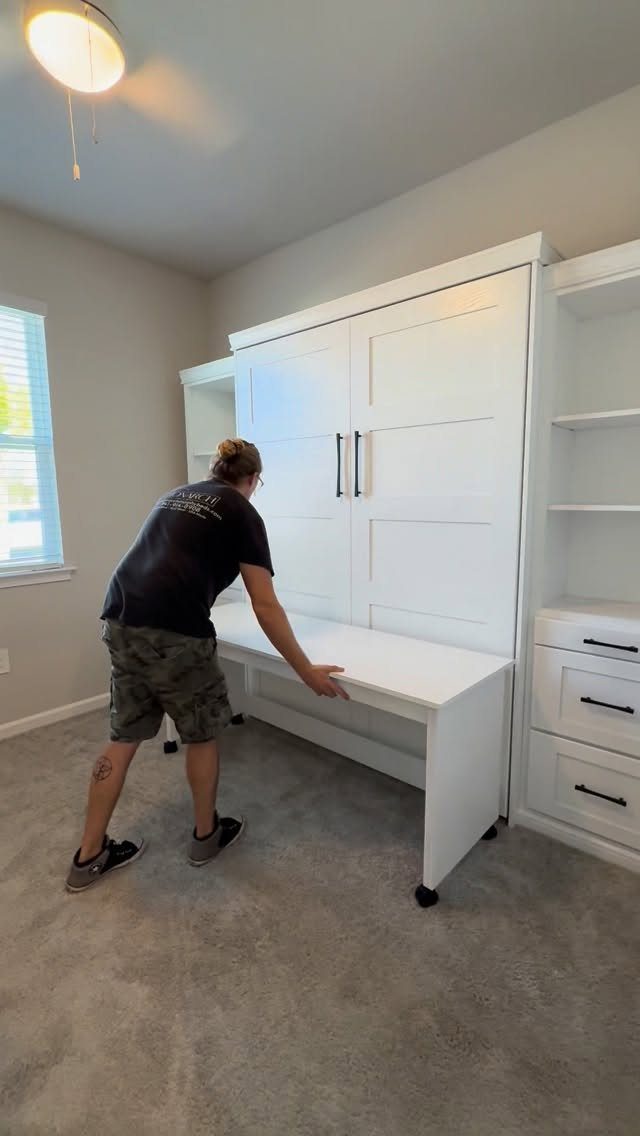
A Murphy bed with an attached desk folds up against the wall when you’re working and pulls down at night, letting one room serve as both office and guest bedroom.
The desk surface typically folds or slides out of the way when you lower the bed.
Most Murphy bed kits include the hardware and hinge mechanism, so you can assemble and install it yourself in a weekend if you have basic tools.
10. Black Paint
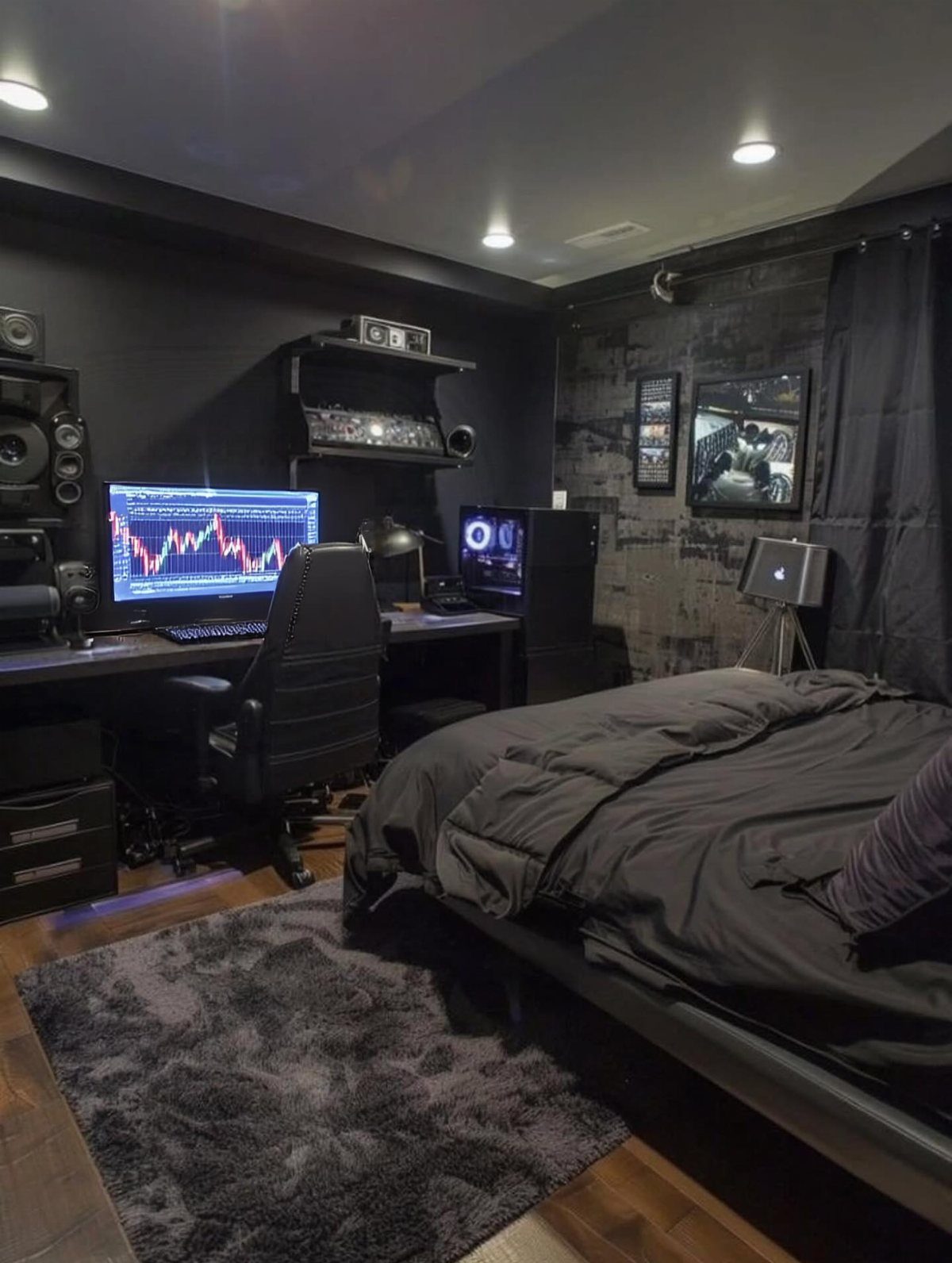
Black paint absorbs light and makes walls recede, which works well in a home office where you want the focus on the screen and desk rather than the room itself.
Use a matte or eggshell finish to avoid glare from task lighting. Black shows dust and scuffs more clearly than lighter colors, so plan to wipe down the walls occasionally.
If the room is small or has limited natural light, black can make it feel tight. Test a sample on one wall before committing to the whole space.
11. Closet Home Office
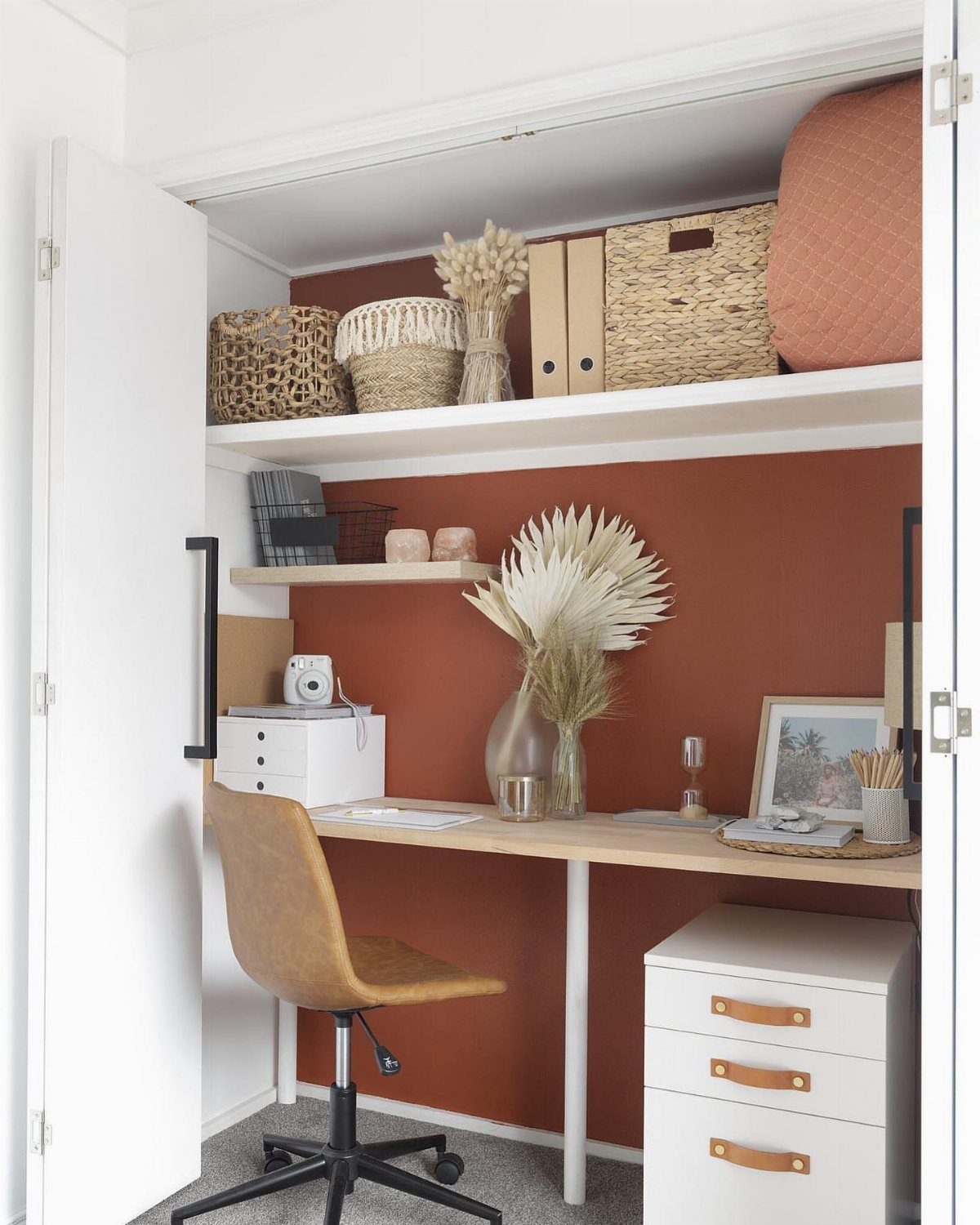
A closet with the doors removed and a desk installed inside becomes a compact home office that tucks into a bedroom or hallway without claiming a separate room.
Remove the closet rod and shelf, then mount a desktop at a comfortable working height. Add a small task lamp and a power strip inside the closet so you don’t have to run cords across the floor.
If you want to close off the workspace at the end of the day, hang a curtain on a tension rod in place of the closet doors.
12. Repurposed Existing Furniture

Old dresser drawers mounted to the wall become open shelving that holds books, plants, and office supplies while adding color and texture to a plain wall.
Sand and paint the drawers before you hang them if you want a uniform finish, or leave the original paint for a mismatched vintage look.
Attach them with L-brackets or French cleats so they sit flush and hold weight without tipping.
Space the drawers at different heights and offsets rather than lining them up in a grid for a more casual arrangement.
13. Install Window Treatments
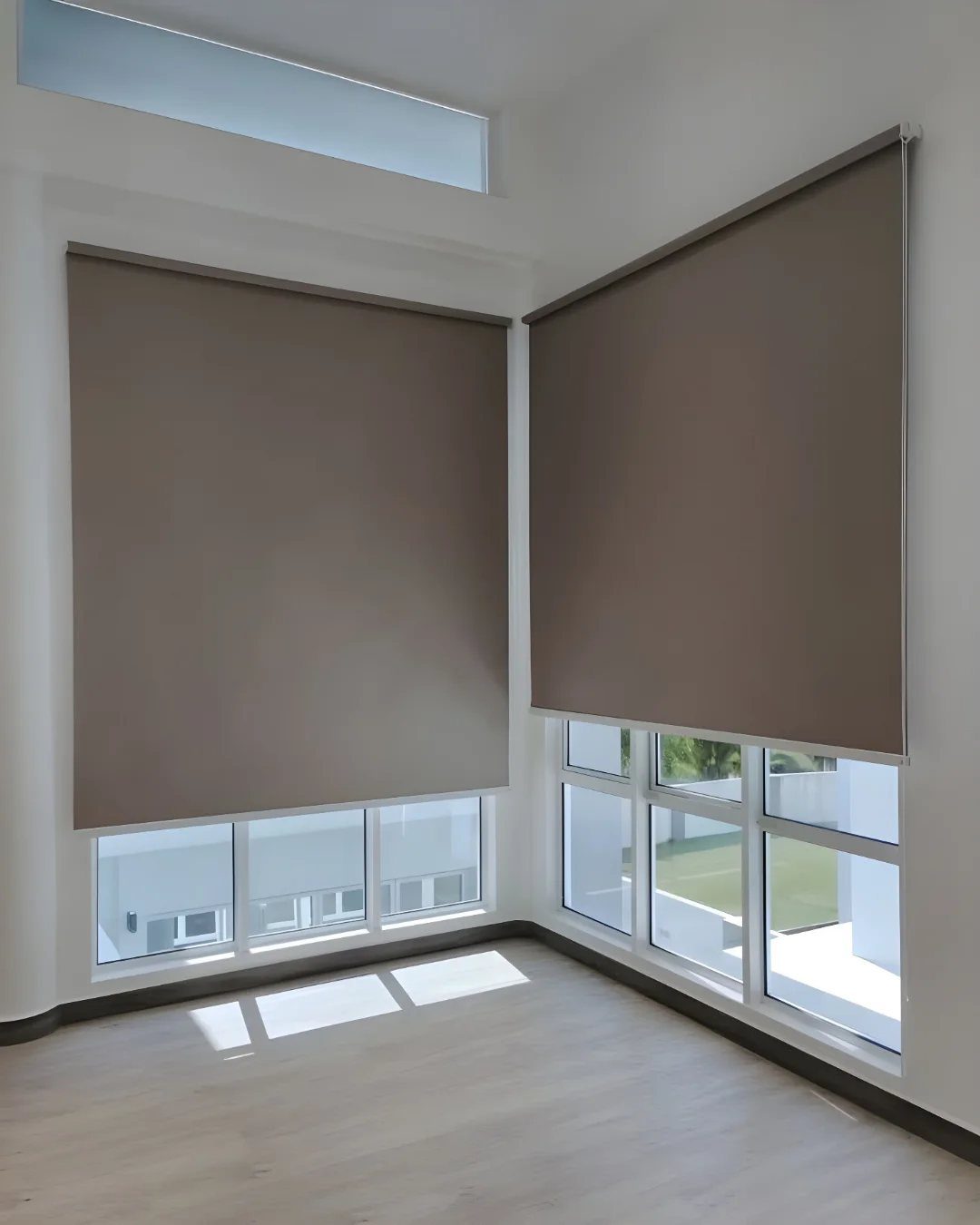
Blinds or curtains let you control glare on your monitor and give you privacy when the desk faces a window or a neighbor’s sightline.
Roller blinds mount inside the window frame and stay out of the way when raised. Cellular shades add insulation if the office gets cold in winter or hot in summer.
For a softer look, hang linen or cotton curtains on a rod just above the window casing. Blackout lining blocks light completely during video calls or screen work that needs a dark room.
Choosing Paint Colors
Blue and green both promote focus without overstimulating the room. Blue calms while keeping energy steady, and lighter blues like sky or powder work well in smaller offices where darker shades might close the space in.
Green sits between warm and cool on the spectrum and pairs easily with wood furniture or metal accents. Sage and olive tones keep the room grounded without feeling cold.
Avoid bright or highly saturated colors on all 4 walls.
They tire the eye over time and compete with the work on your screen. If you want a bolder color, test it on one accent wall and keep the others neutral.
Use satin or eggshell finishes for easier cleaning. Flat paint hides imperfections but shows marks and scuffs more readily in a high-use room.
Lighting Considerations
3 light sources cover the range of tasks you’ll do in a home office.
If the office has a large window, that counts as one source and reduces the need for overhead fixtures during the day.
Softer ambient lighting works better when you’re spending most of the day on a screen. Bright task lighting helps with paperwork or anything that requires close focus.
Organizing Your Workspace
Keep only the items you use daily within arm’s reach on the desk. Pens, notepads, and your phone stay out; everything else goes in a drawer or on a shelf.
Store cables in a tidy unit or group them with clips so they don’t spread across the floor or dangle behind the desk. Visual clutter pulls your attention even when you’re not actively looking at it.
Clear the desk at the end of each day so you start the next morning with a clean surface. A few minutes of resetting prevents the buildup that makes a workspace feel chaotic.
A pegboard keeps charging cables and headphones off the desk, and you can move the hooks as your gear changes. That keeps them visible and off the desk.
Frequently Asked Questions
How to make a home office look nice?
Choose a paint color that sets the mood, whether that’s sage green, warm gray, or another soft neutral.
Add a few plants on shelves or near windows for color and texture, and keep the desk surface clear except for what you use daily.
What are some ideas for wall decor for a small office?
A board and batten accent wall or a gallery of framed prints adds personality to the walls and leaves the floor clear.
Wallpaper with a landscape or pattern works well behind a desk in a corner, and open shelving made from repurposed furniture adds both storage and visual interest.
How to brighten up a dull office?
Position the desk near a window with the light coming from the side to avoid screen glare, and paint the walls a light neutral that reflects daylight.
Add a desk lamp and a floor lamp to supplement the overhead fixture so you control the brightness as the day shifts.






