
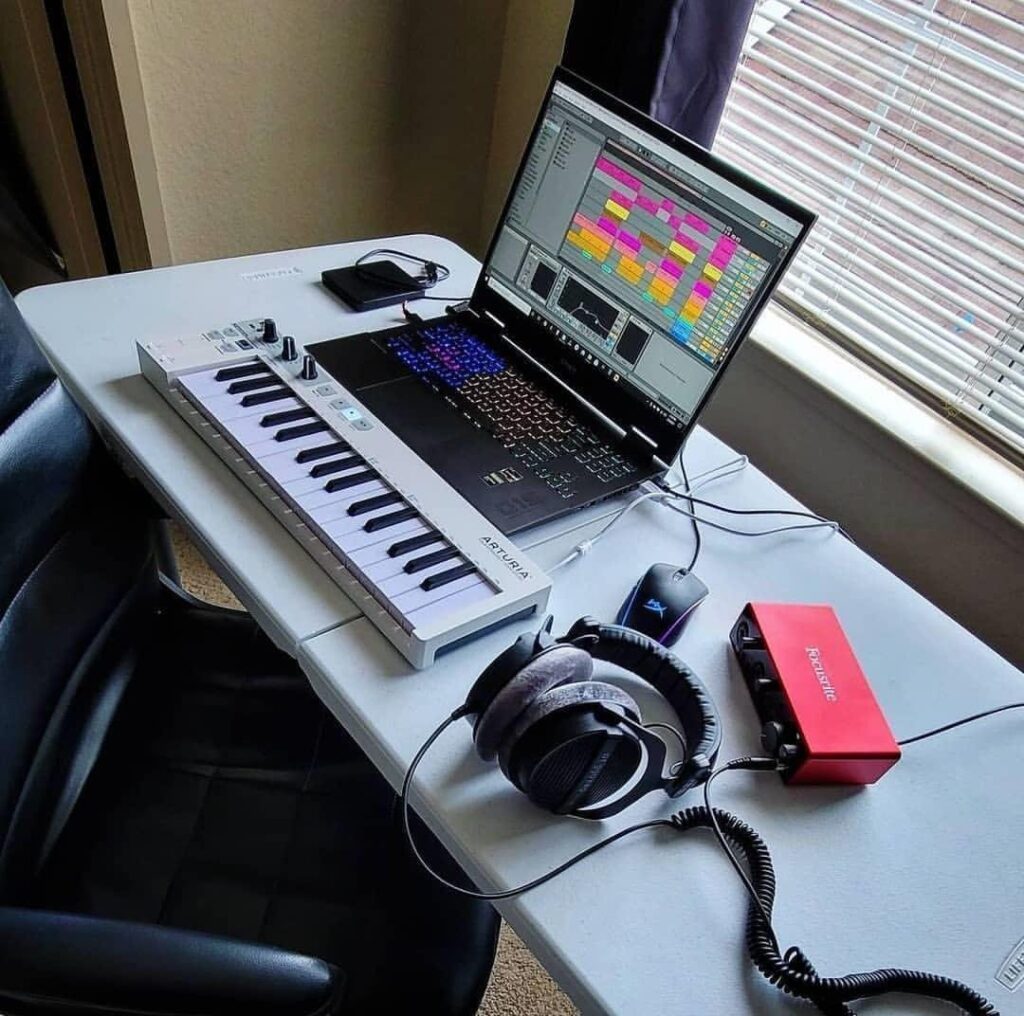
A home music studio can run from a compact wooden desk with a laptop and interface to a full room with dual monitors, vintage audio equipment, and a listening couch.
The right setup depends on how much space you have and whether you need the room to double as a place to step back and listen or stay tight around a single workspace.
1. Plants
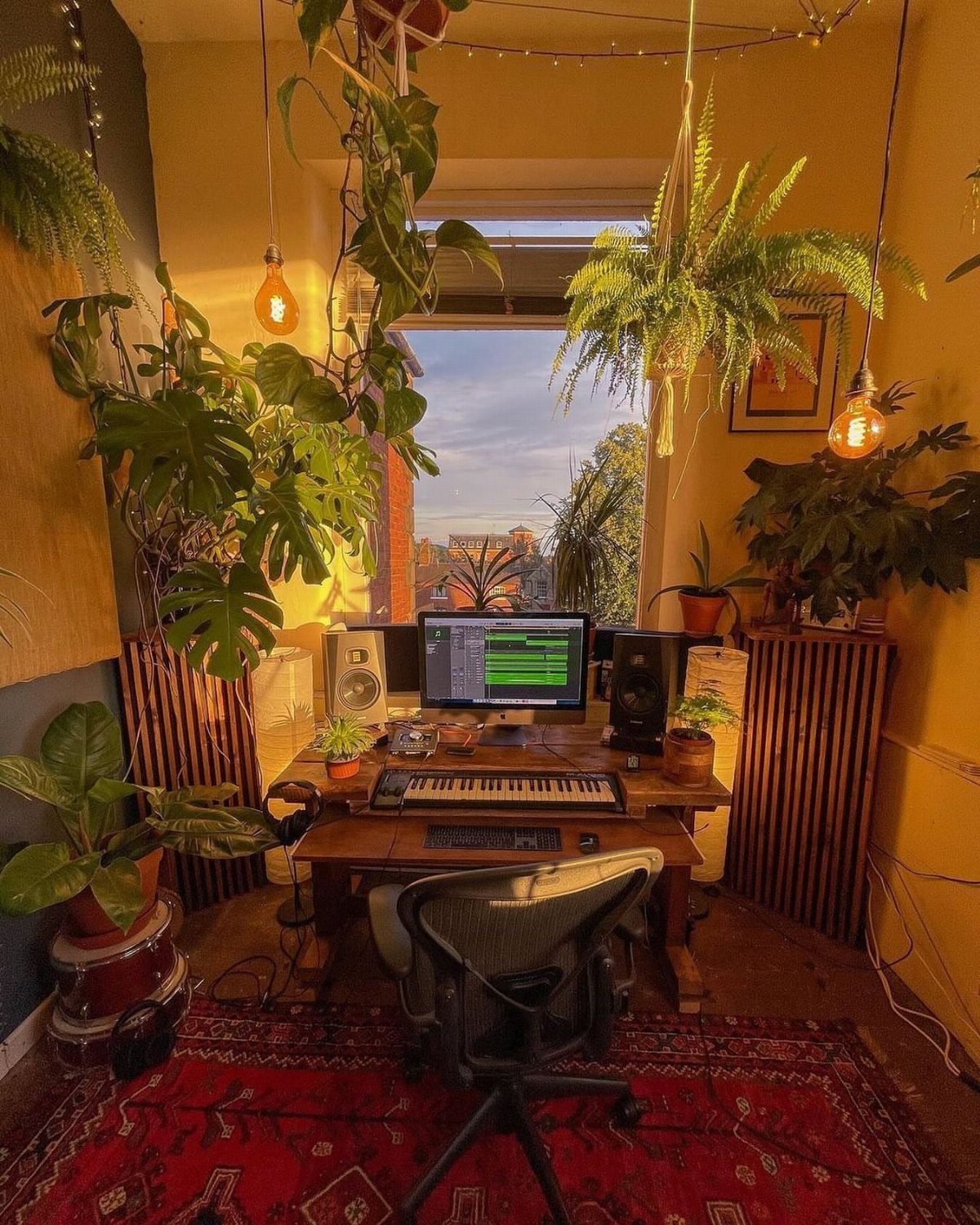
Plants soften the hard surfaces in a studio and pull some of the echo out of the room.
A few potted plants on the desk or floor, plus a hanging plant or two near the window, fill in the space and leave your work surface clear.
Low-light plants like pothos, snake plants, or philodendrons survive in rooms with limited natural light, and they all handle irregular watering. If your studio gets good sun, a fiddle-leaf fig or monstera adds height and shape.
Hanging plants keep the desk clear and draw the eye up, which makes a small room feel taller.
2. LED Color-Changing Lights
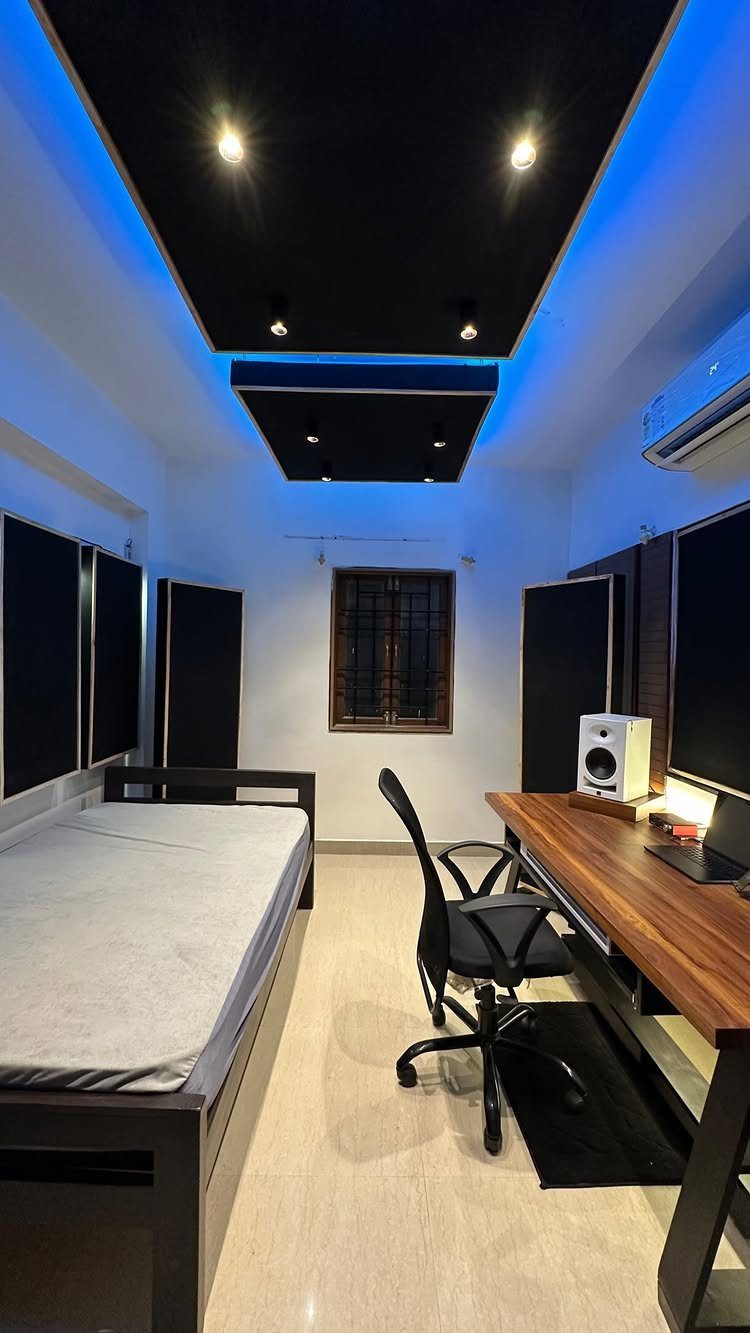
LED strips give you control over the mood in the room. Blue and purple read calm and focused, warmer tones like amber or red shift the vibe when you’re listening back or taking a break.
Most color-changing LED strips run on adhesive backing and plug into a standard outlet. Govee and Philips Hue both offer app control, so you can save presets for different times of day or different tasks.
Placing strips along the ceiling line or behind monitors adds indirect light without glare on your screen. The effect is cleanest when the strip itself stays hidden.
3. Two Visual Monitors
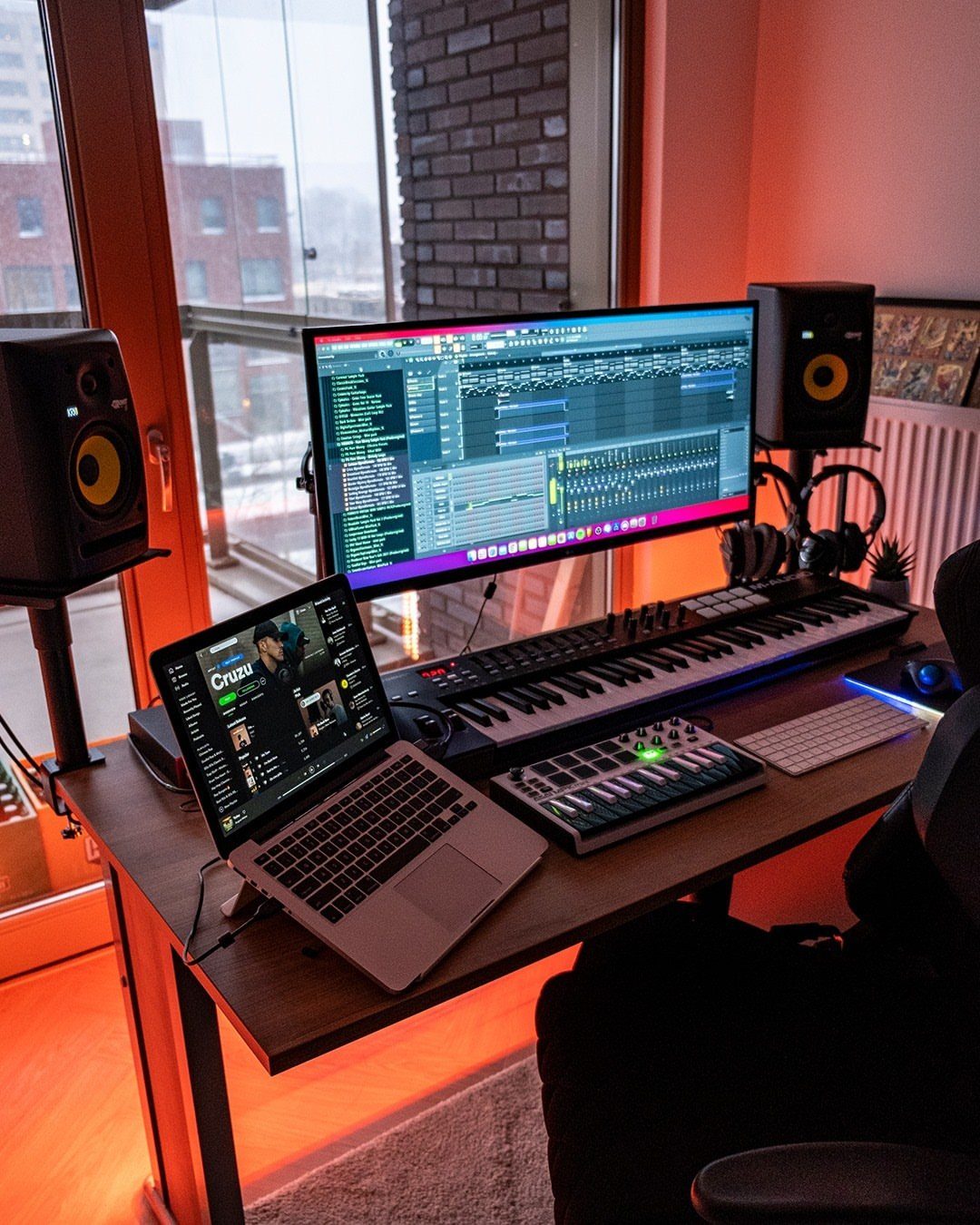
Two screens let you keep your DAW’s mixer on one display and your arrangement or plugin window on the other, so you’re not constantly tabbing between views. The time saved adds up when you’re deep in a session.
A large monitor paired with a laptop works well in tight spaces. If you have room, 2 identical monitors give you a symmetrical setup and make it easier to drag windows across without resizing.
Mount both at eye level to avoid neck strain. An adjustable monitor arm frees up desk space underneath and makes it easier to shift the angle when you need to.
4. Comfortable Couch
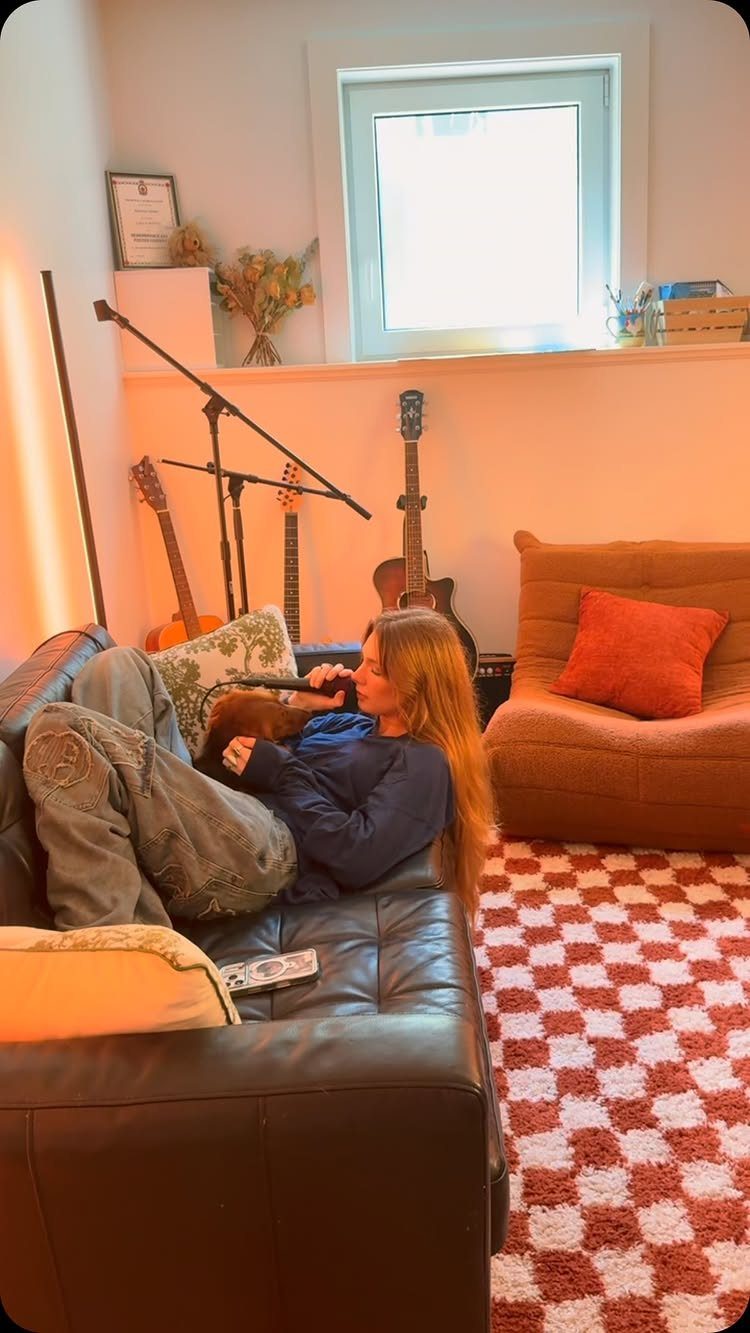
A couch gives you a different listening position and a place to step away from the desk without leaving the room.
Sitting farther back lets you hear the mix the way someone else would, which catches balance issues you miss up close.
Leather or faux leather wipes down easily and holds up better than fabric in a room with gear and cables. A loveseat or small 2-seater fits most home studios and leaves room to move around your workspace.
If the couch faces the monitors, it doubles as a client seat or a spot for a collaborator to sit while you work.
5. Natural Light
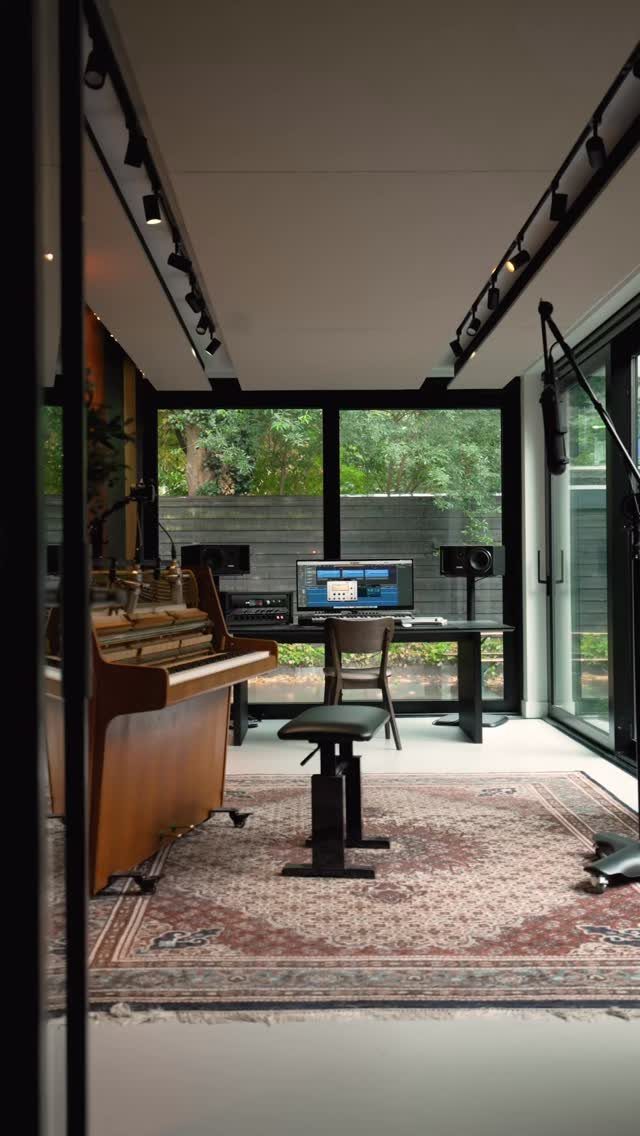
Natural light makes a studio feel less like a cave. A window pulls your eyes off the screen, gives you a sense of time passing, and keeps the room from feeling closed in after a long session.
If your studio has a window, position your desk so the light comes from the side rather than directly behind or in front of your monitors.
That avoids glare on the screen and keeps the backlight from washing out your display.
Sheer curtains or adjustable blinds let you control how much light comes in without blocking it completely. On bright days, diffused light is easier on the eyes than direct sun.
6. Artwork and Decor
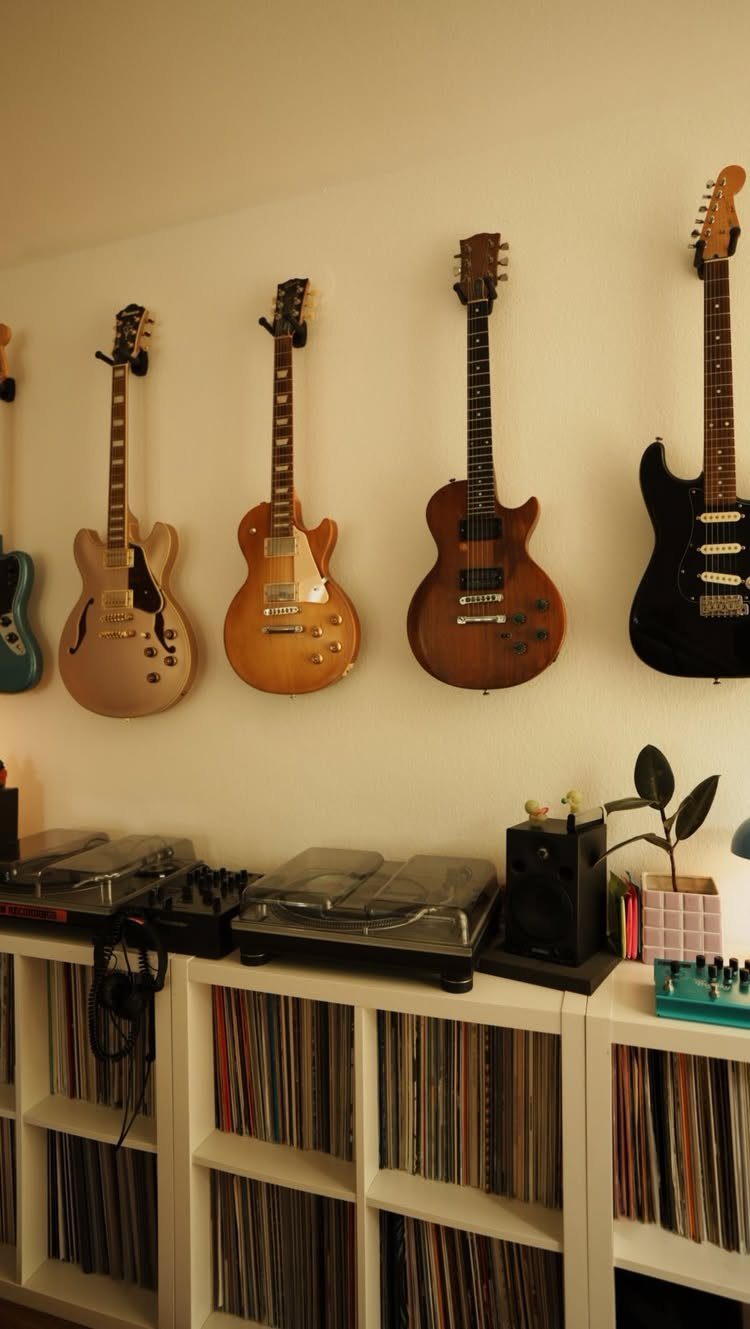
Artwork gives the room a finished look and reflects what you’re into. Guitars on the wall, framed album covers, or a shelf of vinyl all work, and they double as conversation pieces when someone else is in the room.
Wall-mounted guitar hangers keep instruments within reach and add visual interest while leaving your floor clear. Displaying vinyl on a shelf or wall rack turns the collection into decor and makes it easier to grab what you want to reference.
Choose pieces that mean something to you rather than filling the wall for the sake of it. A few well-placed items read more intentional than a crowded wall.
7. Tan Acoustic Panels
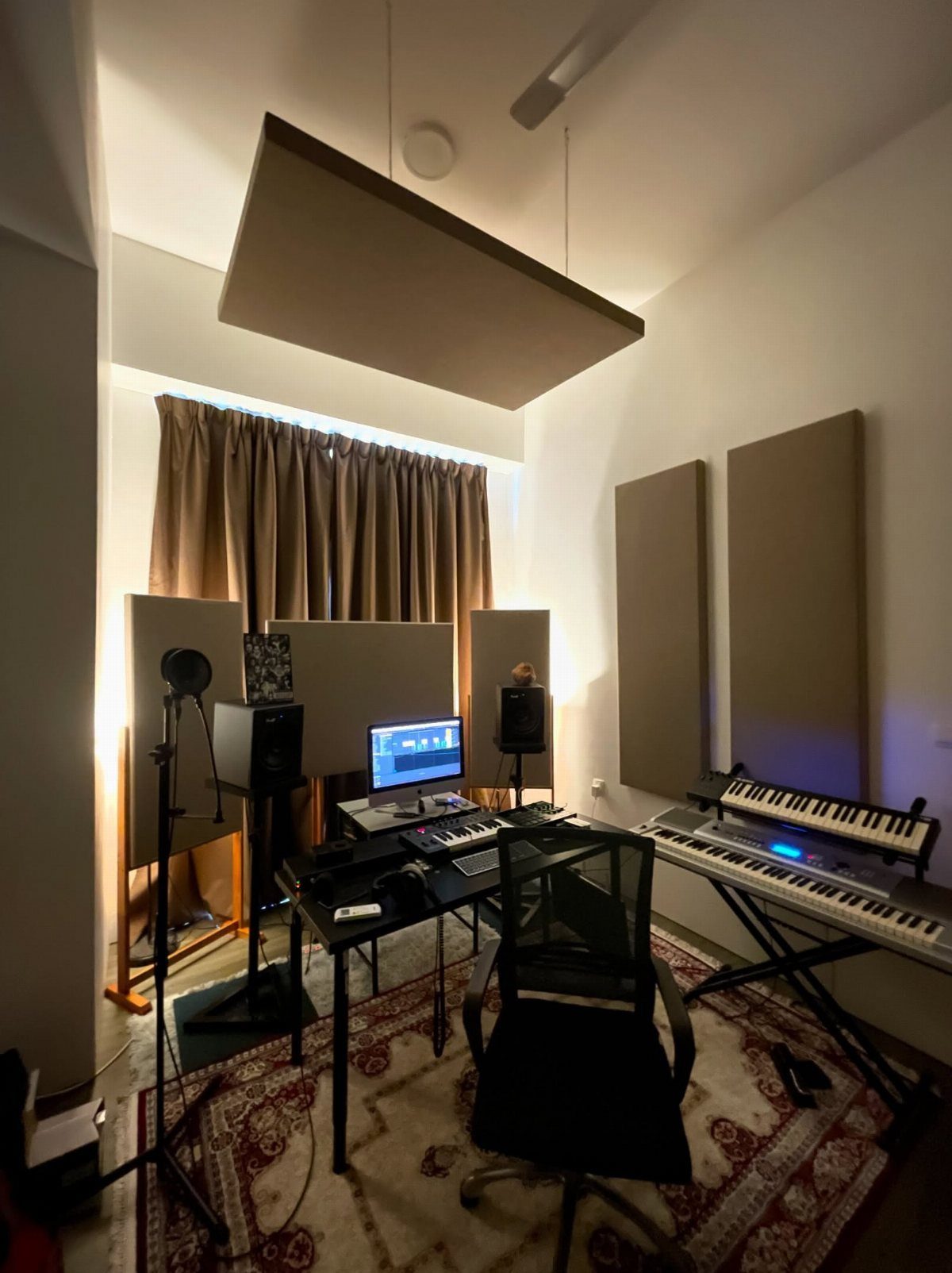
Tan acoustic panels absorb reflections without turning the space dark or clinical. The warm neutral sits between treatment and decor, so the walls look finished rather than covered in foam.
Fabric-wrapped panels in tan, beige, or light brown blend with wood furniture and warm lighting.
Most home studios need panels placed at the first reflection points: the walls to the left and right of your listening position, plus a few behind the monitors.
Thicker panels handle lower frequencies and bass, which is often where home studios need the most control. Thicker panels absorb lower frequencies but take up more wall space.
8. Compact Wooden Desk Setup
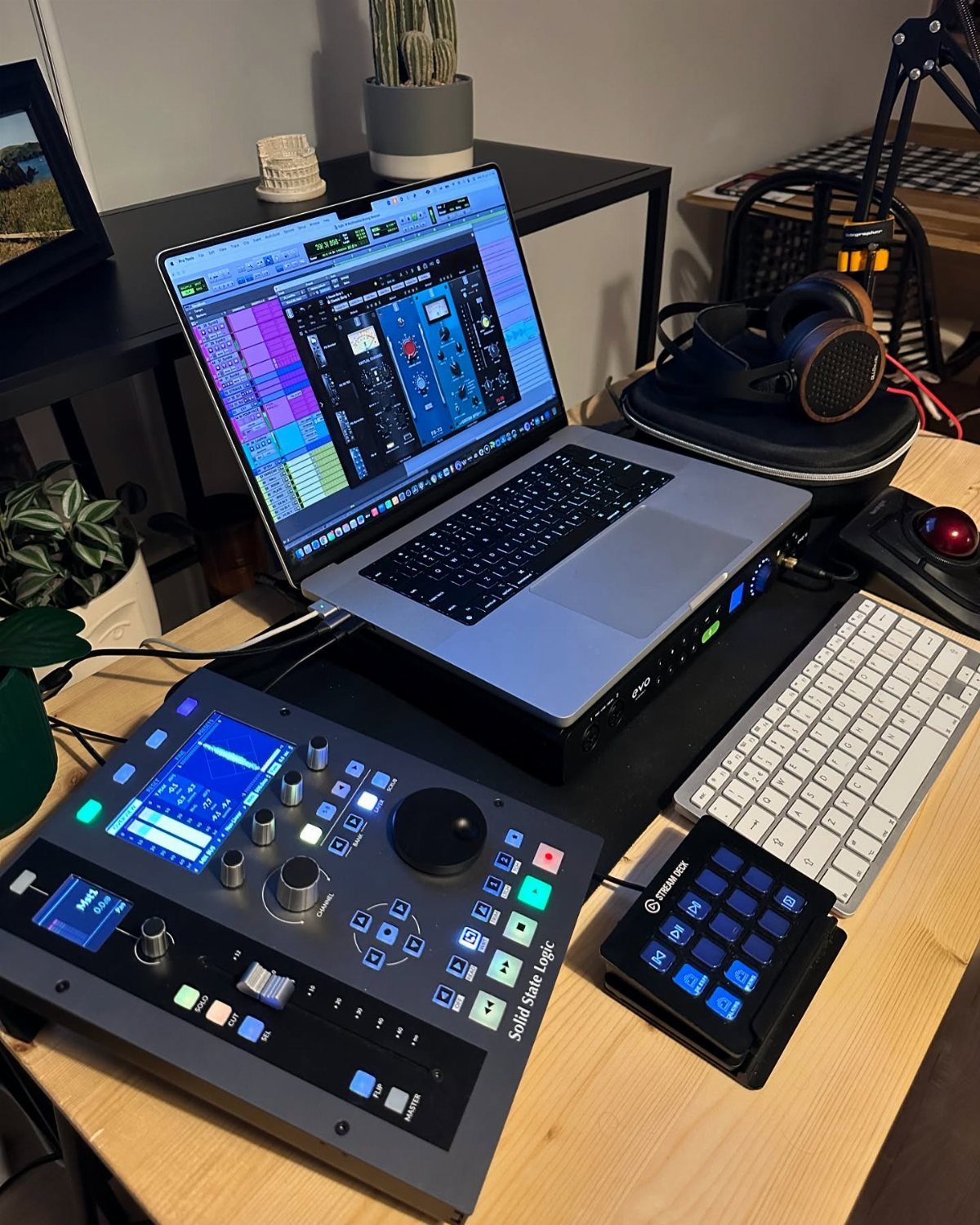
A wooden desk keeps the setup warm and grounded, and it holds studio gear without looking like a control room. The natural grain reads intentional next to black monitors and silver hardware.
Keep the surface clear by routing cables underneath or along the back edge. A compact desk forces you to choose what stays within reach, which keeps your workflow tight and the space easier to move around.
If the desk is small, a laptop on a stand frees up space for a controller or keyboard in front of you. Wall-mounting your audio interface or power strip opens up more surface area without adding furniture.
9. Vintage Audio Equipment
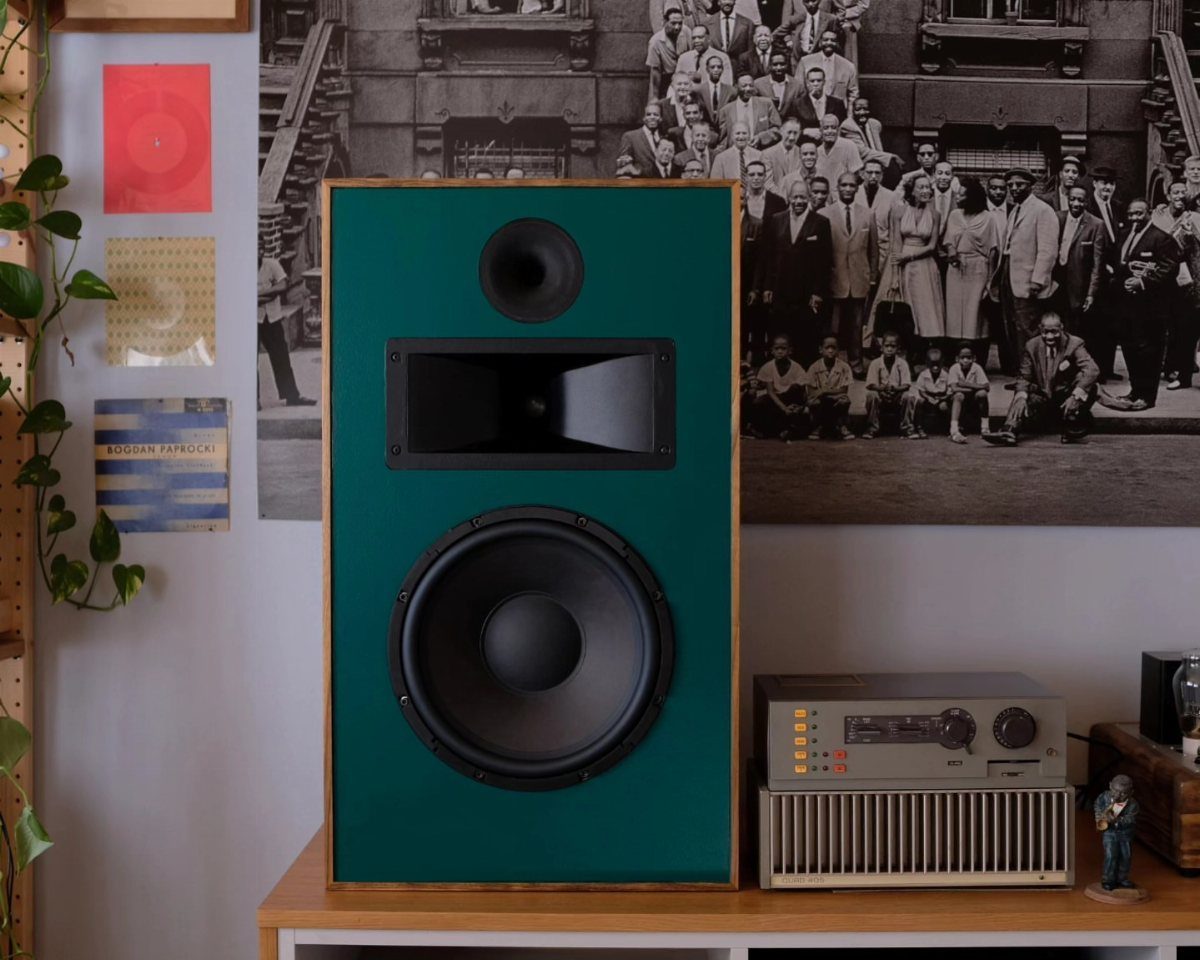
Vintage receivers and speakers add character and give your studio a lived-in feel that new gear doesn’t.
The color and patina on older equipment stand out on a desk or shelf, and most vintage audio still works well for casual listening or reference.
Silver-faced receivers from the 70s and 80s pair well with wooden cabinets or retro speaker cloth. Thrift stores, estate sales, and online marketplaces turn them up regularly, often for less than modern Bluetooth speakers.
Test the unit before you buy it. Most vintage gear needs a cleaning or a recap, but a working receiver can last another decade with basic care.






