

A 48-inch desk fits a single monitor and leaves room for a notebook, while a 60-inch surface handles two screens and paperwork without crowding the edges.
The size of your equipment decides the desk, and whether you need a door between work and the rest of the house depends on how many calls fill your day.
Vertical wood slats add texture behind the desk without covering the whole wall, cable trays keep cords off the floor, and a coffered ceiling with floor-to-ceiling cabinetry gives a home office the finish of a formal room.
1. Natural and Task Lighting

Position your desk where natural light reaches the screen without glare, ideally perpendicular to the window rather than directly in front of it. A floor lamp or adjustable desk lamp fills in when daylight fades or the sky goes grey.
Natural light keeps your circadian rhythm steady and cuts down on midday fatigue. Task lighting gives you control over brightness and direction, so you’re not squinting at a dim corner of the monitor or straining to read notes.
If the window faces south or west, sheer blinds or a light diffuser panel softens harsh afternoon sun without losing the brightness.
2. Multifunctional Design
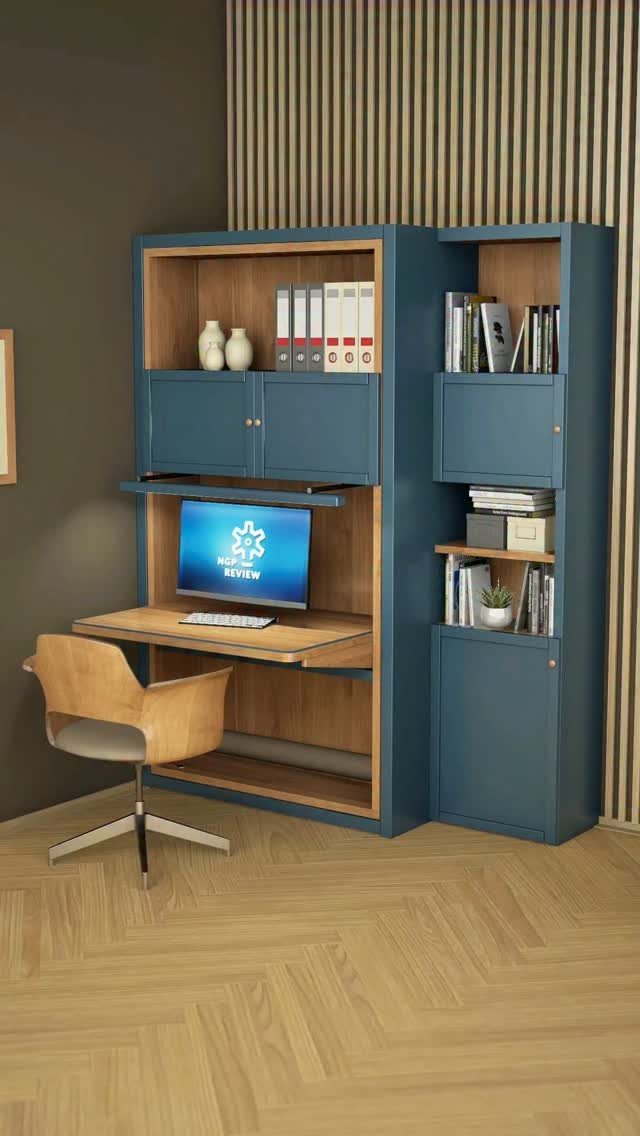
A wall-mounted unit that folds or slides closed turns a working desk into a clean cabinet when you’re done for the day.
The maker notes that the transforming design allows one compact area to serve two completely different purposes, making it especially useful for small apartments and guest rooms.
This setup works best when you don’t need constant access to files or equipment. If your office runs all day, the folding becomes a chore.
3. Desk Facing a Window
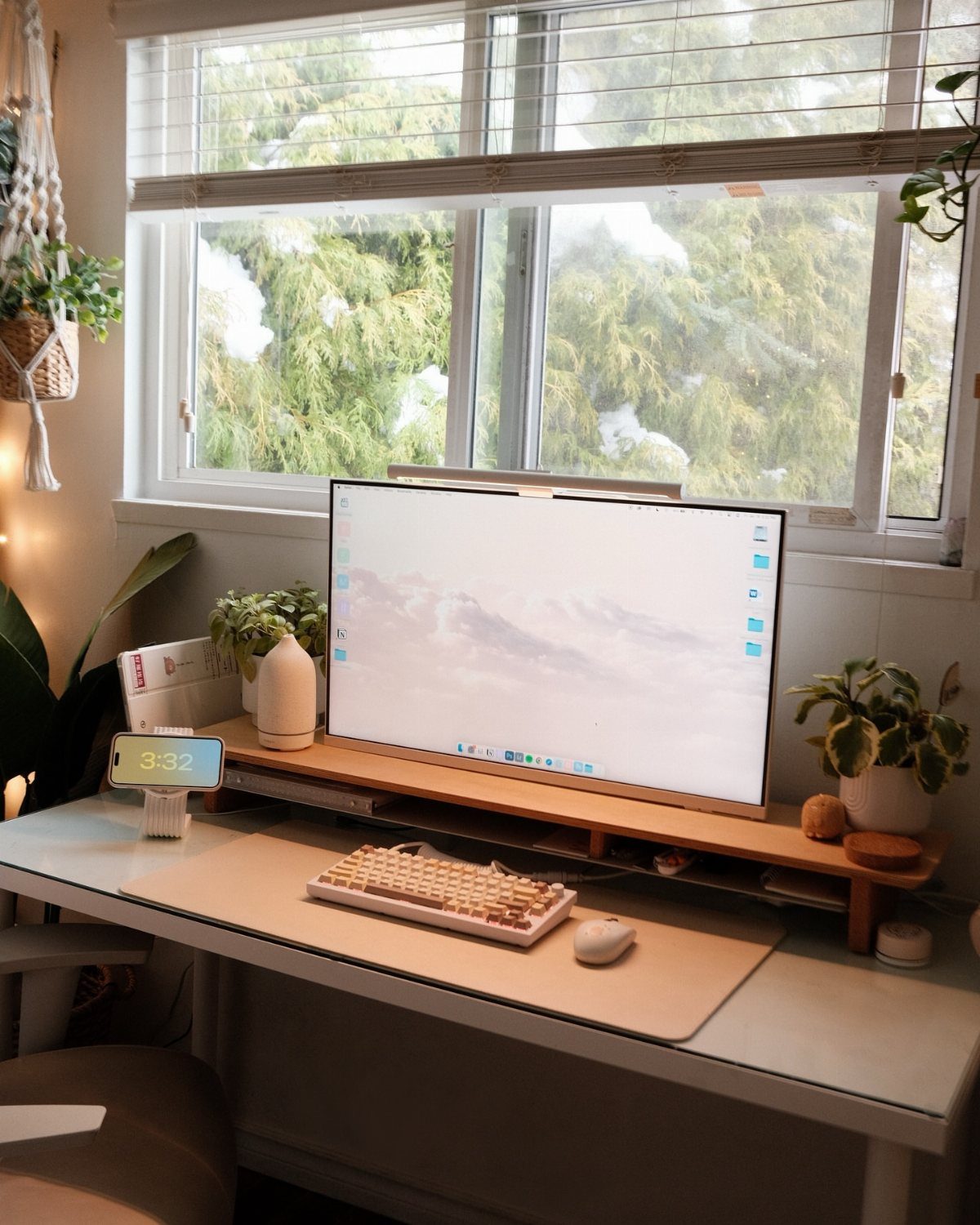
Facing a window while you work gives you somewhere to look besides the screen.
Lifting your eyes to a view helps with eye strain, and having the window in front of you means you control the light with a shade rather than fighting a backlit screen.
The setup does require blinds or a shade. Midday sun on a white desk can be as hard on your eyes as a dark room.
4. Choosing a Color Scheme
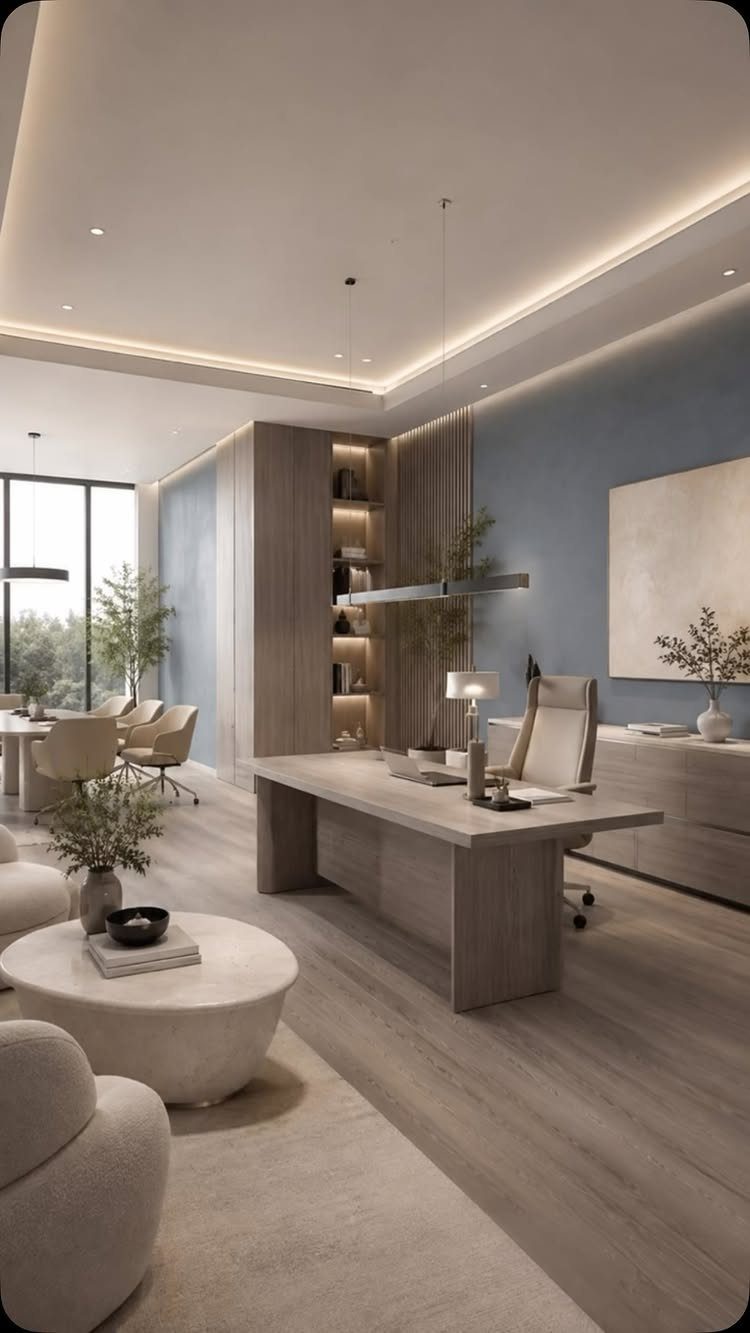
Pick a single color for the walls and let the furniture stay neutral, or choose one wood tone and keep the walls white. This office uses a soft blue accent wall with light wood, which feels calm without reading cold.
Steven Gambrel designed this Bridgehampton home, and the restrained palette is what makes the room feel finished rather than busy. 2 accent colors in a small office usually fight each other.
5. Minimalist Look
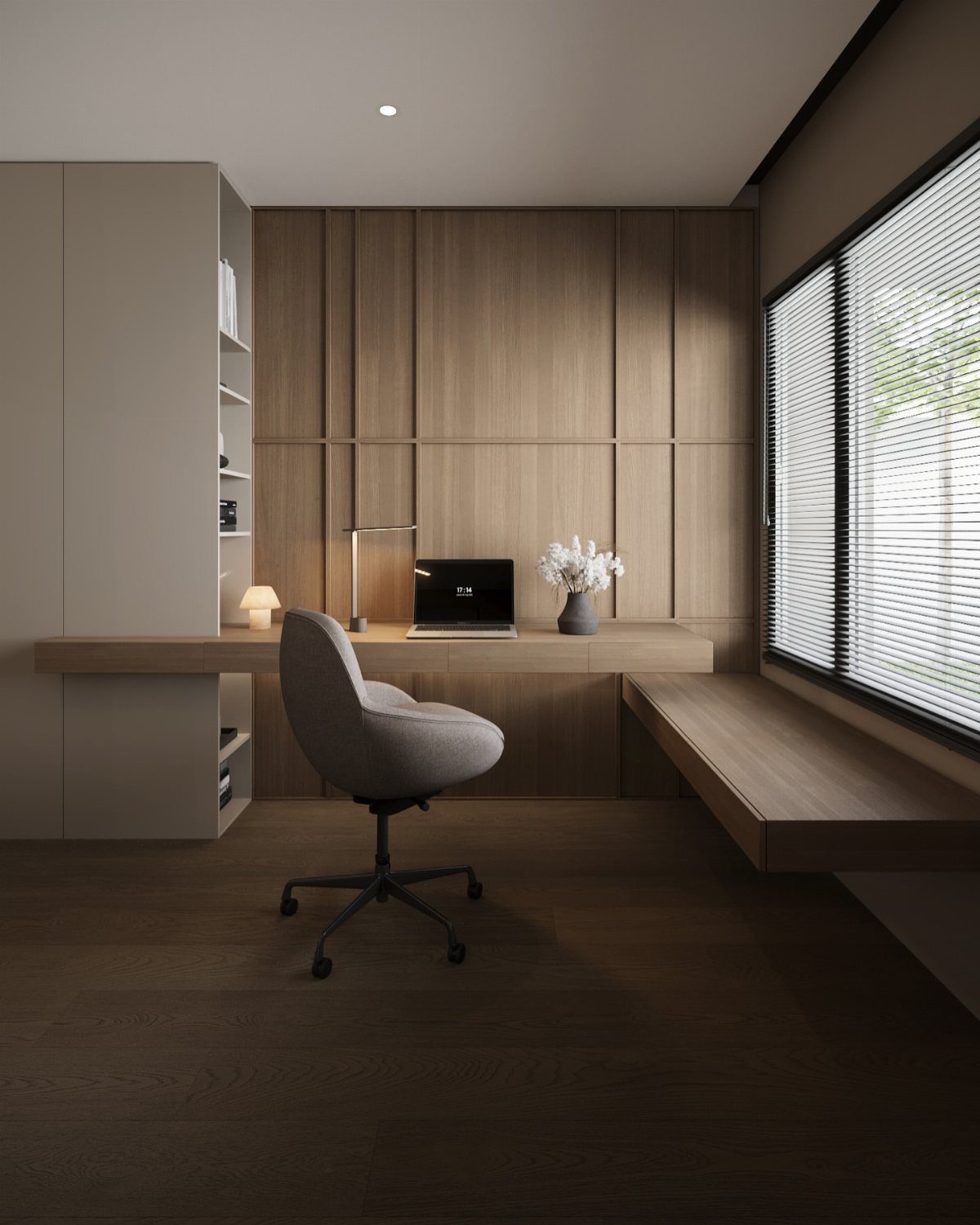
A minimal office keeps the desk clear and the walls uncluttered. Built-in surfaces and concealed storage mean fewer items sitting out, which makes cleaning faster and removes the visual noise that pulls your attention off the work.
The wood paneling here adds warmth without adding objects. If you’re starting from scratch, a floating desk and a single lamp get you most of the way there.
6. Cable Trays, Clips
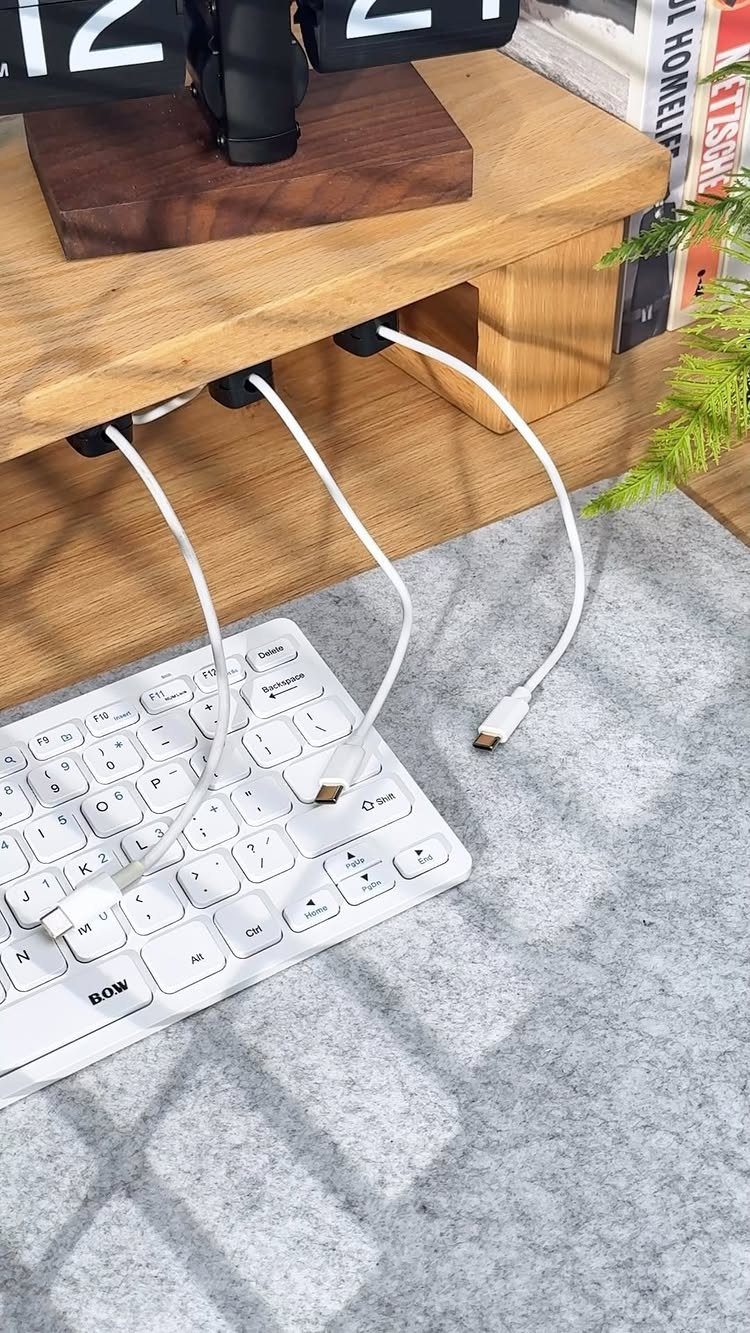
Cable clips screwed to the underside of the desk keep power cords and USB cables off the floor and out of sight.
A cable tray works the same way for thicker bundles.
7. Wooden Desks and Indoor Plants
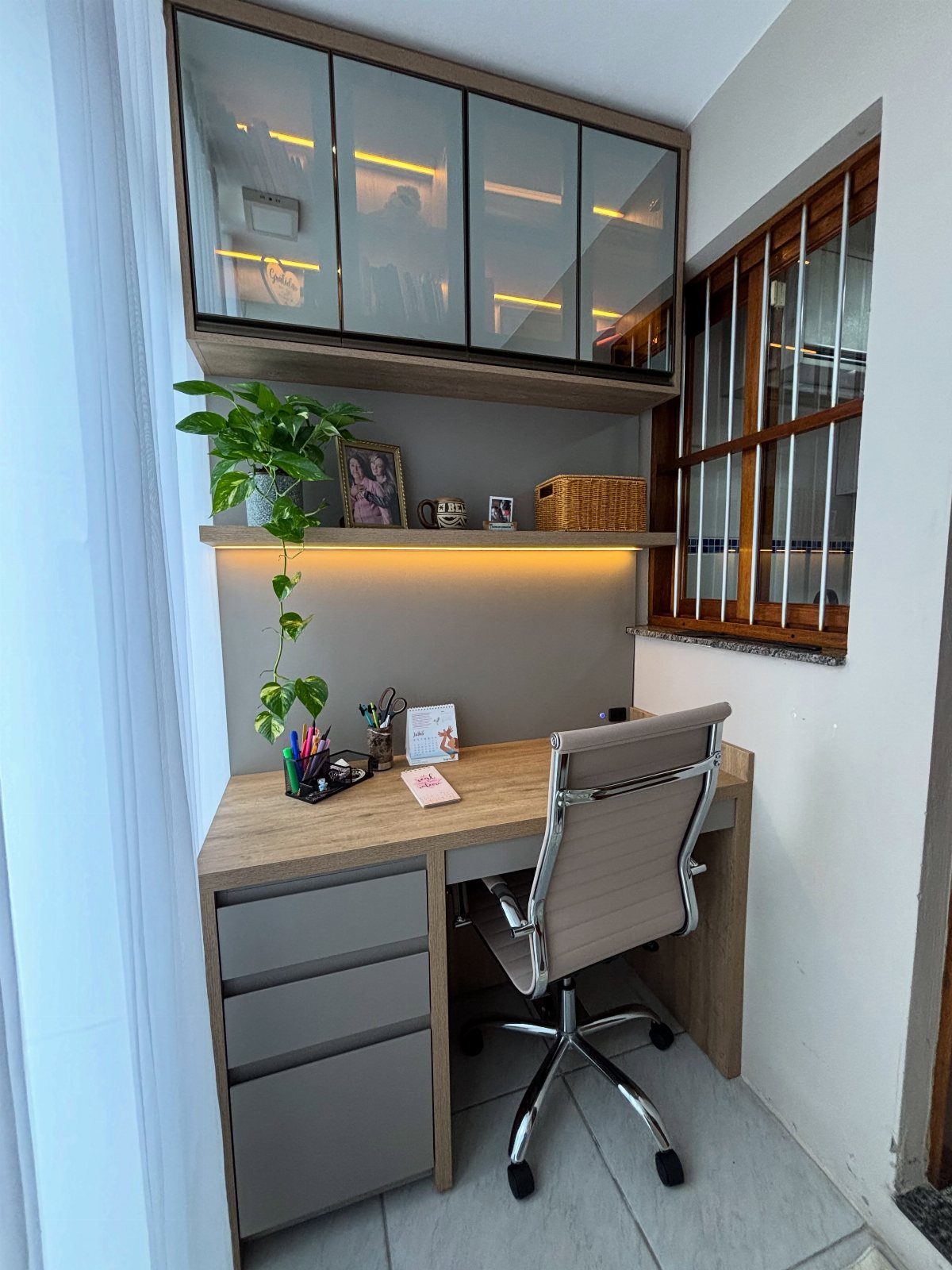
A wooden desk softens an office that would otherwise read too technical, and a single plant near the monitor gives the eye somewhere living to rest between tasks.
A cabinet mounted on the wall adds vertical storage without eating into floor space. Glass doors let you see what’s inside, which cuts down on the time spent looking for files or supplies.
If the office shares a wall with a bedroom or living room, wood absorbs sound better than metal or laminate.
8. Built-in Desk with Overhead Shelving
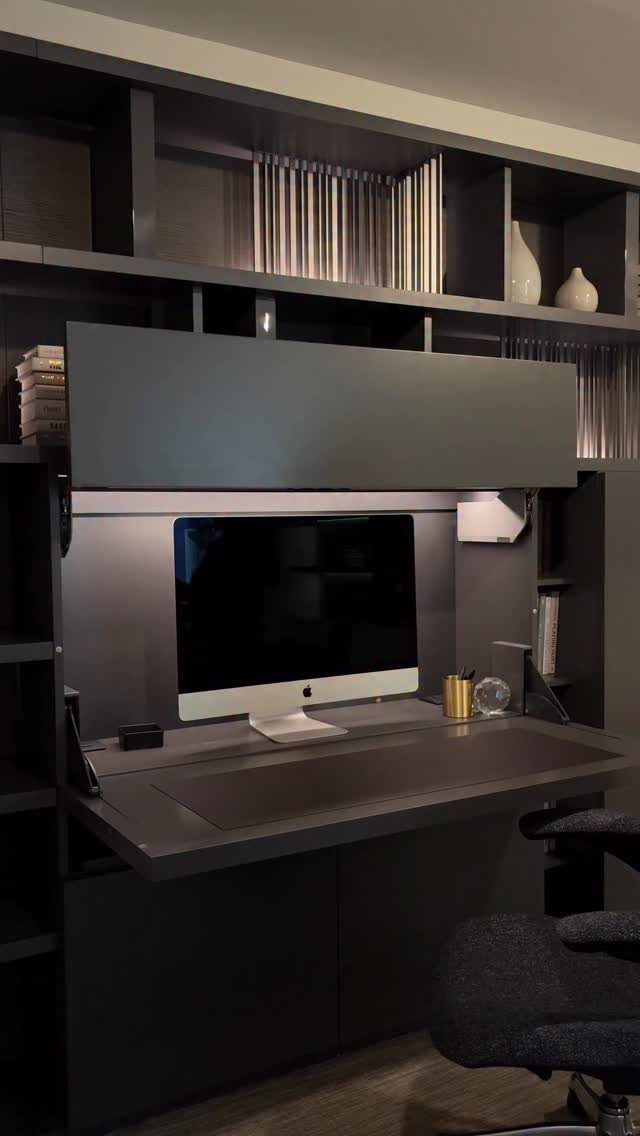
A built-in desk fills the wall and gives you storage at 2 heights without adding freestanding furniture.
Open shelves above the work surface keep books and reference material within arm’s reach, and the lower compartments hold cords, hard drives, or anything that doesn’t need to stay visible.
The dark grey finish here makes the setup feel less like office furniture and more like part of the room. When 5:00 comes, the desk doesn’t announce itself the way a bright surface would.
Custom work costs more than a desk you can move, so this suits a space that will stay an office.
9. Wood Slat Accent Wall
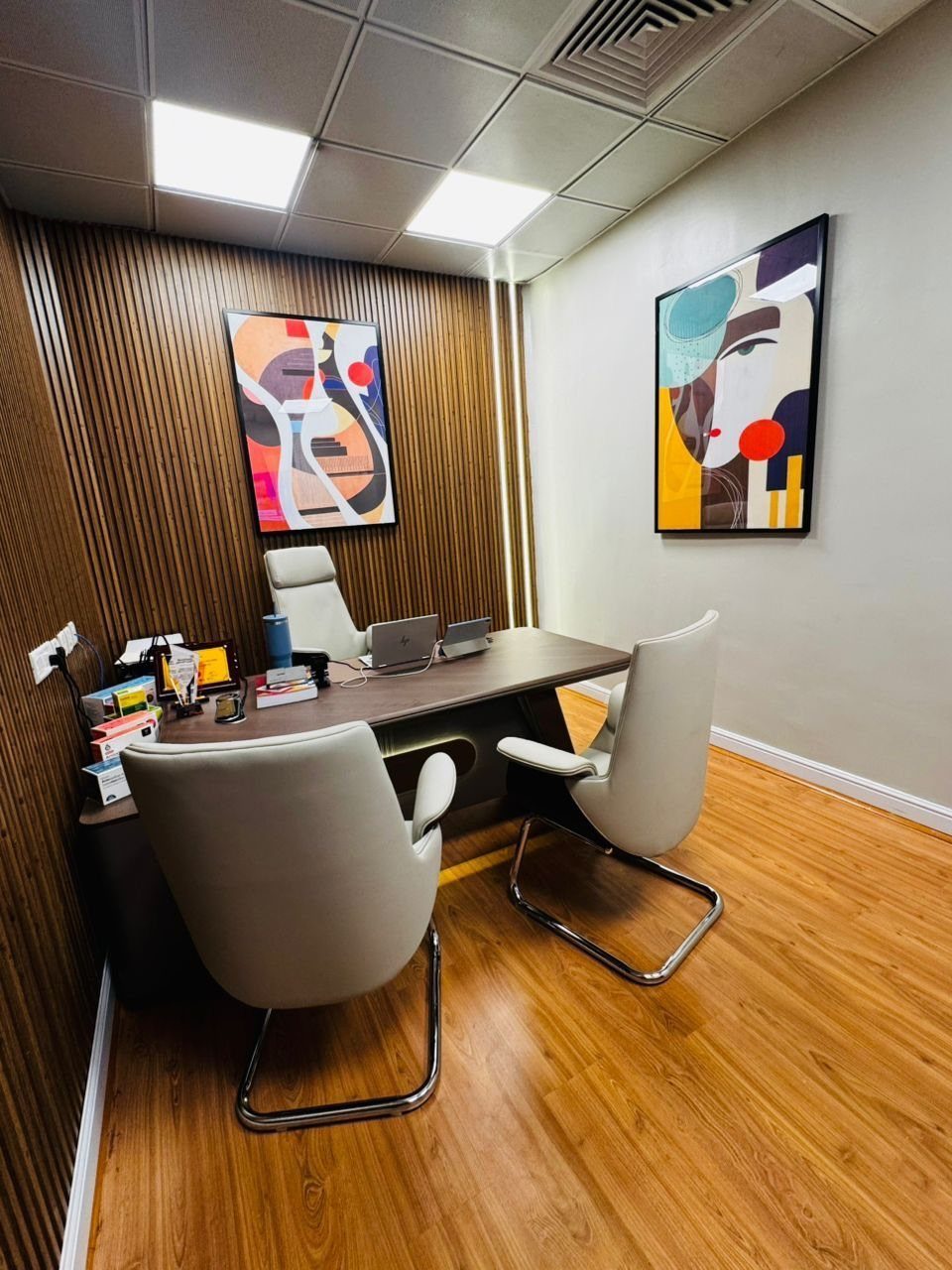
Vertical wood slats give texture without covering the entire wall, and they work behind a desk where you need visual interest but not distraction.
The slats sit flat against drywall and run floor to ceiling, which draws the eye up and makes a small office feel taller. Installation goes faster than tongue-and-groove paneling because each slat mounts individually with adhesive or a cleat.
If you’re adding this yourself, spacing the slats evenly keeps the look clean and makes cutting easier.
10. Illuminated Floating Shelves
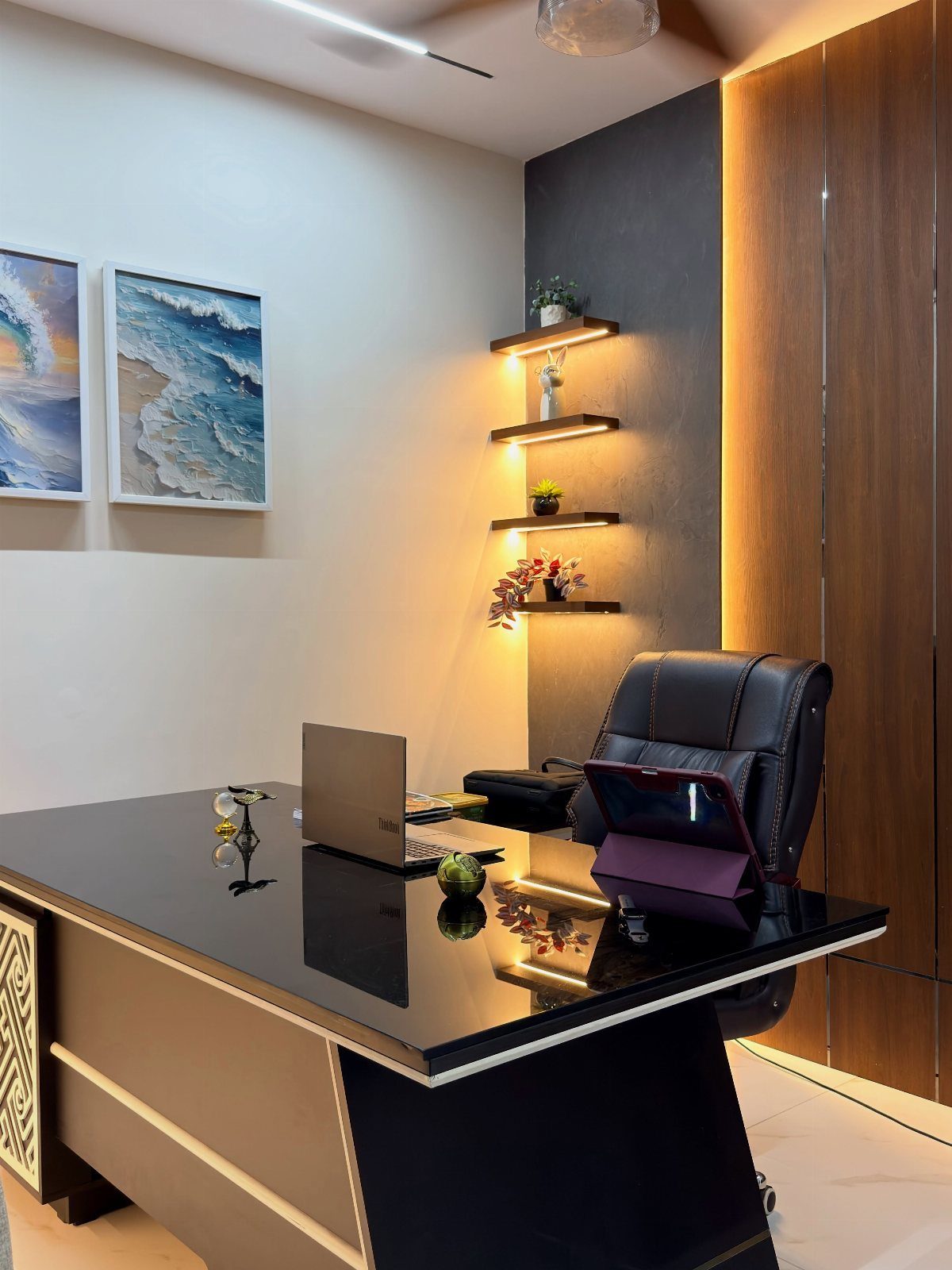
Floating shelves with LED strips behind them put a soft glow on the wall and turn storage into a design feature. The light draws attention to what’s on the shelves, so this works best when you keep the display simple.
The dark accent wall here makes the backlit shelves stand out more than they would against white.
If you’re wiring the LEDs yourself, puck lights or adhesive strips both fit in the gap between the shelf and the wall, and a dimmer switch gives you control when the backlight feels too bright.
11. Coffered Ceiling and Navy Cabinetry
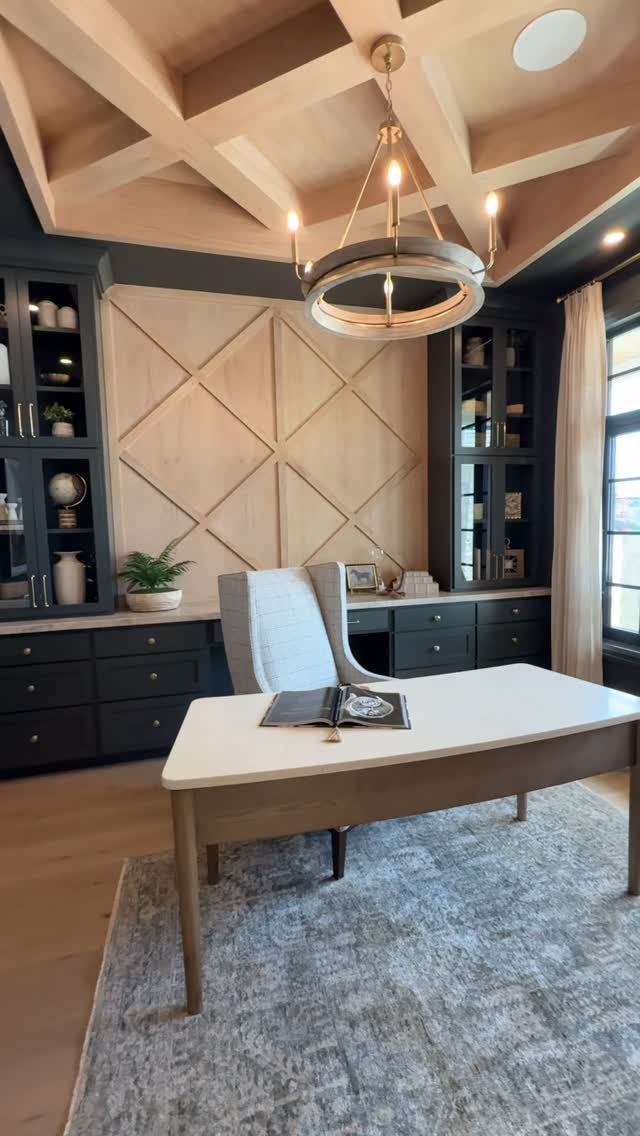
A coffered ceiling and floor-to-ceiling cabinetry give a home office the finish of a formal room, and the navy here balances the light wood overhead without reading too dark.
The chandelier centers the space and adds task light without a visible cord. If you’re adding navy built-ins, keep the desk and rug neutral so the room doesn’t feel too heavy.
This setup suits a larger office where the ceiling height can handle the detail. In a low-ceiling room, the coffering can make the space feel closed in.
Importance of a Dedicated Workspace
A separate workspace sets a physical line between the job and the rest of the house, which makes it easier to concentrate during work hours and step away when they end.
Where you put that workspace depends on what the work requires and how often you need quiet.
A room with a door works best if your day involves calls or meetings, or if you need uninterrupted stretches to think.
A desk in a shared space suits lighter tasks or hours when the house stays quiet, and it keeps you near family activity if that matters.
If the office only sees occasional use, a compact desk may be enough. Working from home all week means you need a real desk, a chair that holds up, and a place to keep things close.
Healthy separation is also paramount in Wanty’s book. “If you don’t have a dedicated home office, you can still find subtle ways to close off your workspace from the rest of your home so you don’t see your work when you’re off-duty,” she says.
— Glamour
Choosing the Right Desk
A 48-inch desk gives you space for a screen, a keyboard, and a coffee mug without feeling cramped.
If you’re running two monitors or spreading out paperwork, 60 inches or wider keeps everything in reach without crowding the surface. If you’re running just a laptop, you can get by with something narrower.
Executive desks give you the surface area for files, equipment, and supplies that need to stay out.
Standing desks let you switch between sitting and standing, which helps with posture over a long day. A smaller desk still does the job when floor space is tight.
Solid wood holds up over time, and a metal frame keeps the look modern. Pick the one that fits the layout and supports how you actually work.
Storage Solutions
Drawers hold small supplies, shelves hold books, and closed cabinets hide equipment or paperwork you don’t use daily.
Keep the things you reach for most within arm’s reach of the chair. Reference material can sit on open shelves, and files you rarely touch can go in a lower drawer or a closed cabinet.
Vertical storage lets you use the wall instead of eating into the floor, which matters in a small office.
Modular units adapt as your storage needs shift, and they stack or rearrange without tearing out built-ins.
Frequently Asked Questions
Where Should I Put a Home Office?
Pick a spot that fits how often you work and whether you need quiet.
A room with a door suits full-time work or frequent calls, while a desk in a shared space works for lighter use when the house stays calm.
Start with the light: a window matters more than you think, and you need power within cable reach.
What Is the Right Desk and Chair Height?
Most desks sit at 28 to 30 inches, and your chair should adjust so your elbows rest near that height with shoulders relaxed. Your feet should reach the floor or a footrest to keep your posture steady through a long workday.






