
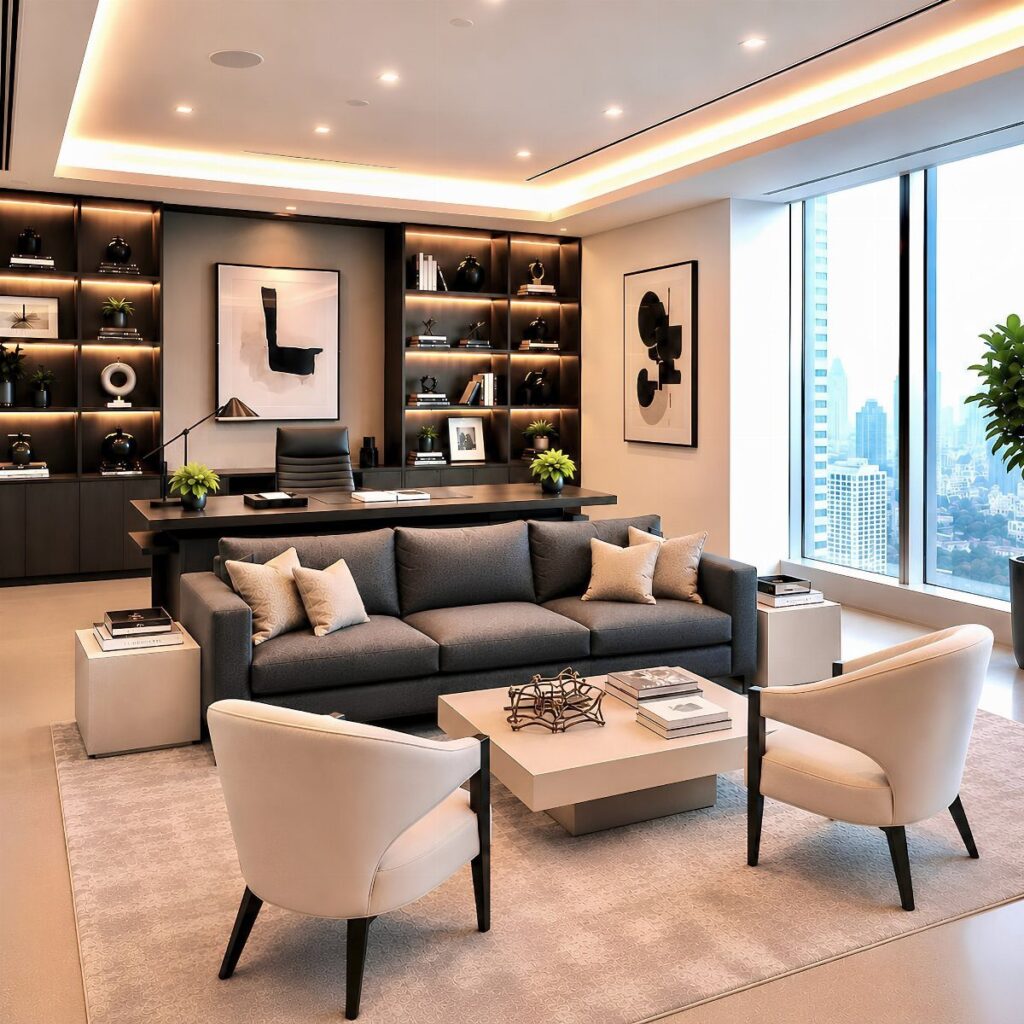
A home office sofa runs from low-profile minimalist couches to built-in window seats, daybeds that work double duty, and tufted pieces that anchor a traditional study.
Leather ages well and keeps its lines clean, fabric softens the room and hides the daily scuffs.
1. Minimalist Modern Couch
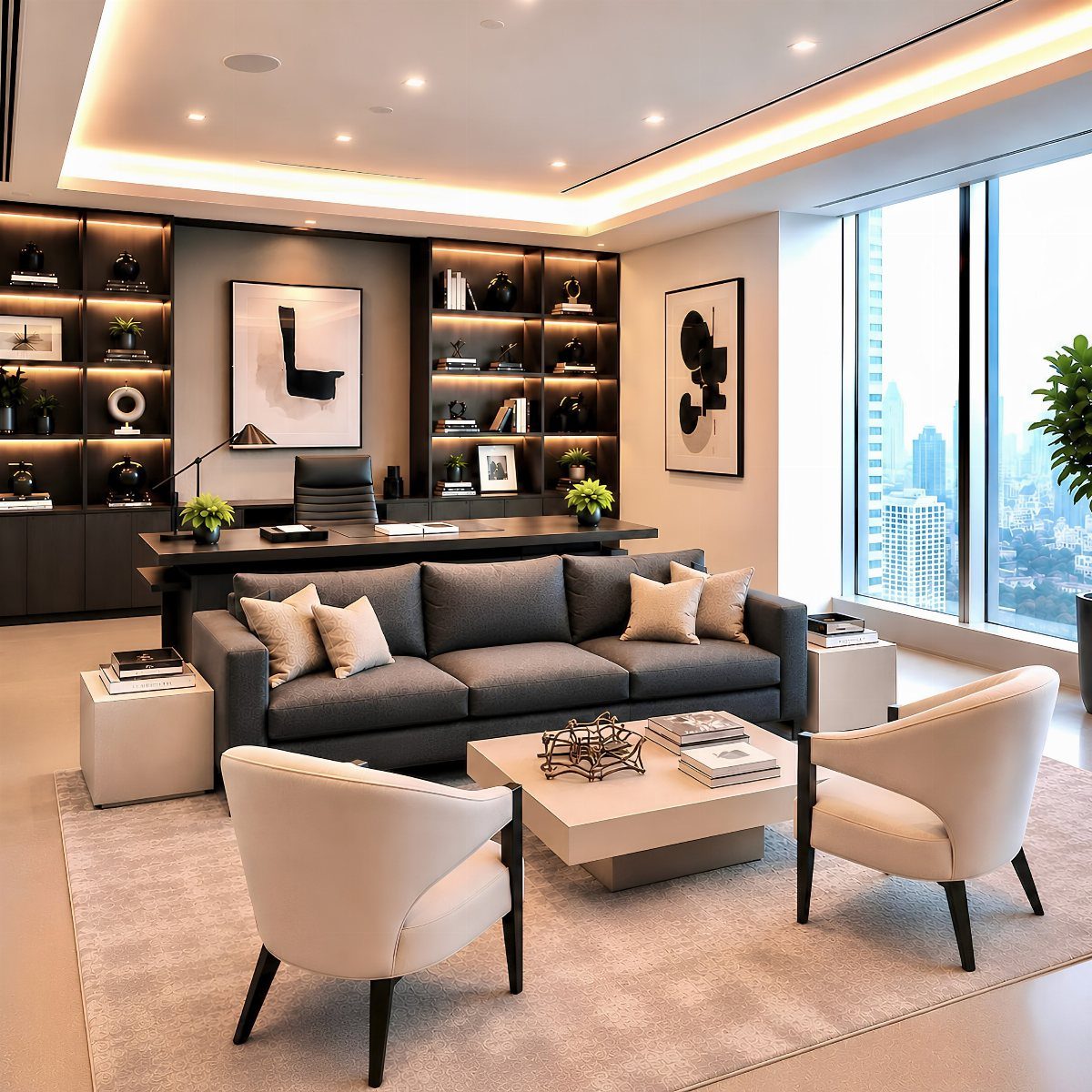
A grey couch this plain does more by doing less. The single color and straight lines let the room stay about the work, and when the office is small, that restraint keeps the space from feeling cluttered.
The low back matters. A taller sofa would eat up sightlines and make the room feel closed in, but this one sits low enough that you still see the wall and shelving behind it.
Pair it with light-colored chairs or a neutral rug so the grey anchors the room without darkening it.
2. Daybed for Dual Functionality
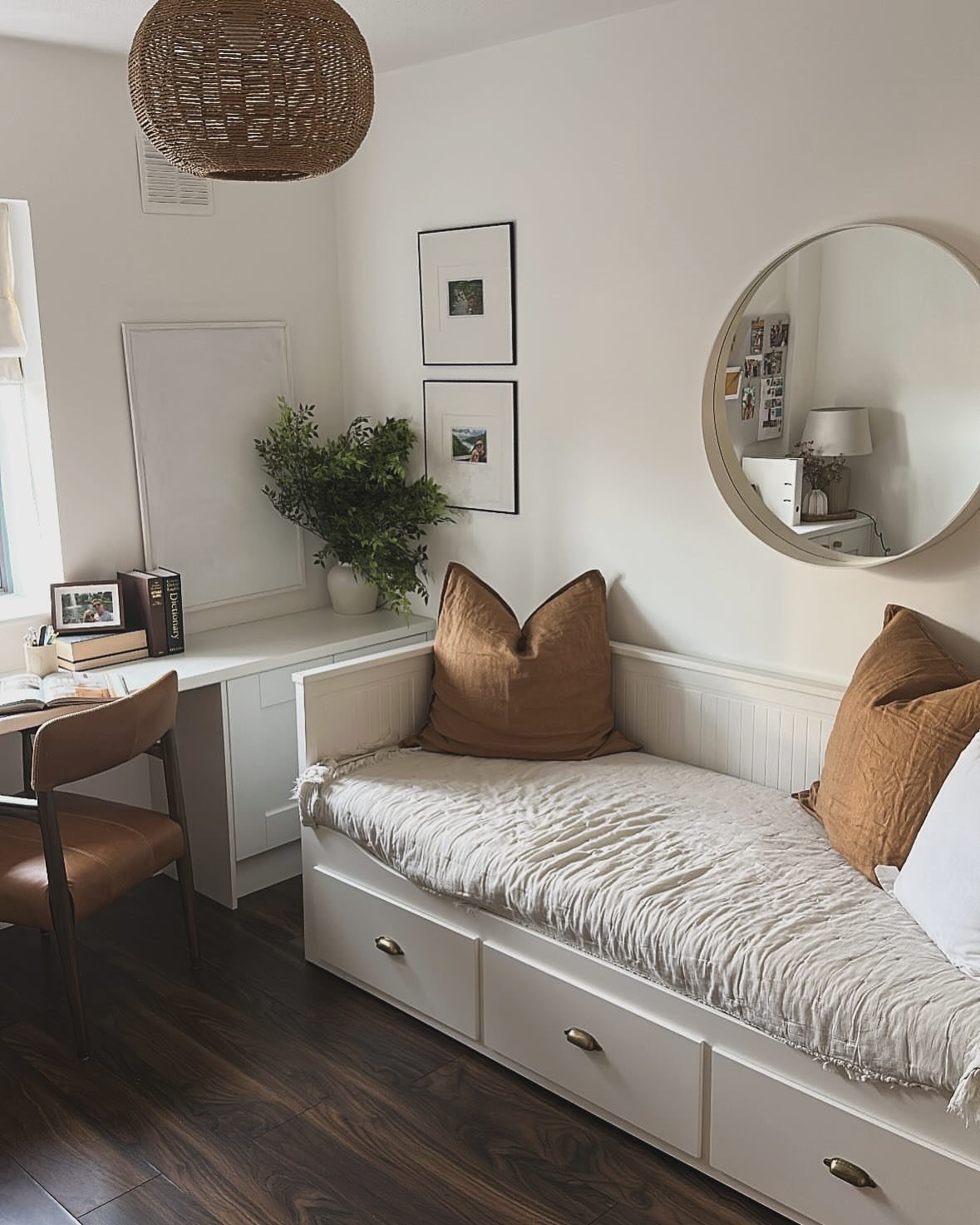
A daybed works as seating while you’re at the desk and turns into a guest bed at night. The built-in drawers below add storage without taking up floor space, which matters when the office is also the spare room.
Cushion thickness decides whether it holds up to both jobs.
A thin mattress or pad works for occasional guests but can bottom out with daily use. A thicker mattress holds up better for sleeping without feeling too firm to sit on.
Mount the unit to the wall studs if you build it in, since drawers and a mattress add weight fast.
3. Compact Settee
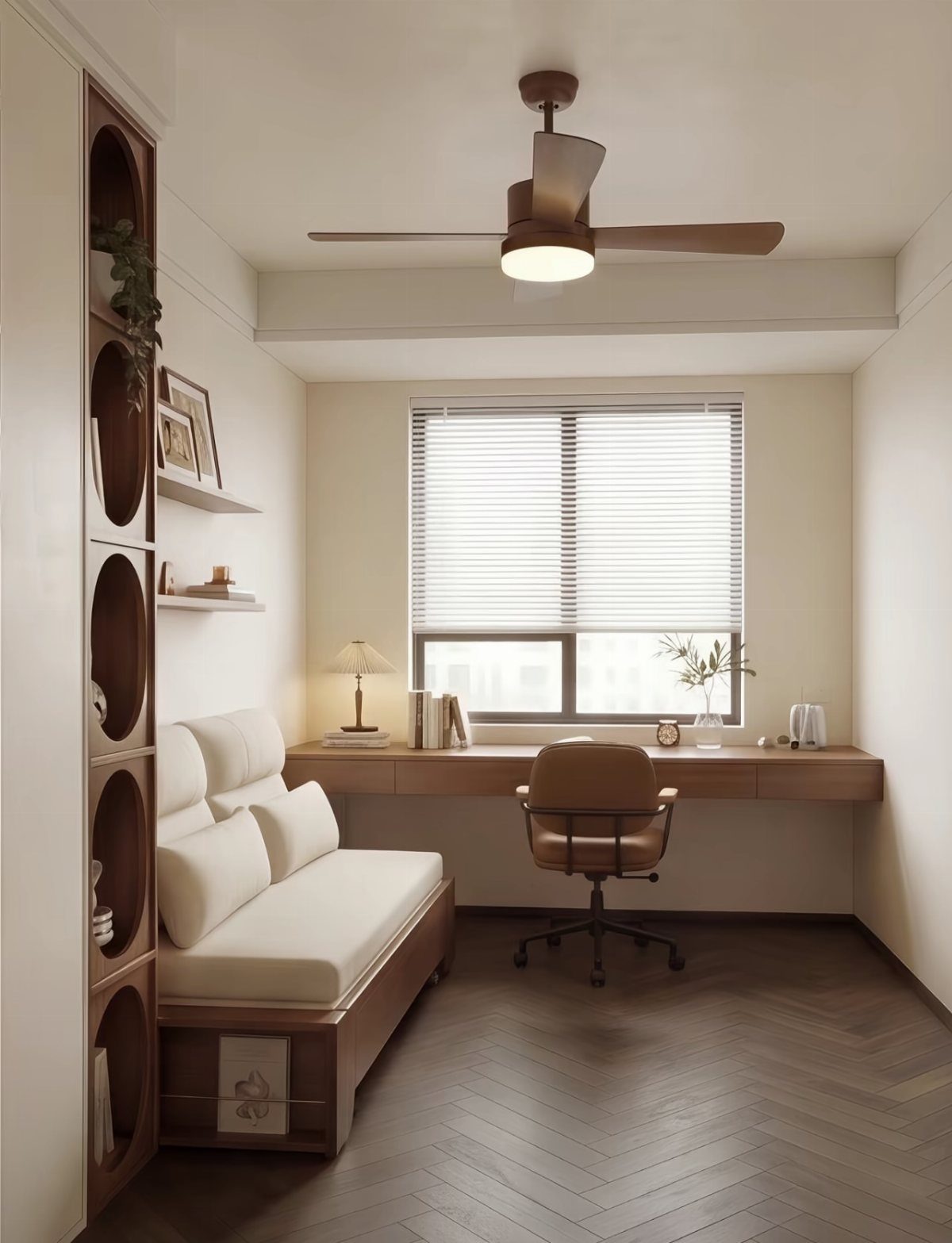
A settee this size fits offices that can’t give up much floor space. The narrow frame and short length leave room for the desk and chair to move, and the white keeps the whole setup from feeling heavy.
A settee shorter than a full sofa fits tighter layouts and still seats two. Anything longer crowds a small office, and anything shorter reads more like an accent chair than a place to actually sit and work through something.
Skip arms if the room is tight. Armless designs save a few inches on each side and make the whole piece feel lighter.
4. Built-In Window Seat Sofa
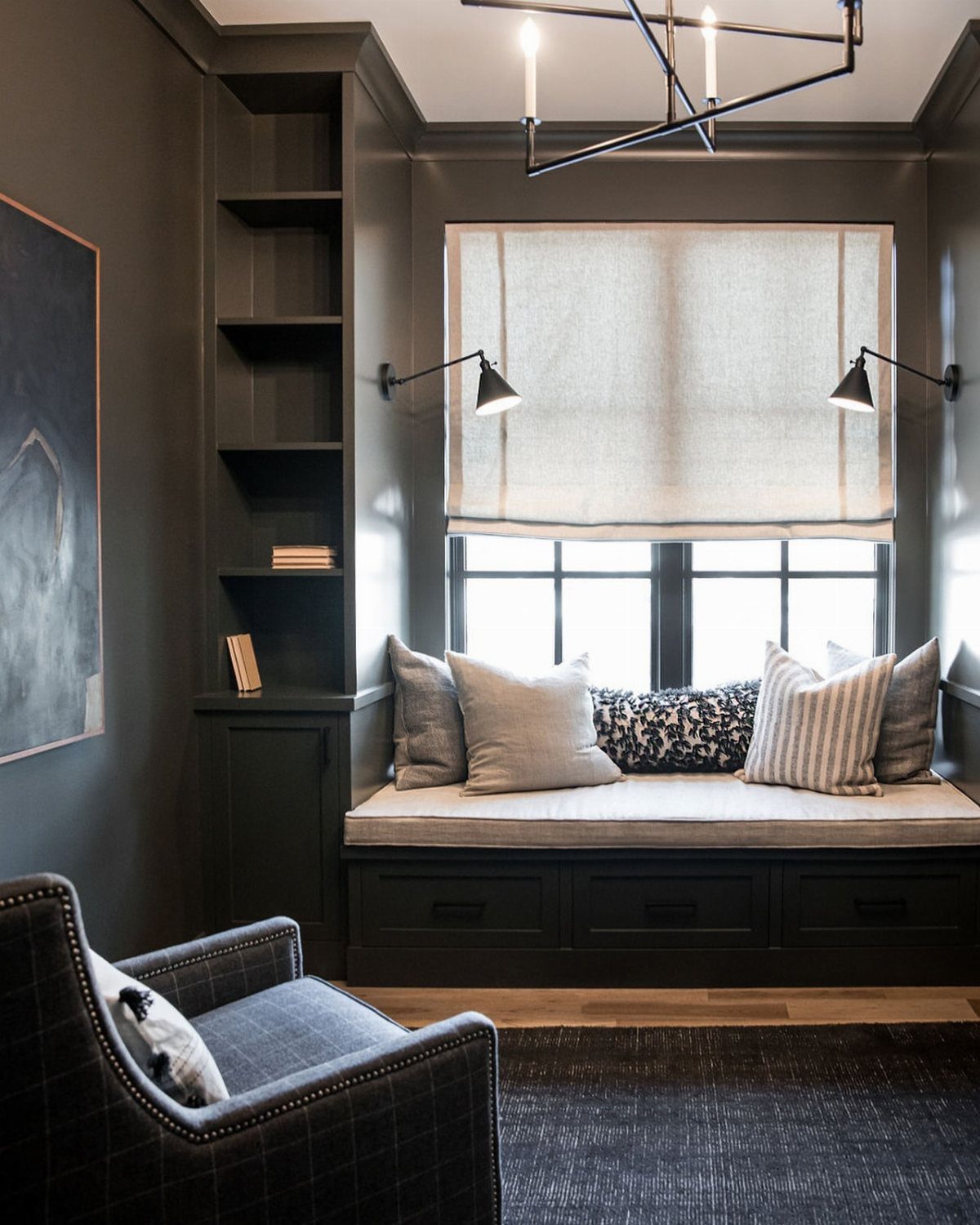
Natural light near the desk keeps you alert and makes the room feel bigger. A window seat sofa puts you right in that light, which is why this setup works so well in a home office.
The built-in design makes the most of the wall space without blocking the window. Dark grey cushions match the paint and keep the look intentional, not like you shoved a couch under the sill.
Add a couple throw pillows for lumbar support, since most window seats sit shallower than a standard sofa and don’t give you much to lean back against.
5. Classic Leather Sofa
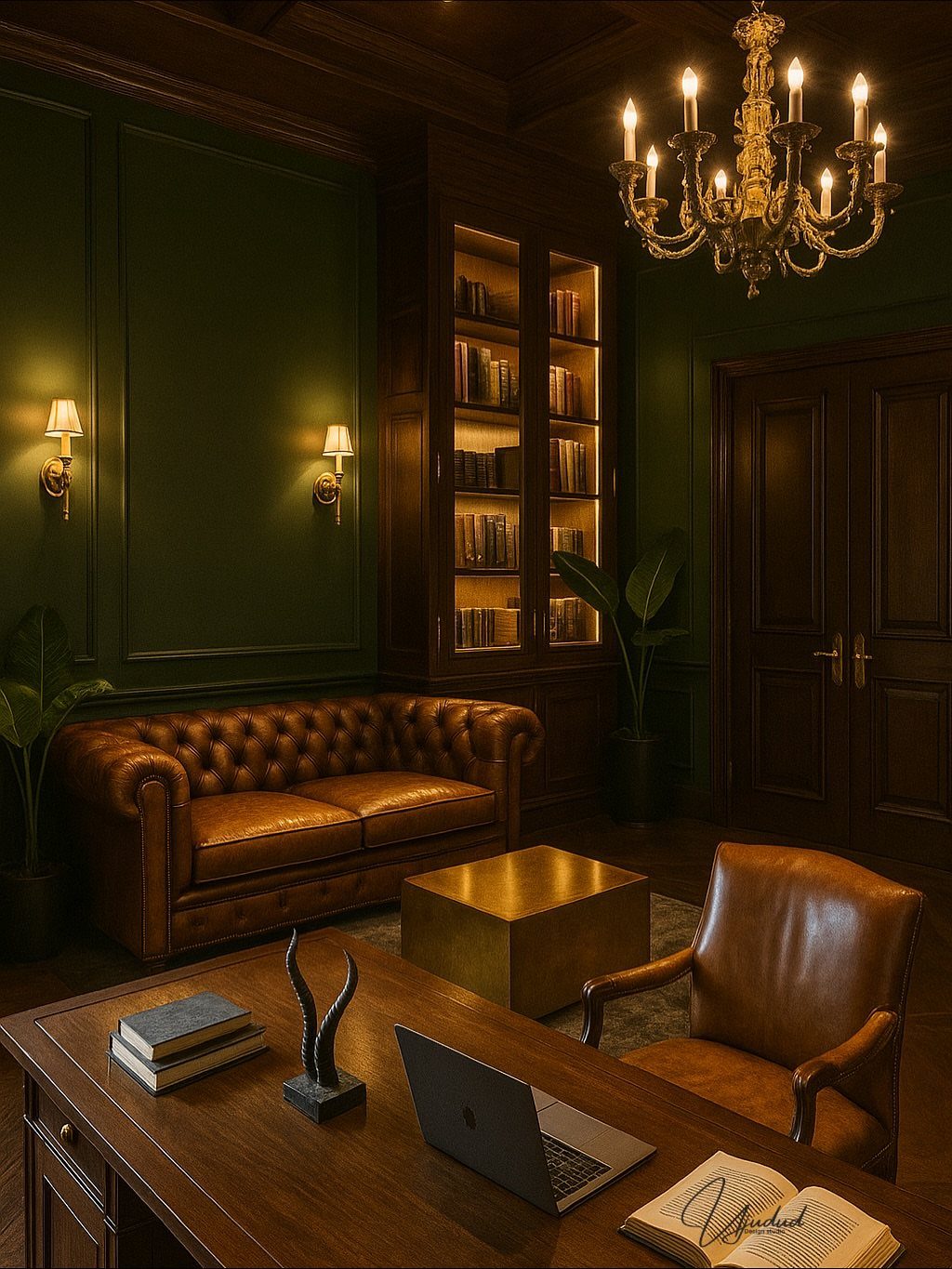
A leather sofa brings weight and polish to an office in a way upholstery doesn’t. The tufted Chesterfield style here holds its shape over time, and leather only gets better with age and use.
Brown works in offices where the walls go dark or jewel-toned. Against this deep green, the leather reads warm instead of stark, and the gold chandelier picks up the undertones in the hide.
Condition the leather twice a year. It dries out faster in heated rooms, and cracked leather is one of the few things that makes this look cheap.
6. Low-Profile Sofa Directly Behind Desk
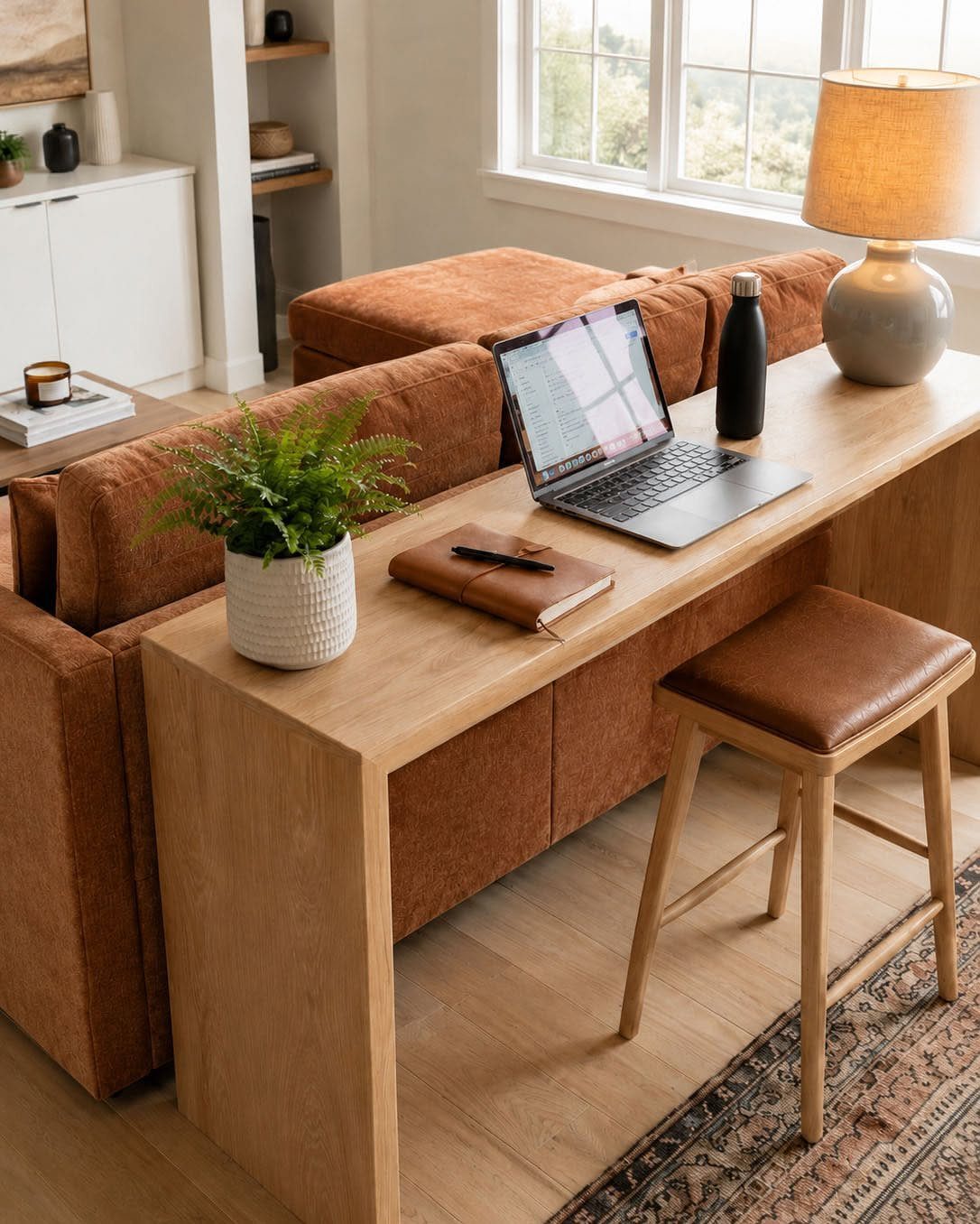
Placing the desk directly in front of a low sofa saves space and gives you two work zones in one footprint. The low profile keeps the sofa from blocking your view or making the room feel segmented.
Orange or rust tones warm up neutral offices without reading too loud.
Make sure the desk height lines up so the sofa back doesn’t interfere with your monitor or task light.
Standard desk height usually clears a low sofa back by a few inches, so you can tuck the desk close without blocking the view.
7. Bookshelf Room Divider Behind Sofa
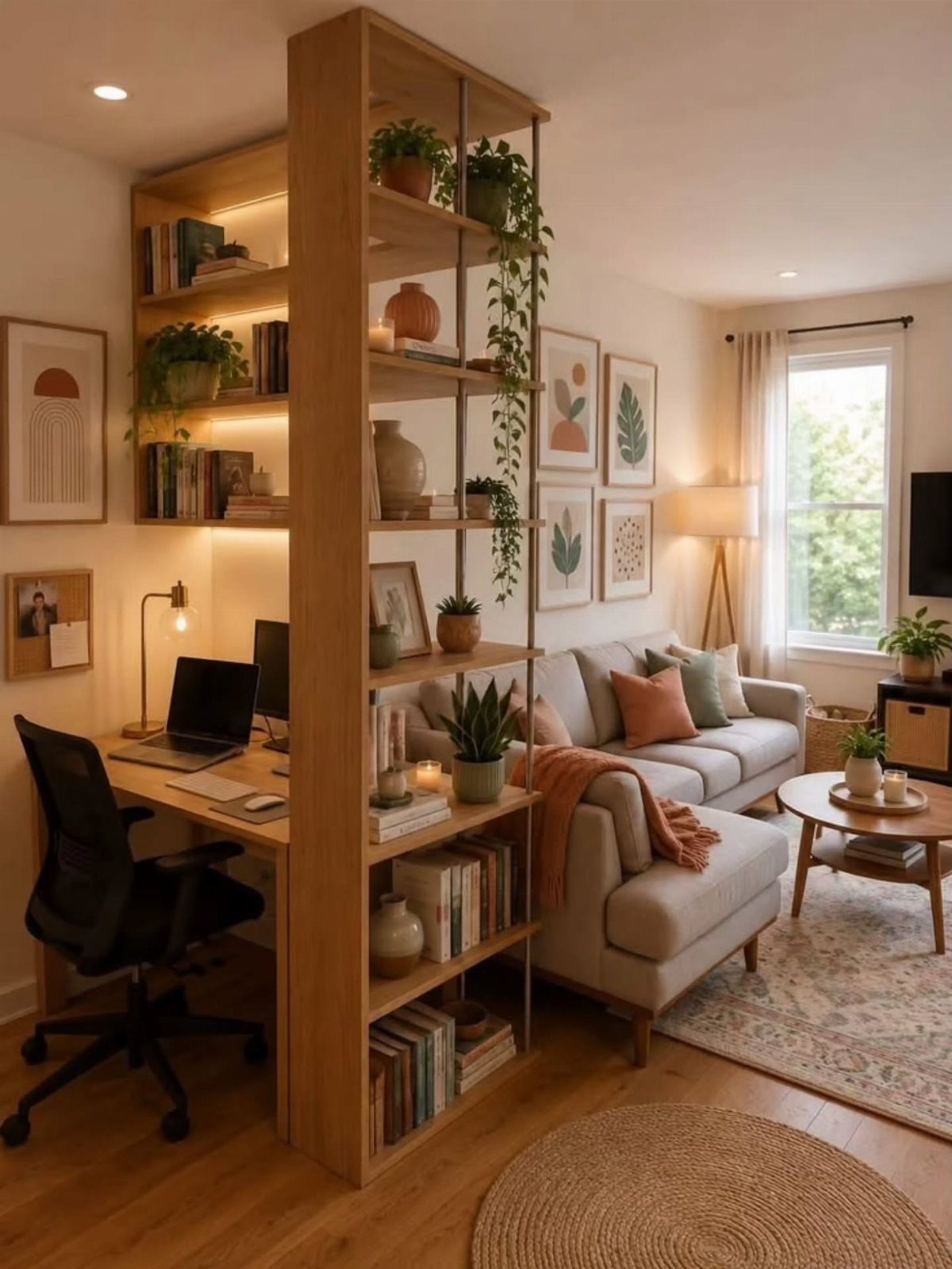
An open bookshelf behind the sofa defines the office zone without closing off the room.
The vertical shelving gives you storage for books and plants while keeping sightlines open from both sides, which matters when the office shares space with a living area or bedroom.
The wood frame adds warmth against the grey upholstery. A metal or solid panel divider would feel heavier and make the office read like a separate room instead of part of the same space.
8. Casual Sofa with Plant Wall
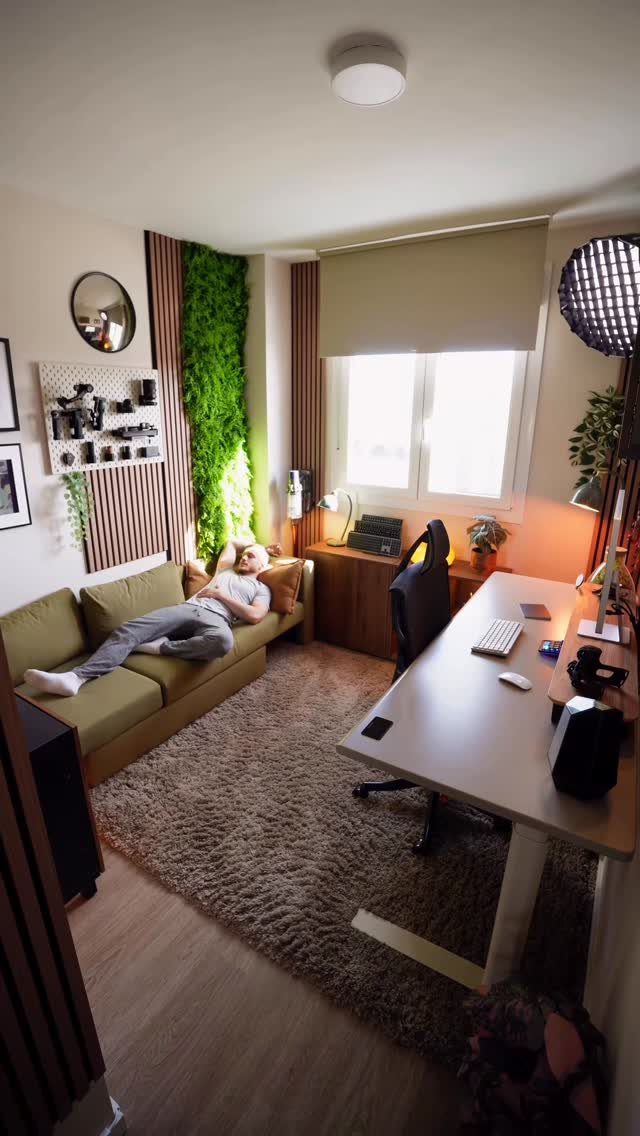
A vertical plant wall behind the sofa brings texture and air quality into the office without taking up floor space. The slatted wood paneling frames the greenery and keeps the look intentional, not just a collection of plants on shelves.
Green fabric picks up the wall and makes the whole corner feel cohesive. A neutral couch would work too, but the color tie makes the setup feel designed.
Irrigation is the part that decides whether this holds up. Most vertical systems need a water line or regular hand watering, and sitting a sofa underneath means spills and drips land on fabric.
9. Tufted Sofa in Traditional Study
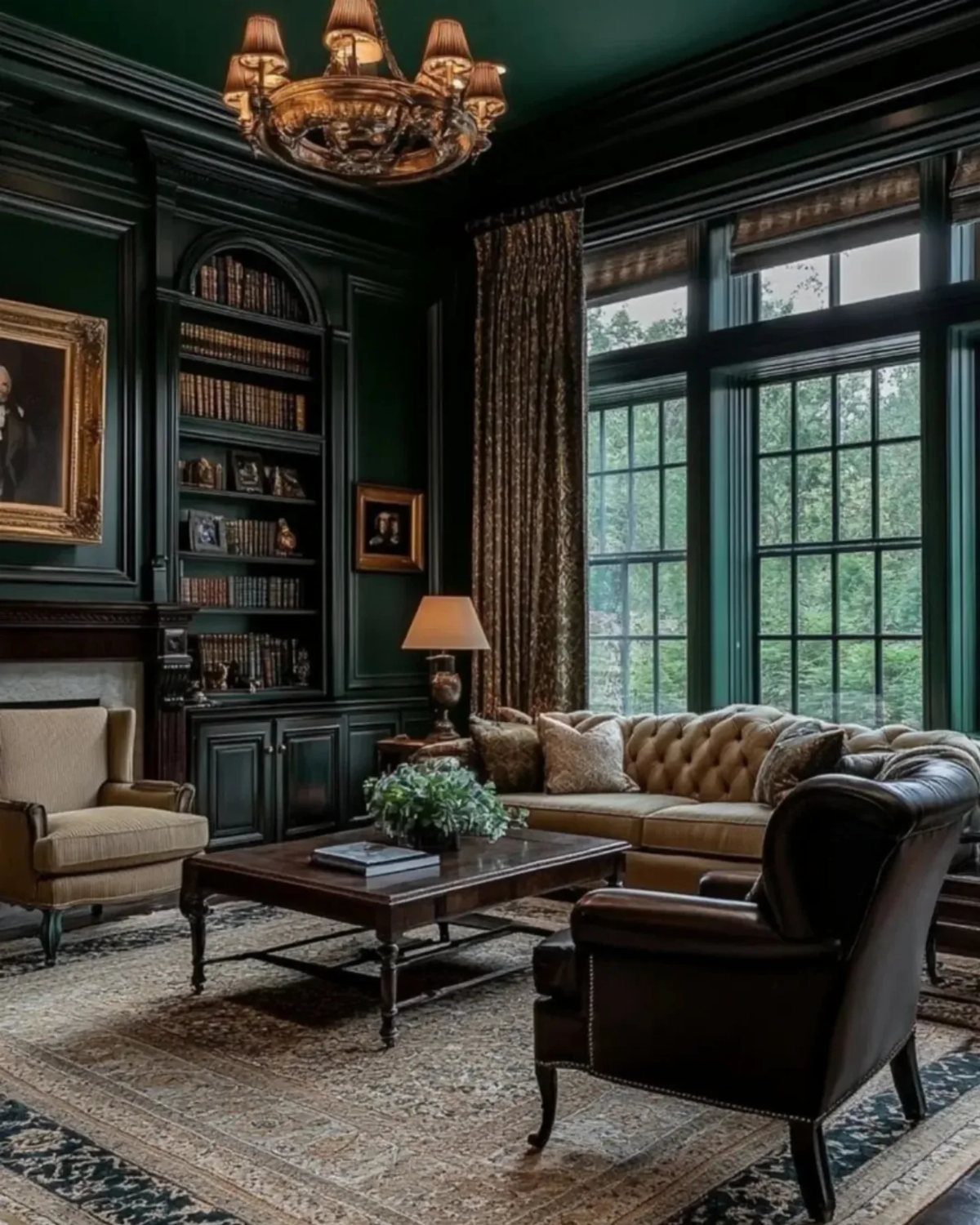
Built-in bookshelves and a tufted sofa turn an office into a proper study. The tan upholstery warms up the dark green walls and stops them from feeling too heavy, while the tufting adds detail without pattern.
Pairing the sofa with armchairs gives you flexible seating for meetings or reading away from the desk. A coffee table between them makes the setup usable, not just decorative.
Dark walls work in rooms with good natural light. Without the window here, the green would swallow the space.
10. Fabric Sofa Beside Workstation
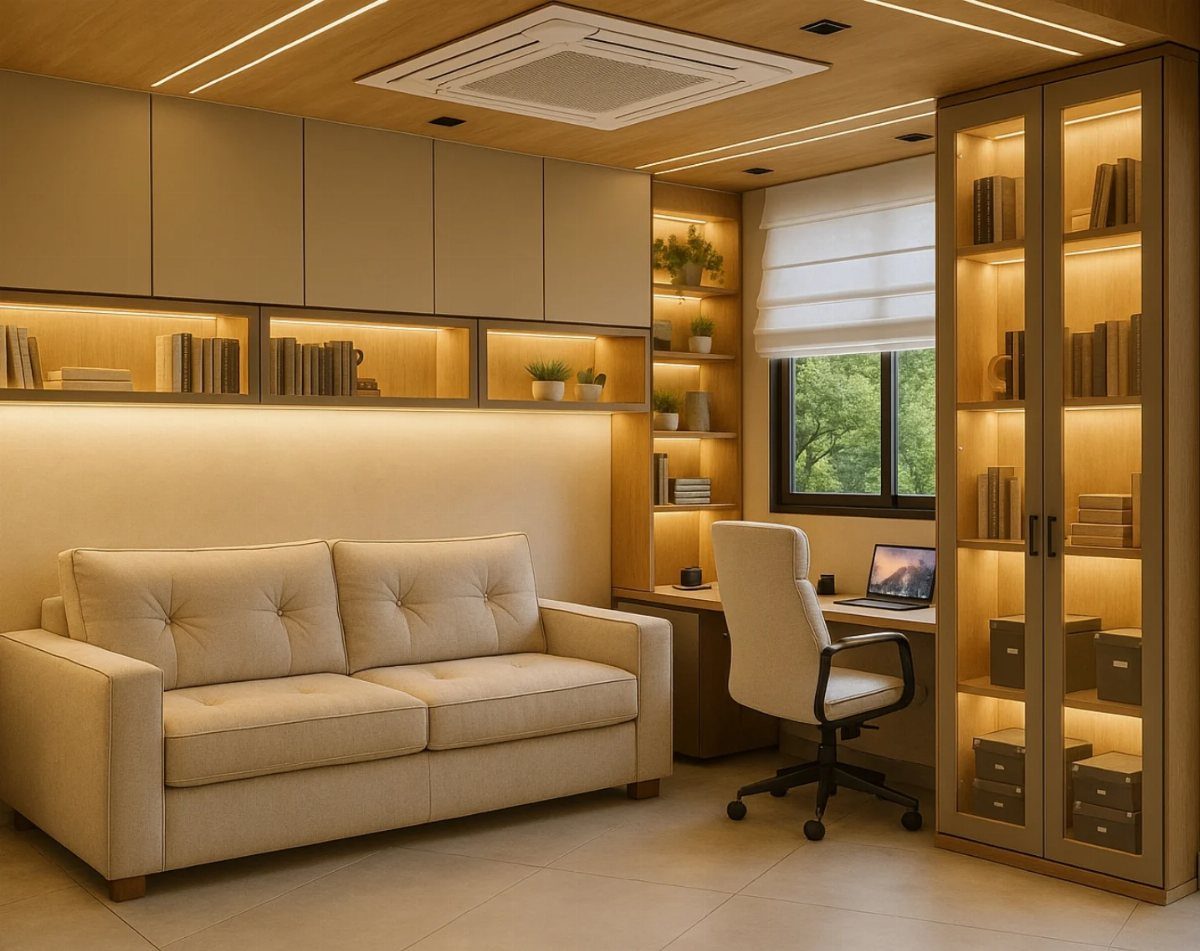
Placing a fabric sofa right next to the desk gives you two work modes in one compact setup. The beige holds the space light, and the built-in shelving above the desk adds storage without crowding the floor.
Positioning the sofa perpendicular to the desk instead of behind it opens up the layout and lets both pieces face into the room.
That matters in smaller offices where a sofa directly behind the desk can make the space feel linear and tight.
Fabric holds up better than leather in rooms with kids or pets, and beige hides light wear better than darker solids.
If you really want to gear your home towards a live/work-space, consider upgrading your current couch to this sofa from Best Choice Products. Low armrests, cupholders and a more upright position offer a better space for getting work done.
Choosing the Right Sofa
Sofa depth between 36–40 inches fits most offices, but measure your floor space first. A deeper sofa eats into the path your desk chair travels, and you’ll feel it every time you stand up.
Commercial-grade fabric or top-grain leather holds up better than residential upholstery. Daily sitting wears fabric faster than occasional use in a living room, and cheap leather cracks in a heated office.
A seat 18–20 inches off the floor lets you stand and return to work without fighting the cushions. Lower seats feel relaxed but add friction to short breaks, and that extra push adds up over a day.
Exposed legs keep the sofa from reading heavy. A skirted base makes a small office feel smaller, since you lose the visual break between the furniture and the floor.
Maximizing Small Spaces
Tall bookcases do the same and hold more per square foot than low units.
A desk with drawers or a coffee table with hidden compartments stores supplies without adding a separate piece of furniture. Slide bins under the bed for papers and gear you want close but hidden.
A sofa that converts to a guest bed or includes built-in storage works best in small spaces where every piece has to earn its place twice.
Creating a Cozy Atmosphere
Color sets the tone before you sit down.
A bright sofa pulls focus and energizes the room, while muted tones hold it steady and quiet. Soft blues make an office feel open and cool, which helps when the room runs small or the light is limited.
Throw pillows and blankets add comfort without permanent commitment. Swap them out when the season changes or when you want the room to feel different.
Ambient lighting softens the space after hours.
Task lighting handles the work, but a floor lamp or sconces near the sofa make the office feel like a room you’d choose to spend time in, not just a place you have to be.
Frequently Asked Questions
How do I fit a couch in a small office?
A settee or condo-sized sofa works in tight offices because the shorter length and narrower frame leave room for your desk and chair to move.
Armless styles trim width by several inches per side when floor space is at a premium. Anything longer than 75 inches crowds a small office and makes the layout feel cramped.
Should I get a sleeper sofa for my home office?
A sleeper sofa works well when your office doubles as a guest room, but the mechanism adds weight and makes the cushions firmer for daily sitting.
Check that the mattress can pull out fully with your desk where it sits now. A daybed with storage drawers gives you the same dual function without the heavy pull-out frame.






